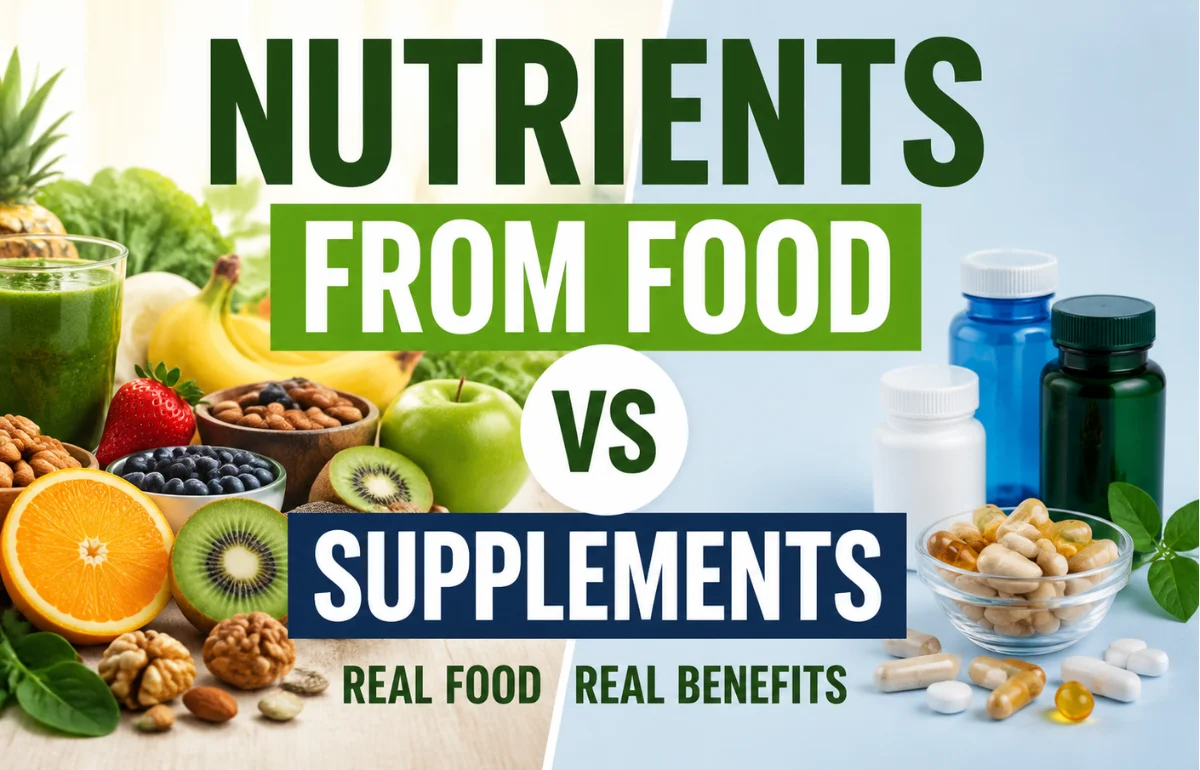
Major health authorities and research support prioritizing a balanced diet over supplements for obtaining vitamins, minerals, and other nutrients. They believe this for multiple reasons. For one thing, if you are filling your stomach with foods that have all the natural vitamins and minerals you need, then you are leaving little room for junk food.
Why Food Is Usually Superior
Synergistic effects and “food matrix”: Whole foods contain a complex mix of vitamins, minerals, fiber, antioxidants, phytochemicals (like flavonoids and carotenoids), and other compounds that work together. These enhance absorption, provide broader health benefits, and aren’t replicated in most supplements.
- Better overall health outcomes: Nutrients from food are linked to lower risks of chronic diseases, heart disease, and mortality in studies. The same benefits aren’t consistently seen with supplements (and in some cases, high-dose supplements show neutral or negative effects).
- Natural bioavailability and balance: Food delivers nutrients in forms and amounts your body handles well, reducing overdose risk. Supplements can provide isolated nutrients in high doses, which may not be absorbed as effectively or can lead to imbalances.
- Additional benefits: Food provides energy, protein, healthy fats, fiber for gut health, and enjoyment—supplements don’t.
Reputable sources like Harvard Health, Mayo Clinic, Cleveland Clinic, and Dietary Guidelines for Americans all recommend “food first” for nutrient needs.
Think About This
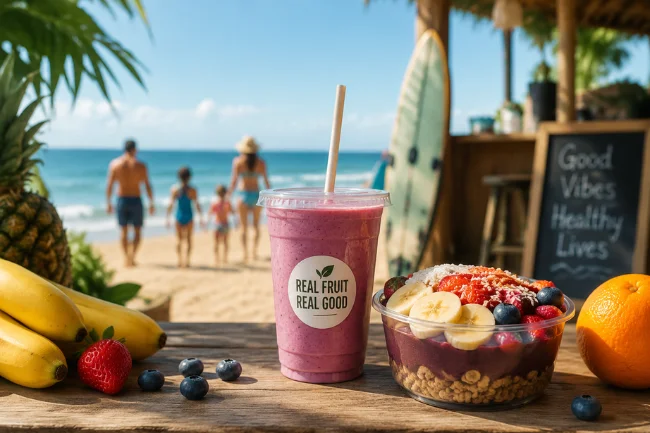
You spend all afternoon at the beach. The sun is beating down on you, and your body is dehydrated and needs energy after a long day of swimming. Would you reach for a bag of potato chips and a handful of supplements, or do you think a smoothie would be better for you?
Doug, a man who owns a smoothie shop in Corolla, North Carolina, had this to say: “We see it all the time. A family comes in after being at the beach and orders smoothies and acai bowls. They inevitably remark how coming here was a much better choice than hitting the drive-through at a burger joint. No sluggish feeling, no lag, just tasty and healthy fruits. ”
When Supplements Can Help
Supplements aren’t useless. They can be valuable in specific cases:
- Diagnosed deficiencies (e.g., vitamin D, B12, iron).
- Certain life stages or conditions (pregnancy, vegan/vegetarian diets, malabsorption issues, elderly, limited sun exposure).
- Limited diets or inability to eat a variety of foods.
In these situations, targeted supplements (under medical guidance) can effectively correct gaps.
Potential Downsides of Supplements
- Overconsumption risks: Easy to exceed safe upper limits, leading to toxicity (e.g., excess vitamin A, E, or iron).
- Limited or no benefit in well-nourished people → Some studies show multivitamins provide little advantage for disease prevention.
- Quality and interactions vary widely; they can interact with medications.
Bioavailability note: Some isolated nutrients in supplements (e.g., folic acid vs. food folate, or certain vitamin D forms) can be more absorbable in specific cases, but the overall package in whole foods wins for long-term health.
Bottom Line
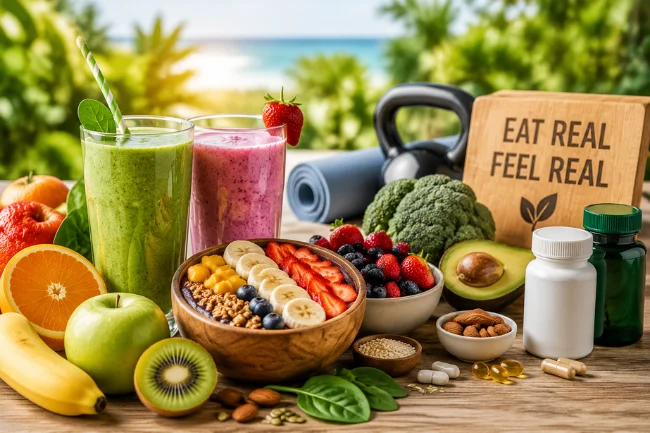
Focus on a varied diet rich in fruits, vegetables, whole grains, lean proteins, nuts, seeds, and dairy (or alternatives). This is the most evidence-based, sustainable, and beneficial approach. Use supplements as a targeted tool when needed—not a replacement.
Items like smoothies or acai bowls can be the perfect meal or snack for you. They replace almost everything your body loses during a workout or being in the sun all day. Vitamin A, Vitamin B, Vitamin C, Vitamin D, folic acid, magnesium, calcium, iron, the list goes on and on.
You can get a “green” smoothie to replenish minerals and boost your immune system, while ordering a fruit smoothie helps with energy and stamina. There are even smoothies that combine the two.
We are natural creatures. We come from the Earth, so it only makes sense that things growing directly from it will benefit us, not some deep-fried Dr. Frankenstein version of it.
Getting into the habit of ordering and imbibing one fruit smoothie per day and cutting out the greasy fat can literally add years to your life and take inches off your waistline. The science is there to back up everything we are saying.
Evolution into Today’s Fruit Smoothies
Smoothies evolved from simple fruit + juice/ice blends to include yogurt, milk, greens, protein, and superfoods. They exploded in popularity in the 1990s–2000s as a convenient health food.
In short: While blended fruit drinks are ancient, the fruit smoothie as we know it today—a thick, blended, often icy fruit beverage sold as a healthy option—is a distinctly American invention from the 20th century, enabled by blenders and driven by health trends.