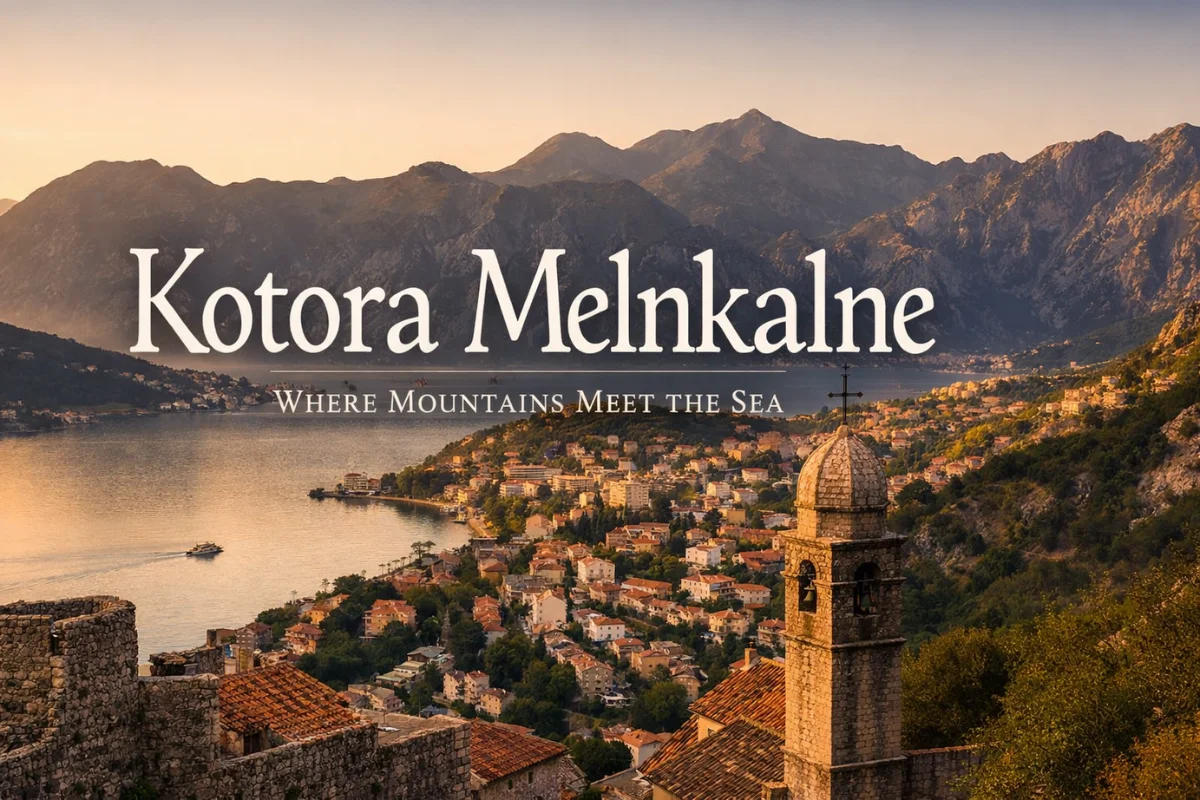
The intersection of geography and linguistics often creates a space where history feels tangible. In the southern reaches of the Adriatic, where limestone cliffs plunge into cobalt waters, a concept has emerged that transcends traditional cartography. Kotora Melnkalne is not merely a destination found on a map; it is a linguistic and cultural reimagining of the Bay of Kotor and the “Black Mountains” of Montenegro. By blending the stylized name of a medieval stronghold with the Latvian translation for the nation itself, this term has become a beacon for those seeking a deeper, more intentional connection to the Mediterranean.
The Linguistic Architecture of Kotora Melnkalne
Understanding the resonance of this term requires deconstructing its origins. The phrasing is a deliberate bridge between two distinct cultural identities. “Kotora” serves as an evocative, stylized variation of Kotor, a town that has survived empires, earthquakes, and the relentless march of time. “Melnkalne,” the Latvian word for Montenegro, literally translates to “Black Mountain.”
When these two elements merge, they create a narrative that is both descriptive and aspirational. It describes a place where the fortified coastal civilization is inextricably linked to the rugged, protective peaks behind it. In a modern context, using this phrasing signals an appreciation for the “slow travel” movement—a philosophy that prioritizes depth of experience and cultural literacy over the mere collection of passport stamps.
The Power of Naming in Modern Travel
In the digital era, how we name a place dictates how we perceive it. Kotora Melnkalne represents a shift from mass-market tourism toward “niche-heritage” exploration. By utilizing a name that feels both ancient and newly discovered, travelers and cultural historians are able to view the region through a lens of resilience and artistic revival. It suggests that the history of the Balkans is not a static museum piece but a living, breathing story that continues to evolve in 2026.
A Historical Foundation: From Illyrians to Venetians
The physical reality behind the poetic name is a landscape layered with the remnants of multiple civilizations. The strategic importance of the bay ensured that any power seeking dominance over the Adriatic would eventually seek to control this specific inlet.
Ancient Roots and Roman Governance
Long before the term became a symbolic movement, the Illyrian tribes inhabited the limestone caves and coastal strips of the region. However, it was the Roman Empire that first institutionalized the area’s maritime potential. Archaeological evidence in the surrounding villages, such as the famous mosaics in Risan, points to a period of significant administrative and artistic growth. The Romans recognized that the bay provided a natural “ria” or submerged river canyon, offering a level of maritime protection that few other Adriatic ports could match.
The Venetian Legacy and the Golden Age
Perhaps no era defined the aesthetic of Kotora Melnkalne more than the four centuries of Venetian rule. From the 15th to the 18th century, the town flourished as a bastion of the Venetian Republic. This period saw the construction of the formidable city walls—which climb precariously up the mountain toward the Saint John Fortress—and the creation of the baroque palaces that line the squares today.
The architecture is a testament to a time when wealth was expressed through stone carvings, ornate balconies, and the cultivation of maritime expertise. To walk through the Sea Gate today is to enter a space that remains functionally identical to its Renaissance peak, preserved by the UNESCO World Heritage designation that now protects its integrity.
The Geography of Resilience: Mountains and Sea
The allure of Kotora Melnkalne is rooted in its dramatic physical contrasts. The geography is not just a backdrop; it is the architect of the region’s history and character.
The Bay of Kotor: A Geological Marvel
Often erroneously called a fjord, the Bay of Kotor is actually a ria. This distinction is important for those who study the natural world. While fjords are carved by glaciers, rias are formed by rising sea levels flooding a river valley. This creates a serpentine waterway that snakes inland for nearly 30 kilometers. The result is a series of interconnected basins that offer calm, deep waters, making it one of the most protected natural harbors in the world.
The Peaks of Lovćen and Orjen
The “Melnkalne” or Black Mountain aspect of the name refers to the towering limestone massifs that enclose the bay. Mount Lovćen, in particular, holds a sacred status in the local consciousness. It is the site of the Mausoleum of Njegoš, a philosopher-king whose writings helped define the national identity. The transition from the humid, Mediterranean air of the coast to the crisp, alpine environment of the peaks can occur in less than an hour of driving, offering a biological and climatic diversity that is rare in such a condensed area.
Comparing the Layers of Kotora Melnkalne
To understand the breadth of this region, it is helpful to look at the various influences that have shaped its current identity. The following table provides a comparison of the key historical and cultural eras that contribute to the modern concept of the area.
Cultural Resonance and the 2026 Slow Tourism Movement
In 2026, the global travel community has shifted significantly toward “intentionality.” The rise of Kotora Melnkalne as a concept is a direct response to the burnout caused by hyper-commercialized tourism. This movement emphasizes three core pillars: Authenticity, Preservation, and Narrative.
The Shift Toward Authenticity
For the modern traveler, the goal is no longer just to “see” a site but to understand its soul. This involves engaging with local traditions that have remained unchanged for generations. In the villages surrounding the bay, such as Njeguši, the production of dry-cured ham (pršut) and mountain cheeses follows methods that are centuries old. The movement encourages visitors to seek out these small-scale producers, ensuring that the economic benefits of tourism reach the community level.
Preservation Beyond Architecture
While UNESCO protects the stone walls, the movement of Kotora Melnkalne seeks to protect the “intangible” heritage. This includes the local dialect, the seafaring songs (klapa), and the traditional festivals like Boka Night. By framing the region as a symbolic movement, there is a renewed focus on environmental sustainability—ensuring that the bay’s delicate ecosystem is not compromised by the very people who come to admire it.
Creative Storytelling and Digital Identity
In 2026, a destination’s identity is co-created by its inhabitants and its visitors. Digital nomads and artists have adopted the term to describe a state of mind—one of quiet strength and historical depth. This has led to the emergence of wellness retreats, writing workshops, and artistic residencies that use the bay’s natural silence as a canvas for innovation.
Practical Insights for the Modern Explorer
Engaging with Kotora Melnkalne requires a different approach than standard Mediterranean vacations. To truly experience the depth of the “Black Mountain,” one must be willing to step off the beaten path.
-
Timing the Visit: The shoulder seasons (May-June and September-October) offer the best balance of weather and tranquility. During these months, the light hitting the limestone cliffs creates a golden hour that lasts for several hours, a phenomenon highly prized by photographers and artists.
-
The Serpentine Ascent: One of the most significant experiences is the drive up the Lovćen serpentine. With 25 hairpin turns, each offering a progressively wider view of the Adriatic, the road serves as a metaphor for the region’s complex layers.
-
Maritime Exploration: While the land routes are stunning, the bay was meant to be seen from the water. Small-scale boat tours that visit the “Our Lady of the Rocks” island provide insight into the local maritime legends and the deep religious devotion of the sailors who built the island stone by stone.
FAQs About Kotora Melnkalne
The Future of Heritage and Identity
The story of Kotora Melnkalne is one of enduring relevance. It suggests that even in an age of rapid globalization, there is a profound human desire to connect with places that have a sense of “permanence.” The stone walls of the bay have seen empires rise and fall, yet they remain, offering a sense of grounding to the modern world.
By viewing this region as a symbolic movement rather than just a travel destination, we acknowledge that the past is a resource for the future. The intersection of Mediterranean charm and Balkan resilience provides a blueprint for how other historic regions might preserve their identity while welcoming the world. Whether through the lens of history, the challenge of the mountains, or the serenity of the sea, this Adriatic marvel continues to invite us to look closer and stay longer.
If you are interested in exploring the deeper cultural narratives of the Mediterranean or require assistance in planning an itinerary that focuses on heritage and authenticity, we can help you navigate the nuances of this remarkable region. Would you like to see a detailed breakdown of the best hiking trails connecting the coastal fortresses to the mountain peaks?
For more information, visit Holistic Wellbeing Living