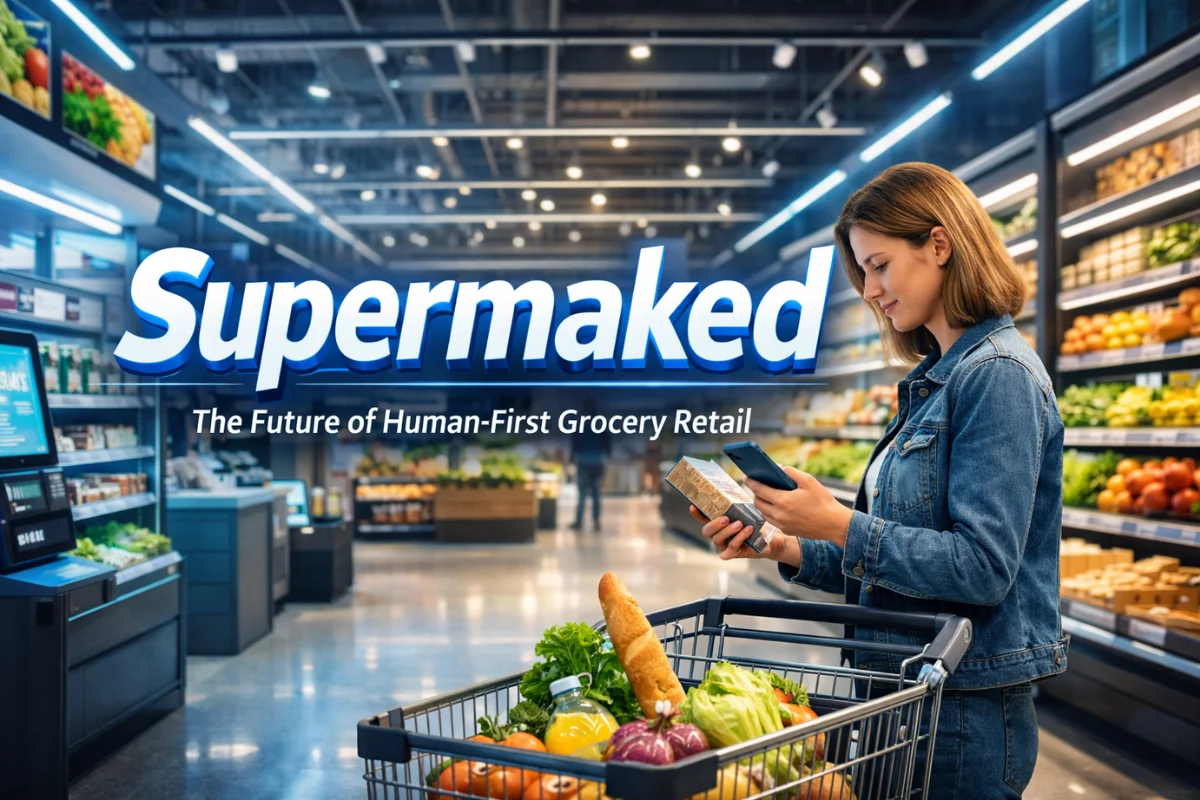
Walk into most supermarkets today, and you’ll notice something: they were built for efficiency, not for people. The aisles are designed to maximize product exposure. The checkout lines are long. The experience is, at best, forgettable. That’s exactly what Supermaked is here to change.
Supermaked is not just a rebranding of the traditional grocery store — it’s a fundamentally different way of thinking about retail. It merges the speed and convenience of e-commerce with the warmth and immediacy of a physical store, all while placing the customer’s emotional experience at the center of every decision. For anyone who has ever felt overwhelmed, ignored, or rushed during a shopping trip, this concept feels long overdue.
What Is Supermaked, Really?
At its core, Supermaked is a retail model built around three principles: adaptability, personalization, and flow. Traditional supermarkets are built around the product — how to move it, display it, and price it. Supermaked flips that entirely. It starts with the question: What does this person actually need right now, and how can we make getting it feel effortless?
The term itself has multilingual roots. In Norwegian and Danish, “supermarked” simply means supermarket. In German, it’s “Supermarkt.” Over time, especially in digitally connected, multicultural communities, the spelling “Supermaked” evolved into something more than a linguistic variant. It became a concept — one that represents a new category of retail experience designed for the modern consumer.
And that consumer has changed dramatically. Today’s shopper wants speed, but not at the expense of relevance. They want personalization, but not at the cost of privacy. They want technology, but not when it creates friction. Supermaked is the answer to all three of those tensions at once.
How Supermaked Differs From a Traditional Supermarket
The Philosophy Shift: From Product to Person
The clearest distinction between a supermarket and a Supermaked lies in what the business optimizes for. Conventional retail measures success in units sold and foot traffic. Supermaked measures success in customer satisfaction, emotional ease, and lifetime loyalty.
This philosophical shift has real, practical consequences. Store layouts are designed for clarity and breathing room, not maximum shelf exposure. Products are grouped by lifestyle and use case, not just category. Staff are freed from repetitive tasks by automation so they can spend time actually helping people.
Technology That Serves, Not Overwhelms
In a Supermaked, technology is deliberately invisible. You won’t find screens shouting at you or apps that feel like a chore. Instead, the tech works in the background: AI-driven inventory systems reduce out-of-stock items, dynamic pricing stays competitive without surprise markups, and smart notifications alert you only when relevant.
Customer-facing tools are simple by design — scan-and-go apps, digital shelf labels, self-checkout stations. The goal is to remove friction, not add features. According to a McKinsey & Company report on the future of grocery retail, consumers increasingly prioritize “seamless digital integration” without “digital fatigue,” which is precisely the balance Supermaked strives for.
Personalization That Respects Your Privacy
One of the most compelling — and often misunderstood — aspects of Supermaked is how it handles data. Many retail models treat personalization as an excuse to collect as much customer data as possible. Supermaked takes the opposite stance.
Personalization here is consent-based and transparent. If you frequently buy organic produce, the app might surface a new local supplier or remind you to restock. If you have dietary restrictions, the store layout guides you toward what’s relevant. You’re never bombarded with irrelevant ads or opaque tracking. This ethical approach to data builds trust, which in today’s retail environment is a genuine competitive advantage.
The In-Store Experience: What You Actually Feel
Layout, Flow, and Sensory Design
Step inside a Supermaked and the difference is tangible. Wide aisles with intentional breathing room. Thoughtfully curated sections organized around real shopping behavior. Seasonal and local items given prominent placement not because they’re more profitable, but because they’re more relevant.
Multi-sensory design plays a major role here. Research published in the Journal of Retailing has consistently shown that ambient factors — lighting, scent, music — significantly influence how long shoppers stay, how satisfied they feel, and how likely they are to return. In a Supermaked, none of this is accidental. Warm lighting, the scent of fresh produce or bread, and background sound are calibrated to create a calm, welcoming environment.
Community as a Core Feature
A Supermaked isn’t just a place to buy things — it’s a space designed to bring people together. Many Supermaked locations host local cooking demonstrations, seasonal farmers’ markets, or community boards. Some integrate small cafés or learning corners. These aren’t marketing gimmicks. They’re part of a deliberate strategy to become an anchor in the communities they serve.
Partnerships with local farmers, artisans, and small-scale producers are another pillar of this community focus. These collaborations bring freshness and uniqueness to the store while simultaneously supporting local economies — something that increasingly matters to consumers who care about where their food comes from and who benefits from their spending.
Sustainability: Built In, Not Bolted On
Smarter Inventory, Less Waste
Retail food waste is a systemic problem. In the U.S. alone, supermarkets discard millions of tons of food annually, according to data from the USDA Economic Research Service. Supermaked addresses this directly through AI-powered demand forecasting that predicts what will be needed before shortages or surpluses develop. This reduces expired stock, cuts costs, and minimizes environmental impact.
Unsold items are routed to food bank partnerships or composting programs rather than the bin. Local sourcing reduces transportation emissions. These choices compound over time into meaningful environmental impact.
Eco Practices That Don’t Ask You to Work Harder
Sustainable shopping shouldn’t require effort from the customer. In a Supermaked, eco-friendly choices are the default: reusable bag stations are prominently placed, packaging is reduced where possible, and energy-efficient systems run quietly in the background. The sustainable option is almost always the easiest one — by design.
Supermaked in a Post-Pandemic World
The COVID-19 pandemic permanently altered how people think about shopping environments. Hygiene, contactless options, and health transparency moved from nice-to-haves to non-negotiables. Supermaked absorbed these changes not as temporary accommodations but as permanent features of the model.
Contactless checkout, sanitization stations, and clear health-sourcing information on products are all standard. But perhaps more importantly, Supermaked responded to the broader psychological shift the pandemic created: a renewed desire for trust. People want to know where their food comes from, how workers are treated, and whether the store’s sustainability claims are real. Supermaked earns that trust through transparency, not marketing language.
The Business Case for Supermaked
Loyalty Over Transactions
Supermaked doesn’t chase one-time shoppers — it builds long-term relationships. Subscription memberships, personalized loyalty benefits, and smart reorder incentives create a customer base that returns not out of habit but out of genuine preference. This model generates significantly higher customer lifetime value than traditional transactional retail.
Operational Efficiency Through Intelligence
By analyzing customer behavior, Supermaked continuously optimizes which products to stock, where to place them, and when to promote them. This reduces waste, improves margins, and increases satisfaction simultaneously — a combination that traditional retail rarely achieves.
What’s Next: The Future of Supermaked
Predictive Shopping and AI Companions
The next frontier is anticipatory retail. AI systems are already being developed that can suggest weekly essentials before you even open the app — based on your habits, your household’s dietary preferences, and even seasonal health trends. Your cart could be partially assembled before you arrive.
Smart Home Integration
Imagine your refrigerator flagging low stock directly to your Supermaked app, or your health tracker syncing with in-store kiosks to recommend foods aligned with your wellness goals. This kind of Internet of Things integration is closer than most people realize, and Supermaked is positioned to be the retail layer that makes it meaningful.
Micro-Supermakeds and Mobile Units
In dense urban areas or underserved communities, fixed retail locations aren’t always viable. Micro-Supermakeds — smaller, modular formats — and mobile retail units are part of the expansion roadmap. These formats bring the full Supermaked experience to communities that have historically been left behind by conventional grocery infrastructure.
Conclusion: Shopping That Respects You
Supermaked represents something retail has needed for a long time: a genuine rethinking of what a store is for. Not just a place to move products, but a space designed to serve people — their time, their preferences, their communities, and their values.
Whether you’re a health-conscious parent, a busy professional, or someone who simply wants to shop without stress, Supermaked is built for you. The technology is there, the philosophy is right, and the demand has never been greater.
Ready to experience retail done differently? Look for a Supermaked near you, or explore how your local grocery stores are beginning to adopt these principles. The future of shopping isn’t coming — it’s already here.
Frequently Asked Questions
1
What exactly is Supermaked and how does it work?
Supermaked is a modern retail model that combines the physical convenience of a traditional supermarket with smart technology, personalized shopping tools, and a human-first design philosophy. It works by using AI-driven systems, ethical data personalization, and intentional store design to create an experience that feels intuitive and stress-free — whether you shop in-store or online.
2
How is Supermaked different from a regular supermarket?
The core difference is the underlying philosophy. Traditional supermarkets are designed to maximize product sales. Supermaked is designed around the person shopping — prioritizing emotional ease, time efficiency, relevant personalization, and community connection. The technology is more sophisticated, the layout is more intentional, and the experience is more human.
3
Is Supermaked available online as well as in physical stores?
Yes. Most Supermaked formats operate as hybrid models, with synchronized online platforms, delivery options, and mobile apps that mirror the in-store experience. Customers can shop in-store, online, or through a combination of both, with their preferences and history carried seamlessly across channels.
4
How does Supermaked handle personal data and privacy?
Supermaked uses a consent-based, transparent approach to personalization. Customers know what data is being collected, why it’s being used, and can opt out at any time. Data is used to improve the shopping experience — not to serve third-party advertisers or build intrusive profiles. This ethical approach to personalization is one of Supermaked’s defining characteristics.
5
Is Supermaked accessible for older adults or people without smartphones?
Yes, inclusivity is built into the Supermaked model at a foundational level. Every digital feature has an analog equivalent — in-store staff assistance, printed signage, accessible checkout options — ensuring that older adults, individuals with disabilities, and those without smartphones are never excluded from a full and comfortable shopping experience.
Sources: McKinsey & Company, “The Future of Grocery” (2023); USDA Economic Research Service, Food Loss and Waste Data; Journal of Retailing, “Sensory Marketing in Retail Environments.”
Read Also: Ryma Ltd: Why the UK E-Commerce Startup Failed

Mark Steve is a tech, business, and lifestyle writer with over 5 years of experience analyzing digital trends, startups, and online business models. He publishes well-researched, fact-checked content focused on clarity, credibility, and real-world value.