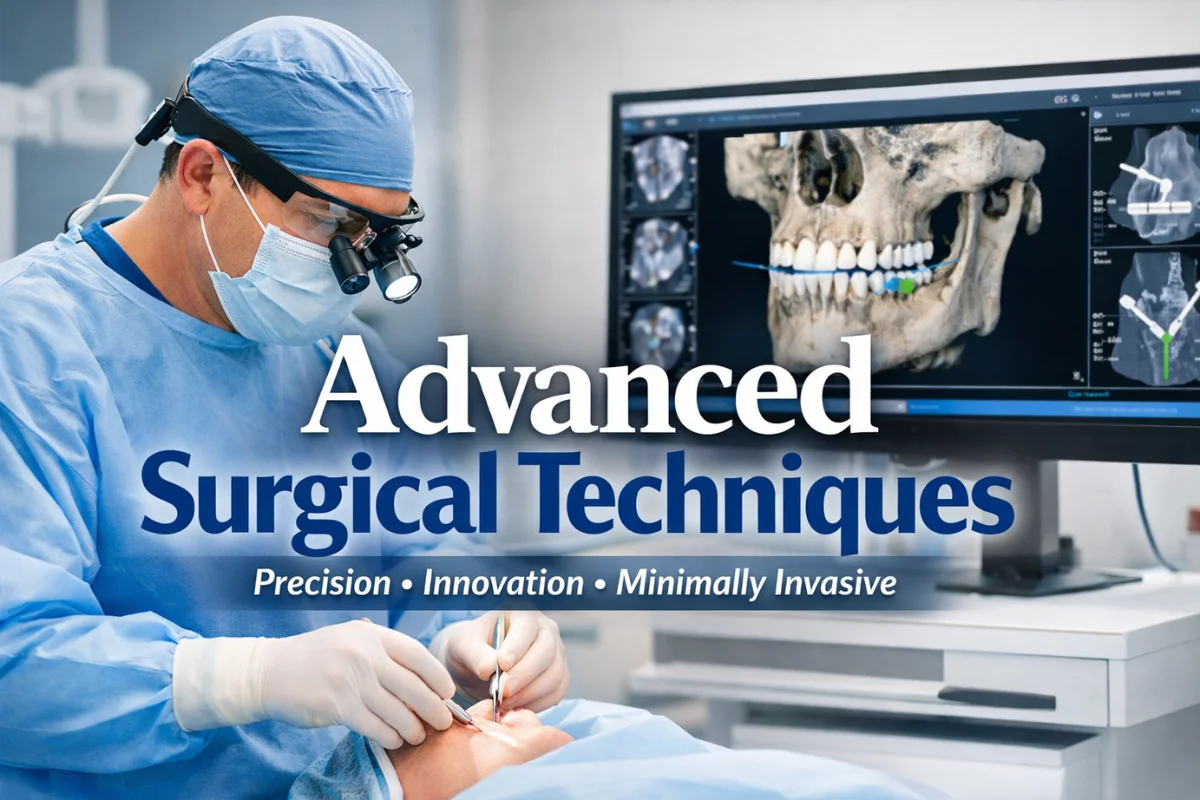
Advanced surgical techniques refer to a broad set of evidence-based, precision-driven procedures that go beyond standard surgical practice — encompassing minimally invasive methods, computer-assisted planning, specialized instrumentation, and refined tissue-management protocols. In modern healthcare settings, these techniques are designed to reduce patient discomfort, shorten recovery timelines, minimize complications, and produce more predictable, lasting outcomes across a wide range of medical and dental specialties.
The Evolution of Advanced Surgical Techniques in American Healthcare
American medicine has seen a dramatic shift in how surgical procedures are approached over the past two decades. What once required extensive incisions, prolonged hospital stays, and weeks of downtime has, in many fields, been refined into targeted, tissue-preserving procedures performed in outpatient settings.
This transformation is driven by three converging forces: advances in imaging technology, the refinement of surgical instrumentation, and a deeper understanding of how the human body heals at the cellular level. Together, these developments have elevated the standard of care available to patients — including those in communities like Turlock, California, where access to sophisticated medical and dental services continues to grow.
The shift toward precision-oriented care is particularly evident in oral and maxillofacial surgery, where the stakes of surgical accuracy are exceptionally high. Structures like the mandibular nerve, the maxillary sinus, and the surrounding bone and soft tissue demand a level of technical skill and pre-operative planning that defines what modern surgical care looks like.
What Makes a Surgical Technique “Advanced”?
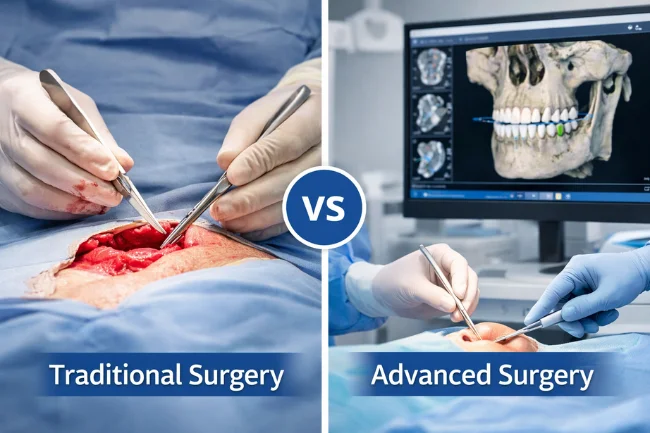
Not every procedure labeled “advanced” earns that designation. In clinical practice, advanced surgical techniques are characterized by several distinguishing features that set them apart from conventional approaches.
Advanced Surgical Technique: Precision Planning Using Digital Imaging
Modern oral surgeons and surgical specialists rely heavily on three-dimensional imaging — including cone beam computed tomography (CBCT) — to map anatomy before a single incision is made. This pre-surgical visualization allows clinicians to identify anatomical landmarks, anticipate challenges, and plan approach angles with a level of accuracy that was simply not possible with traditional two-dimensional X-rays.
The result is a procedure that is better informed, less likely to produce surprises intraoperatively, and more likely to achieve the intended outcome on the first attempt.
Advanced Surgical Techniques: Minimally Invasive Approaches
Minimally invasive surgery (MIS) prioritizes smaller incisions, reduced soft tissue disruption, and lower physiological stress on the body. In oral surgery, this often translates to flapless implant placement, keyhole sinus augmentation, and guided bone regeneration techniques that preserve the native tissue architecture while still achieving the necessary surgical objectives.
Patients treated with minimally invasive approaches typically report less post-operative swelling, reduced pain levels, and faster return to daily function — all meaningful quality-of-life improvements.
Computer-Guided Advanced Surgical Execution
Surgical guides — fabricated from digital impressions and CBCT data — allow surgeons to execute procedures with a degree of positional accuracy that manual technique alone cannot consistently replicate. In implant dentistry, guided surgery ensures that each implant is placed at the correct depth, angulation, and mesiodistal position relative to adjacent structures.
This technology is not simply a convenience; it is a patient safety tool that reduces the margin for error in procedures where millimeters matter.
Evidence-Based Graft and Regeneration Materials
Advanced surgical care also encompasses the materials used to support healing. The field of regenerative surgery has expanded significantly, with bone grafting materials, platelet-rich fibrin (PRF), and growth factor-enhanced scaffolds now routinely incorporated into procedures that once relied on the body’s unaided healing response.
These biological adjuncts are selected and applied based on a growing body of peer-reviewed research, ensuring that patients receive materials and protocols that are supported by clinical evidence — not trend.
Advanced Surgical Techniques in Oral and Maxillofacial Surgery
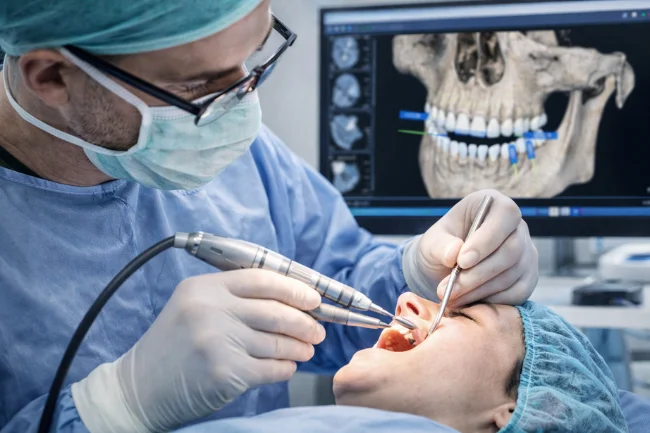
Oral surgery represents one of the most active domains of advanced surgical technique development. The procedures performed in this specialty — tooth extractions, implant placement, bone grafting, sinus lifts, and pathology management — require a combination of technical precision and anatomical knowledge that demands ongoing training and experience.
Advanced Surgical Techniques for Dental Implant Placement
Dental implant surgery has evolved from a relatively invasive, multi-stage process into a streamlined procedure that, in appropriate candidates, can be completed with minimal disruption to surrounding tissues. The surgical placement of a titanium implant into the jaw requires precise depth control, accurate angulation, and an understanding of bone quality and density that varies across patients and sites.
Modern implant techniques incorporate surgical guides, torque-controlled handpieces, and bone-preservation protocols to optimize osseointegration — the biological process by which bone fuses to the implant surface. When performed correctly, implants function and feel like natural teeth, providing a durable, long-term solution for tooth loss.
For residents of the Central Valley seeking this level of care, Hughson Dental Implants offers oral surgery services informed by these same principles of precision and patient-centered practice.
Advanced Surgical Techniques for Bone Grafting and Ridge Preservation
When a tooth is lost, the surrounding alveolar bone begins to resorb — a process that, left unaddressed, can compromise both the aesthetics and the functional outcomes of future implant therapy. Ridge preservation grafting, performed at the time of extraction, places a bone substitute material into the socket to maintain volume and architecture until implant placement can occur.
More complex cases may require lateral ridge augmentation or vertical bone regeneration — procedures that demand a thorough understanding of wound management, membrane placement, and graft stabilization. These techniques draw on principles from both reconstructive surgery and regenerative biology.
Advanced Surgical Procedures for Sinus Augmentation
The maxillary sinuses — air-filled cavities located above the upper back teeth — can expand downward as bone resorbs following tooth loss, leaving insufficient bone height for implant placement. Sinus augmentation, or a sinus lift, addresses this by carefully elevating the sinus membrane and introducing bone graft material to create the necessary vertical dimension.
Two primary approaches exist: the lateral window technique for cases requiring significant volume gain, and the crestal (transalveolar) approach for more modest augmentation needs. Selection between these techniques is guided by careful measurement and clinical judgment.
Advanced Surgical Techniques for Extractions and Third Molar Management
Impacted wisdom teeth remain one of the most common indications for oral surgery referral. Advanced extraction techniques focus on minimizing bone removal, preserving adjacent tooth structure, and reducing the neurovascular risk associated with deeply impacted mandibular third molars.
In cases where the roots are in close proximity to the inferior alveolar nerve, CBCT imaging provides the three-dimensional clarity needed to plan a safe, controlled extraction — and in some cases, techniques such as coronectomy (intentional root retention) are employed to mitigate nerve injury risk.
Comparing Surgical Approaches: Traditional vs. Advanced Techniques
The table below provides a general educational overview of how conventional and advanced surgical approaches differ across several key dimensions. Individual patient outcomes vary based on clinical factors and provider expertise.
| Feature | Conventional Approach | Advanced Technique |
|---|---|---|
| Pre-surgical imaging | 2D periapical or panoramic X-ray | 3D CBCT with digital planning |
| Surgical guide use | Freehand technique | Computer-fabricated surgical guide |
| Incision design | Larger mucosal flap | Minimally invasive or flapless where indicated |
| Graft materials | Basic bone substitute | PRF, growth factors, advanced scaffolds |
| Recovery timeline | Typically longer | Often shorter with less post-op discomfort |
| Predictability | Dependent on surgeon’s skill alone | Augmented by technology and digital workflow |
| This comparison is meant as a general reference; clinical decision-making always depends on individual anatomy, health status, and the judgment of a qualified surgeon. | ||
The Role of Surgeon Training in Mastering Advanced Surgical Techniques
Advanced surgical techniques are only as effective as the clinician applying them. Oral and maxillofacial surgeons, periodontists, and other surgical specialists typically complete extensive post-doctoral residency training — often four to six years beyond dental school — before entering independent practice. Board certification, where applicable, provides an additional layer of demonstrated competency.
Beyond initial training, the pace of innovation in advanced surgical techniques demands ongoing continuing education. The best surgical practitioners attend hands-on workshops, participate in study clubs, and remain current with peer-reviewed literature to ensure that their clinical approach reflects contemporary standards of care.
Patients seeking care involving advanced surgical procedures are well within their rights to ask about a provider’s training background, experience with specific techniques, and approach to continuing education. A qualified clinician will welcome these questions.
Advanced Surgical Techniques Available to Patients in Turlock
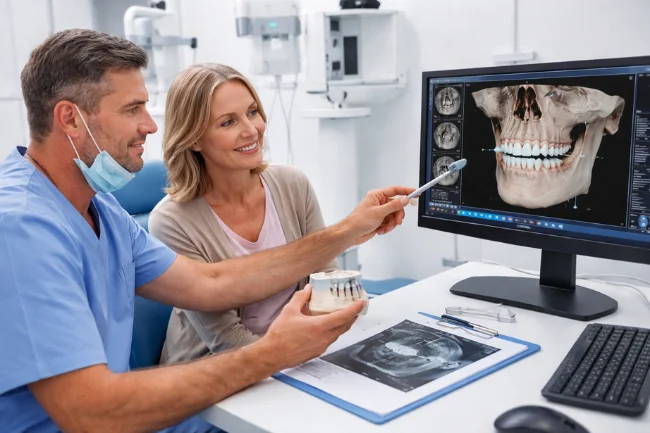
Turlock and the surrounding Central Valley have seen meaningful growth in the availability of specialized healthcare services. Patients no longer need to travel to major metropolitan centers to access advanced surgical techniques — providers in the region are increasingly equipped with the technology, training, and clinical infrastructure to deliver these procedures close to home.
When evaluating a surgical provider, patients are generally advised to consider:
- Whether the practice uses current imaging technology, including CBCT, where appropriate
- The surgeon’s training background and any board certifications held
- Whether the practice offers a thorough consultation process, including written treatment planning
- The availability of sedation options suitable for the procedure and the patient’s comfort needs
- How the practice handles post-operative care and emergency follow-up
These factors collectively reflect a practice culture that prioritizes patient safety and clinical quality alongside technical skill.
Sedation and Anesthesia Supporting Advanced Surgical Techniques
Sedation and anesthesia are integral components of safe, comfortable advanced surgical techniques. Options range from local anesthesia alone to nitrous oxide, oral sedation, IV moderate sedation, and general anesthesia, with the appropriate level determined by the complexity of the procedure, the patient’s anxiety level, medical history, and the surgeon’s training and facility capabilities.
IV sedation and general anesthesia require specific credentialing and adherence to safety protocols governed by state dental boards and professional associations. Patients undergoing sedation should receive thorough pre-operative instructions, including dietary restrictions and transportation arrangements, and should be monitored by trained clinical staff throughout the procedure.
Frequently Asked Questions
Moving Forward With Confidence in Advanced Surgical Care
Advanced surgical techniques represent the convergence of rigorous clinical training, digital technology, and a patient-centered philosophy of care. Whether a procedure involves implant placement, bone regeneration, or the removal of a problematic tooth, the principles of precision, safety, and evidence-based practice remain consistent.
For individuals in Turlock and the surrounding region, access to this level of surgical care is closer than many realize. Understanding what to look for in a surgical provider — and what questions to ask — empowers patients to make informed decisions that serve their long-term oral and overall health.
If you are considering an oral surgical procedure, a consultation with a qualified specialist is the most appropriate first step. A thorough examination, complete diagnostic imaging, and a transparent conversation about your options will give you the foundation needed to proceed with clarity and confidence.
For More Information, Visit Holistic Wellbeing Living