Jump to:
ToggleCreative Journal Ideas: The Complete Guide to Types, Prompts & How to Start
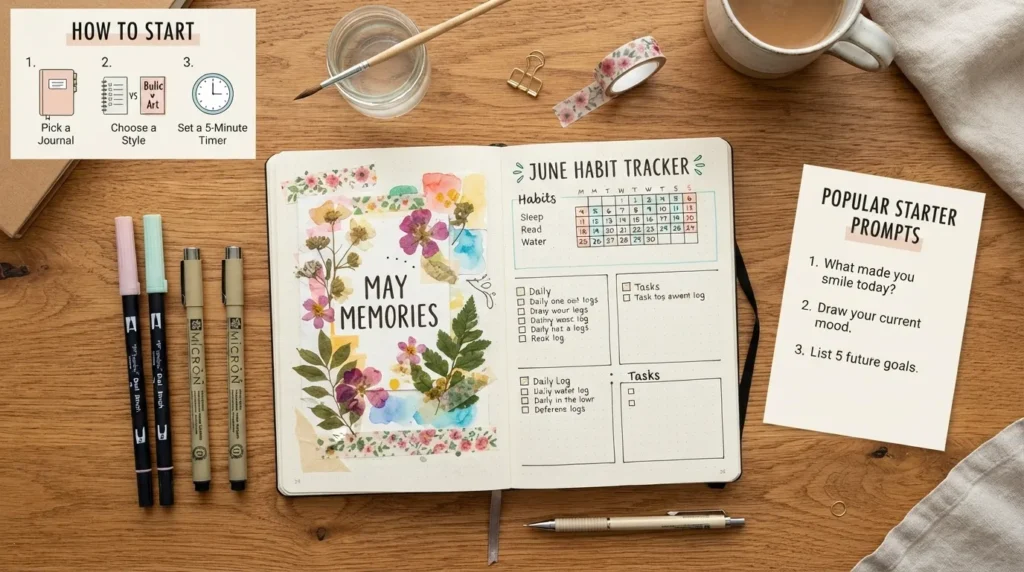
What Is a Creative Journal?
A creative journal is a private space where words meet pictures, color, and texture. Unlike a traditional daily diary that focuses mostly on writing down what happened during your day, a creative journal lets you express yourself using whatever media feels right at the moment. You might sketch your afternoon snack, tape in a movie ticket, splash watercolors over a quick thought, or collage photos next to a list of your goals. There are no strict formatting rules to follow.
Creative Journal vs. Regular Diary
While both tools help you process life, they work in very different ways:
Regular Diary: Focuses almost entirely on text. You sit down, write the date, and record events, thoughts, or feelings line by line.
Creative Journal: Mixes written words with visual elements. The focus is on playful self-expression rather than just documenting your schedule or tracking habits.
If a standard page of plain text feels too dry or rigid, bringing creative journal ideas to life gives you total freedom to experiment without worrying about neat handwriting.
Who Can Keep One?
Here is the best part: anyone can keep a creative journal. You do not need to be an artist, a designer, or a skilled writer.
Remember: This notebook is just for you. Nobody else ever has to see it.
You don’t need expensive supplies or artistic talent to get started. Stick figures, messy paint splatters, torn magazine pages, and uneven doodles belong here just as much as polished drawings. The goal is to enjoy the process of making something, not to create a masterpiece for a museum gallery.
Types of Creative Journals
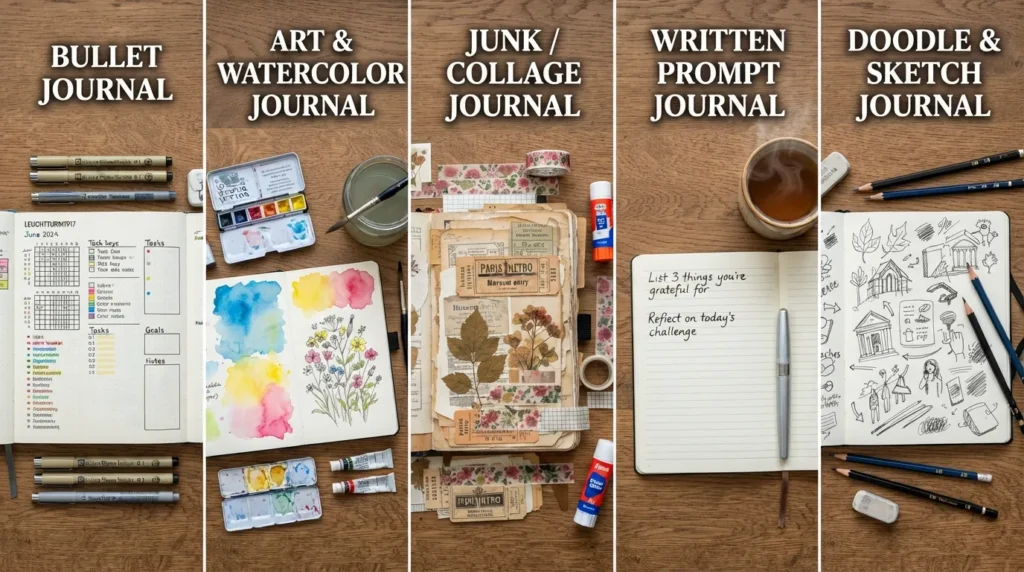
If you want to start journaling creatively, you do not have to stick to plain text on a lined page. People use all kinds of styles depending on what they want to make, track, or remember. Here are the most popular types of creative journals you can try.
Art Journal
An art journal is a space where paint, ink, markers, and words come together. You do not need to be a trained artist to keep one. It is less about making a masterpiece and more about expressing emotions using colors, textures, and simple drawings alongside your writing.
Junk Journal
A junk journal is made using found items and recycled paper. Think ticket stubs, clothing tags, old book pages, dried flowers, and wrapping paper. You bind or paste these bits together to create a textured notebook filled with memories, vintage vibes, and saved scraps.
Idea/Freeform Journal
This is your ultimate brain-dump notebook. There are no strict rules, templates, or neat lines here. You can write down random shower thoughts, doodle in the margins, map out a new project, or list quick observations whenever inspiration hits.
Travel Journal
A travel journal helps you capture the feeling of a place while you are exploring it. Instead of just listing what you did, you can tape in train tickets, write down funny conversations, sketch local food, and save receipts to remember the small details of your trip.
Nature Journal
A nature journal brings your attention back to the outside world. You can use it to draw leaf shapes, record weather patterns, press small flowers, or write about how a quiet walk in the park made you feel. It is a great way to slow down and notice what is around you.
Gratitude Journal
A gratitude journal focuses on the good parts of your routine. Instead of just writing a basic list of things you are thankful for, a creative version lets you illustrate small wins, use colorful highlighters, or collage pictures of things that brought you joy that week.
Sketchbook / Visual Journal
If you process your thoughts better through pictures than words, a visual journal is ideal. It leans heavily on quick sketches, hand lettering, diagrams, and simple drawings to tell the story of your day or explore an idea visually.
How to Start a Creative Journal
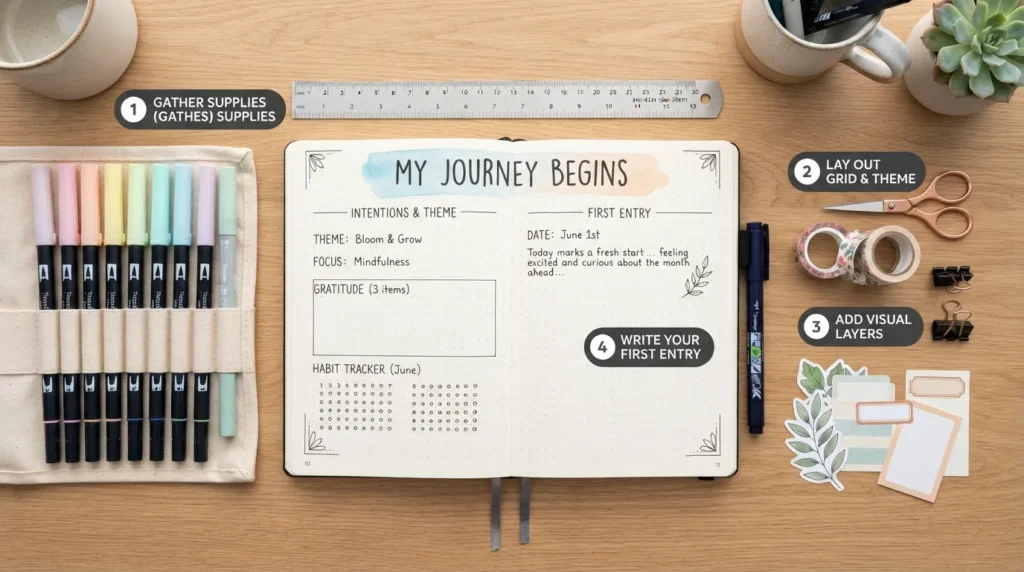
Starting a creative journal is much easier than it looks. You do not need to be a talented artist or a gifted writer to begin. All you need is a willingness to play, experiment, and make a bit of a mess.
Here is a straightforward guide to getting your first pages going without any stress.
Materials You Actually Need
It is easy to get carried away buying endless art supplies, but you really only need a few basics to get started:
- A simple notebook: Pick something you feel comfortable using every day.
- A good pen: A simple black gel pen or ballpoint works great.
- Basic color tools: A small set of colored pencils, highlighters, or watercolors is plenty.
- Glue stick and scissors: Perfect if you want to paste in movie tickets, photos, or magazine cutouts.
- Optional extras: Washi tape, stamps, or stickers are fun to add later on, but definitely not required.
Choosing the Right Notebook
The right paper makes a big difference depending on what you want to put in your journal:
- Standard lined paper (70–80 gsm): Best if you plan to stick purely to writing with standard pens.
- Dotted or grid paper (80–100 gsm): Great for combining bulleted lists, trackers, and light doodles without lines getting in the way.
- Heavyweight or watercolor paper (160+ gsm): Essential if you plan to use wet mediums like acrylic paint, heavy watercolors, or thick markers so the pages do not bleed through or warp.
Overcoming the "Perfect Page" Fear
Staring at a blank, pristine page can feel intimidating. Many people worry about "ruining" a brand-new notebook with messy handwriting or bad drawings.
Here are a few quick ways to beat that pressure:
- Scribble on the first page: Draw a random squiggle or write a messy note on page one right away to get the perfectionism out of the system.
- Embrace mistakes: Cover up mistakes with a piece of scrap paper, a sticker, or just cross them out and keep moving.
- Focus on the process, not the outcome: Remind yourself that this journal is for your eyes only. It does not need to look like a curated social media post.
- Set a timer: Give yourself just five minutes to drop ideas onto the page without overthinking.
40+ Creative Journal Ideas & Prompts
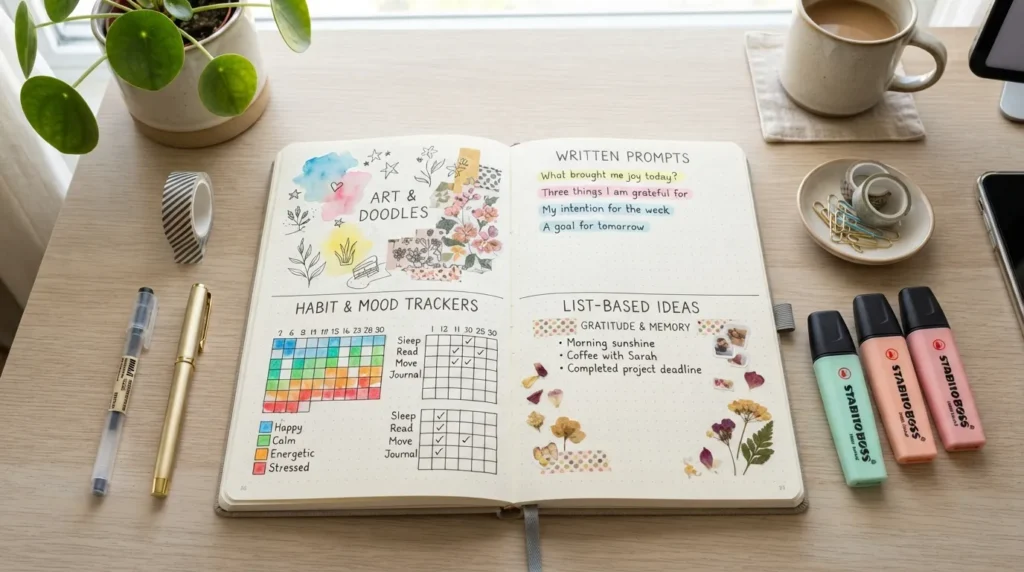
If you ever open a blank page and feel stuck, you are not alone. Having a list of fresh creative journal ideas ready to go makes it much easier to start writing, drawing, or pasting without overthinking.
Here are more than 40 hands-on prompts and layout concepts split into five distinct styles, so you can always find something that fits your mood today.
Reflective/Emotional Prompts
These prompts help you check in with your internal world, process big feelings, and get your honest thoughts down on paper.
- The Unsent LetterWrite a full page to a person, place, or past version of yourself without any plans to send it. Say what you really need to say.
- The Energy AuditDraw a quick circle in the middle of your page. On the inside, list five things that fill your cup. On the outside, list five things drain your batteries this week.
- Future Self DialogueWrite a short conversation between who you are right now and who you want to be five years from now. What advice does your future self give you?
- Emotions as WeatherInstead of just writing "I feel tired," describe your current emotional state using weather terms—like a light drizzle, a sudden fog, or a clearing sky.
- The Worry DumpSet a timer for three minutes and stream-of-consciousness write every single anxiety on your mind. When time runs out, draw a solid box around them and close the notebook.
- Highlight Reel vs. RealityDivide your spread in half. On the left side, sketch or write what your life looks like on social media. On the right, capture what it actually feels like behind the scenes.
- Gratitude in the MundaneSkip the obvious things like family and health. List eight hyper-specific, tiny things you enjoyed today—like the exact temperature of your coffee or a good song on the radio.
- Forgiveness ListWrite down three minor mistakes you made recently that you are still carrying around, then write a simple, direct sentence pardoning yourself for each one.
Artistic/Visual Prompts
You do not need to be a trained artist to enjoy visual journaling. These ideas focus on color, shape, and freedom rather than perfection.
- Single-Color Palette ChallengePick just one marker or watercolor shade. Create a full spread using only different tones, lines, and textures of that single color.
- Blind Contour Self-PortraitLook into a mirror, put your pen on the paper, and draw your face without looking down at the page or lifting your pen once. Let it be weird and messy.
- Abstract Emotion PaintingUse acrylics, watercolors, or colored pencils to paint how a specific memory feels, using only abstract shapes, harsh angles, or soft curves.
- Comic Strip of Your DayDivide your page into four equal boxes. Draw a quick, simple stick-figure comic showing four key moments from your morning to your evening.
- Doodle StampedeFill an entire page edge-to-edge with tiny, repeating doodles of one simple object—like leaves, coffee cups, stars, or simple geometric shapes.
- Scribble TransformationClose your eyes and draw a wild, fast scribble across the middle of your page. Open your eyes and turn that scribble into a creature, object, or landscape.
- Paper Cutout CollageGrab an old magazine, newspaper, or junk mail. Cut out shapes of different textures and colors, then layer them to create a textured background before writing over top.
- Paint Swatch MapCollect free paint chips from a hardware store, glue them onto your page, and write a micro-story or memory inspired by the name of each color.
Sensory/Experiential Prompts
Connecting to your physical senses is a great way to ground yourself when your mind feels cluttered or overstimulated.
- Sound MappingSit quietly in one spot for five minutes. Draw a tiny dot in the center of your page to represent yourself, then write down every sound you hear in the exact direction and distance it comes from.
- Texture RubbingsWalk around your home or neighborhood with your journal and a soft crayon. Place the page over tree bark, coins, or fabric, and rub the crayon over it to capture the pattern.
- Tasting NotesTake your favorite meal, snack, or drink and write a detailed critique like a food reviewer. Describe the crunch, warmth, sweetness, and aftertaste in vivid detail.
- Scent Memory LogList three specific smells you encountered today—like rain on asphalt, fresh laundry, or citrus peel—and write down the exact memory or feeling each scent brings up.
- Temperature LogUse colors and short phrases to record how your body physically felt at four different points throughout the day—from cold morning air to cozy evening blankets.
- Tactile Focus SpreadPaste three small materials with different textures onto your page (like a piece of foil, a strip of velvet ribbon, and a dry leaf) and write how touching each one impacts your focus.
- Movement TraceGo for a ten-minute walk without your phone. When you return, immediately draw the path you took using fluid, sweeping lines that match the pace of your steps.
- Shadow TracingPlace your journal near a sunny window where shadows fall across the paper. Trace the outlines of the shadows cast by house plants, window frames, or your own hand.
Themed & Seasonal Spreads
Keeping track of the passing seasons and life chapters helps turn your notebook into an authentic archive of your year.
- Seasonal Bucket ListAt the start of spring, summer, fall, or winter, design a visual checklist of small experiences you want to enjoy before the season ends.
- Monthly Brain DumpDedicate a double-page spread at the end of the month to collect your favorite songs, books, shows, quotes, and memories from the past 30 days.
- Weather Tracker LayoutDesign a simple monthly grid where you color in a small icon each day to reflect the local weather and your overall mood side-by-side.
- Holiday Tradition SnapshotDocument one specific tradition you celebrate during the holidays. Write down who was there, what it smelled like, and what made it special this year.
- Reading Nook TrackerDraw a simple bookshelf with blank book spines. Fill in the title and color of each book as you finish reading it throughout the season.
- Playlist of the SeasonWrite down ten songs that served as the backdrop for your life over the last few months, along with a line explaining why each track made the cut.
- Goal Breakdown SpreadTake one big goal for the upcoming season and break it down into four small, manageable action steps using a clear flowchart layout.
- Nature Study PageTape a fallen leaf or pressed flower to your page, then write down where you found it, the time of day, and a short observation of the surrounding environment.
Interactive/Physical Elements
Adding physical depth and movement turns a standard notebook into an interactive keepsake you will love flipping through later.
- The Secret EnvelopeGlue a small, decorative envelope onto your page. Tuck in private notes, receipts, ticket stubs, or small photos that you want to keep hidden from quick glances.
- Dutch Door LayoutCarefully trim a vertical or horizontal page in half so you can flip back and forth between two different sections while keeping the main border visible.
- Washi Tape Flip-OutsUse decorative tape on the edge of a postcard, photo, or extra piece of paper to attach it to your page like a swinging door, doubling your writing space.
- Interactive TabsAdd small paper or ribbon tabs to the outer edges of your pages to mark special entries, monthly recaps, or favorite prompts so they are easy to find.
- Ticket & Scrap CollagesSave everyday paper trail items like coffee sleeves, bus passes, and clothing tags, and paste them down into a raw, layered collage layout.
- Fold-Out TimelinesFold a long strip of paper accordion-style and glue one end to your journal page. Unfold it to reveal a long visual timeline of an event or travel day.
- Window CutoutsCarefully cut a small square or circle window out of one page so that a picture or quote from the following page shows through when closed.
- Pressed Plant PocketsCreate a clear pocket using a piece of parchment paper or clear tape to safely house delicate dried flowers or leaves without damaging the surrounding pages.
Creative Journal Templates & Layout Ideas
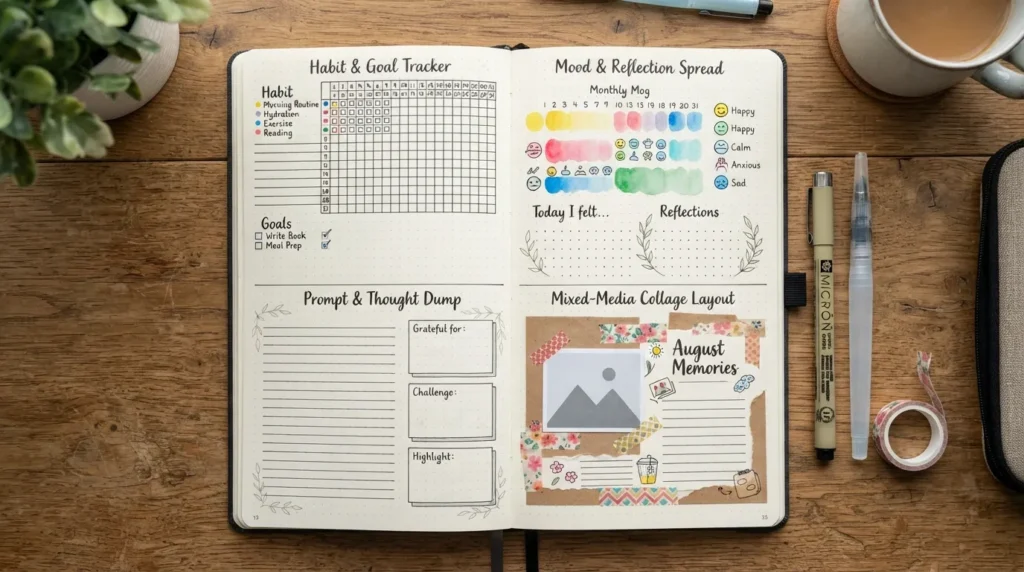
Simple Page Templates
When you stare at a blank page, it can feel tough to know where to begin. Using a basic visual grid helps break down the space so you can dive right in. Here are a few easy, structured layouts to try:
The Four-Box Split: Divide your page into four equal squares. Label them Grateful For, On My Mind, Today’s Goal, and Quick Doodle. It keeps things brief and gives every thought its own neat corner.
The Center Block: Draw a medium box right in the middle of the page for your main focus or daily quote. Use the outer margin for random thoughts, small sketches, or sticker decorations.
The Column View: Split your page vertically into two or three side-by-side strips. You can use one column for your morning thoughts, one for evening reflection, and one for a running to-do list.
The Time-Block Strip: Draw a single vertical line down the left edge to record the hours of the day. Use the wider right side to jot down what you did or how you felt during those specific times.
Templates vs Freeform Layouts
Structured templates work best when you feel stuck or short on time. A set grid gives your hand something to follow immediately, which cuts down on overthinking. They are great for daily check-ins, habit tracking, or quick morning check-ins when you only have five minutes to spare.
Freeform layouts give you complete freedom. You start with an empty page and let your mood guide where the pen goes—writing sideways, mixing giant lettering with tiny scribbles, or sticking down tape and paper scraps wherever they land.
If you like routine and clear structure, lean toward templates. If you treat your notebook as a place to mess around and decompress without rules, go freeform. Many people find that switching between the two depending on their energy levels keeps the habit feeling fun and fresh.
Popular Journaling Methods
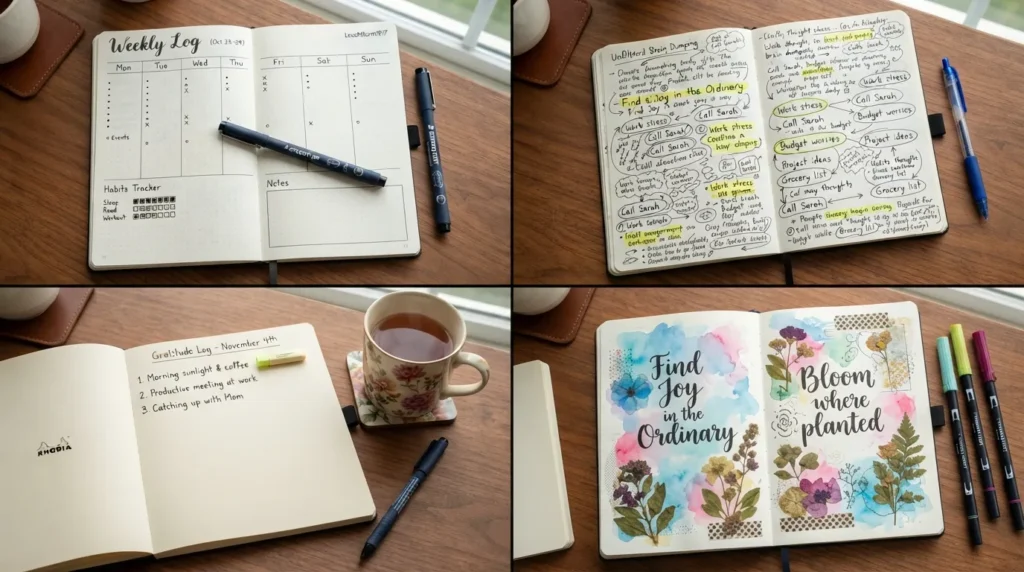
Trying a structured framework can breathe new life into your routine if a blank page feels intimidating. These simple methods give your thoughts a clear path to follow, making it easy to practice creative journal ideas without feeling stuck.
The 3-3-3 Journaling Method
The 3-3-3 method is a fast, grounding practice that helps bring your mind back to the present moment. It takes less than five minutes, making it perfect for busy mornings or stressful afternoons.
Here is how you break it down on the page:
3 things you notice right now: Write down three details from your current environment. This could be the sound of traffic outside, the warmth of your coffee mug, or the pattern of sunlight on your desk.
3 things you are grateful for: List three specific items, people, or small moments that brought you joy today. Aim for small, fresh details rather than broad ideas.
3 main priorities for today: Pick three simple tasks or intentions to focus on. Keeping this list short prevents overwhelm and gives you a clear sense of direction.
The 3-2-1 Journaling Method
If you want a reflection tool that builds self-awareness, the 3-2-1 method offers a quick evening review. It helps you process your day, celebrate small wins, and let go of lingering stress before you sleep.
Set aside a quiet moment at night and write down:
3 things that went well: Record three positive moments, progress on a goal, or small victories from your day.
2 things you learned: Note two quick lessons, interesting facts, or insights you gained about yourself or the world around you.
1 thing you will improve tomorrow: Focus on one actionable step you can take to make the next day run a little smoother.
Is There a Downside to Creative Journaling?
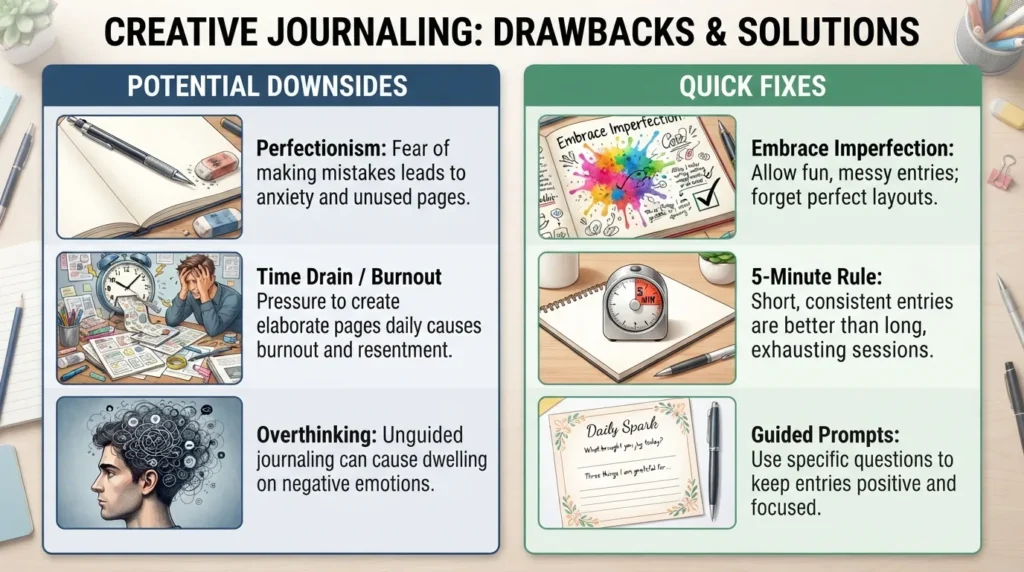
Creative journaling is a wonderful tool for self-expression, but it is not a magic fix for everything. While pouring your heart onto paper usually feels great, there are a few things to keep in mind so your habit stays healthy and helpful.
Over-analyzing every thought: It is easy to fall into the trap of overthinking. If you spend hours dissecting every single emotion or drawing every minor detail of your day, journaling can start to feel like a heavy task rather than a fun, creative outlet.
Ruminating instead of processing: Sometimes, writing repeatedly about negative experiences without moving toward a solution can leave you stuck in a loop. Healthy processing helps you feel relief, but swirling around the same bad mood on paper can actually make you feel worse.
Expecting it to replace professional therapy: Creative journal ideas can help you organize your thoughts and track your feelings, but a notebook cannot offer professional mental health support. If you are dealing with severe anxiety, trauma, or depression, journaling should complement therapy, not replace it.
Perfectionism burnout: Trying to make every page look like a picture-perfect piece of art can create unnecessary stress. When you worry more about how the page looks than how it makes you feel, the joy of creative journaling disappears quickly.
The key is balance. Use your journal as a safe space to play, reflect, and experiment, but give yourself permission to close the notebook whenever you need a break.
Creative Journal Ideas for Every Age Group
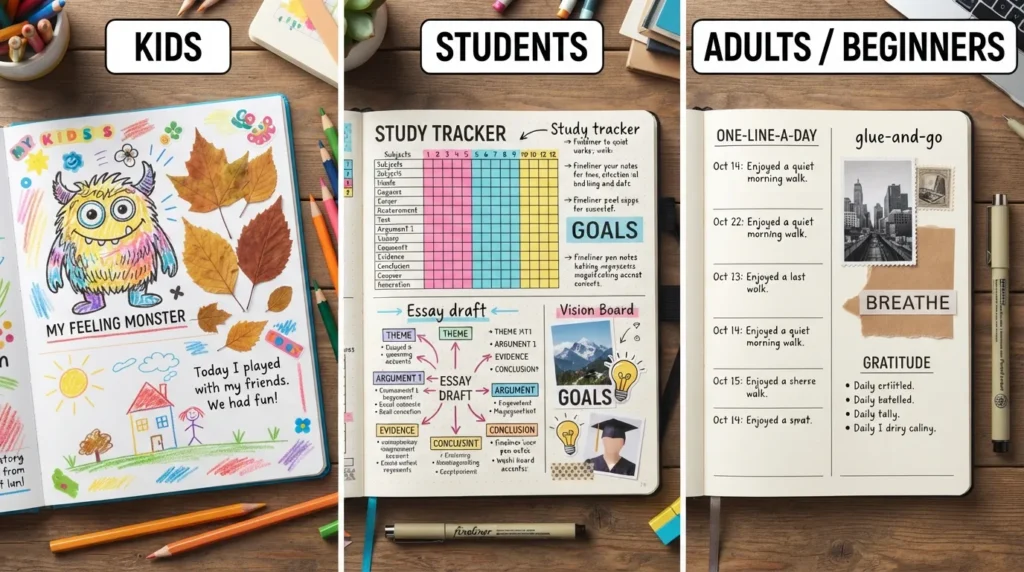
Finding the right way to journal often comes down to where you are in life. A young child experiences journaling differently than a student or a busy adult trying a new habit for the first time. Here are practical ways to adapt creative journaling for every stage of life.
For Kids
Kids learn best when they can use their hands, play with colors, and mix visual art with words. Simple activities keep them engaged without feeling like schoolwork.
Doodle and Story Pages: Draw a character or a picture on one side of the page and write two or three sentences about what is happening on the other side.
Feeling Monster Logs: Draw a funny monster to represent an emotion felt during the day, such as a blue monster for feeling sad or a bright yellow one for feeling excited.
Nature Scrapbooking: Glue flat leaves, pressed flowers, or small seeds onto a page and write down where and when they were found.
Daily Favorite Highlights: Draw or write down three favorite things that happened before bedtime, like eating an ice cream cone or playing at the park.
For Students
Students often balance heavy workloads, changing schedules, and big goals. Creative journaling can help clear mental clutter, plan projects, and manage daily stress.
Study Tracker and Task Grids: Map out weekly assignments, exam dates, and reading goals using colorful grids, habit trackers, and highlighters.
Brain Dump Spreads: Dedicate a blank page to writing down every random thought, task, or worry before starting a study session to clear the mind.
Mind Mapping for Papers: Draw central topics in circles and sprout smaller branches for main points, arguments, and supporting sources.
Vision Boards for Big Goals: Combine cut-out images, quotes, and personal mantras to visualize upcoming goals or career plans.
For Adults / Beginners
Starting a creative journal as an adult can feel overwhelming if you think you need artistic skills. Focus on low-pressure techniques that reduce stress and build a consistent routine.
One-Line-a-Day Logs: Write a single sentence every evening summarizing the main highlight or reflection of the day.
Glue-and-Go Collage Pages: Use old magazine clippings, ticket stubs, wrapping paper, or receipts to build a visual page layout without needing to draw.
List-Based Entries: Keep things quick by writing simple top-five lists, such as favorite meals of the week, places to visit, or things that brought a smile.
Morning Gratitude Prompts: List three small things you are thankful for right after waking up to set a positive tone for the day.
FAQs
The seven most popular types of creative journals are:
- Art journal – paint, ink, and mixed media alongside writing
- Junk journal – made from recycled paper and found scraps
- Idea/freeform journal – a no-rules brain-dump notebook
- Travel journal – tickets, sketches, and notes from your trips
- Nature journal – observations, pressed flowers, and weather notes
- Gratitude journal – illustrated lists of things you're thankful for
- Sketchbook/visual journal – quick drawings and hand lettering
You do not have to pick just one. Many people mix two or three styles in the same notebook.
When your mind feels blank, skip the big questions and try something small and specific instead:
- List five sounds you can hear right now
- Doodle whatever object is closest to you
- Write down a conversation you overheard this week
- Describe your favorite meal in as much detail as possible
- Make a list of songs stuck in your head lately
Boredom is actually a good sign — it usually means your brain is ready to wander somewhere interesting if you give it a small nudge.
A "journal entry" simply means one single piece of writing or artwork on a page, dated or not. Seven journal entries just means seven separate pages or spreads. For a creative journal, a week of seven entries might look like:
- A morning brain-dump page
- A gratitude list with small doodles
- A collage made from a receipt and a ticket stub
- A quick mood-tracker sketch
- A page describing a meal in detail
- A single-color art spread
- A short letter to your future self
There's no fixed format — the only rule is that each entry captures a moment or feeling from that day.
Pimchanok Srisuk
Pimchanok Srisuk is the Journaling Editor at Holistic Wellbeing Living. She writes about journaling prompts, reflective writing, emotional clarity, and mindful routines. With seven years of experience creating personal-growth content, Pimchanok helps readers use simple writing practices to understand their thoughts and make calmer everyday decisions.