Jump to:
ToggleCreative Journal Page Ideas: The Ultimate Guide to Layouts, Design & Daily Consistency
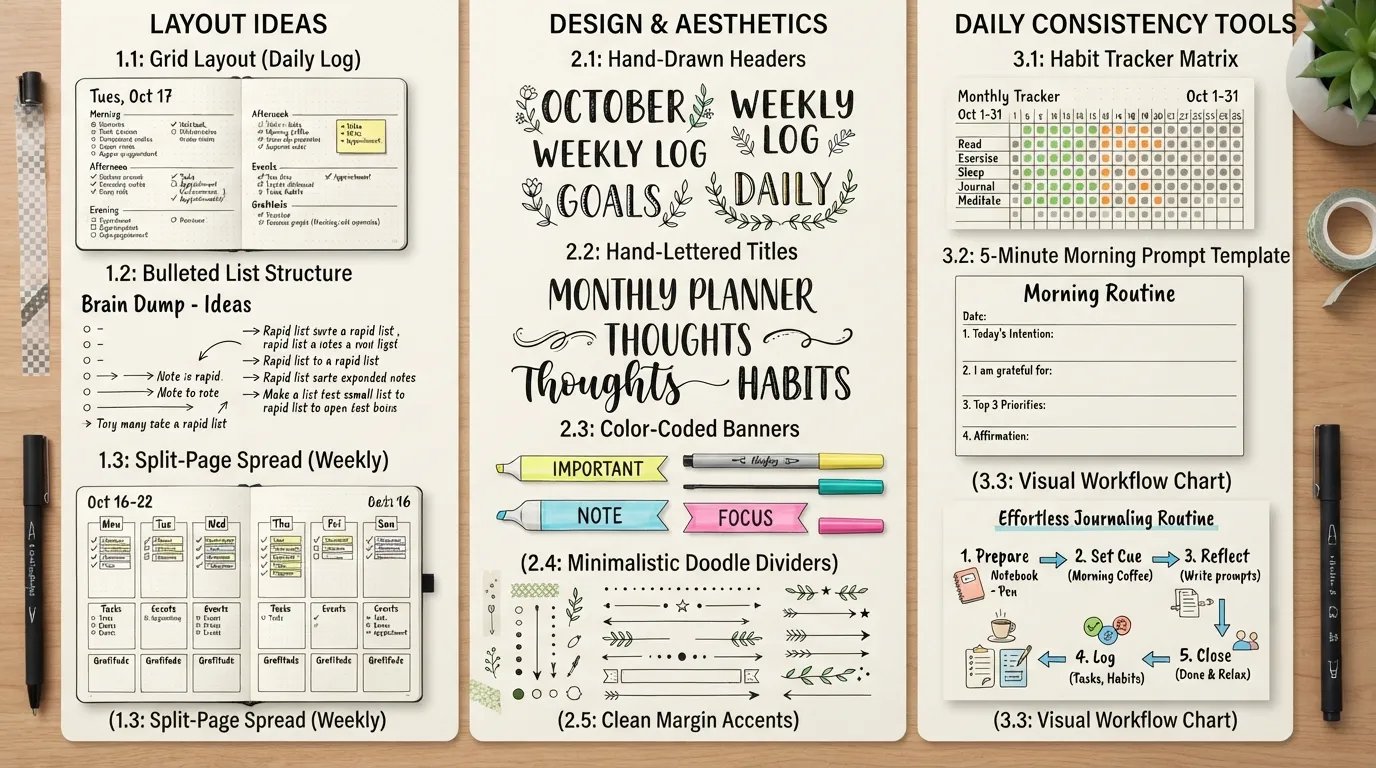
Master your journal page layout with 25+ creative ideas, 10-minute aesthetic setups, science-backed frameworks (3-3-3 & 111 methods), and free printable templates. Overcome blank page syndrome today!
Staring at a fresh, blank notebook page brings a strange mix of excitement and anxiety. You open your journal, pen in hand, wanting to organize your day or clear your head, but hesitation kicks in. What layout should you use? How do you keep it looking clean without spending hours drawing lines? What happens if you make a mistake on the first page?
Journaling shouldn’t feel like high-stakes homework. A great journal page balances structure with freedom—giving your brain clear boundaries to write in while keeping the process quick, creative, and stress-free.
Whether you prefer minimal dot-grid layouts drawn in minutes with a Muji 0.38mm gel pen, decorative spreads packed with pockets and stickers, or structured mental health frameworks like the 3-3-3 method, this complete guide has you covered.
Here is everything you need to transform blank paper into practical, beautiful journal pages that support your everyday life.
Why Page Structure Eliminates "Blank Page Syndrome"
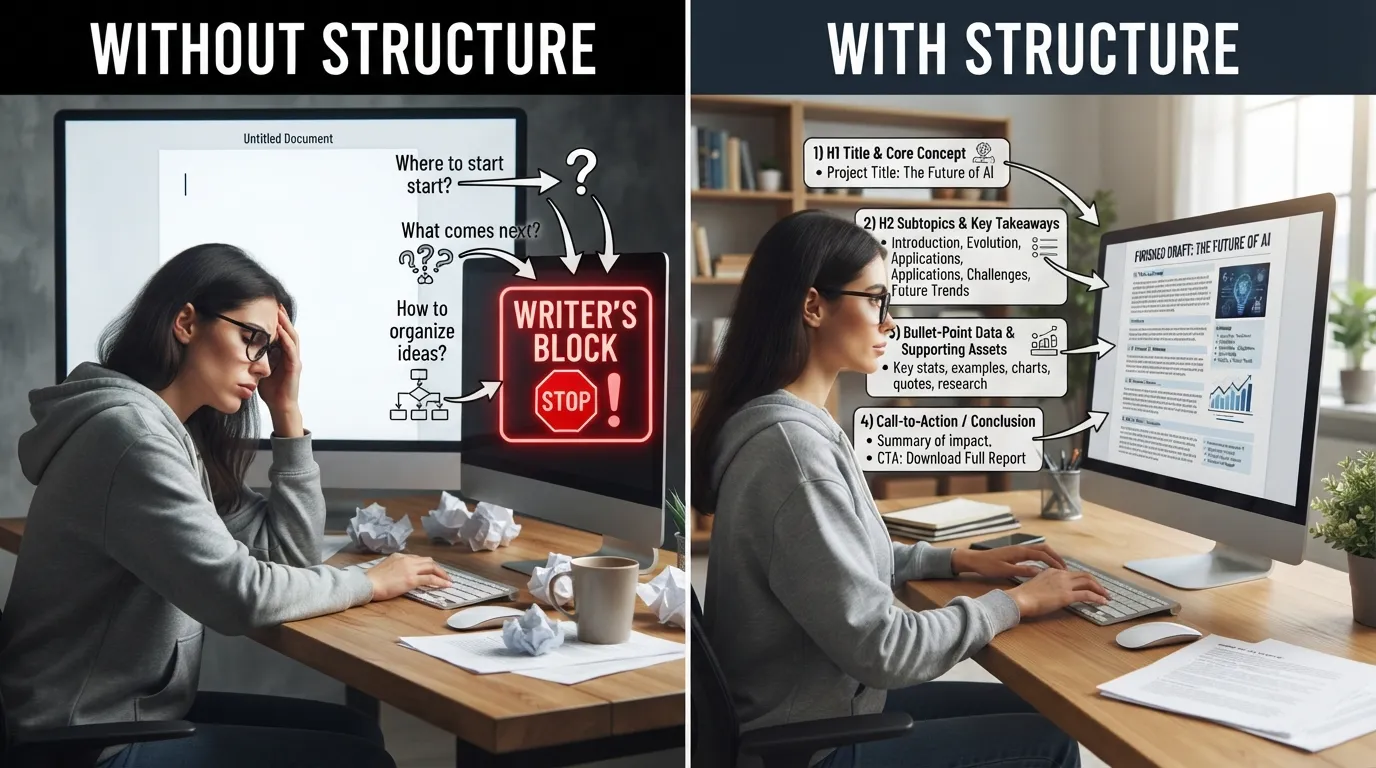
Staring at an entirely empty white sheet often triggers instant mental friction. When you open a fresh notebook without a clear framework, your brain faces immediate decision fatigue over where to start, what to write, and how to format your entry.
Pre-allocating dedicated spaces removes this creative roadblock completely. Turning your notebook into an inviting, structured canvas transforms daily journaling from an intimidating task into a habit you look forward to.
The Psychology of Structural Guardrails
Unstructured journal pages often invite procrastination because the brain treats a vast white canvas like a high-stakes test. You end up worrying about ruining the notebook with crooked lines or messy handwriting instead of capturing your thoughts.
Building physical or visual guardrails shifts your mindset from passive hesitation to active engagement. When your top margin is always reserved for the date and your left margin holds habit trackers or bullet points, your pen moves naturally. You transition away from chaotic emotional venting into functional, structured daily planning.
Choosing Your Canvas: Dot-Grid, Blank, or Digital Pages
The paper layout or digital canvas you choose dictates how effortlessly you can build spreads without needing a ruler every morning.
Dot-Grid vs. Lined Paper: Standard 5mm dot-grid notebooks offer the perfect middle ground between structure and total creative freedom. Unlike harsh horizontal lines that force uniform text, faint grid dots guide your headers, boxes, and doodles while visually blending into the background once the page is filled.
Blank Paper: Completely unruled paper suits watercolor washes, loose sketching, and heavy junk journal ephemera. However, maintaining straight lines of text usually requires sketching faint pencil guidelines that you must erase later.
Digital Pages (GoodNotes / Notion): Digital tools like GoodNotes or Notion allow you to import custom PDF templates, rearrange text blocks instantly, and search past entries. While convenient, digital setups trade away the tactile, screen-free sensory reset that physical paper and a fine-tip gel pen provide.
Science-Backed Journaling Frameworks
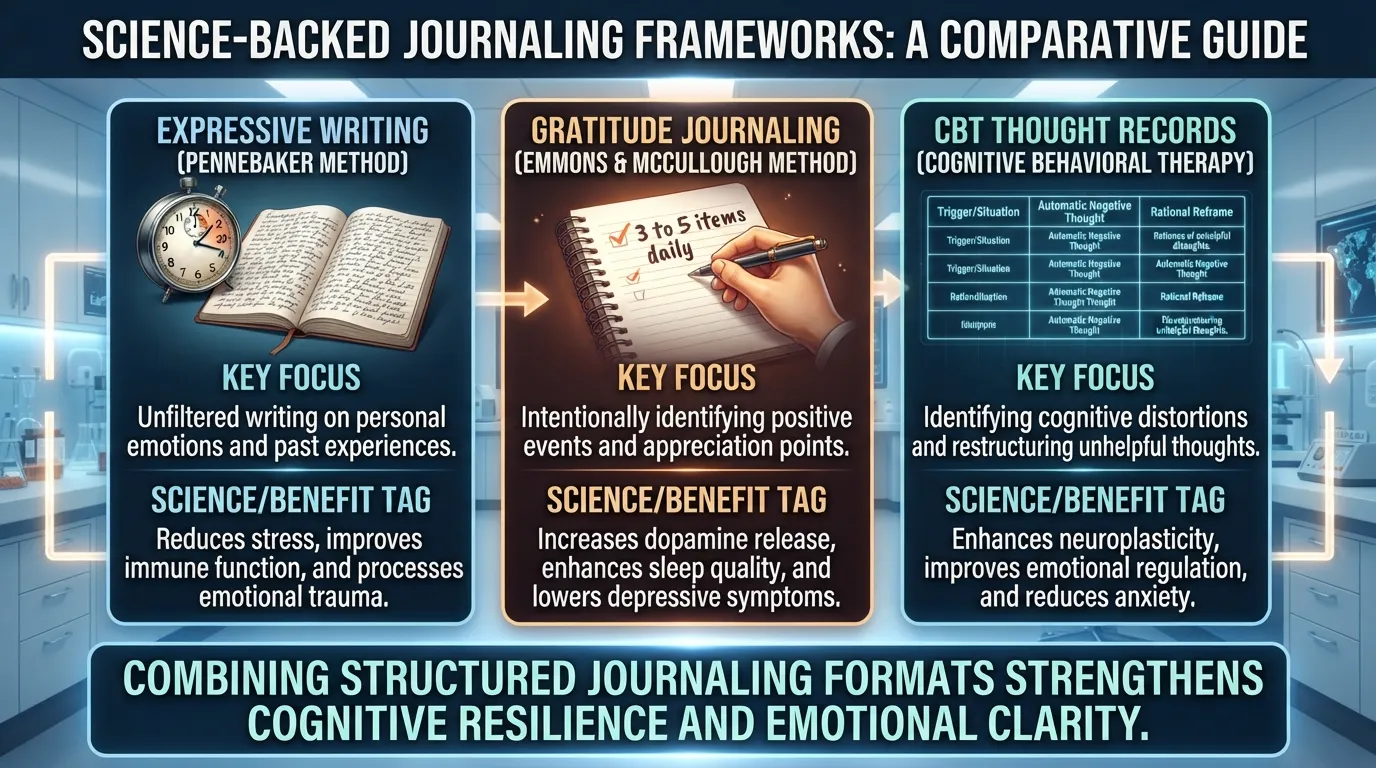
Structure doesn’t mean complicated. Applying simple frameworks gives your journal page a clear purpose, balancing emotional awareness with practical daily execution.
The 3-3-3 Journaling Method
The 3-3-3 method divides a standard dot-grid page into three clear, actionable tiers that take less than five minutes to complete.
3 Gratitudes: Write down three specific, grounded moments to start your morning with positive focus.
3 Non-Negotiable Tasks: List your top three essential tasks for the day to lock in executive focus and stop multi-tasking.
3 Evening Reflections: Revisit your spread before bed to note three observations or wins, helping your mind process the day for better sleep.
The 111 Journaling Method
When you have less than two minutes to spare, the 111 method strips away all extra noise and zeros in on core essentials.
1 Win: Record one success from yesterday to build immediate positive momentum.
1 Priority: Highlight the single most crucial task for today to eliminate decision overload.
1 Lesson: Write down one practical insight gained from a recent mistake to support continuous personal growth.
Cognitive Offloading & Unfiltered Brain Dumps
When racing thoughts and competing priorities crowd your head, organizing them neatly from the start feels nearly impossible. Cognitive offloading solves this by letting you dump raw mental stress directly onto paper before organizing it into a layout.
Clinical research published by the National Institutes of Health (NIH) shows that expressive writing and offloading mental clutter onto paper significantly reduces cognitive strain and eases anxiety symptoms.
To convert a messy brain dump into a functional daily page, follow this simple process:
Dump without judgment: Set a timer for 5 minutes and write every thought, worry, and task onto a blank page without caring about neatness or spelling.
Filter with color: Take a Muji gel pen or highlighter, circle actionable tasks, and cross out things completely beyond your immediate control.
Migrate to your grid: Transfer those circled actionable tasks directly into your clean daily layout or priority list.
10 Plug-and-Play Prompts to Fill Any Page Instantly
Whenever you open your notebook and feel completely stuck, pick one of these targeted prompts to trigger immediate clarity:
What is currently draining my energy, and how can I address it today?
What are 3 small things that made me smile over the last 24 hours?
If today could only have one successful outcome, what would it be?
What boundary do I need to hold this week to protect my mental peace?
What emotion am I holding onto right now, and what is it trying to tell me?
What are 3 physical comforts in my environment that I often take for granted?
How can I show myself extra patience if things don’t go as planned today?
What habit am I struggling to maintain, and what small friction can I remove?
What is one task I have been delaying that will take less than 10 minutes to finish?
What single piece of advice would I give a friend going through my current situation?
How to Structure a Blank Page Without Pre-Made Prints
Designing custom journal pages on blank paper doesn't require complex artwork or expensive stencils. With a few simple grid setups, you can turn any blank page into a functional layout that holds all your tasks, reflections, and trackers in one place.
The Dashboard Spread (All-in-One Daily Overview)
The dashboard spread acts as a personal mission control center for your day. By organizing different zones on a single dot-grid page, you capture both big-picture priorities and small daily details without feeling cluttered.
- • Top Header Title Area: Reserve the top 3–4 dot rows purely for your date, day of the week, and a focal theme. Use a Tombow Fudenosuke brush pen for bold lettering, keeping the rest of the page clean for fine-tip writing.
- • Dedicated Sidebars: Draw a thin vertical border down the left or right margin (about 1.5 inches wide). Use this sidebar exclusively for fast habit checkboxes, top weekly goals, and rapid event logs using a Muji 0.38mm gel pen.
Column & Quadrant Page Division
When managing multiple areas of life at once, open pages can quickly turn chaotic. Dividing a two-page spread into four distinct quadrants gives your thoughts immediate visual organization.
Assign each quadrant a specific focus: Work & Tasks in the top left, Home & Errands in the top right, Self-Care & Health in the bottom left, and Ideas & Creative Notes in the bottom right.
💡 Pro Tip: The Invisible Guide Line Trick
If you love the minimal look of unlined paper but struggle to write straight, lightly draw layout boxes using a 2H pencil. Fill in your journal entries, let the ink dry completely, and then run a soft vinyl eraser over the page. Your text stays perfectly aligned while the guidelines disappear completely.
Integrating Habit Grids & Mood Trackers
Instead of flipping to a separate tracker section at the back of your notebook, embed mini habit grids directly alongside your daily reflections. Draw a compact 7x3 dot box near your lower page margin to track daily hydration, movement, or sleep duration. Using subtle accent colors like a muted green or warm terracotta highlighter makes habit tracking quick and visual without overpowering your journal entry.
🎬 Visual Tutorial: Pencil-Line Division & Dashboard Spreads
Video Summary: Mary Ellen (Planning with Bumble) demonstrates how to measure pencil guidelines, divide dot-grid pages into clean sections, and construct an all-in-one daily dashboard layout step by step.
5 Hands-On Paper Craft Journal Page Ideas
Adding tactile, interactive elements to your notebook turns simple daily entries into memorable keepsakes. If you love junk journaling or want to incorporate physical mementos into your dot-grid notebook, these five paper-craft techniques bring depth and functional storage to any journal spread.
Envelope Pockets for Private Notes & Keepsakes
Sometimes you want to record personal thoughts, store concert tickets, or save pressed flowers without leaving them exposed on the open spread. Mini kraft envelopes or vellum pockets offer an easy, stylish solution.
Secure a small patterned envelope onto your page using a Tombow permanent tape runner or a strip of floral washi tape along the flap hinge. For removable pockets that you can move around, attach tiny hook-and-loop velcro dots to the back of the envelope.
Layered Shape Pockets (Triangles, Circles & Tags)
Rather than gluing down flat rectangular pockets, layer geometric paper cutouts to create multi-tiered storage spots on a single page.
Cut a diagonal triangle from scrap scrapbook paper and glue only the bottom and outer edges to the corner of your page. Overlap it with a half-circle pocket or a manila shipping tag tucked inside. This creates built-in slots for mini reflection cards, habit lists, or daily photo prints.
Double-Insert Wide Belly Bands
A belly band is a horizontal or vertical strip of decorative cardstock secured across your journal page, allowing you to slide journaling cards securely underneath.
To make a double-insert belly band, cut a 2-inch wide strip of heavy kraft paper, glue both outer ends to the edges of your page, and run a thin line of glue down the exact vertical center. This creates two separate side-by-side slots—perfect for sliding in a daily task card on the left and a gratitude card on the right.
The Fold-Over Hidden Journaling Flap
If you enjoy sharing your creative journal layouts on social media or leaving your notebook open on your desk, sensitive entries need privacy protection.
Fold a piece of decorative scrapbook paper in half to create a mini card flap. Glue the back half directly onto your page layout while leaving the top flap free to open. Write your intimate journal entry inside the flap, keeping the text private while maintaining a beautiful decorative exterior.
Corner Tuck Collages
Corner tucks combine art journal aesthetics with quick functionality. Layer fussy-cut botanical illustrations, vintage book page scraps, and clear PET floral stickers in the bottom corner of your spread. Apply glue along only two outer edges of the collage cluster to leave a small pocket where you can tuck daily memos, receipts, or prompt cards.
🎬 Visual Tutorial: DIY Paper Pockets, Belly Bands & Hidden Flaps
Video Summary: PinkMonarchPrints demonstrates step-by-step techniques for assembling layered paper pockets, double-slot belly bands, and fold-over hidden flaps using basic crafting tools.
Effortless Aesthetic Setups for Busy Days
You don't need hours of free time to create a beautiful notebook layout. When schedule pressures hit, quick visual tricks let you build framed, stylish spreads in under ten minutes using basic stationery.
The Masked Stencil Technique with Distress Oxides
The masked stencil technique is one of the fastest ways to construct a clean writing area surrounded by soft color. Place a rectangular piece of scrap paper or sticky note in the center of your page to act as a temporary mask.
Lay a geometric or botanical stencil over the page and blend Tim Holtz Distress Oxide ink around the edges using a soft blending brush. When you peel away the center mask, you are left with a crisp, ink-free white box ready for journaling, bounded by a soft artistic border.
Hand-Drawn Banners, Headers & Simple Doodles
Simple hand-drawn accents instantly elevate plain text headers without requiring artistic skill. Adding basic line work gives your page an organized, intentional feel in seconds.
- • Ribbon Banners: Draw a simple rectangle, extend folded tails on both sides with small diagonal tucks, and write your main topic inside with a fine-tip gel pen.
- • Drop-Shadow Dates: Write out the date in bold print, then use a grey dual-tip brush pen to trace along the bottom and right edges of each letter for an instant 3D effect.
- • Minimal Floral Doodles: Draw a single curved line along your margin and add small teardrop leaf shapes on alternating sides to anchor your header.
PET Tape & Dashed Border Accents
Pre-cut clear PET tapes offer detailed floral and vintage graphics without the drying time of glue or paint. Stick a tape strip across the top margin or running down the outer edge to frame your spread instantly.
To tie the design together, take a Muji 0.38mm gel pen and draw quick dashed lines half a dot-space inside your paper border. This simple faux-stitch frame anchors your writing space and makes any quick entry look complete.
Quick Brush Pen Prompts
When you lack time for detailed journaling, bold headers help you record short reflection points quickly. Use a Tombow Fudenosuke brush pen to letter large headers like "Grateful For", "Proud Of", or "Looking Forward To". Jot down 2–3 brief bullet points under each header to finish your entry in minutes.
🎬 Visual Tutorial: 10-Minute Stenciled & Brush Pen Layouts
Video Summary: Helen Colebrook (Journal with Purpose) shares efficient stencil masking methods, ink blending tricks, and quick brush pen lettering setups designed for busy days.
Combining Aesthetics with Bullet Journal Productivity
Bullet journaling bridges the gap between structured task management and creative personal reflection. Created by Ryder Carroll, this flexible system lets you tailor every page layout to your workload, ensuring your notebook stays functional without becoming a time-consuming burden.
Official Rapid Logging Rules
At the core of the official Bullet Journal System is rapid logging—a standardized notation method designed to capture thoughts, tasks, and events with maximum speed using simple symbols.
Actionable Tasks (•): Use a solid bullet point for actionable to-dos. Once finished, turn it into an “X”. If postponed, turn it into a right arrow (“>”) to migrate it to another day.
Scheduled Events (O): Use a small open circle to log time-specific events, appointments, or milestones without cluttering your task list.
Observations & Notes (–): Use a simple dash for facts, thoughts, meeting takeaways, or quick mental notes that require no direct action.
Minimalist vs. Decorative BuJo Spreads
Finding the right balance between visual creativity and functional efficiency determines whether you stick with your journal long-term.
Minimalist Spreads: Rely exclusively on a black Muji gel pen and a ruler. By focusing strictly on rapid logging, daily entries take less than three minutes to prepare. This approach works best during high-stress workweeks when setup speed matters most.
Decorative Spreads: Incorporate Tombow dual brush pens, colored paper borders, and thematic drawings. If setting up artistic pages serves as a relaxing weekend ritual, decorative spreads are worth the effort. However, if drawing complex themes causes setup fatigue, fall back on clean minimalist entries.
Single Daily Page vs. Weekly Log Spread
Choosing how much calendar space to allocate on a single spread depends on your daily schedule demands:
Single Daily Pages: Allocate an entire page to one date. Ideal for heavy workloads, expressive long-form writing, detailed habit grids, and lengthy meeting logs.
Weekly Log Spreads: Divide a two-page spread into seven distinct blocks for an entire week. Ideal for fast high-level planning, tracking recurring routines, and seeing your week’s schedule at a single glance.
Combining Aesthetics with Bullet Journal Productivity
Bullet journaling bridges the gap between structured task management and creative personal reflection. Created by Ryder Carroll, this flexible system lets you tailor every page layout to your workload, ensuring your notebook stays functional without becoming a time-consuming burden.
Official Rapid Logging Rules
At the core of the official Bullet Journal System is rapid logging—a standardized notation method designed to capture thoughts, tasks, and events with maximum speed using simple symbols.
Actionable Tasks (•): Use a solid bullet point for actionable to-dos. Once finished, turn it into an “X”. If postponed, turn it into a right arrow (“>”) to migrate it to another day.
Scheduled Events (O): Use a small open circle to log time-specific events, appointments, or milestones without cluttering your task list.
Observations & Notes (–): Use a simple dash for facts, thoughts, meeting takeaways, or quick mental notes that require no direct action.
Minimalist vs. Decorative BuJo Spreads
Finding the right balance between visual creativity and functional efficiency determines whether you stick with your journal long-term.
Minimalist Spreads: Rely exclusively on a black Muji gel pen and a ruler. By focusing strictly on rapid logging, daily entries take less than three minutes to prepare. This approach works best during high-stress workweeks when setup speed matters most.
Decorative Spreads: Incorporate Tombow dual brush pens, colored paper borders, and thematic drawings. If setting up artistic pages serves as a relaxing weekend ritual, decorative spreads are worth the effort. However, if drawing complex themes causes setup fatigue, fall back on clean minimalist entries.
Single Daily Page vs. Weekly Log Spread
Choosing how much calendar space to allocate on a single spread depends on your daily schedule demands:
Single Daily Pages: Allocate an entire page to one date. Ideal for heavy workloads, expressive long-form writing, detailed habit grids, and lengthy meeting logs.
Weekly Log Spreads: Divide a two-page spread into seven distinct blocks for an entire week. Ideal for fast high-level planning, tracking recurring routines, and seeing your week’s schedule at a single glance.
Free Layout Tools & Downloadable Resources
Integrating digital tools and printable templates into your journaling routine offers the ultimate shortcut for complex layouts. Whether you prefer loose-leaf binders, discbound notebooks, or hybrid digital setups, downloadable resources allow you to maintain consistent layouts without drawing every grid by hand.
Printable A4/A5 Dot-Grid & Lined PDFs
Printable PDF templates provide instant access to high-quality dot-grid and lined pages, perfect for binder setups, practice sheets, or custom insertions.
A4 & A5 Dot-Grid Grids: Standard 5mm dot spacing offers complete design flexibility. You can print dot-grid pages to practice hand-lettering, draft weekly layouts before drawing them in your main notebook, or add extra pages to a ring-bound journal.
Lined & Graph Inserts: Narrow-ruled or graph templates work exceptionally well for long-form journaling, structured goal-setting worksheets, and financial tracking pages.
Printing Tip: When printing PDF templates, set your printer scale to 100% (Actual Size) rather than “Fit to Page” to ensure dot spacing remains precisely 5mm across your sheet.
Customizing Journal Layouts in Canva
Canva makes it easy to design personalized journal pages, custom habit trackers, and decorative headers tailored to your specific workflow.
Setting Up Your Canvas: Create a document using custom dimensions matching your journal size (e.g., 5.83 x 8.27 inches for standard A5).
Designing Habit Grids & Trackers: Use Canva’s line and table elements to build clean, minimalist habit tracking grids, mood charts, or daily schedule blocks.
Creating Printable Headers & Stickers: Design custom lettering headers, motivational quote banners, or decorative botanical illustrations. Once finished, print them on matte sticker paper, cut them out, and paste them directly into your physical journal spreads.
Quick Answers to Common Journaling Questions
What is a journal page?
A journal page is a single entry or layout spread inside a notebook dedicated to logging personal thoughts, daily tasks, habit tracking, or creative artistic expressions.
How do I start writing when my mind is completely blank?
Simply write the current date, time, and location to break the blank-page friction, or answer a single low-pressure prompt like "How does my body feel right now?" to get words flowing naturally.
What are the main types of journals?
The most popular types include Bullet Journals (task & efficiency systems), Gratitude Journals (positivity tracking), Mental Health/Reflection Journals (emotional processing), Fitness Journals (health logs), Art/Junk Journals (visual collage), and Planner/Goal Journals (structured milestone mapping).
What is the best time of day to journal?
The ideal time depends on your goals: Morning journaling sets daily intentions and reduces ahead-of-day anxiety, whereas Evening journaling aids in mental reflection and cognitive offloading before sleep.
Can ChatGPT or AI help me journal?
Yes! AI tools can generate personalized daily prompts, structure customized habit tables, or offer targeted self-reflection exercises that you can transcribe into your physical or digital journal pages.
Pimchanok Srisuk
Pimchanok Srisuk is the Journaling Editor at Holistic Wellbeing Living. She writes about journaling prompts, reflective writing, emotional clarity, and mindful routines. With seven years of experience creating personal-growth content, Pimchanok helps readers use simple writing practices to understand their thoughts and make calmer everyday decisions.