Jump to:
Toggle150+ Journaling Lists to Try: The Ultimate List of List Ideas for Your Journal
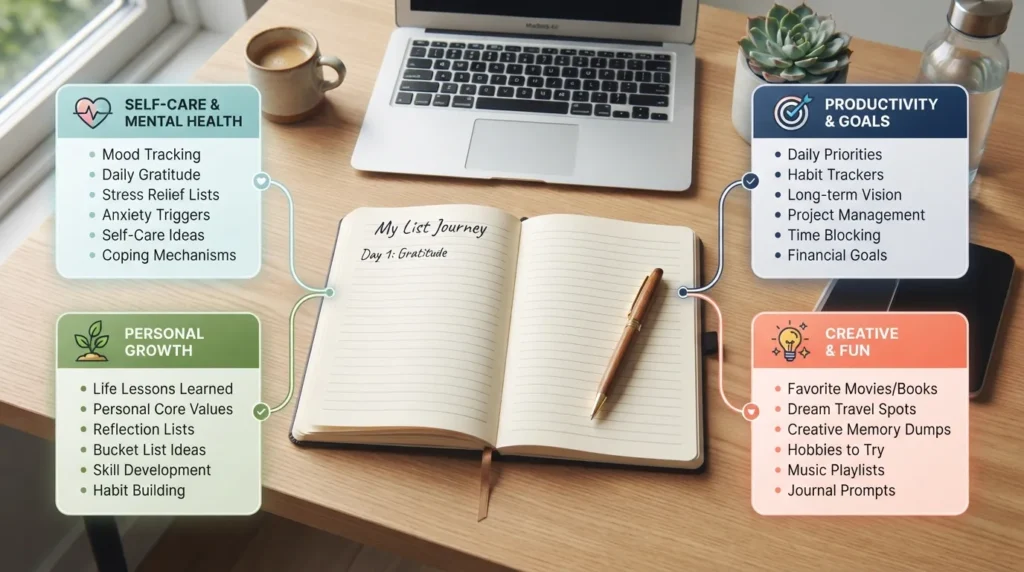
Some days, staring at a blank page feels less like a quiet moment of self-care and more like trying to write an essay on the spot. When you just don’t have the energy for long, rambling entries, turning to journaling lists is easily the simplest way to keep your practice going without the brain fog.
Think of a journaling list as a quick snapshot of your thoughts, feelings, or day-to-day life—no perfect grammar or deep introspective essays required. It’s just a bulleted way to clear your head, organize your messy thoughts, and get your pen moving without any pressure.
In this guide, you’ll find over 150 categorized list ideas, practical tips on how to actually use them, creative formats to experiment with, and quick answers to common questions. Beyond just giving you a massive list of prompts, we’re sharing down-to-earth ways to turn these simple bullet points into meaningful moments of self-reflection.
Studies from top medical institutions, including research highlighted by University of Rochester Medical Center, show that writing down your thoughts helps lower stress, manage anxiety, and track personal growth. Lists give you all those proven benefits of expressive writing, just in a fraction of the time.
Top 10 Journaling Lists to Start With (If 150 Feels Like Too Many)
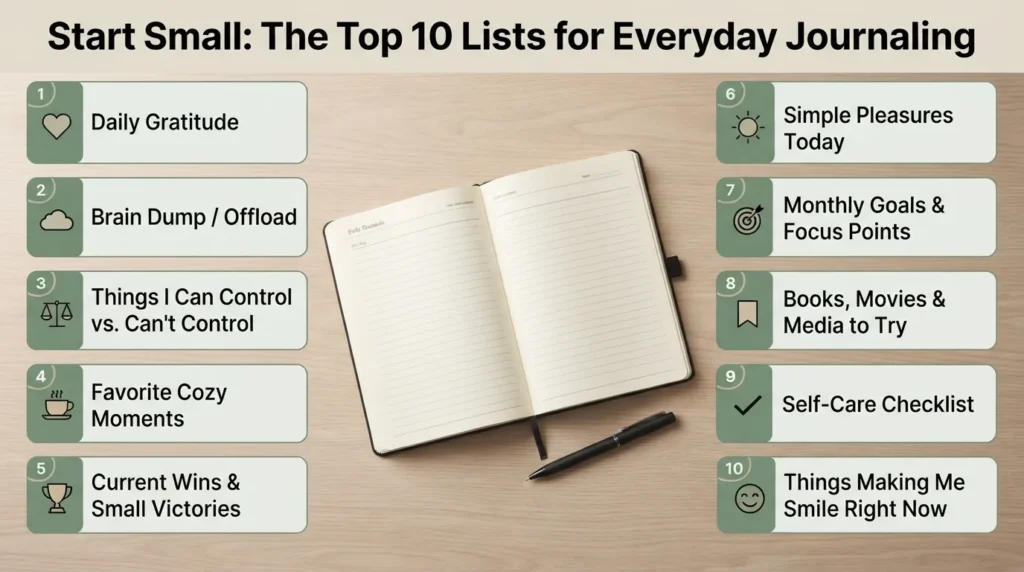
If scrolling through a giant list of 150 prompts gives you decision fatigue before you even open your notebook, breathe. You don’t need a massive directory to get the benefits of list journaling—you just need one prompt that speaks to you right now.
Here is a curated shortlist of the most fun, grounded, and beginner-friendly journaling lists to start tonight:
Daily Gratitude List: Write down 3 to 5 tiny, specific things that made today feel a bit warmer.
Things That Bring You Instant Happiness: From the smell of morning coffee to fresh bedsheets.
Books to Read: A clean, satisfying running tally of stories you want to dive into.
Travel Bucket List: Places you dream of visiting, whether it’s two towns over or across the ocean.
My Self-Care Menu: A quick-reference list of simple things that reset your energy when you feel drained.
Proud Moments: A personal hype list of achievements, big and small, to look back on when self-doubt creeps in.
Favorite Quotes: Words from books, podcasts, or friends that stopped you in your tracks.
Dopamine Menu: Healthy, low-effort activities that give you a quick boost when you are bored or stuck.
Things to Let Go Of: Worry, old habits, or expectations that are simply taking up unnecessary mental room.
Random Favorites: Current favorite song, lunch spot, sweater, or weekday ritual.
Pick just one tonight—you don’t need all 150 at once.
What Is Journaling Lists? (Quick Definition + Why It Works)
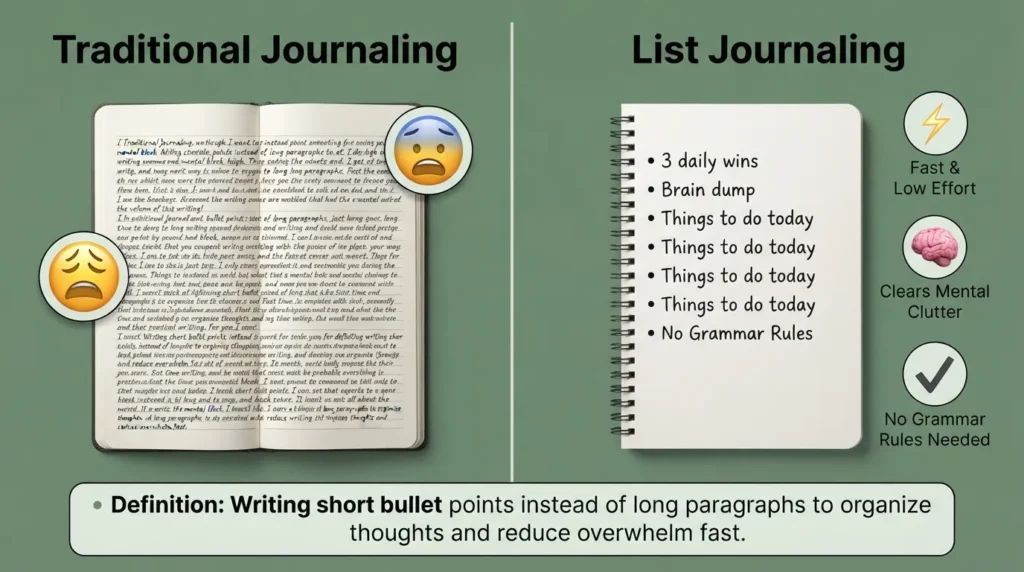
What Are Journaling Lists?
Journaling lists are simply bullet-point entries in your notebook instead of long, full-page paragraphs. Instead of forcing yourself to write full sentences, you just jot down quick thoughts, memories, ideas, or feelings one line at a time. It’s a low-pressure way to get what’s in your head onto the page.
Why List-Making Works So Well in a Journal
It’s way faster than writing full paragraphs: When you don’t have twenty minutes to sit down and write out your entire day, a quick list takes less than five. You get all the clarity without the time commitment.
It instantly solves blank page anxiety: Staring at a completely empty, wide-open notebook page can feel intimidating. Bullet points give your page immediate structure, so starting never feels overwhelming.
It makes brainstorming and self-reflection effortless: Lists help you brain-dump without worrying about grammar or transitions. You can hop from one thought to the next as fast as your mind moves.
It helps you spot patterns in your thinking: When your thoughts are stacked neatly line by line, it’s so much easier to step back and notice recurring habits, moods, or themes in your life.
Benefits of List Journaling
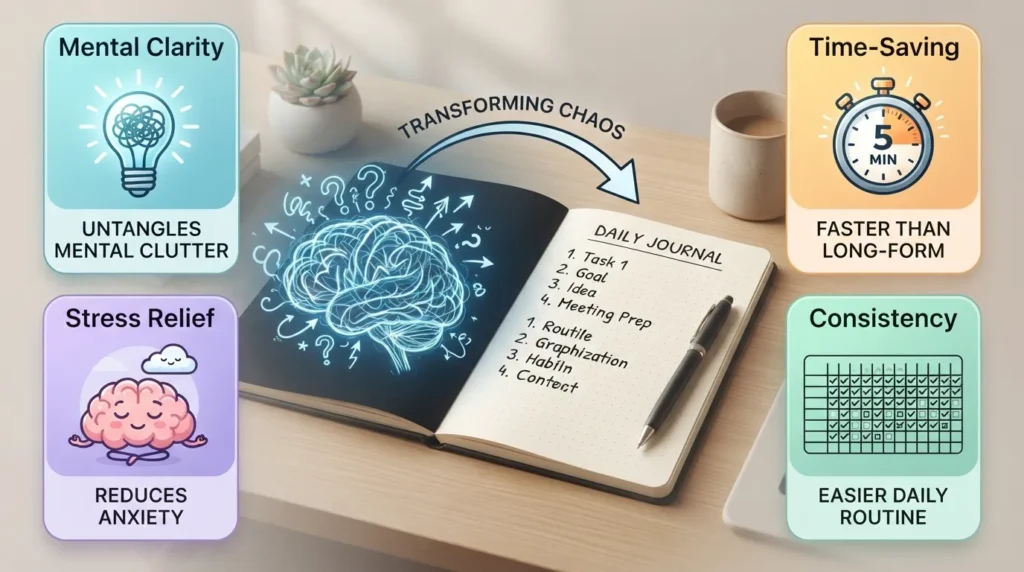
Mental clarity: Dumping your thoughts onto paper clears space in your head instantly.
Stress relief: Writing down what is bothering you makes it feel smaller and easier to manage.
Gratitude & positivity: Focusing on good moments rewires your mind to notice the bright spots in your day.
Memory keeping: Capturing tiny life details gives you a sweet snapshot of who you were at a specific moment.
Self-awareness: Spotting patterns in what you write helps you understand what truly drives you.
Creativity boost: Removing the pressure of writing full paragraphs lets wild, playful ideas flow free.
Easier consistency: Writing bullet points takes two minutes, making it simple to keep a daily habit going.
How to Actually Use Lists in Your Journal (Beginner Technique)
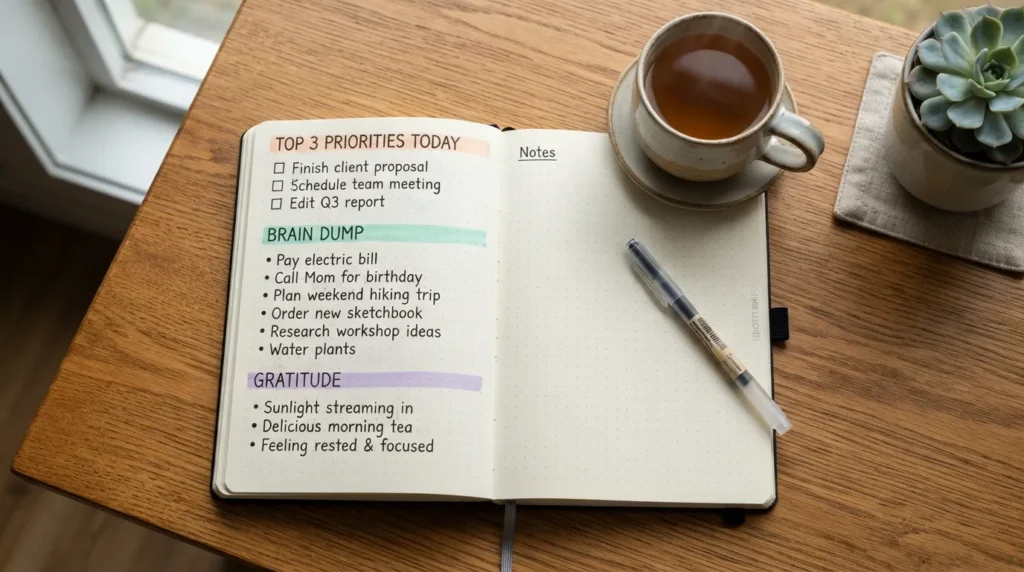
If you have ever stared at a blank page feeling completely stuck, you are not alone. Turning your entries into journaling lists takes away that pressure—no perfect sentences required. Here is how to actually get started and get real value out of what you write.
The “Number First” Trick
Before you write a single word, pick a topic and write out numbers 1 through 20 down your page.
It sounds almost too simple, but something about seeing empty numbers tricks your brain into wanting to fill them in. You stop overthinking every word because your only goal is to complete the sequence. If you get stuck halfway through, keep your pen moving until every number has an entry, even if the last few feel silly or surprising.
How to Review Your List After Writing It
Once your list is done, don’t just close the notebook. Take thirty seconds to look over what landed on the page:
Notice the obvious items: The first three or four things are usually just off the top of your head—your surface-level thoughts.
Notice the “should” items: Look for entries that sound like obligations or things you feel you ought to care about.
Notice the random or unexpected items: Pay attention to the weird or surprising answers that popped up toward the end—that is usually where the real insights hide.
Notice repeats and patterns: If the same theme keeps showing up across different journal lists, your mind is telling you it needs attention.
Tip: Turn a Date or Number Into a List Prompt
When you do not know what to write about, let the calendar do the work for you.
Look at today’s date—say it is the 14th—and make a list of 14 things. It could be 14 things making you smile today, 14 tiny tasks you finished this week, or 14 places you love in your hometown. It takes five seconds to set up and instantly gives you a realistic goal.
Where to Keep Your Lists
You do not need a fancy setup or special stationery to start list journaling. Use whatever tool you will actually pick up every day:
A plain spiral notebook or a classic bullet journal
A dedicated “lists only” section tucked in the back of your current diary
A notes app or journaling app on your phone for capturing quick thoughts on the go
Remember, there is no wrong answer here—building the habit matters way more than the tool you choose
150+ Journaling List Ideas by Category
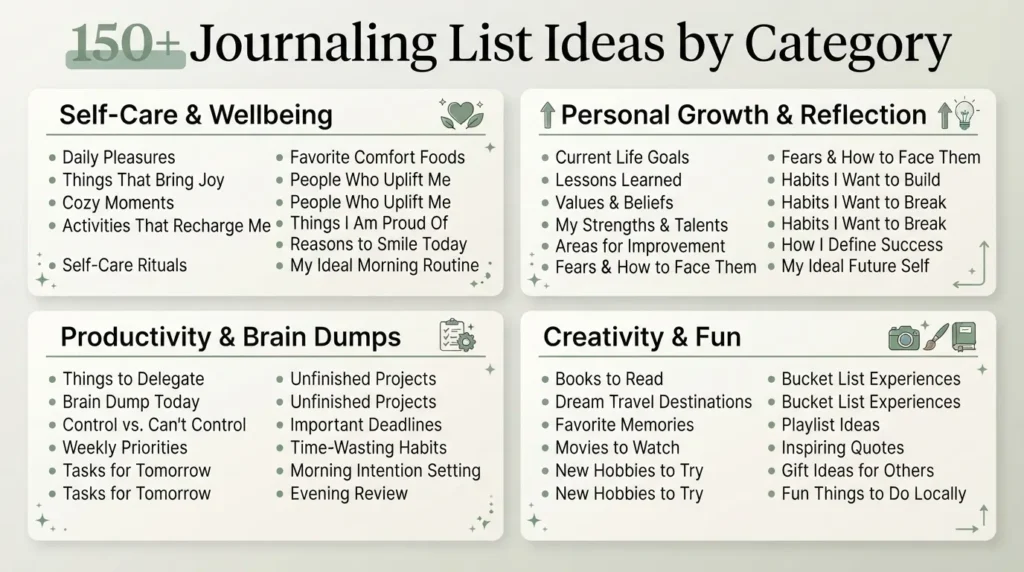
When inspiration runs low, having a go-to stash of prompts makes all the difference. Browse through these themed ideas whenever you want a quick spark for your notebook.
Self-Reflection & Personal Growth Lists
Things that make you feel truly happy
Things you are ready to let go of this month
Proud moments and recent personal wins
Your non-negotiable core values
Hard lessons you are grateful you learned
Things you are surprisingly good at
Fears you would like to gently overcome
Ways you have grown as a person over the last year
Gratitude & Positivity Lists
Simple things you are grateful for right now
People who have positively shaped who you are
Small joys and quiet, everyday pleasures
Your absolute happiest memories
Compliments you have received and actually believed
Self-Care & Wellbeing Lists
Your personal self-care menu for bad days
Gentle ways to relax when you feel overwhelmed
Your custom dopamine menu (quick, medium, and long mood-boosters)
Healthy habits you want to slowly build this season
Entertainment & Favorites Lists
Books on your reading list (and past favorites)
Movies and comfort TV shows to rewatch
Songs, albums, or playlists you have on repeat
Podcasts and creative channels you follow
Favorite quotes that hit home
Travel & Adventure Lists
Places on your lifetime travel bucket list
Every city or country you have already visited
Dream destinations for your next trip
Cozy local spots in your hometown you adore
Journaling Lists for Adults (Everyday Life & Organizing)
Short-term and long-term goals for the year
Practical skills you would love to learn
Daily habits to build (and a few to break)
Your master life-admin list (appointments, home tasks, bills)
Fun & Random Lists to Make When Bored
Random favorite things (smells, words, textures, colors)
Sweet or funny childhood memories
Weird, useless facts you happen to know
Things that never fail to make you laugh out loud
A quick “would you rather” list for yourself
Fun Lists to Make With Friends
A shared bucket list for your friend group
Inside jokes that need to be documented
Dream road trip or vacation ideas together
Favorite memories you have shared over the years
Relationship & Connection Lists
Old friends you would love to reconnect with
Qualities you deeply admire in the people around you
Favorite family traditions and shared memories
People in your daily life you would like to know better
Creative Ways to Format Your Lists (Make Them Fun, Not Just Functional)
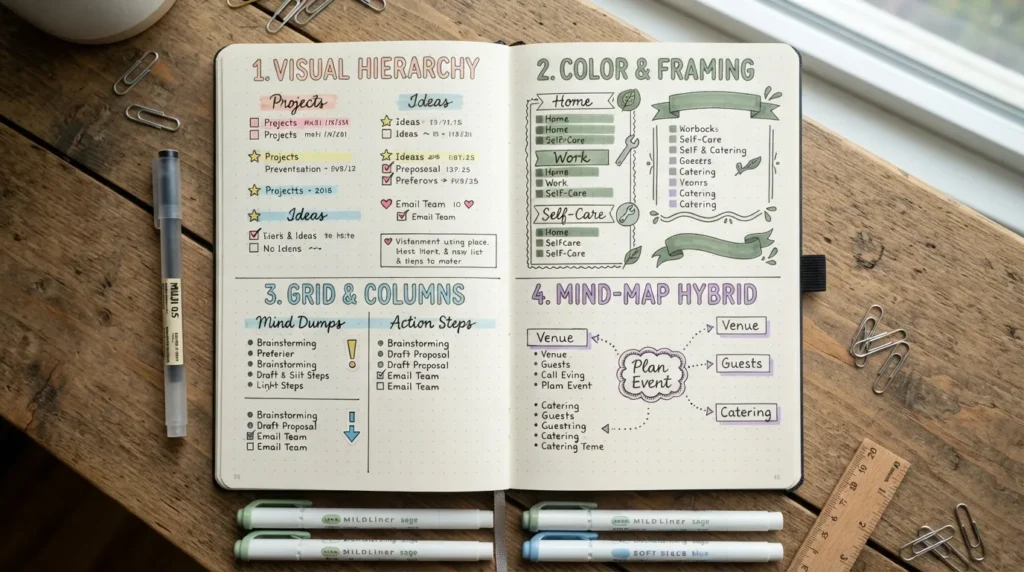
Standard bullet points are great, but journaling lists don’t have to look like a chore list on your fridge. Playing with how your page looks can actually make you want to open your notebook more often. Here are a few simple ways to spice up your layouts:
Try numbered or lettered lists: If bullets feel a bit plain, use numbers (1 to 10) for rankable ideas like top cozy movies. Use letters (A to Z) when you want a fun challenge, like listing things that bring you joy for every letter of the alphabet.
Doodle a small icon next to each item: You don’t need to be an artist. Draw a tiny coffee mug next to a morning ritual, a little leaf for a park walk, or a simple star next to a favorite memory.
Use speech bubbles or freeform layouts: Instead of writing straight down the page, scatter your thoughts. Draw small bubbles across the paper and fill each one with a word or phrase, or let your text curve around the edges.
Try a “found text” style: Cut out interesting words, patterns, or images from old magazines, junk mail, or receipts and glue them onto the page alongside your handwritten list.
Set up a pre-numbered page: Write out numbers 1 through 20 on a blank page at the start of the week. Leave the spaces blank and fill them in slowly whenever a fun thought or memory pops up over the next few days.
Tips to Make List Journaling a Habit
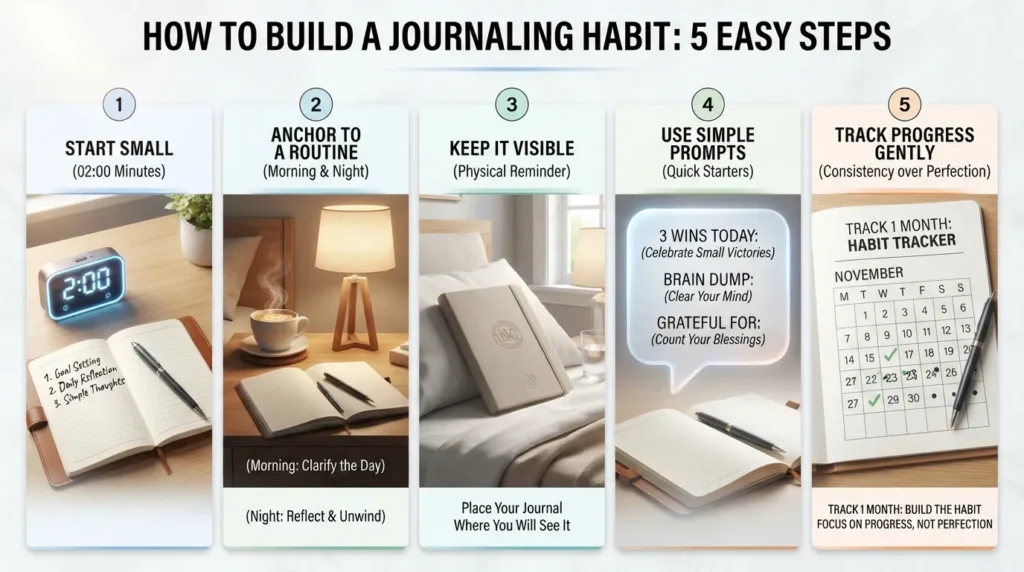
The best part about list journaling is how low-pressure it is. You don’t need an hour of free time or a fancy routine to stick with it. A few practical strategies can help you keep the momentum going without feeling like it’s another task on your to-do list:
Set a weekly rhythm: You don’t have to write every single day. Deciding to tackle just one new list a week—maybe on Sunday mornings with your tea—is plenty to build a strong habit.
Keep an ongoing “master list of lists”: Whenever you stumble across a fun prompt or idea, jot it down in the back of your notebook. That way, you’ll never stare at a blank page wondering what to write about.
Revisit old lists monthly: Flip back through your journal every few weeks. It’s comforting to see how your mood, priorities, or favorite things have shifted over time, and it makes the practice feel deeply rewarding.
Embrace the mess: Don’t worry about crooked lines, typos, or crossed-out words. Messy, honest lists count just as much as aesthetic ones—what matters is getting your thoughts onto the paper.
Frequently Asked Questions
What are good journal lists to make?
Honestly, whatever is on your mind! If you are feeling overwhelmed, a classic "brain dump" or a list of things you can control versus what you can't works wonders. If you want a mood boost, try listing simple daily pleasures, favorite cozy moments, or things you're looking forward to this month. There are no strict rules here.
What is list journaling?
List journaling is exactly what it sounds like: capturing your thoughts, feelings, and memories using short bullet points instead of long, formal paragraphs. It gives you all the benefits of regular journaling without the pressure of having to write full sentences or care about grammar.
How do I start list journaling if I'm not a "writer"?
That is actually the best part about journaling lists—you don’t need to be a writer at all.
- Pick a single topic: Start simple, like "3 good things that happened today."
- Keep it short: Write down single words or quick fragments.
- Drop the expectations: You don't need fancy notebook handwriting or poetic phrasing.
If you can write a quick grocery list, you already have all the skills you need to do list journaling.
Can list journaling help with stress or anxiety?
Yes, absolutely. When your head feels crowded with racing thoughts, putting them down line-by-line gets them out of your head and onto paper. Seeing your worries visually written out makes them feel much smaller and easier to handle. Plus, making a simple list takes very little mental energy, which is ideal when you're already feeling fried.
How long should a journaling list be?
As long or as short as you want it to be. Some days you might only have three quick things to write down, and other days you might fill two whole pages. Aiming for 3 to 5 bullet points is usually a sweet spot for beginners, but never force yourself to hit a specific number just to fill space.
Pimchanok Srisuk
Pimchanok Srisuk is the Journaling Editor at Holistic Wellbeing Living. She writes about journaling prompts, reflective writing, emotional clarity, and mindful routines. With seven years of experience creating personal-growth content, Pimchanok helps readers use simple writing practices to understand their thoughts and make calmer everyday decisions.