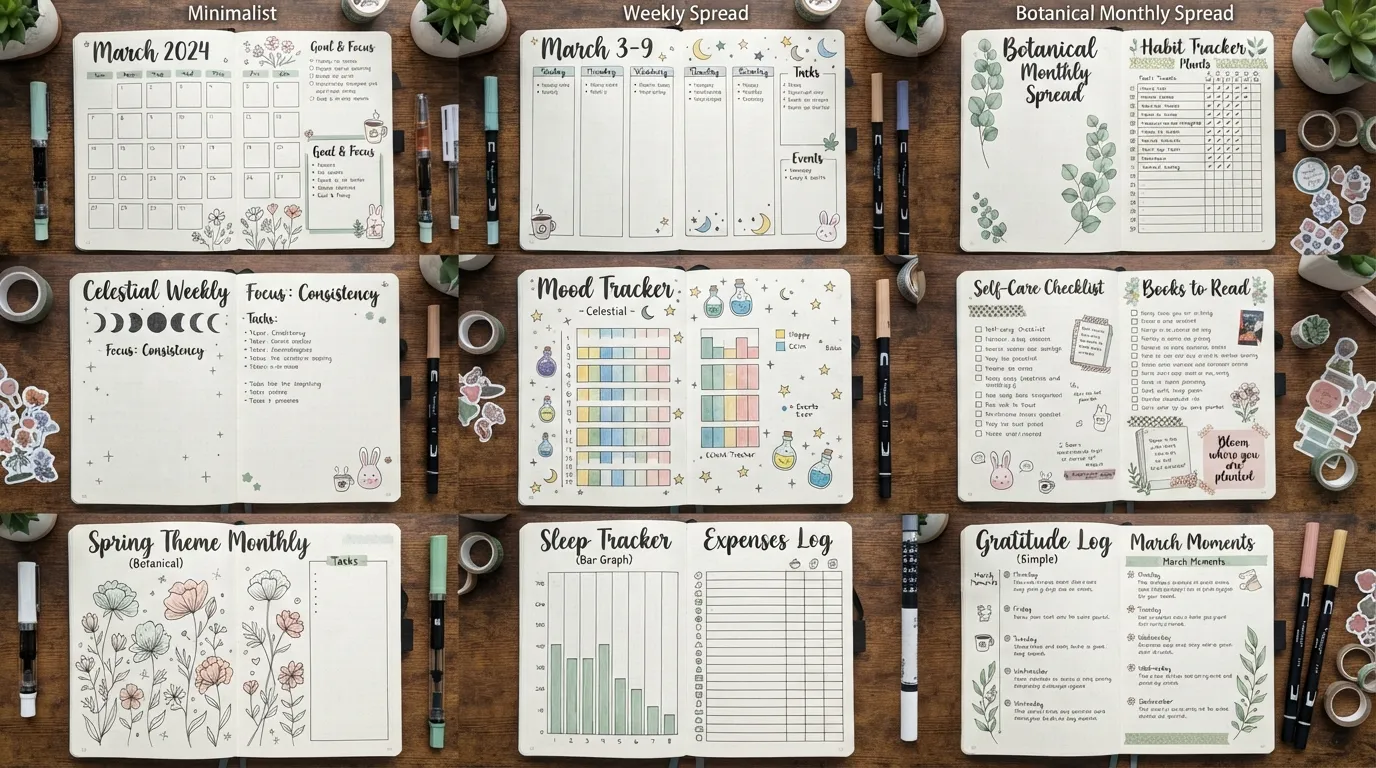
Looking for aesthetic bullet journal ideas that are beautiful but still practical? You do not need perfect handwriting, expensive supplies, or complicated drawings to create a journal you enjoy using. The best setup is one that matches your style, the time you have, and what you actually want your bullet journal to do.
Below, you will find aesthetic ideas for beginners, students, adults, and anyone who wants a more personal journal. You will also find simple doodles, quotes, washi tape and sticker ideas, seasonal cover pages, functional spreads, and easy ways to choose an aesthetic without making your journal difficult to maintain.
What Makes a Bullet Journal Aesthetic?
An aesthetic bullet journal is less about following one exact style and more about creating visual consistency. You can make a page look polished by repeating a small number of colors, lettering styles, doodles, borders, or decorative elements.
For example, a minimalist journal may use black ink, simple lines, and plenty of white space, while a cozy theme might use warm colors, small illustrations, handwritten quotes, and soft decorative details. Both can be aesthetic even though they look completely different.
Best Aesthetic Bullet Journal Ideas
You do not need to use every idea below. Pick the pages that match your routine and combine decorative elements with layouts that genuinely help you plan, remember, track, or reflect.
1. Minimalist Monthly Cover Page
Start a new month with a clean title, a simple border, and one small illustration. A single flower, star, moon, leaf, or geometric shape can be enough to create a polished look.
Best for: beginners, busy schedules, and anyone who likes clean pages.
Easy upgrade: use one accent color for the month name and repeat it in tiny details throughout the following pages.
2. Botanical Leaf Theme
Draw simple leaves around headings, corners, or page borders. You do not need detailed botanical artwork; repeated leaf shapes can create a cohesive theme on their own.
Try it with: a green-and-black palette, small plant doodles, nature quotes, and a simple habit or gratitude tracker.
3. Black-and-White Bullet Journal
A black-and-white layout is one of the easiest ways to create an aesthetic journal without worrying about color matching. Use black pens, line art, simple lettering, dots, frames, and white space.
Best for: people who want a low-cost setup or prefer a monochrome journal.
4. Aesthetic Quote Page
Choose a short quote that actually means something to you and make it the main visual element of the page. Surround it with a thin frame, small doodles, stars, flowers, or simple typography.
Tip: short quotes usually work better visually because they leave room for lettering and decoration without making the page crowded.
5. Simple Aesthetic Weekly Spread
Divide two pages into seven daily sections, then add one small decorative element to each day. You can use tiny flowers, stars, weather symbols, or geometric marks as visual anchors.
Why it works: the layout remains functional while the repeated decorative element gives the spread a consistent look.
6. Mood Tracker With a Visual Theme
Turn a mood tracker into part of your monthly theme. Instead of a plain grid, use flowers, stars, clouds, books, cups, or another repeated shape and assign each mood a color.
Keep it simple: choose a small number of mood categories that you can realistically distinguish and record.
7. Habit Tracker With Tiny Icons
Instead of decorating the entire page, let small icons provide the aesthetic detail. A water drop for hydration, a book for reading, a moon for sleep, or a leaf for outdoor time can make a functional tracker more personal.
Best for: anyone who wants an aesthetic spread without spending a long time drawing.
8. Cozy Coffee Shop Theme
Build a warm theme around coffee cups, books, pastries, handwritten notes, checkered borders, or small café-style illustrations. It works especially well for weekly plans, reading logs, gratitude pages, and journal prompts.
9. Celestial Moon and Stars Theme
Use moons, stars, constellations, clouds, and small dots to create a celestial spread. A dark-ink layout can stay very simple, while one metallic or warm accent color can add contrast.
10. Memory-Keeping Spread
Create a page for moments you want to remember: a favorite meal, a day out, a small achievement, a memorable conversation, or something that made you laugh.
Make it aesthetic: combine short captions with tiny doodles, ticket-style boxes, dates, or a restrained color palette rather than trying to illustrate everything.
11. Reading Journal Page
Track books you want to read, books you have finished, favorite lines, ratings, or memorable characters. A bookshelf illustration can become the decorative framework for the entire collection.
12. Gratitude Page
Use a simple repeated shape such as leaves, hearts, clouds, or stars to record small things you appreciate. This is a good example of a page where decoration can support the purpose rather than compete with it.
13. Brain Dump Page
A brain dump does not have to look messy. Divide the page into a few loose areas for tasks, ideas, worries, reminders, and things to explore. Add a simple title and a small border if you want decoration without losing the freedom of the page.
14. Vision Board Spread
Combine short goals, words, sketches, symbols, and small visual references into one page. Keep the layout organized into a few themes instead of filling the entire spread with unrelated decorations.
15. Aesthetic Budget Tracker
A budget page can still look personal. Use clean categories, small icons, and a consistent color system. The decorative layer should never make amounts or categories difficult to read.
16. Self-Care Checklist
Create a realistic collection of small activities that help you reset, such as reading, walking, tidying, planning, resting, or spending time away from screens. Use simple icons to make the page easy to scan.
17. Travel Planning Spread
Combine destinations, packing reminders, itinerary notes, places to eat, spending notes, and memories. A map outline, suitcase doodle, airplane icon, or passport-style boxes can establish the theme.
18. Playlist or Music Page
Create a themed playlist page using song titles, tiny music symbols, favorite artists, or a mood-based layout. You can keep the decoration minimal and let the lettering become the main design element.
19. One-Line-a-Day Page
Record one short sentence each day. This is especially useful if you like the idea of memory keeping but do not want to write long journal entries. Repeating the same small structure each day keeps the page neat.
20. Bullet Journal Tetris
Use differently sized boxes that fit together like Tetris pieces to create a flexible page. Large boxes can hold major tasks or notes, while smaller ones can be used for reminders, trackers, quotes, or small lists.
Why it works aesthetically: the irregular shapes create visual interest while still giving every part of the page a purpose.
Aesthetic Bullet Journal Ideas by Style
If you are not sure what aesthetic to choose, start with the overall feeling you want rather than a specific page.
| Style | Try These Elements | Good Page Types |
|---|---|---|
| Minimalist | Black ink, white space, simple lines | Weekly spreads, trackers, planning |
| Botanical | Leaves, flowers, earthy colors | Monthly covers, gratitude, mood tracking |
| Celestial | Moons, stars, dots, constellations | Quotes, monthly pages, reflection |
| Cozy | Coffee, books, warm colors, simple patterns | Reading logs, weekly pages, memories |
| Monochrome | Black-and-white line art and typography | Any spread, especially beginner layouts |
Simple Aesthetic Bullet Journal Ideas for Beginners
You do not need artistic skills to make a bullet journal aesthetic. In fact, simple pages often look more consistent because they are easier to repeat.
- Choose one pen and one accent color.
- Use simple boxes, lines, dots, or borders.
- Pick one doodle and repeat it instead of learning several complicated drawings.
- Leave some empty space rather than decorating every corner.
- Start with one weekly or monthly spread before creating a large collection of trackers.
Aesthetic Bullet Journal Doodles
Small doodles are useful because they add personality without taking over the page. Start with shapes that you can draw repeatedly.
- Leaves and simple flowers
- Stars and moons
- Clouds and raindrops
- Books and coffee cups
- Hearts and tiny bows
- Simple plants
- Geometric shapes
- Tiny envelopes, calendars, or check marks
A good approach is to choose three to five doodles that match your theme and reuse them. Repetition creates visual consistency without making every page look identical.
Aesthetic Bullet Journal Quotes
Quotes work best when they have a clear purpose. You might use a short motivational line on a monthly cover, a calming phrase on a self-care page, or a favorite sentence on a memory spread.
For the visual design, make the quote the focal point and keep surrounding decoration simple. Mixing several fonts, colors, and illustrations can make a short quote harder to read.
Using Washi Tape in an Aesthetic Bullet Journal
Washi tape can create borders, section dividers, tabs, color accents, or quick decorative blocks without requiring drawing skills.
If you are using patterned tape, let it become the main decorative element instead of adding several competing patterns. One strip at the edge of a page or behind a heading can be enough.
Budget-friendly approach: you do not need a large collection of washi tape. One or two designs that match your chosen color palette can work across several spreads.
Black-and-White Journal Stickers and Printable Stickers
Black-and-white journal stickers can be especially useful if you prefer a monochrome aesthetic or want decoration that works with almost any page.
Printable stickers can also help when you want consistent icons without drawing each element yourself. Use them for headings, calendars, labels, small illustrations, or recurring symbols.
The important part is not how many stickers you use. Keep the visual language consistent with your page so the decoration supports the layout instead of making it harder to read.
Aesthetic Bullet Journal Ideas for Students
Students often need a journal that balances planning with decoration. Useful pages include:
- Weekly class planning
- Assignment trackers
- Exam countdowns
- Study habit trackers
- Reading lists
- Brain dumps
- Goal pages
- Simple monthly spreads
For a busy school schedule, avoid creating a decorative spread that takes longer to maintain than the planning itself. A simple border, two-color palette, and small icons can give you the aesthetic look without adding unnecessary work.
Aesthetic Bullet Journal Ideas for Adults
An adult bullet journal can be aesthetic without being overly decorative. Consider combining practical pages with a restrained visual theme:
- Monthly priorities
- Work planning
- Budget tracking
- Meal planning
- Habit tracking
- Reading lists
- Travel planning
- Reflection and gratitude
If your journal is mainly functional, prioritize readability. A sophisticated-looking page does not need elaborate decoration; consistent spacing, clear headings, and a limited palette can do most of the visual work.
Seasonal Aesthetic Bullet Journal Cover Pages
June Bullet Journal Cover Page
For June, consider early-summer themes such as flowers, sunshine, greenery, fruit, clouds, outdoor scenes, or light geometric patterns. Choose one central illustration and let the month title remain easy to read.
December Bullet Journal Cover Page
December gives you plenty of options: winter scenes, stars, candles, snow-inspired patterns, cozy drinks, gift motifs, or simple festive lettering. You do not need to rely on a heavily holiday-themed design; a winter palette and a few small details can create the same seasonal feeling.
How to Choose the Right Aesthetic for Your Bullet Journal
If you are overwhelmed by inspiration, make the decision based on your real needs.
| If you want… | Try… |
|---|---|
| The easiest setup | Minimalist or monochrome |
| More drawing | Botanical, celestial, cozy, or seasonal themes |
| A low-cost journal | Black pen, simple doodles, and reusable layouts |
| A functional journal | Clean weekly pages, trackers, lists, and subtle decoration |
| A highly personal journal | Memory pages, quotes, playlists, goals, and favorite doodles |
How to Make Your Bullet Journal Look Aesthetic Without Spending Hours
The easiest way to avoid an exhausting setup is to create a repeatable visual system.
- Choose a limited palette. One main ink plus one or two accents is usually enough.
- Choose a small doodle set. Repeating the same few shapes makes pages feel connected.
- Keep headings consistent. Use the same lettering approach across a month.
- Leave breathing room. Empty space can make a decorated page easier to read.
- Reuse layouts. You do not need to invent a completely new spread every week.
Common Aesthetic Bullet Journal Mistakes
Trying to Copy Every Detail
An inspiration photo shows one person’s handwriting, spacing, supplies, and drawing style. Your page does not need to reproduce all of those details to work.
Using Too Many Colors
A large color palette can make an otherwise simple page look visually busy. Start with fewer colors and add another only when it has a clear purpose.
Making Every Page Decorative
Not every spread needs to become an art project. If a page is primarily for planning, let the planning remain the focus.
Creating Too Many Trackers
A tracker is useful when you will actually record it. Start with the habits or information you genuinely want to monitor instead of filling pages with trackers because they look attractive.
What If You Are Not Artistic?
You can absolutely make an aesthetic bullet journal without being good at drawing. Start with typography, spacing, simple boxes, repeated patterns, stickers, washi tape, and basic shapes.
If a detailed design catches your eye, simplify it instead of abandoning it. Turn a complex illustration into an outline, reduce the number of colors, or use one small part of the design as a border or corner decoration.
What Should You Put in an Aesthetic Bullet Journal?
There is no required list. A useful bullet journal might include only a monthly calendar and weekly planning, while another person’s journal might include trackers, reading logs, memories, quotes, goals, and creative collections.
A good starting point is to choose:
- One planning page
- One page for something you want to track
- One personal or creative collection
- One decorative element that ties the pages together
You can add more once you know what you actually enjoy using.
Frequently Asked Questions About Aesthetic Bullet Journals
How do I make an aesthetic bullet journal?
Choose a visual style, limit your color palette, use a few repeatable doodles or decorative elements, and keep your layouts easy to read. You do not need complicated artwork; consistency is often more important than detail.
What are some creative ideas for a bullet journal?
Try mood trackers, habit trackers, reading logs, memory pages, playlists, gratitude pages, brain dumps, vision boards, travel spreads, quotes, seasonal covers, and themed weekly layouts. The most useful choice depends on what you want your journal to help you remember, plan, or track.
What should I put in a bullet journal?
Start with pages you will actually use: monthly or weekly planning, tasks, goals, habits, notes, memories, or lists. Decorative pages can be added when they make the journal more enjoyable rather than creating extra work.
What are some beautiful ideas for a journal?
Botanical covers, celestial pages, black-and-white spreads, cozy themes, quote pages, memory collections, seasonal designs, and minimalist layouts can all look beautiful. The best option is the one that fits your preferred style and the purpose of the page.
Is bullet journaling still a thing?
Yes. The format continues to be used in many different ways, from simple planning and tracking to creative journaling and memory keeping. You do not need to follow a highly decorative style for the method to be useful.
What are some common mistakes to avoid when bullet journaling?
Common problems include making pages too complicated, creating more trackers than you will use, copying a design without adapting it to your needs, using too many decorative elements, and feeling that every page has to be perfect.
What are some good themes for a bullet journal?
Popular directions include minimalist, botanical, celestial, cozy, monochrome, seasonal, nature-inspired, bookish, travel, and simple geometric themes. You can also build a theme around a color palette rather than a specific subject.
What are some good journal topics?
Good topics include goals, habits, reading, gratitude, memories, travel, meals, routines, hobbies, finances, study plans, ideas, playlists, and things you want to learn or remember.
What is dot journaling?
Dot journaling generally refers to using a dotted notebook or a dot-grid layout to organize notes, plans, trackers, lists, and creative spreads. The dots provide a flexible guide without imposing the rigid lines of a traditional ruled page.
What are some good list ideas for a journal?
Try lists of books to read, places to visit, favorite meals, goals, things to learn, gift ideas, movies to watch, songs to revisit, monthly priorities, memories, or ideas you do not want to forget.
What does BuJo mean?
BuJo is a common abbreviation for Bullet Journal.
How to Keep Your Aesthetic Bullet Journal Enjoyable
The most beautiful journal is not necessarily the one with the most decoration. It is the one you can realistically maintain and still enjoy opening.
If a detailed weekly spread takes too long, simplify it. If a tracker becomes a chore, remove it. If you love drawing, give yourself more creative pages. If you prefer planning, keep the decoration subtle.
Your bullet journal can change with you. Try a theme, keep the parts that work, and let go of the parts that do not.
The goal is not to create a perfect journal. It is to create a journal that feels like yours and makes planning, tracking, remembering, or creating a little more enjoyable.
“`
Pimchanok Srisuk
Pimchanok Srisuk is the Journaling Editor at Holistic Wellbeing Living. She writes about journaling prompts, reflective writing, emotional clarity, and mindful routines. With seven years of experience creating personal-growth content, Pimchanok helps readers use simple writing practices to understand their thoughts and make calmer everyday decisions.