Jump to:
ToggleGoal Setting Journal: How to Set Goals, Track Progress & Build Better Habits
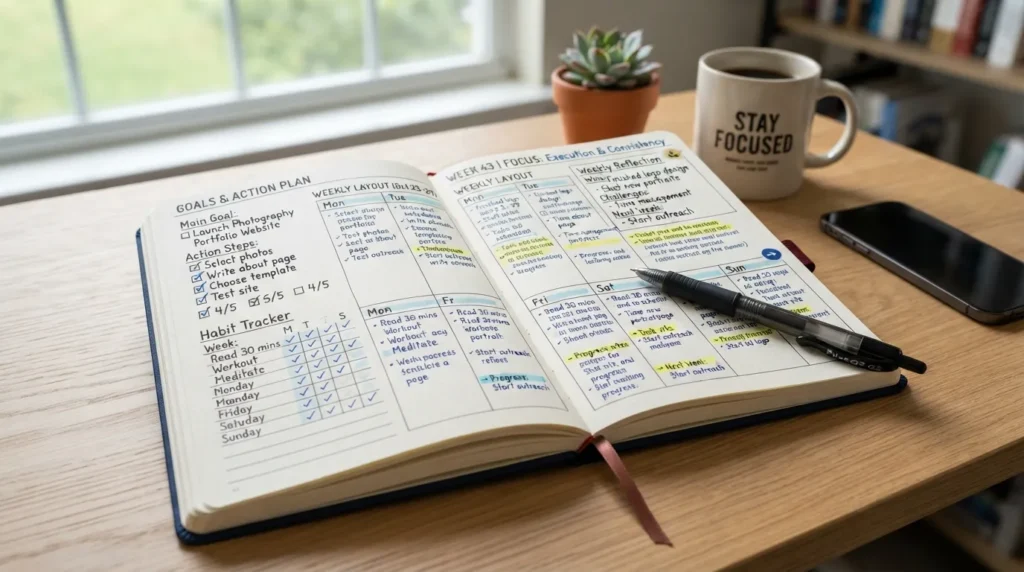
A goal setting journal is more than a simple notebook. It is a structured tool that helps you turn ideas, dreams, and ambitions into clear goals with practical action steps. Instead of keeping your plans only in your mind, a journal gives you a place to define what you want, track your progress, reflect on challenges, and stay focused over time.
Whether you are working on personal growth, career improvement, health goals, productivity, or daily habits, a goal setting journal helps you create a clear roadmap. In this guide, you will learn what a goal journal is, how to use one effectively, important goal-setting methods, useful prompts, templates, and common mistakes to avoid.
What Is a Goal Setting Journal?
A goal setting journal is a dedicated journal used to plan goals, organize ideas, record progress, and review achievements. Unlike a regular diary, it focuses on intentional planning and measurable improvement.
A good goal journal connects your big goals with smaller daily actions. For example, instead of writing “I want to become healthier,” you can create a clear plan with specific habits, deadlines, progress tracking, and weekly reflections.
- Main goals and priorities
- Action plans and deadlines
- Daily or weekly progress tracking
- Habit tracking
- Reflection questions
- Lessons learned and improvements
Why Use a Goal Setting Journal?
Many people have goals but struggle to achieve them because they do not create a clear system. Writing goals down creates a visible reminder of what you want to accomplish and helps you focus on the actions required.
1. Creates Clear Direction
A journal helps you move from vague wishes to specific goals. Instead of saying “I want success,” you can define what success means and what steps are required to reach it.
2. Improves Focus and Consistency
Daily and weekly tracking allows you to see whether your actions are moving you closer to your goals. It becomes easier to identify distractions and improve your routine.
3. Helps Measure Progress
A goal journal allows you to review your achievements, understand setbacks, and adjust your strategy when needed.
How to Use a Goal Setting Journal Step by Step
Step 1: Define Your Main Goal
Start by writing the goal you want to achieve. Make sure it is specific and meaningful. A clear goal gives you a stronger direction than a general idea.
Step 2: Break the Goal Into Smaller Actions
Large goals can feel overwhelming. Divide them into smaller tasks that you can complete daily or weekly.
Step 3: Set a Timeline
Add realistic deadlines and milestones. A timeline helps you measure progress and stay accountable.
Step 4: Track Your Progress
Use daily notes, checklists, or weekly reviews to record what you completed and what needs improvement.
Step 5: Reflect and Adjust
Regular reflection helps you understand what is working, what is not working, and what changes can improve your results.
Popular Goal Setting Methods You Can Use
SMART Goals Method
The SMART system is one of the most popular ways to create effective goals. It helps make goals clearer by focusing on five elements:
- Specific: Clearly define what you want to achieve.
- Measurable: Decide how you will track progress.
- Achievable: Create a realistic target.
- Relevant: Make sure the goal matches your priorities.
- Time-bound: Set a deadline.
90-Day Goal Planning
A 90-day plan breaks long-term goals into smaller periods. Instead of focusing only on a yearly target, you create a short-term roadmap with clear milestones.
Weekly Reflection Method
Weekly reflection helps you review your progress, celebrate improvements, identify problems, and plan your next steps.
What Should You Write in a Goal Journal?
A useful goal journal should include sections that help you plan, act, and reflect. Some helpful journal pages include:
- My main goal and why it matters
- Action steps required to achieve the goal
- Daily priorities
- Weekly progress review
- Challenges and solutions
- Future improvements
Goal Setting Journal Example
| Goal Area | Example |
|---|---|
| Goal | Improve fitness |
| Action Plan | Exercise three times per week |
| Tracking | Weekly progress review |
Goal Journal vs Planner: What Is the Difference?
A planner mainly focuses on scheduling tasks, appointments, and daily activities. A goal journal focuses on the bigger picture: why you want something, how you will achieve it, and how you will measure progress.
Many people use both together. A goal journal creates the strategy, while a planner helps organize daily execution.
Useful Goal Setting Journal Prompts
- What is the most important goal I want to achieve?
- Why does this goal matter to me?
- What small action can I take today?
- What obstacles might stop me?
- What progress have I made this week?
- What can I improve next week?
Common Mistakes When Using a Goal Journal
Setting Too Many Goals
Trying to achieve everything at once can reduce focus. Choose important goals and give them proper attention.
Ignoring Progress Reviews
Writing goals once is not enough. Regular reviews help you stay connected with your plans.
Making Goals Too General
Clear goals with measurable steps are easier to follow than unclear wishes.
Frequently Asked Questions
What is the purpose of a goal setting journal?
A goal setting journal helps you organize goals, track progress, and create a clear action plan.
How often should I write in a goal journal?
You can use it daily for planning and weekly for reviewing progress.
Can beginners use a goal journal?
Yes, beginners can use a goal journal to create simple goals and build better planning habits.
What is the difference between a goal journal and a planner?
A goal journal focuses on goal achievement, while a planner focuses on organizing daily activities.
Conclusion
A goal setting journal is a practical tool for turning ideas into organized plans. By defining clear goals, tracking progress, reflecting regularly, and using proven methods like SMART goals, you can create a system that keeps you focused and motivated.
The most effective journal is not the one with the most pages. It is the one you consistently use to understand your goals, take action, and improve over time.
Pimchanok Srisuk
Pimchanok Srisuk is the Journaling Editor at Holistic Wellbeing Living. She writes about journaling prompts, reflective writing, emotional clarity, and mindful routines. With seven years of experience creating personal-growth content, Pimchanok helps readers use simple writing practices to understand their thoughts and make calmer everyday decisions.