Halloween Trivia Questions and Answers for Kids, Adults and Parties (150+ Free)
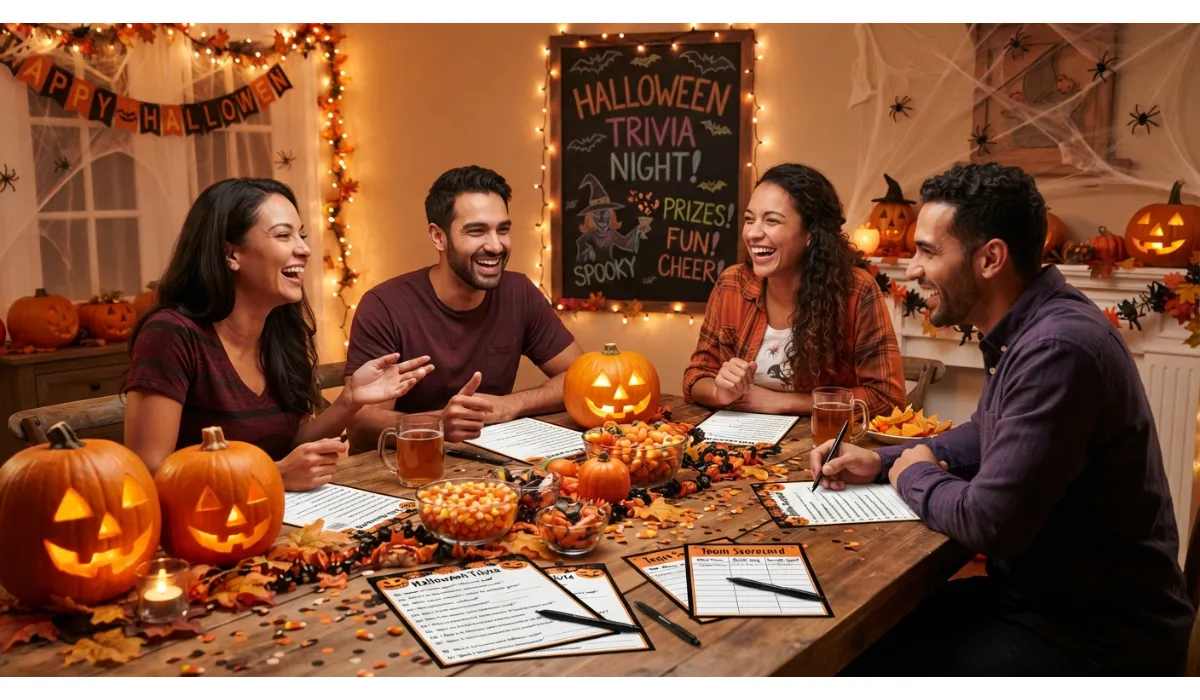
Halloween Trivia Questions and Answers: Start Playing in 30 Seconds
Jump straight into the spooky spirit with a ready-to-play mini-round designed to test your seasonal knowledge. Whether you are hosting a party or passing time on October 31, these questions deliver instant entertainment.
10 Quick Halloween Trivia Questions and Answers
Put your expertise to the test with this curated mix of easy and medium questions covering history, candy, classic movies, and ancient folklore.
Question 1: What ancient Celtic festival is considered the precursor to modern Halloween?
Answer: Samhain.
Fun Fact: Ancient Celts believed the veil between worlds thinned during Samhain, allowing spirits to roam freely.
Question 2: Which popular Halloween candy was originally called “Chicken Feed” when it was invented in the 1880s?
Answer: Candy corn.
Fun Fact: George Renninger of the Wunderle Candy Company created the iconic tri-colored sugar treat.
Question 3: In the 1993 film Hocus Pocus, what is the name of the magical cat cursed to live forever?
Answer: Thackery Binx (often just called Binx).
Fun Fact: Before being transformed into a cat by the Sanderson sisters, Binx was a teenage boy living in 17th-century Salem.
Question 4: What root vegetable did the Irish and Scots originally carve into lanterns before switching to pumpkins?
Answer: Turnips.
Fun Fact: Irish immigrants brought the tradition to North America, where abundant pumpkins quickly replaced turnips for carving jack-o’-lanterns.
Question 5: According to global trick-or-treat statistics, what is America’s favorite chocolate candy to receive on October 31?
Answer: Reese’s Peanut Butter Cups.
Fun Fact: Peanut butter cups consistently top national retail sales charts during the autumn holiday season.
Question 6: What transylvanian castle is famously associated with the fictional vampire Dracula?
Answer: Bran Castle.
Fun Fact: While Bram Stoker never visited Romania, he modeled his fictional castle after Bran Castle’s dramatic cliffside architecture.
Question 7: Which famous illusionist died on Halloween in the year 1926?
Answer: Harry Houdini.
Fun Fact: Houdini actually died from acute appendicitis, not a magic trick gone wrong, though his death on October 31 cemented his mysterious legacy.
Question 8: In the classic holiday tradition, what phrase must children shout when asking neighbors for candy during trick-or-treat rounds?
Answer: Trick-or-treat!
Fun Fact: The phrase implies a playful ultimatum: give a treat or expect a harmless prank.
Question 9: What color ghost is Casper known as in classic animation and comic books?
Answer: Friendly white ghost.
Fun Fact: Unlike traditional scary spirits, Casper was created in the 1930s to be a gentle character who preferred making friends over haunting people.
Question 10: In Mexican folklore and celebrations, what holiday immediately follows Halloween on November 1 and 2?
Answer: Día de los Muertos (Day of the Dead).
Fun Fact: This vibrant cultural celebration honors deceased loved ones with ofrendas, marigolds, and sugar skulls.
What’s Inside This List
Explore a comprehensive collection featuring dedicated categories for kids, adults, multiple-choice options, true-or-false challenges, and office-friendly work quizzes. This complete package contains over 50 total questions alongside printable PDF extras for your next event.
Easy Halloween Trivia Questions and Answers for Kids and Classrooms
Engage young learners and family parties with safe, age-appropriate questions tailored for children. These curated prompts spark curiosity while keeping the autumn spirit fun, accessible, and completely pressure-free.
Easy Halloween Trivia Questions for Young Kids (Ages 4 to 7)
Introduce early learners to classic autumn themes with 12 gentle questions focusing on familiar colors, pumpkins, costumes, and the traditional trick-or-treat routine.
Question 1: What color are traditional pumpkins when they are fully ripe and ready to pick in October?
Answer: Orange.
Question 2: What spooky phrase do children say when they knock on neighbors’ doors for candy?
Answer: Trick-or-treat!
Question 3: Which flying nocturnal animal is a classic symbol of Halloween decorations?
Answer: Bat.
Question 4: What kind of pet is often shown as a witch’s lucky companion in stories?
Answer: Black cat.
Question 5: What do you call a carved pumpkin with a glowing face inside?
Answer: Jack-o’-lantern.
Question 6: What friendly cartoon character is a kind ghost who prefers making friends over scaring people?
Answer: Casper.
Question 7: What sweet, sticky treat on a stick made from cooked sugar syrup is popular during autumn carnivals?
Answer: Candy apple.
Question 8: What do people wear on Halloween to transform into superheroes, animals, or monsters?
Answer: Costumes.
Question 9: Which month does Halloween officially take place in every year?
Answer: October.
Question 10: What sweet, yellow-and-orange candy looks like a miniature vegetable from the farm?
Answer: Candy corn.
Question 11: What do spiders spin in the corners of porches to catch bugs during spooky season?
Answer: Webs.
Question 12: What warm beverage spiced with cinnamon and nutmeg do families drink on chilly October nights?
Answer: Apple cider.
Halloween Trivia for Kids Ages 8 to 12
Challenge older elementary students with 13 slightly advanced questions exploring fascinating animal behaviors, classic folklore, wrapped mummies, and family-friendly cinematic features.
Question 1: What ancient culture originally celebrated Samhain, marking the transition into the dark winter months?
Answer: The Celts.
Question 2: Which flying mammal is the only one capable of true, sustained flight and anchors vampire lore?
Answer: Bats.
Question 3: In ancient Egyptian history, what was the primary purpose of wrapping bodies into mummies?
Answer: To preserve them for the afterlife.
Question 4: Which Disney animated film features a young boy named Miguel who travels to the Land of the Dead?
Answer: Coco.
Question 5: What historical European city experienced a famous panic over poisoned candy legends during the late 20th century?
Answer: Multiple cities globally, though urban legends became widespread across North America in the 1970s and 1980s.
Question 6: In the movie Hotel Transylvania, what famous monster runs the resort for spooky creatures?
Answer: Count Dracula.
Question 7: What popular green vegetable was historically used for carving lanterns before North American farmers switched to pumpkins?
Answer: Turnips [01:45].
Question 8: Which Shakespearean play features three wicked witches chanting “double, double toil and trouble”?
Answer: Macbeth.
Question 9: What meteorological phenomenon often creates a natural foggy atmosphere on autumn nights?
Answer: Radiation fog caused by cooling ground temperatures.
Question 10: In the wizarding world of Harry Potter, what spooky sweet treat tastes like “every flavor”?
Answer: Bertie Bott’s Every Flavor Beans.
Question 11: What skeletal instrument family dominates traditional spooky dance music tracks like “The Skeleton Dance”?
Answer: Percussion and xylophones.
Question 12: Which classic Universal Monsters character is famously stitched together from different parts?
Answer: Frankenstein’s monster.
Question 13: What glowing chemical reaction makes jack-o’-lantern glow sticks or chemical lights shine bright?
Answer: Chemiluminescence.
Tips for Using These Questions in a Classroom
Maximize participation and maintain high engagement during school hours by structuring your trivia session around inclusive group activities and thoughtful rewards.
Incorporate Group Play: Divide the classroom into cooperative teams named after seasonal entities (like “The Black Cats” or “The Pumpkins”) to encourage peer collaboration.
Host Interactive Buzzer Rounds: Use handheld soft balls or simple desk taps as buzzers to add an energetic game-show dynamic to the activity.
Provide Allergy-Safe Candy Rewards: Hand out non-food treats like festive pencils, spider rings, or stickers alongside allergy-safe snacks to ensure every student feels included http://www.youtube.com/watch?v=4ZnEiscF_qs.
Halloween History and Origins Trivia
Uncover the rich cultural roots behind modern spooky celebrations by exploring centuries of ancient traditions, folklore, and religious shifts. Understanding these historical milestones separates casual trivia players from true holiday historians.
What Does “Halloween” Actually Mean?
Halloween is a linguistic contraction of the historical Scottish phrase “All Hallows’ Eve,” marking the sacred evening preceding the Christian holy day of All Hallows’ Day. This convergence of ancient seasonal markers and medieval holy days shaped the modern naming of October 31.
Which Ancient Festival Is Halloween Based On?
Modern Halloween traces its earliest roots back to the ancient Celtic festival of Samhain, though contemporary historians debate the exact degree of direct influence. For a deeper historical breakdown, consult Britannica’s overview of Halloween, which details how seasonal transitions morphed over centuries.
Why Do We Carve Pumpkins? The Story of Stingy Jack and Turnip Lanterns
Irish folklore tells the tale of “Stingy Jack,” a trickster who bargained with the devil and was condemned to wander the earth with a glowing ember. To light his way, Jack placed his coal inside a carved turnip, prompting Irish and Scottish villagers to carve scary faces into root vegetables to ward off wandering spirits before switching to abundant North American pumpkins.
Where Did Trick-or-Treating Come From? (Souling and Guising)
The modern practice of trick-or-treating evolved from medieval European customs known as “souling” and “guising.” Impoverished citizens and children would go door-to-door offering prayers for the dead in exchange for spiced soul cakes, while guisers dressed in costumes to fool mischievous spirits.
Halloween vs. Día de Muertos: What’s the Difference?
While Halloween and Día de Muertos (Day of the Dead) occur consecutively on the calendar, they have distinct cultural origins and purposes. Halloween focuses on warding off spooks and harvest merrymaking, whereas the Mexican holiday of Día de Muertos is a joyous family remembrance honoring deceased loved ones with vibrant marigolds and altars.
15 Halloween History Questions and Answers
Test your mastery of historical timelines with these 15 challenging questions spanning ancient rituals, European folklore, and American traditions.
Question 1: What Christian feast day is celebrated on November 1st immediately following All Hallows’ Eve?
Answer: All Saints’ Day.
Question 2: During what century did Irish and Scottish immigrants heavily popularize Halloween traditions in the United States?
Answer: The 19th century (especially during the 1840s potato famine).
Question 3: What three-week liturgical period includes All Hallows’ Eve, All Saints’ Day, and All Souls’ Day?
Answer: Allhallowtide.
Question 4: In Irish folklore, what cursed mortal was forced to wander the earth with a hollowed-out root lantern?
Answer: Stingy Jack.
Question 5: What vegetable did people in the British Isles carve before discovering that North American pumpkins were larger and easier to carve?
Answer: Turnips.
Question 6: What medieval practice involved begging for spiced sweet cakes in exchange for praying for the homeowner’s dead relatives?
Answer: Souling.
Question 7: What term did Scottish and Irish youth use for dressing up in disguise and performing tricks for food or coins?
Answer: Guising.
Question 8: In what year did the infamous Salem witch trials take place in colonial Massachusetts?
Answer: 1692.
Question 9: Which ancient Celtic festival celebrated the end of the harvest and the boundary between worlds on October 31?
Answer: Samhain.
Question 10: What major American city hosted the very first official citywide trick-or-treating civic celebration in 1921?
Answer: Anoka, Minnesota.
Question 11: During World War II, what common household baking and cooking staple was strictly rationed, temporarily slowing down candy production?
Answer: Sugar.
Question 12: What traditional autumn game involves trying to catch floating fruit using only your teeth?
Answer: Bobbing for apples.
Question 13: Which Roman festival honoring the goddess of fruit and trees is sometimes credited with influencing early autumn harvest games?
Answer: The festival of Pomona.
Question 14: What floral decoration is universally used during Día de Muertos to guide spirits back to their family altars?
Answer: Marigolds (Cempasúchil).
Question 15: In what decade did commercial Halloween costumes mass-produced by department stores first take off across North America?
Answer: The 1930s.
Halloween Candy and Food Trivia
Delve into the sugary history and retail statistics behind autumn’s favorite treats. From agrarian roots to modern retail dominance, sweet confections remain a cornerstone of October 31 celebrations.
Why Was Candy Corn Once Called “Chicken Feed”?
Candy corn was originally marketed under the name “Chicken Feed” in the 1880s by the Wunderle Candy Company. The name referenced both its unique triangular shape and the fact that corn was primarily used as feed for farm poultry at the time.
What Is the Most Popular Halloween Candy?
The title of top Halloween candy often changes depending on retail metrics and polling demographics. According to annual consumer spending reports published by the National Retail Federation (NRF), chocolate items like Reese’s Peanut Butter Cups and Snickers consistently battle for the number one spot nationwide.
12 Halloween Candy and Food Questions and Answers
Test your culinary knowledge of spooky season snacks with these 12 questions spanning historical desserts, modern sweets, and fun-size treats.
Question 1: Who originally invented candy corn in the late 19th century before it became a seasonal staple?
Answer: George Renninger of the Wunderle Candy Company.
Question 2: According to National Retail Federation surveys, what peanut butter and chocolate treat frequently dominates October sales?
Answer: Reese’s Peanut Butter Cups.
Question 3: What fruit coated in hard, boiled sugar syrup on a stick is a classic autumn festival snack?
Answer: Caramel apples.
Question 4: What spiced, baked dessert featuring a fluted crust is traditionally served throughout autumn and Thanksgiving?
Answer: Pumpkin pie.
Question 5: What medieval spiced sweet cakes were handed out to beggars during historical souling traditions?
Answer: Soul cakes.
Question 6: In what decade did candy manufacturers popularize individually wrapped “fun-size” portions for trick-or-treaters?
Answer: The 1950s.
Question 7: Which chocolate bar featuring nougat, caramel, and peanuts is regularly ranked among America’s top three favorite candies?
Answer: Snickers.
Question 8: What sweet, sticky syrup made from boiled sugar or molasses is used to coat apples or popcorn balls?
Answer: Toffee or caramel.
Question 9: Which candy company manufactures the famous peanut butter cups that dominate autumn statistics?
Answer: The Hershey Company.
Question 10: What puffed snack coated in molasses syrup is traditionally served at Midwestern Halloween parties?
Answer: Popcorn balls.
Question 11: During which global conflict was sugar heavily rationed, causing a temporary dip in commercial candy production?
Answer: World War II.
Question 12: What brightly colored marshmallow treat shaped like ghosts, pumpkins, and corn is produced by Just Born?
Answer: Peeps.
Halloween Movie and TV Trivia
Dive into the cinematic universe of spooky season cinema, featuring iconic horror masterpieces, cult-classic comedies, and beloved family animations. Test your pop culture expertise with trivia from Hollywood’s most celebrated autumn screenings.
Hocus Pocus Trivia
The 1993 Disney classic Hocus Pocus revolves around the mischievous Sanderson sisters—Winifred, Sarah, and Mary—who are accidentally resurrected in Salem, Massachusetts, by a skeptical teenager. Despite initial box office struggles, the film evolved into a massive cultural touchstone and annual viewing tradition.
Halloween (1978) Trivia
Director John Carpenter’s independent horror masterpiece Halloween (1978) introduced audiences to the silent killer Michael Myers in the fictional town of Haddonfield, Illinois. Operating on a micro-budget, production designer Tommy Lee Wallace famously crafted Myers’ iconic, expressionless white visage by modifying a store-bought Captain Kirk mask.
The Nightmare Before Christmas, Beetlejuice and Family Favorites
Tim Burton’s stop-motion masterpiece The Nightmare Before Christmas follows Jack Skellington, the Pumpkin King of Halloween Town, as he attempts to take over Christmas. Alongside other family favorites like Beetlejuice and The Addams Family, these films blend whimsical ghouls with unforgettable comedy.
Scream, Ghostbusters and Classic Horror Trivia
Modern slasher hits like Wes Craven’s Scream reinvented the horror genre with self-aware humor, while blockbusters like Ghostbusters and animated staples like It’s the Great Pumpkin, Charlie Brown cement autumn as Hollywood’s favorite time of year.
15 Halloween Movie Trivia Questions and Answers
Challenge your film knowledge with these 15 questions covering iconic movie monsters, memorable quotes, and cinematic milestones.
Question 1: In the 1993 film Hocus Pocus, what is the name of the eldest Sanderson sister played by Bette Midler?
Answer: Winifred Sanderson.
Question 2: What original piece of store-bought merchandise was modified to create Michael Myers’ iconic mask in 1978’s Halloween?
Answer: A Captain Kirk (William Shatner) mask.
Question 3: In The Nightmare Before Christmas, what is the name of the skeletal protagonist who rules over Halloween Town?
Answer: Jack Skellington.
Question 4: Which supernatural comedy features Peter Venkman, Ray Stantz, Egon Spengler, and Winston Zeddemore catching ghosts in New York City?
Answer: Ghostbusters.
Question 5: What quirky, gothic family features characters named Wednesday, Pugsley, Morticia, and Gomez?
Answer: The Addams Family.
Question 6: In Wes Craven’s 1996 slasher film Scream, what is the name of the fictional town where the murders take place?
Answer: Woodsboro.
Question 7: Which Peanuts character spends all of Halloween night waiting patiently in a pumpkin patch for a mythical holiday figure?
Answer: Linus van Pelt.
Question 8: In Tim Burton’s Beetlejuice, how many times do you have to say the titular bio-exorcist’s name to summon him?
Answer: Three times.
Question 9: What is the name of the sinister hotel run by monsters in the animated franchise Hotel Transylvania?
Answer: Hotel Transylvania (run by Count Dracula).
Question 10: In the movie Coraline, what unsettling physical feature do the inhabitants of the Other World have instead of eyes?
Answer: Buttons.
Question 11: Which classic 1984 horror comedy introduces viewers to adorable furry creatures that turn into vicious monsters if fed after midnight?
Answer: Gremlins.
Question 12: Who directed the 1978 horror classic Halloween and composed its iconic, chilling piano theme song?
Answer: John Carpenter.
Question 13: In the cult classic Trick ‘r Treat, what is the name of the small, burlap-sack-wearing spirit who enforces Halloween traditions?
Answer: Sam.
Question 14: Which actress starred as Laurie Strode in the original 1978 Halloween, launching her career as a legendary horror scream queen?
Answer: Jamie Lee Curtis.
Question 15: In Hocus Pocus, what type of animal does Thackery Binx get transformed into by the wicked witches?
Answer: A black cat.
Monsters, Witches and Folklore Trivia
Unravel the myths and legends behind history’s most terrifying creatures. From nocturnal shape-shifters to ancient superstitions, explore the folklore that shapes our modern understanding of horror.
What Is a Group of Witches Called?
A gathering or organized group of witches is traditionally called a coven. In historical folklore and modern fantasy, covens often consist of thirteen members who meet under the moonlight to practice magic and perform seasonal rituals.
What Is the Word for a Werewolf?
The technical, clinical term for a werewolf or a person who transforms into a wolf during a full moon is a lycanthrope. This word originates from the Greek term lykanthropos, combining lykos (wolf) and anthropos (man).
Why Don’t Vampires Have Reflections?
According to European vampire lore, traditional mirrors were historically backed with pure silver, a sacred and pure metal. Because vampires are creatures of darkness and corruption, silver mirrors cannot capture their soulless reflections.
Black Cats, Bats and Halloween Superstitions
Superstitions linking animals to bad luck or witchcraft date back centuries across European cultures. Black cats were famously feared in medieval Europe as witch familiars, while bats earned a dark reputation because of their nocturnal habits and association with blood-drinking creatures of the night.
12 Monster and Folklore Questions and Answers
Put your mythological knowledge to the test with these 12 questions covering classic movie monsters, ancient superstitions, and legendary beasts.
Question 1: What is the traditional name for a gathering of twelve or more witches?
Answer: A coven.
Question 2: What formal medical or mythological term describes a human who transforms into a wolf?
Answer: Lycanthrope.
Question 3: Why are traditional vampires unable to cast a reflection in a mirror according to folklore?
Answer: Mirrors were historically backed with pure silver, which repels evil entities.
Question 4: What ancient civilization practiced mummification to preserve pharaohs for the afterlife?
Answer: Ancient Egyptians.
Question 5: Which famous literary monster was created by a young Mary Shelley during a rainy summer in Switzerland?
Answer: Frankenstein’s monster.
Question 6: What color cat is most commonly associated with bad luck and spooky season superstitions?
Answer: Black cat.
Question 7: In classic folklore, what specific lunar phase triggers a werewolf’s transformation?
Answer: A full moon.
Question 8: What winged creature of the night inspired the legendary vampire myth of Transylvania?
Answer: The vampire bat.
Question 9: According to old superstitions, what wooden stake-related object is traditionally used to defeat a vampire?
Answer: A wooden stake through the heart.
Question 10: What legendary undead creature, popular in modern pop culture, shuffles slowly and craves human brains?
Answer: A zombie.
Question 11: What botanical plant is famously believed to ward off vampires and evil spirits when hung near a doorway?
Answer: Garlic.
Question 12: Which spirit or phantom is traditionally said to haunt old castles and rattle chains in the night?
Answer: A ghost.
Hard Halloween Trivia Questions for Adults
Challenge seasoned trivia enthusiasts and party guests with advanced questions designed to test deep knowledge of obscure holiday history, rare cinematic trivia, and global world records. These demanding prompts will easily separate casual fans from true holiday experts.
15 Hard Halloween Trivia Questions and Answers
Test your mastery of advanced seasonal trivia with 15 difficult questions covering historical records, rare film production facts, and deep-cut folklore.
Question 1: In what year did the town of Anoka, Minnesota, officially host the very first citywide Halloween celebration to curb juvenile pranks?
Answer: 1921.
Question 2: What is the title of the ancient 18th-century Scottish poem by Robert Burns that immortalized traditional Halloween matchmaking games and folklore?
Answer: “Halloween”.
Question 3: Which classic Universal horror film holds the record for being the first major studio talkie monster movie released in 1931?
Answer: Dracula.
Question 4: What is the weight record (in pounds) for the heaviest pumpkin ever grown, which set a world record in recent years?
Answer: Over 2,700 pounds (achieved by various growers breaking world records through competitive cultivation).
Question 5: In John Carpenter’s 1978 Halloween, what is the name of the psychiatric facility where Michael Myers escapes from before returning to Haddonfield?
Answer: Smith’s Grove Sanitarium.
Question 6: What specific pagan festival celebrated by the ancient Romans is sometimes cited by historians as influencing autumn harvest customs in Britain?
Answer: Feralia (or the festival of Pomona).
Question 7: Which famous American author wrote the classic short story “The Legend of Sleepy Hollow,” featuring the Headless Horseman?
Answer: Washington Irving.
Question 8: In the 1968 horror masterpiece Night of the Living Dead, directed by George A. Romero, what specific term is actually used by the characters instead of “zombie”?
Answer: Ghouls.
Question 9: What medieval English statute officially criminalized begging and souling practices under vagrancy laws, altering autumn traditions?
Answer: The Vagabonds Act of 1572.
Question 10: In the cult horror movie Trick ‘r Treat, what are the four strict rules enforced by the spirit Sam?
Answer: Wear a costume, hand out candy, check your candy, and never blow out a Jack-o’-lantern before midnight.
Question 11: What toxic chemical compound was famously suspected in nationwide media panics regarding tampered Halloween candy during the 1970s and 1980s?
Answer: Potassium cyanide (though investigations proved most contamination stories were urban legends).
Question 12: Which Shakespearean tragedy features the famous incantation spoken by three witches: “By the pricking of my thumbs, something wicked this way comes”?
Answer: Macbeth.
Question 13: In what year was the Candy Corn confection invented by George Renninger of the Wunderle Candy Company?
Answer: The 1880s (specifically 1880).
Question 14: What is the name of the fictional town in Ohio where the television series Stranger Things sets its supernatural, dimension-crossing Halloween episodes?
Answer: Hawkins.
Question 15: According to Guinness World Records, what is the largest number of lit jack-o’-lanterns ever displayed in a single unified exhibition?
Answer: Over 30,000 glowing pumpkins displayed at events like the Great Jack O’Lantern Blaze.
Bonus Round: Tie-Breaker Questions
Resolve close scores and break tournament ties using these three numeric-answer questions where the closest guess wins the game.
Tie-Breaker Question 1: Approximately how many pounds of candy corn are manufactured in the United States every single year?
Answer: Over 35 million pounds.
Tie-Breaker Question 2: In what year was the original, groundbreaking horror film Night of the Living Dead released in theaters?
Answer: 1968.
Tie-Breaker Question 3: How many total minutes is the runtime of John Carpenter’s theatrical cut of the 1978 classic Halloween?
Answer: 91 minutes.
How to Keep Adult Trivia Fair and Fun
Maintain an engaging, competitive atmosphere during adult game nights by establishing clear ground rules and smooth gameplay mechanics.
Ban Smartphone Usage: Require all players to lock phones away in a basket to prevent cheating and preserve the integrity of hard trivia questions.
Implement Time Limits: Give teams exactly 30 seconds to lock in their answers on paper to keep the game moving at an energetic pace.
Award Creative Bonus Points: Give out extra points for hilarious wrong guesses or deep pop-culture commentary to keep spirits high even when scores lag.
Halloween Trivia Multiple Choice Questions and Answers
Test your recognition skills with a structured quiz format that provides plausible alternatives for every question. Multiple-choice rounds work exceptionally well for large party settings where players prefer selecting from options over blind guessing.
15 Halloween Multiple Choice Questions (A, B, C, D)
Challenge participants with 15 questions featuring four distinct options, designed to test general knowledge, movie history, and seasonal traditions.
Question 1: Which state produces the highest overall volume of pumpkins in the United States annually?
A) California
B) Illinois
C) New York
D) Ohio
Answer: B) Illinois
Question 2: In the 1993 film Hocus Pocus, what potion ingredient does Winifred Sanderson need to complete her spell?
A) A lock of hair from a pure maiden
B) The life force of a child
C) A tear from a zombie
D) The blood of a black cat
Answer: B) The life force of a child
Question 3: What was the original name of the candy bar known today as Snickers when Mars introduced it?
A) Marathon
B) Snickers was always named Snickers
C) The name is derived from the family’s favorite horse
D) Victory Bar
Answer: C) The name is derived from the family’s favorite horse (Snickers was the name of the Mars family’s favorite horse).
Question 4: Which country is credited with originating the tradition of carving jack-o’-lanterns out of turnips?
A) Germany
B) Ireland and Scotland
C) England
D) Canada
Answer: B) Ireland and Scotland
Question 5: What color were original Halloween decorations and party themes primarily centered around in early 20th-century America?
A) Black and orange
B) Purple and green
C) Blood red and white
D) Brown and gold
Answer: A) Black and orange
Question 6: In what year did Charles Schulz release the classic television special It’s the Great Pumpkin, Charlie Brown?
A) 1962
B) 1966
C) 1970
D) 1974
Answer: B) 1966
Question 7: What traditional Italian pastry or cookie is heavily associated with the celebration of All Saints’ Day?
A) Panettone
B) Biscotti dei Morti (Dead Man’s Biscuits)
C) Cannoli
D) Pizzelle
Answer: B) Biscotti dei Morti (Dead Man’s Biscuits)
Question 8: According to historical records, approximately how much money do U.S. consumers spend on Halloween celebrations annually?
A) 500 million dollars
B) 3 billion dollars
C) Over 10 billion dollars
D) 50 billion dollars
Answer: C) Over 10 billion dollars
Question 9: What type of mythical creature is associated with the ancient Greek word lykanthropos?
A) Vampire
B) Werewolf
C) Banshee
D) Goblin
Answer: B) Werewolf
Question 10: Which classic monster movie features actor Boris Karloff wrapped in bandages?
A) The Mummy (1932)
B) Frankenstein (1931)
C) The Invisible Man (1933)
D) Dracula (1931)
Answer: A) The Mummy (1932)
Question 11: In the movie Ghostbusters, what is the name of the giant marshmallow mascot that terrorizes New York City?
A) Puffing Pete
B) Stay Puft Marshmallow Man
C) Sweet Marshmallow Giant
D) Marshmallow Marsh
Answer: B) Stay Puft Marshmallow Man
Question 12: What historical figure is famously rumored to have died on Halloween in 1926 due to medical complications?
A) Thomas Edison
B) Harry Houdini
C) Nikola Tesla
D) Arthur Conan Doyle
Answer: B) Harry Houdini
Question 13: Which Shakespeare play features the famous cauldron-chanting trio of witches?
A) Hamlet
B) Romeo and Juliet
C) Macbeth
D) A Midsummer Night’s Dream
Answer: C) Macbeth
Question 14: What sweet confection is made by boiling molasses or brown sugar and coating an apple?
A) Cotton candy
B) Toffee apple
C) Taffy chew
D) Marshmallow whip
Answer: B) Toffee apple
Question 15: What modern household item was used to create the mask worn by Michael Myers in 1978’s Halloween?
A) A hockey mask
B) A paper-mache skull
C) A Captain Kirk face mask
D) A rubber pig mask
Answer: C) A Captain Kirk face mask
Multiple Choice Answer Key
Quickly check scores or grade participant sheets using this consolidated master answer key:
1: B | 2: B | 3: C | 4: B | 5: A
6: B | 7: B | 8: C | 9: B | 10: A
11: B | 12: B | 13: C | 14: B | 15: C
Halloween True or False Questions
Debunk common urban legends and test quick-thinking skills with a fast-paced true-or-false round. This section breaks down persistent myths while offering straightforward gameplay for quick party matches.
15 Halloween True or False Questions and Answers
Review 15 statements designed to challenge common assumptions about history, animal folklore, and seasonal safety rules.
Question 1: True or False: Modern trick-or-treating originated directly from ancient Roman harvest banquets.
Answer: False. It evolved primarily from medieval European practices like souling and guising, combined with Celtic Samhain traditions.
Question 2: True or False: Candy corn was originally invented and marketed under the name “Chicken Feed.”
Answer: True. The Wunderle Candy Company used the name in the 1880s to reference farm poultry feed.
Question 3: True or False: Black cats were universally revered and brought good luck across all of medieval Europe.
Answer: False. Medieval superstitions frequently associated black cats with witchcraft and bad luck.
Question 4: True or False: The town of Anoka, Minnesota, is officially recognized as the “Halloween Capital of the World.”
Answer: True. Anoka hosted one of the first official civic celebrations in 1921 to keep kids out of trouble.
Question 5: True or False: Real razor blades hidden in apples by malicious strangers have caused widespread fatalities during trick-or-treating.
Answer: False. Extensive sociological studies confirm that random candy tampering resulting in injury is an urban legend rather than a verified statistical reality.
Question 6: True or False: Pumpkins are technically classified as fruits rather than vegetables.
Answer: True. Because they contain seeds and develop from the flower of the plant, botanically speaking, pumpkins are fruit.
Question 7: True or False: John Carpenter spent a massive multi-million-dollar studio budget to film the original 1978 Halloween.
Answer: True (False). The film operated on a famously tiny indie budget of roughly 300,000 dollars.
Question 8: True or False: Vampire bats are native to European forests where traditional Dracula folklore was born.
Answer: False. Vampire bats are native exclusively to Central and South America; Bram Stoker based his novel on European myths and wolves.
Question 9: True or False: Día de los Muertos is simply the Mexican version of Halloween.
Answer: True (False). While adjacent on the calendar, Día de los Muertos is a sacred, joyous holiday focused on remembering deceased ancestors rather than scaring spirits away.
Question 10: True or False: Turnips and potatoes were carved into lanterns in Ireland and Scotland before immigrants brought the practice to pumpkin-abundant America.
Answer: True. Large North American pumpkins proved much easier to hollow out and carve.
Question 11: True or False: Harry Houdini passed away on Halloween night in 1926 due to a magic trick gone wrong.
Answer: True (False). He died from acute appendicitis, though the date of his death added to his legendary persona.
Question 12: True or False: The word “witch” derives from an Old English word meaning “wise woman.”
Answer: True. The term stems from wicce, meaning wise one or sorceress.
Question 13: True or False: More chocolate candy is sold during the week of Halloween than during Valentine’s Day.
Answer: False. Valentine’s Day and Easter frequently rival or exceed Halloween in total nationwide chocolate sales.
Question 14: True or False: Bats are completely blind and rely entirely on magic to navigate the night sky.
Answer: False. Bats have functional eyes and utilize sophisticated echolocation rather than supernatural abilities.
Question 15: True or False: The traditional colors of Halloween—orange and black—represent harvest warmth and the darkness of winter.
Answer: True. Orange symbolizes the autumn harvest, while black represents darkness and the onset of winter.
Halloween Myths That Sound True
Dispel common misconceptions that often circulate during spooky season with these helpful reality checks:
The Poisoned Candy Myth: Media panics from the 1970s created widespread fear of contaminated treats, but criminologists have found virtually no documented cases of strangers poisoning random children.
Black Cat Bad Luck: While medieval folklore demonized black cats, ancient Egyptian culture actually worshipped cats as sacred protectors of the home.
Bats and Hair Entanglement: A persistent childhood myth claims bats will fly directly into your hair, but bats possess expert echolocation that easily allows them to avoid human contact.
Funny Halloween Trivia and Good Halloween Questions
Inject humor and conversation-starting energy into your gathering with questions designed to make participants laugh. These lighthearted prompts provide a refreshing break from intense history and movie trivia.
What Are Some Funny Halloween Trivia Questions?
Funny Halloween trivia questions combine quirky seasonal facts with lighthearted humor, making them ideal for breaking the ice at parties or keeping kids entertained without any genuinely scary elements.
Question 1: What do ghosts serve for dessert at Halloween dinner parties?
Answer: I-scream.
Question 2: Why did the skeleton refuse to jump off the haunted castle roof?
Answer: Because he didn’t have the guts.
Question 3: What is a witch’s favorite subject to study when she attends school?
Answer: Spelling.
Question 4: What musical instrument do graveyard skeletons love to play in spooky bands?
Answer: A trom-bone.
Question 5: Why do mummies make terrible secret-keeping friends?
Answer: Because they tend to wrap things up and keep everything bottled inside.
Question 6: What kind of street does a friendly zombie love to live on?
Answer: A dead end.
Question 7: Why didn’t the vampire attack the spooky ghost during dinner?
Answer: Because he couldn’t sink his teeth into him.
Question 8: What do stylish witches wear to keep warm on chilly autumn nights?
Answer: Ghoul-friend sweaters.
Question 9: Why did the pumpkin cross the busy street on October 31?
Answer: Because it wanted to get to the middle of the local harvest festival.
Question 10: What do smart vampires use to check their hair before heading out to a party?
Answer: A bat mirror.
What Are Some Good Halloween Questions to Ask? (Icebreakers)
Spark engaging conversations among guests who might not know each other well using these non-trivia icebreaker prompts:
Question 1: What was the most creative or scariest costume you ever wore as a kid?
Question 2: If you had to survive a night inside a haunted mansion, which fictional horror movie character would you want by your side?
Question 3: Would you rather spend Halloween night exploring a dark ancient catacomb or watching classic slasher films under a cozy blanket?
Question 4: What is your absolute favorite childhood Halloween candy memory?
Question 5: If you could magically bring any fictional monster to life as a house pet, which one would you pick?
Question 6: What is the scariest movie you have ever watched, and did you finish it?
Question 7: If you were hosting a spooky dinner party, what three eerie dishes would you serve your guests?
Question 8: Do you prefer handing out candy to trick-or-treaters or going out into the neighborhood yourself?
Question 9: What smell reminds you the most of autumn—cinnamon, burning leaves, or pumpkin spice?
Question 10: If you could instantly master any magical spell or potion-making skill, what would you use it for?
Halloween Trivia for Work, Team Events and Zoom
Bring colleagues together for seasonal team-building with structured office-friendly trivia. Whether hosting an in-person breakroom celebration or running a virtual session over video conferencing software, these tools ensure seamless execution.
10 Office-Friendly Halloween Trivia Questions
Keep corporate events professional, inclusive, and fun with 10 questions focused on workplace-appropriate pop culture, retail facts, and autumn history.
Question 1: According to retail data, what is the single highest-selling non-candy item purchased for autumn holidays?
Answer: Costumes.
Question 2: Which classic holiday special features Charlie Brown waiting in vain for the Great Pumpkin?
Answer: It’s the Great Pumpkin, Charlie Brown.
Question 3: In the corporate retail world, approximately what month do stores begin stocking Halloween merchandise on shelves?
Answer: August or September.
Question 4: What sticky autumn treat consists of fresh apples dipped in warm boiled sugar syrup?
Answer: Candy apples.
Question 5: Which famous illusionist’s dramatic death on October 31, 1926, remains a pop-culture touchstone?
Answer: Harry Houdini.
Question 6: What vegetable was originally carved into lanterns in Ireland before North American pumpkins took over?
Answer: Turnips [01:45].
Question 7: What is the technical clinical term for a person who believes they can transform into a wolf?
Answer: Lycanthrope.
Question 8: Which historic U.S. city is internationally famous for its massive annual Halloween parade in Greenwich Village?
Answer: New York City.
Question 9: What medieval European practice involved poor citizens begging for spiced cakes in exchange for prayers?
Answer: Souling.
Question 10: Which classic monster movie released by Universal in 1931 established the golden age of cinematic horror?
Answer: Dracula.
How to Run Halloween Trivia on Zoom or Teams
Deliver a flawless virtual trivia experience for remote colleagues by leveraging built-in collaboration features on platforms like Zoom and Microsoft Teams.
Use Screen Sharing: Share your screen to display trivia slides or question lists so everyone can read along clearly.
Utilize Breakout Rooms: Split large work departments into smaller breakout teams for two minutes between rounds to encourage cross-collaboration.
Leverage Private Chat: Instruct team captains to submit their answers directly to the host via private chat to prevent other teams from copying.
Automate Scoring: Keep a live scoreboard visible on a shared document so teams can track standings in real time.
Team Trivia Rules and Scoring Ideas
Establish clear guidelines to keep competitive energy high and ensure the game stays fast-paced and fair across departments.
Assign Team Captains: Designate one person per breakout room to submit the final agreed-upon answer before the timer expires.
Implement Point Multipliers: Offer double points for difficult history questions and standard points for easy pop-culture prompts.
Award Fun Superlatives: Give out digital gift cards or fun titles like “Master of Monsters” to winning teams alongside creative booby prizes for the lowest score.
Interesting Halloween Facts
Discover fascinating trivia and surprising historical highlights that reveal how an ancient agricultural festival evolved into a modern cultural phenomenon. These verified facts provide deep insight into the traditions, retail milestones, and folklore surrounding October 31.
What Are 20 Interesting Facts About Halloween?
Halloween boasts thousands of years of rich history, massive economic impact, and bizarre cultural traditions that surprise even seasoned holiday enthusiasts.
Halloween traces its origins back over 2,000 years to the ancient Celtic festival of Samhain.
The term “Halloween” is a shortened version of “All Hallows’ Eve,” the evening before All Saints’ Day.
Irish and Scottish immigrants brought traditional autumn folk customs to North America during the 19th century.
Turnips, potatoes, and large beets were originally carved into scary lanterns before North American pumpkins became the standard.
Candy corn was originally marketed under the name “Chicken Feed” in the 1880s by the Wunderle Candy Company.
U.S. consumers spend over 10 billion dollars annually on Halloween costumes, decorations, and candy.
Reese’s Peanut Butter Cups consistently rank as America’s favorite chocolate candy to receive on October 31.
The town of Anoka, Minnesota, is officially recognized as the “Halloween Capital of the World” for hosting early civic celebrations.
Michael Myers’ iconic mask from the 1978 horror film Halloween was a modified store-bought Captain Kirk mask.
Botanically speaking, pumpkins are classified as fruits because they contain seeds and develop from flowers.
The practice of trick-or-treating evolved from medieval European customs known as “souling” and “guising.”
Illinois produces the highest overall volume of pumpkins of any state in the United States.
Famous illusionist Harry Houdini died on Halloween night in 1926 from medical complications.
A traditional gathering or organized group of witches is called a coven.
The clinical term for a werewolf or a person who transforms into a wolf is a lycanthrope.
Black cats were heavily stigmatized in medieval Europe due to superstitions linking them to witchcraft.
Día de los Muertos (Day of the Dead) is a distinct Mexican holiday celebrating deceased ancestors, celebrated right after Halloween.
The world record for the heaviest pumpkin ever grown exceeds 2,700 pounds.
Vampire bats are native exclusively to Central and South America, not the forests of Eastern Europe.
Over 35 million pounds of candy corn are manufactured across the United States every single year.
Where Can I Find More Halloween Facts?
Explore the comprehensive sections above for deeper dives into specific topics, ranging from cinematic history and monster folklore to classroom-friendly games and adult trivia challenges.
How to Host a Halloween Trivia Night + Free Printable
Transform any seasonal gathering into an unforgettable event by organizing a structured trivia night. Proper preparation, clear scoring mechanics, and engaging themes ensure your party runs smoothly from start to finish.
How to Set Up Rounds, Teams and Scoring
Successful trivia nights require a balanced structure that keeps participants engaged without feeling overwhelmed. Divide your event into logical segments to maintain high energy throughout the evening.
Create Balanced Teams: Group guests into teams of four to six people to encourage collaborative guessing and lively discussions.
Structure Multiple Rounds: Separate your game into themed rounds, such as history, movie pop-culture, candy stats, and monster folklore.
Enforce Strict Timers: Give teams exactly 60 seconds per question to lock in written answers to keep the game moving briskly.
Maintain a Live Scoreboard: Keep total scores visible on a whiteboard or shared digital screen so teams can track standings between rounds.
Printable Halloween Trivia Questions and Answers PDF
Equip yourself with everything needed for a successful game night by downloading our complete, ready-to-use printable package.
What’s Included: The downloadable PDF features a complete 50-question master quiz, a clean question sheet for participants, a comprehensive answer key for the host, and dedicated team scorecards.
How to Access: Simply print copies of the question sheets and scorecards for each table, keeping the master answer key hidden until scoring time.
Prizes, Props and Music Ideas
Elevate the atmosphere of your trivia night by incorporating immersive decorations, memorable prizes, and spooky background audio tracks.
Award Fun Prizes: Hand out small trophies, festive candy baskets, or novelty mugs to the winning team.
Set the Mood: Play instrumental horror soundtracks or classic Halloween mixes at low volume during intermission breaks.
Use Spooky Props: Decorate tables with miniature pumpkins, flickering LED candles, and cobwebs to match the seasonal theme.
Do’s and Don’ts for Hosts
Master the art of hosting by following these essential guidelines for maintaining a fun, fair, and energetic game environment.
DO Read Questions Twice: Clearly enunciate every question twice so all teams catch important details.
DO Keep Score Transparent: Announce updated standings after every round to fuel friendly competition.
DON’T Allow Phone Use: Strictly prohibit mobile devices at tables to prevent cheating during difficult history and movie rounds.
DON’T Rush Intermissions: Give teams adequate time to tally points and refill drinks between rounds.
Halloween Trivia FAQs
Find quick, expert answers to the most common questions about hosting, formatting, and sourcing spooky trivia games for any gathering.
What Is an Interesting Halloween Quiz Game?
An engaging Halloween quiz game combines multi-format rounds featuring multiple-choice questions, audio clips of classic movie themes, picture boards of movie monsters, and interactive true-or-false challenges. Mixing rapid-fire general knowledge with themed trivia keeps participants energized, prevents boredom, and accommodates players of all skill levels.
How Many Questions Should a Halloween Trivia Night Have?
A standard Halloween trivia night works best with 40 to 50 questions divided into four or five distinct rounds of ten questions each. This structure provides a balanced event lasting roughly ninety minutes, which is the ideal timeframe to maintain high audience engagement without causing participant fatigue.
What Are Some Good Answers for a Halloween Pub Quiz?
Strong pub quiz answers feature surprising historical facts and deep pop-culture trivia, such as identifying Samhain as the precursor to the holiday, recognizing that Michael Myers’ mask was a modified Captain Kirk prop, or knowing that candy corn was originally called chicken feed.
Where Can I Get More Trivia Questions?
You can find extensive collections of additional trivia prompts by exploring specialized online quiz databases, seasonal party planning books, and the comprehensive question categories outlined throughout this guide, ranging from ancient folklore and candy statistics to family-friendly classroom lists.
How Do I Make Halloween Trivia Harder or Easier?
To increase difficulty, incorporate obscure historical dates, exact box office figures, and deep-cut literary horror questions without multiple-choice options. To make the game easier, rely heavily on multiple-choice formats, true-or-false challenges, and iconic pop-culture movie questions suitable for all ages.
Conclusion
Whether you are hosting a lively virtual party over Zoom, planning an office team-building event, or running a competitive pub quiz on October 31, having the right questions makes all the difference. From ancient Samhain history and classic movie milestones to funny icebreakers and printable scorecards, these comprehensive Halloween trivia questions and answers give you everything needed to deliver an unforgettable, top-tier seasonal game night.
Mark Steve
Mark Steve is a tech, business, and lifestyle writer with over 5 years of experience analyzing digital trends, startups, and online business models. He publishes well-researched, fact-checked content focused on clarity, credibility, and real-world value.