“Am I a loser?” is a painful question, but a setback cannot answer it. A loser is an informal label people use for someone they believe has failed; it is not a diagnosis or a measurable type of person. Losing a job, falling behind your peers, making a mistake, or struggling to get started describes a situation or behavior. It does not establish your worth or predict your future. If I want an honest answer, I look at what happened, what I can influence, and what support I need. That approach leaves room for accountability without turning one difficult chapter into an identity.
The question usually arrives after a particular moment: another rejection email, a birthday that doesn’t match the life you pictured, or an evening spent watching everyone else appear to move ahead. Sometimes it follows a real mistake that needs repair. Sometimes it follows exhaustion. In either case, calling yourself a loser feels like a verdict, yet it gives you almost no useful information about what to do next.
Why Do I Feel Like a Loser?
I would start by asking, “Compared with what?” Most feelings of failure have a hidden reference point. It might be a parent’s expectations, a classmate’s career, a former version of you, or a deadline you never consciously chose. When that reference point stays hidden, the feeling can seem like an objective fact.
There are also practical reasons the thought gets louder. You may be under financial pressure, stuck in an unsuitable job, lonely, recovering from a breakup, or trying to function while sleep-deprived. None of these automatically explains every feeling. They do change the conditions under which you evaluate yourself.
A result becomes a whole-person judgment
“I failed an exam” identifies an event. “I am a failure” claims the event tells the entire story of who you are. That leap is tempting because a single label is simpler than a messy explanation. It is also less accurate. One exam can reveal a gap in preparation, a poor study method, a hard period at home, or a subject you need more help with. It cannot measure your value as a friend, colleague, or human being.
I am careful not to turn this into empty reassurance. If I missed a deadline or hurt someone, I still need to own it. Separating a person from an action makes responsibility more precise: I can name the action, address the consequence, and change the pattern.
Your comparison has missing data
When you compare your ordinary Tuesday with somebody’s announcement, you are comparing different kinds of evidence. You can see their promotion or relationship. You usually cannot see the family help, private setbacks, debt, luck, sacrifices, or doubts behind it. Even when another person truly has what you want, their timeline does not create a deadline for yours.
Try naming the standard in a sentence: “I think I’m behind because I expected to earn this much by this age.” Now you have something you can examine. Is the goal still yours? Were the starting conditions comparable? Would meeting it actually improve your life?
A hard season gets mistaken for a permanent trait
The word “loser” implies a fixed identity. Life, however, comes in seasons. Caring for a relative, searching for work, living with illness, or rebuilding after a loss may reduce your visible progress for months. A slower season deserves an honest account of its demands. It does not need a flattering story, but it does need the whole story.
What Does “Loser” Even Mean?
Outside a game or contest, the term has no agreed scoring system. People often use it to bundle income, status, popularity, appearance, and confidence into one insult. Those measures do not always move together, and some are outside your control. A wealthy person can be deeply unreliable; someone between jobs can be generous and skilled.
I find it more useful to replace the label with a question I can answer. Am I unhappy with my current circumstances? Have I neglected a responsibility? Am I pursuing a goal that matters to me? Each question calls for a different response. An insult calls only for shame.
The table does not turn a difficult life into a productivity exercise. Its purpose is to recover detail. Detail tells you whether you need a plan, a conversation, rest, treatment, or a change in expectations.
Am I a Loser If I Have No Job, Money, or Clear Direction?
No. Employment, savings, and direction matter because they affect security and choices. They are not a test of whether you deserve respect. Unemployment may reflect a difficult market, health needs, caregiving, discrimination, a mismatch in skills, or a decision that did not work out. The cause matters because the remedy depends on it.
If money is urgent, I would deal with the immediate numbers first: what is due, what can be reduced, which support is available, and which applications or conversations have the best chance of helping. If the main problem is direction, I would run small experiments rather than demand a complete life plan. Talk to someone in a field, try a short project, or volunteer for a task that tests an interest. Information grows from contact with reality.
What If I Have Made Real Mistakes?
Then I would name them plainly. Reassurance that erases harm is not very comforting, especially when you know what happened. You can be responsible for a poor choice without being permanently defined by it.
Start with three separate statements: “What I did was…,” “The effect was…,” and “What I can do now is….” The middle statement matters. It keeps the focus on the actual consequence instead of a dramatic judgment about your identity. The last statement may be an apology, a repayment, a changed habit, or accepting that the other person needs distance.
A Better Way to Answer “Am I a Loser?”
I use a simple three-part check when a global judgment is crowding out the facts. It is not a personality test. It is a way to sort what needs attention.
1. State the event without the label
Write one sentence that a camera or a bank statement could verify: “I have been out of work for four months,” “I spent more than I planned,” or “I haven’t called my friend back.” Avoid words such as “always,” “never,” and “worthless.” If the sentence cannot be checked, it may be an interpretation rather than a fact.
2. Separate control, influence, and context
Ask what you directly chose, what you could influence, and what you could not control. For example, you can improve a résumé and contact people; you cannot force an employer to hire you. You can apologize for your words; you cannot control someone else’s response. This distinction prevents two opposite errors: blaming yourself for everything and pretending you have no agency.
3. Choose a next move you can observe
Pick an action small enough to do under current conditions. Send one application, book one appointment, clean one corner, or tell a trusted person what is going on. If it depends on a sudden burst of confidence, shrink it. I would judge that move by whether I did it, not by whether it instantly changed my entire life.
Here is a useful extra check I rarely see in advice about feeling behind: match the size of the question to the time available. “What should I do with my life?” cannot be settled tonight. “What can I do before Friday to learn whether this path fits?” often can. A smaller question is not avoidance; it can be the first honest piece of a larger answer.
How to Stop Feeling Like a Loser Without Pretending Everything Is Fine
You do not have to feel good about every part of your life to stop attacking yourself. The aim is a more accurate view that lets you act.
Keep an evidence record, including the unglamorous parts
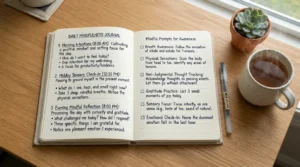
For one week, jot down what you actually did, the obstacles you met, and one thing you handled with care. Include paid work, caregiving, errands, learning, and asking for help. The point is not to collect compliments. It is to notice work that disappears when you measure yourself only by public milestones.
Be equally willing to record a missed commitment. A fair record includes both progress and problems. If the same obstacle appears repeatedly, you have discovered something to address: perhaps the task is too large, the schedule is unrealistic, or you need another person’s support.
Change the comparison group
I would compare today with my own recent starting point before comparing myself with a stranger at a different stage. Did I respond sooner than last time? Do I understand one more part of the problem? Am I making a choice that fits my values, even if it is invisible online? Progress can be modest and still be real.
Build reliability with a small promise
Confidence often grows when you see yourself follow through. Choose one promise that is specific and manageable: “I will walk for ten minutes after lunch on Monday and Wednesday,” or “I will draft the first three lines of the email by 4 p.m.” If you miss it, revise the plan instead of using the miss as evidence against your character.
Let someone see the actual problem
Shame thrives on vague summaries. Saying “I’m a loser” to a friend may lead to a quick “No, you’re not.” Saying “I’m scared because I have been rejected from six jobs and my rent is due” gives them something they may be able to help with. You can ask for a listening ear, help sorting options, or company while you make a call.
Not everyone will respond well. Choose a person who can listen without turning your situation into a competition or a lecture. If you do not have that person nearby, a counselor, support group, or community service may offer another place to begin.
When the Feeling Needs More Than Self-Help
Feeling inadequate after a setback is common. Persistent hopelessness, loss of interest in usual activities, major changes in sleep or appetite, difficulty functioning, or thoughts of self-harm deserve more attention. I would not try to diagnose those feelings from an article.
The National Institute of Mental Health advises seeking professional help when severe or distressing symptoms last two weeks or more. If symptoms are worsening or daily life is becoming hard to manage, contact a health professional sooner. A doctor or mental health professional can help assess what is happening and discuss appropriate support. Feeling worthless can be part of depression, but this thought alone does not establish a diagnosis; NIMH’s depression guidance describes the broader pattern.
If you might hurt yourself or cannot stay safe, seek immediate help through local emergency services or a crisis service in your country, and tell someone near you. You do not have to settle the question of whether your problems are “serious enough” before asking for help.
Self-compassion is often misunderstood as letting yourself off the hook. I see it as speaking accurately to yourself while you work on what needs changing. The American Psychological Association discusses acknowledging difficulty without piling on harsh self-criticism. You can say, “This was hard, I made a mistake, and I need to fix it.” All three parts can be true.
What Counts as Progress When Life Still Looks Messy?
I would watch for two kinds of progress: outcomes and capacity. An outcome is getting the job or passing the course. Capacity is being able to make applications consistently, study more effectively, or recover from rejection without abandoning the goal. Outcomes can lag behind improved capacity. If you look only for the final result, you may miss the changes that are building toward it.
This does not mean every tiny action deserves celebration. It means that a useful measure should reveal what is changing and what still needs work. You can want more from your life without treating your current life as evidence that you are less than other people.
Frequently Asked Questions
Is it normal to feel like a loser sometimes?
Yes. Setbacks and comparisons can trigger that thought. If it becomes persistent, distressing, or disrupts daily life, speak with a health professional.
Am I a loser if I am unemployed?
No. Unemployment describes your work situation, not your worth. Focus on immediate needs, available support, and practical ways to improve your options.
Why do I feel like a loser even when I am successful?
External achievements may not settle an internal standard that keeps moving. Identify the standard you are using and whether it reflects what you actually value.
How do I stop comparing myself to others?
Name the specific comparison, check what information you are missing, and track progress against your own goals and starting point.
Can feeling like a loser be a sign of depression?
Feeling worthless can occur with depression, but a single thought is not a diagnosis. Seek professional support if it comes with persistent symptoms or trouble functioning.
A More Useful Question to Take With You
If you are asking, “Am I a loser?”, pause before you accept the label. Name the specific problem, account for your circumstances, and choose one action you can take this week. If the feeling is persistent or overwhelming, make reaching out that action. Your next step does not have to prove your worth; it only has to help you care for your life.
Related Posts: