Jump to:
ToggleJournal Writing About Myself: How to Start, What to Write, and Prompts to Use
What Does "Journal Writing About Myself" Mean?
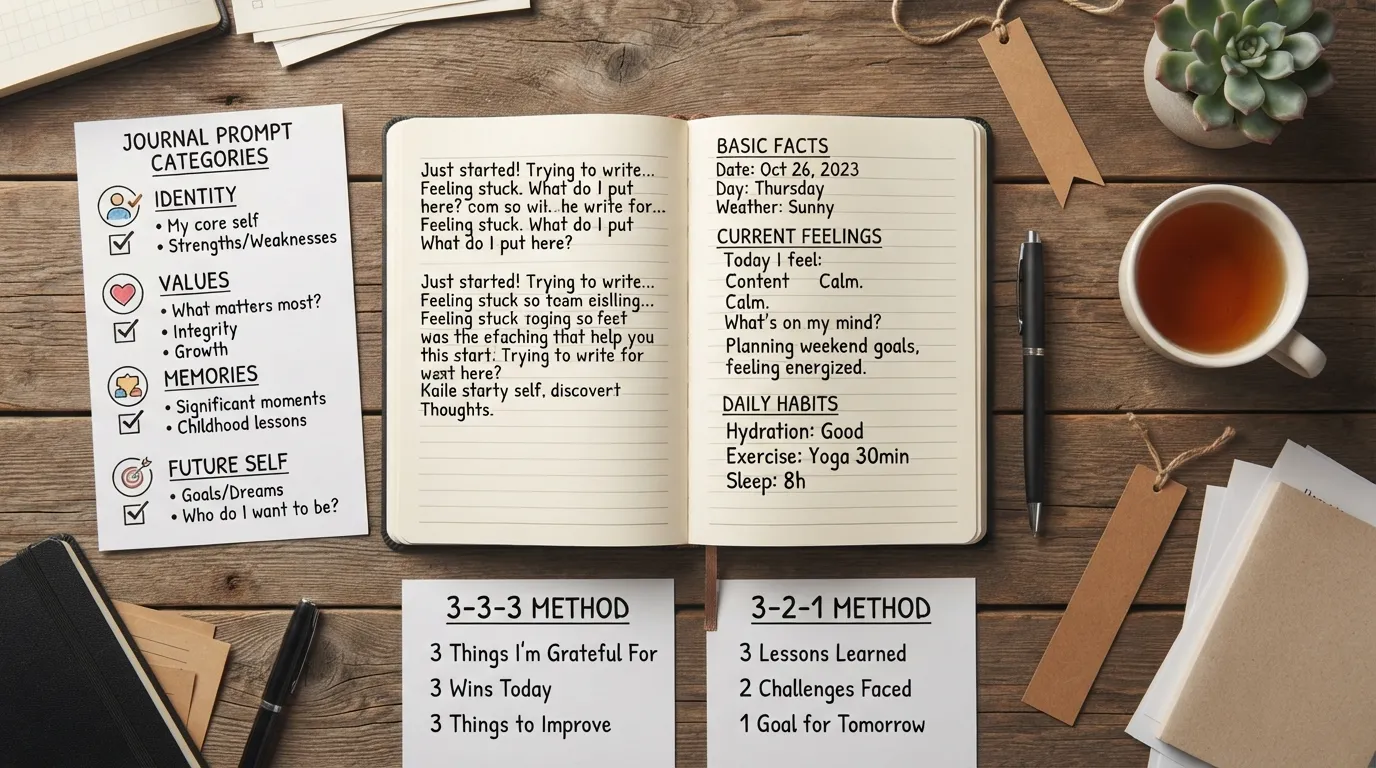
At its core, journal writing about myself is a dedicated practice focused entirely on exploring who you are right now, rather than just chronicling what happened during your day. While a traditional diary entry reads like a play-by-play log of events—listing errands run, emails sent, and meals eaten—self-focused journaling is inherently reflective and inward-looking. It asks you to pause, examine your inner landscape, and put words to your evolving identity, values, and emotional state. Whether you are creating a single snapshot page or building an ongoing habit, this type of writing shifts the lens away from external distractions and places it squarely on your own internal world.
Are You Writing a One-Time “About Me” Page or an Ongoing Reflection Habit?
Quick Decision Guide:
If you want to create a dedicated introductory spread, skip down to the About Me Journal Page Ideas section.
If you are looking to build a continuous practice of self-discovery, start with the How to Start and What to Include sections below. (For a broader foundation on building a regular habit, check out our guide on how to start journaling.)
How to Start Writing About Yourself in a Journal
Beginning a journal entry about yourself can feel intimidating if you stare at a blank page waiting for profound realizations. The trick is to lower the pressure immediately.
Start with simple, unedited facts about your current reality before attempting to untangle deep emotions. List out what you ate for breakfast, the physical clothes you are wearing, or the sounds outside your window. This acts as a runway, easing your mind into the act of writing.
Furthermore, give yourself explicit permission to write messy. No one is grading your grammar, evaluating your sentence structure, or judging your handwriting. Let the thoughts spill out raw and unpolished, because authenticity matters far more than eloquence when you are exploring your own mind. If you ever feel stuck on what to write, reviewing structured lists of what to write in a journal can help jumpstart your momentum.
What To Include When Writing About Yourself
Basic Facts
Anchor your entry in your current reality by noting your name, age, current job or school, and hometown. This baseline information grounds the entry in time and space, creating a historical marker you can look back on years from now.
Favorites
Taste and preferences shift constantly, making them a fascinating thing to track. Document the foods you crave, the songs on repeat in your headphones, the books or articles capturing your attention, and the colors you find yourself gravitating toward right now.
Daily Life & Habits
Describe your actual routine rather than an idealized version of it. Include your morning rituals, how you structure your hobbies, and how you genuinely spend your discretionary time on a typical Tuesday.
Personality
Are you feeling particularly quiet or loud this season? What quirky habits make you uniquely you, and how would your closest friends describe your energy in three words?
Feelings Right Now
Take an honest, unfiltered snapshot of your current emotional state. Don’t censor yourself or try to sound overly optimistic; if you feel tired, restless, or quietly content, name it without judgment. To explore these emotional layers further, you can also draw inspiration from targeted journal prompts for mental health.
Dreams & Goals
Look slightly ahead and map out what you are actively working toward this year. Focus not just on career or academic milestones, but on personal growth targets, such as setting better boundaries or carving out more time to rest.
Journal Prompts About Yourself
To help you dive straight into deep, meaningful self-discovery, use these original prompts categorized by theme:
Identity & Core Self:
What part of my personality do I hide when I want to fit in, and why do I feel the need to protect it?
If I met an exact clone of myself at a coffee shop, what would I find most endearing and most exhausting about them?
What is a core belief I held firmly five years ago that I have completely discarded today?
Values & Beliefs: 4. What does a genuinely successful day look like to me, completely stripped of what society or my family expects? 5. When do I feel the most intensely protective of my time and energy? 6. What is a hard boundary I need to draw in my relationships right now to protect my peace?
Memories & Past Influence: 7. What is a seemingly minor childhood memory that still shapes how I react to stress as an adult? 8. Which past failure or awkward moment, though painful at the time, taught me something invaluable about my resilience? 9. Who was the first person that made me feel truly seen for who I am, and how did they do it?
Future Self: 10. What advice would my happiest, most grounded future self give me about the worry I am carrying today? 11. If I knew with absolute certainty that I could not fail, what bold step would I take tomorrow morning?
About Me Journal Page Ideas
Experimenting with different layouts can make journal writing about myself feel fresh and engaging. Depending on your aesthetic and mood, you can structure your page using several distinct formats:
List Format: Excellent for quick thinkers; organizes traits, favorites, and current goals into crisp, scannable bullet points.
Letter-to-Yourself Format: Written in the second person (“Dear Me”), creating a compassionate, conversational dialogue as if you are talking to a trusted friend.
Q&A Format: Structured like a personal interview, featuring a list of deliberate questions on one side and brief, honest answers on the other.
Timeline Format: Traces key milestones, recent shifts, and upcoming aspirations along a linear path across the page.
Simple About Me Journal Ideas
If you prefer a clean, minimalist approach, try a “Right Now” spread divided into four quadrants: Currently Reading, Currently Learning, Currently Feeling, and Currently Craving. This takes less than five minutes to fill out yet provides a vivid portrait of your current season of life. As noted by experts at Verywell Mind, expressive writing can significantly lower stress levels and enhance self-awareness by helping you organize chaotic thoughts into clear, manageable concepts.
Journal Writing About Myself for Students
For students navigating the fast-paced world of classes, exams, and changing social dynamics, journaling provides an invaluable anchor. Juggling academic pressure and social expectations can make it easy to lose touch with your personal identity outside of GPA scores and extracurriculars.
Incorporate student-specific prompts into your routine to reflect on your academic journey:
What class challenges me the most, and what is one small adjustment I can make to understand the material better?
How have my friendships shifted since the school year started?
What non-academic goal am I prioritizing for this semester?
About Me Page Ideas for Students
Students can get creative with layout designs that reflect their daily environments:
School-Goals Visual: A central mind-map linking your main academic targets to your personal wellness habits.
Locker or Desk-Style Page: A sketch of a locker interior or desk organizer filled with sticky notes representing your current favorite snacks, classes, and weekend plans.
Friend-Group Section: A corner dedicated to appreciating the people who keep you grounded through midterms and finals.
Example Journal Entry About Myself
Example 1: General Self-Reflection Entry
October 14. I’ve been feeling this strange sort of static in my brain all week—not quite anxious, but like my thoughts are tuned to the wrong radio frequency. I spent the morning trying to force productivity, answering emails before my coffee even cooled down, and it completely drained me. Note to self: forcing focus never works. Today, I actually love the crisp chill in the air; I wore my oversized green cardigan and walked for twenty minutes without listening to a podcast just to hear the leaves crunch. I realize I’ve been measuring my worth lately by how many items I cross off my to-do list, which is exhausting. My main goal right now is learning to sit quietly on the porch without feeling guilty that I’m “wasting time.” If I were to describe my current personality in one word, it’s recalibrating. I’m shedding an old routine and trying to figure out what pace actually feels sustainable for me.
Example 2: Student-Style About Me Entry
Sophomore Year, Spring Semester. Name: Maya. Current obsession: iced oat milk lattes and the 1990s sociology elective that is completely blowing my mind. Right now, my backpack is a chaotic disaster zone filled with crumpled quiz papers, half-empty highlighters, and three different notebooks. If my friends had to describe me, they’d probably say I’m the one who always has gum, runs everywhere because I misjudge time, and stresses way too much over group projects. My biggest goal this semester is to stop caring so much about perfection in organic chemistry and actually give myself permission to struggle and learn. Outside of classes, I spend way too much time scrolling through vintage camera listings. School is intense right now, but I like who I’m becoming—I’m finally learning to speak up in seminars instead of keeping my hand frozen halfway up.
Journaling Methods You Can Use
The 3-3-3 Journaling Method
The 3-3-3 method is a structured approach designed to break overthinking into manageable segments. When applied to self-focused writing, it invites you to write down:
3 things you are currently feeling in your body or mind.
3 aspects of your current identity or habits you appreciate.
3 small, tangible steps you can take today to support your personal growth.
This method keeps you from spiraling into endless introspection by grounding abstract thoughts into immediate, actionable awareness.
The 3-2-1 Journaling Method
Originally popularized as a nightly wind-down tool, the 3-2-1 framework can easily be adapted for self-reflection by asking:
3 things about yourself that brought you joy or comfort recently.
2 current behavioral patterns or habits you are ready to evaluate or shift.
1 clear, foundational truth you know about yourself right now (e.g., “I am resilient even when I feel overwhelmed”).
Guidance on selection: Use the 3-3-3 method when you feel scattered and need to ground your identity and actions into the present moment. Turn to the 3-2-1 method when you want a gentle, structured wind-down to reflect on your personal habits and emotional state at the end of the week.
Types of Journals Which Fits Writing About Yourself Best
Reflective Journals: These feature open, blank, or lined pages with zero structural constraints. This is the absolute best choice for writing about yourself, as self-exploration requires plenty of unstructured space to wander, ramble, and uncover unexpected insights without rigid boxes limiting your thoughts. Research highlighted by Psychology Today notes that unstructured expressive writing allows the brain to safely process complex life transitions and emotional patterns.
Gratitude Journals: Focus primarily on listing external blessings, positive events, and things you are thankful for. While wonderful for boosting overall mood, they rarely dig deep into personal identity, values, or shadow traits.
Bullet / Structured Journals: Rely on rapid-logging, habit trackers, and index grids. While fantastic for managing daily tasks and schedules, their strict formatting can feel too clinical when you are trying to unpack complex personal emotions or write an introspective About Me entry.
Tips for Writing About Yourself Effectively
The time of day you choose to write can drastically change the flavor of your self-reflection:
Morning Clarity: Writing first thing in the morning captures your mind before the noise of the day takes over. Your defenses are lower, allowing raw, unfiltered truths and dreams to surface naturally onto the page.
Evening Reflection: Writing at night offers a retrospective lens. It gives you a safe container to process emotional triggers, evaluate how your day aligned with your personal values, and gently lay down mental baggage before sleep.
What Not to Do When Journaling About Yourself
Don’t compare your entries to prompts you see online. Aesthetic social media spreads and curated journaling accounts often show picture-perfect paragraphs that don’t reflect real life. Your journal is a private laboratory, not a gallery exhibit—messy, scratched-out lines are a sign of honest processing.
Don’t skip the hard feelings. It is tempting to use self-reflection exclusively as a tool for forced positivity, skipping over resentment, insecurity, or grief. True self-discovery requires holding space for the uncomfortable emotions just as willingly as the joyful ones.
Frequently Asked Questions
Is it healthy to journal about yourself every day?
Yes, daily self-reflection is generally healthy as long as it remains compassionate rather than obsessive. However, if journaling ever starts to feel like a rigid chore or fuels over-analysis of your flaws, feel free to drop back to two or three times a week.
What is the best time of day to write in your journal?
The best time is whenever works consistently for you. Many people prefer early mornings to set daily intentions, while others enjoy writing late at night to process thoughts and clear their minds before sleep.
Pimchanok Srisuk
Pimchanok Srisuk is the Journaling Editor at Holistic Wellbeing Living. She writes about journaling prompts, reflective writing, emotional clarity, and mindful routines. With seven years of experience creating personal-growth content, Pimchanok helps readers use simple writing practices to understand their thoughts and make calmer everyday decisions.