Jump to:
ToggleHow to Write a Journal: A Complete Step-by-Step Guide for Beginners
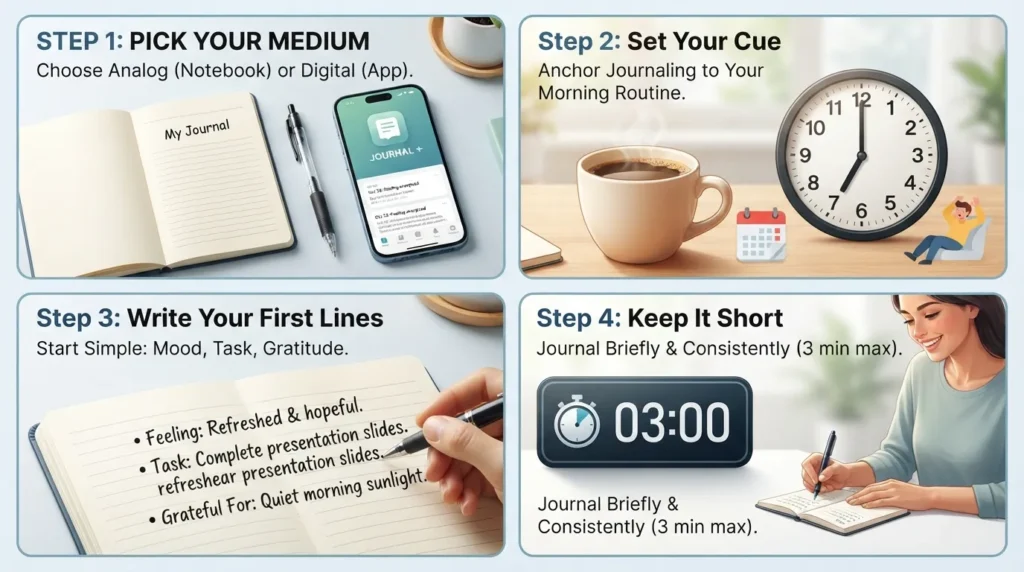
What Does It Mean to "Write a Journal"?
- At its core, writing a journal means setting aside regular time to record your thoughts, feelings, track your life, or reflect on your daily experiences in a dedicated space (for a deeper dive into the basic concept, check out our full guide on What is a Journal).
- While a diary typically tracks what you did each day, a journal focuses on what you thought and felt about those events—making it a tool for inner processing rather than just a logbook
What You Need Before You Start

Paper Journal vs Digital Journal
Choosing where to write is your first big decision. Neither option is better than the other, but one will definitely fit your lifestyle better. Here is how they stack up:
| Feature | Paper Journal | Digital Journal |
|---|---|---|
| Privacy | High physical privacy (if kept in a safe spot), but zero password protection. | High digital security with passwords, Face ID, and encryption. |
| Cost | Low initial cost ($5–$20 for a notebook), but requires ongoing purchases. | Free basic apps available; premium apps may require subscriptions. |
| Ease of Habit | Easy to start if placed on your nightstand; fewer screen distractions. | Convenient for quick entries, but easy to get distracted by notifications. |
| Portability | Requires carrying a notebook and pen everywhere you go. | Always in your pocket on your phone or synced across devices. |
Choosing a notebook/app that fits your handwriting size and style
If you choose paper, pay attention to the page ruling. Large, loopy handwriting feels cramped on narrow-ruled paper, while small handwriting can feel lost on wide-ruled pages. Dot-grid notebooks give you freedom if you like drawing or customizing your layouts, while blank pages work best if you hate feeling constrained by lines.
If you go digital, test the visual feel first. Look for apps that let you adjust font size, line spacing, and background color so your eyes stay comfortable while typing or writing with a stylus.
Pen/tool preference matters more than most beginners think: A scratchy pen that skips ink or a digital stylus with noticeable lag creates physical friction. That tiny bit of annoyance can make your brain resist journaling altogether. Find a pen that glides effortlessly across the paper, or an app interface that feels smooth to use. When the physical act of writing feels good, sticking to the habit gets a whole lot easier.
How to Write a Journal: Step-by-Step
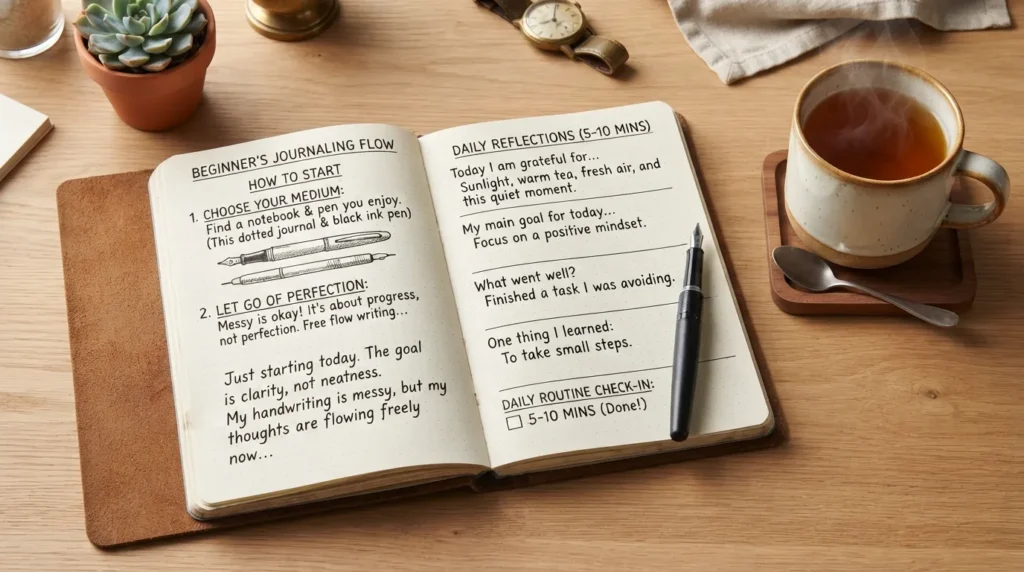
Step 1 — Pick your format (paper or digital) and set it up
First, decide where your thoughts are going to live. You don’t need a fancy leather-bound notebook or expensive software.
- Paper: A simple spiral notebook, a quiet room, and a smooth pen work wonders. Physical writing forces you to slow down, which helps calm a racing mind.
- Digital: If typing is faster or more convenient, use a basic notes app, Google Docs, or a password-protected journal application on your phone.
Pick whatever feels easiest today. You can always change your mind later.
Step 2 — Start with the date (why this small habit matters)
Always write the date at the very top of your page. It sounds minor, but it does two important things:
- It acts as a warm-up ritual that tells your brain, “We are starting now.”
- It anchors your thoughts in time, making it easy to look back months or years later and see how much you have grown.
Step 3 — Write your first line without overthinking it
The hardest part is staring at a blank page. The secret to getting past that freeze? Just write down whatever pops into your head first, even if it feels silly.
- “I don’t know what to write today.”
- “My coffee is cold and I feel tired.”
- “It was a strange morning.”
Once that first line is on paper, the rest starts flowing much more naturally.
Step 4 — Let it be messy — no grammar/spelling rules apply
This isn’t a school assignment, and nobody is going to read this except you. Turn off your inner editor entirely.
- Skip punctuation if you want to.
- Ignore typos and misspelled words.
- Write in bullet points, fragments, or random streams of thought.
Give yourself permission to write badly — no one is grading it. The goal isn’t to create fine literature; it’s to get your honest feelings out of your head and onto the page.
Step 5 — Set a simple time limit (5–10 minutes) so it doesn’t feel overwhelming
If you tell yourself you need to write for an hour, you’ll probably put it off. Keep it tiny at first.
Set a timer on your phone for 5 to 10 minutes. When the timer goes off, you are completely free to close the notebook and move on with your day. Small, steady consistency will always beat occasional marathon sessions.
What to Write About When You Don't Know What to Say

Staring at a blank page can feel surprisingly intimidating. You sit down with the best intentions, open your notebook, and then… nothing. Your mind goes completely quiet, or worse, feels way too cluttered to pick a single thought.
When you get stuck, you don’t need a massive wave of inspiration to start writing. You just need a simple entry point to get the ink moving.
Journal prompts
When you have no idea where to start, prompts do the heavy lifting for you. You don’t have to overthink it—just pick one of these questions and answer it honestly.
- Gratitude: What is one small, ordinary thing that made you smile today, and why?
- Mood: How does your body feel right now, and what emotion seems to be taking up the most space?
- Goals: What is one tiny thing you can do tomorrow to make your week feel a little easier?
- Reflection: What was the hardest part of your day, and how did you handle it?
- Growth: What is something you are currently learning to let go of?
- Self-Care: What do you need to hear most right now?
Brain dump / stream of consciousness method
If answering a specific question feels like too much work, try a brain dump. This method is all about letting go of control.
Set a timer for three to five minutes. Place your pen on the paper and start writing whatever pops into your head. It does not need to make sense, use proper grammar, or tell a story. If your brain says, “I don’t know what to write, my shoulders hurt, I need to buy groceries,” write exactly that.
The goal here isn’t to create a masterwork. It’s to clear out the mental noise holding you back so you can think a little clearer.
Daily log style (what happened today)
When all else fails, drop the deep emotional searching and just treat your journal like a record book. Write down a simple chronological list of what you actually did today.
You might write down what time you woke up, what you ate for breakfast, the weather outside, or a quick summary of a conversation you had. It sounds basic, but recording simple facts removes the pressure to be profound. Once you start listing the events of your day, you will often find that deeper thoughts naturally start to spill out onto the page.
- Looking for more inspiration to keep your habit going? Check out our complete collection of journal prompts to find your next favorite topic.
The 3-3-3 Journaling Method (Explained)
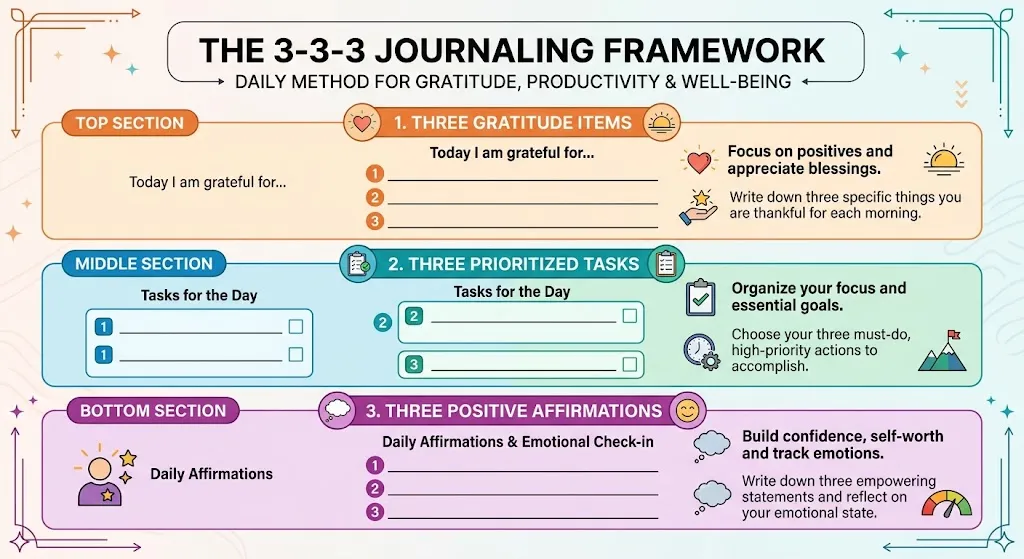
If your brain feels cluttered the moment you open a notebook, the 3-3-3 journaling method is a total breath of fresh air. It is a simple, structured technique designed to clear mental noise in about five to ten minutes. Instead of staring at a blank page wondering what to write, you focus on three clear prompts every single day:
- 3 Things You Are Grateful For: Write down three specific, small moments from your day. Skip the generic answers like “my family” or “my house.” Focus on tiny details instead, like the smell of your morning coffee, a warm text from a friend, or finding a great parking spot on the first try.
- 3 Things You Want to Accomplish Today: Pick three realistic priorities for your day. Keep them manageable so you do not feel overwhelmed. These can be work tasks or personal wins, such as finishing a report, going for a twenty-minute walk, or folding the laundry that has been sitting on your chair all week.
- 3 Things You Need to Let Go Of: List three worries, negative thoughts, or minor frustrations that are eating up your energy. Getting them out of your head and onto paper helps your brain process them and move on.
A Quick Worked Example
Here is what a completed 3-3-3 entry actually looks like in practice:
3 Gratitudes
- The warm sunlight streaming through my kitchen window while I ate breakfast.
- A funny voice note my sister sent me on my drive to work.
- Finishing my favorite chapter of my book last night.
3 Priorities
- Send out the monthly project update email by noon.
- Drink at least four full glasses of water before dinner.
- Go to bed by 10:30 PM without looking at my phone.
3 Things to Let Go
- Feeling guilty because I didn’t get to the gym yesterday.
- Annoyance at the driver who cut me off in traffic.
- Stressing over a minor typo in a group message.
The 3-2-1 Journaling Method (Explained)

If you have ever opened a fresh journal, stared at a blank white page, and felt your brain instantly freeze up—you are definitely not alone. Free writing sounds great in theory, but without a plan, it often feels like work. That is where structured prompts come in, and the 3-2-1 method is one of the easiest ones to stick with.
What Is the 3-2-1 Method?
The 3-2-1 journaling method is a simple daily framework designed to help you process your day, practice gratitude, and clear mental clutter in under five minutes. You do not need to write long paragraphs or figure out what to say. You just answer three quick prompts based on numbers:
- 3 Things You Are Grateful For: Focus on specific, small moments from your day (like a warm cup of coffee or a funny text from a friend) rather than broad concepts.
- 2 Things You Want to Let Go Of: Identify two quick items causing you stress, self-doubt, or frustration that you want to leave on the page.
- 1 Focus for Tomorrow: Pick one single intention, goal, or priority for the next day to give yourself a clear starting point.
Because the structure is so tight, it keeps you from spiraling into overthinking. You get your thoughts down, gain a little clarity, and close the notebook.
How It Differs From the 3-3-3 Method
It is easy to confuse the 3-2-1 technique with the 3-3-3 method, but they actually serve completely different purposes.
The 3-3-3 method is primarily a real-time grounding exercise used to manage anxiety or feeling overwhelmed in the moment. In 3-3-3, you look around your environment and name three things you can see, three sounds you can hear, and move three parts of your body. It brings your awareness back to physical reality when your mind is racing.
The 3-2-1 method, on the other hand, is a reflective journaling routine. You write it down—usually at the end of the day or first thing in the morning—to reflect on your feelings, release mental weight, and set a clear intention for what comes next.
A Quick Worked Example
Here is what a complete 3-2-1 entry might look like in real life on a normal Tuesday evening:
- 3 Things I’m Grateful For:
- The quiet morning walk before my phone started buzzing.
- My coworker helping me fix that slide deck right before the meeting.
- Eating warm leftovers on the couch while watching my favorite show.
- 2 Things I Want to Let Go Of:
- Replaying that awkward moment when I stumbled over my words during lunch.
- Feeling guilty that I didn’t make it to the gym today.
- 1 Focus for Tomorrow:
- Block off two uninterrupted hours in the morning to finish my project draft.
That is literally all it takes. No fancy language, no long-winded essays—just a quick, honest check-in with yourself.
Example: What a Real Journal Entry Looks Like
October 14th
My mind feels a bit scrambled tonight. Today was heavy at work—that afternoon project deadline had my heart racing for hours. I kept feeling like I was running out of time, even though everything ended up getting turned in on schedule.
Sitting here now with my tea, I realize I need to let go of that leftover tension. I did my best, and my boss even thanked me for stepping up. Why do I still replay the stressful moments in my head long after they’re over?
Tomorrow, I want to try a different approach. I’ll take three deep breaths before opening my email in the morning. I also want to make sure I step away from my desk for lunch instead of eating while typing.
Grateful for this quiet bedroom, the warm blanket on my lap, and the simple fact that today is officially finished. Tomorrow is a brand new start.
How Often Should You Journal?
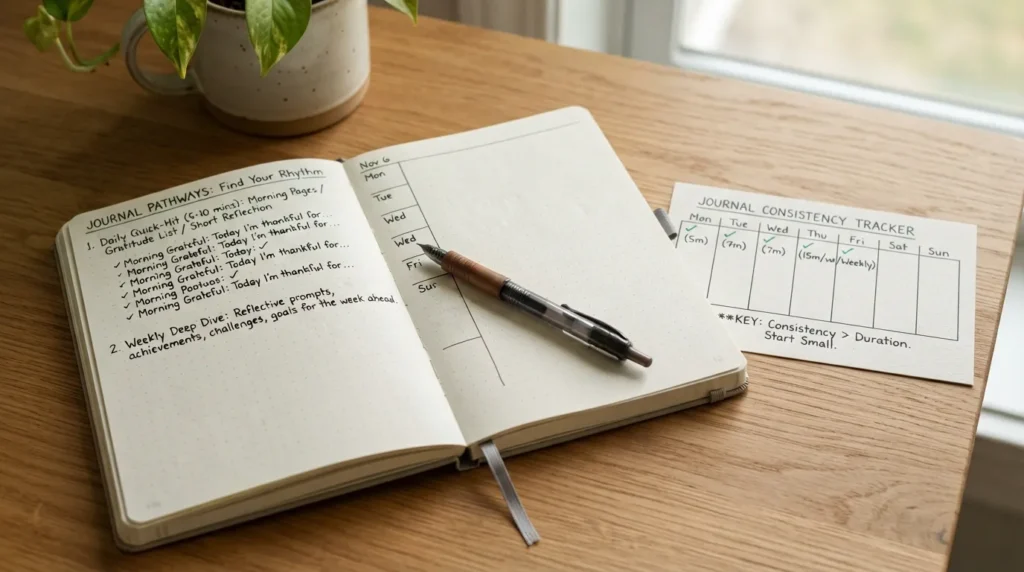
Daily vs. A Few Times a Week — What Actually Sustains the Habit
A lot of people abandon journaling because they start with an “all-or-nothing” mindset. They assume if they don’t sit down with a pen every single morning without fail, they’ve somehow messed up. That pressure usually turns a good habit into a chore pretty quickly.
The truth? Journaling a few times a week with focus and honesty does way more for your mind than forcing a daily entry when you have nothing to say.
- When daily works: Daily journaling is great if you use short prompts, quick gratitude lists, or a 3-minute morning dump. It helps set a calm tone for the day.
- When 2–3 times a week works better: If you prefer deep, long-form reflection, aim for two or three times a week instead. Writing every few days gives you enough life experience to actually write about, without the burnout.
Consistency isn’t about perfect streaks on a tracker—it’s about coming back to your notebook whenever your brain needs space.
Tying Journaling to an Existing Routine
If you want your writing habit to stick without relying on pure willpower, try “habit stacking.” Instead of picking a random time every day, attach journaling directly to something you already do every single day without thinking.
Example: “Right after I pour my morning coffee, I will open my notebook and write for five minutes.”
Here are a few natural routine pairings that work well:
- Morning Coffee/Tea: Write while your drink is hot and your house is still quiet.
- Evening Wind-Down: Keep your journal right on your pillow. Write three quick lines about your day before turning off your bed lamp.
- Workday Transition: Write for two minutes right when you close your laptop at the end of the workday to clear your head before stepping into your personal time.
By linking your notebook to an existing cue like coffee or bedtime, you remove the effort of deciding when to write. It just becomes another seamless part of your day.
Common Journaling Mistakes Beginners Make
Starting a journal sounds simple enough. You get a pen, open a fresh page, and start writing. But so many people hit a wall within the first week. If you feel like journaling is harder than it should be, you might be falling into one of these common traps.
- Trying to write perfectly or editing as you go: A journal isn’t an essay for school, and nobody is grading it. When you pause to fix typos, cross out messy sentences, or hunt for prettier words, you block your actual thoughts. Let your words flow out messy, confusing, and raw. That is where the real relief happens.
- Buying a “too nice” notebook you’re afraid to ruin: We have all done this. You buy a gorgeous, expensive leather notebook with golden edges, and suddenly every blank page feels intimidating. You worry your handwriting isn’t pretty enough for it. Start with a cheap spiral notebook or a basic composition book. When the notebook costs three dollars, you won’t hesitate to mess it up.
- Setting unrealistic daily-streak expectations: Telling yourself you will write for 30 minutes every single morning sounds great in theory. In reality, life gets busy. When you set rigid goals right at the start, journaling turns into another task on your to-do list instead of a daily mental breather.
- Comparing your journal to aesthetic posts online: Social media is full of carefully decorated journal spreads with perfect calligraphy, pressed flowers, and color-coded doodles. That is art, not private mental processing. Your journal doesn’t need to be pretty. It just needs to be honest.
- Quitting after missing a day: Missing a day or two isn’t a failure—it’s just life happening. A lot of beginners skip a Monday, feel guilty, and abandon the whole habit. You don’t lose all your progress just because you took a break. Simply open the page whenever you are ready and pick right back up.
How to Turn One Entry Into a Lasting Habit
Building a consistent journaling habit is less about willpower and more about smart design. Here is how to make daily writing stick:
- Habit-Stacking Tips: Pair your journaling with a routine you already do every single day. Anchor it to your morning coffee, your evening tea, or the moments right after you brush your teeth. When you attach a new habit to an established one, your brain does not have to work as hard to remember it.
- Realistic Streak Mindset: Aim for consistency over perfection. You do not need to write for an hour every day. Writing just two sentences counts as keeping the habit alive. Set low targets so that showing up feels easy even on your busiest days.
- Missing a Day Is Fine: Never let a missed day derail your momentum. Life happens, and skipping an entry does not mean you failed or have to quit. The golden rule is simple: try not to miss two days in a row. Treat every new morning as a fresh start.
FAQs
How do you start writing in a journal?
Pick a simple notebook and a pen you like. Set a tiny goal, such as writing for three minutes or filling five lines. Focus on how you feel right now, what happened today, or one thing on your mind. Do not worry about grammar, neatness, or structure—just write whatever comes up naturally.
What is the 3-3-3 journaling method?
The 3-3-3 method is a fast layout designed to organize your daily thoughts. Every morning, write down:
- 3 things you are grateful for
- 3 main goals or tasks for the day
- 3 positive affirmations or gentle reminders to yourself
What is an example of journal writing?
A simple entry can look like this: “October 12 – Felt overwhelmed during my morning meeting, but a quick walk at lunch helped reset my focus. Tonight I want to turn off my phone by 9 PM and get extra rest.”
What should I write in a journal?
You can write about anything happening in your head or heart. Common topics include daily events, personal goals, current stressors, things you feel thankful for, or answers to simple journal prompts. There are no strict rules.
What is the 3/2-1 method of journaling?
The 3/2-1 method helps you reflect quickly, especially before bed. Write down:
- 3 things you accomplished today
- 2 things you learned or enjoyed
- 1 thing you want to focus on tomorrow
What are common journaling mistakes?
The most common mistakes include trying to write too much at once, worrying about neat handwriting or correct grammar, and judging your own thoughts. Another common trap is giving up entirely after missing a day or two instead of simply picking back up.
Can you give an example of a personal journal?
A personal journal entry often mixes thoughts, feelings, and everyday details. For instance: “Sunday evening. Spent the afternoon reading on the porch. I felt truly peaceful for the first time all week. Need to protect my quiet time on weekends more often.”
What are 5 journal entries with examples?
- Gratitude Entry: “Grateful for warm sunlight, a good cup of coffee, and a clear schedule today.”
- Brain Dump: “My head feels messy. Need to reply to Sarah, finish the report, and fix the leaking tap.”
- Reflective Entry: “Felt frustrated after that conversation today. Next time, I want to listen more before reacting.”
- Goal-Focused Entry: “Main goal this month: walk 20 minutes every morning before opening work emails.”
- Nightly Review: “Highlight of the day was catching up with Mom. Tomorrow I will focus on finishing my project early.”
What does a journal look like?
A journal can look like anything you want it to be. It can be a plain lined notebook, a leather-bound diary, a digital app on your phone, or a simple binder filled with loose pages. Inside, it can hold neat paragraphs, quick bullet points, sketches, or a mix of everything.
Quick-Start Recap
- Pick Your Tool: Grab any basic notebook, digital doc, or journal app.
- Keep It Tiny: Start with just 2–3 minutes or a few lines each day.
- Anchor the Habit: Attach your writing time to your morning coffee or bedtime routine.
- Drop the Judgment: Ignore grammar and focus purely on getting your real thoughts down.
- Stay Flexible: If you miss a day, forgive yourself and write the next day.
Pimchanok Srisuk
Pimchanok Srisuk is the Journaling Editor at Holistic Wellbeing Living. She writes about journaling prompts, reflective writing, emotional clarity, and mindful routines. With seven years of experience creating personal-growth content, Pimchanok helps readers use simple writing practices to understand their thoughts and make calmer everyday decisions.