Low Self Esteem and Procrastination: Why They Are Connected and How to Overcome Them
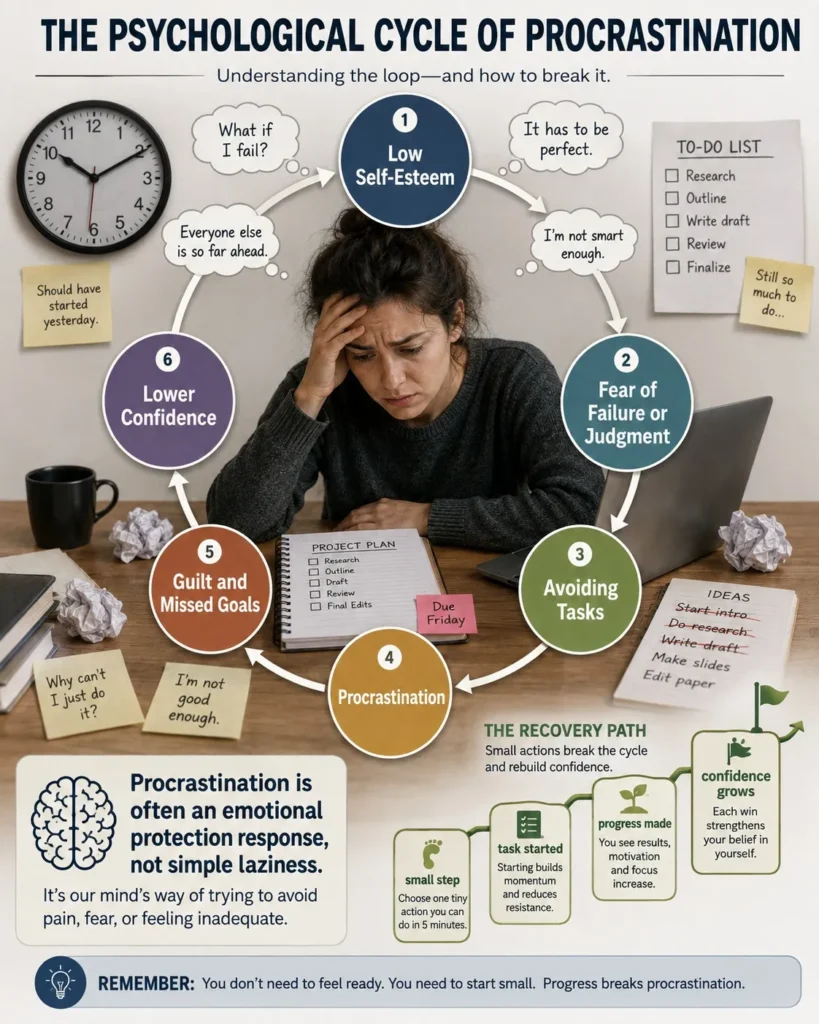
Low self-esteem and procrastination are often connected in a cycle where negative self-beliefs make tasks feel more difficult, causing avoidance and delays. Those delays can then create more guilt, self-criticism, and reduced confidence.
Procrastination is not always about laziness or poor time management. For many people, delaying tasks is an emotional response linked to fear of failure, perfectionism, fear of judgment, or the belief that they may not be capable enough.
Low self-esteem creates self-doubt → self-doubt increases fear → fear encourages avoidance → procrastination reinforces negative beliefs.
The Connection Between Low Self-Esteem and Procrastination
Self-esteem affects how you see your abilities, decisions, and personal value. When your confidence is low, everyday tasks can feel like tests of your worth rather than normal challenges.
For example, someone with healthy confidence may think, “I can try this and learn from mistakes.” Someone struggling with low self-esteem may think, “If I fail, it proves I am not good enough.”
This mindset can create avoidance. By postponing a task, the person temporarily escapes uncomfortable emotions such as anxiety, embarrassment, or fear of failure.
The Self-Sabotage Cycle Explained
Low Self-Esteem
↓
Fear of Failure or Judgment
↓
Avoiding Important Tasks
↓
Procrastination and Delays
↓
Guilt and More Self-Doubt
Breaking this cycle requires improving both behavior and self-belief. Simply forcing yourself to work harder may not solve the deeper emotional reason behind procrastination.
Why Low Self-Esteem Causes Procrastination
1. Fear of Failure
When your self-worth becomes connected to performance, starting a difficult task can feel risky. Avoiding the task feels safer than facing the possibility of failure.
2. Perfectionism
Some people delay tasks because they believe their work must be perfect. The fear of producing something imperfect can become stronger than the motivation to begin.
3. Negative Self-Talk
Thoughts like “I always fail,” “I am not smart enough,” or “I cannot do this” reduce confidence and make taking action harder.
4. Fear of Judgment
If you worry about how others will evaluate your work, you may delay starting because avoiding action temporarily protects you from criticism.
Signs Your Self-Esteem May Be Affecting Your Productivity
- You avoid tasks where you might make mistakes.
- You wait for the “perfect time” to begin.
- You compare your progress with other people.
- You criticize yourself after delaying work.
- You underestimate your ability before trying.
- You feel overwhelmed even by manageable tasks.
How To Stop Procrastinating When You Have Low Self-Esteem
1. Separate Your Worth From Your Results
A mistake, unfinished task, or poor result does not define your value as a person. Treat outcomes as feedback instead of proof that you are inadequate.
2. Start With a Very Small Action
Large tasks can feel threatening when confidence is low. Reduce the starting point:
- Write one paragraph instead of finishing the whole report.
- Work for five minutes instead of planning a full day.
- Complete one small step instead of the entire project.
3. Replace Negative Self-Talk
Change harsh thoughts into realistic statements:
Instead of: “I always fail.”
Try: “I am learning, and progress comes from practice.”
4. Build Self-Efficacy Through Evidence
Confidence grows when you collect proof that you can take action. Keep track of small wins, completed tasks, and improvements.
Low Self-Esteem vs Lack of Motivation
| Low Self-Esteem | Low Motivation |
|---|---|
| Often involves negative beliefs about yourself | Often involves low energy or unclear goals |
| May involve fear of failure or judgment | May improve with better routines or incentives |
Common Mistakes That Keep The Cycle Going
- Waiting until you feel completely confident before starting.
- Using self-criticism as your main source of motivation.
- Comparing your beginning with someone else’s progress.
- Setting unrealistic goals and feeling defeated.
- Ignoring the emotional reason behind procrastination.
Frequently Asked Questions
Is procrastination a sign of low self-esteem?
Procrastination can be connected to low self-esteem, especially when delays come from fear of failure, self-doubt, or fear of judgment. However, procrastination can also have other causes, such as unclear goals or poor planning.
Can low self-esteem cause anxiety?
Low self-esteem may increase feelings of worry, insecurity, and stress because people may expect negative outcomes or doubt their ability to handle challenges.
How can I rebuild confidence after procrastinating?
Start with small achievable actions, track your progress, practice kinder self-talk, and focus on consistency instead of perfection.
Is procrastination just laziness?
Not always. Many people procrastinate because of emotional discomfort, fear, perfectionism, or feeling overwhelmed rather than because they do not care.
Final Thoughts
Low self-esteem and procrastination often reinforce each other, but the cycle can be changed. The solution is not simply forcing yourself to work harder. It is building confidence through small actions, changing negative beliefs, and learning that your value is not determined by one task or outcome.
Start small, take action before you feel perfectly ready, and allow progress to build the confidence you need.
Explore Topics
Sub-Topics & Guides
Featured Guides
Top Industry Resources
Editorial Integrity
Our content is 100% human-written, evidence-backed, and continuously updated to fulfill reader intent with maximum honesty.
"Small, consistent habits compounded over time create unshakeable momentum."