Self Sabotage and Procrastination: Why You Hold Yourself Back and How to Break the Cycle
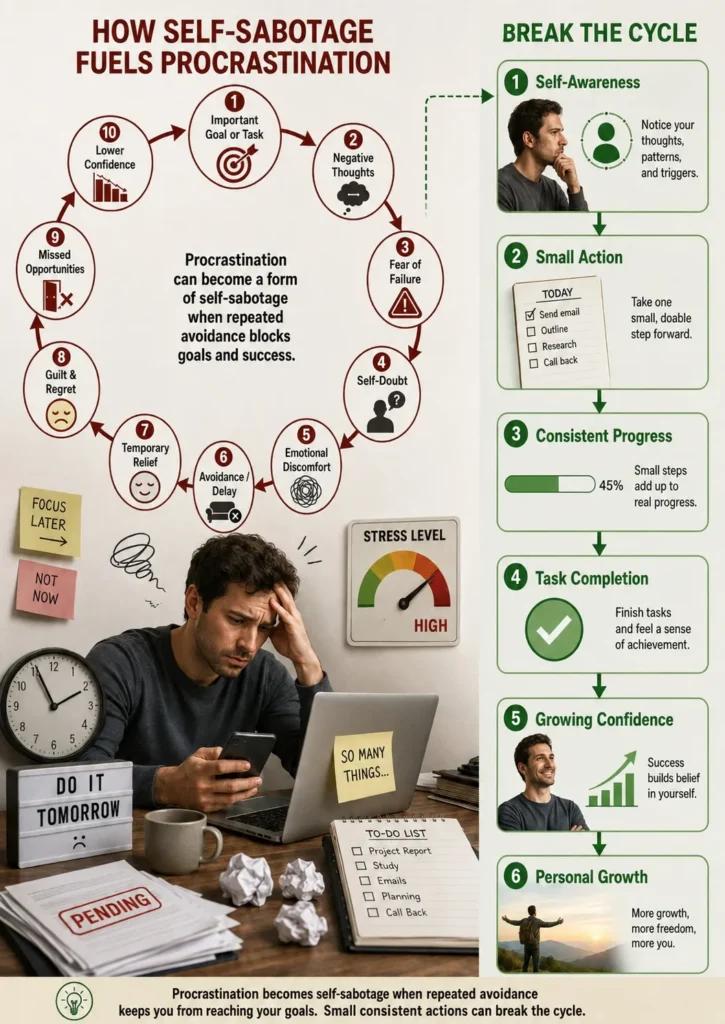
Self sabotage and procrastination often look like a lack of discipline, but the problem is usually deeper. Many people delay important tasks, avoid opportunities, or create obstacles for themselves because their brain is trying to protect them from uncomfortable emotions such as fear, uncertainty, failure, or judgment.
Understanding the connection between self sabotage and procrastination can help you recognize your patterns, identify the reasons behind your avoidance, and take practical steps to break the cycle.
Self sabotage and procrastination connection: Procrastination can become a form of self sabotage when delaying important actions repeatedly prevents you from reaching goals, building confidence, or creating the life you want.
What Is Self Sabotage?
Self sabotage is a pattern of thoughts, behaviors, or decisions that work against your own goals and success. A person may want a positive outcome but unconsciously create barriers that make progress harder.
Self sabotaging behaviors can appear in different areas of life, including work, relationships, personal growth, health, and education.
- Ignoring important responsibilities
- Quitting when progress becomes uncomfortable
- Creating unrealistic expectations
- Negative self-talk
- Avoiding situations where you might be judged
What Is Procrastination?
Procrastination is the habit of delaying tasks or decisions even when you know the delay may create problems later. It is not always caused by laziness. Often, procrastination is connected to emotions, stress, fear, or difficulty managing discomfort.
A person may postpone a task because starting it creates feelings of anxiety, boredom, uncertainty, or fear of making mistakes.
How Are Self Sabotage and Procrastination Connected?
Procrastination becomes self sabotage when avoidance repeatedly moves you away from something important. The short-term benefit is feeling temporary relief, but the long-term result is usually stress, guilt, and reduced confidence.
The self sabotage procrastination cycle:
Difficult task → uncomfortable emotion → avoidance → temporary relief → guilt and stress → more avoidance
Self Sabotage vs Procrastination: What Is The Difference?
| Self Sabotage | Procrastination |
|---|---|
| A broader pattern of behaviors that block personal success. | A specific behavior involving delaying tasks or actions. |
| Can include negative thinking, avoidance, perfectionism, and quitting. | Usually focuses on postponing something important. |
Why Do People Self Sabotage and Procrastinate?
Fear of Failure
Fear of failure is one of the most common reasons people avoid taking action. Delaying a task can feel safer because it protects you from discovering that your effort may not produce the result you want.
Fear of Success
Success can also create uncertainty. More responsibility, higher expectations, or changes in identity may feel uncomfortable, causing some people to hold themselves back.
Perfectionism
Perfectionism often creates a situation where starting feels impossible because the person believes the result must be perfect from the beginning.
Low Self-Worth and Self-Doubt
When someone doubts their ability, they may avoid situations that challenge their confidence. This avoidance can reinforce the belief that they are not capable.
Common Signs of Self-Sabotaging Procrastination
- Waiting for the “perfect time” to start
- Making excuses instead of taking small actions
- Starting projects but not finishing them
- Avoiding feedback or improvement opportunities
- Choosing short-term comfort over long-term goals
- Repeating patterns you already know are harmful
How To Break The Self Sabotage and Procrastination Cycle
1. Identify Your Triggers
Notice what happens before you procrastinate. Ask yourself: What emotion appears before I avoid this task? Is it fear, confusion, boredom, or pressure?
2. Start With Smaller Actions
Large tasks create resistance. Breaking a goal into smaller steps makes action easier and helps rebuild confidence.
3. Challenge Negative Thoughts
Replace thoughts like “I will fail” with more realistic thinking: “I can start with one small step and improve as I go.”
4. Build Systems Instead of Depending on Motivation
Simple routines, reminders, and accountability systems reduce the need to rely only on willpower.
How CBT Can Help With Self-Sabotaging Behavior
Cognitive Behavioral Therapy (CBT) focuses on the relationship between thoughts, emotions, and behaviors. CBT techniques can help people recognize harmful thinking patterns and replace them with healthier responses.
For procrastination, this may involve identifying automatic thoughts, challenging unrealistic beliefs, and practicing gradual action instead of avoidance.
Real-Life Examples of Self Sabotage and Procrastination
Career example: Someone wants a better job but delays updating their resume because they fear rejection.
Study example: A student avoids preparing for an exam because starting feels overwhelming, leading to last-minute stress.
Personal growth example: Someone wants to build a habit but quits after missing a few days instead of restarting.
Is Self Sabotage A Mental Disorder?
Self sabotage itself is not considered a mental disorder. It is a behavioral pattern that can be influenced by many factors, including emotions, experiences, beliefs, stress, and coping habits.
Frequently Asked Questions
Is procrastination a form of self sabotage?
Procrastination can become a form of self sabotage when repeated delays prevent you from reaching important goals or create avoidable problems.
Is self sabotage a trauma response?
Some people may develop self-protective behaviors after difficult experiences, but self sabotage can have many different causes and does not always come from trauma.
Can self sabotage be connected to ADHD?
Some people with ADHD experience challenges such as task initiation difficulties and procrastination, but procrastination alone does not mean someone has ADHD.
What is the best way to stop self sabotaging behavior?
The best starting point is identifying your patterns, understanding your triggers, taking small actions, and building healthier responses over time.
Final Thoughts
Self sabotage and procrastination are often connected through avoidance. The behavior may provide short-term comfort, but it can prevent progress and reduce confidence over time.
Breaking the cycle starts with awareness. When you understand why you avoid important actions, you can replace automatic patterns with small, consistent steps that move you closer to your goals.
Explore Topics
Sub-Topics & Guides
Featured Guides
Top Industry Resources
Editorial Integrity
Our content is 100% human-written, evidence-backed, and continuously updated to fulfill reader intent with maximum honesty.
"Small, consistent habits compounded over time create unshakeable momentum."