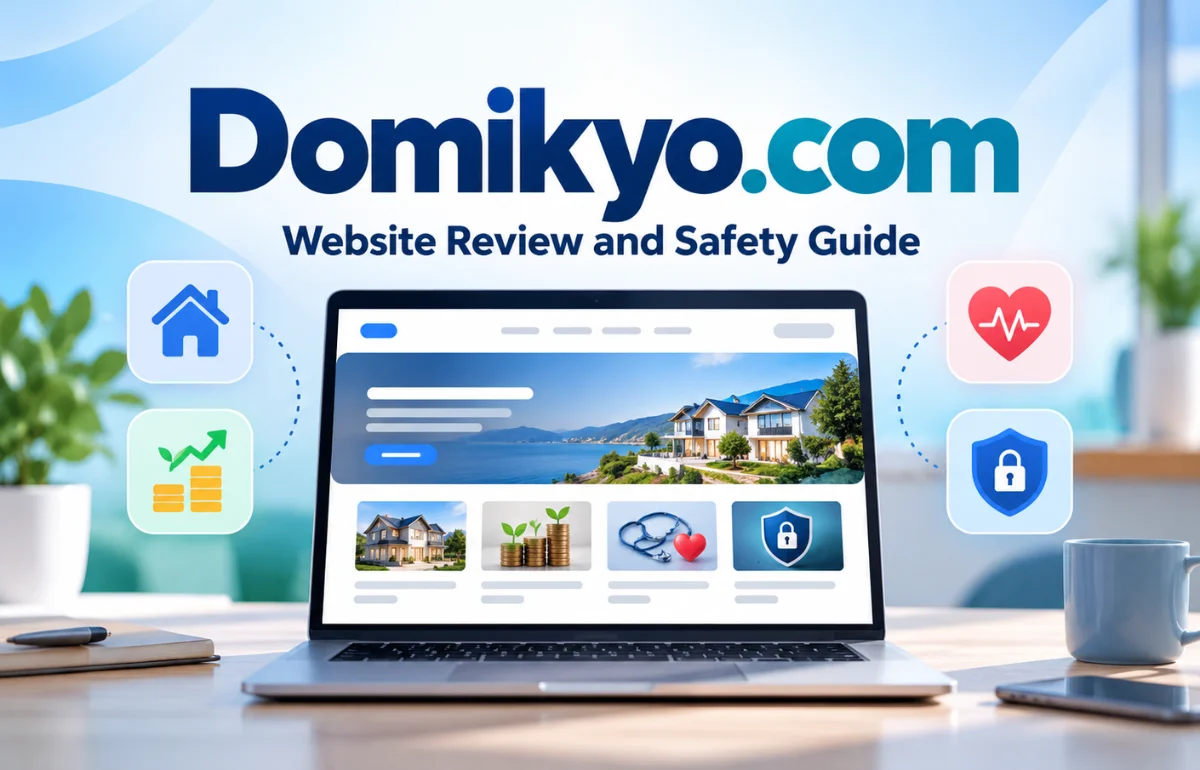
Domikyo.com is a website domain associated with general-interest informational content, particularly technology, finance, health, and business. Rather than representing a standalone app or an online store, it is described in public listings as a multi-topic publishing website. Technology-related discussions also connect the name with smart homes, internet-connected devices, and networking.
However, there is a difference between what outside sources say about a website and what can be confirmed by visiting it. During my October 2026 research, I could verify the domain’s technical footprint and a third-party publishing listing, but I could not independently inspect its current articles through direct automated access.
This review explains what the available evidence shows, where the unanswered questions are, and how I would decide whether to rely on its content.
Domikyo.com at a Glance
Before looking at individual topics, I find it useful to separate observable records from descriptions supplied by other websites.
| Detail | What I could establish |
|---|---|
| Website address | https://domikyo.com/ |
| General identity | Described externally as an informational publishing website |
| Reported subject areas | Technology, finance, health, business, and lifestyle-related topics |
| Domain history | BuiltWith dates its earliest registration record to December 5, 2020 |
| Technical services | HTTPS, Cloudflare DNS and content delivery, and IPv6 appear in BuiltWith’s profile |
| Access during research | Direct automated retrieval did not provide a readable homepage; BuiltWith also records a 403 response |
| Public publishing offer | Adoovy advertises paid article placement on the domain |
| Owner or editorial team | Not independently established from the evidence available to me |
These details answer a basic question without making the website sound more transparent than it currently appears.
Why Is Domikyo.com Difficult to Identify Precisely?
The most defensible answer is that third-party sources present it as multi-topic, with technology among the better-documented associations. I would not turn that into a claim that every listed section is currently active, because I could not inspect a full live category archive.
There is another detail worth checking. Search results can display thedomikyo.com, a different domain whose pages use the Domikyo name and discuss technology, business, finance, and wellness.
Similar branding does not establish shared ownership or prove that content published on one domain also exists on the other. When researching any site, I check the exact address in the browser bar before using its About page as evidence.
What Topics Are Associated With Domikyo.com?
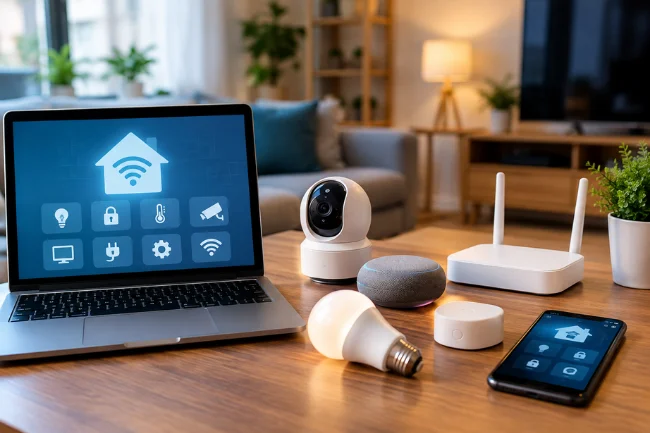
The available descriptions and marketplace classification suggest a broad editorial scope. The examples below explain the subject areas, not a verified inventory of currently published articles.
Technology, Smart Homes, and Internet Connectivity
Technology is the clearest recurring theme. Public descriptions associate the domain with connected-home equipment, Wi-Fi networks, cybersecurity, and the Internet of Things (IoT).
IoT simply means ordinary physical devices that connect to a network and exchange information, such as smart plugs, security sensors, or thermostats.
I have not confirmed that Domikyo.com currently offers a specific smart-bulb tutorial or product test. That distinction matters: a topic associated with a domain is not evidence that a particular guide has been published there.
Business and Digital Work
Other descriptions connect the website with business topics, entrepreneurship, workplace tools, and digital trends. Readers searching these subjects often want straightforward explanations of software, online operations, marketing concepts, or productivity methods.
The standard I use for business content is simple: does the article show when its advice applies?
A suggestion aimed at a solo freelancer may be unsuitable for a company handling customer data or managing staff. Useful articles explain their assumptions instead of presenting one tactic as a solution for everyone.
Finance and Money Questions
Finance is not merely an assumed category. The publishing marketplace Adoovy explicitly classifies the domain under Finance, alongside Health and Technology.
That confirms how the marketplace labels the site, though it doesn’t establish the quality or volume of its finance articles.
For any discussion of banking, investments, fees, or taxes, I would look for a country, a publication date, and an authoritative source.
Financial rules differ by jurisdiction and can change quickly. An approachable explanation is a helpful starting point, but it should not replace current regulator guidance or individualized professional advice.
Health, Lifestyle, and Other General Subjects
Health appears in the same marketplace classification. Lifestyle, education, and travel are mentioned in wider third-party descriptions, although I could not verify complete category archives for those subjects on the original domain.
These areas deserve different levels of scrutiny.
A general article about organizing a workspace is low risk. Advice about symptoms, medicines, supplements, or disease treatment can affect someone’s health. I look for qualified reviewers and primary medical references before acting on such claims.
What Does the Domain’s Technical Record Show?
There is more concrete evidence about the website’s infrastructure than its editorial process. The public BuiltWith technology profile records several recognizable web services.
Registration History and Security Infrastructure
BuiltWith places the domain’s earliest registration record on December 5, 2020.
That is evidence of domain history, not proof that the current publisher has operated it continuously since that date. Domains can change ownership, purpose, and content without changing their names.
The same profile detects HTTPS, Cloudflare DNS, Cloudflare content-delivery services, IPv6, and an SPF email record.
In plain English, those technologies relate to encrypted connections, routing traffic, delivering pages, network compatibility, and identifying permitted email senders.
They’re meaningful technical details, but none can tell me whether an article’s advice is correct. HTTPS protects information in transit; it does not independently certify the truthfulness of the words on a page.
What Does a 403 Forbidden Error Mean?
I attempted to retrieve the main domain while researching this piece, but the request did not return a readable site page. BuiltWith also reports that the domain returned a 403 Forbidden response during its detection process.
A 403 means a server understood a request but refused access. Security rules, blocked IP addresses, and automated-traffic restrictions can all be involved.
Cloudflare’s technical documentation explains that 403 responses may originate from the website server or from Cloudflare-related controls.
That does not establish that the website is permanently offline, unsafe, or inaccessible to every human visitor.
If you receive the error yourself, try the exact HTTPS address in a standard browser, check whether the problem persists on another connection, and avoid any unexpected request to install software to gain access.
Is Domikyo.com Safe and Legitimate?
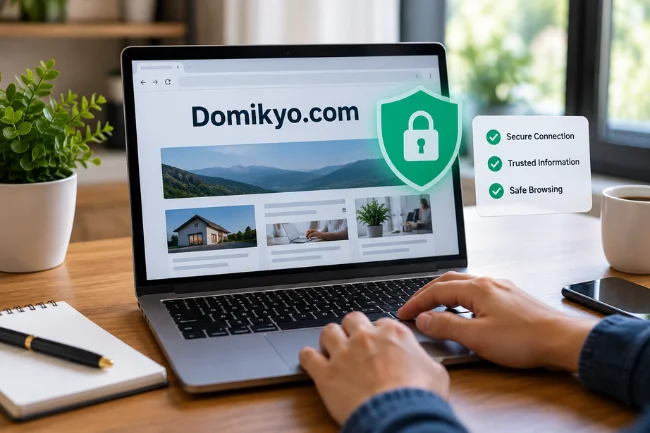
I would resist giving this question a simple yes-or-no label.
A safer assessment separates three issues that are often mixed together: whether the address is the intended site, whether its connection is technically protected, and whether the information published there is dependable.
When I evaluate an unfamiliar informational website, I look for a recognizable editorial identity, accessible contact information, named authors, correction policies, sensible external links, and evidence that supports more than the headline.
The absence of one feature does not automatically mean fraud; several missing signals together mean I should place less confidence in unsupported claims.
For readers, a few habits offer practical protection:
- Type the domain carefully rather than following an unfamiliar imitation link.
- Avoid downloading unexpected files or granting browser notifications just to read an article.
- Never supply passwords, financial details, or identification documents without a clear reason and a verified recipient.
- Cross-check consequential health, money, or cybersecurity claims with specialist sources.
My assessment is therefore limited: the technical footprint is documented, but I do not have enough direct evidence to issue a blanket endorsement of every page or service associated with Domikyo.com.
Who Owns Domikyo.com, and Who Writes Its Articles?
Public technical profiles identify services used by a domain; they do not necessarily reveal the individual or company responsible for its editorial decisions.
During this review, I could not independently verify a named owner, founder, headquarters, or editorial team for the original domain.
I would be especially cautious about treating names found on similarly branded websites as proof of ownership. The missing information is a reason to keep the question open, not to invent an answer.
For a specific article, authorship matters more than a broad corporate claim.
I would want a real byline, a relevant biography, citations appropriate to the subject, and a way to report an error. Those details make accountability possible, particularly when advice may affect health or finances.
Sponsored Articles, Domain Metrics, and SEO Claims
An additional public clue comes from Adoovy’s listing for the domain.
At the time of my review, it advertised an article placement for $120, with a stated 24–48-hour turnaround and dofollow links.
The page also displayed a Domain Authority score of 60, a Domain Rating of 51, and traffic estimates attributed to Ahrefs and Semrush.
Those are marketplace representations, not independently verified commitments by the site’s owner.
A placement listing does not show which articles are sponsored, prove that all promised terms will be delivered, or establish that an audience will read the resulting post.
For someone considering sponsored publishing, the more useful questions concern audience relevance, the page’s editorial standards, whether the post remains accessible, and how paid links are disclosed.
Google’s guidance on qualifying outbound links recommends rel="sponsored" for paid placements, with nofollow also acceptable.
A marketplace’s promise of a dofollow link should not be confused with an assurance of compliant or effective SEO.
How I Would Check an Article Before Trusting It
I use a simple evidence test rather than relying on a website’s reputation alone. It works for Domikyo.com and almost any unfamiliar publisher.
Start With the Claim, Not the Headline
Suppose a page says a home router setting will improve security.
I would first identify the exact setting, device model, and software version. Then I would compare the advice with the manufacturer’s current documentation. A technical suggestion without those details can become misleading as devices change.
For finance, I would check the relevant regulator or official provider.
For health, I would prefer recognized medical organizations and research that actually addresses the claim. For travel, I would confirm entry rules with government sources rather than a general blog post.
Check the Publication Trail
Next, I look for a publication date, meaningful update notes, a named writer, and links that lead to original evidence.
A recent date alone is not enough. Replacing the date on an old page does not make outdated instructions current.
I also distinguish a news report, an opinion piece, a commercial placement, and a tested review.
Each can be useful, but they serve different purposes. A tested review should say what was tested and under what conditions. A sponsored article should make its commercial relationship clear.
Use an Evidence Table, Not a Gut Feeling
| Information you encounter | What it establishes | What it does not establish |
|---|---|---|
| Domain registration history | A recorded history for the address | Continuous ownership or editorial quality |
| HTTPS and Cloudflare | Some connection and delivery technologies | Accuracy or honesty of content |
| Marketplace guest-post listing | An advertised paid-placement option | That every page is sponsored |
| DA, DR, or traffic estimate | A tool’s assessment at a point in time | Verified visitors or Google approval |
| Named author and primary sources | Greater accountability and traceability | Automatic correctness of every claim |
Domikyo.com Versus a Specialist Information Source
A broad publication can be convenient for discovery. A specialist source is often better for precise decisions.
I would choose according to the question, not simply according to which site appears first in search results.
| Reader’s question | Role of a general information site | Better source for final verification |
|---|---|---|
| What is a smart-home network? | Explain terminology and common uses | Hardware manufacturer or networking documentation |
| How does online banking work? | Introduce concepts and vocabulary | Bank and financial regulator |
| What does a health term mean? | Provide a plain-language overview | Qualified medical organization or clinician |
| Is a business tool useful? | Outline potential advantages and drawbacks | Official documentation and independent hands-on reviews |
| What documents do I need to travel? | Help identify questions to ask | Government immigration or embassy website |
I see the value of general publishing as orientation.
It can help me understand what to investigate. Once an answer could cost money, affect health, or expose personal data, I raise the evidence standard.
Who Might Find the Website Useful?
People looking for a general explanation of technology or everyday digital subjects may find the domain worth exploring if the site is accessible to them.
Business readers might be interested in basic concepts, while casual readers could be looking for health or lifestyle context.
However, I wouldn’t promise a particular navigation experience, updated article collection, newsletter, or reader-support feature without seeing it on the original domain.
If you are looking for one specific fact, the most efficient approach is to locate the relevant article, examine its sources, and use the specialist checks above.
That is also the main limitation of this review: external records describe the website’s footprint, but they do not replace a current firsthand editorial audit of its individual pages.
Final Take
Domikyo.com has a documented domain history, recognizable web infrastructure, and public associations with technology, finance, health, and wider informational topics.
What remains less clear is the current depth of its article archive, its ownership, and the standards applied to individual pieces.
My suggestion is to visit the exact domain, judge the specific article you need, and verify important claims using original sources. That gives you a useful answer without depending on a website label alone.
Frequently Asked Questions
What is Domikyo.com used for?
It is described in public sources as a multi-topic information website covering subjects such as technology, finance, and health.
Is Domikyo.com a safe website?
Its HTTPS and Cloudflare setup is documented, but those features alone cannot guarantee that every page or external link is safe.
Who owns Domikyo.com?
I could not independently verify a named owner or editorial operator for the original domain from the sources available during this review.
Why is Domikyo.com showing a 403 error?
A 403 means the server refused a request; security filters or access rules may be involved, and it does not necessarily mean the site is offline.
Can I publish a guest post on Domikyo.com?
Adoovy advertises paid article placements for the domain. Verify the current terms, publisher authorization, and link-disclosure practices before paying.
Related Posts