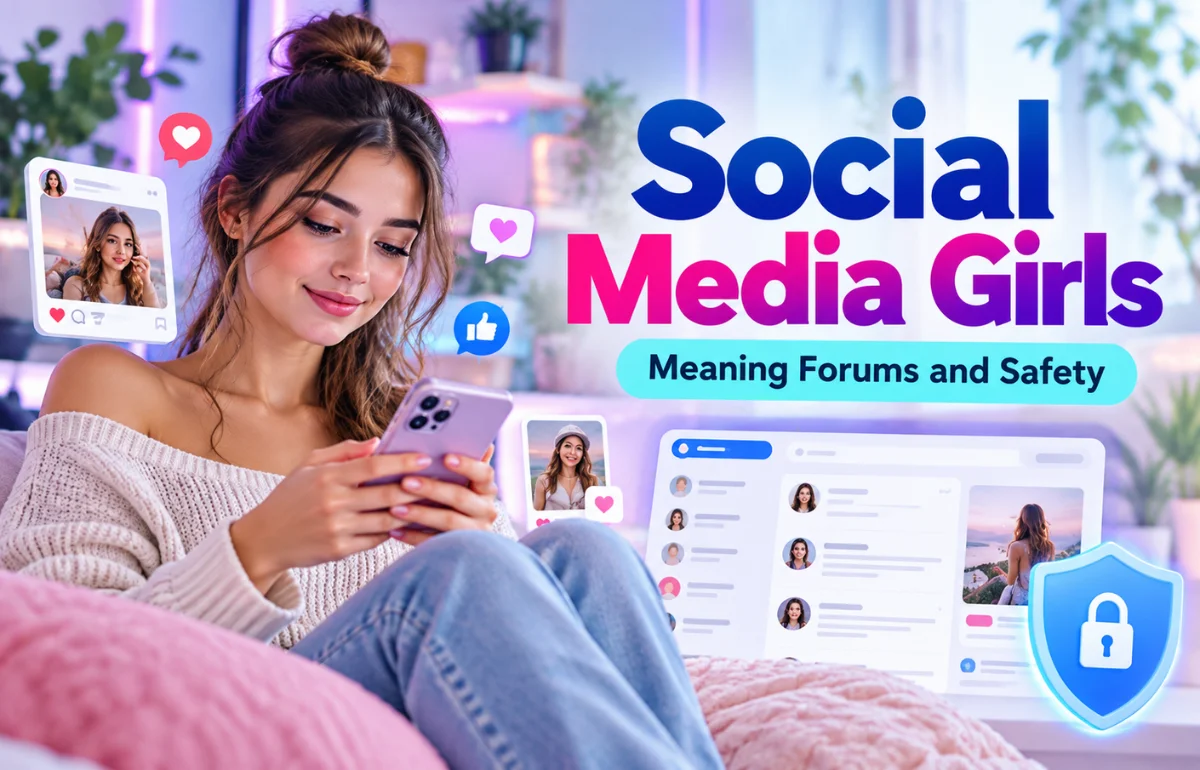
Social media girls is a broad phrase used for girls and women who create, share, or attract attention through content on platforms such as Instagram, TikTok, and YouTube. People also use “SocialMediaGirls” to refer to a separate, adult-oriented online discussion forum about female internet personalities.
These meanings should not be confused. One describes creators and digital culture; the other refers to a particular forum with its own rules, content, and privacy concerns.
If you searched the phrase because you saw an unfamiliar website, understanding that difference is the best place to start. I’ll explain what the term means, what the forum publicly says about itself, and how creators and readers can navigate this corner of the internet responsibly.
What Does “Social Media Girls” Actually Mean?
In everyday conversation, the phrase may describe women posting fashion videos, teaching skills, reviewing products, streaming games, or building businesses around their online personalities. It is an informal label, not a professional title or an official social media category.
The word “girls” can also be misleading. Many people discussed under this label are adults. I prefer “women creators” or “female content creators” when referring to professionals, and I avoid guessing someone’s age from their appearance.
There are three common contexts behind the search:
- Creator culture: Female influencers, streamers, bloggers, and online entrepreneurs.
- Online communities: Discussion groups where people talk about creators, trends, and internet fame.
- The named forum: A specific website using the Social Media Girls name, which is different from a creator-support community.
That third meaning deserves particular attention because a search for a general phrase can lead to content that the reader did not expect.
Why Is the Phrase So Popular?
Social platforms have made individual personalities as visible as traditional entertainment brands. A makeup artist can teach a technique to strangers, a student can explain a difficult subject, and a small-business owner can show how products are made. Audiences follow the person as much as the topic.
The interest is not limited to teenagers. According to Pew Research Center’s 2025 U.S. adult survey, 55% of women reported using Instagram, compared with 44% of men; for TikTok, the figures were 42% and 30%.
These numbers describe platform use, not the percentage of women who are influencers.
Visibility brings curiosity, fan discussions, criticism, and sometimes invasive attention. That mix helps explain why the same search phrase can point toward helpful creator advice or toward websites discussing someone’s personal content.
What Is the Social Media Girls Forum?
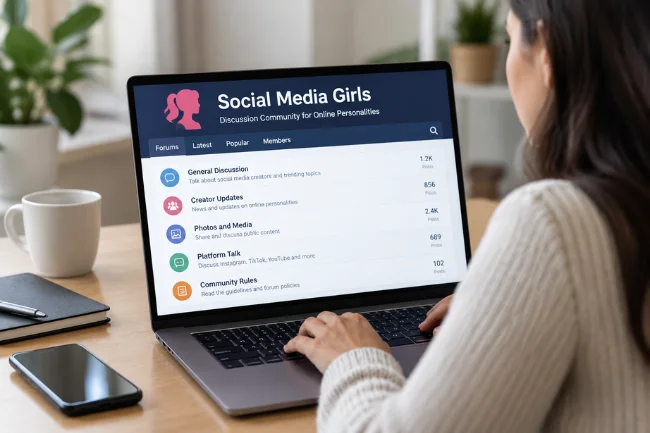
The Social Media Girls forum, often searched as “socialmediagirls forum” or “social media girls forum,” is a separate discussion website centered on female online personalities and shared media.
It is not an Instagram feature, a TikTok service, or a general certification program for influencers.
What Its Public Pages Reveal
When I reviewed the forum’s publicly accessible rules and help pages, I found a much more specific description than the friendly networking image suggested by its name.
Its welcome text references content leaks and sexualized celebrity material. The published terms restrict the service to adults aged 18 or older, while the forum rules prohibit underage material and doxxing.
Those rules tell readers what the operator says it permits or prohibits; they do not independently establish that every post is lawful, consensual, accurate, or properly moderated.
I have not audited private threads or tested the site’s security, so I would not label the whole service safe or unsafe based on a help page alone.
How Discussion Forums Differ From Creator Accounts
On Instagram or TikTok, creators usually manage their own profiles and choose what to publish. On a forum, members may create threads about other people, and those people might have little control over the discussion.
Photos or clips circulating outside their original context can raise questions about permission, ownership, and misleading captions.
A public picture is not the same as unlimited permission to redistribute it. Subscription-only content is not automatically free to repost, either.
The ethical question is not merely “Can I find this?” but “Was this shared with permission, and could repeating it cause harm?”
What About Privacy and Registration?
The forum’s published privacy policy says it collects information including usernames, email addresses, and IP addresses.
Its terms also state that submitted material may be reviewed and give the service broad rights to republish user submissions in connection with the site.
I would read those policies carefully before creating an account. A privacy policy describes a service’s stated practices; it does not provide an independent security audit.
Avoid reusing passwords, providing unnecessary personal information, or downloading unfamiliar files.
Social Media Platforms vs. Forum Communities
Different spaces serve different needs. This comparison can help you choose where to learn about creators, participate in conversations, or publish your own work.
| Platform or community | Main purpose | Who usually controls the content? | What to watch for |
|---|---|---|---|
| Photos, Reels, creator portfolios, brand relationships | Account owner, subject to platform rules | Impersonation, unwanted messages, image reuse | |
| TikTok | Short videos, trends, tutorials, live content | Account owner, subject to platform rules | Reposted clips, context loss, harassment |
| YouTube | Tutorials, reviews, longer videos, Shorts | Channel owner, subject to platform rules | Copyright claims, misleading edits |
| Reddit or Discord groups | Topic-based discussions and communities | Members and community moderators | Uneven moderation, unreliable claims |
| Social Media Girls forum | Threads about female internet personalities and shared media | Forum users and moderators, not necessarily the people discussed | Consent, privacy, adult content, reposting |
My rule is simple: use creator-owned profiles for the most reliable account of what someone chose to publish, and treat third-party commentary as commentary rather than verified biography.
Who Are the Women Behind Today’s Creator Culture?
Not every social media girl is a fashion influencer. Reducing women online to appearance misses much of the work they do.
I find these six creator categories more useful than judging accounts by aesthetic alone.
Educational Creators
They explain subjects such as languages, budgeting, coding, history, or photography.
Their credibility comes from clear demonstrations, accurate information, and corrections when they make mistakes.
Lifestyle and Beauty Creators
They share skincare routines, clothing ideas, home organization, and daily experiences.
A thoughtful creator distinguishes personal preference from proven claims, especially when discussing skin conditions or health-related products.
Entertainers and Streamers
Comedians, gamers, musicians, and live hosts build communities around performance and conversation.
Their value is often consistency, originality, and the feeling of participating in something live.
Business Owners and Professionals
Designers, bakers, consultants, and independent sellers use social media to attract clients.
Their content may be less glamorous, but a useful explanation of a product or service can be more valuable than a viral clip.
Advocates and Community Builders
These creators organize conversations around accessibility, education, local issues, or shared interests.
Good community leadership includes boundaries, accurate sourcing, and respect for differing experiences.
Niche Enthusiasts
Book reviewers, gardeners, birdwatchers, collectors, and hobby experts prove that a huge audience is not the only path to meaningful influence.
A smaller community with a clear shared interest can be especially engaged.
How Social Media Girls Build Trust Rather Than Just Followers
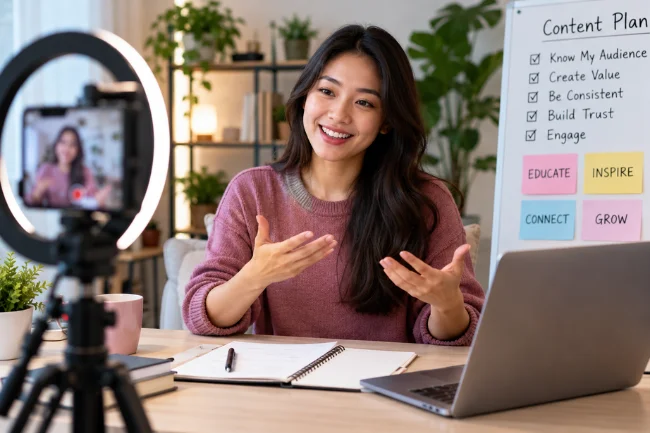
If you’re creating content yourself, I would focus on a recognizable point of view instead of chasing every trend.
Here is a practical framework I use to evaluate whether a creator strategy makes sense.
Start With One Audience Problem
A fitness educator might help office workers exercise in limited space. A book reviewer might focus on short novels for busy readers.
Both have a clearer purpose than “I post lifestyle content.”
Write one sentence: “I help [audience] understand or accomplish [specific outcome].” Then check whether your next five posts genuinely serve that promise.
Make Content People Can Return To
A repeatable series is easier to recognize than disconnected viral attempts.
For example, a new graphic designer could publish a Monday design mistake, a Wednesday before-and-after example, and a Friday answer to a reader’s question.
This is an illustrative schedule, not a claim that three posts per week works for every account. Your actual frequency should depend on your capacity and audience response.
Measure Useful Signals
Views show exposure, but they do not explain whether a post helped anybody.
Look at saves, shares, meaningful replies, profile visits, watch retention, and relevant actions such as newsletter signups or inquiries.
For Instagram creators, Meta’s Best Practices hub covers creation, engagement, reach, monetization, and guidelines within the professional dashboard.
Platform advice changes, so I favor account-specific evidence over universal claims about the perfect posting time.
Build Something Beyond a Feed
Algorithms can change without warning.
A website, opt-in email list, portfolio, or direct client relationship gives a creator another way to stay connected with people who value their work.
That does not mean abandoning social media. It means using the platform to introduce your ideas without making one account the entire business.
How Do Female Creators Make Money Online?
Followers are not a paycheck. Income depends on audience fit, trust, skill, location, platform eligibility, and the offer itself.
Here are common models and the trade-offs worth considering.
| Income method | Best suited to | Main consideration |
|---|---|---|
| Sponsored content | Creators with a defined audience | Disclose the brand relationship clearly |
| Affiliate links | Reviewers and recommendation-focused accounts | Recommend products honestly; disclose commissions |
| Digital products | Educators, designers, specialists | Provide real value and support buyers |
| Memberships or subscriptions | Creators with ongoing exclusive work | Set realistic delivery and privacy expectations |
| Services or consulting | Professionals and freelancers | Explain qualifications, scope, and pricing |
I would never treat a fictional earnings screenshot or a stranger’s revenue claim as a benchmark.
Even creators with similar follower counts can have very different costs and results.
In the United States, the Federal Trade Commission’s influencer guidance explains that material brand relationships, including certain gifts and free products, should be clearly disclosed.
Local advertising rules may also apply elsewhere.
Privacy, Consent, and Safety: What Every Reader Should Know
The harder part of online visibility is that attention can travel beyond the original audience.
These are the safeguards I would put ahead of growth tricks.
Protect Your Accounts Before Problems Appear
Use a unique password, enable two-factor authentication, review active sessions, and separate public business contact details from private accounts.
Consider whether your posts reveal a home address, school, daily route, or real-time location.
A creator can share plenty of personality without sharing every part of their life.
Boundaries are not a lack of authenticity; they are a way to make public work sustainable.
Apply a Three-Question Consent Check
Before reposting anybody’s content, ask: Who published it originally? Did they authorize this use? Does my repost change its context or expose private information?
If you cannot answer those questions confidently, do not upload it.
This simple check also works for screenshots from private messages, paid subscription pages, livestream clips, and images of people who never agreed to become the subject of a public thread.
Public availability alone does not settle privacy or copyright concerns.
Know What to Do if Your Content Is Misused
If someone impersonates you, posts private information, or republishes material without permission, save the URL, date, account name, and relevant screenshots without spreading the content further.
Report it using the platform’s privacy, impersonation, harassment, or intellectual-property process, whichever fits.
The named Social Media Girls forum has a public takedown page asking for the specific thread or post URL.
It states a target of up to 48 hours for a response or action, but that is the site’s own claim, not a guaranteed outcome. Check the current instructions directly before submitting a request, and avoid sending additional sensitive material unnecessarily.
For non-consensual intimate images of adults, StopNCII.org offers a free hashing tool supported by participating platforms.
For qualifying intimate images taken when someone was under 18, the National Center for Missing & Exploited Children’s Take It Down service may help.
These systems do not remove material from every website, and you should not download or forward explicit images of a minor to report them.
Be Skeptical of Links, Downloads, and Rumors
A forum post may look convincing because it contains screenshots, comments, or a familiar creator’s name.
None of those alone proves its claims. Look for the original source, a clear publication date, and independent confirmation before treating a rumor as fact.
Be especially cautious about shortened links, file-hosting pages, unexpected browser prompts, and requests to install software.
If a community relies on mystery downloads or pressures people to share private material, that is a reason to leave, not a reason to investigate further.
How to Choose a Better Creator Community
If your goal is genuinely to learn, collaborate, or meet people who make content, choose communities designed for that purpose.
A moderated photography group, a professional association, a local workshop, or a topic-specific Discord server may be a better match than a forum focused on discussing strangers.
Before joining, I check five things: Is the group’s purpose clear? Can I identify its moderation rules? Are privacy complaints taken seriously? Can members report abuse? And would I feel comfortable being discussed there myself?
The last question is particularly revealing. Respectful communities do not require someone else to lose control of their reputation or images so that members can be entertained.
Frequently Asked Questions
What does social media girls mean?
It usually refers to female creators and influencers, but “SocialMediaGirls” can also name a separate forum about online personalities. Context determines the meaning.
Is Social Media Girls an app like Instagram?
No. The similarly named forum is an independent discussion website, not an official Instagram, TikTok, or YouTube app.
Is the Social Media Girls forum safe to use?
Its published rules do not prove that all content or links are safe. Check its privacy terms, avoid unfamiliar downloads, and never share private material without permission.
Can social media girls earn money from their content?
Yes. Some creators earn through sponsorships, affiliates, services, subscriptions, or products, but earnings vary and are never guaranteed.
What should I do if someone reposts my private photos?
Save the post URL, report it to the host, and use the appropriate removal process. StopNCII.org and Take It Down may help with qualifying intimate images.
Final Thoughts
The phrase social media girls covers two very different conversations: the creativity and business of women online, and public curiosity about a named forum.
Understanding which one you mean prevents confusion and helps you make better decisions.
If you’re a creator, build useful content, protect your boundaries, and earn trust before chasing reach. If you’re researching a community, read its rules, question unverified claims, and respect the people being discussed.
Those habits make the internet more useful for everyone.
Related Posts