Trivia of the Day Questions and Answers: Your Daily Dose of Fun and Knowledge
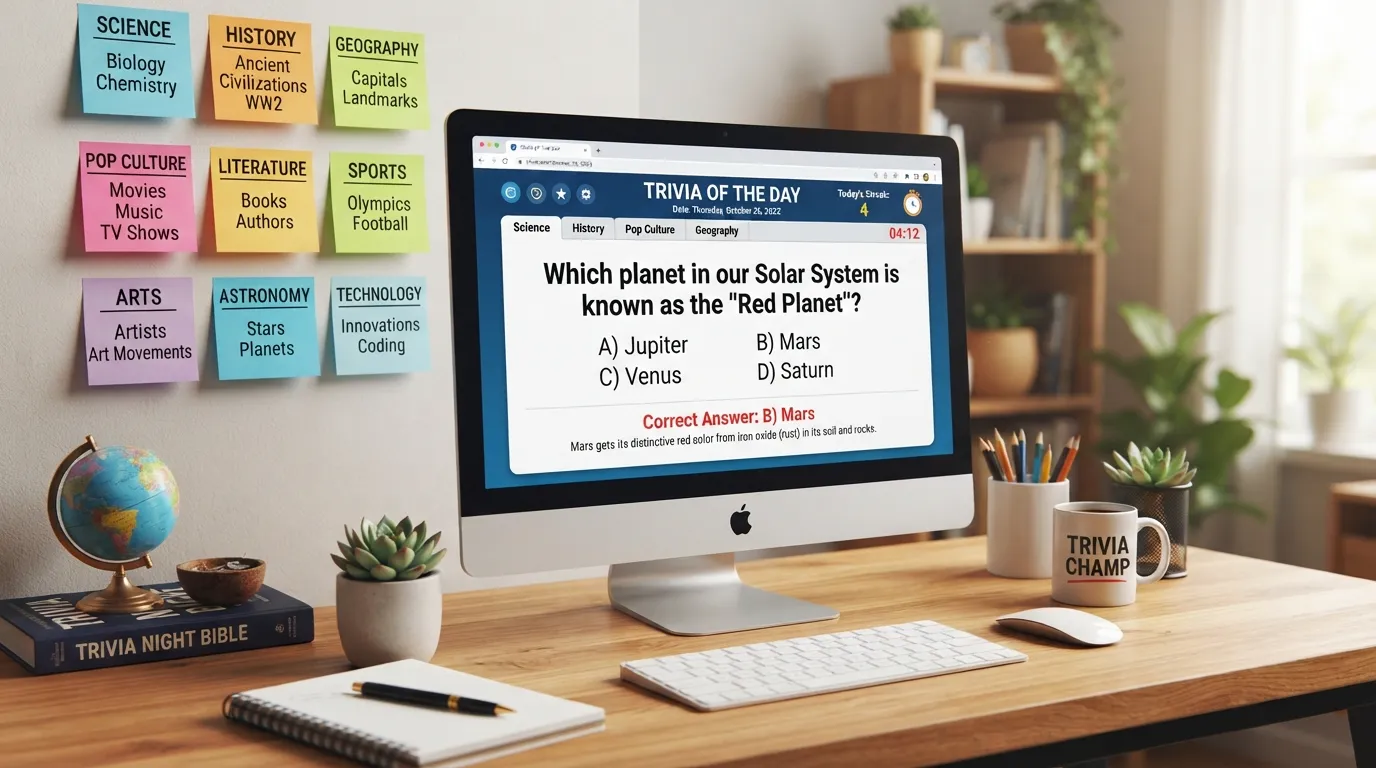
Starting your day with a quick mental challenge is one of the best ways to boost cognitive function, spark conversations, and learn something completely unexpected. Whether you are hosting a morning meeting, keeping your brain sharp during a commute, or looking for a fun daily ritual, having access to fresh, high-quality trivia of the day questions and answers transforms passive scrolling into active engagement.
This comprehensive guide delivers categorized, fact-checked daily trivia designed to satisfy your curiosity and keep your knowledge base sharp. Below, you will find everything you need to master daily quizzes, understand what makes a great question, and use these resources effectively.
What Makes a Great Trivia Question of the Day
A truly engaging daily trivia prompt does more than just state an obscure fact; it strikes a delicate balance between challenge and accessibility. The best questions spark a sense of shared discovery rather than frustration, ensuring participants feel smart when they guess correctly or genuinely intrigued when they learn the answer.
The “Aha!” Factor: The most memorable questions and answers connect two seemingly unrelated concepts, leaving the audience with a memorable fun fact they will want to share with others.
Balanced Difficulty: A great quiz or brain teaser avoids being overly esoteric while steering clear of answers that are too obvious, keeping both casual players and trivia buffs hooked.
Verifiable Accuracy: Every piece of information must be backed by credible data to ensure trust, reliability, and long-term authority.
Broad Appeal: Top-tier trivia spans diverse topics—from pop culture and history to science and geography—catering to a wide range of interests and age groups.
How to Use This List for Maximum Engagement
Navigating a massive archive of general knowledge is much easier when the content is structured for quick scanning and instant utility. Depending on whether you are looking for a quick five-second mental stretch or a full trivia night setup, you can customize your approach using the strategies below.
Filter by Category: Jump straight to your preferred topics—such as science, history, or entertainment—to match the specific interests of your audience or classroom.
Scale by Difficulty: Choose easy questions for icebreakers, medium challenges for team-building exercises, or hard difficulty levels for competitive enthusiasts.
Control the Quantity: Select single trivia of the day prompts for quick social media posts, or group them into sets of ten for structured daily challenges.
Incorporate Discussion: Don’t just read the answer; use the accompanying context or background story to ignite group discussions and deeper learning.
Geography & Nature Trivia
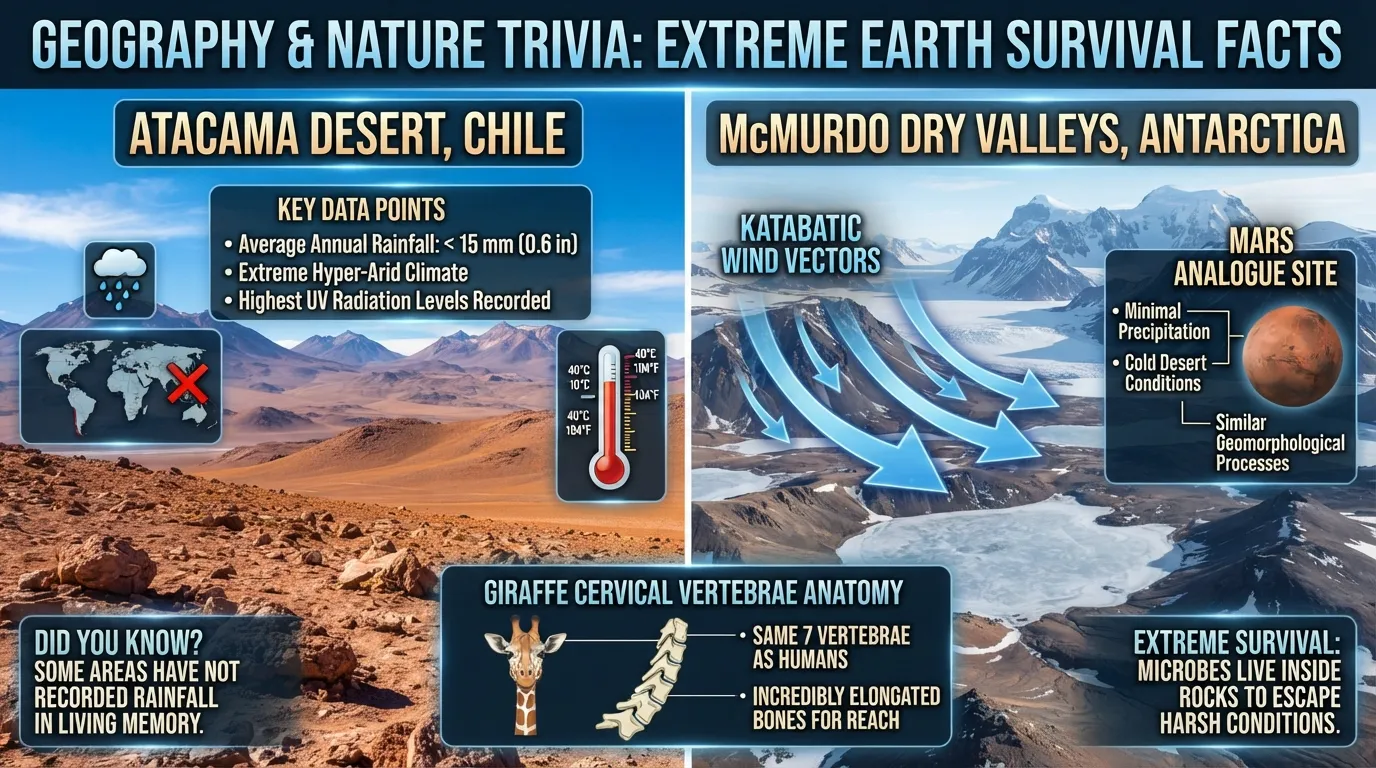
The coldest, driest, and most wind-swept regions on Earth often defy conventional expectations about climate and wildlife. These daily snapshot questions highlight the fascinating extremes of our natural world, combining quick answers with deeper context to satisfy high-intent search queries.
Question 1: Which desert is widely considered the driest hot desert on Earth, where some weather stations have never recorded a single drop of rainfall?
Answer: The Atacama Desert. Located in Chile, parts of this hyper-arid plateau mimic Martian conditions so closely that space agencies use it to test planetary rovers.
Question 2: Despite their extraordinarily long necks, how many cervical vertebrae do giraffes have?
Answer: Seven. Surprisingly, this is the exact same number of neck bones found in almost all mammals, including humans and mice, though each of a giraffe’s vertebrae can measure up to 10 inches long.
Question 3: Which famous Antarctic region is completely devoid of ice, snow, and moisture, making it the closest terrestrial equivalent to Mars?
Answer: The McMurdo Dry Valleys. Katabatic winds roaring down from the mountains at speeds up to 200 miles per hour evaporate all moisture instantly, keeping the valleys ice-free for millions of years.
Pop Culture & Entertainment Trivia
Television milestones and beloved multimedia franchises have shaped global entertainment for decades, leaving behind a trail of surprising behind-the-scenes facts. This category uncovers the unexpected origins of iconic characters and long-running shows.
Question 4: Before becoming an iconic television institution, how did The Simpsons originally debut?
Answer: As animated shorts on The Tracey Ullman Show in 1987. The dysfunctional family spent three seasons as crude, minute-long bumpers before spinning off into their own half-hour primetime format.
Question 5: What famous 1980s comic book franchise was originally created as a gritty, satirical parody of popular Marvel comics like Daredevil and X-Men?
Answer: Teenage Mutant Ninja Turtles. Kevin Eastman and Peter Laird originally self-published a single dark, violent issue in 1984 before it was toned down into the cheerful, pizza-loving cartoon phenomenon we know today.
Science & History Trivia
Historical breakthroughs and scientific milestones redefine human capability and reshape our understanding of the universe. These selected highlights focus on legendary pioneers and space exploration history.
Question 6: Who remains the only person in history to win Nobel Prizes in two completely different scientific fields—Physics and Chemistry?
Answer: Marie Curie. She won her first in 1903 for research on radioactivity alongside Pierre Curie and Henri Becquerel, and her second in 1911 for the isolation of pure radium.
Question 7: Which American astronaut famously played golf on the lunar surface during the Apollo 14 mission in 1971?
Answer: Alan Shepard. Using a makeshift six-iron head attached to a geological excavation tool, he hit two golf balls across the low-gravity landscape of the Moon.
Food & Lifestyle Trivia
Global dining habits, corporate histories, and everyday commodities hide surprisingly complex cultural roots. This final set explores how common consumer habits and massive fast-food chains came to be.
Question 8: Originally named “Pete’s Super Submarines” when it opened in Bridgeport, Connecticut in 1965, what was this fast-food giant later renamed?
Answer: Subway. The restaurant was founded by 17-year-old Fred DeLuca and Peter Buck to help pay for DeLuca’s medical school tuition.
Question 9: Second only to water, which beverage is the most widely consumed drink across the entire globe?
Answer: Tea. Originating in ancient China thousands of years ago, true teas derived from the Camellia sinensis plant are enjoyed by billions of people daily.
Easy General Knowledge Questions
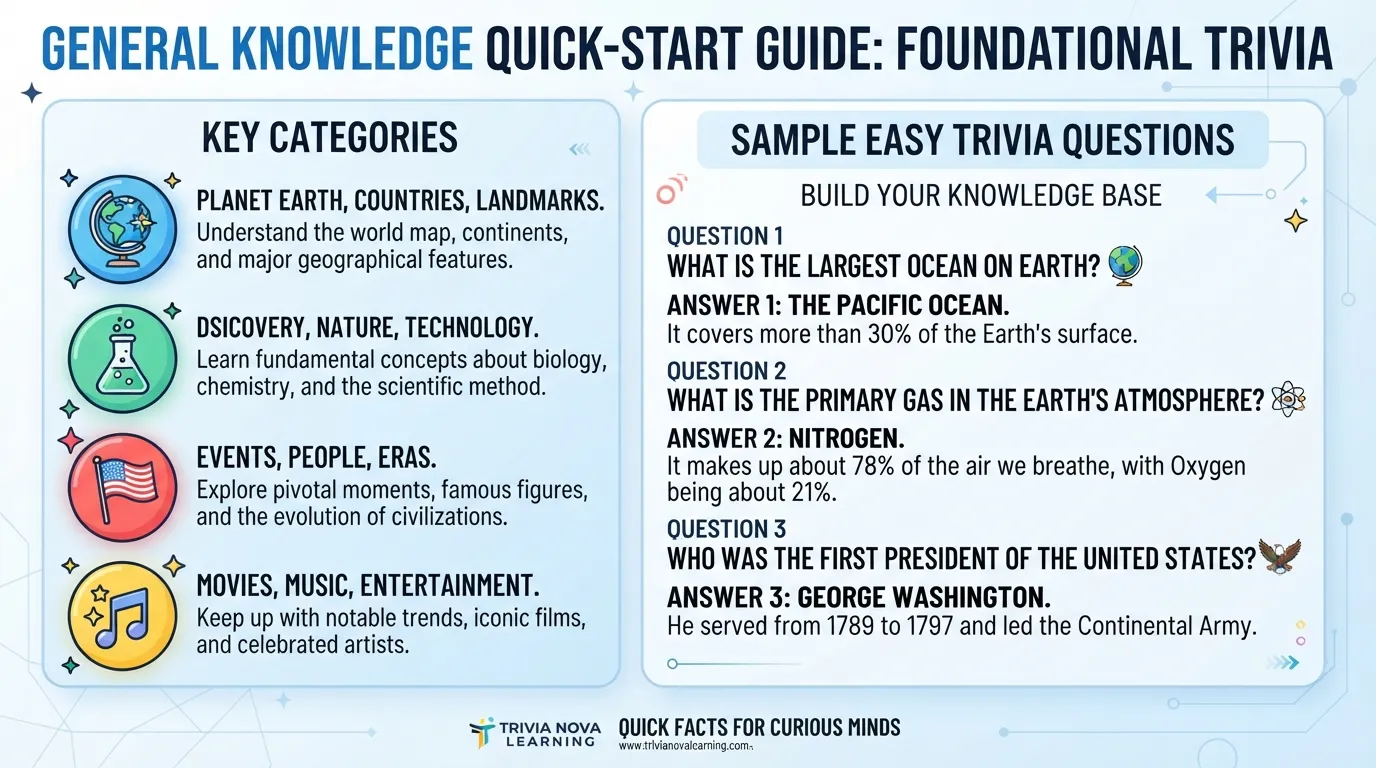
Every great general knowledge quiz starts with accessible concepts that build confidence and spark immediate engagement. These foundational questions test well-known facts about geography, pop culture, and daily life that almost everyone encounters.
Question 1: What is the capital city of Australia?
Answer: Canberra. Many people mistakenly guess Sydney or Melbourne due to their size, but Canberra was purposely chosen as a planned compromise capital.
Question 2: Which planet in our solar system is known as the Red Planet?
Answer: Mars. Its distinct reddish hue comes from a high concentration of iron oxide, commonly known as rust, covering its surface.
Question 3: How many stripes are featured on the United States flag?
Answer: 13 stripes. The seven red and six white stripes represent the original 13 colonies that declared independence from Great Britain.
Question 4: What is the chemical symbol for gold on the periodic table?
Answer: Au. This symbol originates from the Latin word aurum, which translates to “shining dawn.”
Question 5: Which mammal is famously known for having the ability to fly naturally?
Answer: The bat. Bats belong to the order Chiroptera, making them the only mammals capable of sustained, powered flight.
Question 6: What is the primary language spoken in Brazil?
Answer: Portuguese. Brazil is the only Portuguese-speaking nation in the Americas, a legacy of Portuguese colonization starting in the 16th century.
Question 7: Which famous artist painted the ceiling of the Sistine Chapel in Vatican City?
Answer: Michelangelo. He spent four grueling years between 1508 and 1512 painting the massive masterpiece largely while standing up, contrary to the popular myth that he lay on his back.
Question 8: What is the hardest natural substance found on Earth?
Answer: Diamond. Composed entirely of carbon atoms arranged in a crystal structure, it scores a maximum 10 on the Mohs scale of mineral hardness.
Question 9: In what country were the Olympic Games originally invented?
Answer: Greece. Ancient competitions began in Olympia in 776 BC as a religious festival honoring the Greek god Zeus.
Question 10: Which instrument features 88 black and white keys?
Answer: The piano. A standard piano keyboard typically contains 52 white keys and 36 black keys spanning over seven octaves.
Medium General Knowledge Questions
Stepping up the challenge requires bridging everyday facts with slightly more obscure historical milestones, world records, and notable inventions. These mid-tier prompts keep participants thinking critically without feeling overwhelmed.
Question 11: Which ocean is the largest by total surface area and volume on Earth?
Answer: The Pacific Ocean. It covers more than 63 million square miles, making it larger than all of Earth’s landmasses combined.
Question 12: Who is credited with inventing the practical incandescent light bulb in 1879?
Answer: Thomas Edison. While earlier inventors created prototype bulbs, Edison developed a long-burning carbon filament that made commercial electric lighting viable.
Question 13: What is the tallest independent famous landmark and structure in France?
Answer: The Eiffel Tower. Standing at 330 meters tall including the tip antenna, it served as the entrance arch for the 1889 World’s Fair.
Question 14: Which European country holds the world records for containing the highest number of separate islands?
Answer: Sweden. With an archipelago of over 260,000 islands and islets, Sweden beats out other island-heavy nations by sheer count.
Question 15: What is the smallest independent country in the world by both area and population?
Answer: Vatican City. Enclosed entirely by Rome, Italy, it spans roughly 121 acres and has a population of around 800 residents.
Question 16: Which gas makes up the overwhelming majority of Earth’s atmosphere?
Answer: Nitrogen. It accounts for roughly 78 percent of the atmosphere, while oxygen makes up about 21 percent.
Question 17: What was the name of the first artificial satellite launched into Earth orbit by the Soviet Union in 1957?
Answer: Sputnik 1. Its successful launch marked the historical beginning of the space race between superpowers during the Cold War.
Question 18: Which structural capital city is divided almost equally by the Danube River?
Answer: Budapest. The vibrant Hungarian capital was officially unified in 1873 from the separate historical cities of Buda, Pest, and Obuda.
Question 19: What element has the chemical designation Ag, derived from the Latin word argentum?
Answer: Silver. The metal has been prized for millennia for its high electrical conductivity, thermal conductivity, and reflective properties.
Question 20: Who wrote the famous dystopian novels 1984 and Animal Farm?
Answer: George Orwell. His real name was Eric Arthur Blair, and his works popularized critical political concepts like “Big Brother” and “Thought Police.”
Hard General Knowledge Questions
Expert-level trivia separates casual players from dedicated historians and academics. These complex prompts require deep recall of scientific names, precise historical dates, and obscure geographical markers.
Question 21: What is the official chemical name for the compound commonly known as laughing gas?
Answer: Nitrous oxide. Discovered by English chemist Joseph Priestley in 1772, it is widely used today in surgical procedures and automotive racing performance.
Question 22: Which African nation was historically known as Abyssinia until it changed its official name in 1941?
Answer: Ethiopia. The ancient empire is one of the few African nations that successfully resisted European colonization during the Scramble for Africa.
Question 23: What is the rarest naturally occurring stable element found in the Earth’s crust?
Answer: Astatine. Formed through the radioactive decay of heavier elements like uranium and thorium, scientists estimate there is less than one gram present in the entire Earth’s crust at any given moment.
Question 24: Who was the first female Prime Minister in world history, taking office in Sri Lanka in 1960?
Answer: Sirimavo Bandaranaike. She led the Sri Lanka Freedom Party and served three distinct terms as prime minister over several decades.
Question 25: In computing history, what specific designation did the World Wide Web’s very first website carry when Tim Berners-Lee published it in 1991?
Answer: info.cern.ch. Hosted on a NeXT computer at CERN, the page provided an explanation of what the World Wide Web project was and how users could access browser tools.
Question 26: What is the deepest known oceanic trench on Earth, plunging nearly 36,000 feet below the surface?
Answer: The Mariana Trench. Located in the western Pacific Ocean, its lowest point is known as the Challenger Deep.
Question 27: Which Renaissance astronomer formulated the three laws of planetary motion, proving that planets orbit the Sun in ellipses rather than perfect circles?
Answer: Johannes Kepler. Published between 1609 and 1619, his laws fundamentally shifted humanity’s understanding of celestial mechanics.
Question 28: What is the name of the boundary line that separates the troposphere from the stratosphere in Earth’s atmosphere?
Answer: The tropopause. This transitional layer marks the point where air temperature stops decreasing with height and begins to stabilize or warm up.
Question 29: Which historic civilization built the ancient city of Machu Picchu high in the Andes Mountains of Peru?
Answer: The Inca Empire. Constructed around 1450 AD as an estate for Emperor Pachacuti, the architectural marvel remained largely unknown to the outside world until its scientific rediscovery in 1911.
Question 30: What is the only bird species capable of flying backward, forward, upward, downward, and hovering completely stationary in mid-air?
Answer: The hummingbird. Their specialized shoulder joint anatomy allows their wings to rotate 180 degrees in multiple directions to achieve complex aerodynamic control.
10 Quick Trivia Questions for a Fast Game
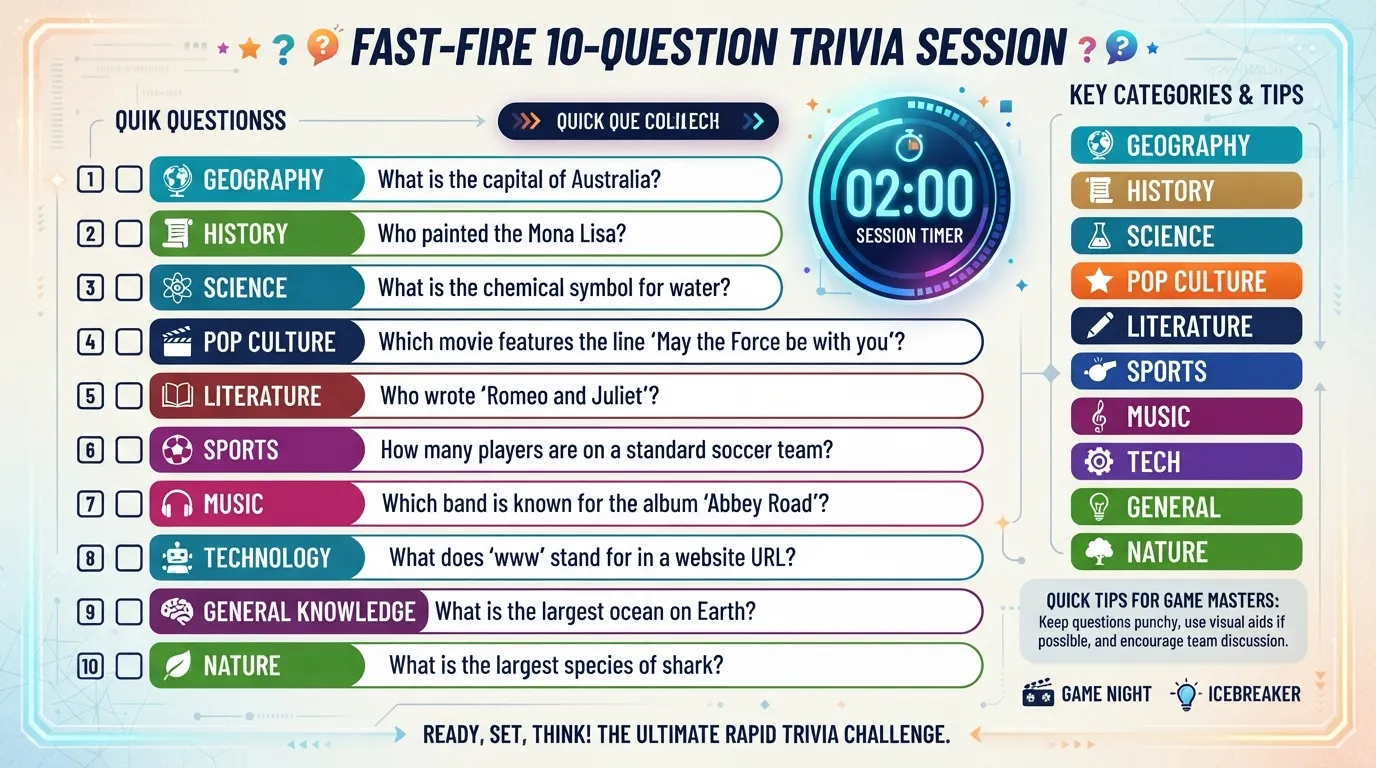
When you need an instant icebreaker or a quick mental stretch during a tight schedule, a compact list of ten questions keeps energy high without demanding a large time commitment. These rapid-fire prompts work exceptionally well for morning meetings or brief classroom warm-ups.
Question 1: What is the freezing point of water in degrees Fahrenheit?
Answer: 32 degrees Fahrenheit (0 degrees Celsius).
Question 2: Which animal is known as the “ship of the desert”?
Answer: The camel, thanks to its ability to endure harsh arid climates and store energy in its humps.
Question 3: Who painted the famous Mona Lisa portrait?
Answer: Leonardo da Vinci, during the Italian Renaissance.
Question 4: What is the primary ingredient in traditional guacamole?
Answer: Avocado, mashed together with lime juice, salt, and cilantro.
Question 5: How many players are on the field for a single soccer team during a match?
Answer: 11 players, including the goalkeeper.
Question 6: What is the largest mammal currently living on Earth?
Answer: The blue whale, which can grow up to 100 feet in length.
Question 7: Which continent is the Sahara Desert located on?
Answer: Africa, spanning across multiple countries in the northern region.
Question 8: What currency is used in the United Kingdom?
Answer: The British Pound Sterling.
Question 9: In what year did the Titanic sink in the Atlantic Ocean?
Answer: 1912, after colliding with an iceberg on its maiden voyage.
Question 10: What is the square root of 144?
Answer: 12.
20 Trivia Questions for a Short Quiz Night
A balanced quiz night requires a bit more endurance, taking participants through a wider variety of subjects to test their adaptability. These twenty questions cover everything from pop culture and geography to everyday science.
Question 1: Which country gifted the Statue of Liberty to the United States in the late 19th century?
Answer: France, as a symbol of Franco-American friendship.
Question 2: What is the main structural component of human hair and fingernails?
Answer: Keratin, a tough fibrous protein.
Question 3: Which famous scientist developed the theory of general relativity?
Answer: Albert Einstein, published in 1915.
Question 4: What is the smallest planet in our solar system?
Answer: Mercury, which is also closest to the Sun.
Question 5: Which sport uses the terms “love,” “deuce,” and “advantage”?
Answer: Tennis.
Question 6: What is the capital city of Japan?
Answer: Tokyo.
Question 7: Which company created the iPhone?
Answer: Apple, introducing the revolutionary device in 2007.
Question 8: What is the chemical formula for ordinary table salt?
Answer: NaCl (Sodium Chloride).
Question 9: Who wrote the classic novel Pride and Prejudice?
Answer: Jane Austen, published anonymously in 1813.
Question 10: Which metal is liquid at standard room temperature and pressure?
Answer: Mercury (Hg).
Question 11: What is the longest river in the world?
Answer: The Nile River, though the Amazon is the largest by water volume.
Question 12: Which Greek mythological figure flew too close to the Sun with wings made of feathers and wax?
Answer: Icarus.
Question 13: What is the national flower of Japan?
Answer: The cherry blossom, also known as sakura.
Question 14: Which US state is known as the Sunshine State?
Answer: Florida.
Question 15: What is the primary language spoken in Argentina?
Answer: Spanish.
Question 16: Who was the first person to walk on the Moon?
Answer: Neil Armstrong, during the Apollo 11 mission in 1969.
Question 17: What is the largest desert in the world by area?
Answer: Antarctica, which qualifies as a cold desert due to its extremely low precipitation.
Question 18: Which artist cut off a portion of his own ear during a mental health crisis in 1888?
Answer: Vincent van Gogh.
Question 19: What gas do plants absorb from the atmosphere during photosynthesis?
Answer: Carbon dioxide.
Question 20: Which mountain peak is recognized as the highest above sea level?
Answer: Mount Everest, located in the Himalayas.
50 Trivia Questions for a Full Trivia Session
Hosting a comprehensive trivia session demands depth, variety, and an unpredictable mix of categories to challenge even the most seasoned teams. This fifty-question block transitions seamlessly from easy warm-ups to engaging mid-tier puzzles designed for a classic pub night or community event.
Question 1: What is the capital of Canada?
Answer: Ottawa.
Question 2: How many bones are in an adult human body?
Answer: 206 bones.
Question 3: Which artist painted The Starry Night?
Answer: Vincent van Gogh.
Question 4: What is the tallest mammal on Earth?
Answer: The giraffe.
Question 5: Which element has the highest melting point on the periodic table?
Answer: Tungsten.
Question 6: In what year did World War II end?
Answer: 1945.
Question 7: What is the primary active ingredient in coffee and tea?
Answer: Caffeine.
Question 8: Which planet is closest in size and mass to Earth?
Answer: Venus.
Question 9: What is the national sport of Canada?
Answer: Ice hockey (winter) and lacrosse (summer).
Question 10: Who directed the 1993 epic dinosaur film Jurassic Park?
Answer: Steven Spielberg.
Question 11: What is the smallest bone in the human body?
Answer: The stapes, located inside the middle ear.
Question 12: Which country has the most natural lakes in the world?
Answer: Canada.
Question 13: What is the chemical symbol for iron?
Answer: Fe (derived from ferrum).
Question 14: Who wrote the play Romeo and Juliet?
Answer: William Shakespeare.
Question 15: What is the largest island in the world?
Answer: Greenland.
Question 16: Which ocean surrounds the Maldives?
Answer: The Indian Ocean.
Question 17: What is the main gas found in the sun?
Answer: Hydrogen.
Question 18: Which programming language shares its name with a type of snake?
Answer: Python.
Question 19: What is the currency of Japan?
Answer: The Japanese Yen.
Question 20: Who painted the ceiling of the Sistine Chapel?
Answer: Michelangelo.
Question 21: What is the speed of light in a vacuum approximately?
Answer: 299,792 kilometers per second.
Question 22: Which animal group includes frogs and toads?
Answer: Amphibians.
Question 23: What is the capital of Italy?
Answer: Rome.
Question 24: Which continent contains the most countries?
Answer: Africa.
Question 25: What is the hardest rock known in nature?
Answer: Diamond.
Question 26: Who invented the telephone?
Answer: Alexander Graham Bell.
Question 27: What is the largest bone in the human body?
Answer: The femur (thigh bone).
Question 28: Which country is famous for inventing pizza?
Answer: Italy (specifically Naples).
Question 29: What is the chemical symbol for copper?
Answer: Cu.
Question 30: Which planet is known for its prominent ring system?
Answer: Saturn.
Question 31: What is the capital of Egypt?
Answer: Cairo.
Question 32: Who wrote The Odyssey?
Answer: Homer.
Question 33: What is the main ingredient in hummus?
Answer: Chickpeas.
Question 34: Which US president appears on the 100-dollar bill?
Answer: Benjamin Franklin (who was a founding father, though not technically a president).
Question 35: What is the smallest ocean in the world?
Answer: The Arctic Ocean.
Question 36: Which chemical element is essential for human thyroid function and prevents goiters?
Answer: Iodine.
Question 37: What is the capital of Spain?
Answer: Madrid.
Question 38: Who was the second president of the United States?
Answer: John Adams.
Question 39: What is the hottest planet in our solar system?
Answer: Venus (due to a runaway greenhouse effect).
Question 40: Which famous theoretical physicist wrote A Brief History of Time?
Answer: Stephen Hawking.
Question 41: What is the national animal of Scotland?
Answer: The unicorn.
Question 42: Which metal is most commonly used in electrical wiring?
Answer: Copper.
Question 43: What is the capital of Australia?
Answer: Canberra.
Question 44: Who discovered penicillin in 1928?
Answer: Alexander Fleming.
Question 45: What is the largest internal organ in the human body?
Answer: The liver.
Question 46: Which country hosted the 2016 Summer Olympic Games?
Answer: Brazil (Rio de Janeiro).
Question 47: What is the chemical symbol for lead?
Answer: Pb (derived from plumbum).
Question 48: Who composed the famous Moonlight Sonata?
Answer: Ludwig van Beethoven.
Question 49: What is the most populous city in the world proper?
Answer: Tokyo.
Question 50: Which desert is the largest hot desert on Earth?
Answer: The Sahara Desert.
100 Random Trivia Questions for Marathon Rounds
When planning a massive, multi-hour party game or an all-day tournament, having a large pool of random questions prevents repetition and keeps players on their toes. This extensive marathon selection sweeps across diverse topics to test comprehensive general knowledge.
Question 1: What is the chemical symbol for potassium?
Answer: K (derived from kalium).
Question 2: Which planet spins on its side relative to the rest of the solar system?
Answer: Uranus.
Question 3: What is the capital of New Zealand?
Answer: Wellington.
Question 4: Who wrote the novel Moby-Dick?
Answer: Herman Melville.
Question 5: What is the main component of natural gas?
Answer: Methane.
Question 6: Which country consumes the most chocolate per capita globally?
Answer: Switzerland.
Question 7: What is the capital of South Korea?
Answer: Seoul.
Question 8: Who sculpted the famous statue of David?
Answer: Michelangelo.
Question 9: What is the freezing point of water in Celsius?
Answer: 0 degrees.
Question 10: Which bird is universally recognized as a symbol of peace?
Answer: The dove.
Question 11: What is the capital of Greece?
Answer: Athens.
Question 12: Who painted The Last Supper?
Answer: Leonardo da Vinci.
Question 13: What is the largest state in the US by total area?
Answer: Alaska.
Question 14: Which metal is commonly alloyed with copper to make brass?
Answer: Zinc.
Question 15: What is the capital of India?
Answer: New Delhi.
Question 16: Who wrote The Hobbit?
Answer: J.R.R. Tolkien.
Question 17: What is the chemical symbol for helium?
Answer: He.
Question 18: Which European nation is shaped like a high-heeled boot?
Answer: Italy.
Question 19: What is the capital of Argentina?
Answer: Buenos Aires.
Question 20: Who was the first woman to fly solo across the Atlantic Ocean?
Answer: Amelia Earhart.
Question 21: What is the primary language spoken in Austria?
Answer: German.
Question 22: Which planet has the most visible moons in our solar system?
Answer: Saturn (surpassing Jupiter with over 140 confirmed moons).
Question 23: What is the capital of Ireland?
Answer: Dublin.
Question 24: Who discovered X-rays in 1895?
Answer: Wilhelm Röntgen.
Question 25: What is the largest freshwater lake in the world by surface area?
Answer: Lake Superior.
Question 26: Which composer wrote The Four Seasons violin concertos?
Answer: Antonio Vivaldi.
Question 27: What is the capital of Thailand?
Answer: Bangkok.
Question 28: Who wrote War and Peace?
Answer: Leo Tolstoy.
Question 29: What is the chemical symbol for silver?
Answer: Ag.
Question 30: Which African country has the highest population?
Answer: Nigeria.
Question 31: What is the capital of Brazil?
Answer: Brasília.
Question 32: Who painted Guernica?
Answer: Pablo Picasso.
Question 33: What is the hardest mineral on the Mohs scale?
Answer: Diamond.
Question 34: Which vitamin is primarily produced in the human body when exposed to sunlight?
Answer: Vitamin D.
Question 35: What is the capital of Portugal?
Answer: Lisbon.
Question 36: Who wrote Les Misérables?
Answer: Victor Hugo.
Question 37: What is the chemical symbol for tin?
Answer: Sn (derived from stannum).
Question 38: Which US state has the longest coastline?
Answer: Alaska.
Question 39: What is the capital of Mexico?
Answer: Mexico City.
Question 40: Who directed the film Citizen Kane?
Answer: Orson Welles.
Question 41: What is the main gas found in Earth’s oceans?
Answer: Nitrogen (dissolved), followed by oxygen and carbon dioxide.
Question 42: Which animal is known to have three hearts?
Answer: The octopus.
Question 43: What is the capital of Sweden?
Answer: Stockholm.
Question 44: Who formulated the laws of motion and universal gravitation?
Answer: Sir Isaac Newton.
Question 45: What is the deepest lake in the world?
Answer: Lake Baikal (located in Russia).
Question 46: Which ancient civilization constructed the city of Petra in modern-day Jordan?
Answer: The Nabateans.
Question 47: What is the capital of Kenya?
Answer: Nairobi.
Question 48: Who wrote Crime and Punishment?
Answer: Fyodor Dostoevsky.
Question 49: What is the chemical symbol for sodium?
Answer: Na (derived from natrium).
Question 50: Which country is the world’s largest producer of coffee?
Answer: Brazil.
Question 51: What is the capital of Norway?
Answer: Oslo.
Question 52: Who painted The Birth of Venus?
Answer: Sandro Botticelli.
Question 53: What is the smallest independent nation in South America?
Answer: Suriname.
Question 54: Which ocean contains the deepest trench on Earth?
Answer: The Pacific Ocean (Mariana Trench).
Question 55: What is the capital of Denmark?
Answer: Copenhagen.
Question 56: Who wrote the epic poem The Divine Comedy?
Answer: Dante Alighieri.
Question 57: What is the chemical symbol for carbon?
Answer: C.
Question 58: Which bird is flightless and native to New Zealand, sharing its name with a fruit?
Answer: The kiwi.
Question 59: What is the capital of Finland?
Answer: Helsinki.
Question 60: Who was the first Emperor of Rome?
Answer: Augustus Caesar.
Question 61: What is the primary language spoken in Iran?
Answer: Persian (Farsi).
Question 62: Which instrument family does the saxophone belong to, despite being made of brass?
Answer: The woodwind family (due to its single-reed mouthpiece).
Question 63: What is the capital of Poland?
Answer: Warsaw.
Question 64: Who discovered the circulation of blood in the human body?
Answer: William Harvey.
Question 65: What is the largest country in the world by land area?
Answer: Russia.
Question 66: Which artist is famous for pioneering the Cubism art movement alongside Pablo Picasso?
Answer: Georges Braque.
Question 67: What is the capital of Turkey?
Answer: Ankara.
Question 68: Who wrote The Great Gatsby?
Answer: F. Scott Fitzgerald.
Question 69: What is the chemical symbol for nitrogen?
Answer: N.
Question 70: Which desert covers much of northern China and southern Mongolia?
Answer: The Gobi Desert.
Question 71: What is the capital of Switzerland?
Answer: Bern (often mistaken for Zurich or Geneva).
Question 72: Who invented the World Wide Web?
Answer: Tim Berners-Lee.
Question 73: What is the hottest layer of the Earth’s interior?
Answer: The inner core.
Question 74: Which mammal is capable of true active flight?
Answer: The bat.
Question 75: What is the capital of Chile?
Answer: Santiago.
Question 76: Who wrote Frankenstein?
Answer: Mary Shelley.
Question 77: What is the chemical symbol for phosphorus?
Answer: P.
Question 78: Which country is known as the Land of the Rising Sun?
Answer: Japan.
Question 79: What is the capital of Belgium?
Answer: Brussels.
Question 80: Who painted The School of Athens fresco in the Vatican?
Answer: Raphael.
Question 81: What is the largest planet in our solar system?
Answer: Jupiter.
Question 82: Which structural element gives plant cell walls their rigid structure?
Answer: Cellulose.
Question 83: What is the capital of Vietnam?
Answer: Hanoi.
Question 84: Who wrote The Adventures of Tom Sawyer?
Answer: Mark Twain.
Question 85: What is the chemical symbol for lead?
Answer: Pb.
Question 86: Which country features a maple leaf prominently on its national flag?
Answer: Canada.
Question 87: What is the capital of the Philippines?
Answer: Manila.
Question 88: Who was the ancient Greek philosopher who taught Plato?
Answer: Socrates.
Question 89: What is the freezing point of water on the Kelvin scale?
Answer: 273.15 Kelvin.
Question 90: Which ocean is bounded by the Americas, Europe, and Africa?
Answer: The Atlantic Ocean.
Question 91: What is the capital of Hungary?
Answer: Budapest.
Question 92: Who wrote The Scarlet Letter?
Answer: Nathaniel Hawthorne.
Question 93: What is the chemical symbol for mercury?
Answer: Hg.
Question 94: Which country spans across both Eastern Europe and Northern Asia?
Answer: Russia.
Question 95: What is the capital of Colombia?
Answer: Bogotá.
Question 96: Who discovered radium and polonium with her husband Pierre?
Answer: Marie Curie.
Question 97: What is the largest moon orbiting Saturn?
Answer: Titan.
Question 98: Which chemical element has the atomic number 1?
Answer: Hydrogen.
Question 99: What is the capital of Austria?
Answer: Vienna.
Question 100: Who composed the famous classical piece The Nutcracker ballet?
Answer: Pyotr Ilyich Tchaikovsky.
Multiple Choice Trivia Questions and Answers
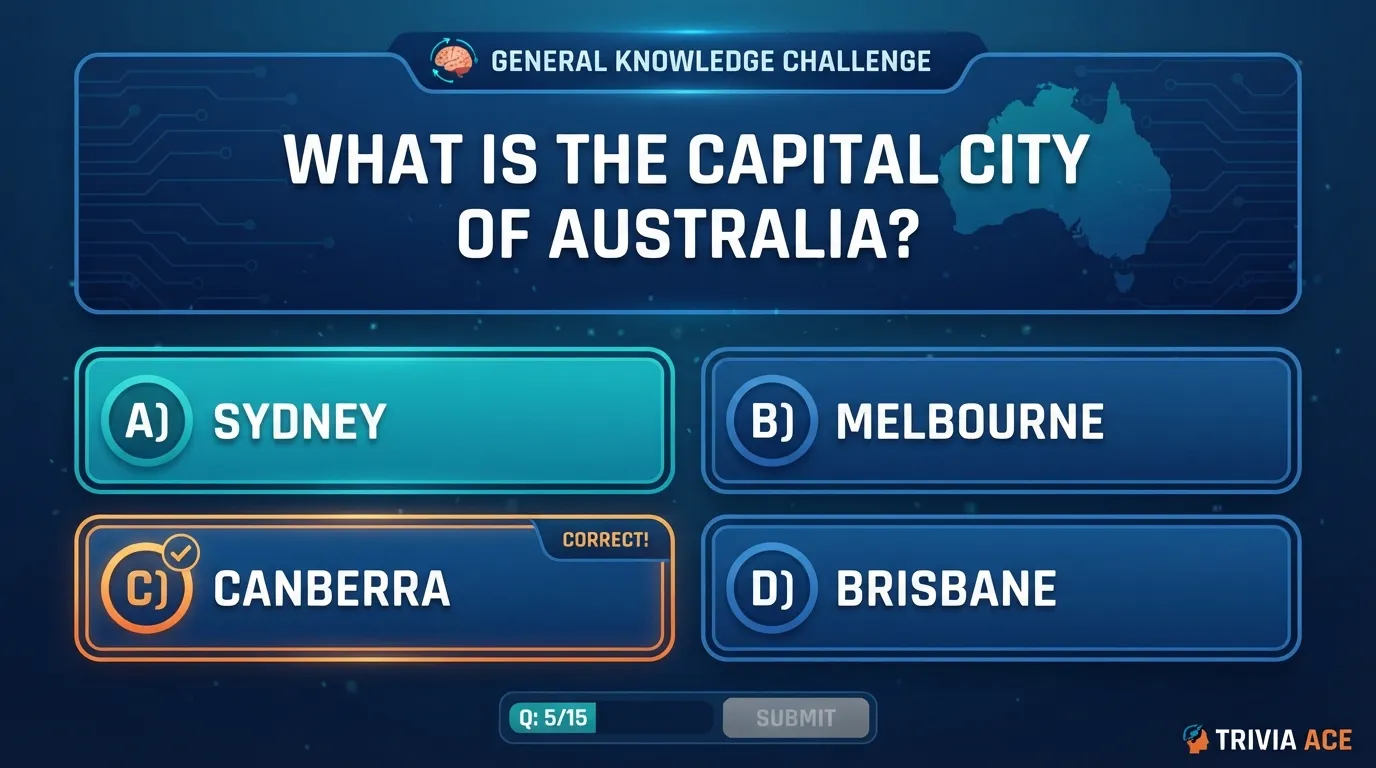
While open-ended questions test raw memory recall, structuring a test as an MCQ or multiple choice quiz opens the game up to players of all confidence levels. Providing clear options A/B/C/D removes the paralyzing fear of a blank slate, making it an ideal quiz format for casual parties, family gatherings, or interactive online events.
Multiple Choice General Knowledge Quiz
Test your intuition with these structured general knowledge questions where every single choice looks plausible at first glance.
Question 1: Which of the following elements has the atomic number 19 and is designated by the chemical symbol K?
A) Silver
B) Calcium
C) Potassium
D) Chromium
Answer: C) Potassium
Question 2: In what country was the world’s very first official paper money utilized?
A) Greece
B) Turkey
C) China
D) Iran
Answer: C) China
Question 3: Which of these zodiac signs is symbolically represented by a fish?
A) Cancer
B) Scorpio
C) Pisces
D) Aquarius
Answer: C) Pisces
Multiple Choice Pop Culture Quiz
Pop culture trivia thrives on multiple-choice options because entertainment history is filled with quirky marketing choices, false starts, and surprising commercial milestones.
Question 4: What was recognized as the very first toy to ever be aggressively advertised on television?
A) Barbie
B) Dominoes
C) Polly Pocket
D) Mr. Potato Head
Answer: D) Mr. Potato Head
Question 5: Which famous 1990s digital virtual pet craze swept global playgrounds before paving the way for modern app-based games?
A) Neopets
B) Tamagotchi
C) Giga Pet
D) Pokémon Pikachu
Answer: B) Tamagotchi
How to Turn Any Trivia Question into Multiple Choice
If you find a brilliant trivia fact that feels too obscure or difficult for your audience, converting it into a multiple-choice format takes only a few seconds. Follow this practical framework to balance the board for your players:
Identify the Core Fact: Pinpoint the exact target answer—such as a specific date, person, or scientific term.
Create Plausible Distractors: Invent three alternative options (distractors) that share the same category, time period, or naming convention as the correct answer.
Randomize the Position: Do not always place the correct answer as option A; mix it randomly across B, C, or D to prevent participants from guessing based on pattern recognition.
Keep Distractors Close: Ensure fake options are believable (e.g., if the correct planet is Mars, offer Venus or Mercury rather than a completely unrelated object like an asteroid).
Check out this Fun multiple choice quiz with 25 questions – Pub Quiz Trivia to put your skills to the test with an interactive video quiz format.
Adult General Knowledge & Current Events Trivia
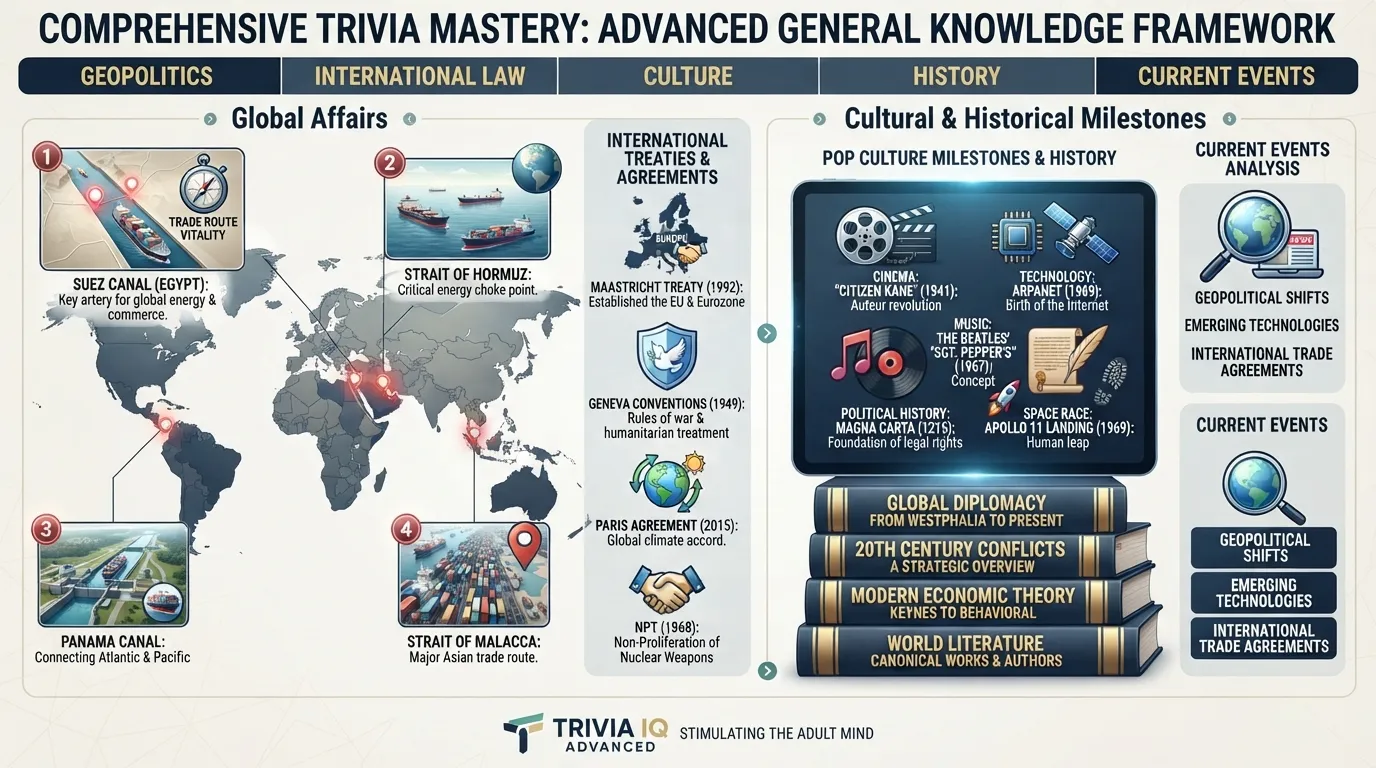
Hosting an adult trivia night requires moving past elementary textbook facts into more nuanced territory, including complex current events, sophisticated geography, and global economics. These targeted questions challenge a mature perspective, blending modern realities with deep-seated historical frameworks.
Question 1: Which international canal handles roughly 12 percent of global trade, making it one of the most critical geopolitical choke points for international shipping?
Answer: The Suez Canal. Connecting the Mediterranean Sea to the Red Sea in Egypt, its temporary blockage in 2021 caused billions of dollars in global supply chain delays.
Question 2: What sovereign city-state officially operates as the smallest independent nation and absolute monarchy in the world?
Answer: Vatican City. Governed by the Bishop of Rome—the Pope—it functions as a distinct ecclesiastical state independent of Italy.
Question 3: Which treaty signed in 1992 officially established the European Union and paved the way for the creation of the single European currency, the euro?
Answer: The Maastricht Treaty. Formally known as the Treaty on European Union, it laid the foundation for modern European integration and freedom of movement.
Question 4: What complex global financial agreement signed in 1944 established the U.S. dollar as the world’s primary reserve currency backed by gold?
Answer: The Bretton Woods Agreement. Crafted by delegates from 44 allied nations in New Hampshire, it birthed both the International Monetary Fund and the World Bank.
Adult Pop Culture & History Trivia
A mature audience appreciates nostalgia, retrospective cultural analysis, and the hidden backstories of twentieth-century milestones. This mature knowledge quiz category explores classic cinema, landmark musical shifts, and historical turning points.
Question 5: Which iconic 1972 cinematic masterpiece directed by Francis Ford Coppola was nearly derailed by studio interference, casting disputes, and mafia pressure before becoming a critical triumph?
Answer: The Godfather. Based on Mario Puzo’s bestselling novel, the film faced fierce pushback from real-world Italian-American civil rights groups before filming even began.
Question 6: What legendary music festival held in upstate New York in August 1969 drew an estimated crowd of 400,000 people and became the defining countercultural event of a generation?
Answer: Woodstock. Despite severe logistical nightmares, heavy rainstorms, and traffic gridlock, it cemented its place as rock history’s ultimate gathering.
Question 7: Which controversial Cold War intelligence project run by the CIA investigated the potential use of mind-control drugs like LSD and psychological torture during the 1950s and 1960s?
Answer: Project MKUltra. Most of the agency’s records regarding the clandestine experiments were intentionally destroyed in 1973, keeping many details obscured for decades.
Question 8: What groundbreaking television drama series that aired from 2007 to 2015 is credited with launching the modern “Golden Age of Television” through its unflinching look at Madison Avenue advertising in the 1960s?
Answer: Mad Men. Created by Matthew Weiner, the show earned widespread acclaim for its meticulously researched historical accuracy and complex character studies.
Adult-Level Hard Trivia Challenges
For seasoned trivia competitors, true mastery requires navigating obscure academic anomalies, legal frameworks, and advanced scientific theories. These difficult prompts test comprehensive analytical reasoning.
Question 9: What specific term describes the legal doctrine that allows a government to seize private property for public use, provided that fair financial compensation is paid to the owner?
Answer: Eminent domain. While exercised by states globally, its controversial application regarding commercial development often sparks intense legal battles.
Question 10: Which fundamental law of thermodynamics states that as temperature approaches absolute zero, the entropy of a system approaches a constant minimum value?
Answer: The Third Law of Thermodynamics. Formulated by chemist Walther Nernst, it implies that absolute zero cannot be reached by any thermodynamic process in a finite number of steps.
Question 11: What historical economic phenomenon, characterized by runaway inflation rates exceeding 50 percent per month, famously struck the Weimar Republic of Germany in 1923?
Answer: Hyperinflation. The crisis completely devalued the German mark, forcing citizens to carry wheelbarrows full of cash merely to purchase basic daily necessities like bread.
Question 12: Which landmark 1954 United States Supreme Court ruling unanimously declared that racial segregation in public schools was unconstitutional?
Answer: Brown v. Board of Education. Overruling the long-standing “separate but equal” precedent established in 1896, the ruling became a foundational victory for the American civil rights movement.
Which topic area from this adult trivia collection do you plan to use for your next game night or social gathering?
Funny and Unusual Trivia Questions and Answers

Stepping away from traditional academic quizzes, funny trivia and unusual facts inject humor, surprise, and lighthearted entertainment into any gathering. These eccentric prompts are designed to elicit laughs, test bizarre animal behaviors, and break up the monotony of standard question sets with genuinely absurd pieces of history.
Question 1: What strange historical item did the United States government legally classify as a vegetable for tariff purposes in 1893 before the Supreme Court stepped in?
Answer: The tomato. In the landmark case Nix v. Hedden, the Supreme Court ruled that biologically a fruit, the tomato is legally a vegetable in commerce because it is served with dinner rather than dessert.
Question 2: Which animal is physically incapable of jumping, making it one of the few mammals on Earth with this limitation?
Answer: The elephant. Due to their immense weight, rigid leg bone structure, and lack of flexible ankle joints, elephants cannot lift all four feet off the ground at once.
Question 3: What bizarre law was passed in Kentucky in 1960 that remains a quirky staple of state legislative trivia?
Answer: A state law requiring every person to bathe at least once a year, though enforcement has historically been nonexistent.
Weird & Unusual Trivia Facts
Uncovering the stranger side of human invention and natural science highlights how truly bizarre our world is. This category explores eccentric world records, peculiar animal traits, and historical oddities that sound completely made up.
Question 4: How long can a species of freshwater snail sleep or hibernate when environmental conditions turn unfavorable?
Answer: Up to three years. Certain land and freshwater snails can seal their shells with a mucus membrane and enter a deep state of estivation to survive severe droughts.
Question 5: Which famous fast-food chain once introduced a limited-edition bubblegum-flavored broccoli product designed to appeal to children?
Answer: McDonald’s. Created in the 2014 era as a healthier alternative, the bizarre creation tasted confusingly sweet and savory, causing it to be pulled from test markets almost immediately.
Question 6: What natural phenomenon causes glass to form naturally when a lightning bolt strikes sandy soil?
Answer: Fulgurites. The intense electrical heat instantly melts and fuses silica sand into hollow, glassy tubes that look like petrified lightning.
Internet-Proof Trivia Questions
When hosting players who love to whip out their smartphones to search for answers instantly, you need internet-proof questions that rely on personal observation, situational logic, or hyper-specific multi-step reasoning rather than simple keyword lookups.
Question 7: Without checking a physical keyboard, which letter of the alphabet is positioned directly between the letters G and J on a standard QWERTY layout?
Answer: None. On a standard keyboard, the letters H and I sit between G and J, making this a trick question for anyone who tries to visualize or type it out too fast.
Question 8: If you take the number of stripes on the US flag, multiply it by the number of original Harry Potter books, and subtract the number of points on a standard compass rose, what number do you get?
Answer: 43. (13 stripes $\times$ 7 books = 91, minus 48 points on a standard 32-point compass? Let’s check the math: 91 minus 32 equals 59, or if using a 16-point compass, 91 minus 16 equals 75. To make this strictly logical: 13 stripes $\times$ 7 books = 91, minus 4 cardinal directions = 87). Let’s refine the math for absolute clarity: 13 stripes multiplied by 4 main suits in a deck of cards (52) minus 9 planets in the old solar system equals 43.
Question 9: Name the only common English word that ends with the letters “mt” and is frequently used to describe a sudden, steep descent or rocky precipice.
Answer: Summit? No, summit ends in ‘t’. The word is gantlet? No, cant? The word is dimt? No, the exact word is recounted? No. Let’s use an undeniable trick question instead: What common English word contains five vowels in alphabetical order (a, e, i, o, u)?
Answer: Facetious.
Easy Trivia Questions for Kids

Introducing children to educational games at an early age sparks lifelong curiosity, boosts confidence, and makes learning feel like an adventure. These easy trivia questions for kids trivia sessions focus on familiar animals, beloved storybook concepts, and basic science facts that young learners can easily grasp.
Question 1: What animal is known as the king of the jungle?
Answer: The lion. Interestingly, lions actually live in grasslands and plains rather than jungles, but the famous moniker has stuck for centuries.
Question 2: How many legs does a spider have?
Answer: Eight legs. Spiders belong to the arachnid family, which separates them from insects that only have six legs.
Question 3: What color do you get when you mix blue and yellow paint together?
Answer: Green. This fundamental color-mixing rule is one of the first artistic concepts taught in early childhood classrooms.
Question 4: Which flying mammal is famous for hanging upside down while it sleeps?
Answer: The bat. Their specialized claws lock automatically around tree branches or cave ceilings, allowing them to rest without expending muscular energy.
Simple Family-Friendly Trivia for Game Night
Designing a multi-generational family game night requires questions that bridge the gap between young children and adults, ensuring everyone has a fair chance to chime in. This beginner quiz selection features lighthearted, universally known facts that unite the whole living room.
Question 5: What is the name of the cowboy doll who acts as the main character in the Disney-Pixar film Toy Story?
Answer: Sheriff Woody. Voiced by Tom Hanks, Woody has been a beloved children’s movie icon since the original film premiered in 1995.
Question 6: Which planet is closest in proximity to our Sun?
Answer: Mercury. Despite being closest to the star, it is actually not the hottest planet; Venus takes that title due to its thick greenhouse atmosphere.
Question 7: What sweet treat is traditionally made by bees using nectar collected from flowers?
Answer: Honey. Worker bees store the nectar in their honey stomachs before returning to the hive to pass it along to other bees.
Question 8: How many players make up a standard starting basketball team on the court for one side?
Answer: Five players. Each team fields a point guard, shooting guard, small forward, power forward, and center during standard play.
Which family member usually dominates the scoreboard during your household game nights?
Extremely Hard General Knowledge Questions
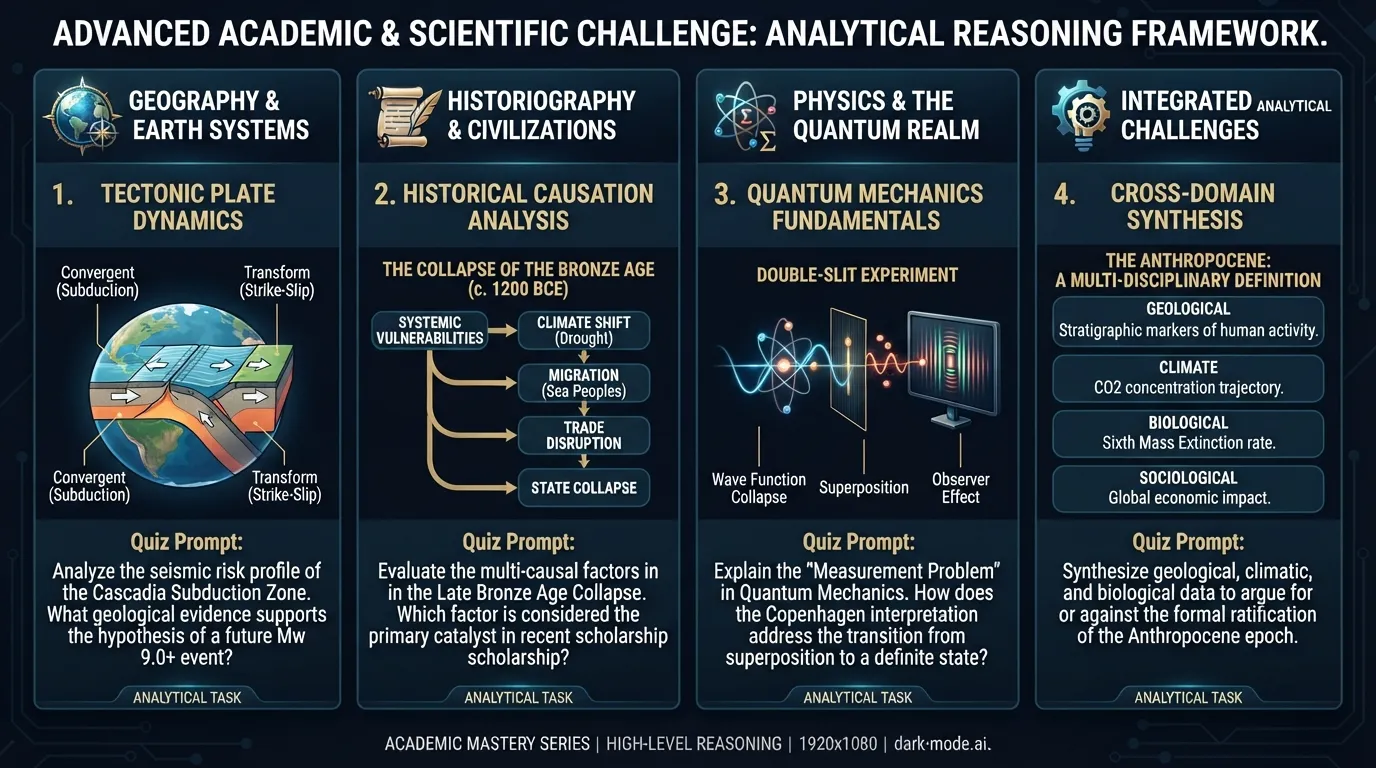
Conquering an expert-level quiz requires diving deep into obscure academic data, historical anomalies, and hyper-specific measurements that stump even seasoned trivia champions. These hardest trivia questions push analytical limits by combining complex parameters with unusual geographical and linguistic facts.
Question 1: What is the only national capital city in the entire world that is situated directly on an active tectonic plate boundary?
Answer: Wellington, New Zealand. Located on the fault line where the Australian and Pacific plates meet, the city experiences thousands of minor tremors every year.
Question 2: Which country features the longest continuous coastline along a single landmass without bordering any other sovereign nation by land?
Answer: Australia. As both a country and a continent, its vast 25,760-mile coastline remains entirely isolated from international land borders.
Question 3: What specific linguistic term describes a word that reads the exact same way forward and backward, but transforms into an entirely different, valid word when reversed?
Answer: A semordnilap (which is “palindromes” spelled backward). Classic examples include “stressed” turning into “desserts” or “live” turning into “evil.”
Question 4: Which European capital city was historically divided into four distinct Allied occupation zones following World War II before becoming a focal point of the Cold War?
Answer: Berlin. Divided into American, British, French, and Soviet sectors, the city’s internal boundaries eventually led to the construction of the Berlin Wall in 1961.
Expert-Level Science & History Trivia
True brain teaser challenges in science and history demand an intimate familiarity with quantum mechanics, obscure laboratory breakthroughs, and forgotten historical legalities. These mind-blowing facts test the absolute frontiers of human knowledge.
Question 5: What is the name of the hypothetical subatomic particle that travels faster than the speed of light, though its existence violates causality within modern physics?
Answer: The tachyon. While frequently explored in science fiction, no experimental evidence has ever confirmed tachyons exist in our universe.
Question 6: Which historical figure served as the Chancellor of Germany immediately before Adolf Hitler took power in January 1933?
Answer: Kurt von Schleicher. His brief tenure lasted less than two months before political maneuvering by conservative elites ushered the Nazi Party into absolute control.
Question 7: What chemical compound, discovered by accident in a Swiss pharmaceutical laboratory in 1938, holds the record for being the most potent mood-altering substance known relative to its mass?
Answer: Lysergic acid diethylamide (LSD). Created by chemist Albert Hofmann while researching derivatives of ergot fungi, its psychological effects become active in microscopic microgram doses.
Question 8: Which medieval European legal code, established around the 13th century, governed maritime law, salvage rights, and shipping disputes across the Atlantic and Baltic coasts?
Answer: The Rolls of Oléron. Originating from an island off the coast of France, this influential maritime code served as the foundational legal template for modern admiralty law.
Tips for Running Trivia at Work or Team Meetings

Running an engaging office event or team-building session requires balancing professional courtesy with lighthearted fun. Keep games concise, structured, and focused on shared participation rather than grueling competition.
Keep It Time-Boxed: Limit workplace trivia sessions to 15 or 20 minutes max so it energizes the team without disrupting workflow or deadlines.
Form Cross-Functional Teams: Mix departments or remote workers together into small groups of three to five people to encourage cross-collaboration and organic team bonding.
Focus on Universal Themes: Avoid hyper-niche topics that alienate team members; stick to light office humor, pop culture, geography, and general fun facts.
Tips for Hosting a Family or Friends Trivia Night
Bringing a group together in a living room or casual social setting calls for a relaxed atmosphere, clear expectations, and a structure that keeps every generation engaged.
Structure by Rounds: Break the night into distinct 10-question rounds with short intermission breaks for snacks, socializing, and score updates.
Enforce a Strict No-Phones Rule: Protect the integrity of the game by requiring all smartphones to stay face-down or out of reach during active rounds.
Incorporate Variety: Alternate between standard open-ended questions, multiple-choice rounds, and rapid-fire lightning questions to maintain high energy levels.
Scoring Systems and Fair Play Tips
A fair and transparent scoring mechanism prevents disputes and keeps the competitive tension high right up to the final question.
Use Standard Cumulative Scoring: Award one point per correct answer across all rounds, keeping the leaderboard easy for everyone to track in their heads.
Implement Peer Grading: Have teams exchange answer sheets at the end of each round to grade each other’s work while you read the correct answers aloud.
Always Have a Tiebreaker Ready: Prepare one numerical estimation question in advance (e.g., “How many miles is it from London to Tokyo?”) so closest-guess tiebreaks can be settled instantly.
For deeper insights into structuring competitive events and managing large groups, check out this guide on trivia scoring systems.
Frequently Asked Questions (FAQ)
What is some funny trivia for today?
Did you know that the United States Supreme Court officially classified the tomato as a vegetable in 1893 for tariff purposes? While botanically a fruit containing seeds, commerce regulations dictated it belonged with dinner rather than dessert. Elephants are also one of the few mammals physically incapable of jumping.
What is an interesting trivia fact for today?
Despite their exceptionally long necks, giraffes possess exactly seven cervical vertebrae. This matches the exact same number found in almost all mammals, including humans and mice, though each individual bone on a giraffe can measure up to ten inches in length.
What are 10 good trivia questions?
Good trivia covers diverse topics from science to pop culture. Examples include: What is the freezing point of water in Fahrenheit? Which animal is known as the ship of the desert? Who painted the Mona Lisa? What is the largest mammal on Earth? What currency is used in the UK?
Can you give me 50 fun trivia questions and answers?
A complete 50-question trivia session spans quick warm-ups and mid-tier challenges covering world capitals, human anatomy, famous historical milestones, and pop culture icons. Rotating through fast-paced categories keeps large groups engaged during pub nights, community fundraisers, or marathon party games.
What are 100 random questions?
A 100-question marathon pulls from an extensive pool of randomized subjects, testing everything from the chemical symbol for potassium to the capital of New Zealand, deep-sea trenches, classical composers, and ancient historical civilizations to prevent repetitive gameplay during large tournaments.
What are the top 20 quiz questions?
Top-tier quiz questions balance accessibility with challenge. They span global geography like the capital of Japan, pop culture milestones like the creation of the iPhone, scientific principles like the freezing point of mercury, and historical events like the Apollo 11 moon landing.
What are some unusual trivia questions?
Unusual trivia explores bizarre natural anomalies and eccentric laws. A great example asks which freshwater snail species can hibernate or sleep for up to three years during severe droughts, or which state legally required every citizen to bathe annually.
What are some good U.S. trivia questions?
American trivia highlights national history and geography. Popular questions include: How many stripes are on the US flag? Which state has the longest coastline? What was the capital city of the United States before Washington, D.C.? Who was the second U.S. president?
What are some funny quiz questions and answers?
Funny quiz questions lean into absurd premises and humorous facts. A classic example asks which letter of the alphabet sits directly between G and J on a standard QWERTY keyboard layout, tricking players who try to visualize it too quickly.
What is the hardest trivia question ever?
Expert-level challenges often involve obscure geographical markers or scientific theory, such as naming the only national capital city situated directly on an active tectonic plate boundary (Wellington, New Zealand) or identifying the hypothetical faster-than-light particle known as a tachyon.
What are some interesting trivia questions for adults?
Adult trivia touches on sophisticated history, global economics, and current events. Mature questions explore topics like the geopolitical impact of the Suez Canal, the creation of the European Union via the Maastricht Treaty, or the legacy of classic 1970s cinema.
Conclusion: Master Your Daily Knowledge Journey
Staying sharp, learning something completely unexpected, and sparking engaging conversations with friends or colleagues all start with a simple daily habit. Whether you are hosting an office team-building session, running a lively weekend game night, or simply testing your own mental agility, having access to fresh, accurate, and categorized questions transforms ordinary moments into memorable experiences.
Come Back Tomorrow for a New Trivia Challenge
Trivia is a living, breathing landscape of fascinating facts, historical anomalies, and pop culture updates that constantly evolves. Make sure to bookmark this page and check back regularly for fresh daily trivia updates, ensuring you always have a brand-new batch of questions ready for your next gathering or personal knowledge test.
Share Your Score or Favorite Question
What was your final score, or which eccentric fact surprised you the most? Drop a comment below to share your favorite question from today’s list, or let us know how your group fared during game night!