

The would meme is an internet reaction image used to express attraction, desire, or enthusiastic approval with one word: “would.” Its best-known version shows an orange cat leaning toward a microphone, apparently delivering a confident answer to a question nobody asked aloud. In its original, adult-leaning context, “would” is shorthand for “would have sex with.” In lighter conversations, people also use it jokingly to say they strongly want something, such as a delicious meal or an unusual car.
That difference matters. A picture of the cat under a celebrity photo can imply attraction, while the same reaction under a plate of fries is usually exaggerated enthusiasm. I find the meme easiest to understand as a deliberately blunt verdict: the image looks official, the answer is just one word, and the contrast makes the joke land.
What Does the Would Meme Mean?
The meaning comes from a sentence that has been intentionally left unfinished. Instead of writing a full statement, someone replies “would” and expects everyone else to fill in the missing words.
Originally, those implied words were sexual. The meme belongs to a style of internet humor sometimes called hornyposting, where people make conspicuous or exaggerated comments about attraction. The reaction image allows someone to make that declaration without spelling it out.
But context changes how people read it. Under a fictional character’s picture, the intended meaning may be flirtatious. Under a photo of a spectacular sandwich, it becomes an absurd way of praising food. It is not a universal synonym for “good,” and it is not necessarily a serious confession.
Is “would” a compliment or a joke?
Often, it is both. The person posting it is expressing approval while exaggerating how boldly they are willing to announce that approval.
I use a simple context test when interpreting these replies: look at what the image responds to before interpreting the single word. The same caption can be playful, suggestive, ironic, or intentionally ridiculous depending on the subject and the people involved.
Where Did the Would Meme Come From?
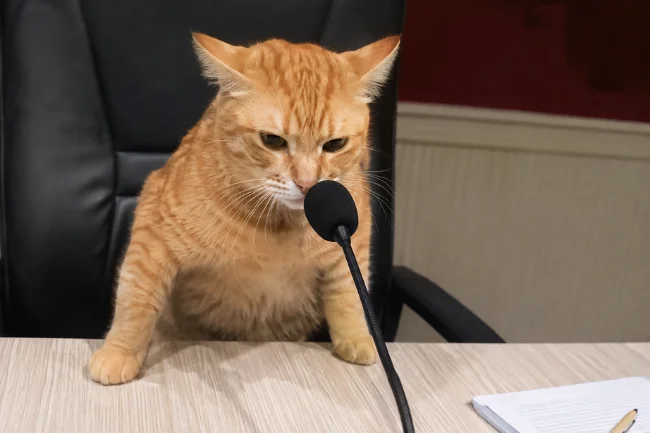
The documented history points to Twitter, now called X, in 2022. According to Know Your Meme’s archive, the earliest known version features a ginger cat touching or scratching its nose near a microphone, with “would” printed over the photo.
The identity of the person who first created that exact captioned image is not established. That is an important distinction: an early recorded post is evidence that a meme existed by a particular date, not proof that its account invented it.
A short timeline of the meme’s spread
- September 2022: The cat reaction image was already circulating. Know Your Meme documents a September 28 post by the Twitter account @reactjpg.
- October 2022: The image appeared in replies to photographs, including mugshots shared by the account @mugshawtys. Users employed it as an exaggerated expression of attraction.
- October–November 2022: Replies expanded to accounts posting odd-looking food and cars. The joke increasingly worked through unexpected subjects as well as conventional attraction.
- Late 2022: Alternative microphone pictures and negative versions helped establish “would” as a recognizable reaction-image format rather than a single cat photo.
- Following years: The image continued to circulate as an easily understood callback, even when the original post or creator was unfamiliar to the people sharing it.
The timeline explains how a niche reaction became flexible. Once audiences recognized what “would” implied, swapping the person or animal at the microphone became another way to tell the same joke.
Why Is There a Cat Speaking Into a Microphone?
The cat makes the line funnier by presenting a ridiculous response as if it were serious public testimony. It is sitting at a table, close to a microphone, with the kind of focused expression viewers can imagine belonging to someone making an important announcement.
Of course, the cat is not actually delivering a statement. That mismatch is the appeal. The picture gives one short word the visual weight of a press conference.
When I compare the archived original-style cat image with the “Would Not” variation, the microphone is what makes both captions feel decisive. Even the refusal seems like a formal ruling.
The microphone is not essential to every version, but it is a strong visual clue. Without it, “would” can look like an ordinary caption. With it, the reaction becomes a tiny performance.
The Most Recognizable Would Meme Variations
There is no single approved version. People remix the image because its punchline is short, recognizable, and easy to adapt.
1. The original orange cat
This is the classic would cat meme: an orange tabby beside a tabletop microphone, paired with the word “WOULD.” It works as a quick reply when no additional explanation is wanted.
2. The Japanese Parliament microphone image
Another well-known variation uses a photograph from a 2018 confrontation in Japan’s parliament. A politician reaching toward a microphone appears unusually determined, which makes the caption sound even more forceful. The photo was repurposed for the joke; the original political event had nothing to do with the meme’s meaning.
3. Would Not and Wouldn’t
These reverse the verdict. A familiar image captioned “WOULD NOT” communicates rejection rather than attraction or eagerness. Part of the humor comes from using the same solemn setup to deliver the opposite answer.
4. Food reactions
A photo of an enormous burger or unusually elaborate dessert can inspire a “would” reply. Here, the audience generally reads the statement as a deliberately over-the-top way to say, “I want that.”
5. Cars and strange objects
The format also appears in discussions about unusual cars and objects. Posting the cat below something bizarre can make the reaction intentionally absurd. Readers understand the joke because the object is not a conventional romantic target.
6. Custom microphone edits
Creators sometimes replace the cat with a character, pet, or other expressive figure. As long as the microphone-and-verdict idea remains clear, viewers can recognize the reference.
| Variation | Typical message | Best understood as |
|---|---|---|
| Orange cat saying “Would” | Strong attraction or approval | Classic reaction |
| Parliament microphone image | Especially emphatic “would” | Dramatic exaggeration |
| “Would Not” cat | Rejection or disinterest | Opposite reaction |
| Food-related reply | “That looks irresistible” | Playful enthusiasm |
| Unusual car or object | Intentionally absurd approval | Ironic humor |
| Custom character at a mic | A personalized verdict | Remix or parody |
These descriptions explain common readings; individual posts can still be sarcastic or mean something different to their particular audience.
How to Use the Would Meme Without Missing the Joke

A successful reaction needs a subject, an implied judgment, and an audience that can understand the tone. It rarely needs a paragraph of explanation.
For example, imagine a friend posting a photo of a fantastic-looking chocolate cake. Replying with the cat image suggests an exaggerated level of desire for the cake. The comedy comes from making an ordinary craving sound like a dramatic personal announcement.
Now imagine the same meme below a stranger’s selfie. The meaning is much more personal and potentially sexual. That response may be unwelcome, even if the poster intended it as harmless internet humor.
Good situations for the meme
- A lighthearted conversation where everyone recognizes the format.
- A fictional-character discussion in a community comfortable with suggestive jokes.
- A food post where “would” clearly means eagerness to eat.
- An absurd picture where the unexpected subject is the punchline.
- A friendly exchange in which the recipient has already established that kind of humor.
Situations where I would avoid it
I would skip this reaction in professional conversations, on posts involving minors, and under personal photos when attraction-based remarks have not been invited. I would also avoid using it in a brand account’s replies unless the brand’s audience clearly understands the double meaning.
A useful rule is to ask whether the implied sentence would be appropriate if you wrote it out fully. If not, the single-word version does not automatically make it appropriate.
How to Find a Would Meme Template or Make Your Own
If you want the recognizable format, begin with the original cat image rather than a random microphone picture. Know Your Meme’s image gallery is useful for identifying established variants and tracing where examples were archived.
For a new edit, tools such as Canva, Imgflip, or a basic phone photo editor can handle the job. You do not need special effects or complicated typography.
Create a clean reaction image
- Choose an image. Use a photo you own, have permission to edit, or are otherwise entitled to reuse. A subject facing a microphone makes the joke immediately recognizable.
- Crop around the expression. Keep the face, microphone, and caption area visible. Remove distracting details that do not help the punchline.
- Add a short caption. Use “WOULD,” “WOULD NOT,” or another deliberate variation. A bold, high-contrast font is easier to read on a phone.
- Check the joke at small size. Shrink the image to roughly the size it would appear in a social-media reply. If the word or expression disappears, simplify the design.
- Export and credit appropriately. Save a common image format such as PNG or JPEG. Keep track of where the source photo came from, particularly before using it commercially.
My editing preference is to leave the visual slightly plain. Perfectly polished graphics can lose the accidental, deadpan quality that makes the original funny. Readability matters more than elaborate styling.
Can you download the original would cat meme?
You can find archived image files on meme-reference pages, including the orange-cat reaction image entry. Finding a downloadable copy does not necessarily grant permission for every use. For business campaigns or merchandise, check the image’s ownership and licensing rather than assuming that a widely shared meme is free of restrictions.
What Makes a Good Would Meme Caption?
The strongest version often uses only the word itself. Adding a lengthy explanation can spoil the effect, because readers are supposed to supply the missing thought.
If you are creating a variation, change one thing at a time: the speaker, the verdict, or the subject being judged. That preserves the familiar joke while giving people a reason to share your version.
Here are a few original caption ideas for lighthearted situations:
- A dog watching someone unwrap a sandwich: “WOULD.”
- A disappointed cat examining a soggy pizza: “WOULD NOT.”
- A dramatic courtroom-style photo responding to a dessert menu: “ABSOLUTELY WOULD.”
- An exhausted commuter seeing an empty train seat: “WOULD.”
These are creative examples, not claims about historically famous versions. The distinction matters if you are trying to document meme culture accurately rather than merely produce a similar joke.
Would Meme vs. “Smash or Pass” and Other Reactions
The would meme has something in common with “smash or pass,” which asks people to express attraction or rejection. But the formats are not identical. “Smash or pass” is usually a question, game, or explicit choice; the microphone cat is a ready-made reaction that supplies an answer without an invitation.
It is also different from an ordinary thumbs-up reaction. A thumbs-up can mean approval with no additional implication. “Would” brings a deliberately suggestive history to the conversation, even when someone uses it to praise food.
| Format | Main purpose | How direct is the meaning? |
|---|---|---|
| Would meme | Exaggerated desire or approval | Implied, context-dependent |
| Smash or pass | Evaluate attraction | Usually explicit |
| Thumbs-up reaction | Show agreement or approval | Generally straightforward |
| “Would Not” meme | Deliver the opposite verdict | Clearer rejection, often ironic |
That distinction explains why replacing every “yes,” “love it,” or “looks good” with “would” can sound strange. The joke works best when the extra implication adds humor.
Why This One-Word Reaction Still Works
Many memes depend on a particular audio clip, a detailed caption, or knowledge of a short-lived event. This one needs remarkably little explanation once you recognize the visual setup.
It combines three elements: an unexpectedly serious-looking speaker, a compressed statement, and a subject that the audience has to interpret. The viewer participates by mentally completing the sentence.
I think the unfinished sentence is its cleverest feature. A normal caption tells you what to think; this one lets you discover the implication yourself. That small act of interpretation creates the punchline.
The format also travels easily between conversations. A person can use the same image to comment on a fictional character, a tempting meal, or a ridiculous object, although the meaning shifts with each setting. That adaptability helps explain its continued appearance years after the first documented posts.
Common Mistakes That Change the Meaning
The biggest mistake is treating the would meme as another name for any “would you?” question. A poll asking “Would you move abroad?” may be interesting, but it is not automatically part of the one-word reaction-image trend. The shared word does not make the formats equivalent.
Another mistake is assuming that every appearance of the cat is sexual. That describes its original implication but not every later joke. A food reply may be using the format precisely because the original wording is hilariously inappropriate for a plate of pasta.
Finally, be careful with meme origins. A repost date, template upload date, and original creation date can be different. If you are writing about the format, separate verified archival examples from claims about who invented it. The original captioned cat image’s creator has not been conclusively identified in the sources discussed here.
Final Thoughts
The would meme succeeds because it turns an unfinished sentence into a full reaction. The orange cat, the microphone, and the single-word verdict make desire or approval look comically official.
If you want to use it, start with the original image, consider what the response implies in context, and keep your caption short. For a creative twist, try making a microphone reaction from a photo you have the right to use, then see whether the joke still makes sense without any explanation.
Frequently Asked Questions
What does “would” mean in the cat meme?
It originally implies “would have sex with,” but it can also jokingly express strong enthusiasm for food, objects, or fictional characters.
Who created the original would meme?
The original creator has not been conclusively identified. The captioned cat image was circulating on Twitter by September 2022.
Why does the would meme show a microphone?
The microphone makes a brief, blunt reaction look like a serious public statement, which adds to the humor.
What does “would not” mean in a meme?
“Would not” reverses the original verdict, typically signaling rejection or disinterest, sometimes sarcastically.
Where can I find a would meme template?
Check Know Your Meme’s archived image gallery or search a meme editor for “would cat microphone”; verify image rights before commercial use.

FOLLOW YOUR CURIOSITY
A little more to explore
Stay with the topic. Find another perspective to take into your day.
Social Media Girls: Essential Guide to Forums & Safety
By Sienna Marlowe
New Laptop Status: 100 Fresh Captions for Every Post
By Sienna Marlowe
Sotwe 2026: Essential Safety Facts & Best Alternatives
By Sienna Marlowe