Jump to:
ToggleMindset Journal: How to Build a Growth Mindset Through Daily Reflection
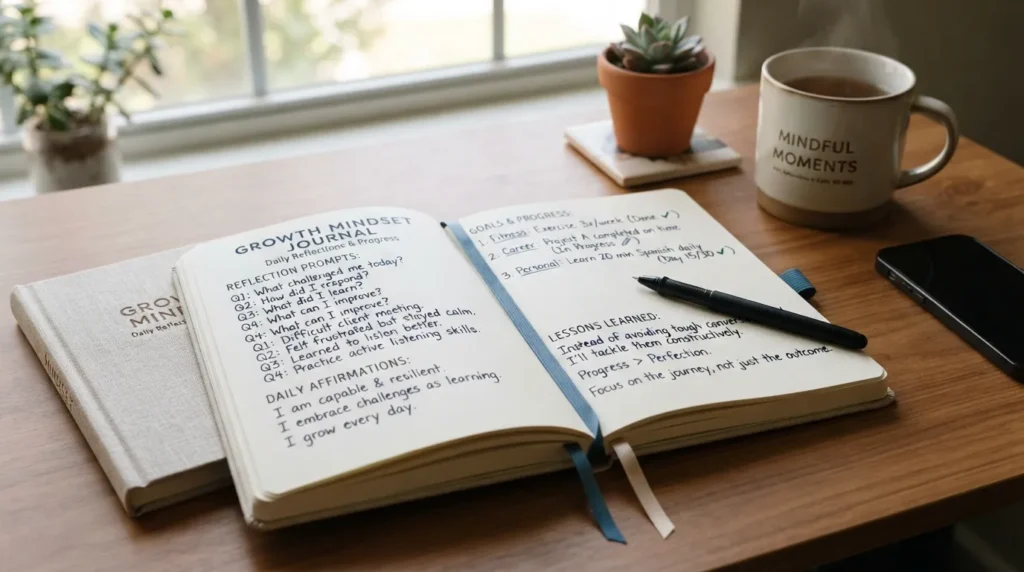
A better mindset does not develop overnight. It grows through awareness, reflection, and the willingness to learn from everyday experiences. A mindset journal is a simple but powerful tool that helps you understand your thoughts, recognize limiting beliefs, and create a more positive approach toward challenges.
Whether you want to build confidence, develop a growth mindset, improve emotional awareness, or create healthier daily habits, journaling provides a structured way to reflect on your progress. Instead of only recording what happened during your day, a mindset journal helps you understand why you think and react in certain ways.
What Is a Mindset Journal?
A mindset journal is a guided or blank notebook designed to help you reflect on your thoughts, beliefs, emotions, goals, and personal growth. It encourages you to examine your mindset and develop more productive ways of responding to challenges.
Unlike a traditional diary that mainly records daily events, a mindset journal focuses on self-improvement. It helps you identify negative thought patterns, appreciate progress, set intentions, and learn from experiences.
- Develop greater self-awareness.
- Build a growth-oriented way of thinking.
- Track personal progress over time.
- Understand emotions and reactions.
- Create intentional daily habits.
How Does a Mindset Journal Work?
A mindset journal works through regular reflection. By writing down your thoughts and experiences, you create a clearer understanding of your beliefs, decisions, and behaviors.
1. Identifying Your Current Thinking Patterns
Many thoughts happen automatically throughout the day. Journaling helps you slow down and notice patterns that influence your confidence, motivation, and decisions.
2. Reframing Negative Thoughts
A growth mindset does not mean ignoring problems. It means looking at challenges as opportunities to learn. A journal helps you question limiting thoughts and find more constructive perspectives.
3. Creating Awareness Through Reflection
Reviewing your journal entries allows you to recognize improvements, understand repeated challenges, and make better choices in the future.
Benefits of Using a Mindset Journal
| Benefit | How It Helps |
|---|---|
| Self-awareness | Helps you understand your emotions, thoughts, and reactions. |
| Growth mindset | Encourages learning from mistakes and challenges. |
| Goal clarity | Makes personal goals easier to define and follow. |
| Emotional balance | Creates space to process feelings in a healthy way. |
What Is a Growth Mindset Journal?
A growth mindset journal focuses specifically on developing the belief that abilities and skills can improve through learning, effort, and consistent practice.
The idea is based on the difference between a fixed mindset and a growth mindset. A fixed mindset views abilities as unchangeable, while a growth mindset focuses on improvement and learning.
Growth Mindset Journal Examples
- What challenge did I face today?
- What lesson did I learn from a mistake?
- What skill do I want to improve?
- What progress did I make today?
- What positive action can I take tomorrow?
How to Start a Mindset Journal
Starting a mindset journal does not require complicated rules. The most important thing is creating a consistent habit that allows honest reflection.
- Choose your journal format: Use a notebook, digital journal, or guided journal.
- Select a regular time: Morning or evening works well for most people.
- Start with simple questions: Focus on thoughts, lessons, and goals.
- Write honestly: Your journal should reflect your real experiences.
- Review your progress: Look back regularly to notice patterns and growth.
Morning and Evening Mindset Journal Routine
| Morning Reflection | Evening Reflection |
|---|---|
|
|
Frequently Asked Questions About Mindset Journals
What is the purpose of a mindset journal?
The purpose of a mindset journal is to help you understand your thoughts, reflect on your experiences, and develop healthier thinking patterns. It provides a structured way to track personal growth, set intentions, and learn from daily challenges.
What should I write in a mindset journal?
You can write about your goals, emotions, challenges, lessons learned, positive experiences, and areas where you want to improve. Many people use mindset journal prompts to guide their daily reflections.
What is the difference between a mindset journal and a gratitude journal?
A gratitude journal mainly focuses on appreciating positive moments and things you are thankful for. A mindset journal covers a wider range of reflection, including personal growth, challenges, beliefs, goals, and improving your way of thinking.
How often should I use a mindset journal?
Many people use a mindset journal daily, but the most important factor is consistency. Writing for a few minutes each morning or evening can create a useful reflection habit over time.
Can children use a mindset journal?
Yes, children can use a mindset journal with age-appropriate prompts. It can help them understand emotions, build confidence, recognize effort, and develop a positive approach toward learning and challenges.
What is the 3-3-3 journaling method?
The 3-3-3 journaling method is a simple reflection technique where you write three things you notice, three thoughts or feelings you want to explore, and three actions or goals to focus on. The exact format can vary depending on personal preference.
Is a mindset journal the same as a planner?
No. A planner focuses on organizing tasks, schedules, and appointments, while a mindset journal focuses on thoughts, emotions, reflection, and personal development. Some people use both together for better organization and growth.
What are some good mindset journal prompts for beginners?
Beginners can start with simple prompts such as: What did I learn today? What challenge helped me grow? What positive thought do I want to remember? What is one small improvement I can make tomorrow?
Pimchanok Srisuk
Pimchanok Srisuk is the Journaling Editor at Holistic Wellbeing Living. She writes about journaling prompts, reflective writing, emotional clarity, and mindful routines. With seven years of experience creating personal-growth content, Pimchanok helps readers use simple writing practices to understand their thoughts and make calmer everyday decisions.