Jump to:
Toggle50+ Diary Ideas to Fill Every Page (Practical, Aesthetic, and Everything Between)
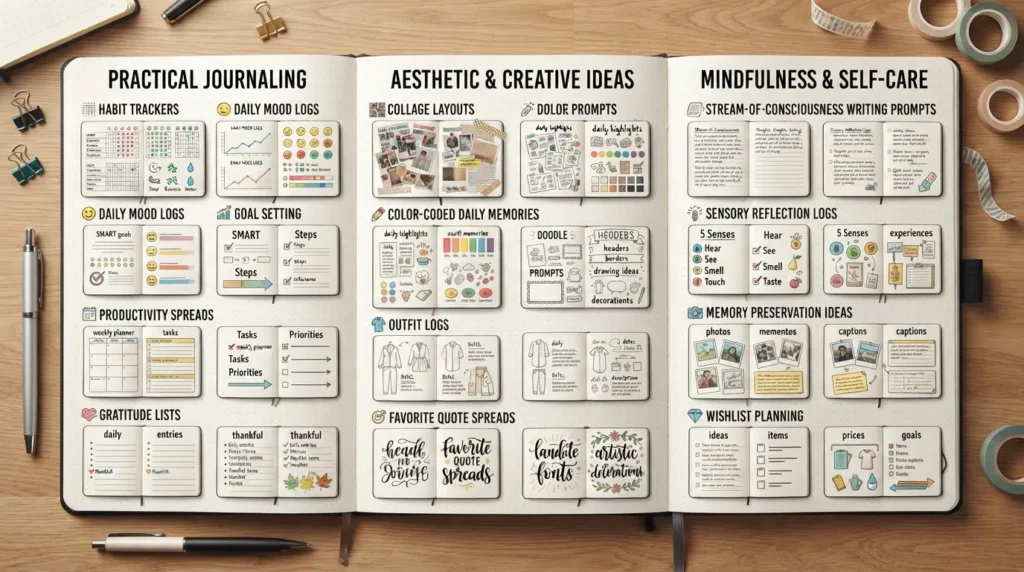
We’ve all been there: you buy a gorgeous new notebook, sit down with your favorite pen, and then completely freeze. Staring at a blank white page can feel surprisingly intimidating. You want to write, but your brain goes blank, or you worry about ruining the book with messy handwriting and boring entries.
The good news? Your journal doesn’t have to be a masterpiece, and you don’t need a life-altering event to write about.
Whether you want practical prompts to organize your mind, cute visual layouts to express your creativity, or quick lists to break through writer’s block, this guide has you covered. From total beginners and busy students to anyone just looking for a fun creative outlet, here are real, usable page ideas you can try today.
What Should You Put in a Diary?
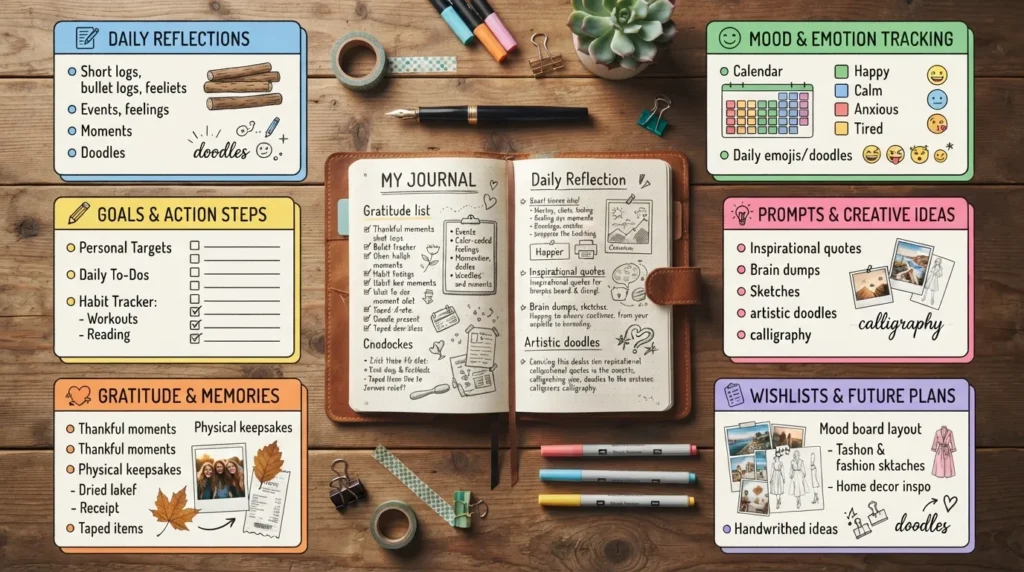
A diary can hold anything from simple daily thoughts to creative page layouts. The most practical things to put in a journal include daily reflection prompts, quick gratitude lists, tracker spreads, creative sketches, and unsent letters. Whether you want to process your emotions or just fill a blank page, you can mix text, lists, and visuals depending on your mood.
Core Journaling Ideas to Try Today
Daily Reflection: Write a few lines about the best part of your day, a struggle you faced, or a lesson you learned.
Quick Gratitude: Jot down three tiny things that made you smile today, like a good cup of coffee or a funny text.
Visual Spreads: Draw simple doodles, paste movie tickets, or create a color-coded habit tracker for your daily routine.
Lists & Brain Dumps: List your favorite songs, current goals, or write down every stray thought in your head to clear your mind.
Unsent Letters: Write out what you wish you could say to someone—or to your future self—without any pressure to send it.
Daily Reflection & Habit-Tracking Diary Ideas
Gratitude log
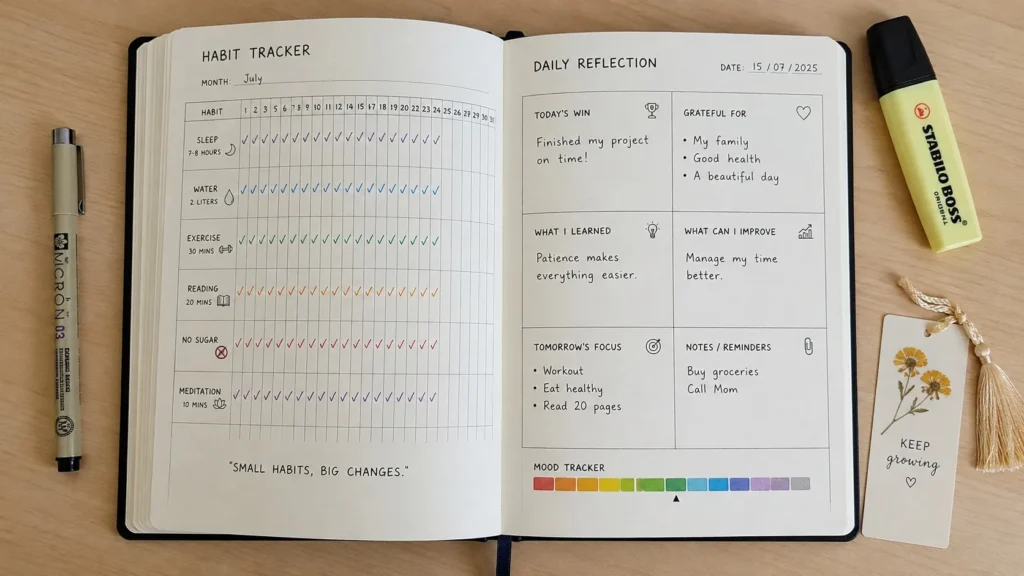
Write down three simple things that made your day better. They don’t need to be huge milestones—a good cup of coffee, a warm blanket, or a funny video count just as much as a big accomplishment.
One line a day
If you are short on time or feeling lazy, write just one sentence about what happened today. Over time, this builds a quick timeline of your life without feeling overwhelming.
Mood and weather tracker
Draw a tiny sun, cloud, or rain symbol next to today’s date, then pick a color that matches how you felt. It takes ten seconds, and seeing the patterns over a month is surprisingly interesting.
Highs and lows of the day
Divide a page into two columns: “The Good” and “The Tough.” Write down the best part of your day and the part that was annoying or hard. It gives you a balanced view of life instead of focusing only on the bad.
Self-care log
List the small things you did today to look after your physical and mental health. This could be drinking enough water, taking a quick walk outside, turning off your phone early, or just resting.
Habit/fitness tracker
Draw a simple grid with days of the month on one side and a few habits on the other (like stretching, reading 10 pages, or practicing a language). Fill in a square every time you complete a habit.
Reading log
Keep a running list of books you are reading or want to finish. Write down the title, author, a quick rating out of five stars, and your favorite quote from the book.
TV/media log (movies, shows, books you’re consuming)
Dedicate a page to tracking the media you consume. Drop in a quick review, rate the ending of a show, or jot down movie recommendations from friends so you don’t forget them later.
Travel journal (trips, day-outs, ticket stubs and memorabilia)
Use your pages to save memories from weekend trips or day outings. Tape down ticket stubs, train passes, or receipts alongside a brief note about where you went and what you ate.
“Reasons to be proud of yourself” / self-esteem log
Write down small wins that usually go unnoticed. Did you speak up in class, finish a chore you were avoiding, or handle a frustrating moment calmly? Record it here to look back on when you feel down.
Creative & Aesthetic Diary Ideas
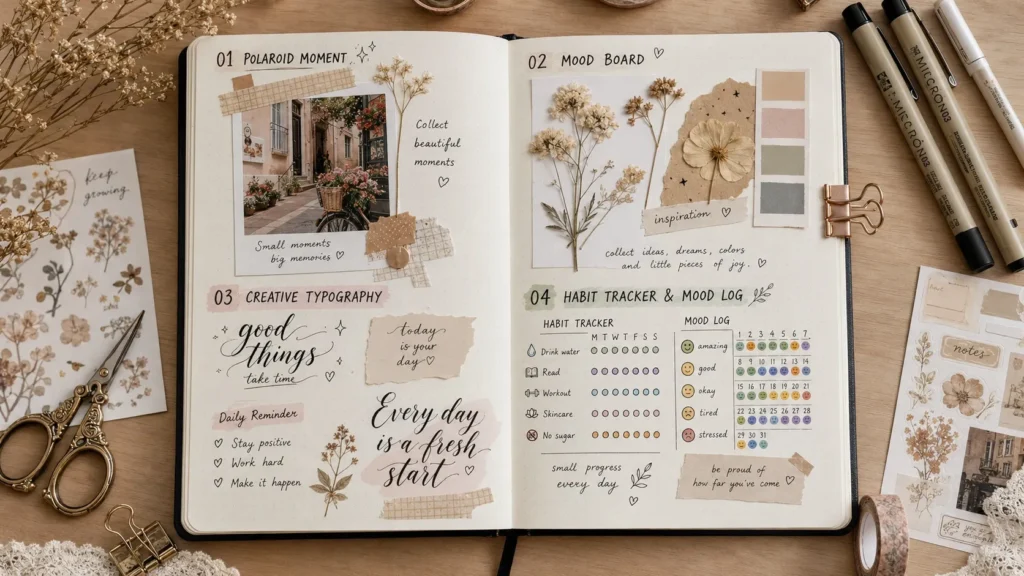
If you learn best by seeing and doing rather than just typing out paragraphs, turning your page into a visual space is a great way to break the ice with a blank notebook. You do not need to be an artist to make your pages look cool—just a few simple touches can bring a flat page to life.
Doodle pages and flower sketches (including pressed real flowers and nature elements)
Fill a full page with tiny, repetitive drawings like stars, vines, simple coffee cups, or geometric patterns. If drawing feels tricky, skip the pen and use real nature instead. Flatten a small leaf or flower inside a heavy book for a few days, then tape or glue it into your journal alongside a note about where you found it.
Camera roll / photo-dump spread
Print out four or five random, non-aesthetic photos straight from your phone’s camera roll—a picture of your lunch, a weird street sign, a messy desk, or a cute pet picture. Paste them into a grid layout and write one line under each photo explaining what was happening in that exact moment.
Mini vision board
Cut out pictures, patterns, or words from old magazines, junk mail, or printouts that represent how you want your upcoming month or season to feel. Paste them together on a single spread until no white space is left. It acts like a quick visual snapshot of your current goals and mood.
Quote and lettering pages
Pick a short phrase from a song, a book, or a conversation that stuck in your head today. Write it right in the center of your page using a thicker pen, ALL CAPS, or cursive handwriting. Fill the white space around the words with simple borders, dashes, or small hearts.
Washi tape, stickers, and paper-scrap spreads
Keep your old movie tickets, receipts, clothing tags, and torn pieces of brown paper bags. Layer these paper scraps on your page using strips of patterned washi tape and random stickers to create a quick scrapbook layout. You can write your journal entry directly over the paper scraps or around the edges.
Stick to two or three colors: Pick a simple color palette (like sage green and cream, or soft pink and brown) so your spread looks pulled together without trying too hard.
Mix up your fonts: Pair simple block letters with soft cursive to instantly add visual texture to your titles and dates.
Embrace muted tones: Muted colors like beige, dusty rose, and slate gray give your pages an effortless, cozy feel that is easy on the eyes.
Diary Ideas for Students
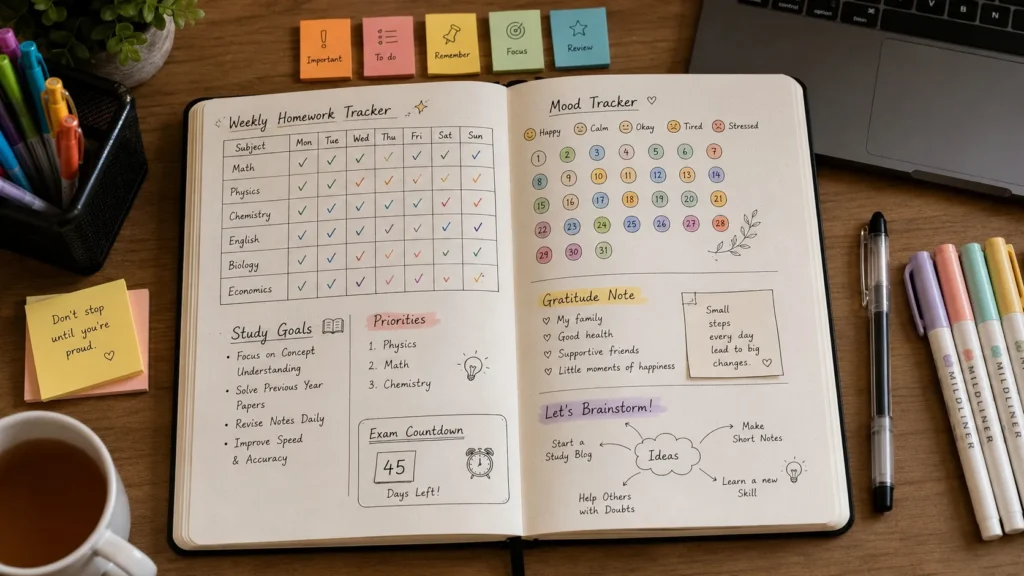
School gets chaotic fast. Keeping a dedicated student section in your diary keeps your brain organized without feeling like extra homework.
Study/revision log
Don’t just write “studied history” and call it a day. Break your log down by subject, topic, and the total time you spent focusing.
Subject & Topic: Write down exactly what you reviewed (e.g., Biology – Cell Structure).
Time Spent: Track actual study time in 25- or 30-minute blocks.
Confidence Rating: Draw three small circles next to the entry. Color in one circle if you’re still confused, two if you get it mostly, or all three if you could teach it to someone else.
This gives you an instant visual map of what you need to review again before test day.
Exam countdown tracker
A countdown page turns midterms and finals into a steady plan instead of a last-minute panic.
Draw a simple grid or a line of numbered boxes counting down the days to your biggest exam. Every evening, cross off one box. Next to the countdown, leave a small column for your daily target (like “Read Chapter 4” or “Practice 10 math problems”). Seeing the boxes tick down keeps the timeline real, while the daily target keeps your studying small and manageable.
Class reflection notes
This isn’t for copying down standard lecture notes. Use this space right after class to capture what actually stuck in your head.
Write down the single most surprising thing you learned that day, or write out one question you still don’t fully understand. If a professor emphasized a specific point multiple times, jot it down here with a big star next to it. It takes two minutes, but it fixes the key takeaways in your memory while they’re still fresh.
To-do + planner hybrid page
Instead of keeping separate books for homework, personal errands, and random thoughts, combine them into a single spread for your school week.
Divide your page into three simple columns:
Must-Do Today: Strict deadlines, test dates, and homework due tomorrow (limit this to 3–5 items max).
Side Tasks: Reading assignments due later in the week, emails to send, or chores.
Brain Dump: A catch-all area for random thoughts, club meeting reminders, or project ideas that pop into your head during lectures.
This layout stops your daily to-do list from looking overwhelming while giving every random thought a safe place to land.
Diary Ideas for Beginners and Girls
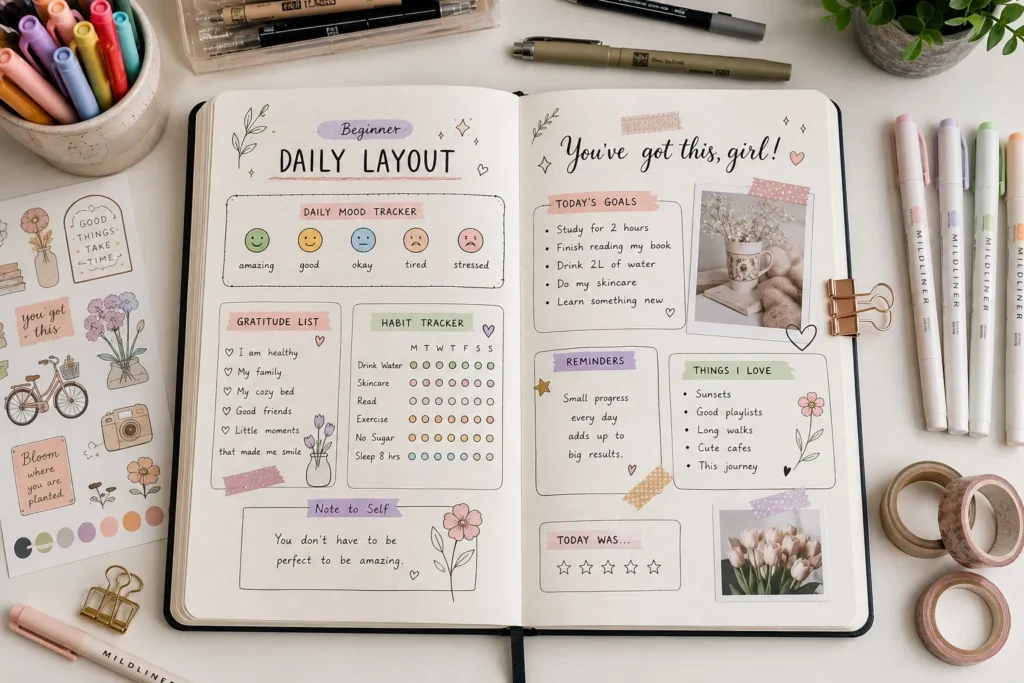
About-me pages
Starting a new journal can feel intimidating, but an “about me” page is the easiest place to begin. Think of it as a snapshot of who you are right now. You do not need to write a long biography—just capture your current life in simple bits and pieces.
The Basics: Write down your age, current city, current job or school grade, and your favorite nickname.
Current Favorites: List the song you have on repeat, your go-to snack, the show you are binge-watching, and your favorite outfit.
Right Now Stats: Note what time you went to bed last night, what the weather is like outside your window, and the last photo in your camera roll.
A Quick Doodle: Draw a rough sketch of your favorite shoes, your pet, or the desk setup you are using right now.
Letter to your future self
Writing a letter to your future self is a fun way to capture your present thoughts, worries, and hopes. Pick a specific date to open it—like your next birthday, graduation day, or just five years from now.
To keep it simple, answer a few straightforward questions:
What is the biggest thing stressing you out right now?
What is something you are really looking forward to this year?
Who are your closest friends at this exact moment?
What is one piece of advice you hope your older self remembers?
Once you finish writing, fold the page over and seal it with a piece of tape or a fun sticker. Write “Do Not Open Until [Date]” clearly across the top so you are not tempted to peek early.
Favorite-things lists
When you are stuck on a blank page and do not feel like writing deep thoughts, make a list of things that bring you joy. Lists are quick to write, easy to make look pretty, and super satisfying to fill out.
Media Lists: Write down your top 5 comfort movies, podcasts you listen to while walking, or books that made you cry.
Little Joys: List 10 tiny moments that brightened your week—like the smell of fresh coffee, finding a good parking spot, or a cat letting you pet it.
Seasonal Delights: Pick your favorite season and list everything you love about it, from cozy sweaters in autumn to cold drinks in the summer.
Go-To Foods: Create a page dedicated to your ultimate meal, your favorite ice cream flavors, or local spots with the best fries.
What to Write When You're Bored or Stuck
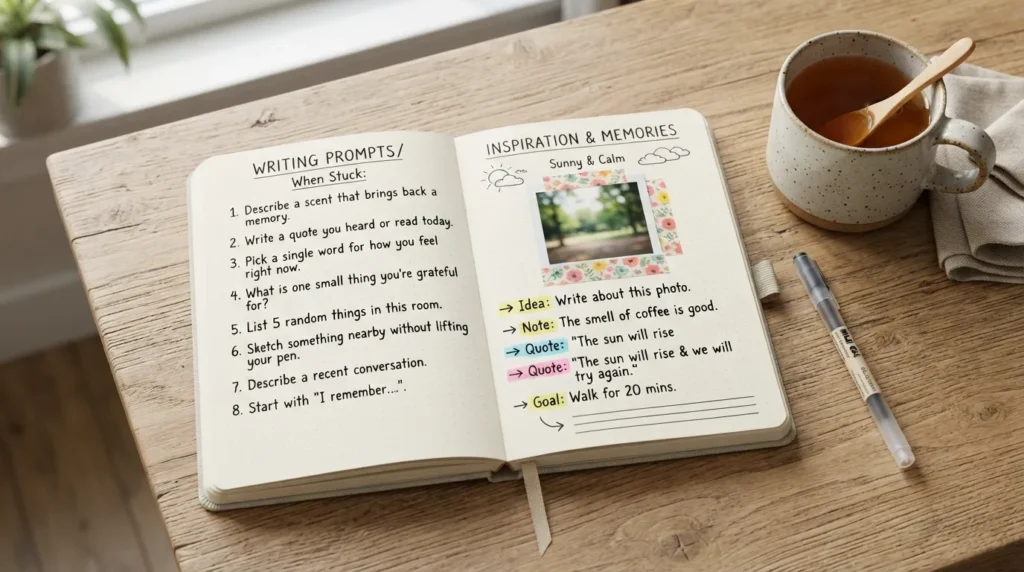
The 5-4-3-2-1 Grounding Reset: Write down 5 things you can see, 4 you can physically feel, 3 you can hear, 2 you can smell, and 1 good thing about yourself. It breaks writer’s block in two minutes flat.
Brain Dump the Noise: Set a timer for three minutes and write every single random thought floating in your head—no full sentences, no neat handwriting, just raw noise until your mind feels lighter.
Offline Bucket List: List 10 things you want to do this week that do not involve a screen or an internet connection, like reading a chapter on the porch, baking cookies, or sketching a room in your house.
Current Favorites Snapshot: Record your current favorite song, go-to snack, top show, and the app you use the most right now. It takes almost zero brainpower to fill out and makes a fun time capsule later.
The “Unsent Letter”: Pick someone who got on your nerves today or someone you miss. Write down everything you wish you could say to them, knowing full well you’ll never mail it.
The Energy Audit: Draw a simple line down the middle of your page. Label one column “Things giving me energy” and the other “Things draining me.” Fill out three items for each side.
Rewrite a Bad Moment: Take one tiny thing that went wrong today and rewrite the memory with a funny, ridiculous, or completely dramatic ending instead.
The “If I Had $1,000 Today” List: Pretend a random stranger handed you a thousand dollars cash this morning, but you have to spend every penny before midnight. List exactly what you are buying.
Worst Case vs. Reality: Write down the one thing stressing you out right now. Next to it, write the absolute worst thing that could happen, followed by what is actually likely to happen.
Pencil Sketch & Caption: If words aren’t coming at all, grab a pen and sketch the nearest item on your desk—a coffee mug, your phone, or a stray shoe—and add a one-line caption underneath it.
The Micro-Gratitude List: Skip the big stuff like “family” and get ridiculously specific. List five tiny things that brought you peace today, like cold water on a hot afternoon or a green traffic light.
Try a Guided Prompt Book: If you still feel completely stuck, consider using a pre-made guided journal or prompt book; having pre-printed questions on the page takes away all the pressure of deciding where to start.
Journaling Methods Worth Knowing
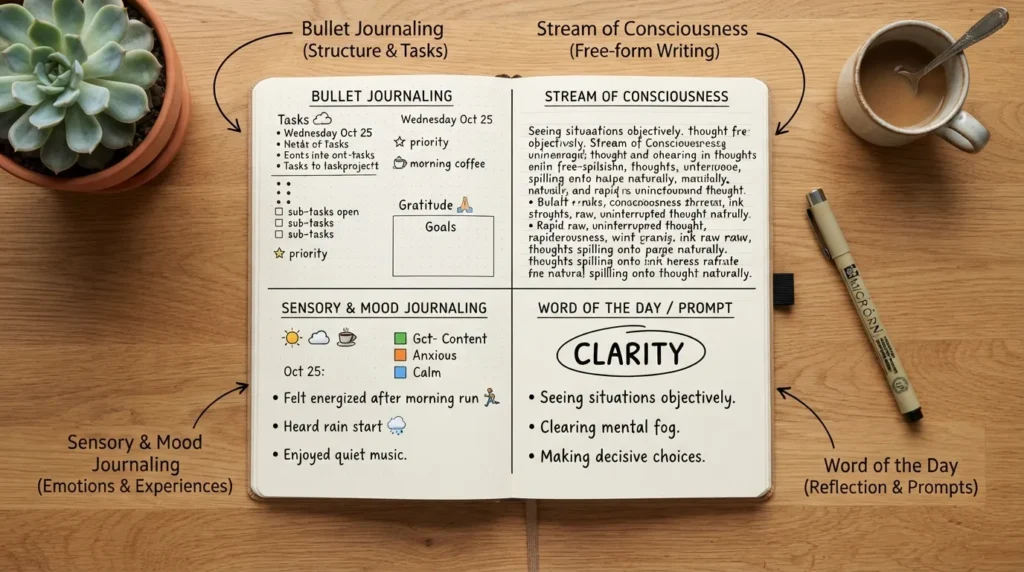
What is the 3-3-3 journal method?
The 3-3-3 journal method is a quick daily writing routine designed to help you organize your thoughts without spending hours at a desk. Every day, you write down three things you are grateful for, three things you want to accomplish, and three things that are currently weighing on your mind.
It takes less than five minutes to complete. By splitting your page into these three simple categories, you get a quick snapshot of your mood, your priorities, and your stress levels all in one place.
The six types of journals
Bullet Journal (BuJo): A flexible system that uses dots, symbols, and short notes to track your habits, to-do lists, and schedule in one custom notebook.
Art Journal: A creative space focused on visual expression using paints, sketches, stamps, collages, and cut-out magazine pictures alongside light writing.
Gratitude Journal: A simple log where you write down positive moments, kind gestures, or small things from your day that made you smile.
Dream Journal: A notebook kept right next to your bed so you can write down every detail you remember from your dreams the second you wake up.
Travel Journal: A memory book filled with ticket stubs, photos, maps, and daily stories collected while exploring new places or taking trips.
One-Line-a-Day Journal: A low-pressure format where you write just a single sentence about your day, building a multi-year memory log one line at a time.
How to Start Journaling the Right Way
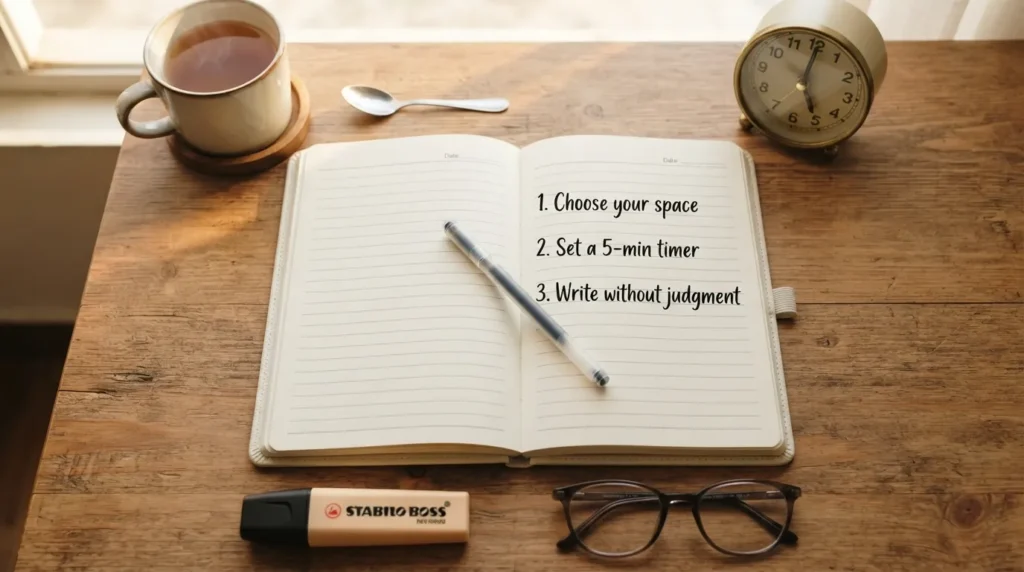
Starting a diary sounds simple until you sit down with a fresh notebook and realize you have no idea where to begin. The secret isn’t finding the “perfect” setup—it’s building a quick routine that actually fits into your normal day.
Best time of day to journal
There is no single best time for everyone, but picking a specific window helps your brain know what to expect.
First thing in the morning: Write down your main focus for the day, a quick dream recap, or a few thoughts to clear your mind before checking your phone.
During a mid-day break: Use 5 minutes after lunch to drop a quick brain dump on the page, especially if school or work feels overwhelming.
Right before bed: Reflect on what happened, write down one good moment, or log your mood so you aren’t carrying stress into sleep.
How to make it a habit (not a chore)
If journaling feels like extra homework, you’ll stop doing it after three days. Keep it light so you actually look forward to opening your notebook.
Set a tiny goal: Commit to writing just one sentence or listing three words about your day instead of filling a whole page.
Pair it with an existing habit: Open your diary right after you pour your morning drink or right after you brush your teeth at night.
Keep your notebook visible: Leave your journal on your pillow or next to your keyboard instead of hiding it in a drawer.
Give yourself permission to skip: Missing a day doesn’t mean you failed—just open to a clean page whenever you’re ready to pick it back up.
FAQs
You can put pretty much anything in your diary — your day, your feelings, small wins, doodles, quotes, or a quick gratitude list. There's no single "right" thing to write. If you're not sure where to start, try one line about your day or three things you're thankful for, and build from there.
The 3-3-3 method is a simple format for days when you don't know what to write. You jot down 3 things you're grateful for, 3 things that are bothering you, and 3 things you want to do or achieve. It takes a few minutes and gives your page some structure without needing a full journaling routine.
Whenever it actually fits your routine. Morning journaling helps you set intentions for the day, while night journaling helps you unwind and process what happened. Try both for a week and stick with whichever one you naturally don't skip.
Some research suggests it can help. Expressive writing — writing honestly about your feelings for 15 to 20 minutes a few times a week — has been linked to lower blood pressure and reduced stress hormones in several studies, since it helps calm the stress response that can raise blood pressure over time, according to the American Diabetes Association. Journaling isn't a treatment on its own, but it can be a helpful, low-effort addition to a healthy routine.
Grab any notebook — it doesn't need to be fancy — and write the date at the top of a blank page. Don't overthink your first entry; one honest sentence about your day is a great start. The habit matters far more than the format, so keep it simple until it starts to feel natural.
The most common types are: bullet journals (quick lists and trackers), gratitude journals (daily thankful notes), art journals (doodles and collage), dream journals (what you remember from sleep), travel journals (trip memories and keepsakes), and one-line-a-day journals (a single sentence per day). You don't have to pick just one — most people mix a few of these into the same diary.
Pimchanok Srisuk
Pimchanok Srisuk is the Journaling Editor at Holistic Wellbeing Living. She writes about journaling prompts, reflective writing, emotional clarity, and mindful routines. With seven years of experience creating personal-growth content, Pimchanok helps readers use simple writing practices to understand their thoughts and make calmer everyday decisions.