What Is a Junk Journal?
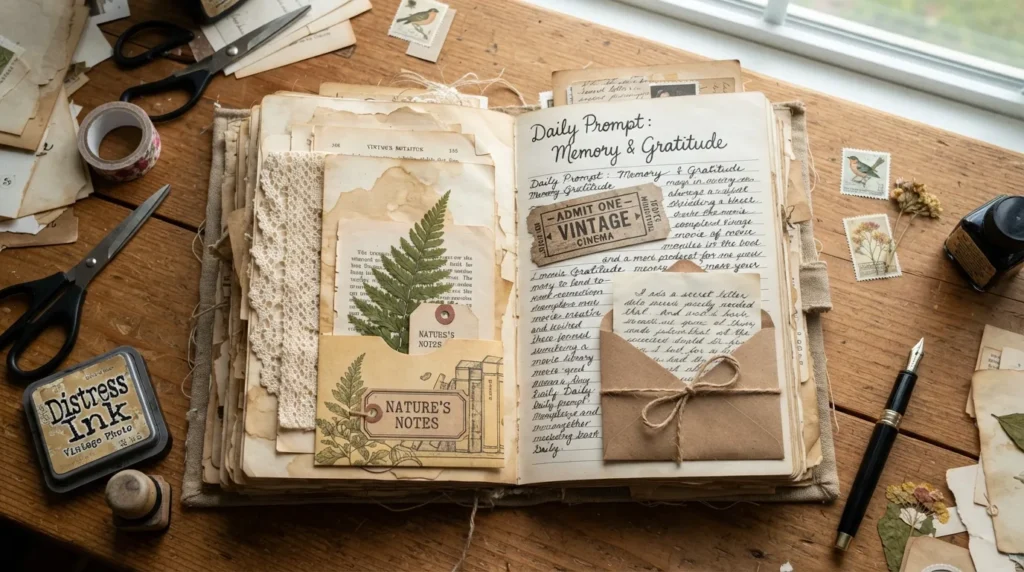
A junk journal is a handmade booklet crafted almost entirely from found, recycled, and repurposed materials. Instead of buying a blank notebook from the store, you assemble your own pages using everyday paper items that would otherwise end up in the trash—think vintage book pages, old envelopes, receipts, clothing tags, junk mail, paper bags, and scrap wrapping paper.
These items are bound together to create a textured, one-of-a-kind memory book, planner, or creative outlet. Unlike traditional diaries focused solely on written entries, junk journaling centers on tactile storytelling. You can glue down physical mementos, tuck ticket stubs into handmade pockets, add pressed flowers, or write down your thoughts directly over old print.
It is called “junk” journaling because the core concept relies on upcycling trash into art. There are no rules about neatness, matching colors, or perfect handwriting. Every page is meant to be layered, interactive, and completely unique to your personal style.
Junk Journal Ideas by Theme
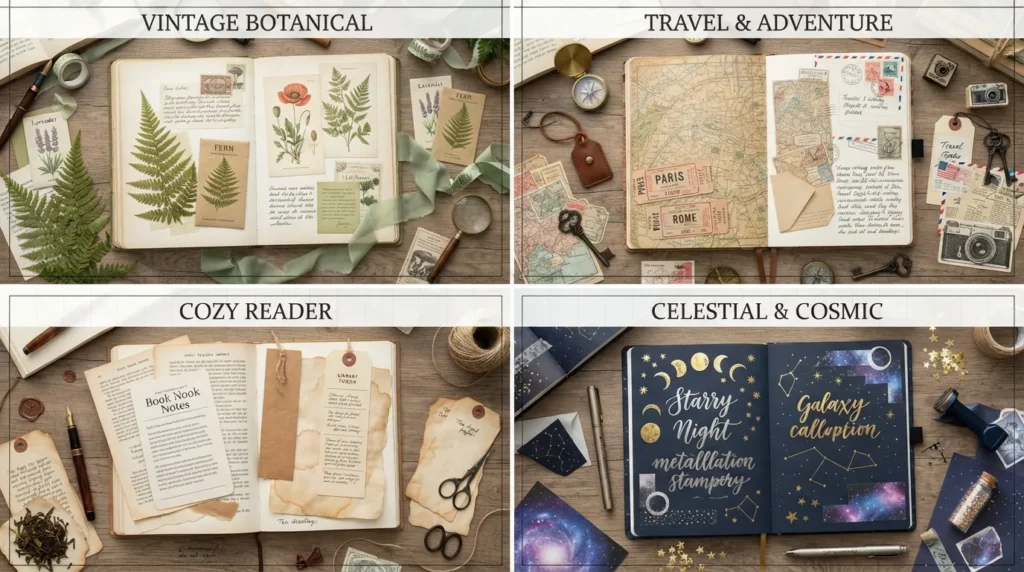
Finding a specific theme makes filling your pages so much easier. Instead of staring at a blank canvas, a theme gives you a clear direction for color palettes, textures, and paper choices. Here are six popular junk journal spread ideas organized by theme to help spark your creativity.
Daily Life / Smash Book Ideas
Your everyday life is full of small, memorable details that deserve a home. A daily life spread acts like a casual, unstructured diary where you capture real moments as they happen.
Receipts and Ticket Stubs: Glue down a receipt from a quiet coffee date or a grocery store run, then write a short note beside it about how you were feeling that morning.
To-Do Lists and Sticky Notes: Instead of throwing away your completed daily checklists or random sticky notes, tear off the edges and paste them onto a page with colorful wash tape.
Ordinary Conversations: Write down a funny quote from a friend or a sweet text message you received, then layer it over scrap notebook paper.
Travel & Event Memory-Keeping Ideas
Save the paper ephemera from trips, concerts, and gatherings to recreate the feeling of a specific day or location.
Transit Maps and Boarding Passes: Fold a bus or subway map into a simple pocket, tuck your ticket stubs inside, and seal it with a bit of baker’s twine.
Concert and Show Wristbands: Glue plastic or fabric event wristbands down as decorative page borders alongside torn venue flyers.
Pressed Flowers and Foreign Receipts: If you traveled somewhere new, combine dried local leaves or flowers with foreign currency receipts for a layered, textured look.
Vintage & Shabby Chic Ideas
If you love soft colors, aged textures, and romantic details, vintage junk journal page ideas are perfect for you.
Tea-Stained and Coffee-Dipped Pages: Soak plain white paper in brewed tea or coffee, let it dry, and tear the edges for an instant aged look.
Lace Trims and Fabric Scraps: Adhere small scraps of lace, linen, or floral cotton along the margins of your pages to act as soft tabs.
Old Book Pages and Sheet Music: Use yellowed pages from damaged vintage books or vintage sheet music as background layers before adding your photos or journaling.
Nature & Seasonal Ideas
Bring outdoorsy textures and seasonal moods onto your pages with natural elements and earthy colors.
Botanical Rubbings and Stamps: Place a textured leaf under a thin page and rub a crayon or graphite pencil over top to reveal its fine details.
Seasonal Color Palettes: Dedicate a spread to autumn by using torn brown paper bags, dried oak leaves, and orange ribbon, or go bright for spring with pressed wildflowers.
Parchment Pockets for Seeds: Fold a small piece of parchment paper into an envelope to hold dried flower seeds or small feathers you found on a walk.
Collage Ideas (Food, Recipes & Packaging)
Kitchen packaging and food wrappers carry vibrant colors and nostalgia, making them fantastic for quirky junk journal spreads.
Handwritten Family Recipes: Glue down a cherished recipe card—complete with kitchen stains—and frame it with torn brown paper or patterned tea towels.
Tea Bags and Candy Wrappers: Save aluminum tea wrappers, foil candy papers, or tea bag tags. Iron them flat under a cloth and paste them down for shiny metallic accents.
Produce Fruit Stickers: Collect the small plastic or paper stickers from apples, bananas, and citrus fruits, sticking them together on a single grid-style page.
Zero-Waste “Trash-Only” Ideas
You don’t need fancy craft store supplies to make incredible trash journal ideas come to life. Challenge yourself to use items you would normally throw straight into the recycling bin.
Cereal Box Covers: Cut up cardboard cereal boxes to use as sturdy pocket inserts, tags, or page dividers.
Security Envelope Patterns: The blue and black patterned print inside bill envelopes makes a striking background pattern when torn into geometric shapes.
Netting and Mesh: Reuse the plastic mesh netting from fruit bags (like orange or avocado bags) to add rich, grid-like texture over plain backgrounds.
Creative Junk Journal Page Layout & Spread Ideas
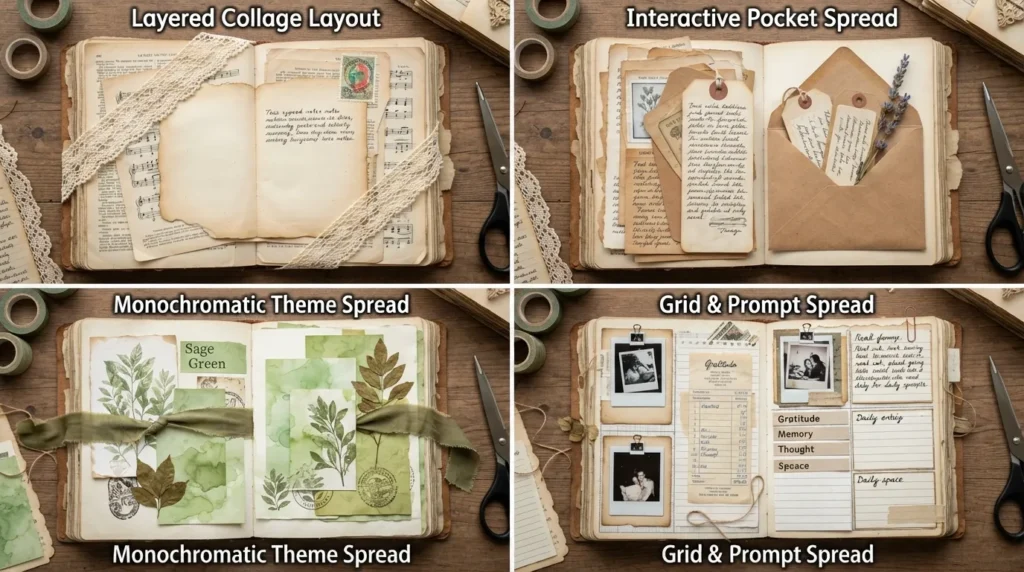
Getting stuck staring at a blank page is a common hurdle, but experimenting with different junk journal spreads can instantly spark your creativity. Whether you want to hide secret notes, play with tactile textures, or build a home for physical keepsakes, these distinct junk journal page layout ideas will help you craft dynamic, layered pages.
Envelope Pocket Spreads
Envelopes are ideal for adding interactive elements and secret storage to your junk journal spread ideas. Glue an open envelope directly onto your page to create a top-loading pouch, or tip one in by taping its flap to the page edge so it swings open like a flip-out door.
Junk Mail Surprise: Glue a standard security-tinted bill envelope across a two-page spread, cut off the top fold, and tuck in a folded letter, tea bag, or long photo strip.
Layered Mini Envelopes: Cascade three small coin envelopes vertically down the page, using each tiny pocket for a specific daily habit tracker, a hidden mini tag, or small dried flower petals.
Color-Themed Spreads
Limiting your palette to one or two dominant colors gives your junk journal page ideas an instantly cohesive, editorial look—even when using completely unrelated scraps of trash journal material.
Monochromatic Vintage Blue: Pair sky-blue scrap paper, indigo denim scraps, a blue postage stamp, and blue ballpoint pen journaling to create a calming, single-color story.
High-Contrast Warmth: Combine dark brown Kraft paper with vibrant yellow mustard seed packets, yellow paint swatches, and aged cream-colored book pages for a rich, warm visual contrast.
Window Frame / Cut-Out Spreads
Creating physical openings in your pages adds visual depth and makes turning the page an interactive experience. You can craft these frames using basic craft knives or decorative punch tools.
Polaroid Picture Window: Cut a rectangle out of the center of your page, frame it with distress ink and a drawn border, and glue a piece of clear vellum behind it so the image on the next page peeks through.
Peak-Through Peek-a-Boo: Hole-punch three staggered circles down the right edge of a page so small glimpses of patterned scrap paper from the following page show before you even turn it.
Sticker & Collection Home Spreads
Instead of letting loose ephemera clutter your desk, turn full two-page spreads into dedicated display galleries for tiny flat items you collect over time.
Grid Style Display: Draw a loose grid of pencil boxes across both pages to create defined homes for sticky notes, vintage fruit stickers, or small torn clothing tags.
Washi Tape Gallery: Line up overlapping strips of decorative paper tape along the margins, then pin or clip clear photo corners inside the center area to hold changing tickets, receipts, or stamps.
Fabric & Texture Layering Spreads
Junk journaling isn’t just about paper; bringing in soft textiles and raw materials makes your journal feel tactile and grounded.
Frayed Canvas Backing: Glue a piece of raw, frayed burlap or linen down as your base page layer before pasting down your journaling card or handwritten paper note on top.
Ribbon & Lace Borders: Stitch or glue a strip of vintage lace along the outer edge of your page to create a soft, textured tab that sticks out gracefully when your journal is closed.
Junk Journal Ideas for Beginners
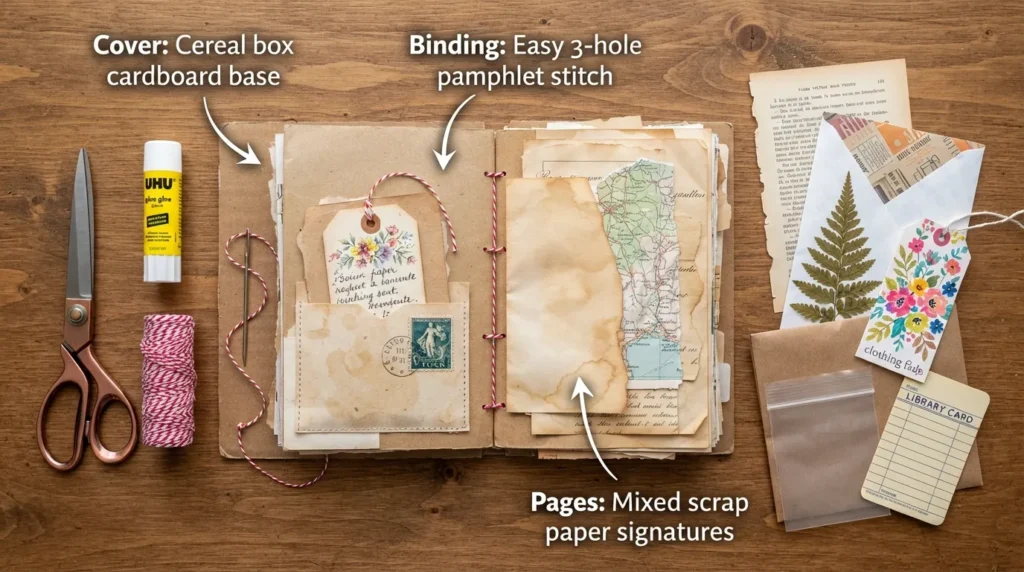
Starting your very first journal can feel a little intimidating, but you don’t need special skills or expensive craft items to make something beautiful. The best junk journal ideas for beginners focus on using materials you already have laying around the house. Here are five easy ways to start your first project today without getting overwhelmed.
Simple Notebook (3-Hole Pamphlet Stitch)
If you want to make a classic booklet from scratch, a 3-hole pamphlet stitch is the easiest way to bind paper together. Fold a sheet of cardstock or thin cardboard in half for your cover, then fold five to ten mixed pages (like notebook paper, book pages, and brown paper bags) to nest inside it. Poke three evenly spaced holes along the folded spine with a pushpin or needle. Thread a piece of embroidery floss or sturdy thread up through the middle hole, down through the top hole, all the way to the bottom hole, and back through the middle. Tie the loose ends in a double knot over the center string, trim the excess thread, and your first custom journal is finished.
Use What’s at Home Before Buying
You don’t need to spend a dime at a craft store to gather amazing supplies. Walk around your home and collect everyday paper items that usually end up in the recycling bin.
Cereal boxes and snack cartons: Cut them down and fold them in half to make sturdy, flexible journal covers.
Mail envelopes: Save security envelopes with cool interior patterns to make instant pockets or flip-out flaps.
Grocery bags and packing paper: Tear them into smaller pieces to use as neutral background layers, or crinkle them up to add unique texture.
Clothing tags and receipt stubs: Save these small paper scraps to use as tuck spots, page tabs, or journaling cards.
Mini Journal as a First Project
Instead of trying to fill a large notebook, start small with a mini journal. Cut a few sheets of paper down to 4×6 inches or fold a single sheet of printer paper into an eight-page pocket booklet. Because the pages are so tiny, you can complete an entire junk journal spread in just five minutes. Finishing a miniature project quickly builds your confidence and gives you immediate satisfaction without the pressure of filling blank space.
No-Sew Option (Elastic, Ribbon, or Twine Binding)
If you don’t want to sew or handle needles, you can create a working binding using simple elastic, ribbon, or twine. Fold a sturdy piece of cardboard in half for your cover. Cut a slit or punch a tiny hole at the top and bottom of the spine fold. Loop a piece of stretchy hat elastic or narrow ribbon through the holes so it runs vertically down the inside center of the cover, and tie it securely on the outside spine. Fold your folded pages together and slip them directly under the elastic band. This method holds your pages in place while letting you add, remove, or rearrange pages whenever you want.
Altered Book Journals (No Binding Needed)
An altered book is the ultimate shortcut because the binding work is already done for you. Grab an old hardback book from a thrift store or a yard sale that has a sturdy spine. To make room for your added layers, tear out two or three pages for every page you decide to keep. Use a glue stick to paste two remaining adjacent pages together so they form a thick, sturdy base for paint, collage, and ink. You can immediately start decorating the pages with your favorite trash journal ideas without building a cover or sewing signatures.
What You Actually Need
You only need a few basic tools to build your first project. Here is a quick list of junk journal supplies to gather from around your house before you get started:
Adhesive: A standard glue stick for paper layers, plus wet liquid glue or double-sided tape for heavier items like fabric and buttons.
Cutting tools: A basic pair of household scissors, or a craft knife and a ruler for clean, straight edges.
Paper scraps: A mix of plain paper, old book pages, junk mail, wrappers, and recycled cardboard.
Binding materials: A needle and sturdy thread (like embroidery floss or dental floss), or narrow ribbon and elastic bands for no-sew builds.
Basic coloring tools: A simple black pen for writing, along with a few colored pencils, markers, or a single stamp pad to age your page edges.
Everyday "Junk" You Can Use Organized by Category
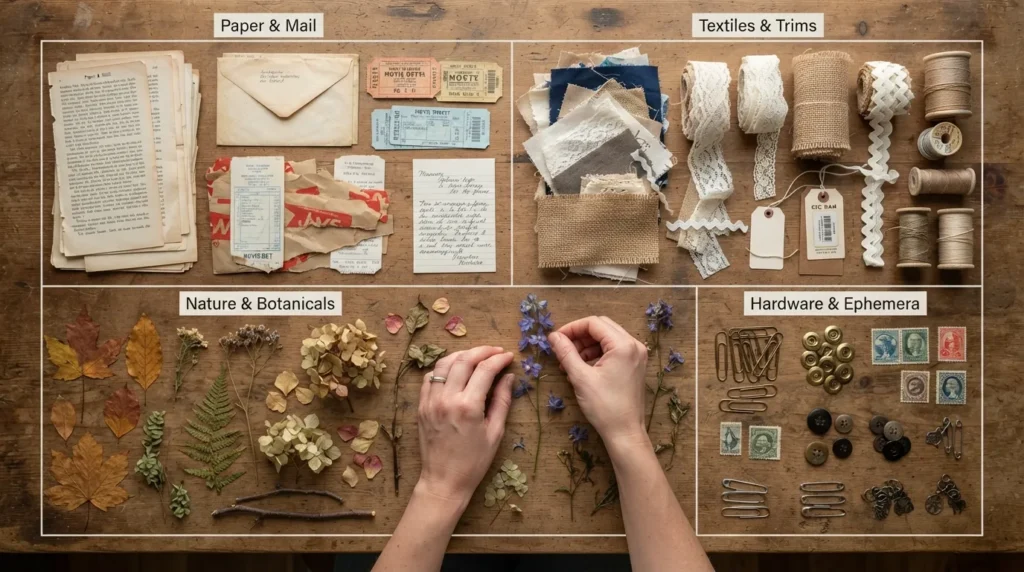
You do not need to buy expensive craft supplies to create beautiful pages. Most of the best junk journal inspo is already sitting in your recycling bin, junk drawer, or closet. Here is a breakdown of everyday items you can save and collect, organized by category:
Paper-Based
Book pages: Old book pages with yellowed edges, music sheets, dictionary pages, and out-of-date atlas maps make fantastic background layers.
Mail items: Envelopes (especially window envelopes), security envelope patterns, postcards, and junk mail flyers.
Paper scraps: Leftover wrapping paper, brown paper grocery bags, parchment paper, and butcher paper.
Packaging & Labels
Food and drink packaging: Tea bag wrappers, coffee sleeves, dried tea bags (emptied and flattened), fruit stickers, and bread tags.
Retail tags: Clothing hangtags, price tags, receipt slips, and sticker backing paper.
Cardboard elements: Thin cardboard from cereal boxes or tissue boxes (great for making sturdy pocket inserts or journal covers).
Ephemera
Travel tickets: Used bus passes, train tickets, boarding passes, and parking stubs.
Event keepsakes: Movie tickets, wristbands from concerts, museum entry passes, and paper menus from memorable meals.
Vintage-style extras: Stamped envelopes, old receipts, or retro newspaper clippings.
Fabric & Texture
Fabric scraps: Cut-offs from old denim jeans, worn-out cotton shirts, canvas, or flannel.
Trims and ribbons: Lace scraps, ribbon remnants from gifts, twine, yarn, and burlap strips.
Textured accents: Mesh produce bags, bubble wrap (great for stamping), tissue paper, and pressed dried leaves or flowers.
Junk Journaling Prompts to Get You Started 8-10 concrete prompts
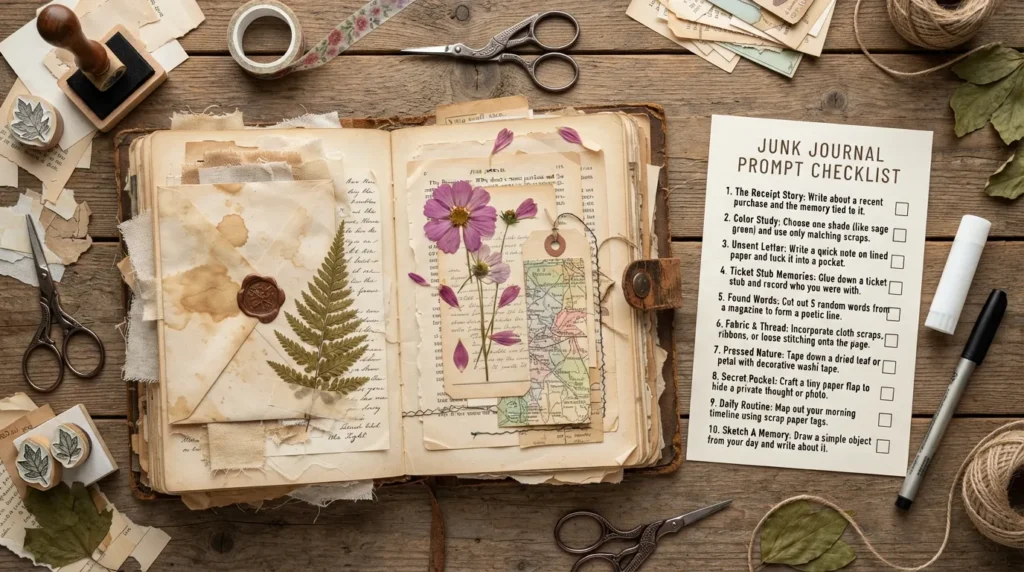
When you open a blank page and do not know where to start, a quick prompt can clear away the mental block. These practical junk journaling prompts will help you turn everyday scraps into meaningful pages right away:
The Receipt Log: Pick three paper receipts from this past week—a coffee shop ticket, a grocery stub, or a parking pass. Glue them down in a row, then write a short sentence next to each one about how you felt or who you were with when you spent that money.
Color-Matched Collage: Choose one specific color, like mustard yellow or sage green. Hunt through old magazines, junk mail, and food packaging to find 5 to 7 scraps in that exact shade. Cluster them together on the page to create a monochromatic background.
Anatomy of a Good Day: Draw a simple jar, box, or tote bag outline in the center of your spread. Inside the shape, tape down physical items that represent a recent good day—a wrapper from a snack you enjoyed, a pressed leaf from a walk, or a ticket tag.
The Envelope Secret: Glue a used mailing envelope onto your page with the flap facing up. Tuck a private thought, a current goal, or a written worry inside, then seal it with a piece of patterned wash tape so only you know what is inside.
Weathering the Moment: Look out the window right now. Glue down a scrap of paper that matches the sky’s mood, then write down the exact temperature, time, and three physical sensations you feel in your body at this moment.
The Food Packaging Flip: Cut out the front panel of a cardboard tea box or a colorful pasta package. Use it as a large center patch on your page, then journal around its edges about your favorite comfort meal or a memory tied to that food.
Map Your Daily Route: Rip out a section of an old road map or print out a map of your neighborhood. Draw a dotted line with a bright marker showing your daily commute or favorite walking path, noting your favorite stops along the way.
Unsent Letter Pocket: Tuck a blank folded card or index card into a handmade paper pocket. Write a letter to your past self or your future self, slip it into the pocket, and decorate the outside with pressed flowers or stamp ink.
The Single-Song Spread: Pick one song you currently have on repeat. Write out your favorite lyrics in the center of the page, then surround the words with ripped book pages, dark ink smudges, and cutout images that match the song’s vibe.
Fill your journal with everyday paper scraps, memories, and personal touches. Great items include receipts, dried flowers, movie tickets, postage stamps, handwritten notes, torn book pages, unused postcards, and wrapping paper. You can also add photos, fabric scraps, ribbon, or tags from new clothes.
A good junk journal meets three clear criteria:
- Sturdy Binding: The spine holds together firmly without pages falling out, even when the journal gets thick and bulky.
- Functional Pages: The pages lie flat enough to write, glue, or paint on easily without tearing under liquid adhesive.
- Personal Meaning: It reflects your unique style, memories, or creative thoughts rather than just mimicking someone else's work.
Start by gathering scrap paper, junk mail, and old book pages. Fold the papers in half to create smaller booklets, called signatures. Next, make a cover out of cereal box cardboard or an old hardback book spine. Nest your signatures inside the cover and bind them together using a simple three-hole pamphlet stitch with heavy thread or twine. Once bound, your blank pages are ready for decorating.
If you hit a creative block, try these specific prompt ideas:
- The Receipt Story: Glue down a recent receipt and write a quick paragraph about what you bought, who you were with, and how you felt that day.
- Color Study: Choose one single color (like sage green or warm amber) and build a page using only paper scraps, stamps, and magazine cutouts in that shade.
- Unsent Letter: Write a short, honest letter to your past self or a favorite fictional character on a piece of lined paper, then tuck it into a decorated envelope.
Pimchanok Srisuk
Pimchanok Srisuk is the Journaling Editor at Holistic Wellbeing Living. She writes about journaling prompts, reflective writing, emotional clarity, and mindful routines. With seven years of experience creating personal-growth content, Pimchanok helps readers use simple writing practices to understand their thoughts and make calmer everyday decisions.