Jump to:
Toggle100+ Morning Journal Prompts to Start Your Day With Clarity, Calm & Intention
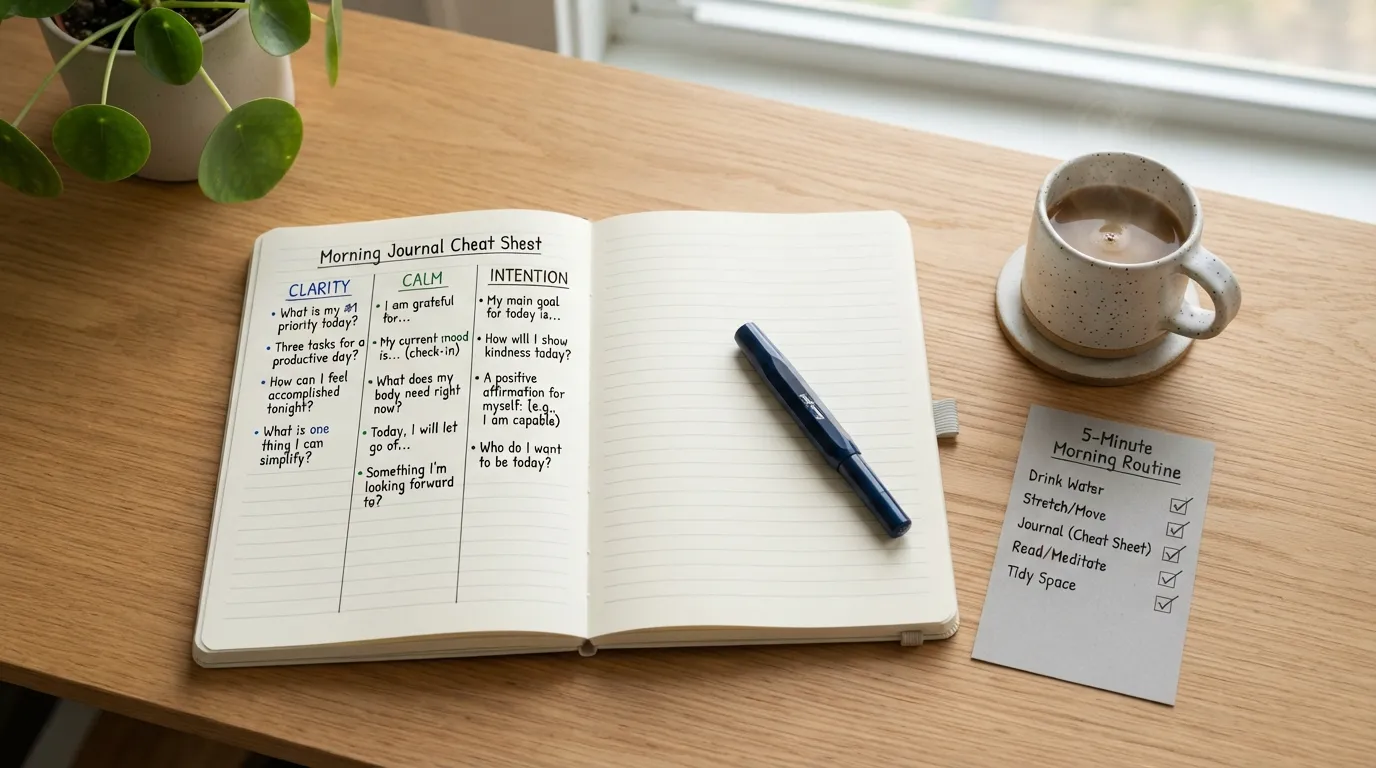
Morning journal prompts help you clear mental clutter, set daily goals, and start your day with focus. Spend 5 minutes each morning answering 2 or 3 simple questions to feel calmer and more organized before your busy day begins.
What Are Morning Journal Prompts?
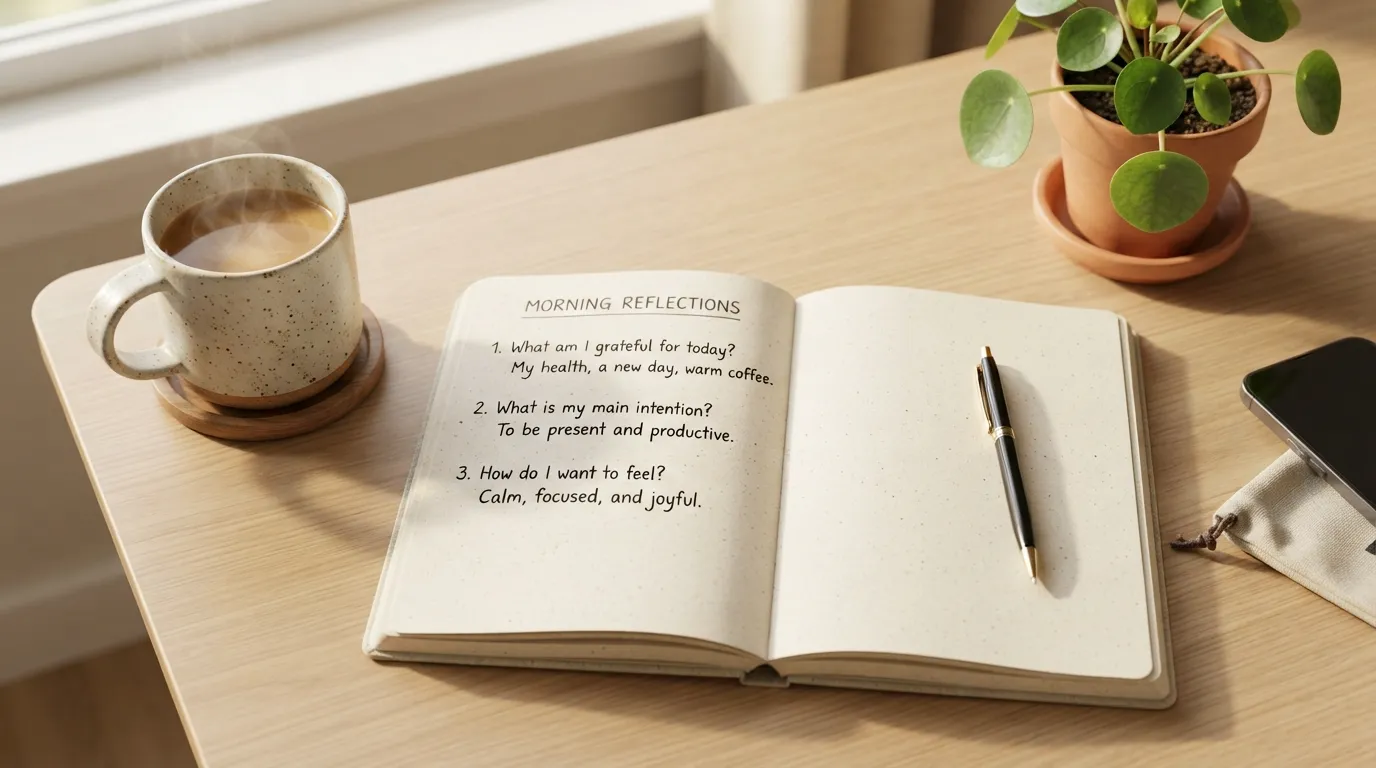
A morning journal prompt is simply a specific question or idea that starts your writing every morning. Instead of opening a blank page and staring at it wondering what to write in your morning journal, a prompt gives your brain an easy place to start.
When you wake up, your mind is usually half-asleep or already racing with things you need to do. A good prompt acts like a track for a train. It guides your thoughts so you do not waste ten minutes wondering where to begin.
[Blank Page] ──> “What do I write?” ──> Brain Freeze
[Prompt] ──> “How do I feel right now?” ──> Instant Writing
Why this works: Your brain naturally wants to answer questions. When you ask yourself a clear question, your brain automatically starts searching for an answer. This skips the struggle of starting.
Morning Journal Prompts vs Morning Pages — What’s the Difference?
People often mix these two up, but they are actually quite different ways to practice morning journaling.
Morning Pages come from Julia Cameron’s book The Artist’s Way. The rule is simple: you write three full pages of longhand, stream-of-consciousness thought every single morning. No topic, no prompt, no goal. You just dump whatever pops into your head onto the paper—even if it is just “I don’t know what to write” fifty times.
Morning Journal Prompts give you direction. You pick one or two targeted questions about your mood, goals, or gratitude, and you answer them. You can write two lines or two pages—there is no fixed page length you have to hit.
| Feature | Morning Pages | Morning Journal Prompts |
|---|---|---|
| Structure | Unstructured (free writing) | Structured (question-based) |
| Length | Exactly 3 pages | Flexible (as short as 3–5 lines) |
| Goal | Clear out mental clutter | Build focus, clarity, or intention-setting |
| Best For | People who feel overwhelmed with messy thoughts | People who want quick guidance or have limited time |
I used to try doing three full pages every day, but on busy weekdays, it felt like a chore. Switching to one simple morning prompt saved my routine. If you want a quick morning routine that helps you gain clarity in five minutes, guided prompts are usually the way to go.
Why Journal in the Morning?

I used to start my days by rolling over, grabbing my phone, and scrolling through news and messages before my eyes were even fully open. Within two minutes, my brain felt rushed, stressed, and behind schedule.
Switching to morning journaling changed that completely. Spending just five minutes with a blank page gives you control over your morning before the rest of the world starts demanding your attention.
Here is what actually happens when you build a morning writing habit.
Mental & Emotional Benefits
When you first wake up, your mind is usually full of loose thoughts, random worries, and a running to-do list. Writing them down gets them out of your head so you do not have to carry them around all day.
Clears brain fog: Putting your initial thoughts on paper works like emptying a full trash bin. It frees up space so you can think clearly.
Lowers morning anxiety: If you wake up feeling uneasy, writing down why helps you name the feeling. Once a fear is written on paper, it often looks much smaller and easier to manage.
Builds quiet self-awareness: You start noticing patterns in how you feel. For example, I realized through morning prompts that I always felt anxious on Tuesdays because of a specific weekly meeting. Spotting that allowed me to prepare for it better.
Why this works: Your brain uses up energy trying to hold onto unspoken thoughts. Writing things down signals to your nervous system that the information is safe on paper, which helps your body relax.
Productivity & Focus Benefits
Most people go through their day reacting to emails, texts, and other people’s priorities. A quick morning journaling session flips that script so you choose what matters most before the noise starts.
Sharpens your focus: Instead of trying to do ten things at once, writing a quick list of top priorities helps you pick the one or two tasks that actually matter.
Sets your daily tone: Intention-setting in the morning acts like a GPS. If you decide on paper that you want to be calm today, you are much more likely to pause before losing your temper later on.
Reduces decision fatigue: Deciding how to handle your day on paper saves you from making dozens of small, stressful choices later in the afternoon when your brain is tired.
Here is a quick comparison of how your morning feels with and without a quick writing habit:
| Feature | Morning Pages | Morning Journal Prompts |
|---|---|---|
| Structure | Morning Pages Unstructured (free writing) | Morning Journal Prompts Structured (question-based) |
| Length | Morning Pages Exactly 3 pages | Morning Journal Prompts Flexible (as short as 3–5 lines) |
| Goal | Morning Pages Clear out mental clutter | Morning Journal Prompts Build focus, clarity, or intention-setting |
| Best For | Morning Pages People who feel overwhelmed with messy thoughts | Morning Journal Prompts People who want quick guidance or have limited time |
Long-Term Wellbeing Benefits
The real magic of morning pages prompts shows up after a few weeks of consistency. It is not just about having a good morning; it starts changing how you view your life overall.
Boosts daily gratitude: When you regularly answer morning prompts about what is going well, your brain gets better at noticing positive things automatically, even on hard days.
Creates a written record of your growth: Looking back at old journals shows you how much you have changed. Problems that used to keep you up at night suddenly look like small bumps in the road.
Builds a stable morning routine: Having a simple, grounding habit every morning builds trust with yourself. You start the day knowing you can stick to a promise you made to yourself.
How to Start Morning Journaling (Beginner-Friendly Steps)
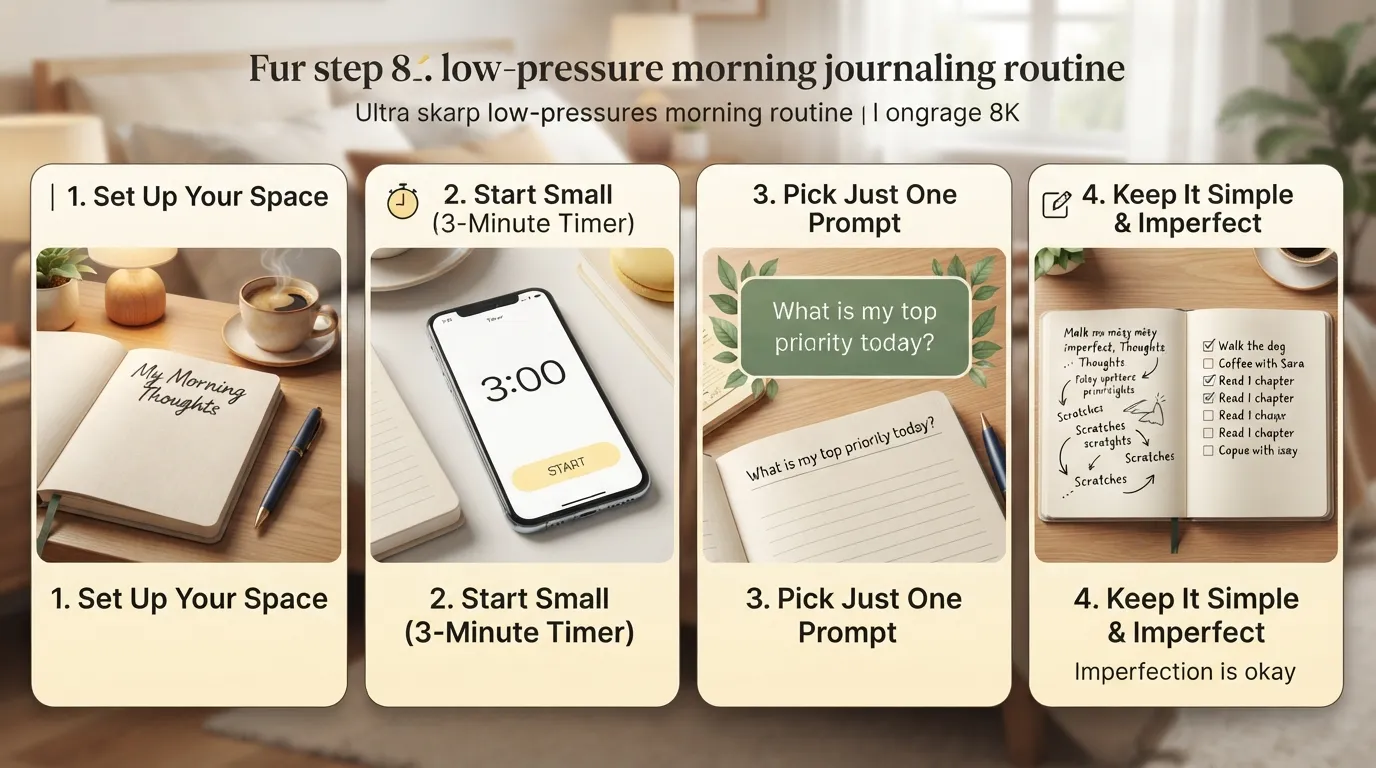
Starting a new routine often feels overwhelming when you try to do too much at once. When I first started, I tried writing full pages every morning, got tired after three days, and quit. The trick is to keep your setup small and friction-free. Here is the exact four-step process to get going without burning out.
Step 1 – Pick Your Format (Notebook, App, or Printable)
You do not need a fancy leather journal to start morning journaling. The best tool is simply the one you will actually open when you are half-awake.
Paper Notebook: A simple spiral notepad works best if you spend all day looking at screens. Physical paper forces your brain to slow down and focus on one thought at a time.
Phone or Computer App: Tools like Notes, Notion, or dedicated journaling apps suit people who type faster than they write. It also means your journal is always with you.
Printable Pages: If staring at a blank page gives you anxiety, printed templates with pre-written morning prompts give your eyes a structured path to follow.
My advice: Pick paper if you get easily distracted by phone notifications first thing in the morning.
Step 2 – Choose Just 2–5 Prompts, Not All
One common mistake is trying to answer a long list of questions before your brain is fully awake. That turns a peaceful habit into a stressful chore.
Select two to five morning writing prompts maximum for your routine. This keeps your mind clear and stops you from feeling rushed.
A simple 3-prompt combination that works well:
What is one thing I want to accomplish today?
How do I want to feel while doing my work today?
What am I thankful for right now?
Focusing on just a few targeted questions helps build self-awareness without draining your mental energy before the day even starts.
Step 3 – Set a 5–10 Minute Timer
Give yourself a fixed, short time window. Setting a physical timer on your phone creates gentle pressure that keeps your pen moving.
Why this works: Your brain knows there is a clear end point, which stops you from staring blankly at the page wondering what to write in morning journal entries.
How to do it: Set a timer for 5 minutes. Tell yourself that once the timer rings, you are done—even if you only wrote three short sentences.
Short bursts make daily practice doable, especially on busy weekdays.
Step 4 – Write Without Editing Yourself
Your morning journal is not an essay. Nobody else is going to read it, grade it, or mark it with a red pen.
If you make a spelling mistake, leave it. If your thoughts sound messy or silly, keep writing anyway. This technique—often used in morning pages prompts—is about clearing out mental clutter so you can start your day with focus.
Real-life example: If your answer to a prompt is “I feel tired and I don’t want to go to my 9 AM meeting,” write that down. Getting honest thoughts out of your head onto paper helps lower stress instantly.
100+ Morning Journal Prompts by Category
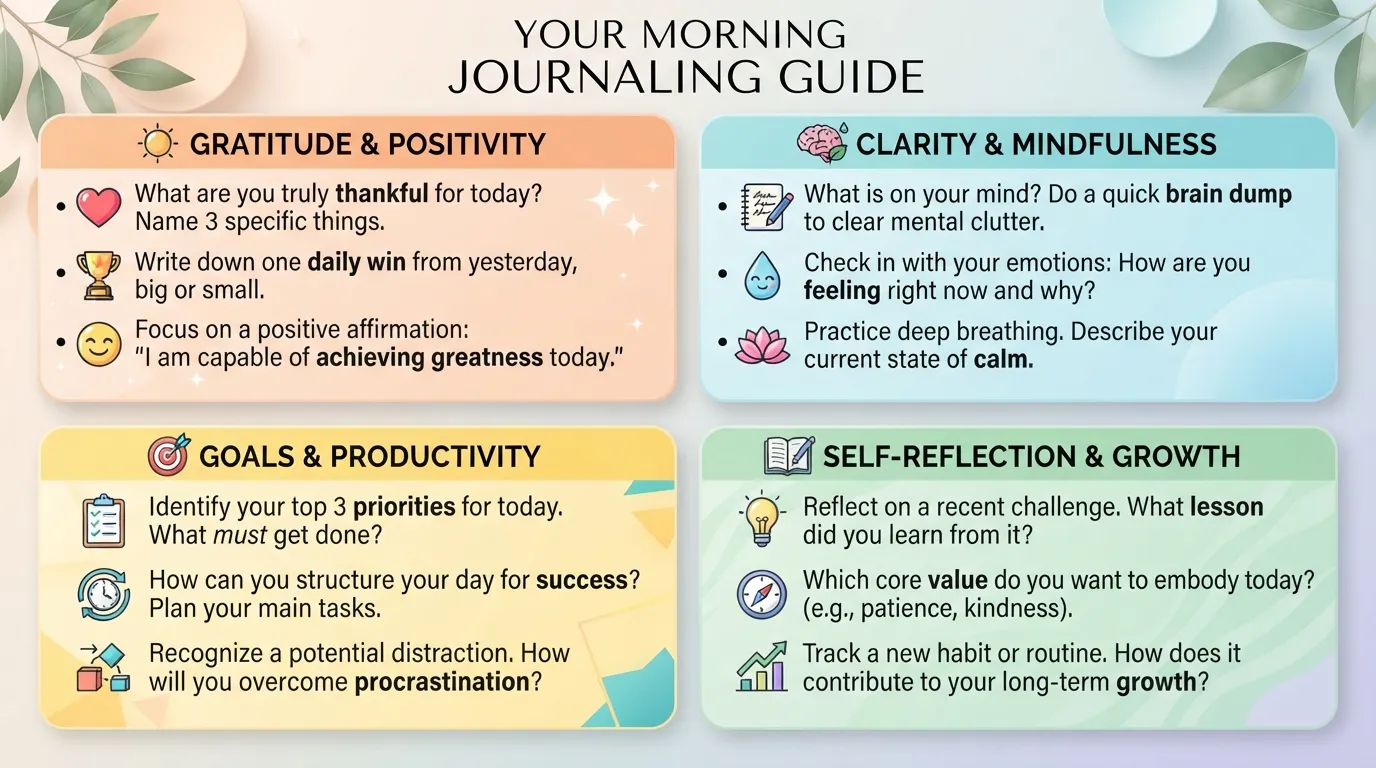
When you open your notebook early in the morning, a blank page can feel intimidating. I used to stare at the white space for ten minutes, write down “I am tired,” and give up.
Having clear, specific prompts removes that friction. Pick a category below that matches what you need today, pick one prompt, and write.
For Gratitude
Gratitude works best when you focus on tiny, specific details instead of big, generic ideas. Writing “I am grateful for my family” every day gets boring. Try these morning prompts to find new things to appreciate:
What is one small physical comfort you enjoyed in the last 24 hours?
Who made your life a little easier yesterday, and how did they do it?
Look out the window right now. What is one visually pleasant thing you see?
What is a tool, app, or object you used this morning that saved you time?
Name a hardship you went through in the past that actually made you stronger today.
What is something funny that made you laugh recently?
Write down three things about your physical body that you appreciate.
What is a piece of good news you heard this week?
Name a song, book, or movie that lifted your mood recently. Why did it help?
What is a simple pleasure you are looking forward to enjoying today?
Who is someone you haven’t talked to in a while, but you are glad they exist?
What skill do you have today that you used to struggle with?
What is one room or spot in your home that makes you feel safe?
What was the best part of your morning routine today?
What is one problem you don’t have right now?
Pro Tip: If you feel stuck, answer this question: “If I lost everything tomorrow, what single item would I want back first?”
For Productivity & Goals
Using morning journaling for productivity is not about making a giant to-do list. It is about picking your main priorities so you do not waste energy on busywork.
What is the single most important task I must complete today to feel successful?
If I could only get three things done today, what would they be?
What is one distraction I know will pop up today, and how will I avoid it?
What task have I been putting off, and what is the very first step to start it?
How can I make my hardest task today feel a little more fun or easy?
What does “done” look like for my biggest project right now?
What energy drain can I eliminate from my schedule today?
What habit am I trying to build, and when exactly will I do it today?
Who do I need to reply to or email today before I start my deep work?
How will I know if I spent my day wisely when I go to bed tonight?
What is one thing I can prepare this morning to make my evening easier?
What boundary do I need to set today to protect my work time?
What small step can I take today toward a goal I want to reach next month?
Where am I wasting time during my day without realizing it?
What is one task I can delegate or drop entirely today?
For Self-Care & Mental Health
If you wake up feeling anxious, overwhelmed, or sluggish, use your morning writing prompts as a safe space to unload those heavy feelings without judgment.
How does my body feel right now, from head to toe?
What emotion am I holding onto this morning, and why?
What is one thing causing me stress today, and can I control it?
What do I need to give myself permission to feel or do today?
What is a kind thing I can say to myself right now?
What low-energy activity can I plan for myself if I feel tired later?
How can I show myself compassion if things do not go as planned today?
What is one worry I can choose to leave on this paper and not carry with me?
What boundary do I need to hold today for my own peace of mind?
What is a physical need (water, rest, movement) my body is asking for right now?
What noise or input (social media, news) do I need to limit today?
What made me feel overwhelmed yesterday, and how can I avoid a repeat today?
Who is one person I can reach out to if I need support today?
What is a gentle reminder I need to hear today?
How can I make my space feel a little calmer right now?
For Mindset & Deep Reflection
These prompts help you build self-awareness. Use them when you want to look at your bigger patterns, habits, and ways of thinking.
What limiting belief about myself am I ready to let go of?
How do I usually react when things go wrong, and is that way helping me?
What is a recent mistake I made, and what did it teach me?
Am I living according to my own values, or am I trying to please others?
What does success mean to me right now in my life?
What am I currently taking too seriously?
What is something I used to care about that no longer matters to me?
If I knew I could not fail, what action would I take this week?
How do I treat myself when I make a mistake?
What is a compliment I find hard to accept, and why?
What area of my life needs more honesty right now?
What is one story I keep telling myself that might not actually be true?
How have I grown as a person over the last year?
What uncomfortable conversation am I avoiding, and why?
What would my future self tell me about my current situation?
For Students
School brings a unique mix of academic pressure, social stress, and changing schedules. These morning pages prompts help keep your mind focused and your stress low.
What subject or project am I most worried about today, and why?
What is my main study goal for today outside of regular classes?
What distraction (like my phone or gaming) hurts my study focus the most?
How can I make my study session today more active and engaging?
What is one thing I am confused about in class that I need to ask for help with?
What habit can I practice today to stay disciplined with my homework?
How will I reward myself after finishing my study sessions today?
What test or assignment is coming up, and what is my step-by-step plan for it?
How can I manage my energy so I don’t crash in the afternoon?
What is one positive thing about my school or university environment today?
How can I support a classmate or friend today?
What study environment helps me work best, and how can I set it up today?
What self-talk do I use when a practice problem gets too hard?
How do I handle test anxiety, and what calming routine can I use today?
What skill am I learning in school right now that will help my future career?
For Women
Between juggling personal expectations, relationships, and societal pressures, morning journaling can serve as an essential space to reconnect with what you actually want.
Where in my life am I saying “yes” when I really want to say “no”?
What does my ideal, pressure-free morning look like, and how can I bring a piece of it into today?
How am I taking care of my physical and emotional energy right now?
What unrealistic standard am I holding myself to today?
What is one way I can honor my boundaries with family or coworkers today?
What makes me feel confident, and how can I invite more of that into my day?
How can I show up for myself today instead of prioritizing everyone else first?
What is a compliment about my character—not my appearance—that I give myself today?
What relationship in my life gives me energy, and which one drains it?
What project or dream have I set aside that I want to reclaim?
How can I speak to myself today with the same kindness I offer my friends?
What does self-respect look like in my daily routine today?
What guilt am I carrying right now that I need to drop?
What space in my life feels cluttered, and how can I simplify it?
What brings me pure joy without needing to be productive?
For Adults
Managing work, bills, home care, and personal lives requires clarity. Use these prompts to balance your daily responsibilities while maintaining personal growth.
What work task demands my full attention today, and what can wait until tomorrow?
How am I balancing my professional goals with my personal life right now?
What is one financial habit I want to pay closer attention to today?
What stress from work am I accidentally bringing home with me?
What is a career goal I am working toward, and is my daily effort matching it?
How can I make my workday slightly less stressful today?
What chore or household duty can I streamline or share today?
What boundary do I need to keep between my job and my personal time?
What professional relationship do I want to improve or invest in today?
How am I taking care of my physical health during long work hours?
What decision am I overthinking, and what is the simplest choice?
What skill do I need to develop to advance in my career or personal projects?
What am I grateful for in my current job or daily routine?
How can I create ten minutes of pure quiet time for myself today?
What long-term personal goal am I neglecting because of daily busywork?
Quick Morning Journal Prompts (For When You Only Have 2 Minutes)

You do not need 30 minutes and a cup of tea to get the benefits of morning journaling. Some days, your alarm goes off late, or you just want to get on with your day. That is totally fine.
When time is short, the key is simplicity. You want morning prompts that require zero overthinking.
Here are five ultra-quick morning journal prompts you can answer in under two minutes:
What is one thing that would make today a win?
Why it works: It cuts through your giant to-do list and forces you to pick a single priority.
Example answer: “Finishing my math assignment before 5 PM.”
How do I feel right now in one word, and what do I need?
Why it works: It builds instant self-awareness without getting stuck in a long emotional recap.
Example answer: “Tired. I need to drink a big glass of water and stretch.”
What is one small thing I am grateful for this morning?
Why it works: A quick note of gratitude shifts your mindset toward something positive before the day gets noisy.
Example answer: “The quiet room before everyone else wakes up.”
If today had a theme, what would it be?
Why it works: Setting an intention gives you a simple mental focus for how you want to handle your day.
Example answer: “Patience with myself.”
What can I cross off my mind right now so I do not worry about it?
Why it works: Writing down a persistent worry gets it out of your head and onto the paper, leaving your brain free to focus.
Example answer: “Remembering to reply to Sarah’s text—I’ll do it at lunch.”
Pro Tip: Keep your notebook and pen on your nightstand. If you do not have to hunt around your room to find your journal, you are much more likely to write down a quick response before grabbing your phone.
Tips to Actually Stick With Morning Journaling
Starting a morning habit is easy. Keeping it going when you are sleepy or busy is the hard part.
I used to quit after three days because I tried to make every entry perfect. Once I dropped the rules and built a simple routine, the habit finally stuck.
Here is what works in real life:
Keep your notebook visible the night before. Place your journal right on top of your phone or your coffee maker before you go to sleep. When you wake up, you will see it immediately. This cuts down on the effort needed to get started.
Pair journaling with an existing habit. This is called habit stacking. Instead of finding a whole new block of time, tack your writing onto something you already do every single morning. Write while your coffee brews, or answer one prompt right after you brush your teeth.
Don’t judge or overthink your answers. Your journal is not a test, and no one else will read it. Messy handwriting, half-baked thoughts, and quick bullet points all count. The goal is clarity, not pretty pages.
Rotate your prompts weekly. Answering the exact same questions every day gets boring fast. Pick two or three morning prompts to focus on for a week, then switch to a fresh set on Monday to keep your brain engaged.
Keep your list of prompts ready. When you sit down with a blank page, you shouldn’t waste time wondering what to write in your morning journal. Save this page, write five favorites on a sticky note, or print a quick list to slip inside your notebook cover.
Pro Tip: Start small. Writing just two honest sentences every day builds way more momentum than writing three pages once a month.
FAQs
Frequently Asked Questions
Five to ten minutes is plenty. When I first started, I tried writing for 30 minutes every morning, but I burnt out within a week.
If you're using specific morning journal prompts, answering just two or three quick questions shouldn't take more than five minutes. The goal is to clear your head before the day gets noisy, not to write a novel. On days when you have extra time, feel free to keep going, but keep your daily goal small so you can stick with it.
Stick to one to three prompts per session.
Trying to answer a long list of questions can feel like completing a homework assignment, which ruins the habit. Picking just one meaningful prompt gives you room to think deeply about your answer instead of rushing through a long checklist.
- One prompt: Works best if you want to write a few paragraphs on a single topic (like “What is my biggest focus today?”).
- Two or three prompts: Work great for short, bullet-point style answers (like listing three things you're grateful for and one daily goal).
Yes, because it gets overwhelming thoughts out of your head and onto paper. Psychologists call this "externalizing" your thoughts.
When you feel anxious in the morning, your brain is usually racing with tasks, worries, or worst-case scenarios. Writing them down forces you to slow down and put those feelings into clear words. Often, once you see your worries written on paper, they feel much smaller and easier to handle.
The best time is right after you wake up, ideally before you check your phone.
Once you look at your notifications, social media, or work emails, your mind gets flooded with other people's priorities. Morning journaling works best when your brain is still quiet and fresh.
Final Thoughts — Make Morning Journaling a Habit, Not a Chore
If you try to write for 30 minutes every single morning, you will probably quit by Thursday.
I know this because I did it for years. I would set big expectations, buy a fresh notebook, and then give up the moment life got messy.
Morning journaling works best when it feels easy. Here is how to make it stick without the pressure:
Simple Rules to Stay Consistent
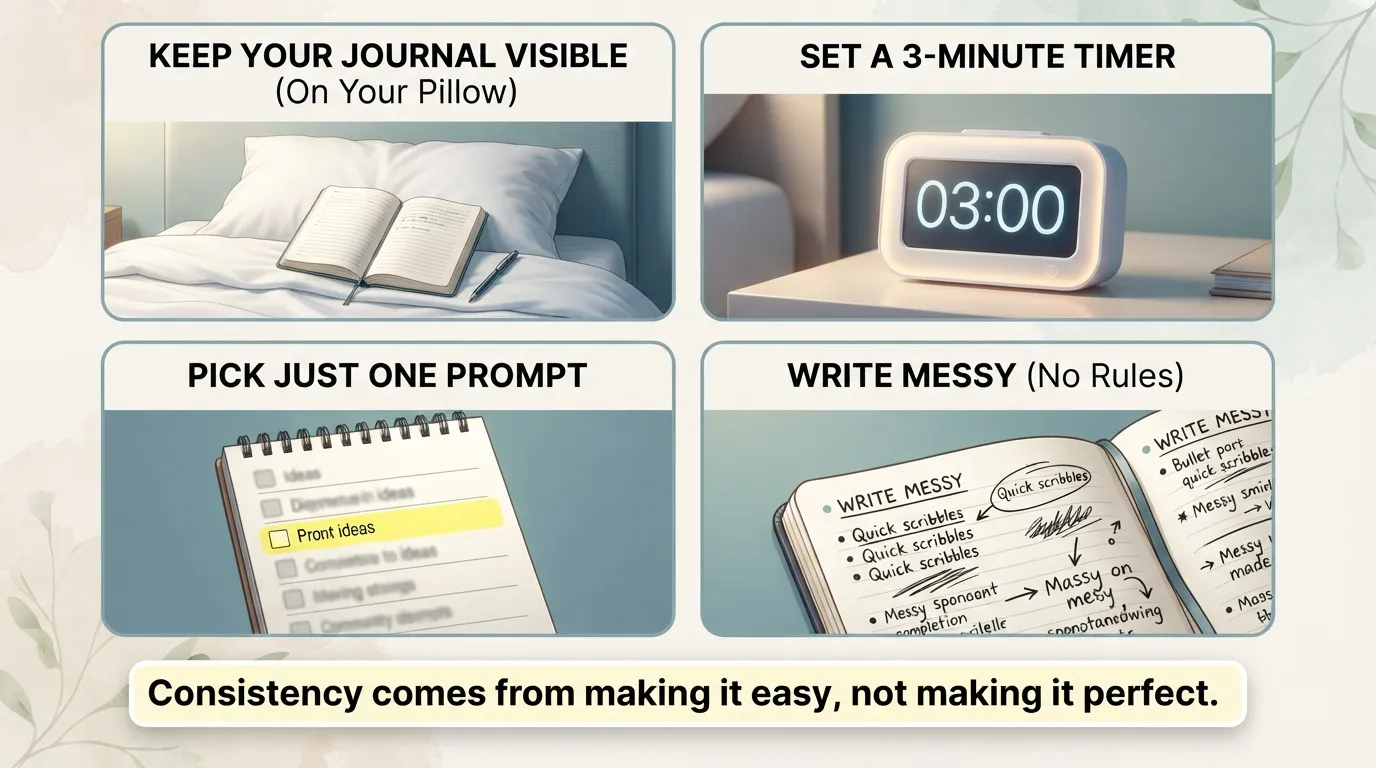
Keep your notebook on your pillow. When you make your bed in the morning, toss your journal right onto your pillow. When you go to sleep at night, move it to your nightstand. Seeing it first thing prevents you from reaching for your phone instead.
Set a timer for 3 minutes. You do not need to fill pages. Tell yourself you only have to write until the timer goes off. Usually, starting is the hardest part. Once you begin, momentum takes over.
Pick just one prompt. Don’t try to answer five different morning prompts before you have had your coffee. Choose one question from the list above that matches your mood today and ignore the rest.
Write messy. You are not submitting this for a grade. Scribble, cross things out, or use bullet points. When you remove the pressure to make it look pretty, your brain actually relaxes.
My favorite shortcut: On days when my brain feels completely blank, I write down three things I am looking at right now and one thing I want to feel today. That’s it. Four lines total.
What to Expect After a Few Weeks
When you stick with morning writing prompts regularly, you start to notice small shifts. You stop waking up with that instant feeling of being behind. You catch bad moods before they ruin your afternoon.
Morning journaling is not about fixing your life overnight. It is just a quick way to clear out the mental noise so you can start your day on your own terms.
Grab a pen, pick one prompt tomorrow morning, and see how it feels.
Pimchanok Srisuk
Pimchanok Srisuk is the Journaling Editor at Holistic Wellbeing Living. She writes about journaling prompts, reflective writing, emotional clarity, and mindful routines. With seven years of experience creating personal-growth content, Pimchanok helps readers use simple writing practices to understand their thoughts and make calmer everyday decisions.