Jump to:
ToggleSelf-Care Journal Ideas: Prompts, Layouts & Trackers to Get Started
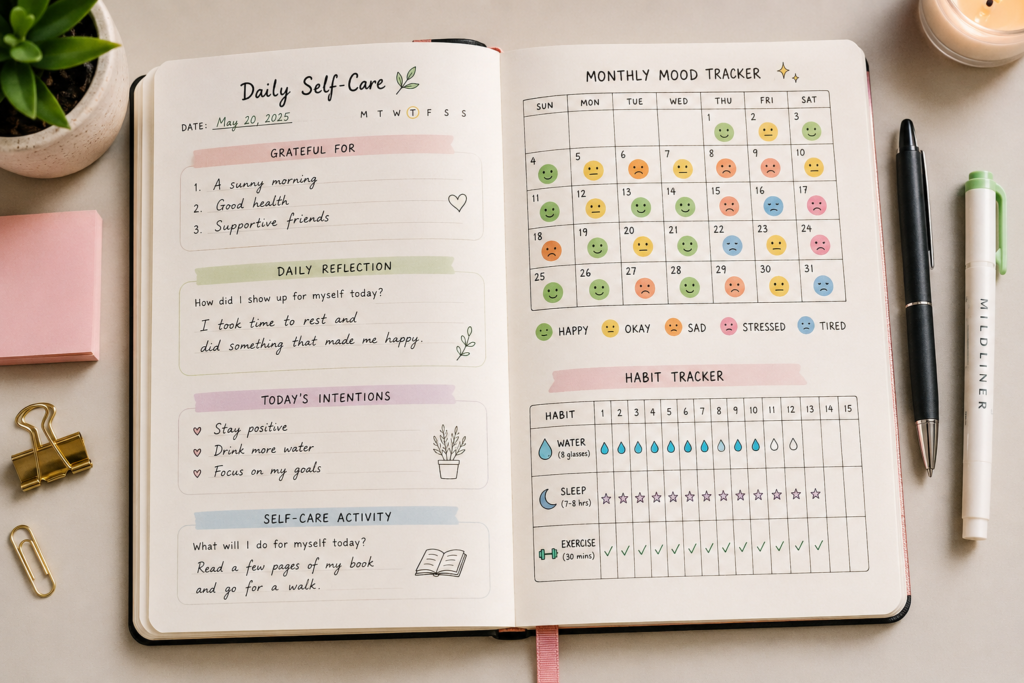
Self-care journaling isn’t just about writing your feelings down — it’s about creating a space that’s entirely yours, where you can track your mood, celebrate small wins, and reconnect with what actually makes you feel good. Whether you’re brand new to journaling or looking to refresh your practice, here are self-care journal ideas that go beyond the usual prompt list — from trackers and layouts to reflective questions and creative touches.
What Is a Self-Care Journal?
A self-care journal is a personal space — physical or digital — where you check in with your emotional, mental, and physical wellbeing. Unlike a diary that simply records what happened in your day, a self-care journal is intentional: it’s built to help you notice patterns in your mood, track habits that support your wellbeing, and give yourself permission to slow down and reflect.
What Should Be in a Self-Care Journal?
A good self-care journal usually blends three things: structured trackers, reflective writing, and small creative touches that make the practice feel personal.
Daily Layouts & Trackers
- Mood Tracker — Use colors or simple symbols to log how you felt each day. Over a few weeks, patterns start to emerge that words alone might miss.
- Habit Tracker — Check off small, achievable goals like drinking water, moving your body, or taking medication.
- Self-Care Bingo — Make a 5×5 grid of easy wellness tasks (a short walk, a phone-free hour, a favorite song) and cross one off when you complete it.
- Dopamine Menu — A list of quick, medium, and long activities that genuinely boost your mood without reaching for your phone. Think of it as a personal “menu” you can pick from depending on how much time or energy you have.
Reflective Check-In Ideas
- Body and Mind Check-In — Ask: “How does my body feel right now, and what do I need most?”
- The Joy List — Write down ten small things that made you smile recently.
- Wins and Release — Note one small win from today, and one heavy thought you’re ready to let go of.
- Inner Child Check — What did you love doing as a kid, and how can you bring a bit of that into your life now?
Creative Additions
- Quote and Mantra Pocket — Tape a small envelope inside your journal’s cover to hold notes, quotes, or reminders that lift you up.
- Photo or Collage Page — Add a picture of yourself or cutouts that match your current mood or season of life.
- Letter to Yourself — Write a kind, forgiving note to your past or future self — no editing, no judgment.
Self-Care Journal Prompts by Category
Prompts for Self-Awareness
- What do I need most right now — physically, emotionally, or mentally?
- What is one belief about myself that I’m ready to challenge?
- When do I feel most like myself?
Prompts for Self-Love & Healing
- What is something I’m struggling with, and how can I show myself compassion instead of criticism?
- What would I say to a friend going through what I’m going through right now?
- What’s one thing I can forgive myself for today?
Prompts for Stress & Anxiety Relief
- What’s currently weighing on my mind, and what’s actually within my control?
- What does my body feel like when I’m stressed, and what helps it settle?
- What’s one small thing I can do in the next hour to feel calmer?
Prompts for Gratitude & Positivity
- What are three things, big or small, that I’m grateful for today?
- What’s a recent moment that made me genuinely happy?
- What’s something about myself that I’m proud of this week?
How to Create a Wellness Journal (Step-by-Step)
- Pick a format that feels natural — a notebook, an app, or even voice notes. Comfort matters more than looking “aesthetic.”
- Choose 2-3 elements to start with — don’t try to fit every tracker and prompt in from day one. Start with a mood tracker and one reflective prompt.
- Set a low-pressure routine — even 5-10 minutes, 2-3 times a week, is enough to build the habit.
- Keep it private and honest — this isn’t for anyone else to read.
- Revisit old entries occasionally — it helps you notice growth you might not see day to day.
What Is the 3-3-3 Journaling Method?
The 3-3-3 method is a simple journaling structure: write down 3 things you’re grateful for, 3 things you’re currently feeling, and 3 things you want to focus on or achieve. It’s popular because it’s quick, structured, and covers gratitude, emotional awareness, and intention-setting in one short session — making it ideal for people who find blank-page journaling overwhelming.
5 Self-Care Activities to Pair With Journaling
- A short walk outside before or after writing
- A few minutes of deep breathing or stretching
- Making a warm drink and journaling slowly with it
- Listening to a calming playlist while you write
- Lighting a candle to signal “this time is just for me”
What Type of Journaling Is Best for Mental Health?
Research generally points to expressive writing and gratitude journaling as two of the most effective styles for mental health, since they help process emotions and shift focus toward the positive without requiring perfect structure. That said, the “best” style is the one you’ll actually stick with — a mood tracker paired with short reflective prompts is often more sustainable than long-form daily entries.
FAQs
What journal do therapists recommend?
Many therapists don’t recommend a specific brand — they recommend a format that removes friction, such as guided journals with prompts already built in, or a simple blank notebook paired with a consistent routine like the 3-3-3 method.
What are good self-care journal ideas for mental health?
Mood tracking, gratitude lists, and short “body and mind check-in” prompts are especially useful, since they build self-awareness without requiring long writing sessions on harder days.
What are some journal prompts for self growth and healing?
Prompts that ask what you’re ready to release, what you’re proud of, and what small step you can take today tend to support both growth and healing without feeling overwhelming.
What is the best self-care journal?
The best one is whichever format you’ll actually use consistently — whether that’s a plain notebook, a guided prompt journal, or a digital app with trackers built in.
Pimchanok Srisuk
Pimchanok Srisuk is the Journaling Editor at Holistic Wellbeing Living. She writes about journaling prompts, reflective writing, emotional clarity, and mindful routines. With seven years of experience creating personal-growth content, Pimchanok helps readers use simple writing practices to understand their thoughts and make calmer everyday decisions.