Jump to:
ToggleStuff to Write in Your Diary: A Complete List of Ideas for Every Kind of Entry
What Can You Write About in a Diary?
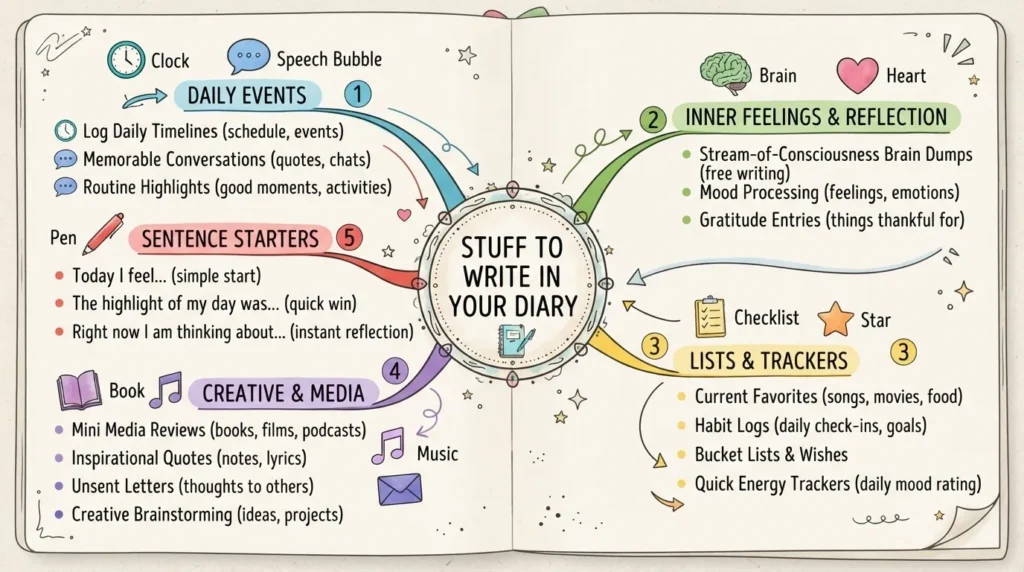
In a diary, you can write about almost anything depending on your goals and mood. The main categories to cover include:
Daily Events & Memories: Log your daily routine, conversations, highlights, and personal milestones.
Inner Thoughts & Mental Health: Use expressive writing for stress relief, emotional processing, and brain dumps.
Lists & Quick Trackers: Record current favorites, habit logs, bucket lists, and simple bullet points.
Creative Ideas & Media Reviews: Save quotes, review books and movies, draft unsent letters, or note new ideas.
Daily Events & Everyday Moments
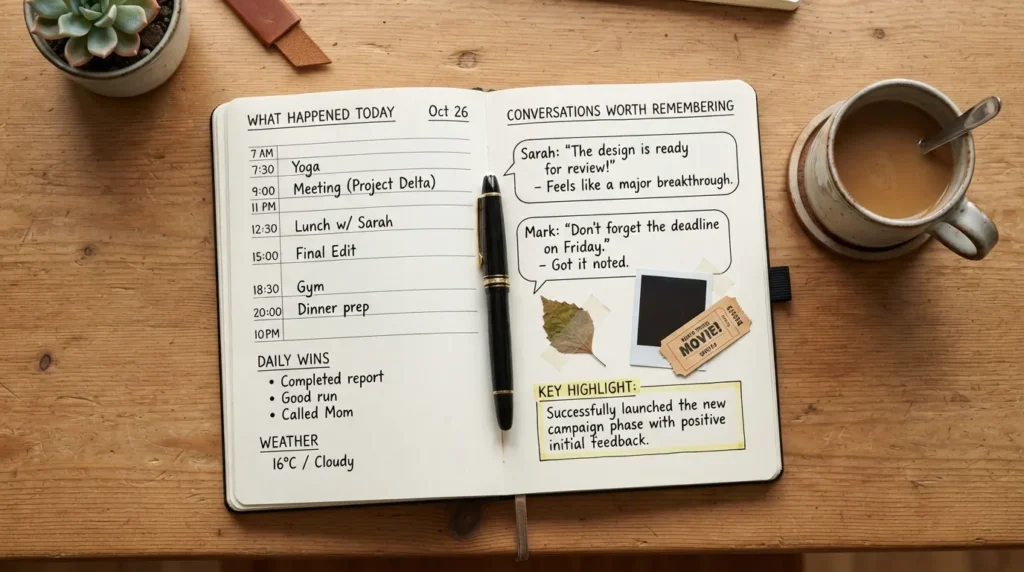
A diary doesn't always need high drama or deep emotional breakthroughs. Logging your everyday experiences creates a rich, personal time-capsule of your life that becomes invaluable to re-read years down the line.
Use these quick sentence-starter prompts to capture daily highlights, routine details, and small wins without feeling overwhelmed by a blank page:
- "Today I spent most of my time..."
- "The most surprising thing that happened to me today was..."
- "The best part of my day was..."
- "One small challenge I navigated today was..."
- "Right now, the weather and overall mood outside feels like..."
- "A simple detail from my daily routine I want to remember is..."
Spoken words fade quickly from memory, but documenting meaningful dialogues, funny comments, or insightful advice keeps those moments alive. You can capture conversations by writing down direct quotes, describing the context and mood, or adding screenshots and small mementos directly into your journal pages.
For creative techniques on how to layout and document dialogues in your diary, check out this guide:
Feelings & Emotional Check-Ins
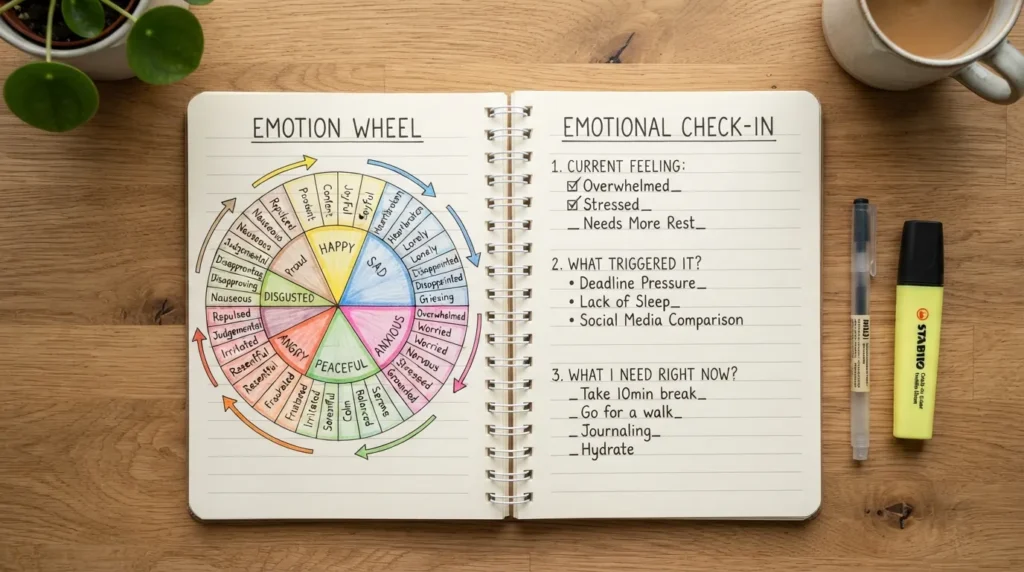
A diary is one of the safest places to process your emotions without judgment. Whether you are navigating a stressful day or trying to understand a sudden change in mood, these prompts help you pause, reflect, and gain clarity on what’s happening inside.
How Am I Feeling Right Now?
When your mind feels crowded or overwhelming, naming your exact emotional state brings instant relief. Use these prompts to check in with yourself in the present moment:
“If my current emotion had a color or weather forecast, it would be…”
“Where am I holding tension in my body right now, and what is it trying to tell me?”
“Right now, I feel… and that is okay because…”
“What is one physical sensation or thought I am experiencing at this very second?”
“If I could describe my mind in three words right now, they would be…”
Working Through a Problem or Worry
Instead of letting worries loop endlessly in your head, putting them on paper helps break them down into manageable pieces. Try this step-by-step reflection approach:
Identify the Core Worry: “What is the exact situation causing me stress right now?”
Separate Control from Reality: “What parts of this problem are within my control, and what parts are completely out of my hands?”
Best & Worst Case Scenario: “What is the absolute worst thing that could happen, and what is the most realistic positive outcome?”
Actionable Next Step: “What is one tiny, practical step I can take today to ease this situation?”
Self-Compassion Check: “What gentle advice would I give to a close friend facing this exact same problem?”
Mood Tracker Prompt
If you don’t have time for a long entry, a quick daily mood log helps you identify patterns over time and track your emotional growth.
Today’s Core Entry: “Today I’m feeling [insert emotion] because [insert cause or trigger].”
Energy Level: “My mental and physical energy level today is a [1–10] because…”
Shift Indicator: “One thing that shifted my mood for the better today was…”
Need Assessment: “To support my mood for the rest of the day, I need to give myself…”
Gratitude Entries
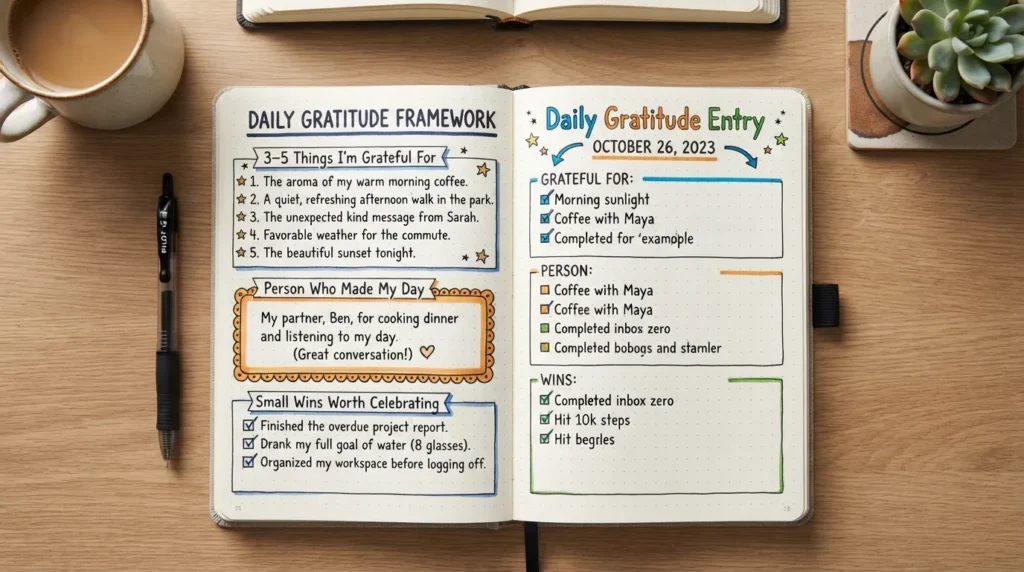
Gratitude journaling is one of the most effective methods to shift your focus from daily stressors to positive experiences. Consistently writing down moments of appreciation helps rewire your brain to recognize progress, comfort, and joy in your everyday life.
3–5 Things I’m Grateful For Today
When writing a gratitude list, focus on specific details rather than general statements. Instead of simply writing “I am grateful for food,” describe the taste of your morning coffee or a quiet lunch break.
Use these prompts to pinpoint gratitude in your daily routine:
“One small comfort I enjoyed today was…”
“A simple sensory experience (a sound, sight, or scent) that brought me peace today was…”
“Something in my surrounding environment that made my life easier today is…”
“A challenge I avoided or successfully navigated today was…”
A Person Who Made My Day Better
Reflecting on the individuals who positively impact your life deepens social connections and emotional awareness. This entry can feature anyone—a friend, family member, coworker, or even a helpful stranger.
Use these prompts to document meaningful human connections:
“Today, [Name] helped me by…”
“A thoughtful gesture or kind comment I received today was…”
“A quality I truly admire about [Name] and how they showed it today is…”
“Someone whose presence made me feel comfortable or supported today was…”
A Small Win Worth Celebrating
Acknowledging micro-wins builds consistent momentum and self-confidence. You do not need a major milestone to write a celebratory entry; small actions matter just as much.
Use these sentence starters to track your daily progress:
“A task I kept putting off that I finally completed today was…”
“A healthy choice or positive boundary I honored today was…”
“One area where I showed improvement compared to last month was…”
“A moment where I handled a situation better than I used to was…”
Goals, Dreams & Future Plans
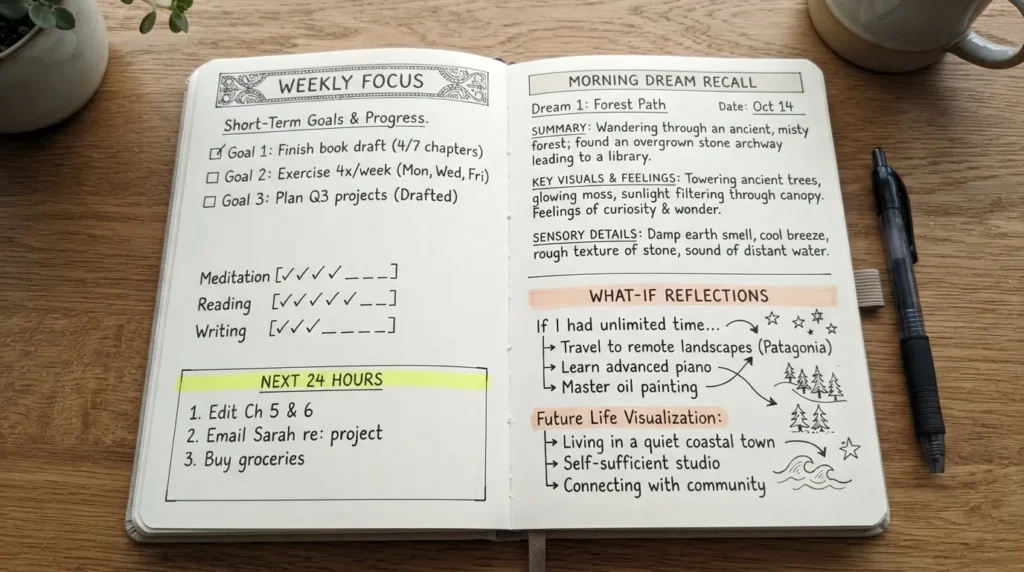
Logging your night dreams immediately after waking up helps preserve vivid details that fade within minutes. Sleep logs offer creative inspiration and insights into your subconscious thoughts.
Structure your sleep dream entries with these steps:
- The Immediate Summary: Write down the core theme or main event as soon as you open your eyes.
- Key Visuals & Emotions: Record prominent colors, locations, people, and how you felt during the dream (e.g., curious, rushed, peaceful).
- Sensory Details: Note any vivid sounds, weather, or unexpected plot twists you remember.
Creative visualization allows you to explore possibilities, test ideas, and brainstorm without limitations. Unconstrained writing exercise entries help expand your creativity and reduce mental fatigue.
Prompts to spark your imagination:
- "If I had an entire free day with zero obligations and unlimited resources, I would..."
- "If I could instantly master any one complex skill or subject overnight, it would be..."
- "What if I moved to a completely new city or environment tomorrow—what would my ideal daily life look like?"
- "If I could host a dinner with three people from history or fiction, who would they be and what would we discuss?"
Watch this guided walkthrough to see how creative visual layouts and imagination prompts can be incorporated into your journal pages:
Creative & Reflective Entries
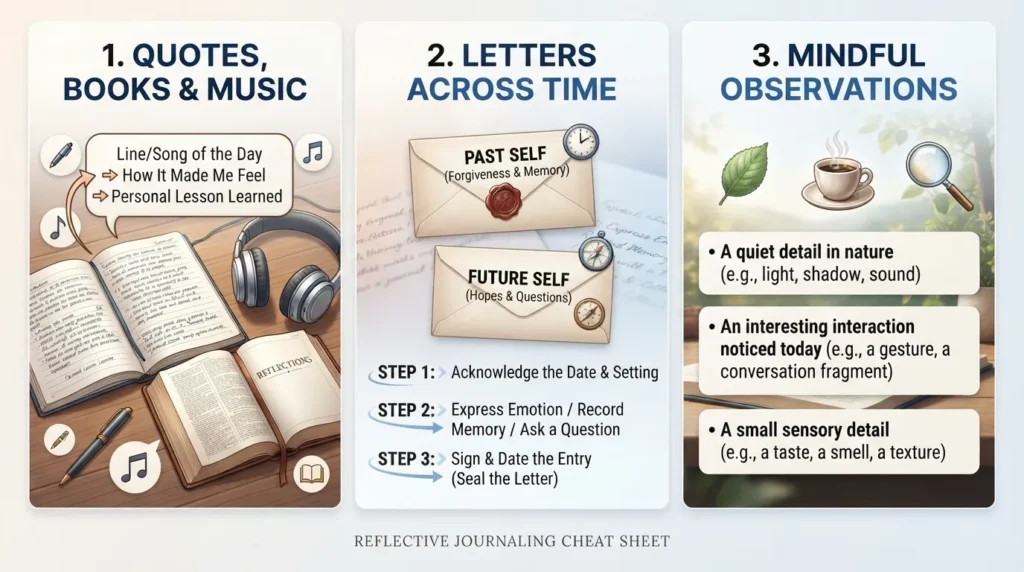
Taking a creative and reflective approach to your diary helps you look at your everyday world through a more observant lens. Instead of just logging what happened, these entries focus on how external moments—like art, memories, or subtle details—resonate with your inner thoughts.
A Quote, Book, or Song That Moved Me
Art, music, and literature often articulate feelings we struggle to express on our own. Documenting the media that impacts you creates a snapshot of your evolving taste, mindset, and emotions over time.
Use these prompts to explore media that resonates with you:
“A line from a song or book that stuck with me today was… because it reminded me of…”
“Listening to [Song Title] or reading [Book Title] made me feel…”
“If I had to pick one quote to represent my current stage of life, it would be…”
“What lesson or emotion did this piece of media inspire in me today?”
A Letter to My Future or Past Self
Writing a direct letter to yourself across different time periods is a powerful exercise in self-compassion, perspective, and reflection.
Key angles to explore in your letter entries:
To Your Past Self: Write a letter of forgiveness or encouragement regarding a tough decision or period you navigated. What do you know now that you wish you knew then?
To Your Future Self: Write to yourself 1 year, 5 years, or 10 years from now. Share your current hopes, your daily routine, and ask questions about who you hope to become.
To Yourself Next Month: Write a short, encouraging note highlighting what you hope to feel or achieve by this time next month.
Something I Noticed Today (People, Nature, Small Details)
Practice mindfulness by capturing the quiet, easily overlooked details around you. This exercise trains your brain to stay present and observe your environment closely.
Use these sentence starters to record everyday observations:
“A small, beautiful detail in nature I noticed today was…”
“I observed an interesting interaction between people today when…”
“A quiet sound or pleasing visual in my immediate surroundings was…”
“Something unexpected I saw on my daily commute or walk was…”
If You Don't Know What to Write No Wrong Way to Journal
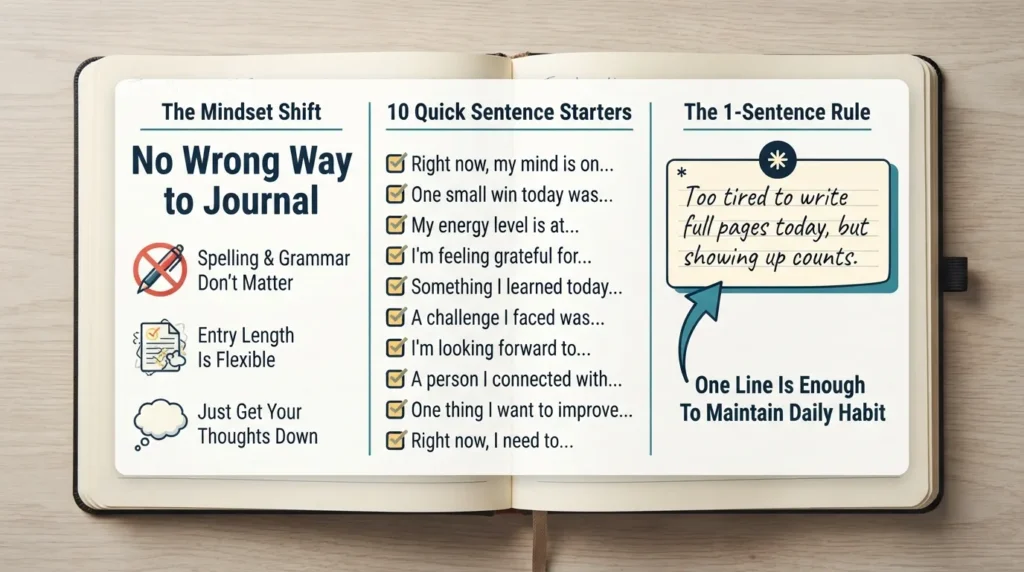
The biggest hurdle in keeping a diary is perfectionism. Remember that there is no test to pass, no grammar score, and no audience judging your entries. Your diary is a private workspace built purely for your thoughts.
When staring at a blank page gives you writer's block, use any of these plug-and-play sentence starters to get ink moving immediately:
- "Right now, the very first thought in my head is..."
- "One thing occupying a lot of my mental space today is..."
- "If I could describe my current mood in three words, they would be..."
- "Something I am currently looking forward to is..."
- "The most comfortable moment I experienced today was..."
- "If my energy level was a percentage right now, it would be... because..."
- "One small decision I made today that turned out well was..."
- "Something that annoyed or frustrated me recently was..."
- "Right now, my body feels..."
- "The main task I need to focus on next is..."
The One-Sentence Rule: You do not need to write full pages for a diary entry to count. On low-energy days or when you are pressed for time, give yourself full permission to write just a single sentence. Writing "I am too tired to write today, but I showed up anyway" keeps your daily momentum intact without turning journaling into a stressful chore.
Watch this guide on how to build a consistent journaling habit even on days when you feel low energy or experience severe writer's block:
Find quick, actionable answers to common questions about starting, maintaining, and customizing your personal diary:
- Daily Event Logs: Summarizing what happened during your day.
- Gratitude Lists: Writing down 3–5 specific things you appreciate.
- Brain Dumps: Unfiltered stream-of-consciousness writing to release stress.
- Goal Trackers: Noting short-term targets and personal progress.
- Creative Reviews: Documenting thoughts on songs, books, or movies that moved you.
Watch this insightful video discussing why journaling benefits everyone equally:
The true power of keeping a diary lies in consistency, not perfection. You do not need pristine handwriting, poetic sentences, or dramatic life events to write meaningful entries. Whether you record a single sentence during a busy evening or write multi-page brain dumps on stressful weekends, your diary remains a private, judgment-free space designed purely to serve your mental clarity, self-growth, and memories.
Pimchanok Srisuk
Pimchanok Srisuk is the Journaling Editor at Holistic Wellbeing Living. She writes about journaling prompts, reflective writing, emotional clarity, and mindful routines. With seven years of experience creating personal-growth content, Pimchanok helps readers use simple writing practices to understand their thoughts and make calmer everyday decisions.