Jump to:
ToggleThe Complete Journaling Supplies Guide: Everything You Need to Start and Upgrade Your Practice
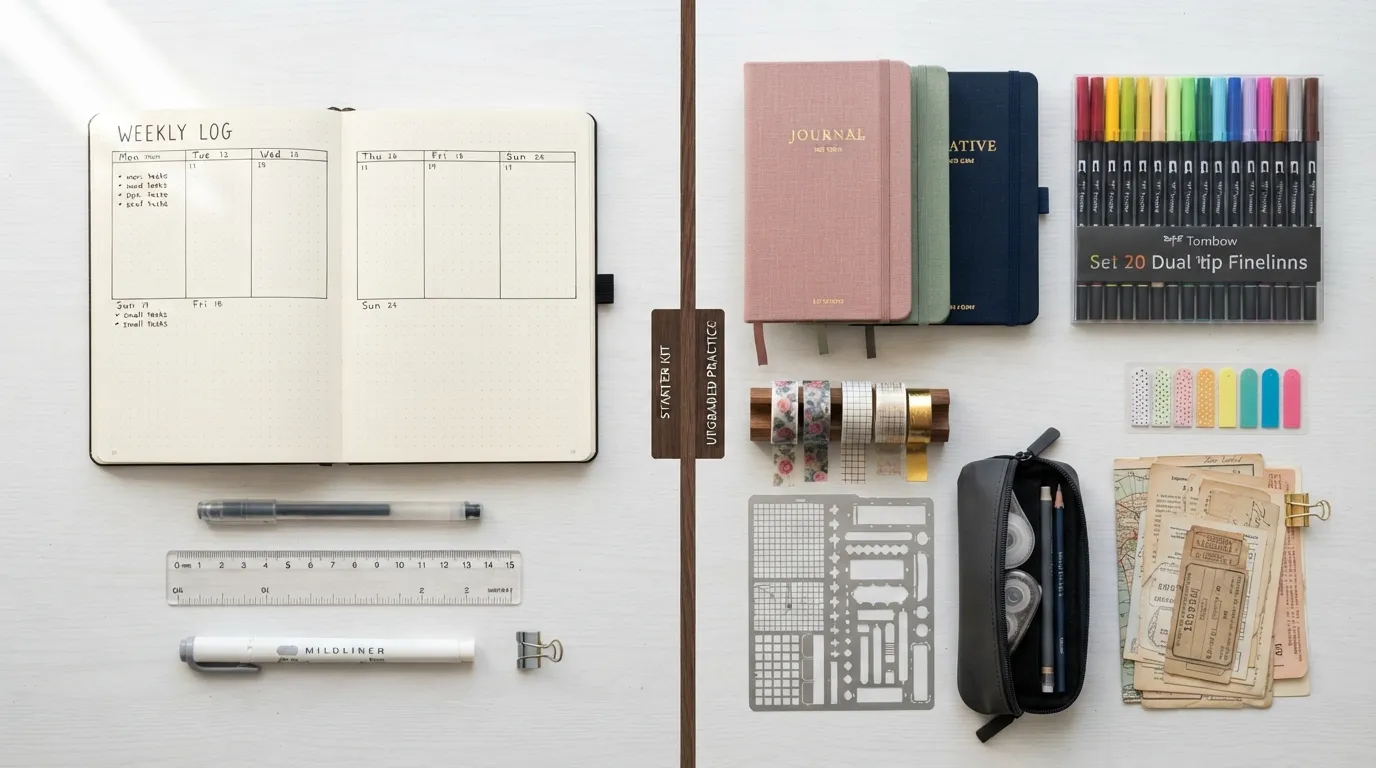
Searching for journaling supplies can quickly lead to decision paralysis. With thousands of notebook options, endless pen nib sizes, specialized tapes, and decorative accents flooding social media feeds, knowing what you actually need to build a consistent practice is tough.
This guide eliminates the guesswork. Whether you need a minimal starter kit, want to explore aesthetic embellishments, need cost-effective alternatives, or require portable travel and reading setups, you will find every tested recommendation, paper specification, and supply breakdown right here.
Quick Answer: The 5-Item Essential Journaling Supplies List
1. Dot Grid or Lined Journal: A durable notebook featuring 120+ GSM paper to prevent ink ghosting and bleed-through.
2. Fine-Liner Gel Pen: A quick-drying 0.5mm black gel pen or archival fineliner that will not smudge under highlighters.
3. Washi Tape: Neutral or patterned 15mm decorative paper tape to quickly secure photos, receipts, and section dividers.
4. Permanent Glue Tape/Stick: A mess-free archival adhesive runner for seamless ephemera tipping and collage layouts.
5. Compact Canvas Pouch: A structured zippered pencil case to keep daily tools organized and accessible.
What Are Journaling Supplies? Quick Definitions & Core Categories
Journaling supplies—often referred to interchangeably as journal stationery or journaling materials—encompass all the physical tools used to capture thoughts, organize schedules, track habits, and document memories. While individual setups range from starkly minimalist to elaborate art pieces, every supply fits into four fundamental categories:
Paper & Journals
The foundation of your practice, including notebooks, loose-leaf refills, traveler's inserts, and specialty papers.Writing Tools
Instruments used to apply ink, graphite, or paint, including gel pens, fountain pens, fine-liners, brush markers, and highlighters.Decorative & Aesthetic Add-ons
Embellishments designed to add color, texture, and visual interest, such as washi tape, stickers, stamps, ephemera, and glue runners.Organization & Storage
Protective gear and carrying solutions like zippered pouches, desk organizers, pen loops, and binder clips that keep tools structured and portable.Functional vs. Creative Journaling Supplies
Understanding how you intend to use your journal determines which supplies deserve space on your desk.
| Feature | Functional Journaling (Bullet Journaling, Planning) | Creative Journaling (Junk Journaling, Memory Keeping) |
|---|---|---|
| Primary Goal | Productivity, task tracking, rapid logging, habit building | Expressive layout design, memory preservation, artistic outlet |
| Core Supplies | Precision fine-liners, ruler, simple dot-grid notebook, muted highlighters | Thick mixed-media paper, vintage ephemera, glue tape, scrap fabric, decorative washi |
| Key Specs Needed | Fast-drying ink, clear grid rulings, lightweight portability | 160 GSM+ paper, archival adhesives, bleed-resistant inks |
Functional setups prioritize speed, legibility, and structure. Creative practices lean heavily on visual layering, textural materials, and artistic media. Knowing where your practice lands on this spectrum prevents buying decorative tools you won't use or minimalist tools that limit your creativity.
Journaling Supplies vs. Journal Accessories — What's the Difference?
While journaling supplies represent the functional core tools required to write, draw, or construct an entry, journal accessories act as the functional or protective "extras" layered on top of your primary setup.
- Core Supplies: The non-negotiable items required to make marks or bind pages together (e.g., notebooks, pens, adhesives).
- Accessories: Utility and style add-ons designed to enhance convenience or protect your tools (e.g., magnetic bookmarks, elastic closure bands, brass page clips, protective leather covers, stencils).
The Beginner's Journaling Supplies List Start Here
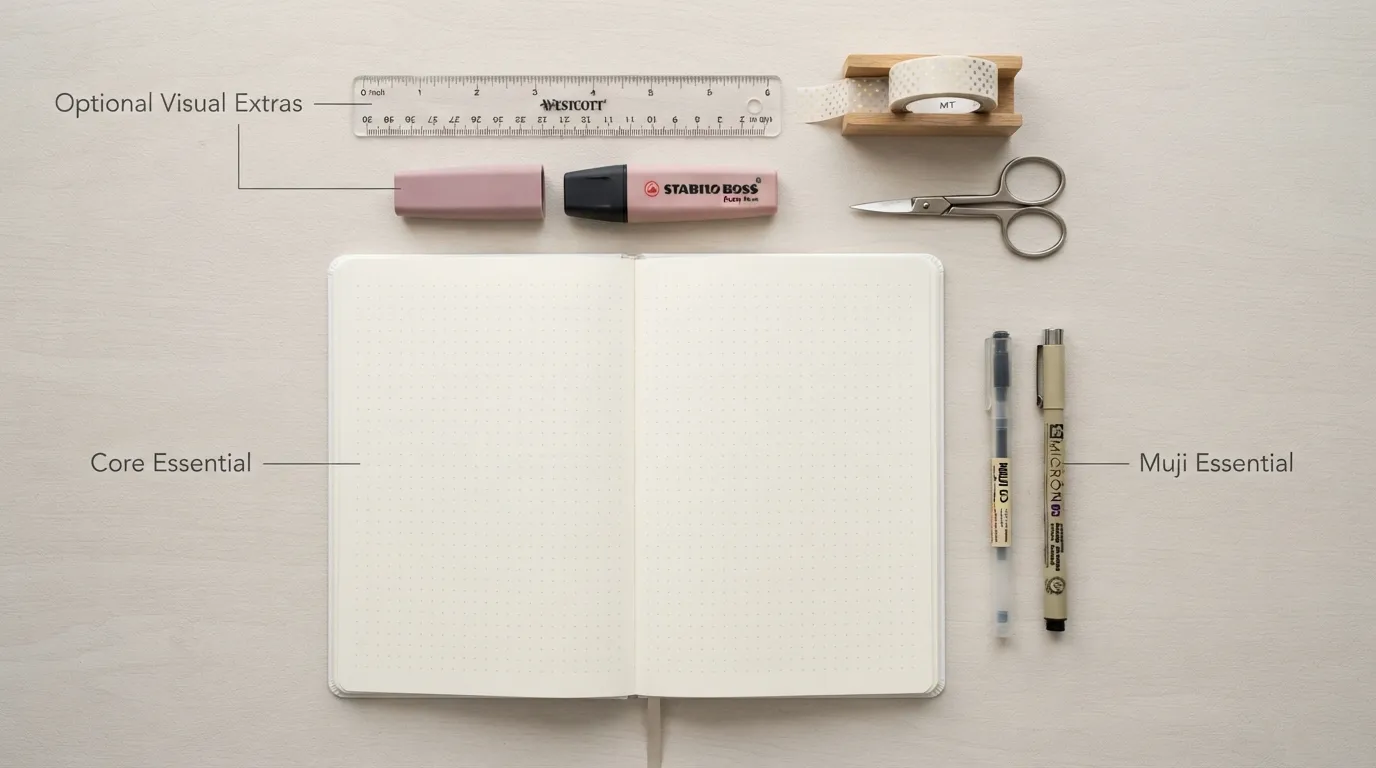
Starting a journaling practice does not require buying out an entire stationery store. While social media showcases elaborate layouts packed with dozens of tools, a complete starter kit only requires a few reliable, high-performing basics to get you up and running effectively.
Essential Starter Checklist
Dot Grid Notebook: Provides enough subtle structural guidance for clean layouts without visually cluttering your pages.
0.5mm Black Gel Pen: Delivers crisp, smooth ink flow that dries quickly to avoid smudging across daily entries.
Muted Highlighters (2–3 colors): Adds soft visual hierarchy and color coding for dates, headers, and task tracking without overpowering text.
15mm Neutral Washi Tape: Allows you to quickly tape in loose receipts, ticket stubs, and photos without damaging paper fibers.
Double-Sided Glue Tape Runner: Secures photos and flat paper ephemera completely flat without wrinkling thin notebook pages.
Stainless Steel Ruler (6-inch): Helps cleanly divide spreads, draw task boxes, and measure margins on portable pages.
Fine-Tip Waterproof Fineliner (0.3mm): Ensures key outlines and grid boxes stay permanent even if watercolor or highlighters are layered on top.
Compact Zipper Pencil Pouch: Keeps your core writing tools organized, protected, and ready for on-the-go journaling.
The Minimalist Truth
You only truly need three things to build a consistent habit: a journal, a single comfortable pen, and 10 minutes of uninterrupted time each day. Everything else is purely an enhancement.
Minimum Viable Kit ($10 – $15): A simple 100 GSM notebook combined with a single reliable gel pen. Perfect for verifying that your daily habit sticks before investing further.
Comfortable Starter Kit ($35 – $50): A premium 160 GSM dot-grid notebook, a set of archival fineliners, muted highlighters, and basic adhesives for an adaptable layout workflow.
If you are looking for an even simpler structural breakdown of baseline tools, read Page Flutter’s a step-by-step beginner supply checklist to see how minimal a starter setup can be.
Choosing Your First Journal
Selecting the right page layout determines how much freedom or structure your daily writing will have:
Dot Grid Layout: The most versatile option for modern journaling. The subtle 5mm matrix guides straight lines, custom tables, and habit trackers without interfering with freehand sketches or personal reflections.
Lined (Ruled) Layout: Ideal for traditional longform journaling, stream-of-consciousness writing, and brain dumps where straight text lines are the main priority.
Blank Layout: Offers maximum creative freedom for sketching, watercolor accents, and unstructured visual collages without any ruling lines.
Hybrid Layouts: Feature split spreads—such as dot grid on the left and lined on the right—making them popular for combining structured planning with daily prose.
When narrowing down your physical notebook specifications, explore different types of journals or compare specific kinds of journal bindings to find your ideal fit. If you prefer wide, spacious spreads for horizontal planning, check out an 8×8 dot grid journal or a square bullet journal for maximum layout flexibility. For those searching for physical and online retailer setups, see where can i buy a bullet journal to find tested stockists.
Choosing Your First Pen
Your choice of pen directly dictates writing comfort, drying time, and overall page cleanliness.
Gel Pens: Smooth, vibrant, and effortless to write with. Look for fast-drying gel inks to avoid smearing, especially if you are left-handed.
Fineliners: Plastic or felt-tipped precision pens delivering consistent line weights. Excellent for ruling lines, drawing tracker boxes, and detailed lettering.
Ballpoint Pens: Oil-based ink tools that rarely bleed through even thin paper, though they require more writing pressure and lack ink vibrancy.
Fountain Pens: Offer a premium writing experience with variable nib sizes and rich ink choices, but require bleed-resistant, fountain-pen-friendly paper.
Brush Pens: Flexible fiber or synthetic tips specifically designed for hand-lettering, decorative calligraphy, and bold section headers. Distinct from fine-tip writing pens, brush pens react to downward pressure to create thick downstrokes and thin upstrokes.
Whenever possible, prioritize archival ink—ink that is acid-free, waterproof, lightfast, and fade-resistant. Archival formulas ensure your entries, photos, and memory spreads will not yellow, degrade, or run over decades of storage. For deeper technical specifications, read JetPens’ detailed nib-size and ink comparisons to match pen mechanics to your specific paper type.
Pen Type Quick-Reference Table
What Will You Actually Write? Solving the Blank Page Problem
Staring at a blank page is the single biggest hurdle for beginner journalers. Having structured categories ready eliminates second-guessing and keeps momentum going:
Gratitude Entries: Note three specific, small moments from the past 24 hours that brought clarity or comfort.
Daily Rapid Logs: Bullet point immediate tasks, events, and quick observations as they happen throughout the day.
Brain Dumps: Unload overwhelming thoughts, lists, and mental chatter onto paper without worrying about spelling or layout structure.
If you hit a creative block or need inspiration for your daily entries, check out our master lists on stuff to write in a notebook, explore fresh things to write down on paper, or review guided ideas for what to write about in a notebook.
Aesthetic Journal Supplies For the Instagram/Pinterest-Style Setup
Washi Tape & Decorative Tape
Washi tape widths vary depending on the layout structure, with common sizes serving specific functional roles:
5mm (Slim Washi): Ideal for dividing daily grid sections, creating subtle page borders, and making custom habit tracker lines.
15mm (Standard Washi): The most versatile width for framing photos, securing paper ephemera, and highlighting header blocks.
30mm+ (Wide Washi): Best for creating full-page backgrounds, decorative landscape headers, and torn-edge accent strips.
Layering without bulk: To layer multiple washi tapes without adding excess weight that breaks a notebook’s lay-flat binding, stagger tape edges across different horizontal lines, use semi-transparent rice-paper tapes, and avoid stacking more than two layers directly on top of each other at the spine area.
Mildliners, Highlighters & Color Coding
Dual-tip mild highlighters (often referred to as Mildliners) are a staple in aesthetic journaling. Journalers prefer mildliners over standard neon highlighters because their water-based, soft pastel pigment produces zero bleed-through on quality paper while maintaining a muted tone that does not overpower handwritten text.
Bullet journal color-coding systems: Assign 3 to 5 soft palette shades to distinct productivity categories—such as soft pink for personal errands, sage green for work tasks, and muted blue for habit or mood tracking—to keep layouts readable at a glance.
Aesthetic Ephemera & Junk Journal Add-ons
Aesthetic ephemera adds tactile texture and vintage charm to journal pages using items such as vintage stamps, ticket stubs, lace strips, dried flowers, and ledger paper scraps.
For pre-sorted themed sets, check out curated junk journal ephemera packs from Root & Co, or explore vintage-style stationery accessory sets on JournalSay to easily source layered paper accents.
Stickers, Stamps & Embellishments
Adding visual accents requires choosing the right material for your notebook setup:
Sticker Sheet Types:
Matte Paper: Blend seamlessly with page textures and can be written on with gel pens.
Glossy Vinyl: Offer vibrant color payoff and durable water resistance, though they add slight page thickness.
Transparent PET/Plastic: Provide a smooth, “printed directly on the page” look without background white space.
Rubber Stamp Basics: Use quick-drying pigment ink pads to avoid smudging, and press lightly from the center outward to get clean impression lines without ink pooling.
Sticker Storage Tip: Keep loose sticker sheets sorted by color or theme in clear pocket inserts to prevent edge bending—see our dedicated storage section below for full organization setups.
Journal Making & DIY Supplies For Crafters and Custom Journal Fans
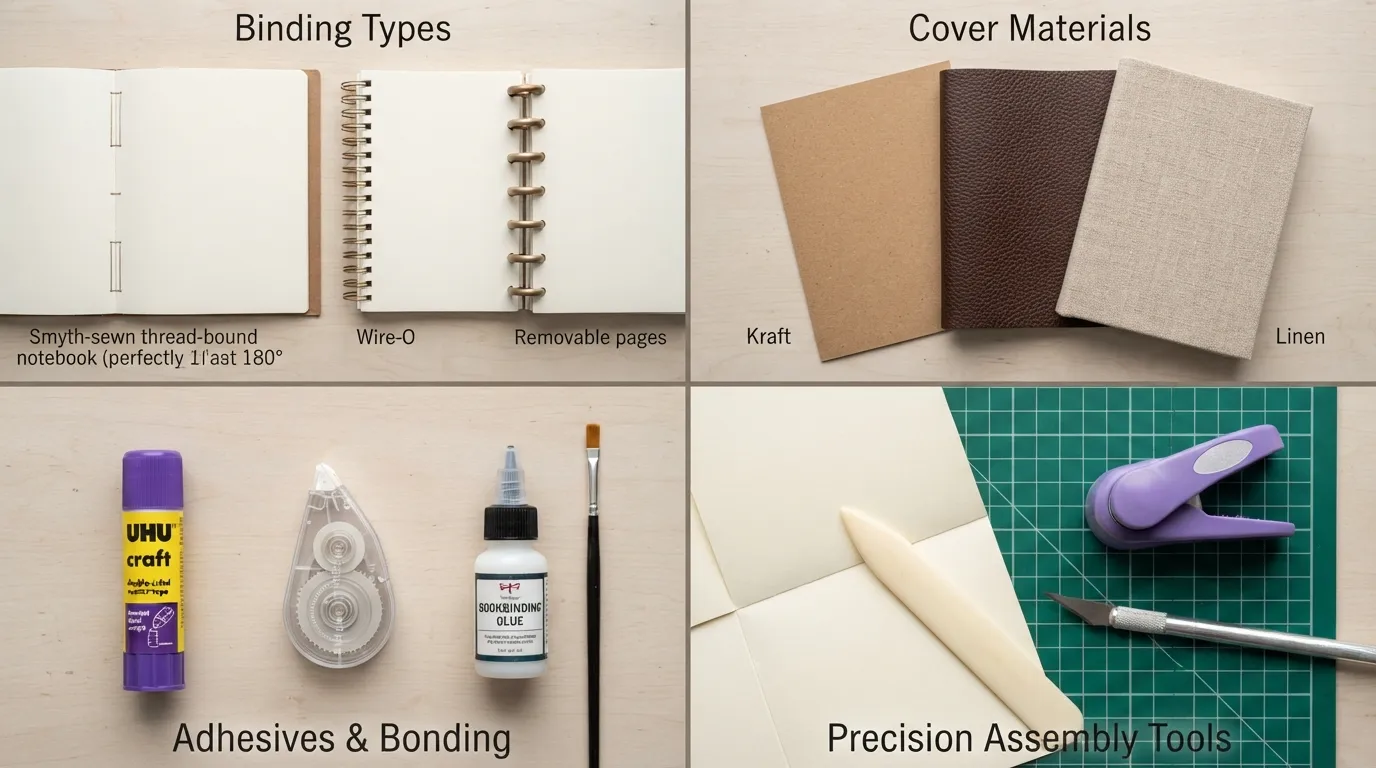
Binding & Cover Materials
The binding method dictates how comfortably a journal opens and stays open while writing:
Smyth-Sewn (Thread-Bound): Folded paper signatures are stitched directly together along the spine, creating a true lay-flat binding that lies completely flat at 180° without requiring hand pressure.
Spiral / Wire-O Bound: Allows pages to fold back 360° for compact writing spaces, though the center coil can interfere with hand placement near margins.
Disc-Bound: Uses circular plastic or metal discs to hold punched pages, allowing individual sheets to be removed, rearranged, or reinserted continuously.
Cover Material Options:
Kraft Cardstock: Lightweight, eco-friendly, and ideal for custom stamping, drawing, or mixed-media personalization.
Leather-Look PU (Polyurethane): Offers a premium, water-resistant, and durable finish without using animal products.
Fabric / Linen Wraps: Provides a soft, tactile, bookbinding aesthetic that resists cracking along the spine over long-term use.
Adhesives & Assembly Tools
Using the right adhesive prevents paper warping, bubbling, and spine separation:
Glue Sticks: Best for light paper collages and temporary positioning; dries fast with low moisture, but can weaken over time.
Double-Sided Tape (Tape Runners): Ideal for securing photos, thick ephemera, and cover liners instantly with zero paper wrinkle or drying time.
Mod Podge / PVA Glue: Essential for heavy-duty bookbinding, sealing fabric covers, and decoupage; requires a brush application and full drying time.
Next-Level DIY Tools:
Bone Folder: Smoothes out paper folds, creates sharp spine creases, and presses adhesives flat without marking paper fibers.
Corner Rounder: Trims sharp $90^\circ$ paper edges into smooth $4\text{mm}$ or $7\text{mm}$ rounded corners to prevent page curling.
Self-Healing Cutting Mat: Protects work surfaces while providing accurate grid measurements for rotary cutters and craft knives.
DIY-Assembled vs. Professionally Manufactured Journals — Which Should You Choose?
Deciding whether to hand-craft a journal from scratch or source a pre-made print run depends on your volume goals, budget, and intended end use:
DIY vs. Manufactured Decision Matrix
When DIY Wins: Best for unique one-off art projects, personal junk journals, memory albums, and custom gifting where hands-on texture matters more than uniformity.
When Manufactured Wins: Best for launching a stationery store, scaling inventory for corporate giveaways, reselling on retail platforms, or delivering a factory-grade polished finish.
If you are looking to scale your designs commercially, explore top custom journal manufacturers and specialized journal printing services to handle production for you. Crafting a brand from home? Learn how to make custom notebook layouts or read our step-by-step framework to create your own journal to sell across Etsy and digital storefronts.
Journal Paper Technicalities — GSM, Tooth, Bleeding & Ghosting Explained
Journaling Supplies by Journal Type
Bullet Journal Supplies
Bullet journaling relies on structured layouts and precise grid alignment to organize schedules, tasks, and habit trackers:
Grid Size: $5\text{mm}$ dot grid paper is the industry standard, providing subtle visual guidelines for clean box creation without cluttering the page.
Ruler Options: Compact $6\text{–}8\text{-inch}$ clear acrylic or flexible stainless steel rulers allow you to draw rapid margin lines and tracker columns without shifting across the spine.
Layout Stencils: Stainless steel or plastic habit-tracker stencils accelerate the creation of monthly calendars, checklist boxes, and tracker icons.
If you prefer more lateral room for wide horizontal spreads and dual-page habit grids, consider starting with a square bullet journal.
Book/Reading Journal Supplies
Reading journals require specialized tools designed to annotate novels, track page milestones, and build aesthetic book reviews:
Page Tabs & Sticky Flags: Semi-transparent PET index tabs let you mark favorite quotes, character arcs, or plot twists directly on book pages without leaving adhesive residue.
Rating & Tracker Stamps: Custom self-inking rubber stamps (featuring 5-star ratings, page counts, and start/finish dates) create uniform summary headers across your review pages.
Bookish Stickers & Ephemera: Character stickers, library card prints, and mini book cover printouts help visually ground your written thoughts.
For inspiration on layout design and creative tracking setups, check out our guides on custom book journal pages, structural ideas for a reading bullet journal, step-by-step instructions for a diy reading journal, and unique book review journal ideas.
Travel Journal Supplies
On-the-go memory keeping demands lightweight, durable equipment that handles field conditions and rapid ephemera collection:
Compact / Lay-Flat Journals: Mid-sized B6 or A6 flexi-cover notebooks fit easily into daypacks while staying open on small cafe tables or transit trays.
Permanent Glue Sticks: A low-moisture glue stick or mini tape runner is essential for mounting ticket stubs, boarding passes, receipts, and polaroid photos directly onto pages before they get lost.
Waterproof Pen Case: A compact silicone or waxed canvas pouch keeps your daily writing tools protected against weather, spills, and bag compression.
To turn collected tickets, stamps, and travel receipts into layered artistic spreads, revisit our section on Aesthetic Ephemera & Junk Journal Add-ons above.
Types of Journals Overview
Selecting the right notebook structure depends entirely on your primary goal—whether that is daily productivity, creative expression, or long-term memory keeping. Explore our comprehensive master guides on types of journals to keep and the distinct kinds of journal available to match your specific writing routine.
Budget vs. Premium Journaling Kits
Journaling Supplies Buying Guide
1. Cheap Journaling Supplies That Still Perform Well
Building a functional, enjoyable journaling routine does not require spending top dollar on luxury stationery. High-performing budget alternatives exist for almost every staple item—allowing you to save significantly while preserving writing comfort.
| Premium Item | Budget Equivalent | What You Sacrifice |
|---|---|---|
| Archival Fineliners ($25/set) | Water-based Felt Tip Markers ($6/set) | Lower lightfastness; potential for minor feathering on thin paper |
| 160 GSM Lay-Flat Notebook ($28+) | 100 GSM Standard Thread-Bound Journal ($8–$12) | Thinner paper (slight ghosting with heavy inks); simpler cover materials |
| Washi Tape Packs ($15/set) | Paper Masking Tape Rolls ($4/set) | Less variety in patterns/foils; slightly stronger adhesive that may lift delicate paper |
| Solid Brass Ruler ($18) | Clear Acrylic / Flexible Plastic Ruler ($2) | Less tactile weight and long-term durability |
2. Premium & Splurge-Worthy Journaling Essentials
When visual appeal, paper feel, and archival longevity are top priorities, investing in high-end tools elevates the overall writing experience.
3. Wholesale & Bulk Journaling Supplies
Sourcing stationery in bulk is essential for specific high-volume scenarios:
- Teachers & Classrooms: Sourcing budget-friendly grid notebooks and bulk marker sets for student habit-tracking.
- Small Business & Corporate Events: Purchasing matching notebook sets for team workshops.
Notebooks, Sets & Guided Options Beyond the Bullet Journal
Notebook Sets for Everyday Use
While single-subject notebooks work well for focused projects, multi-notebook setups provide a versatile structure for managing distinct areas of life simultaneously. Using color-coded or size-varied sets allows you to keep personal reflections, daily work tasks, and project brain dumps organized separately without cluttering a single book.
Multi-Volume Bundles: Ideal for breaking down quarterly goals, managing multiple clients, or creating subject-specific study logs.
Format Variations: Choose a compact b5 grid notebook set for spacious desktop planning, or stock up on a matching notebook set to maintain a cohesive aesthetic on your bookshelf.
Professional & Functional Builds: For executive meetings and client notes, a structured business journal notebook provides a refined look, while true lay flat journals ensure seamless edge-to-edge writing comfort across both pages.
Guided & Prompted Journals
If facing a blank page creates writer’s block, structured journals offer pre-printed frameworks, daily questions, and targeted exercises to jumpstart your writing habit:
Structured Daily Reflection: Utilizing a guided daily journal helps establish a consistent morning or evening routine with targeted check-ins for gratitude, mood tracking, and priority setting.
Creative & Engaging Outlets: Interactive workbooks and fun guided journals use playful prompts, habit trackers, and visual exercises to make self-reflection feel effortless rather than like a chore.
Curated Prompt Systems: To find the ideal match for your personal goals—whether focusing on mindfulness, goal setting, or deep introspection—explore our top-rated recommendations for the best daily journals with prompts.
Where to Buy Journaling Supplies Online & In-Person
Finding the right place to purchase your stationery depends on whether you prioritize immediate in-store pickup, unique handmade aesthetics, or direct-from-manufacturer quality.
Purchasing Channels Comparison
Big-Box Craft Stores (e.g., Michaels, Joann): Best for instant local pickup and basic budget supplies like tape runners, acrylic rulers, and starter sticker packs. Selection tends to focus on mass-market brands with standard paper quality.
Specialty Japanese & Fine Stationery Shops (e.g., Kinokuniya, Yoseka Stationery): Ideal for curated, high-performance goods like fountain-pen-friendly notebooks, precise fineliners, imported washis, and archival inks.
Etsy & Independent Online Sellers: The premier choice for niche, hand-crafted items including aesthetic ephemera packs, custom rubber stamps, artisan stickers, and handmade junk journal kits.
Direct From Journal Makers & Brands: Best for getting the lowest prices on premium, branded notebooks, accessing exclusive colorways, and ensuring full quality guarantees. To explore curated collections directly, visit our store to shop for journals.
A Note on Finding Stores Near You
Because local retail inventory and store locations change frequently, avoid relying on static blog lists for “near me” shopping. Instead, use real-time inventory apps—such as the official Michaels, Target, or Barnes & Noble mobile apps—or Google Maps with the “In Stock” filter enabled to check immediate local availability for specific pens, highlighters, and notebooks before heading out.
How to Organize & Store Your Journaling Supplies
Acquiring a collection of stickers, washis, and specialized pens can quickly lead to desktop clutter if you do not have a dedicated storage system. Implementing the right storage solutions keeps your creative workspace clean while making every tool immediately accessible during journaling sessions:
Pen Cases & Pouch Systems: Multi-compartment pencil cases and standing canvas pouches keep daily gel pens, fineliners, and highlighters separated by point size or color family, preventing nib damage and dried ink.
Tape Organizers & Acrylic Dispensers: Clear acrylic tape holders or wooden spools keep decorative tapes visible and tangle-free. This directly solves the rolling clutter and lost end-edges common with expanding sticker and washi tape collections.
Ephemera Folders & Accordion Organizers: Clear pocket sleeves, binder inserts, and expanding paper portfolios keep delicate vintage stamps, ticket stubs, and paper scraps flat, organized by color or theme, and safe from torn edges.
Drawer Dividers & Modular Trays: Shallow desk drawer inserts allow you to categorize small embellishments, custom rubber stamps, and glue runners into dedicated compartments so your desktop surface stays completely clear.
Workspace Setup Strategies
Small-Space Setup (Portable / Rolling Cart): If you journal at a dining table or couch, use a 3-tier rolling utility cart or a caddy with grab-and-go pouches. This allows you to roll your entire supply kit out when writing and tuck it away cleanly into a closet when finished.
Dedicated Craft-Desk Setup: If you have a permanent desk space, utilize vertical space with wall-mounted pegboards for tape rolls and scissors, paired with clear desktop acrylic drawers for instant visual access to your sticker sheets, brush pens, and spare notebooks.
Pimchanok Srisuk
Pimchanok Srisuk is the Journaling Editor at Holistic Wellbeing Living. She writes about journaling prompts, reflective writing, emotional clarity, and mindful routines. With seven years of experience creating personal-growth content, Pimchanok helps readers use simple writing practices to understand their thoughts and make calmer everyday decisions.