Jump to:
ToggleWhat to Write in a Journal Before Bed 25 Prompts + the Method That Actually Works
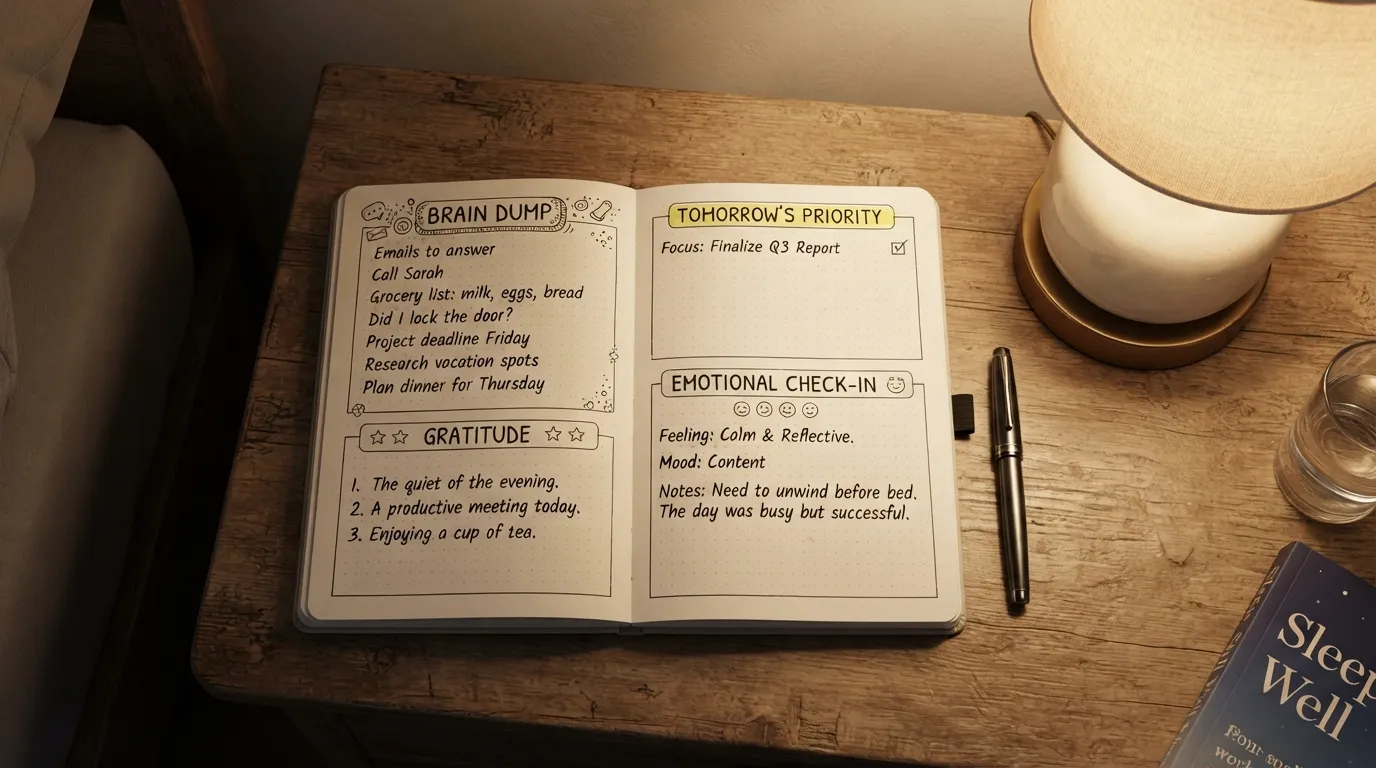
Staring at the ceiling while your brain refuses to hit the “off” switch is one of the most frustrating ways to end a day. If you’re looking to turn that mental static into peaceful rest, the answer isn’t just in a journal—it’s in knowing exactly how to use the page to clear your mind.
Why Journaling Before Bed Helps You Fall Asleep
The primary reason this works is a concept called cognitive offloading. Your brain is designed to solve problems, and it will keep looping through unfinished thoughts, tasks, and worries because it’s terrified you’ll forget them. When you write these down, you are essentially telling your brain that the information is safely stored elsewhere, allowing it to stop “holding” the data. Research has shown that jotting down a to-do list before bed can significantly reduce the time it takes to drift off by externalizing your pending tasks. Whether you are managing high-stress anxiety or simply trying to build a more relaxing wind-down habit, this process works for everyone. Unlike morning journaling, which is often about setting intentions or fueling productivity, nighttime writing is strictly about closing your mental tabs for the day.
What to Write in Your Journal Before Bed
Brain Dump / Worry List
If your mind tends to spin the second your head hits the pillow, start here. A brain dump is a raw, unfiltered download of whatever is cluttering your head—errands, half-baked ideas, or low-grade anxieties. Getting these thoughts out of your head and onto paper reassures your brain that they won’t be lost, giving it permission to stop looping through them.
Gratitude (3 Things)
Writing down three specific things you are grateful for shifts your brain’s focus away from nighttime threat scanning and toward safety and comfort. They don’t need to be grand life events; appreciating a warm shower, a good cup of tea, or a kind text message primes your mind for calm, restorative rest.
Wins From Today
It is easy to end the day fixating on everything you didn’t get done. Listing two or three small wins—like finishing a tough task at work or simply sticking to your evening walk—reminds you of your daily progress and quietens the lingering stress of feeling unproductive.
Tomorrow’s To-Do / Top Priority
Instead of letting your schedule haunt your sleep, write down your tasks for tomorrow and highlight your single top priority. Identifying that one non-negotiable item brings structure to the morning ahead, preventing middle-of-the-night panic about what needs to happen first.
Emotional Check-In (Name 3–5 Feelings)
Slowing down to pinpoint exactly how you feel acts as a powerful nervous system regulator. Instead of carrying a vague cloud of tension into bed, name three to five specific emotions—such as “satisfied,” “overwhelmed,” or “restless”—to help process and untangle your inner state.
A Peaceful Moment / Visualization
Spend a couple of minutes describing a moment from your day that brought you genuine peace, or visualize a quiet, comforting scene where you feel completely at ease. Engaging your sensory imagination—focusing on warmth, soft sounds, or steady breath—helps lower your heart rate and signals to your body that it is safe to sleep.
One Thing to Let Go Of
Choose one frustration, awkward interaction, or mistake from the day and write it down with the explicit intention of leaving it on the page. Physically handing that weight over to your journal stops you from endlessly replaying events you can no longer change tonight.
One Word for the Day
Cap off your entry by picking a single word that sums up your day’s experience or tone. This simple exercise creates a satisfying sense of narrative closure, placing a clear, symbolic final period on the day so you can turn out the lights.
Journaling Methods in Practice
Want to see these techniques in action? Here is a quick walkthrough to get you started.
The 3-3-3 Journaling Method
When you are exhausted and the thought of a long-form entry feels like a chore, the 3-3-3 method is your best friend. It is a streamlined, high-impact structure designed to shift your mindset in just a few minutes. Here is the step-by-step:
3 Things you are grateful for: Start by identifying three specific things that brought you joy today.
3 People you appreciate: Note three people who made your day better or who you are thinking of with kindness.
3 Things you accomplished: List three tasks or wins you achieved, no matter how small.
This works exceptionally well as a bedtime ritual because it forces your brain to pivot from “threat mode”—where it’s analyzing everything that went wrong—to “reward mode.” By systematically scanning for positives, you naturally lower your cortisol levels and create a sense of psychological safety that makes drifting off much easier.
The 3-2-1 Method vs. the 3:2:1 Rule Before Bed
It is easy to mix these up because they share the exact same numbers and often pop up in the same sleep-hygiene searches, but they represent two entirely different strategies for winding down.
The 3-2-1 Journaling Method
This is a reflective writing technique designed to clear your head before sleep. You write down:
3 things you are grateful for from your day.
2 priorities or tasks you want to accomplish tomorrow.
1 heavy thought, frustration, or worry you are choosing to release.
The 3:2:1 Sleep Rule
This is a physiological guideline focused on your physical habits rather than pen and paper. It instructs you to structure your final hours before bed with these cutoffs:
3 hours before bed: Stop eating heavy meals or drinking alcohol to prevent disrupted digestion.
2 hours before bed: Stop working and close out professional tasks to let your mind disengage.
1 hour before bed: Turn off all screens and bright devices to allow your natural melatonin production to kick in.
The Takeaway: The 3-2-1 journal method handles your mental clutter, while the 3:2:1 rule prepares your physical body. Together, they form a complete bedtime routine.
What NOT to Write Before Bed
Your journal should be a sanctuary for rest, not a training ground for stress. It is crucial to avoid using your nightly writing session to re-litigate past arguments or mentally rehearse difficult conversations you expect to have tomorrow. When you write these things down in detail, you are essentially asking your brain to stay in “fight-or-flight” mode, which keeps your heart rate elevated and pushes sleep further away.
Similarly, avoid the trap of catastrophizing. If you find yourself writing down a laundry list of ways tomorrow could go wrong or how a minor mistake today will ruin your entire week, stop immediately. You are not solving problems; you are fueling your own anxiety. If a persistent worry about tomorrow creeps in, don’t dwell on it. Instead, take that thought and move it directly to your “Let It Go” prompt. Acknowledge it, write it down to satisfy your brain’s need to remember, and then consciously commit to putting that specific worry to rest until morning.
Journaling Before Bed for Anxiety
When you live with anxiety, your mind often feels like a crowded room where every thought is shouting for attention. To quiet that noise, you can adapt the brain-dump and worry list specifically for those racing thoughts. Instead of just listing tasks, write down the “what-ifs” that are causing your heart to race. Getting these fears out of your head and onto the page acts as a powerful, non-medication technique to calm your nervous system. By externalizing the source of your anxiety, you take away its power to haunt you while you try to rest.
To make this change stick, try keeping your journal and a pen on your nightstand instead of your phone. It’s a simple shift, but it helps you avoid the instant dopamine hit—and the blue light—of scrolling. Reaching for a pen when your thoughts start spinning is a much more grounding, peaceful way to reclaim your space and prepare your mind for the quiet you deserve.
A 3-Minute Bedtime Journal Template
If you are short on time, this minimalist template takes less than three minutes to complete and effectively clears your mental queue. Whether you prefer quick bullet points or a few flowing sentences, follow this simple structure:
Mood: Capture your current state of mind in just one or two words.
Gratitude: Note one small thing from today that you feel thankful for.
Tomorrow: Identify the single most important task you need to handle tomorrow.
Release: Name one frustration or worry that you are actively choosing to let go of before you sleep.
Example Journal Entry
Today I felt pretty wiped out from the afternoon meetings, but I am glad I finally finished that project draft. I am grateful for the quiet walk after work, a warm cup of peppermint tea, and my cat sleeping on my lap. Tomorrow, my main focus is sending out those client revision notes. I am letting go of the worry about the pending budget approval—it’s out of my hands until the morning.
FAQ
What is the 3-3-3 journaling method?
The 3-3-3 method is a fast, low-pressure grounding exercise. You set a timer for 3 minutes, list 3 things you are grateful for, and write down 3 specific sensory details from your day. It effectively shifts your mind out of circular worry and anchors you in the physical present.
What is the 3-2-1 method / 3:2:1 rule before bed?
While the standard sleep wellness rule involves stopping eating, working, and screen time at specific hourly intervals, a journaling-focused 3-2-1 wind-down involves writing down 3 wins or positive moments from the day, 2 things you are letting go of, and 1 clear intention or priority for tomorrow.
Is it a good idea to journal before bed?
Yes, journaling before bed is an excellent way to clear mental clutter and offload lingering tasks. Studies on cognitive offloading—such as research highlighted by the Sleep Foundation—show that writing down tomorrow's to-do list before sleep helps people fall asleep significantly faster by reducing pre-sleep worry.
What is journal dumping / how do I brain dump before bed?
A brain dump or journal dump is an unfiltered, continuous stream-of-consciousness writing session where you write down everything bouncing around in your head without editing or formatting. To do it before bed, grab a scratch pad and write rapidly for five minutes until your mind feels completely empty.
What's a quick trick to fall asleep faster using journaling?
Write down a concrete "tomorrow list" of your top three tasks right before closing your notebook. Externalizing your unresolved responsibilities signals to your brain that those thoughts are safely stored, preventing them from looping while you try to sleep.
How do I stop negative/repetitive thoughts before bed?
Repetitive thoughts thrive in unspoken loops. By using expressive writing—a practice backed by clinical research documented via PubMed Central (NIH) showing its efficacy in reducing anxiety—you transfer abstract worries onto physical paper, giving your brain permission to stop processing them.
How does journaling rewire my brain over time?
Regular reflective writing engages neuroplasticity by strengthening prefrontal cortex activity, which helps regulate the amygdala (the brain's emotional and stress center). Over time, this builds healthier emotional processing habits and reduces baseline anxiety.
What is sleep anxiety, and can journaling help?
Sleep anxiety is a conditioned fear or dread about not being able to fall asleep, which physically spikes your heart rate and cortisol levels at bedtime. Journaling helps break this cycle by providing a structured container to process daytime stress long before your head hits the pillow.
Pimchanok Srisuk
Pimchanok Srisuk is the Journaling Editor at Holistic Wellbeing Living. She writes about journaling prompts, reflective writing, emotional clarity, and mindful routines. With seven years of experience creating personal-growth content, Pimchanok helps readers use simple writing practices to understand their thoughts and make calmer everyday decisions.