Is Procrastination Laziness or a Coping Mechanism?
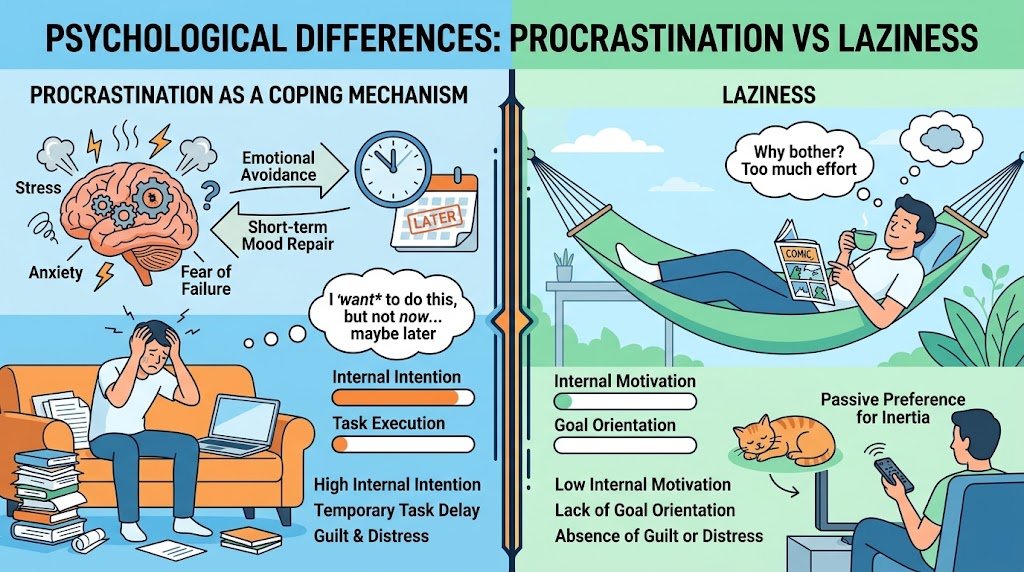
Procrastination is not a time-management failure or a symptom of laziness, but an active avoidance coping strategy and an emotional defense mechanism. When faced with tasks that trigger stress, anxiety, or overwhelm, the brain prioritizes short-term mood repair by postponing the uncomfortable activity. While laziness stems from a general unwillingness to exert effort, procrastination involves an active choice to delay action despite intending—and often wanting—to complete the work.
Laziness vs. Avoidance Coping: Key Differences
Understanding the distinction between these two behaviors helps frame procrastination as a psychological issue rather than a moral flaw.
Motivation: Procrastination involves high internal intention with blocked execution; laziness reflects low intention to act altogether.
Emotional State: Procrastinators experience significant guilt, anxiety, and self-criticism during delays, whereas lazy behavior typically lacks emotional distress or inner conflict.
Root Cause: Avoidance coping is driven by emotional regulation issues, fear of failure, or task aversion, while laziness is characterized by a passive preference for inertia.
By treating procrastination as a response to perceived emotional threats rather than a lack of willpower, you can address the underlying triggers—such as stress and overwhelm—using targeted cognitive strategies rather than self-blame.
The Psychology Behind Procrastination — Why the Brain Avoids Hard Tasks
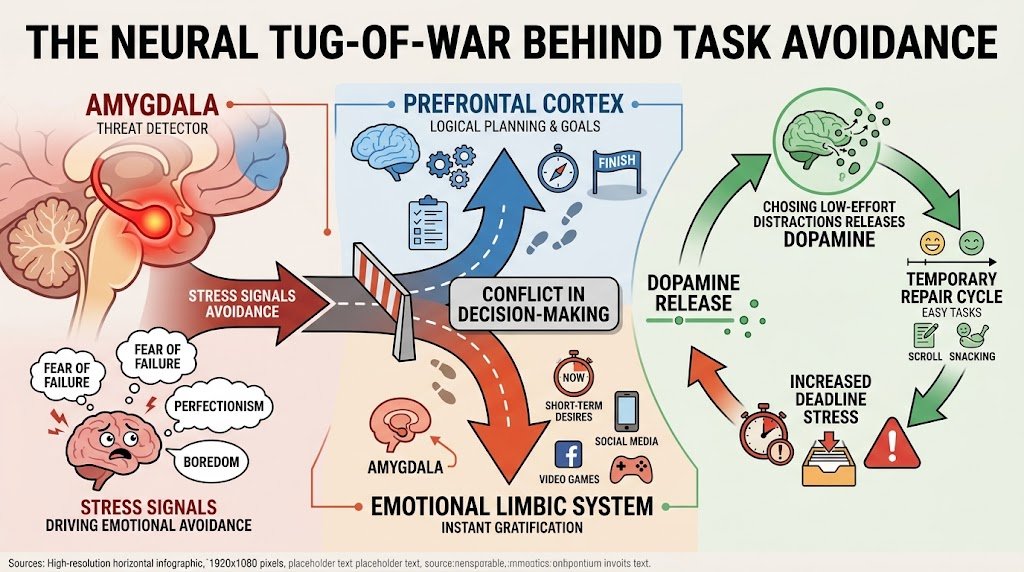
Procrastination occurs when your brain perceives a complex or stressful task as a direct threat to your emotional well-being. Rather than a rational decision to delay, it is a neurobiological default to protect you from negative mental states like anxiety, boredom, and self-doubt. When faced with hard tasks, the brain’s survival wiring overrides rational planning, prioritizing immediate psychological comfort over long-term goals.
The Amygdala’s Role — Why Your Brain Treats Tasks as Threats
The amygdala acts as the brain’s primary threat detector, scanning the environment for danger and triggering the fight-or-flight response. When a project evokes fear of failure, perfectionism, or cognitive overwhelm, the amygdala registers the task as a psychological threat.
Emotional Avoidance: The amygdala hijacks your focus, driving you away from the source of distress to eliminate immediate negative emotions.
Perfectionism Trap: Tasks with uncertain outcomes heighten threat perception, as the brain fears potential social judgment or personal inadequacy.
Boredom and Frustration: Even non-threatening tasks trigger avoidance if they cause high levels of monotony or mental friction.
Prefrontal Cortex vs. Emotional Brain — The Internal Tug-of-War
Executive function relies on the prefrontal cortex, which governs long-term planning, decision-making, and goal-directed behavior. However, the prefrontal cortex is conscious and easily fatigued, making it vulnerable during times of high stress or exhaustion.
Limbic Hijack: The limbics system—the emotional center—demands instant relief, easily overpowering the slower, logic-driven prefrontal cortex.
Willpower Depletion: As mental energy wanes throughout the day, the prefrontal cortex loses its ability to regulate emotional avoidance.
Cognitive Paralysis: When the struggle between long-term logic and short-term impulse becomes intense, the brain defaults to task delay.
Instant Gratification and the Dopamine Feedback Loop
Postponing a difficult task in favor of a low-effort alternative delivers an immediate surge of dopamine—the neurotransmitter associated with reward and motivation. Switching to social media, cleaning, or quick administrative chores offers instant gratification and temporary short-term relief.
Reinforcement Learning: The immediate relief experienced after abandoning a difficult task creates a strong neurochemical reward.
Compounding Avoidance: Over time, the brain learns that delaying unpleasant work guarantees immediate comfort, reinforcing procrastination as a habit loop.
Escalating Guilt: While the initial dopamine hit offers temporary comfort, it inevitably leads to higher baseline stress and anxiety as deadlines approach.
Is Procrastination a Defense Mechanism or a Trauma Response?
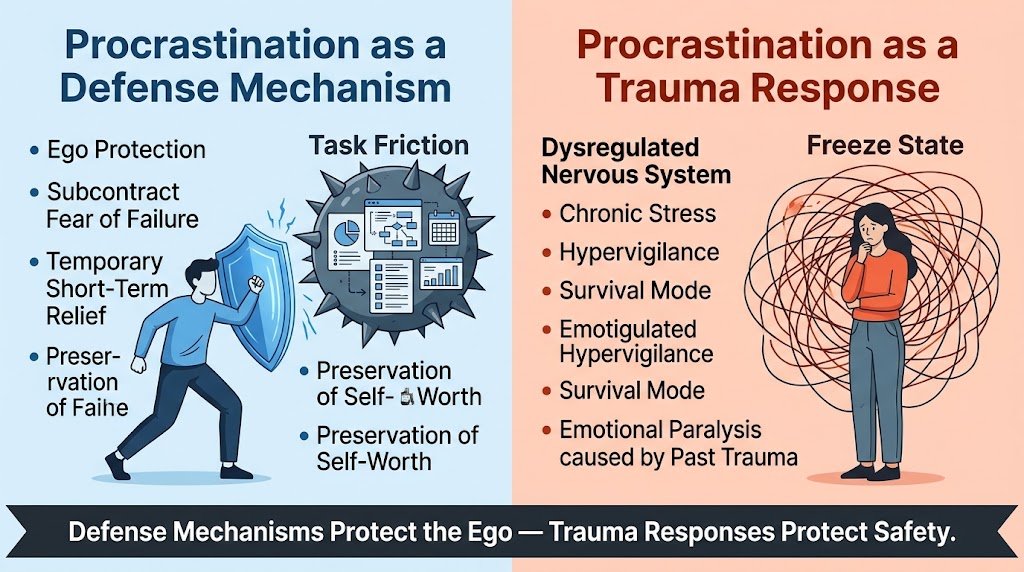
Procrastination functions as an unconscious defense mechanism to shield self-esteem and can develop into a trauma response when rooted in chronic nervous system dysregulation. While defense mechanisms protect the ego from uncomfortable feelings like shame or inadequacy, trauma-driven procrastination occurs when past adverse experiences lock the brain in survival mode, making task execution feel unsafe.
Defense Mechanism vs. Coping Mechanism — What’s the Difference?
Although often used interchangeably, defense mechanisms and coping mechanisms operate at different levels of conscious awareness and control.
Defense Mechanism: Operates largely on an unconscious level to protect the ego from internal conflict. Delaying action serves to protect self-worth—if you do not complete the task, you cannot be judged as inadequate.
Coping Mechanism: Represents a conscious or semi-conscious behavior used to manage external stress. Postponing work offers immediate emotional regulation by stepping away from an overwhelming situation.
Shared Purpose: Both processes prioritize short-term psychological safety over long-term goals, temporarily preserving the mind from uncomfortable emotional realities.
Can Past Trauma Make Procrastination Worse?
Past trauma significantly amplifies task avoidance by keeping the nervous system on high alert. When an individual has experienced harsh criticism, neglect, or high-stakes failure, everyday deadlines can trigger a subconscious fear response.
Hypervigilance: A heightened state of sensory sensitivity causes the brain to misinterpret perceived failure or judgment as a threat to physical or emotional safety.
Nervous System Freeze: Experiencing chronic stress can shift the body into a freeze state—a survival mode where initiation becomes biologically difficult due to low energy and cognitive paralysis.
Impaired Emotional Regulation: Trauma disrupts the brain’s ability to process stress efficiently, causing minor task-related friction to trigger intense anxiety and rapid avoidance behaviors.
The Procrastination Cycle — How It Traps You
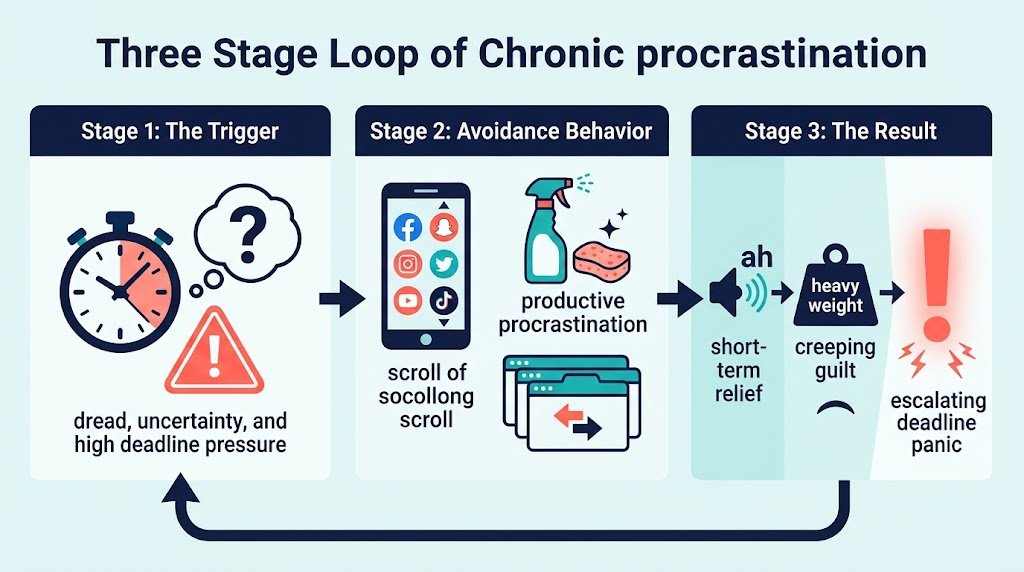
The procrastination cycle is a repetitive neurochemical feedback loop where emotional discomfort drives task delay, resulting in temporary relief that rapidly degrades into guilt and panic. Breaking this cycle requires understanding how each phase feeds directly into the next.
Step 1 — The Trigger (Dread, Uncertainty, Pressure)
The procrastination cycle starts with a specific psychological stimulus that the brain interprets as uncomfortable or threatening. This initial friction triggers immediate emotional resistance before any actual work begins.
Emotional Dread: The expectation that a task will be tedious, exhausting, or emotionally draining creates immediate avoidance.
Ambiguity and Uncertainty: Unclear directions, vague goals, or missing information confuse the prefrontal cortex, leading to cognitive paralysis.
High Performance Pressure: Severe deadline pressure, coupled with perfectionism or fear of criticism, converts a routine assignment into a high-stakes threat to self-worth.
Step 2 — The Avoidance Behavior (Scrolling, Cleaning, Switching Tasks)
To neutralize the negative emotions produced by the trigger, the brain instinctively shifts focus toward low-friction, highly engaging activities.
Digital Distraction: Endless social media scrolling or checking emails delivers rapid dopamine hits that temporarily drown out underlying anxiety.
Productive Procrastination: Engaging in low-priority chores—such as organizing a desk or cleaning—provides a false sense of accomplishment while still avoiding the main task.
Context Switching: Jumping rapidly between minor administrative items creates the illusion of productivity while delaying deep, meaningful work.
Step 3 — The Result (Temporary Relief → Guilt → Panic)
The immediate shift away from the difficult task offers short-term relief, but this comfort quickly deteriorates into a destructive neurochemical feedback loop.
Temporary Relief: Escaping the task immediately lowers stress levels, signaling to the brain that avoidance successfully restores emotional comfort.
Creeping Guilt: As time slips away, internal self-criticism sets in, raising baseline stress and reinforcing feelings of inadequacy.
Escalating Panic: As the final deadline nears, accumulated guilt transforms into intense panic, forcing emergency task completion under extreme strain and compromised quality.
Visualizing the Cycle
  [1. TRIGGER]
  (Dread, Uncertainty, High Pressure)
         │
         ▼
  [2. AVOIDANCE BEHAVIOR]
  (Scrolling, Cleaning, Switching Tasks)
         │
         ▼
  [3. THE RESULT]
  (Temporary Relief ➔ Creeping Guilt ➔ Escalating Panic)
         │
         └─────────────► [Loop Repeats]
Types of Procrastination — Not All Delay Is the Same
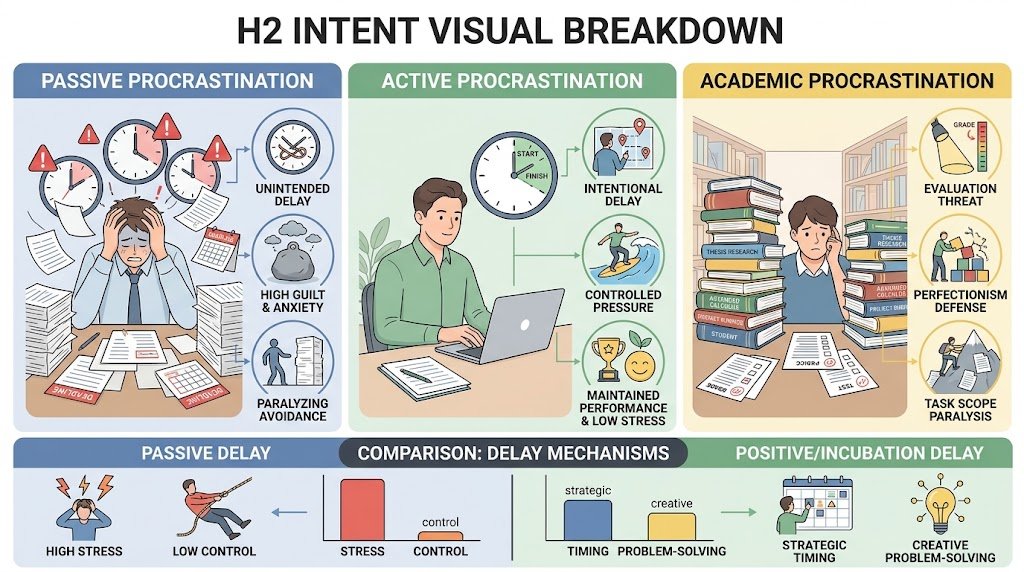
Procrastination manifests in distinct ways depending on the underlying intent, the degree of conscious control, and the environmental context. While passive task delay often leads to anxiety and reduced performance, structured or deliberate delay can serve as a calculated strategy for managing workload and creative pressure.
Academic Procrastination as a Coping Mechanism (Students & Deadlines)
Academic procrastination is a specialized form of task avoidance common among students facing high evaluation pressure and complex assignments. Rather than simple laziness, it functions as a primary coping mechanism against evaluation anxiety, performance pressure, and fear of failure.
Perfectionism and Evaluation Threat: Students often delay starting research papers or studying for exams to avoid receiving feedback that might challenge their intellectual self-worth.
Overwhelming Scope: Unstructured academic projects without immediate interim milestones overwhelm the prefrontal cortex, leading students to default to short-term avoidance.
The Deadline Compression Effect: Delaying action until the final hours forces extreme focus under deadline pressure, allowing students to rationalize compromised quality as a result of limited time rather than limited capability.
Active vs Passive Procrastination — Is There a “Good” Kind?
Psychological research divides task delay into active and passive forms, distinguished by conscious intent and executive control.
Passive Procrastination: The traditional, paralyzing form of delay where individuals feel overwhelmed, fail to act despite intending to, and experience significant guilt, stress, and reduced performance.
Active Procrastination: A intentional, strategic decision to delay tasks. Active procrastinators prefer working under pressure, intentionally using upcoming deadlines to boost focus and motivation while maintaining emotional control.
Key Distinctions: Active procrastinators display high self-efficacy and low stress levels, finishing tasks on time without the severe psychological toll associated with passive avoidance.
Can Procrastination Ever Be a Positive Coping Strategy?
Under specific conditions, deliberate delay can function as a positive coping strategy that enhances decision-making and creative output.
Incubation for Complex Problem Solving: Stepping away from a complex task gives the unconscious mind time to process information, often yielding creative insights and novel solutions.
Prioritization and Filtering: Strategic delay allows low-priority tasks to resolve themselves or lose relevance, preserving limited cognitive bandwidth for high-impact objectives.
Emotional Reset: Intentionally postponing a emotionally charged decision prevents impulsive reactions, providing the time needed to regain emotional stability and approach the issue rationally.
Who Procrastinates the Most? Personality & Risk Factors
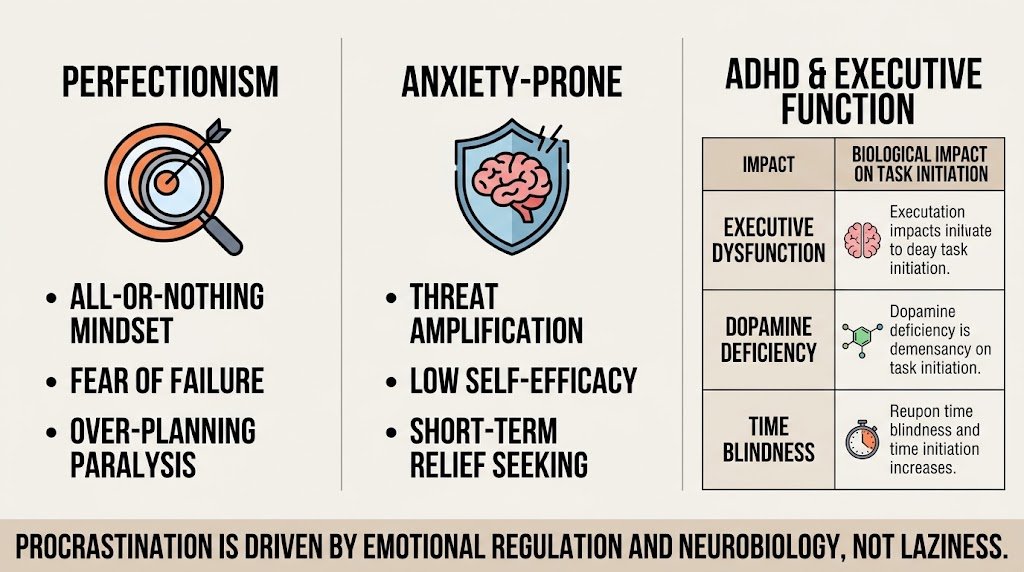
Procrastination is unevenly distributed across different personality profiles and psychological conditions. Individuals who struggle with high emotional sensitivity, rigid internal standards, or neurodevelopmental differences in executive function are disproportionately prone to chronic task avoidance. Identifying these specific risk factors shifts the focus from moral self-blame to targeted behavioral solutions.
Perfectionists and the Fear of Imperfect Results
Perfectionists form one of the highest-risk demographics for severe procrastination due to their all-or-nothing mindset. Rather than protecting against mistakes, perfectionism acts as a primary trigger for task delay.
Maladaptive Perfectionism: The belief that anything short of absolute perfection represents total failure causes severe cognitive friction, making initial task initiation feel dangerous.
Self-Worth Protection: By postponing execution, perfectionists preserve their self-esteem; a flawed result can be attributed to a lack of time rather than a lack of ability.
Over-Planning Paralysis: Spending excessive energy tweaking outlines, schedules, or environments serves as productive procrastination while delaying actual project initiation.
Anxiety-Prone Personalities and Avoidance Patterns
Individuals with high trait anxiety or low self-esteem frequently rely on procrastination as an emotional regulation strategy to manage stress.
Threat Amplification: Anxiety-prone personalities perceive normal deadlines and challenges as severe emotional threats, triggering an immediate fight-or-flight avoidance response.
Low Self-Efficacy: A persistent lack of confidence in one’s skills creates a self-fulfilling cycle, where task avoidance reinforces feelings of helplessness.
Short-Term Relief Focus: The psychological desire to eliminate immediate negative emotions overrides the conscious recognition of long-term consequences.
ADHD and Executive Function Challenges
For neurodivergent individuals, particularly those with Attention-Deficit/Hyperactivity Disorder (ADHD), procrastination is driven by structural neurobiological differences rather than emotional choice alone.
| Risk Factor / Trait | Biological Mechanism | Real-World Impact |
| Executive Dysfunction | Impaired prefrontal cortex regulation | Difficulty sequencing steps, initiating action, and managing transitions between tasks. |
| Dopamine Deficiency | Lower baseline dopamine receptor availability | Routine or low-stimulation tasks fail to generate the neurological drive required to act. |
| Time Blindness | Altered temporal perception | Inability to gauge time accurately leads to unintentional delays until deadline panic triggers action. |
The Real Consequences of Chronic Procrastination
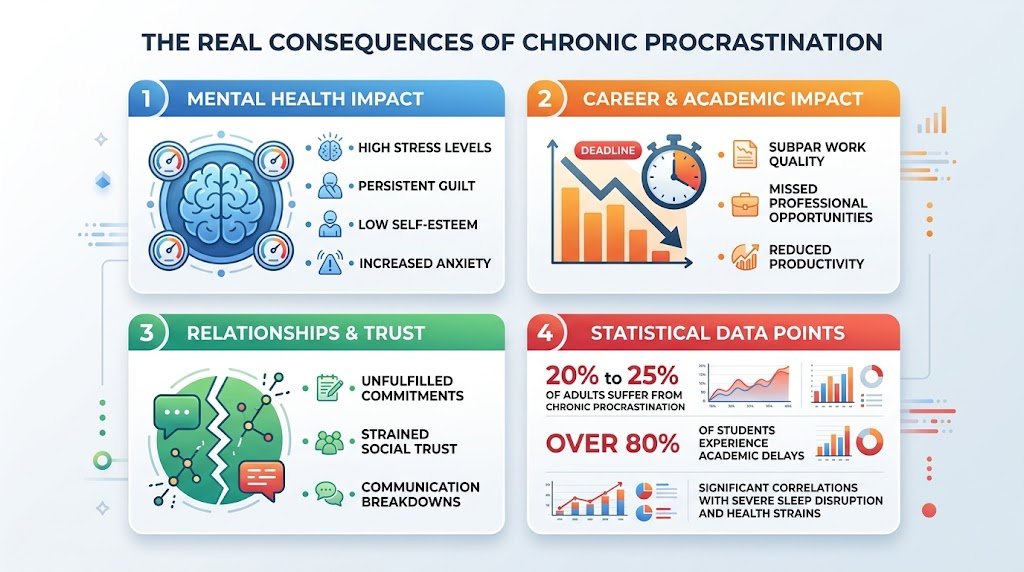
Chronic procrastination extends far beyond missed deadlines and temporary stress, inflicting long-term damage on psychological health, career advancement, and interpersonal relationships. When task avoidance shifts from an occasional habit to a default coping strategy, the persistent exposure to guilt and pressure degrades overall quality of life.
Impact on Mental Health (Stress, Guilt, Self-Esteem)
The psychological toll of chronic procrastination creates a self-sustaining mental health burden. Postponing essential responsibilities keeps the nervous system in a state of prolonged stress.
Chronic Stress and Anxiety: Delaying tasks creates a persistent background level of apprehension, elevating cortisol levels and leading to cognitive fatigue.
Erosion of Self-Esteem: Repeatedly failing to meet self-imposed goals reinforces negative self-talk, transforming occasional delay into a internalized belief of personal inadequacy.
Depressive Symptoms: The endless loop of avoidance, guilt, and self-blame significantly increases susceptibility to depressive moods and feelings of helplessness.
Impact on Career and Academic Performance
In professional and academic environments, persistent delay undermines performance and restricts long-term achievement.
Subpar Work Quality: Rushing to complete complex projects during final hours limits deep thinking, leading to frequent errors and compromised standards.
Lost Opportunities: Procrastinators frequently miss critical application deadlines, career advancement opportunities, and skill development milestones.
Productivity Loss: Chronic context-switching and avoidance behaviors lead to substantial reductions in overall output and professional reliability.
Impact on Relationships and Trust
Procrastination regularly causes interpersonal friction, damaging trust with colleagues, family members, and partners.
Broken Commitments: Failing to fulfill promises or complete shared tasks causes frustration and places undue pressure on others.
Perceived Disrespect: Others often misinterpret chronic delay as a lack of caring, professional disrespect, or unreliability.
Communication Breakdown: The anxiety associated with overdue responsibilities leads procrastinators to withdraw or avoid open dialogue, escalating conflict.
Procrastination Statistics You Should Know
Empirical research highlights the widespread prevalence and severe impact of chronic task avoidance on modern society. A comprehensive clinical study published in the National Institutes of Health (NCBI) Database{rel=”nofollow”} reveals key insights into the scale of this behavior:
Prevalence: Approximately 20% to 25% of adults qualify as chronic procrastinators, experiencing persistent delay across health, financial, and occupational domains.
Student Impact: Academic procrastination affects an estimated 80% to 95% of college students, with over 50% reporting consistent, severe academic impairment.
Health Correlates: Chronic procrastinators exhibit significantly higher rates of sleep disturbances, cardiovascular strain, and delayed medical care.
How to Cope With Procrastination in Healthier Ways
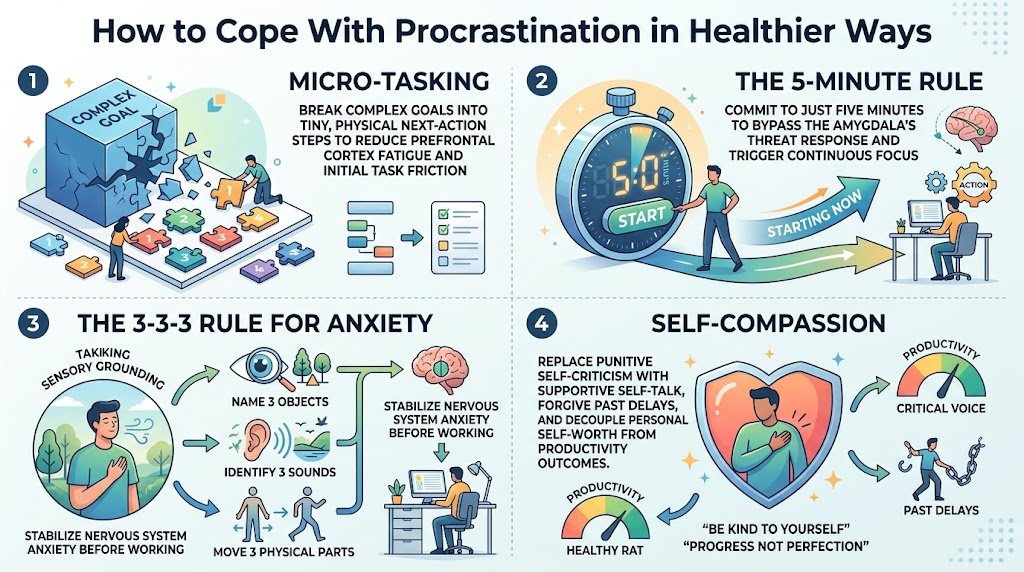
Replacing destructive avoidance patterns requires targeted cognitive and behavioral tools that reduce task friction and calm the nervous system. By shifting focus from long-term outcome pressure to immediate, low-friction initiation, you can bypass emotional threat responses and build natural momentum.
Break Tasks Into Tiny, Manageable Steps
Large projects overwhelm the prefrontal cortex when presented as monolithic goals. Breaking tasks down into micro-actions eliminates ambiguity and reduces the initial threat perception triggered by the amygdala.
Define the Next Action: Replace broad project titles with singular, physical steps (e.g., change “Write report” to “Open document and write main title”).
Lower the Initiation Threshold: Shrink the initial task step until it feels so effortless that it causes zero emotional resistance or mental friction.
Establish Clear Sequences: Map out a linear sequence of immediate tasks so you can transition smoothly from one step to the next without cognitive fatigue.
The 5-Minute Rule — Trick Your Brain Into Starting
The 5-minute rule leverages the psychological principle of momentum: initiating an activity is significantly harder than continuing it once underway.
Commit to Five Minutes: Give yourself full permission to stop working after five minutes if emotional resistance remains high.
Bypass Threat Detection: Framed as a brief, timed commitment, the task no longer triggers the amygdala’s fight-or-flight safety response.
Capitalize on Momentum: In over 80% of cases, breaking the initial paralysis creates enough cognitive focus to continue working well beyond the five-minute mark.
The 3-3-3 Rule for Anxiety — And How It Helps With Procrastination
When task avoidance is driven by high anxiety or a nervous system freeze response, grounded sensory focus helps restore emotional baseline stability. The 3-3-3 rule interrupts catastrophic thinking patterns by redirecting focus back to the immediate environment.
Name 3 Objects: Look around your space and consciously identify three physical objects to anchor visual attention.
Identify 3 Sounds: Listen closely and recognize three distinct background sounds to break internal panic loops.
Move 3 Body Parts: Engage physical motor control by moving three distinct parts of your body (e.g., wiggling toes, rolling shoulders, flexing fingers).
Grounding your nervous system reduces acute anxiety, allowing the prefrontal cortex to regain control over executive function and task initiation.
Practicing Self-Compassion Instead of Self-Criticism
Severe self-criticism amplifies feelings of shame and failure, actively worsening the emotional discomfort that fuels procrastination. Treating yourself with self-compassion breaks the guilt-avoidance feedback loop.
Forgive Past Delays: Acknowledging past procrastination without harsh judgment lowers baseline performance anxiety for future tasks.
Reframe Internal Dialogue: Replace punitive thoughts like “I am lazy and falling behind” with neutral, supportive statements like “I am feeling overwhelmed, but I can take one small step.”
Separate Worth From Performance: Recognize that your human value is not tied directly to perfect productivity or immediate output.
Frequently Asked Questions
What are five ways to stop procrastinating?
To effectively stop procrastinating, you can implement five core psychological strategies:
- Use the 5-Minute Rule: Commit to working on a task for just five minutes to bypass initial brain resistance.
- Break Tasks into Micro-Steps: Divide large projects into tiny, actionable steps to eliminate cognitive overwhelm.
- Practice the Pomodoro Technique: Work in focused 25-minute intervals followed by 5-minute restorative breaks.
- Eliminate Environmental Triggers: Remove digital distractions, such as notifications and social media apps, before starting work.
- Practice Self-Compassion: Forgive past delays to reduce the guilt and anxiety that fuel future avoidance.
Is procrastination a trauma response?
Procrastination can be a trauma response when rooted in chronic nervous system dysregulation. When past adverse experiences—such as severe criticism, perfectionist pressure, or emotional neglect—keep the brain in a heightened state of survival mode, everyday tasks can trigger a subconscious freeze response. In these cases, task delay serves as an involuntary defense mechanism against perceived threats to emotional safety.
How does procrastination affect mental health?
Chronic procrastination negatively impacts mental health by maintaining elevated stress levels and provoking severe emotional distress. It leads to persistent guilt, heightened daily anxiety, sleep disruptions, and low self-esteem. Over time, the continuous cycle of task avoidance and self-criticism significantly increases vulnerability to clinical depression and psychological burnout.
What is the connection between procrastination and anxiety?
The connection between procrastination and anxiety lies in emotional regulation. When a task triggers feelings of inadequacy, fear of failure, or overwhelm, the brain's threat detector (the amygdala) registers the activity as stressful. Procrastination becomes an immediate avoidance coping mechanism to temporarily reduce acute anxiety, even though it ultimately elevates overall stress as deadlines approach.
What are 7 ways to overcome procrastination?
You can overcome chronic procrastination by adopting these seven targeted cognitive and behavioral techniques:
- Apply the 5-Minute Rule to build immediate momentum.
- Deconstruct overwhelming goals into singular, next-action physical steps.
- Structure your workday around time-blocking and focus intervals.
- Use sensory grounding techniques like the 3-3-3 rule to calm anxiety before starting.
- Establish clear, non-negotiable daily priorities using structured task lists.
- Remove high-dopamine digital distractions from your immediate workspace.
- Replace punitive self-talk with supportive self-compassion to lower performance dread.
What is the 3-3-3 rule for anxiety?
The 3-3-3 rule is an effective sensory grounding technique used to manage acute anxiety and nervous system overload. It involves identifying three visual objects in your surroundings, listening for three distinct sounds, and moving three physical body parts (such as wiggling your toes or rolling your shoulders). This redirects brain focus away from internal panic and restores cognitive control for task execution.
What personality type procrastinates the most?
Individuals with high maladaptive perfectionism, high trait anxiety, and lower levels of conscientiousness experience the highest rates of chronic procrastination. Additionally, neurodivergent individuals—particularly those with Attention-Deficit/Hyperactivity Disorder (ADHD)—are disproportionately affected due to underlying biological executive dysfunction and lower baseline dopamine regulation.
What are 10 ways to stop procrastinating?
To build a comprehensive strategy against task delay, implement these ten proven approaches:
- The 5-Minute Rule: Start with a five-minute commitment.
- Micro-Tasking: Shrink steps to the absolute smallest physical action.
- Time Blocking: Dedicate specific hours to deep, focused work.
- The 3-3-3 Rule: Ground sensory anxiety before beginning complex work.
- Temptation Bundling: Pair challenging tasks with enjoyable rewards.
- Workspace Audit: Clear clutter and block distracting websites.
- Implementation Intentions: Use explicit "If-Then" planning statements.
- Accountability Partnerships: Share deadlines with a trusted peer.
- Self-Compassion Exercises: Actively forgive previous procrastination.
- Energy Alignment: Schedule high-friction tasks during peak mental energy hours.
What are some signs that someone is procrastinating?
Common procrastination signs include engaging in productive procrastination (such as cleaning or organizing low-priority items instead of doing urgent work), constantly shifting deadlines, experiencing intrusive feelings of guilt or panic while relaxing, repeatedly checking emails or social media during deep-work sessions, and delaying project initiation despite having the necessary time and resources.
What is the best cure for procrastination?
There is no single "cure" for procrastination because it is an emotional regulation issue rather than a simple habit defect. The most effective long-term solution involves retraining the brain's response to task friction by reducing emotional threat perception through task breakdown, practicing self-compassion to lower performance anxiety, and strengthening executive function through low-friction initiation rules like the 5-Minute Rule.
Mark Steve
Mark Steve is a tech, business, and lifestyle writer with over 5 years of experience analyzing digital trends, startups, and online business models. He publishes well-researched, fact-checked content focused on clarity, credibility, and real-world value.