Why You Feel Like Procrastination Is Ruining Your Life
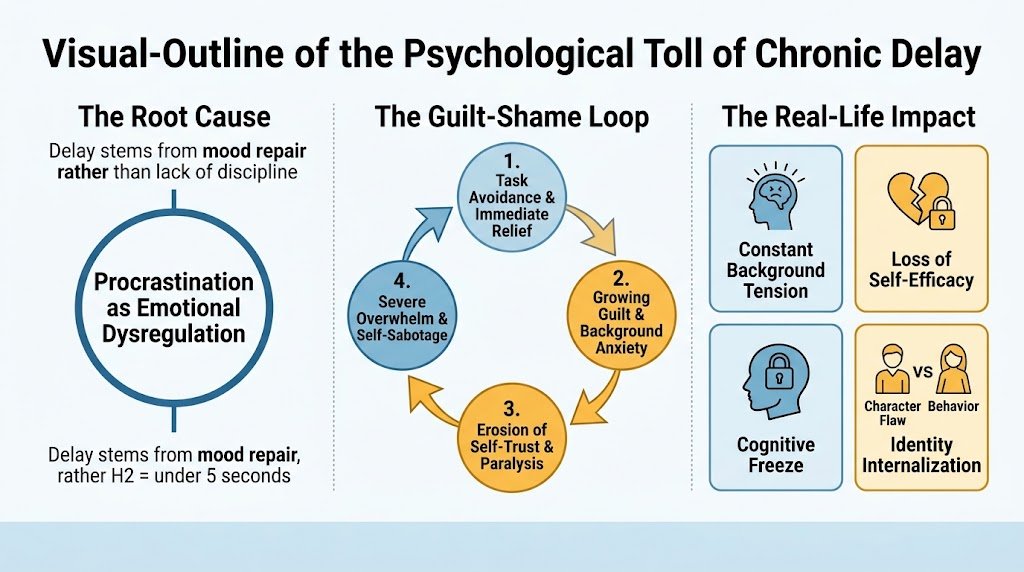
Procrastination feels like a slow-motion destruction of your potential because it bridges the gap between who you are and who you know you could be. It triggers an ongoing conflict where your conscious mind wants to achieve a goal, yet an internal barrier prevents you from taking action.
This disconnect creates severe emotional distress, transforming simple daily tasks into overwhelming psychological hurdles. Over time, chronic delay damages self-trust, creates chronic anxiety, and leads to pervasive self-sabotage.
What “Life-Ruining” Procrastination Actually Feels Like
The sensation of procrastination ruining your life rarely stems from a single missed deadline. Instead, it accumulates through a daily guilt-shame cycle that consumes your mental bandwidth even when you are not actively working.
Constant Background Anxiety: You experience a persistent underlying tension during leisure activities, preventing true relaxation or recovery.
Erosion of Self-Trust: Repeatedly breaking commitments made to yourself undermines your self-efficacy and belief in your own reliability.
The Paralysis of Overwhelm: Complex projects induce an cognitive freeze, making the initial step seem disproportionately difficult.
Identity Shift: You begin internalizing task delay as a personal character flaw rather than an operational behavior.
This state of chronic avoidance creates a continuous emotional tax, leaving you exhausted without having accomplished your priorities.
Why This Isn’t Just Laziness
Viewing procrastination as a lack of discipline or pure laziness is scientifically inaccurate. Modern psychological research demonstrates that procrastination is fundamentally an emotional response—specifically an involuntary coping mechanism for bad moods and negative feelings linked to a task.
Procrastination is an emotion regulation problem, not a time management problem.
When faced with a task that triggers fear of failure, perfectionism, ambiguity, or boredom, your brain prioritizes immediate mood repair. The brain seeks instant relief by redirecting your attention toward low-stakes, immediate-reward activities.
Understanding this distinction shifts the solution from forcing rigid willpower to managing the underlying emotional triggers causing task avoidance.
Is Your Procrastination Normal or a Deeper Problem? (Self-Check)
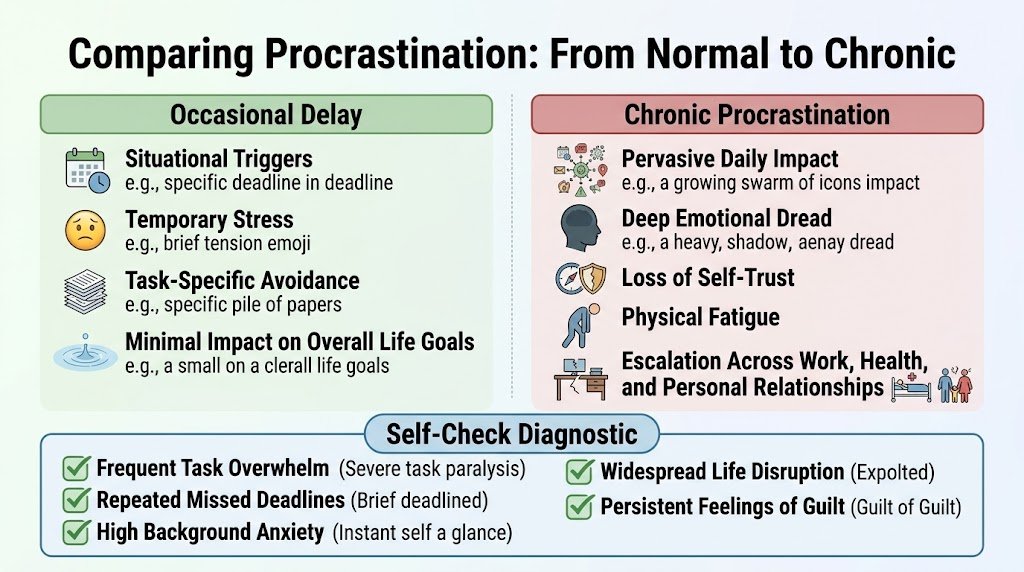
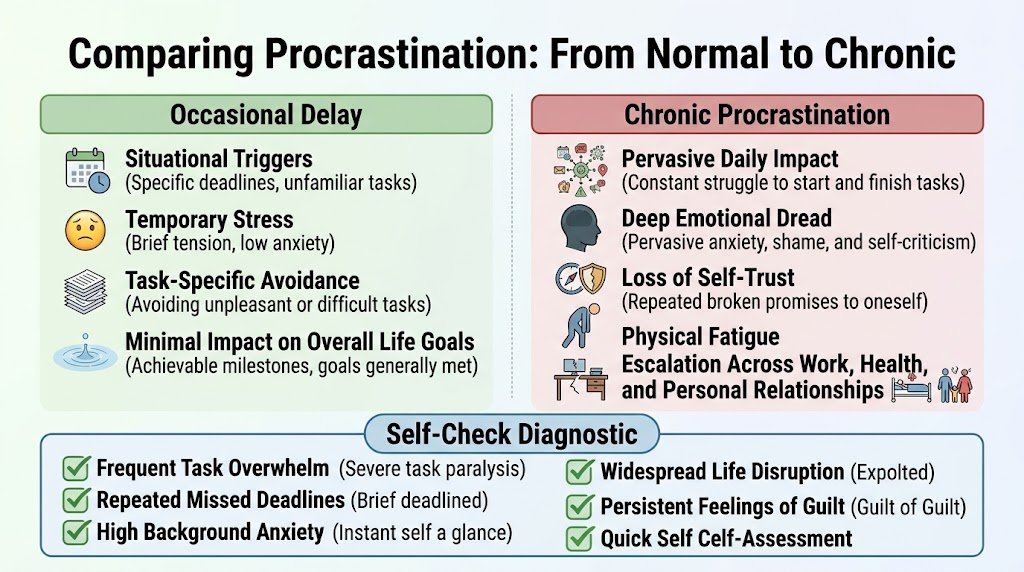
Occasional delay is a natural human reaction to unappealing tasks, but chronic task avoidance can significantly impact your mental health, daily functioning, and long-term trajectory. Identifying whether your procrastination is a temporary response to stress or a ingrained pattern is the first step toward reclaiming your productivity.
Occasional Procrastination vs. Chronic Procrastination
Understanding the distinct boundaries between standard delay and severe task avoidance helps determine the right strategy for intervention.
| Aspect | Occasional Procrastination | Chronic Procrastination |
| Frequency | Situation-dependent; occurs with specific, undesirable tasks | Pervasive; affects almost all areas of life (work, health, relationships) |
| Trigger Mechanism | Task-specific aversion (e.g., boring, complex, or tedious assignments) | Emotional dysregulation, deep-seated fear of failure, or perfectionism |
| Impact on Quality of Life | Minor inconvenience; temporary stress before a deadline | Severe disruption; chronic anxiety, lost opportunities, damaged self-esteem |
| Task Completion | Completed under pressure before critical deadlines | Frequently missed deadlines, incomplete work, or total avoidance |
Signs Your Procrastination Has Crossed into “Chronic” Territory
Procrastination transitions into a severe problem when it becomes your primary coping mechanism for dealing with negative emotions.
Pervasive Impact Across Domains: The pattern isn’t limited to work or school; it bleeds into personal administration, medical appointments, and health habits.
Rationalization and Denial: You repeatedly convince yourself that “I work better under pressure” despite consistent evidence that last-minute efforts harm output quality.
Physical and Mental Exhaustion: The continuous mental friction of avoidance causes constant physical fatigue, insomnia, and elevated cortisol levels.
Escalating Consequences: Delay begins resulting in tangible losses—financial penalties, strained relationships, or damaged professional reputations.
Quick Self-Check: 5 Questions to Ask Yourself Right Now
Use this quick diagnostic to evaluate the severity of your task delay habits right now:
Does delay affect multiple areas of your life? Do you consistently postpone personal errands, self-care, and financial tasks alongside your primary work?
Do you spend more time worrying about a task than it would take to complete it? Does the mental chatter and anxiety surrounding a task outweigh the actual effort required?
Do you break promises made to yourself daily? Do you repeatedly set intentions to start a task at a specific time, only to push it back continuously?
Is your self-esteem directly suffering from your delay habits? Do you regularly experience feelings of guilt, shame, or self-disgust after avoiding important work?
Have you suffered tangible negative consequences due to delay? Have you missed key career milestones, paid late fees, or harmed relationships because of postponed action?
If you answered “Yes” to three or more of these questions, your pattern reflects chronic procrastination rather than simple time management issues.
The Real Psychological Causes of Procrastination
Procrastination is not a failure of character, nor does it stem from an inability to manage time. Modern psychological research shows that task delay is primarily a neurological and emotional coping strategy designed to manage negative feelings associated with specific triggers. When faced with a challenging project, your brain prioritizes immediate short-term emotional repair over long-term cognitive goals.
Fear of Failure and Perfectionism
Perfectionism creates an all-or-nothing mindset that directly fuels fear of failure. When you hold yourself to impossibly high standards, starting a task introduces the risky possibility that your output will fall short of perfection.
Maladaptive Perfectionism: Equating the quality of your work directly with your personal worth makes every assignment feel like a threat to your self-esteem.
Preemptive Self-Sabotage: Delaying action provides a psychological cushion—if the final result is flawed, you can blame the tight deadline rather than a lack of ability.
High-Stakes Paralysis: The pressure to deliver flawless results makes the barrier to entry feel insurmountable, delaying the initial step indefinitely.
Anxiety and Emotional Avoidance
Anxiety and emotional avoidance form the core engine of chronic delay. When a task triggers uncomfortable emotions such as self-doubt, confusion, or boredom, your brain instinctively seeks to protect you from that discomfort.
Immediate Threat Response: Your brain perceives difficult assignments as emotional threats, activating avoidance mechanisms to lower discomfort quickly.
Short-Term Relief Loop: Yielding to delay offers immediate psychological relief, reinforcing the impulse to avoid similar tasks in the future.
Compound Stress: The initial relief is temporary; as deadlines shrink, the accumulated stress creates a stronger cycle of avoidance and panic.
Depression’s Link to Procrastination
Depression directly impairs the neural pathways responsible for motivation, initiative, and goal-directed action. Unlike situational delay, depression-induced procrastination stems from systemic depleted cognitive and physical resources.
Anhedonia and Low Motivation: The reduced capacity to feel pleasure or satisfaction removes the internal reward associated with completing tasks.
Executive Dysfunction: Depression impairs key cognitive processes, including working memory, cognitive flexibility, and information processing.
Pervasive Fatigue: The physical and mental exhaustion linked to depressive episodes makes even minor daily tasks feel overwhelmingly taxing.
Overwhelm and Task Paralysis
When a task appears too complex, unstructured, or large, your brain experiences task paralysis. This reaction occurs when your executive functions become overloaded by the sheer volume of choices and decisions required to move forward.
Decision Fatigue: Evaluating endless possibilities without a clear path forward drains mental energy before physical work even begins.
Ambiguity Friction: Lack of concrete, step-by-step instructions creates cognitive friction, triggering immediate disengagement.
Cognitive Load Maxing: When information overload exceeds your mental working capacity, your brain defaults to a complete operational pause.
Procrastination and ADHD — Is There a Connection?
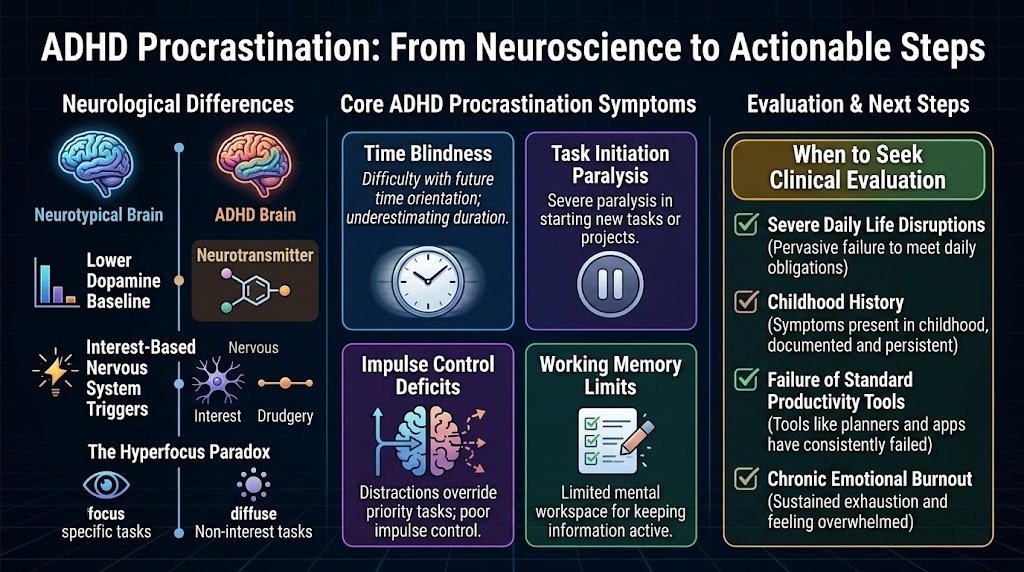
Attention Deficit Hyperactivity Disorder (ADHD) and chronic task delay are deeply intertwined due to shared neurological mechanisms in the brain’s regulatory centers. While neurotypical individuals usually procrastinate to avoid negative emotions, individuals with ADHD struggle with task delay due to structural differences in executive function networks.
Understanding this neurological difference is essential because standard productivity advice—such as “just push through” or “use better discipline”—frequently fails for neurodivergent brains.
How ADHD-Related Procrastination Differs from Normal Procrastination
Procrastination in an ADHD brain stems from a deficit in dopamine regulation and neural connectivity rather than mere emotional avoidance or poor scheduling choices.
Neurochemical Trigger: Neurotypical delay is driven by emotional regulation issues, whereas ADHD delay is driven by a chronic lack of baseline dopamine necessary to initiate low-interest tasks.
Predictability: Standard procrastination tends to be task-specific, while ADHD delay is pervasive, unpredictably affecting both routine demands and personal passions.
The “Interest-Based” Nervous System: Individuals with ADHD do not prioritize tasks based on importance or urgency, but rather on interest, novelty, challenge, or immediate urgency.
Hyperfocus Paradox: An ADHD brain can remain paralyzed for hours on a high-priority assignment, yet suddenly spend six continuous hours locked in hyperfocus on an engaging interest.
Common ADHD Signs That Show Up Alongside Procrastination
ADHD-driven task delay rarely occurs in isolation; it is accompanied by specific cognitive hurdles rooted in executive dysfunction.
Time Blindness: An inability to accurately perceive the passage of time or estimate how long tasks take, leading to chronic underestimation of project scope.
Impulse Control Issues: Impaired prefrontal cortex function makes it exceptionally difficult to resist immediate distractions or novel stimuli when working on routine tasks.
Initiation Deficits: Experiencing severe physical and mental paralysis when trying to transition from a resting state into a high-demand activity.
Working Memory Limitations: Dropping key steps, losing track of instructions, or forgetting the initial goal mid-task due to limited short-term cognitive storage.
When to Consider Getting Evaluated
If task avoidance consistently damages your quality of life, seeking a professional clinical evaluation can offer clarity and targeted treatment options.
Pervasive History: The pattern of task initiation struggles, disorganization, and delay has been consistently present since childhood.
Severe Life Disruptions: You face recurring professional set-backs, academic probation, financial instability, or damaged relationships due to unexecuted tasks.
Standard Strategies Fail: Traditional productivity techniques—such as planners, calendar blocking, and strict schedules—consistently fail to produce lasting improvements.
Emotional Burnout: You experience chronic exhaustion, depression, or anxiety caused by the constant mental energy required to force task initiation.
Obtaining a formal diagnosis provides access to tailored therapies, behavioral strategies, and medical interventions designed specifically for neurodivergent cognitive profiles.
Is There Medication or Treatment for Procrastination?
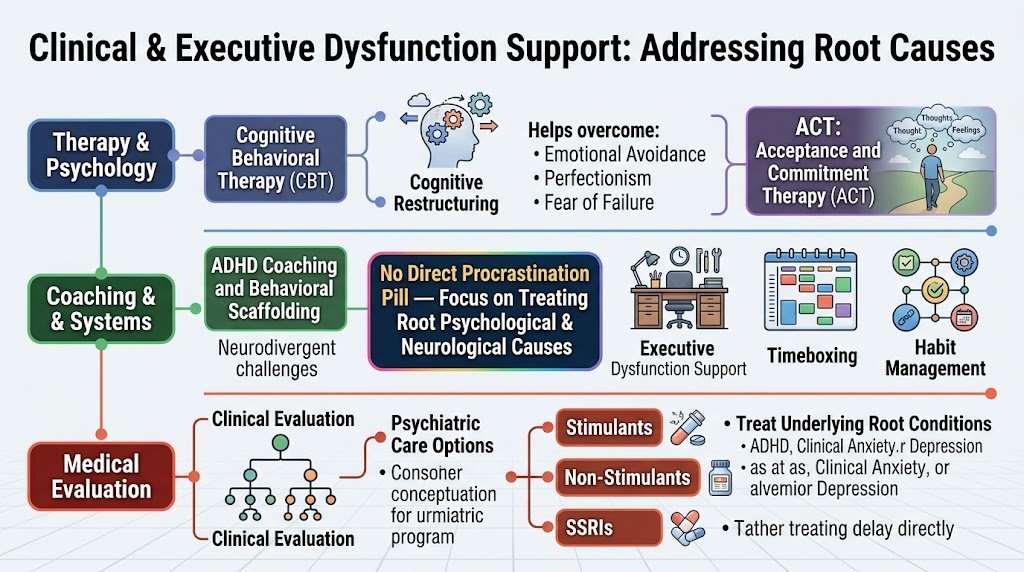
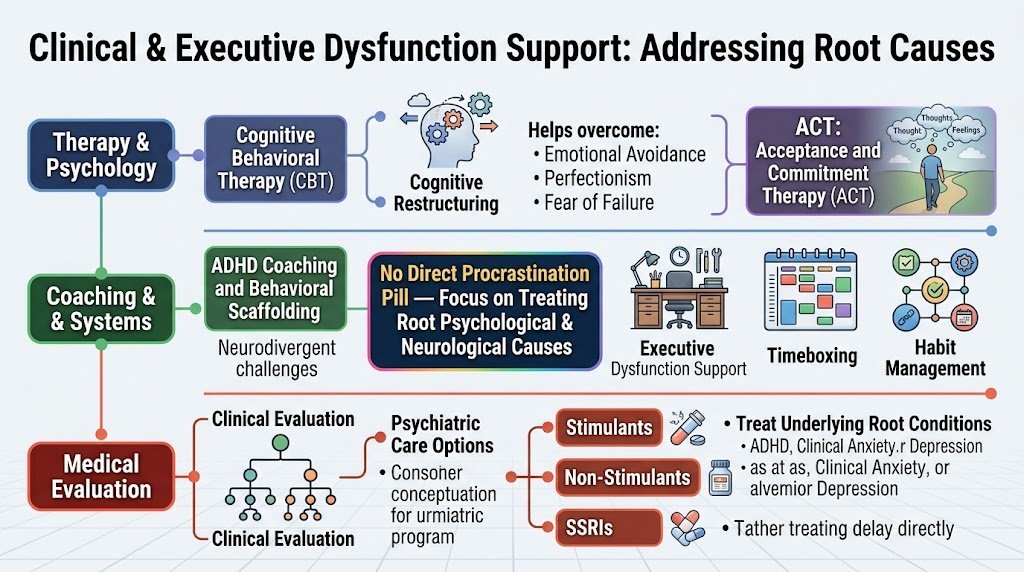
Because procrastination is a complex behavioral pattern rather than a standalone medical diagnosis, there is no single FDA-approved “procrastination pill.” However, because chronic delay is almost always a symptom of underlying psychological, emotional, or neurodevelopmental conditions, targeted clinical treatment can dramatically reduce task avoidance.
When medical professionals address the primary drivers of delay—such as clinical anxiety, depression, or executive dysfunction—a patient’s ability to initiate and complete tasks typically improves as a direct downstream effect.
Why There’s No “Procrastination Pill” — But Treating Underlying Causes Helps
Procrastination serves as a visible symptom for various distinct internal struggles. A pharmaceutical intervention targeting task delay directly does not exist because the root drivers vary drastically from person to person.
Emotional Avoidance: If delay is driven by anxiety, stimulants will not fix the core issue and may even heighten stress responses.
Depleted Executive Function: If delay stems from underlying neurodevelopmental factors like ADHD, standard motivational strategies or antidepressants alone will likely fall short.
Low Energy and Mood: When severe depression causes cognitive freezing, boosting focus without addressing underlying mood dysregulation remains ineffective.
Because of these variations, effective care requires a comprehensive professional evaluation to pinpoint the specific cognitive or emotional triggers at play.
Therapy and Coaching Options (CBT, ADHD Coaching)
Evidence-based psychotherapies provide the most consistent long-term results for overcoming chronic task delay by retraining cognitive patterns and building practical coping mechanisms.
Cognitive Behavioral Therapy (CBT): CBT is considered the gold-standard therapeutic intervention for chronic delay. It helps individuals identify and reframe cognitive distortions (such as perfectionism or catastrophic thinking) that lead to emotional avoidance.
Acceptance and Commitment Therapy (ACT): ACT teaches individuals to acknowledge difficult emotions and psychological discomfort without fleeing from them, building emotional tolerance during challenging tasks.
ADHD Coaching: Designed specifically for neurodivergent individuals, specialized coaching focuses on actionable scaffolding—building customized organizational systems, body doubling routines, and task-breakdown methods to manage executive dysfunction.
When Medication May Be Part of a Treatment Plan
While medication is not prescribed for procrastination itself, healthcare providers frequently prescribe pharmacological treatments for underlying conditions that cause severe task initiation paralysis.
When ADHD is diagnosed, first-line stimulant or non-stimulant medications can help normalize dopamine and norepinephrine levels in the prefrontal cortex, making it easier to sustain focus and manage impulse control. Similarly, when chronic delay is rooted in generalized anxiety disorder or major depressive disorder, psychiatric interventions like SSRIs or SNRIs can reduce the overwhelming emotional load that causes mental freezing.
For detailed clinical guidance on mental health treatments and finding certified care providers, consult the American Psychological Association{rel=”nofollow”}.
Any medication protocol should be strictly evaluated, prescribed, and monitored by a qualified psychiatrist or primary care physician as part of a holistic treatment plan.
Immediate Steps to Stop Procrastinating Right Now
Breaking out of task paralysis requires immediate behavioral momentum rather than waiting for motivation to strike. When you lower the friction required to start, you bypass the brain’s threat-detection mechanisms and trigger natural dopamine release through incremental progress.
These five evidence-based techniques provide immediate tactical relief to help you transition from avoidance to direct execution right now.
The 5-Minute Rule
The 5-minute rule relies on a simple psychological premise: commit to working on your target task for just five minutes, with absolute permission to stop when the timer ends.
Lowers Entry Barrier: Reduces the emotional dread associated with a massive project by shrinking the commitment to a micro-action.
Capitalizes on Momentum: Over 80% of individuals continue working past the five-minute mark because task initiation is the hardest psychological hurdle.
Reduces Resistance: Framing the effort as temporary removes the threat response in your brain, eliminating task paralysis.
Hide Your Phone / Remove Digital Distractions
Digital devices are specifically engineered to exploit your brain’s search for easy novel rewards. When faced with challenging work, your brain reflexively reaches for low-effort dopamine hits available on smartphones.
Out of Sight, Out of Mind: Place your phone in another room or inside a drawer. Increasing physical friction breaks reflexive checking habits.
Environment Design: Close unnecessary browser tabs, turn off desktop notifications, and enable focus modes to preserve working memory.
Friction Layering: Log out of social media platforms or use website blockers to make distraction require deliberate effort.
Use a Timer (25–30 Min Focus Blocks)
Using a structured timer method, such as the classic Pomodoro technique, establishes clear boundaries between dedicated effort and total rest.
Timeboxing: Set a timer for 25 to 30 minutes of uninterrupted single-task focus, followed by a mandatory 5-minute break.
Creates Urgency: Knowing that the work window is short helps sustain attention and prevents mental fatigue.
Guilt-Free Rest: Structured breaks give your brain predictable rewards without triggering feelings of guilt.
Stop Multitasking
Attempting to handle multiple complex tasks simultaneously drains executive control and accelerates cognitive exhaustion. Multitasking is an illusion; the brain rapidly context-switches between tasks, creating cognitive switching penalties.
Focus Single-Mindedly: Select one clear priority and give it your full, undivided attention until the focus block ends.
Reduce Switching Costs: Eliminate back-and-forth switching to preserve mental stamina and increase task speed.
Brain Dump Interruptions: Keep a notepad nearby to quickly write down unrelated thoughts or tasks that pop up, allowing you to return to work without losing focus.
Forgive Yesterday (Breaking the Guilt Cycle)
Holding onto shame over past delays amplifies negative emotions, directly causing future task avoidance. Psychological research demonstrates that self-forgiveness is an essential tool for ending chronic delay.
Self-compassion breaks the avoidance loop by removing the shame and anxiety that fuel task paralysis in the first place.
Release Historical Shame: Acknowledge past delays without harsh judgment; framing delay as an emotional misstep rather than a character flaw facilitates forward progress.
Reset Your Focus: Treat every hour as a fresh start rather than writing off an entire day due to a slow morning.
Lower Stress Burden: Replacing self-criticism with self-forgiveness reduces stress, freeing up the cognitive capacity needed for executive function.
7 Long-Term Ways to Rewire Your Brain and Stop Procrastinating

Overcoming chronic delay permanently requires leveraging neuroplasticity—the brain’s ability to reorganize itself by forming new neural pathways over time. While short-term tactics provide quick relief, long-term success relies on structural changes in your mindset, routines, and physical spaces.
By implementing sustainable systems that address the neurological roots of task avoidance, you can permanently rebuild your approach to goal execution.
1. Break Tasks into Micro-Steps
Large projects trigger task paralysis because the brain views them as overwhelming cognitive threats. Dismantling complex assignments into micro-steps lowers activation energy and makes initiation manageable.
Isolate the Action Item: Transform vague goals like “write project proposal” into hyper-specific actions like “open document and write three bullet points.”
Lower Cognitive Friction: Reduce the perceived difficulty of a task until the barrier to starting feels negligible.
Bypass Threat Responses: Small actions prevent the amygdala from triggering emotional avoidance, allowing smooth task initiation.
2. Build Identity-Based Habits, Not Motivation-Based Ones
Relying on motivation is unreliable because emotional states fluctuate constantly. Sustainable habit formation depends on identity-based habits that shift your core self-concept.
Reframe Internal Narrative: Shift your perspective from “I am trying to complete this project” to “I am the type of person who consistently finishes what they start.”
Focus on Small Decisions: Every action you take acts as a vote for the type of person you wish to become.
Remove Reliance on Willpower: Automated daily routines eliminate the decision fatigue that typically leads to delay.
3. Use Accountability Partners/Systems
External accountability introduces immediate social stakes, countering the brain’s tendency to prioritize short-term comfort over long-term success.
Engage in Body Doubling: Work alongside a colleague or peer, either virtually or in person, to maintain focus through shared presence.
Establish Clear Milestones: Share specific deadlines with an accountability partner and set up regular progress checks.
Utilize Public Commitments: Announcing your goals to a group leverages social expectations to encourage task follow-through.
4. Design Your Environment to Reduce Friction
Relying on sheer willpower in an environment full of distractions guarantees eventual failure. Optimizing your physical and digital surroundings using targeted environment design automates focus.
Increase Friction for Distractions: Make unhelpful habits difficult by placing distractors like video games or social media behind complex logins or physical barriers.
Decrease Friction for Work: Prepare your workspace the night before by laying out necessary materials, opening target applications, and clearing clutter.
Establish Dedicated Work Zones: Reserve specific areas solely for deep focus to build strong mental associations between that environment and work.
5. Practice Self-Compassion Instead of Self-Punishment
Harsh self-criticism reinforces the negative emotional loops that drive task avoidance. Studies demonstrate that practicing self-compassion reduces anxiety and restores executive function.
Acknowledge Mistakes Without Judgment: Frame set-backs as normal learning opportunities rather than personal failures.
Interrupt the Shame Spiral: Neutralize self-defeating thoughts with balanced, constructive self-talk to keep stress manageable.
Protect Mental Energy: Reducing internal conflict preserves cognitive capacity for actual problem-solving and task execution.
6. Track Small Wins to Build Momentum
The human brain thrives on feedback loops. Documenting incremental progress triggers dopamine release, generating positive momentum that carries through to future tasks.
Keep a “Done” List: Log every completed micro-task alongside your traditional to-do list to visually reinforce your productivity.
Celebrate Micro-Milestones: Acknowledge small achievements throughout the day to continuously fuel internal motivation.
Visualize Steady Progress: Use habit trackers or progress bars to maintain visual proof of your consistency over time.
7. Address the Emotional Root, Not Just the Symptom
Lasting behavioral change requires identifying and processing the underlying emotions driving task avoidance rather than attempting to force productivity.
Sustainable productivity is built on emotional regulation, not forced discipline.
Pinpoint Core Triggers: Identify whether a specific delay stems from fear of failure, perfectionism, ambiguity, or boredom.
Process Discomfort Directly: Build tolerance for temporary discomfort instead of turning to distraction for immediate relief.
Align Tasks with Values: Connect daily responsibilities to meaningful long-term goals to increase intrinsic motivation and task engagement.
How Procrastination Affects Different Areas of Life
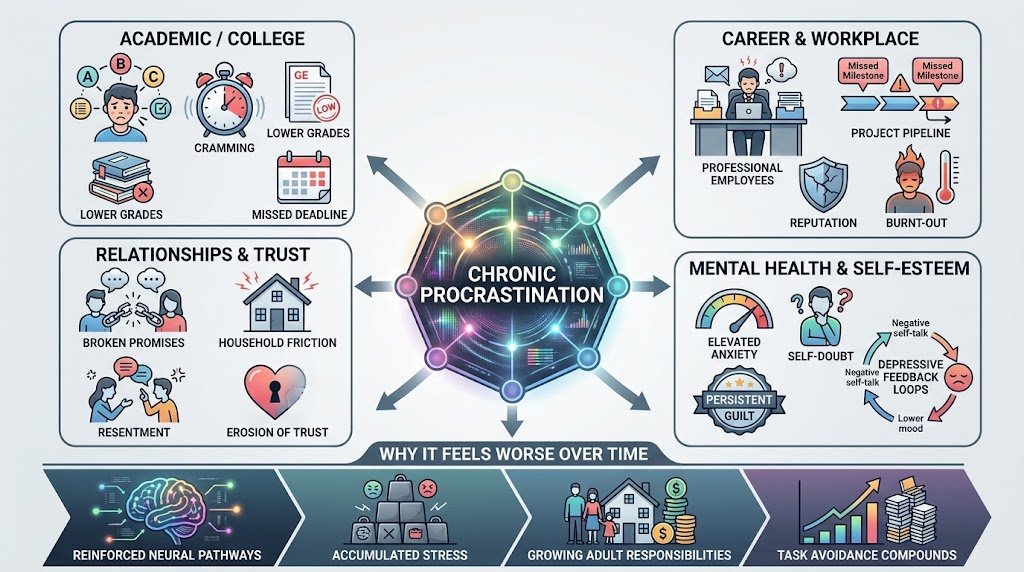
Procrastination is rarely isolated to a single assignment or task. When left unaddressed, task avoidance expands into a pervasive behavioral pattern that erodes personal stability, professional standing, and emotional health. Recognizing how chronic delay impacts different areas of life illuminates the true cost of task avoidance and highlights why early intervention is critical.
Academic/College Procrastination
For many students, college procrastination marks the transition point where informal delay habits evolve into severe academic obstacles. The sudden loss of structural supervision combined with high-volume coursework often overwhelms developing executive functions.
Cramming and Cognitive Exhaustion: Postponing study sessions forces reliance on all-night cramming, which impairs information retention, critical thinking, and exam performance.
Chronic Academic Distress: Repeatedly completing assignments moments before deadlines produces persistent distress, transforming education into a source of constant pressure rather than growth.
Compounded Academic Penalties: Delayed major projects or missed registration deadlines can lead to lowered grades, lost scholarships, or extended degree timelines.
Career and Workplace Impact
In professional environments, the career impact of chronic delay extends beyond missed deadlines, affecting professional reputation and long-term trajectory.
Erosion of Professional Credibility: Frequently requesting extensions or delivering rushed work damages your standing among peers, management, and clients.
Loss of Career Progression: Consistently avoiding high-visibility, complex projects reduces opportunities for promotions, key assignments, and leadership roles.
Workplace Burnout: The continuous pattern of delaying tasks followed by frantic, last-minute execution accelerates physical and emotional fatigue, leading to professional burnout.
Relationships and Trust
The impact of chronic delay on interpersonal relationships is frequently overlooked, yet it causes significant strain in personal and professional partnerships.
Broken Commitments: Repeatedly failing to follow through on shared responsibilities—such as household chores, event planning, or financial duties—erodes interpersonal trust.
Resentment and Friction: Partners, family members, or colleagues often feel forced to compensate for delayed responsibilities, creating ongoing friction and imbalance.
Perceived Unreliability: Friends and loved ones may misinterpret task avoidance as a lack of care, respect, or commitment to the relationship.
Mental Health and Self-Esteem
The psychological toll of chronic task avoidance creates a destructive feedback loop that directly damages overall mental health and long-term self-esteem.
Internalization of Failure: Repeatedly failing to meet personal intentions leads individuals to label themselves as lazy, incompetent, or inherently flawed.
Elevated Baseline Anxiety: The continuous awareness of unfinished responsibilities keeps the nervous system in a state of hypervigilance, raising baseline stress levels.
Depressive Cycles: The combination of lowered self-efficacy, pervasive guilt, and lost potential can trigger or deepen depressive symptoms over time.
Why It Can Feel Like It’s “Getting Worse” over Time
The perception that procrastination undergoes continuous escalation as you age is a documented psychological phenomenon driven by reinforcement loops and compounding demands.
Reinforced Neural Pathways: Every time you avoid a task to relieve immediate discomfort, your brain strengthens the neural connection between avoidance and relief, making the habit more automatic.
Accumulated Psychological Stress: Unfinished tasks and past failures generate a growing burden of guilt and anxiety, increasing the emotional resistance required to initiate future tasks.
Increasing Life Complexity: As career, personal, and adult responsibilities expand, the sheer volume of demands exposes the limitations of relying on last-minute panic to complete work.
Breaking the escalation cycle requires shifting focus from managing deadlines to systematically retraining your brain’s emotional regulation and task-initiation responses.
When to Seek Professional Help
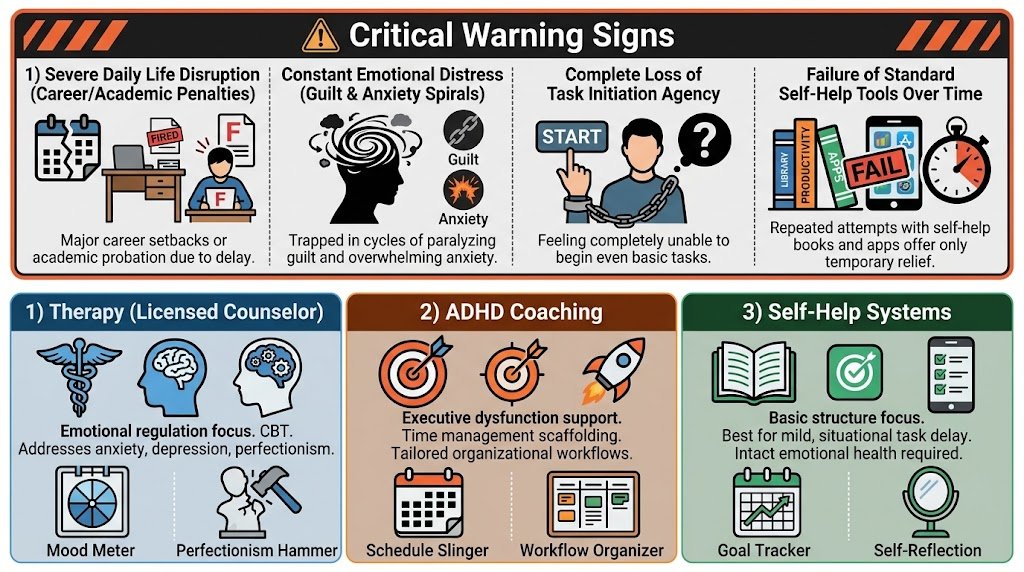
Recognizing when task delay shifts from a manageable productivity challenge into a serious health concern is essential for long-term well-being. When chronic delay consistently interferes with your ability to function, seeking structured mental health support provides the clinical guidance needed to restore stability and daily performance.
Professional intervention offers targeted strategies that self-help resources cannot provide, particularly when task avoidance is rooted in deeper psychological or neurological conditions.
Warning Signs It’s Time to Talk to Someone
While occasional procrastination is manageable through behavioral adjustments, specific warning signs indicate that it is time to consult a qualified professional.
Severe Functioning Impairments: Task avoidance is causing tangible life disruptions—such as job loss, academic suspension, severe financial penalties, or eviction.
Persistent Emotional Distress: You experience unrelenting feelings of guilt, worthlessness, depression, or panic attacks linked directly to your inability to initiate work.
Complete Loss of Agency: You feel utterly incapable of starting critical tasks despite understanding the severe negative consequences of delay.
Co-Occurring Mental Health Symptoms: Task avoidance is accompanied by severe insomnia, chronic fatigue, substance misuse, or intrusive negative thoughts.
Failure of Self-Help Tactics: You have consistently applied productivity frameworks, timeboxing, and habit tracking for months without achieving meaningful improvement.
Therapy vs. Coaching vs. Self-Help — What Fits Your Situation
Choosing the right level of support depends on the underlying driver of your task delay and the severity of its impact on your life.
Therapy (Licensed Therapist or Counselor): Best suited when procrastination is driven by clinical anxiety, major depression, trauma, or deep-seated perfectionism. A therapist or counselor utilizes evidence-based modalities like Cognitive Behavioral Therapy (CBT) to restructure underlying emotional patterns and cognitive distortions.
ADHD Coaching: Ideal when task delay stems primarily from neurodevelopmental factors, executive dysfunction, or time blindness without acute psychological distress. An ADHD coach focuses on practical, real-world scaffolding—helping you build customized organizational routines, time-management habits, and task initiation workflows.
Self-Help Systems: Appropriate for mild, situational procrastination where emotional health remains intact. Self-help books, productivity apps, and habit trackers work well when you simply need clearer structure, minor accountability, or better time-management techniques.
If task avoidance significantly degrades your quality of life, consulting a licensed mental health professional ensures you receive a proper evaluation and an individualized care plan.
Frequently Asked Questions
What are 10 ways to stop procrastinating?
To effectively stop procrastinating, combine immediate behavioral interventions with long-term emotional regulation strategies:
- Apply the 5-Minute Rule: Commit to engaging with a task for just five minutes to lower activation energy and build initial momentum.
- Remove Digital Distractions: Place your smartphone in another room and use browser blockers to eliminate easy dopamine triggers.
- Timebox Work Blocks: Use a timer to structure 25-minute periods of dedicated, uninterrupted single-task focus.
- Break Projects into Micro-Steps: Divide large assignments into tiny, hyper-specific action items to prevent cognitive overload.
- Practice Self-Forgiveness: Release guilt over past delays to lower the negative emotions driving future task avoidance.
- Design Your Environment: Adjust your surroundings to make working frictionless and distraction access inconvenient.
- Build Identity-Based Habits: Focus on becoming someone who executes reliably rather than relying on fluctuating motivation.
- Utilize Body Doubling: Work alongside a partner or colleague to leverage shared presence for continuous accountability.
- Track Incremental Wins: Keep a visible record of completed tasks to generate dopamine and reinforce progress.
- Address Emotional Triggers: Identify whether fear of failure, perfectionism, or ambiguity is causing the initial avoidance response.
Is procrastination curable?
Procrastination is not a disease, so it is not "curable" in a medical sense; rather, it is a learned habit and emotional coping strategy. However, chronic task delay is entirely manageable and reversible through targeted behavioral changes, cognitive restructuring, and emotional regulation techniques. By retraining your brain's response to task-induced discomfort and establishing supportive environmental systems, you can permanently eliminate chronic delay habits.
What personality type procrastinates the most?
While procrastination occurs across all personality profiles, research indicates specific traits correlate more strongly with task delay:
- High Neuroticism: Individuals who experience higher levels of anxiety, stress, and self-doubt are significantly more prone to emotional avoidance.
- Low Conscientiousness: Lower baseline levels of self-discipline, organization, and goal-directed persistence increase susceptibility to delay.
- Perfectionistic Profiles: The perfectionist procrastinator repeatedly delays action due to an all-or-nothing mindset and an intense fear that their work will fall short of high standards.
Who is a famous procrastinator?
One of the most famous historical procrastinators was Leonardo da Vinci. Despite his genius, da Vinci notoriously struggled with task completion and chronic delay, often taking decades to complete single works or leaving projects unfinished entirely. His masterpiece, The Virgin of the Rocks, was delayed for over a decade due to ongoing litigation and distraction, and he famously took 16 years to complete the Mona Lisa.
Why do I procrastinate on things that would actually improve my life?
Procrastinating on life-improving goals—such as launching a business, exercising, or pursuing education—stems from psychological self-sabotage driven by fear of change and vulnerability.
High-value goals carry significant personal meaning, which inherently raises the psychological stakes. When a project matters deeply to your identity, the fear of failure, fear of judgment, or even the anxiety surrounding success increases dramatically. Your brain perceives this potential emotional risk as a threat, triggering avoidance to protect your current self-image from perceived disruption.
Mark Steve
Mark Steve is a tech, business, and lifestyle writer with over 5 years of experience analyzing digital trends, startups, and online business models. He publishes well-researched, fact-checked content focused on clarity, credibility, and real-world value.