Is Procrastination a Symptom of Depression?
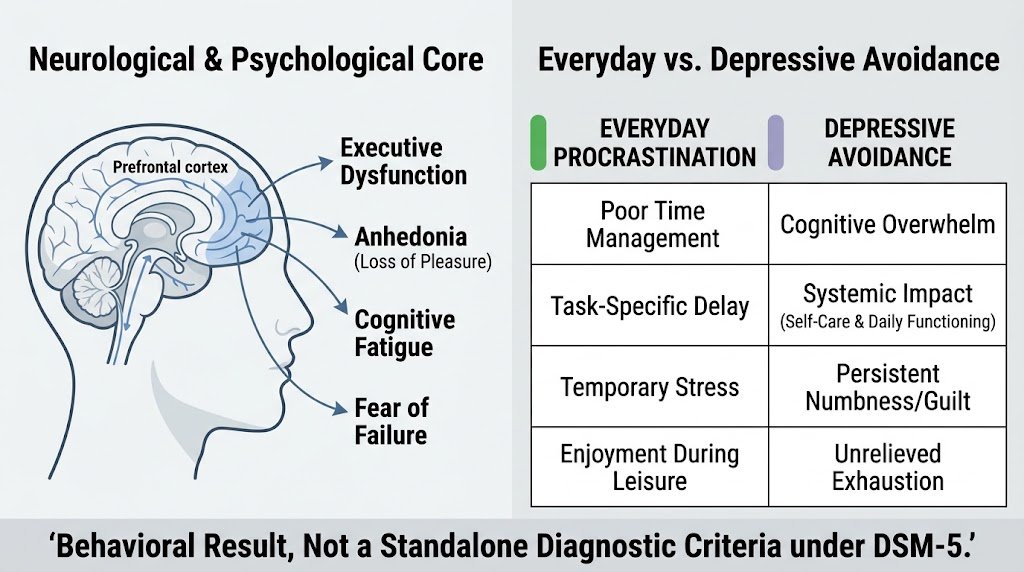
Procrastination is not a formal symptom of depression under the DSM-5, but it is a frequent behavioral result of clinical depression. Major depressive disorder impairs the brain’s executive functioning, drastically reducing motivation, energy, and cognitive focus. While procrastination itself is a behavioral outcome rather than a standalone clinical diagnosis, chronic avoidance often signals underlying mental health challenges like depression or anxiety.
How Depression Impairs Executive Functioning and Drive
Clinical depression alters brain chemistry and neural pathways, making standard daily tasks feel overwhelming. The psychological mechanisms driving depression-fueled procrastination include:
Executive Dysfunction: Impaired decision-making, planning, and task initiation due to reduced activity in the prefrontal cortex.
Anhedonia: The loss of interest or pleasure in activities, which destroys intrinsic motivation to start or complete tasks.
Low Energy and Fatigue: Severe physical and mental exhaustion that limits cognitive endurance.
Fear of Failure: Pervasive feelings of worthlessness or guilt, leading individuals to avoid tasks to escape perceived failure.
Key Differences Between Everyday Procrastination and Depressive Avoidance
Understanding whether delay tactics stem from poor time management or a clinical mood disorder is essential for proper intervention.
| Aspect | Everyday Procrastination | Depressive Avoidance |
| Primary Cause | Poor time management, boredom, or poor prioritization | Cognitive fatigue, low mood, and overwhelming dread |
| Associated Feelings | Temporary guilt, annoyance, or stress | Deep hopelessness, worthlessness, and pervasive exhaustion |
| Scope of Impact | Specific tasks (e.g., work, studying, chores) | Expansive—affects self-care, social life, and daily functioning |
| Relief Upon Delay | Short-term relief or enjoyment during leisure time | Persistent numbness, guilt, or anxiety with no sense of relief |
When Avoidance Signals a Clinical Issue
When procrastination co-occurs with symptoms like persistent sadness, sleep disturbances, changes in appetite, or feelings of guilt, it often reflects an underlying mood disorder rather than simple laziness. Professional evaluations—such as psychological assessments or cognitive behavioral therapy (CBT)—help address the root cognitive patterns rather than relying strictly on standard productivity methods.
Why Isn't Procrastination an "Official" Symptom, Yet So Common in Depression?
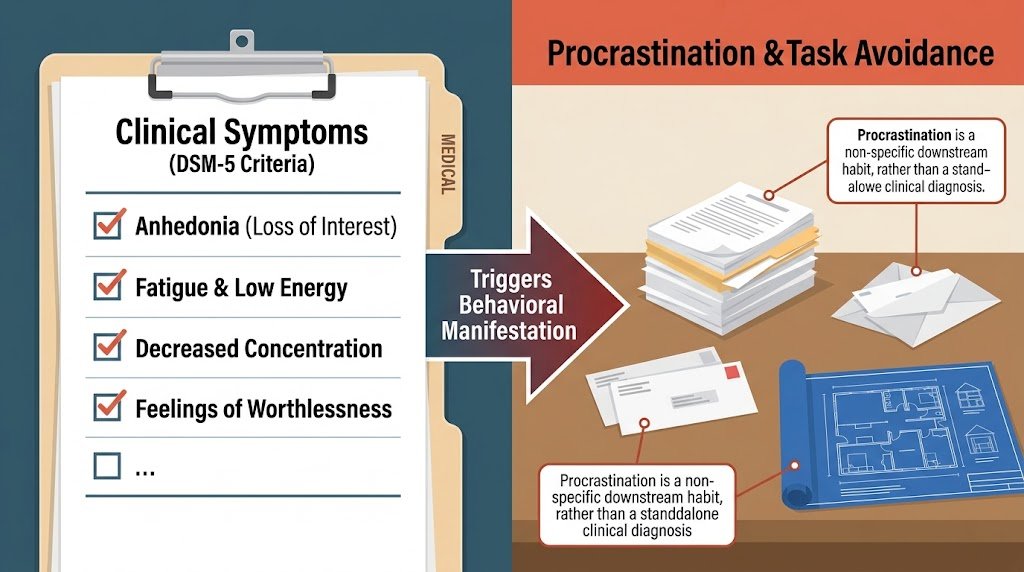
The Diagnostic and Statistical Manual of Mental Disorders (DSM-5) classifies clinical conditions based on core emotional, cognitive, and physiological impairments rather than specific downstream habits. Procrastination is a behavioral consequence rather than a primary diagnostic metric, yet it occurs frequently in depression because it directly manifests from core diagnostic symptoms like fatigue, low concentration, and low self-worth.
What DSM-5 Actually Lists as Depression Symptoms
To meet the criteria for Major Depressive Disorder under the DSM-5, an individual must experience at least five specific symptoms during a two-week period. These criteria focus on internal states rather than external behavioral outputs.
The formal diagnostic criteria include:
Depressed Mood: Persistent feelings of sadness, emptiness, or hopelessness reported nearly every day.
Anhedonia: Markedly diminished interest or pleasure in all, or almost all, daily activities.
Fatigue or Loss of Energy: Near-daily physical and mental exhaustion without physical exertion.
Decreased Concentration: Reduced ability to think, focus, or make decisions, leading to mental paralysis.
Feelings of Worthlessness: Excessive or inappropriate guilt and negative self-evaluation.
Physiological Shifts: Significant weight fluctuations, insomnia or hypersomnia, and psychomotor agitation or retardation.
Procrastination as a “Behavior,” Not a Diagnosis
Mental health professionals distinguish between a root clinical symptom and the resulting secondary behavior. A symptom represents an underlying dysfunction in mood regulation or brain processing, whereas a behavior is the observable action—or inaction—that follows.
Understanding this distinction clarifies why procrastination accompanies depression:
Symptom-Behavior Cascade: Reduced energy (symptom) leads directly to task postponement (behavior).
Diagnostic Specificity: Procrastination is non-specific; it occurs in ADHD, anxiety, perfectionism, and ordinary burnout. Treating it as a diagnostic criterion would create diagnostic confusion.
Internal vs. External Focus: The DSM-5 measures how a disorder alters cognitive processing (such as anhedonia or worthlessness), while procrastination is merely one of many outward ways those cognitive shifts manifest.
The Brain Science — How Depression Actually Causes Procrastination
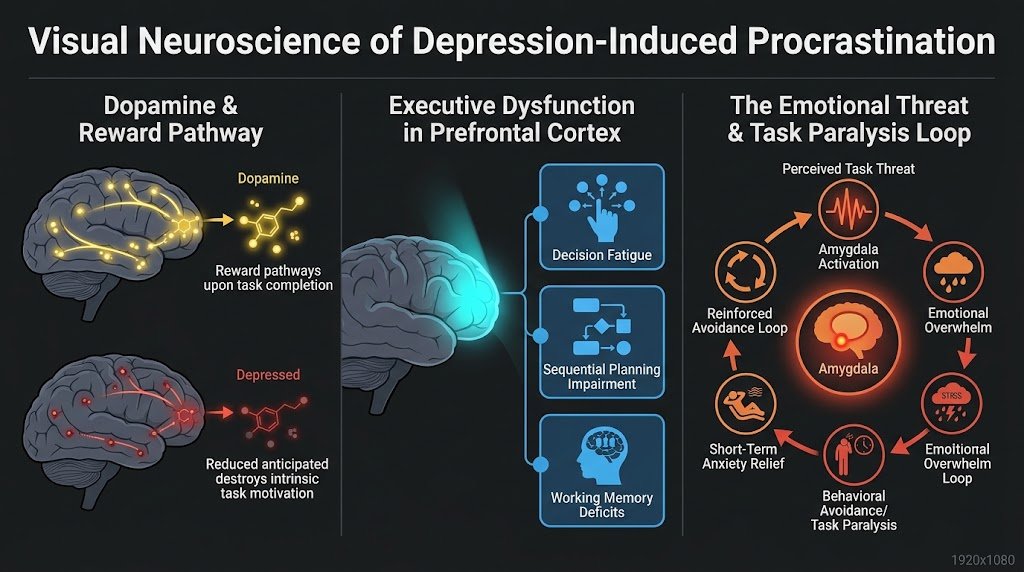
Depression fundamentally alters the neurological systems responsible for motivation, planning, and emotional regulation. Rather than a flaw in willpower, depression-driven procrastination is a direct biological outcome of compromised brain chemistry and structural changes within the central nervous system.
The Dopamine & Reward System Breakdown
Motivation relies heavily on dopamine, a key neurotransmitter involved in the brain’s reward pathway. In a healthy state, the brain releases dopamine in anticipation of completing a task, providing the internal incentive required to initiate effort.
In individuals experiencing clinical depression, this reward system suffers significant dysfunction:
Blunted Reward Signaling: Reduced dopamine transmission lowers the anticipated satisfaction of completing a goal, making task outcomes feel meaningless.
Altered Effort-Cost Calculations: According to PMC research paper{rel=”nofollow”}, depression skews the brain’s assessment of effort versus reward, causing even minor tasks to feel disproportionately demanding relative to their perceived payoff.
Brain Fog and Executive Dysfunction
The prefrontal cortex manages high-level cognitive processes known as executive functioning, which include working memory, time management, and task switching. Depression reduces neural activity and connectivity within the prefrontal cortex, leading to significant executive dysfunction and persistent brain fog.
This neurological impairment manifests in everyday workflows through specific patterns:
Decision Fatigue: Simple choices—such as deciding where to start a project—consume excessive mental energy, inducing cognitive overload.
Impaired Sequential Planning: Mapping out the step-by-step execution of a complex task becomes difficult, causing individuals to stall at the initiation stage.
Working Memory Deficits: Retaining multiple instructions or details simultaneously becomes challenging, increasing the likelihood of task abandonment.
Emotional Overwhelm and Task Paralysis
Procrastination is fundamentally an emotional regulation problem, not a time management deficit. When depression heightened feelings of self-doubt and perceived inadequacy, starting a task triggers severe emotional threat responses.
The brain responds to this perceived emotional threat through distinct stages:
Perceived Threat Activation: The amygdala processes an upcoming assignment or responsibility as a source of emotional distress or guaranteed failure.
Task Paralysis: To protect the psychological self from negative emotions like guilt or embarrassment, the brain triggers an avoidance response, locking the individual into task paralysis.
The Avoidance Loop: Postponing the task provides short-term relief from anxiety, reinforcing the neural pathways that drive avoidance behavior in the future.
The Depression–Procrastination Cycle (The Spiral)
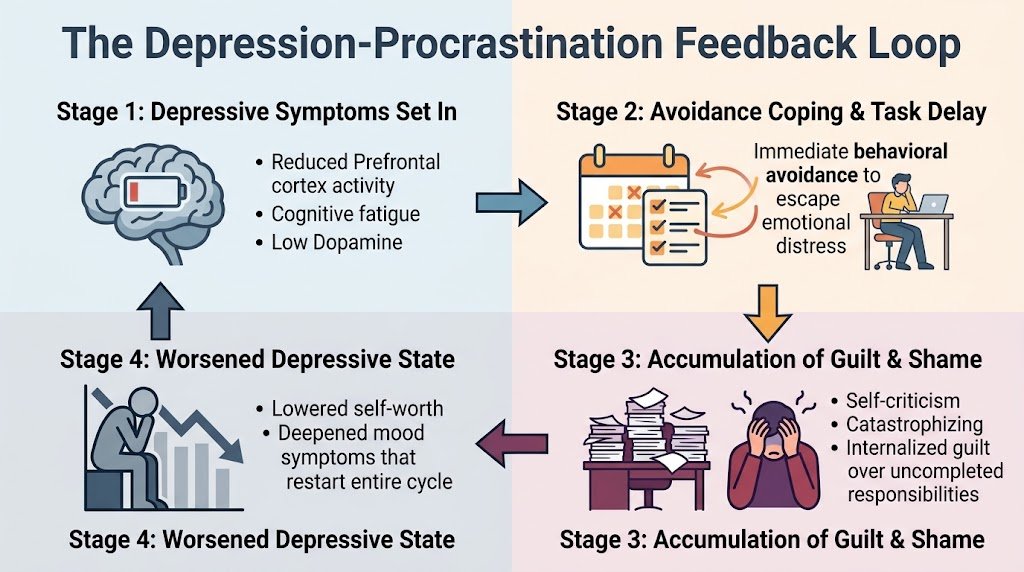
The relationship between depression and procrastination is rarely a one-way street. Instead, it operates as a bidirectional feedback loop where depressive symptoms drive avoidance behavior, and the resulting inaction deepens emotional distress. Breaking this cycle requires recognizing how mood and behavioral avoidance continually reinforce one another.
How Depression Leads to Procrastination
Depression creates a psychological environment where initiating action feels nearly impossible. When executive dysfunction, brain fog, and low energy set in, everyday responsibilities begin to feel like insurmountable obstacles.
The shift from depressive symptoms to active delay follows a distinct internal pattern:
Energy Deficits: Low physical and mental stamina causes individuals to defer demanding tasks in favor of immediate rest.
Catastrophizing: Depressive cognitive distortions frame tasks as overly complex, stressful, or doomed to failure before effort is even applied.
Avoidance Coping: Postponing a task serves as a temporary defense mechanism to escape the negative emotions associated with doing it.
How Procrastination Can Worsen Depression (Guilt & Shame Loop)
While avoidance offers short-term relief from stress, it quickly generates secondary emotional consequences that aggravate depressive symptoms. The delay creates a growing backlog of unfinished tasks, triggering intense internal criticism.
This psychological dynamic exacerbates a worsened mood through specific stages:
Mounting Self-Blame: As deadlines approach, temporary relief turns into intense guilt over perceived unproductiveness.
Internalization of Failure: Over time, guilt shifts into deep-seated shame, causing individuals to view their procrastination as a personal character flaw rather than a manifestation of a health condition.
Amplified Hopelessness: Accumulated unfinished responsibilities reinforce feelings of worthlessness, deepening depressive symptoms and making future task initiation even harder.
Visual Breakdown of the Spiral
Understanding the ongoing loop between emotional distress and behavioral delay helps highlight where interventions can disrupt the cycle.
Step 1: Depressive Symptoms Take Hold — Low energy, anhedonia, and cognitive fatigue reduce the mental bandwidth needed for task initiation.
Step 2: Avoidance Coping — Tasks are postponed to avoid immediate overwhelm, providing temporary relief from emotional discomfort.
Step 3: Guilt & Shame Accumulation — Unmet responsibilities trigger catastrophizing, intense self-blame, and feelings of inadequacy.
Step 4: Worsened Depression — The emotional weight of accumulated shame and task backlog lowers self-worth, plunging the individual back into deeper depressive symptoms.
Signs Your Procrastination Might Be Depression, Not Just Laziness
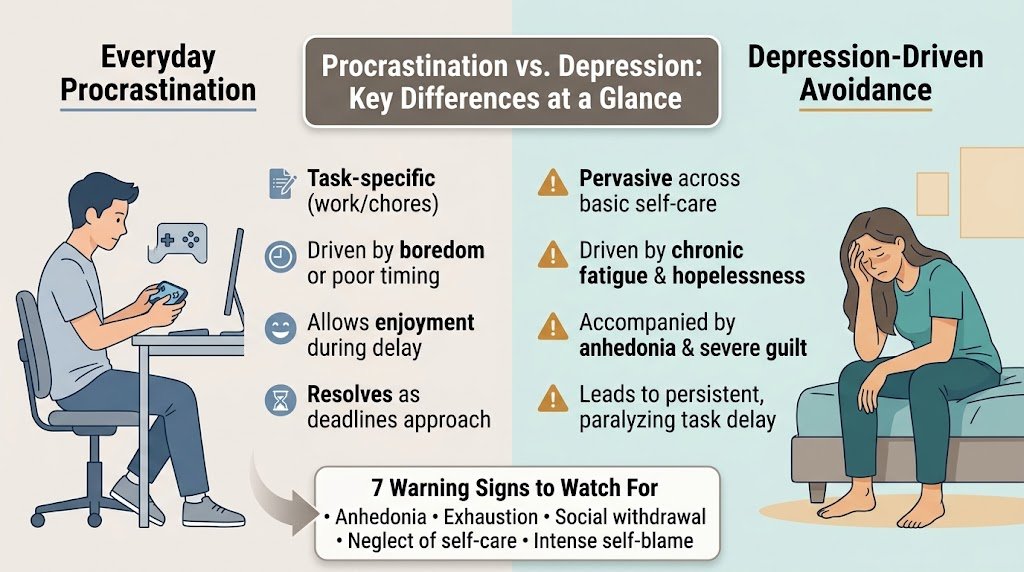
Distinguishing between everyday procrastination and depression-driven avoidance comes down to the frequency, intensity, and underlying emotional drivers of the delay. While normal procrastination stems from poor task engagement or temporary fatigue, depressive procrastination is persistent, paralyzing, and accompanied by a widespread loss of functioning across multiple areas of life.
Normal Procrastination vs. Depression-Driven Procrastination
Everyday procrastination is typically task-specific and temporary, whereas depression-driven procrastination is a chronic state of emotional and physical immobilization.
Task Scope: Normal procrastination usually targets boring, complex, or unpleasant assignments (e.g., filing taxes or studying for an exam). Depressive avoidance affects basic daily routines, including basic self-care, hobbies, and simple personal communications.
Emotional State: Occasional delay is driven by irritation, low motivation, or poor time estimation, while depressive delay is rooted in deep feelings of hopelessness, severe self-criticism, and emotional numbness.
Response to Free Time: When regular procrastinators put off work, they often enjoy alternate low-stress activities or leisure time. Individuals with depression experience anhedonia—an inability to feel pleasure—making free time feel equally draining, hollow, or guilt-inducing.
Duration: Occasional procrastination resolves once deadlines approach or pressure mounts. Chronic, depression-led paralysis persists regardless of consequences or upcoming deadlines.
7 Warning Signs to Watch For
If task avoidance occurs alongside these patterns, the underlying issue likely reflects a clinical mood condition rather than simple laziness:
Inability to Start Even Small, High-Priority Tasks: Experiencing severe mental paralysis when facing routine responsibilities like replying to a simple email, making a bed, or opening mail.
Persistent Loss of Interest (Anhedonia): Finding zero satisfaction or joy in activities, hobbies, or entertainment that previously brought fulfillment and relaxation.
Pervasive Feelings of Hopelessness: Postponing tasks due to an overwhelming internal narrative that any effort made will inevitably fail or prove meaningless.
Physical and Mental Exhaustion: Feeling chronically fatigued, heavy, or physically drained even after extended rest or minimal physical exertion.
Increasing Social Withdrawal: Postponing or ignoring text messages, phone calls, and social invitations to isolate yourself from friends, family, and colleagues.
Severe, Excessive Self-Blame: Transforming task delay into intense self-loathing, internalizing the inability to start as a deep character failure rather than a manageable hurdle.
Neglect of Basic Personal Needs: Postponing fundamental self-care tasks such as eating regular meals, showering, brushing teeth, or taking prescribed medications.
Procrastination Depression Self-Check
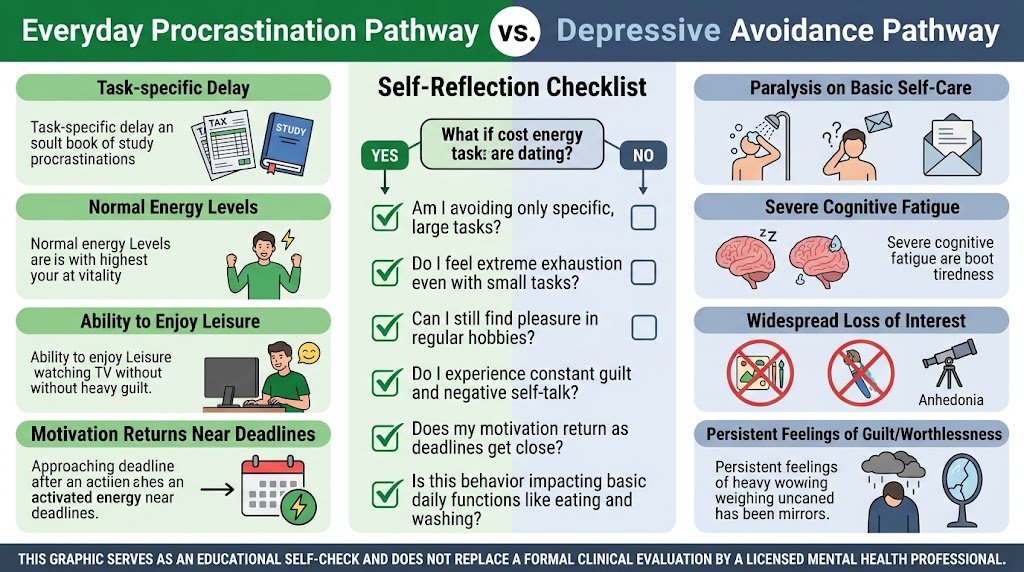
While procrastination is common, distinguishing between routine delay and depression-fueled paralysis can clarify your next steps. This self-assessment helps you reflect on your recent behavior, emotional patterns, and energy levels to evaluate whether your task avoidance may be linked to an underlying mood condition.
6 Quick Questions to Reflect On
Consider your experiences over the past two to four weeks. Answer these questions based on your predominant patterns rather than an isolated bad day:
Task Range: Is your procrastination limited to complex, boring, or high-stakes projects, or are you deferring basic daily routines like bathing, preparing meals, or opening mail?
Emotional State During Delay: When you put off a task, do you feel temporary relief and enjoy alternate activities, or do you experience persistent numbness, heavy guilt, and overwhelming dread?
Energy Levels: Does task initiation feel hard due to poor time management, or does your body feel physically heavy, exhausted, and completely drained of energy regardless of how much sleep you get?
Impact on Joy (Anhedonia): When you step away from your responsibilities, are you still able to enjoy your favorite hobbies, or have you lost interest and pleasure in almost everything you usually love?
Inner Self-Talk: How do you view your inability to start? Do you criticize your focus, or do you internalize the delay as proof that you are fundamentally broken, worthless, or a complete failure?
Response to Deadlines: As a deadline approaches, does the pressure motivate you to take action, or does the mounting pressure leave you completely paralyzed and unable to move forward?
What Your Answers Might Mean
Reviewing your responses can provide valuable perspective on the root cause of your task avoidance:
Mostly Everyday Procrastination Patterns: If your task avoidance is limited to specific work or academic projects, and you maintain normal energy levels and interest in your personal life, your delay likely stems from standard productivity hurdles, perfectionism, or poor time management.
Potential Depressive Avoidance Patterns: If your task avoidance spans basic daily care, is accompanied by chronic physical exhaustion, loss of interest in hobbies, and severe self-loathing, your procrastination may be a behavioral symptom of an underlying mood disorder.
Important Note: This self-check is intended strictly for educational self-reflection and is not a clinical diagnosis. If task avoidance is significantly disrupting your work, relationships, or quality of life, consider scheduling a professional evaluation with a licensed mental health professional, therapist, or psychiatrist to discuss an accurate assessment and a tailored treatment plan.
Procrastination — Depression vs. Anxiety vs. ADHD vs. Autism vs. Laziness
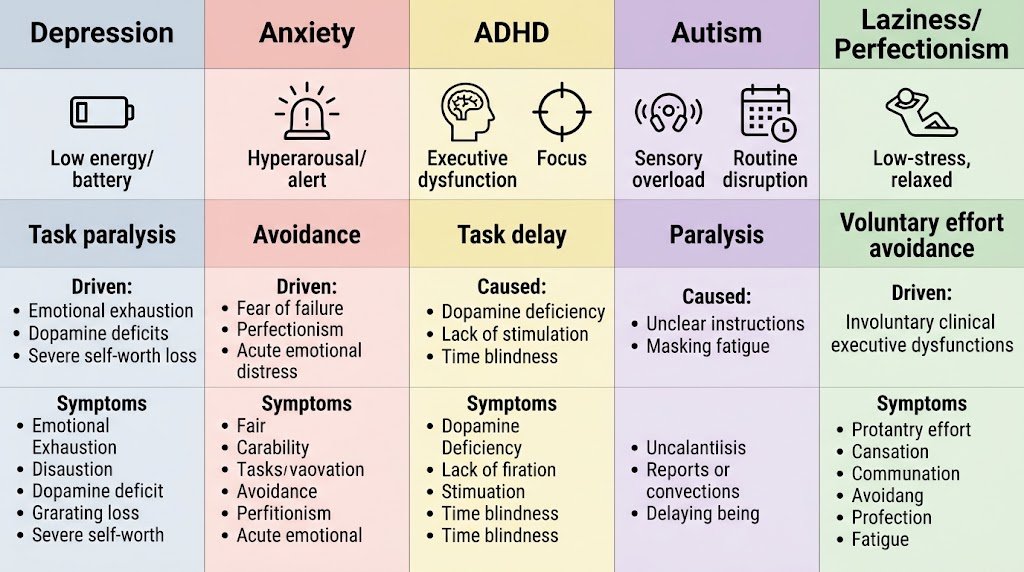
Procrastination manifests across various mental health conditions, neurodivergent profiles, and behavioral habits, but the psychological mechanisms driving the delay differ significantly. Misidentifying the root cause often leads to ineffective coping strategies. Understanding these distinct avoidance patterns helps target the underlying issue—whether it is mood impairment, emotional dysregulation, neurodevelopmental differences, or simple task engagement.
Comparison Table
The following breakdown compares how different underlying drivers shape task initiation, avoidance behavior, and emotional states:
| Driver | Root Cause | Primary Avoidance Pattern | Emotional & Cognitive State |
| Depression | Low dopamine, anhedonia, and severe cognitive fatigue | Complete task paralysis and withdrawal from daily routines | Hopelessness, numbness, low self-worth, and extreme physical exhaustion |
| Anxiety | Fear of negative outcomes or perceived threat | Active delay to temporarily reduce immediate stress or discomfort | Overthinking, panic, tension, catastrophizing, and emotional hyperarousal |
| ADHD | Dopamine deficiency and executive function deficits | Difficulty initiating non-stimulating or low-interest tasks | Restlessness, time blindness, distractibility, and hyperfocus on high-dopamine tasks |
| Autism | Sensory overwhelm, burnout, or demand avoidance | Paralysis caused by unclear instructions, routine disruption, or sensory overload | Overwhelmed, rigid thinking, shutdowns, and cognitive fatigue from masking |
| Perfectionism | Unrealistic standards and fear of evaluation | Postponing task start until conditions, research, or execution can be “flawless” | High anxiety, fear of failure, self-criticism, and all-or-nothing mindset |
| Laziness | Lack of motivation or low interest in a specific task | Choosing more enjoyable or low-effort alternatives voluntarily | Unbothered, relaxed, low distress, and absence of intense guilt or mental paralysis |
Key Differences at a Glance
While task delay looks similar on the surface, analyzing the internal experience reveals clear differences between these states:
Depression vs. Anxiety: Depressive procrastination stems from a belief that effort is pointless or impossible due to exhaustion. Anxiety-driven procrastination stems from caring deeply about the outcome but feeling too terrified of failure or judgment to begin.
ADHD vs. Autism: ADHD procrastination is primarily driven by difficulty managing attention, impulse, and time without immediate rewards. Autistic task paralysis often occurs when a task lacks clear structural steps, breaks predictable routines, or triggers sensory and social fatigue.
Depression vs. Perfectionism: Depressive task avoidance is defined by numbness and low energy, leading to passive detachment. Perfectionist procrastination is an active, high-stress defense mechanism where the fear of making a mistake stalls action.
Clinical Conditions vs. Laziness: Laziness is a voluntary choice to prioritize comfort over effort without causing significant emotional distress. In contrast, depression, anxiety, ADHD, and autism involve involuntary executive dysfunction, intense guilt, and paralyzing stress when trying to initiate action.
How to Break the Cycle — Practical, Actionable Steps
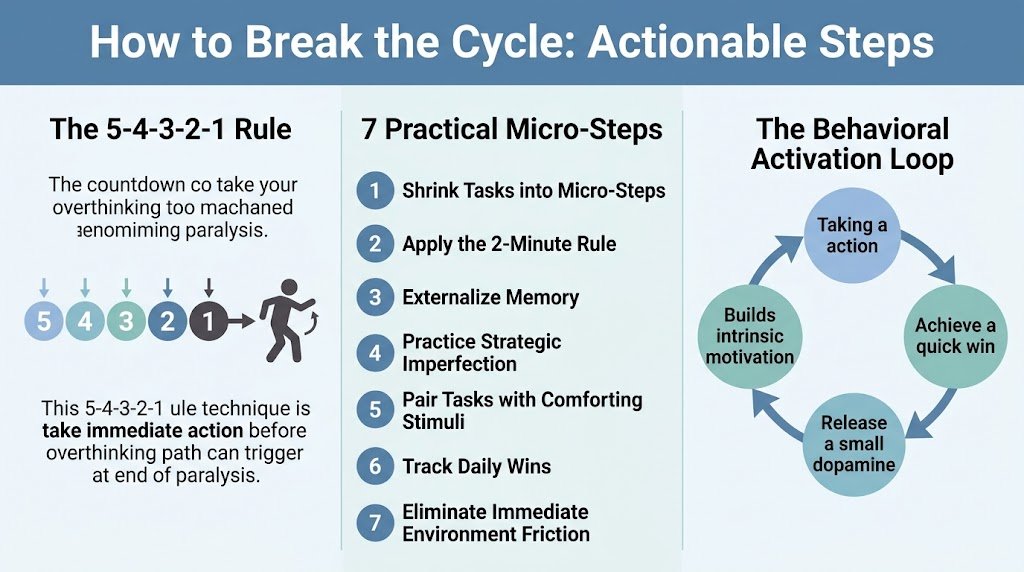
Overcoming depression-driven procrastination requires shifting away from high-pressure willpower tactics toward gentle, low-friction behavioral adjustments. Standard productivity advice often fails when executive dysfunction is present. Utilizing evidence-based strategies designed to bypass mental resistance helps restore task initiation and momentum.
The 5-4-3-2-1 Rule Explained
The 5-4-3-2-1 countdown technique—developed by Mel Robbins—is a simple mindfulness and grounding anchor that disrupts executive paralysis. By creating a direct countdown, you shift focus away from emotional catastrophizing and engage the prefrontal cortex to initiate action.
Select one micro-task you have been delaying, such as standing up, opening a blank document, or walking to the sink. Avoid focusing on completing the entire project.
Count steadily backward: 5 — 4 — 3 — 2 — 1. Counting in reverse requires active concentration, interrupting the brain’s automatic anxiety and hesitation loops.
As soon as you reach 1, immediately move your body to start the task before your brain can generate reasons to delay or overthink.
7 Practical Steps to Stop Depression-Driven Procrastination
Breaking task paralysis when living with depression involves lowering friction and celebrating minimal effort to gradually rebuild self-efficacy.
Shrink Tasks into Micro-Tasks: Break complex projects down into tiny, manageable steps. Instead of “clean the kitchen,” focus on “place one dish in the sink.”
Apply the 2-Minute Rule: Commit to working on a task for just two minutes. Tell yourself you have full permission to stop once the two minutes are up.
Externalize Your Memory: Write down immediate steps on paper rather than relying on working memory, reducing cognitive fatigue and decision overload.
Practice Strategic Imperfection: Lower your standards for task quality. Focus on creating a “rough draft” or performing a half-effort job rather than aiming for perfection.
Pair Tasks with Comforting Stimuli: Combine necessary tasks with low-stress background elements, such as listening to a favorite podcast or a soothing playlist.
Track Daily Wins: Keep a visible list of completed actions, no matter how small. Seeing tangible progress reinforces positive feedback loops in the brain.
Eliminate Immediate Friction: Set up your environment in advance to make task initiation effortless, such as laying out clothes or opening required software windows early.
Behavioral Activation Technique
Behavioral activation is a core Cognitive Behavioral Therapy (CBT) technique designed to break the cycle of depression and avoidance. It operates on the principle that action precedes motivation, reversing the common belief that one must feel motivated before taking action.
The mechanism relies on a structured motivation loop:
The Trap: Waiting for energy or motivation creates an endless state of passive delay, which deepens depressive symptoms.
The Interventional Shift: Taking small, scheduled actions—even without initial motivation—stimulates dopamine release upon completion.
The Motivation Loop: Small wins generate momentum, gradually building intrinsic motivation and increasing overall energy levels over time.
When to Seek Professional Help
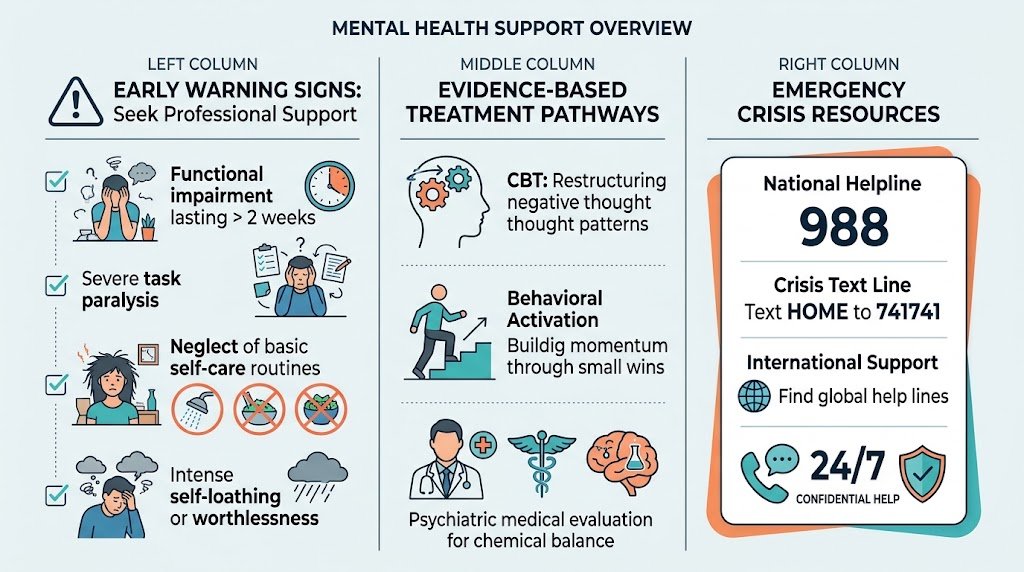
Recognizing when task avoidance transitions from a manageable routine hurdle to an indicator of a clinical mood disorder is essential for long-term health and recovery. Because mental health topics fall under Google’s Your Money or Your Life (YMYL) guidelines, accessing professional care ensures that underlying psychological mechanisms are safely and accurately evaluated.
Signs It’s Time to Talk to a Professional
While occasional procrastination can be addressed with behavioral adjustments, persistent task paralysis combined with depressive symptoms requires professional support.
Consider scheduling a professional evaluation if you observe the following early warning signs:
Pervasive Functional Impairment: Task avoidance severely compromises your employment, academic standing, financial obligations, or personal relationships.
Duration Beyond Two Weeks: Chronic feelings of overwhelming dread, fatigue, and inability to initiate basic tasks persist daily for more than two consecutive weeks.
Neglect of Basic Needs: Avoidance extends to essential self-care routines, such as skipping meals, avoiding hygiene, or ignoring medical care.
Severe Self-Loathing: The inability to complete tasks triggers intense feelings of worthlessness, hopelessness, or thoughts that others would be better off without you.
Treatment Options
Addressing depression-driven procrastination involves treating the underlying mood disorder rather than relying solely on productivity tactics. Evidence-based care pathways include:
Cognitive Behavioral Therapy (CBT): CBT is widely considered the gold-standard therapeutic approach for depression and behavioral avoidance. A licensed therapist helps identify distorted thinking patterns (such as catastrophizing or all-or-nothing thinking) and replaces them with healthier cognitive habits.
Behavioral Activation Therapy: A specialized branch of CBT that systematically helps individuals re-engage in rewarding, high-value activities to naturally boost dopamine levels and restore energy.
Medical Support: A clinical assessment by a psychiatrist or primary care physician can determine if medication—such as selective serotonin reuptake inhibitors (SSRIs)—is appropriate to address chemical imbalances affecting motivation, focus, and emotional regulation.
Crisis Resources
If you or someone you know is feeling overwhelmed, experiencing severe hopelessness, or having thoughts of self-harm, immediate confidential support is available:
National Crisis and Suicide Lifeline (USA): Call or text 988 (Available 24/7, free, and confidential).
Crisis Text Line: Text HOME to 741741 to connect with a crisis counselor.
International Resources: If you are outside the United States, please contact your local emergency services or visit Befrienders Worldwide to find support in your country.
Frequently Asked Questions (FAQ)
Answering common questions about task avoidance, mental health conditions, and cognitive patterns can help clarify how different psychological factors influence behavior.
Why do I keep procrastinating everything?
Chronic procrastination across all areas of life usually stems from underlying emotional dysregulation, chronic fatigue, or executive dysfunction rather than poor time management. When task delay becomes pervasive, it is frequently driven by underlying conditions such as clinical depression, anxiety disorders, ADHD, or severe burnout.
What are the symptoms of severe depression?
Severe depression—also known as Major Depressive Disorder—involves persistent emotional, cognitive, and physical impairments lasting at least two weeks. Common symptoms include:
- Persistent sadness, emptiness, or severe hopelessness
- Anhedonia (complete loss of interest or pleasure in daily activities)
- Chronic physical fatigue and severe lack of energy
- Executive dysfunction, brain fog, and inability to concentrate or make decisions
- Feelings of profound worthlessness or excessive guilt
- Significant changes in sleep patterns, appetite, or body weight
- Recurrent thoughts of death or suicide
Do people with ADHD procrastinate?
Yes, individuals with Attention-Deficit/Hyperactivity Disorder (ADHD) frequently experience severe procrastination. ADHD-driven procrastination is caused by a neurodevelopmental deficiency in dopamine regulation and executive function, leading to "time blindness," difficulty initiating non-stimulating tasks, and challenges with organization and focus.
Is procrastination a sign of anxiety?
Yes, procrastination is a core behavioral manifestation of anxiety. Anxiety-driven procrastination occurs when an individual perceives a task as a threat—often due to fear of failure, fear of judgment, or perfectionism. Delaying the task serves as an immediate avoidance mechanism to temporarily relieve stress and apprehension.
Is procrastination a sign of intelligence or laziness?
Procrastination is neither a sign of high intelligence nor simple laziness. While individuals with high intelligence may procrastinate due to perfectionism, overthinking, or lack of intellectual stimulation, procrastination itself is fundamentally an emotional regulation problem. Laziness implies an unbothered choice to avoid effort, whereas chronic procrastination involves internal conflict, stress, and executive paralysis.
What personality type procrastinates the most?
From a psychological perspective, individuals scoring low in Conscientiousness and high in Neuroticism on the Big Five personality traits procrastinate the most. High neuroticism increases susceptibility to anxiety, self-doubt, and emotional overwhelm, while lower conscientiousness impacts self-discipline, goal orientation, and impulse control.
What are the early warning signs of depression?
Early warning signs of depression often manifest subtly before full diagnostic criteria are met. Key indicators include:
- Mild but persistent loss of enthusiasm for usual hobbies or social interactions
- Increasing difficulty starting routine tasks or making simple decisions
- Mild changes in sleep quality or persistent low-level fatigue
- Higher irritability, low stress tolerance, or unexplained emotional heaviness
- Growing feelings of detachment, self-doubt, or unprovoked guilt
Mark Steve
Mark Steve is a tech, business, and lifestyle writer with over 5 years of experience analyzing digital trends, startups, and online business models. He publishes well-researched, fact-checked content focused on clarity, credibility, and real-world value.