Why Procrastination Might Not Be a Willpower Problem

Chronic avoidance rarely stems from a simple lack of discipline. For many individuals, putting off important tasks is a deeply ingrained physiological protective mechanism rather than a behavioral flaw. When demands trigger old survival responses, the nervous system shifts into a state of freeze, making even simple actions feel overwhelmingly unsafe.
Procrastination often functions as an involuntary self-preservation tactic managed by the autonomic nervous system.
Traditional productivity advice fails here because it treats a neurological bottleneck as a motivation deficit.
Recognizing this shift removes unproductive self-blame, opening the door to nervous system regulation instead of forced execution.
The Hidden Link Between Childhood Trauma and Avoidance Behavior
Unresolved childhood trauma alters how the brain perceives threat and demand, directly linking chronic stress to task avoidance. When growing up involved unpredictable environments or emotional neglect, the developing brain learned that rest or engagement carried hidden risks.
Toxic Stress Conditioning: Prolonged childhood stress keeps the amygdala hyper-vigilant, interpreting everyday responsibilities as genuine physical threats.
Freeze Response Activation: When the nervous system perceives a task as too high-stakes or overwhelming, it triggers a freeze response, manifesting as mental paralysis or exhaustion.
Protective Detachment: Procrastination acts as an emotional shield, subconsciously keeping individuals away from situations where they might fail, judgment might occur, or past wounds could resurface.
What Is Toxic Stress and How It Affects the Developing Brain
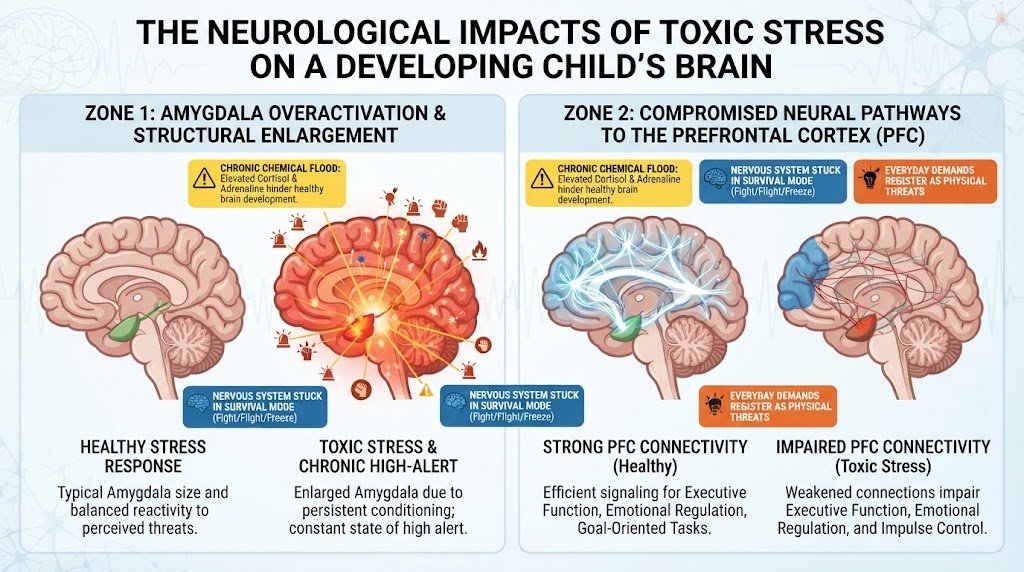
Toxic stress refers to strong, frequent, and prolonged adversity—such as emotional neglect, abuse, or household dysfunction—without adequate adult support. During childhood development, this constant chemical flood structurally alters the brain, particularly enlarging the amygdala and weakening connections to the prefrontal cortex.
Neurological Remodeling: Chronic stress forces the brain to prioritize survival circuits over complex planning, organization, and emotional regulation centers.
Compromised Executive Function: The prefrontal cortex, responsible for goal-oriented tasks and decision-making, struggles to come online effectively under high-pressure conditions.
Persistent Vigilance: The nervous system remains stuck in a baseline state of high alert, making everyday life feel like an endless series of emergencies.
Why the Brain Treats Deadlines and Evaluation as Danger
When a nervous system is shaped by early adversity, normal adult pressures like deadlines, performance reviews, or creative output register as literal survival threats. The brain struggles to differentiate between a physical predator and a high-stakes project, triggering an identical cascade of protective chemicals.
Fear of Negative Evaluation: Past conditioning often links mistakes or imperfection to severe emotional or relational punishment, making evaluation feel unsafe.
Misdirected Threat Response: The brain views complex, open-ended work as an ambiguous threat, immediately activating fight-or-flight mechanisms instead of focused concentration.
Paralysis Over Action: Because the body prepares to fight or flee, sitting still at a desk to write or organize triggers a biological mismatch, resulting in the freeze response.
Harsh Criticism and Perfectionist Parenting
Growing up with hyper-critical caregivers teaches a child that mistakes are dangerous rather than natural learning opportunities. Perfectionism becomes a desperate shield against harsh judgment, but because absolute perfection is impossible, the anticipation of failing paralyzes action before it even begins.
Real-World Scenario: Maya delays starting graphic design projects for weeks. Whenever she remembers her father redlining her childhood art projects with a sharpie, her chest tightens, and she convinces herself it is better not to submit anything than to submit something imperfect.
Internalized Standard: The child adopts the critical caregiver’s voice, ensuring that self-judgment is harsher than anything external.
The Paralysis Loop: Because nothing will ever meet the impossible internal threshold, the brain halts all execution to avoid the anticipated emotional blow.
Unpredictable or Chaotic Home Environments
Living in a household marked by sudden emotional outbursts, substance abuse, or severe instability prevents a child from developing consistent self-regulation. When the environment is constantly shifting, planning for the future feels pointless, and structure feels unsafe rather than supportive.
Real-World Scenario: Sam grew up in a home where dinner times and rules changed daily based on his mother’s moods. As an adult, every time he tries to build a structured weekly calendar, a deep wave of resistance arises because routine unconsciously feels like a trap.
Hyper-Vigilance Over Planning: The brain expends all its daily energy scanning the horizon for sudden changes, leaving zero cognitive fuel for complex work.
Rejection of Structure: Routine is subconsciously associated with the chaos that preceded it, causing the adult to sabotage their own attempts at consistency.
Overly Rigid or Authoritarian Parenting
Authoritarian homes demand strict compliance and offer zero autonomy, preventing children from building internal motivation. When every action is mandated by someone else, compliance feels like subjugation, and procrastination becomes the only silent, autonomous rebellion available.
Real-World Scenario: Jordan works as a freelance accountant but routinely misses tax season filing windows. Raised by strict military parents who dictated his every waking hour, missing deadlines is his subconscious way of reclaiming control over his time.
Loss of Agency: Without experience in self-directed choice, the individual does not know how to work for their own goals rather than to please an authority figure.
Subconscious Rebellion: Procrastination acts as the ultimate weapon of defiance against perceived micro-management, even when the task benefits the individual.
Emotional Neglect and Conditional Love
When affection and validation are contingent upon achievement or compliance, children learn that their authentic selves are inherently unacceptable. They tie their entire self-worth to productivity, creating an immense internal burden where every task feels like a test of their basic human value.
Real-World Scenario: Elena freezes up whenever she has to write a report for work. Her parents only acknowledged her when she brought home straight As, making her feel invisible otherwise; now, a blank document feels like a physical mirror of her emptiness.
High-Stakes Projects: Every professional task or minor chore feels like an existential evaluation of whether they are worthy of existing.
Exhaustion Cycle: Because the emotional stakes are impossibly high, the psychological fatigue sets in immediately, triggering avoidance to protect a fragile ego.
Learned Helplessness From Repeated Failure to Please Caregivers
When a child constantly tries to meet shifting, impossible expectations and continually fails, they internalize learned helplessness. The nervous system concludes that effort is completely futile, wiring the adult brain to shut down before trying because outcome control seems impossible.
Real-World Scenario: Liam stares at his inbox for hours without answering simple client emails. No matter what he did as a child, he was always told he was falling short, so his brain now calculates every action as a guaranteed failure before he even types the first letter.
Pre-Emptive Surrender: The brain conserves energy by refusing to try, treating the avoidance of inevitable disappointment as a minor victory.
Broken Feedback Loop: The connection between taking action and experiencing a positive reward is completely severed, requiring gentle re-wiring to restore faith in effort.
How Maternal Attachment Trauma Shapes Avoidance Patterns
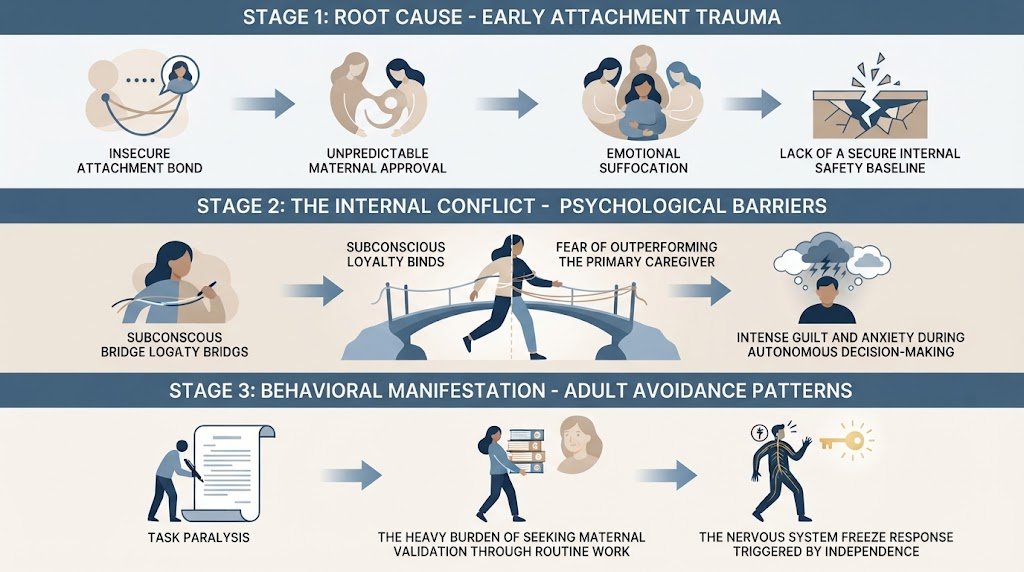
Maternal attachment forms the bedrock of a child’s internal safety baseline, meaning wounds or inconsistencies here directly bleed into adult work habits. When a mother’s affection is unpredictable or emotionally suffocating, the child develops an insecure attachment style that frames independent action as a threat to connection.
Fear of Outperforming the Caregiver: Subconscious loyalty binds the adult to the mother’s emotional baseline, triggering guilt or anxiety when achieving success that the mother never experienced.
Insecure Dependency: Tasks that require autonomous decision-making cause panic because the individual lacks an internalized comforting presence to validate their choices.
Seeking Maternal Approval: Every major project becomes a proxy search for maternal validation, turning routine work into an exhausting emotional hurdle.
How Paternal Criticism or Absence Shapes Procrastination
Paternal trauma typically manifests differently, centering heavily around performance, boundary-setting, and external authority. A hyper-critical or emotionally distant father teaches the developing child that their utility is tied strictly to output, turning deadlines into tests of worthiness.
Rejection of Performance Metrics: Paternal pressure turns objective benchmarks into oppressive demands, sparking passive-aggressive procrastination as a form of self-protection.
The Imposter Syndrome Trap: The persistent belief that one’s work is inherently inadequate leads to endless revisions, overthinking, and final-hour avoidance loops.
Lack of Safe Boundaries: Without a secure paternal figure to model healthy structure, the individual struggles to build internal discipline, viewing all structure as a form of control.
Procrastination as a Trauma Response — How It Shows Up in Adulthood
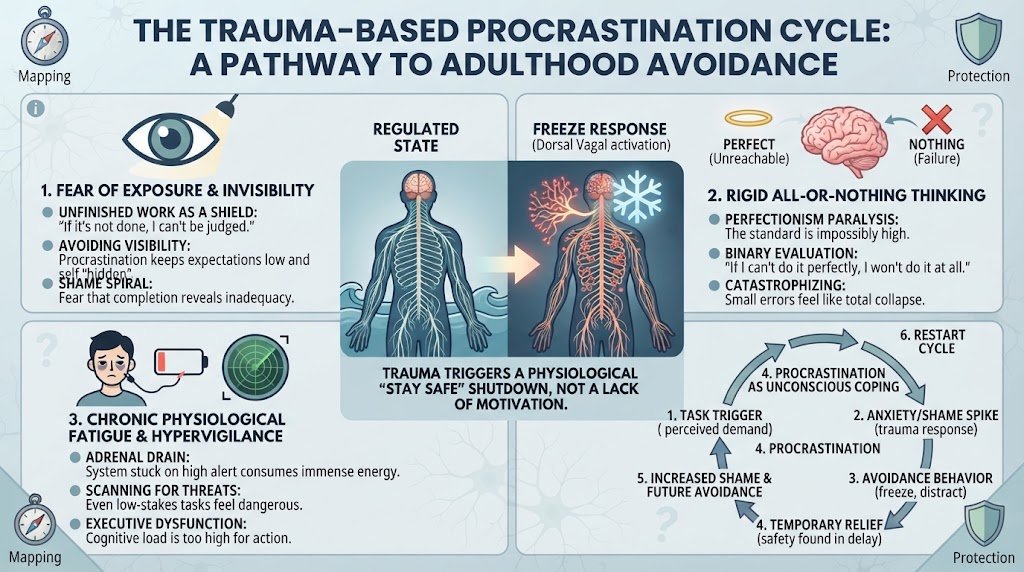
When chronic avoidance is rooted in early adversity, it manifests in daily adult behavior through specific cognitive distortions and nervous system survival patterns. Rather than being a simple scheduling issue, procrastination becomes an active defense mechanism designed to keep the individual emotionally safe from perceived danger[cite: 1].
Fear of Exposure and Staying Invisible
For individuals who grew up facing harsh judgment or conditional validation, being seen carries a subconscious threat. Procrastination acts as an invisible shield, ensuring that projects remain unfinished so the individual never has to step into the spotlight and risk being evaluated or found wanting.
Avoiding the Evaluation Trap: By holding back finished work, the nervous system prevents potential criticism, shielding a fragile sense of self-worth from negative feedback.
The Safe Harbor of Incompleteness: Remaining perpetually “almost done” keeps the individual safely hidden in the background, away from accountability and visibility.
All-or-Nothing Thinking
Trauma wiring often strips away nuance, creating a rigid cognitive binary where work must either be completely flawless or it is a total failure. This black-and-white perspective paralyzes execution, because if a project cannot be done with absolute perfection, the brain prefers not to do it at all.
Unattainable Standards: Setting impossibly high expectations guarantees that starting will feel daunting, triggering immediate avoidance behavior[cite: 1].
Disaster Forecasting: Minor mistakes are magnified into catastrophic outcomes, convincing the brain that starting a task is an unnecessary risk[cite: 1].
Chronic Fatigue and Hypervigilance
Living in a constant state of high alert consumes immense physiological energy, leaving the nervous system perpetually drained. When everyday responsibilities appear on the horizon, the body experiences deep exhaustion, interpreting the demand as an extra stressor it simply lacks the capacity to handle[cite: 1].
Depleted Executive Function: Chronic hypervigilance keeps survival circuits firing, leaving little mental fuel for planning, prioritizing, or problem-solving.
Legitimate Overwhelm: The fatigue associated with trauma is real, making the physical act of sitting down to work feel like an insurmountable mountain[cite: 1].
Procrastination as an Unconscious Coping Mechanism
When complex stressors trigger the nervous system, the brain automatically reaches for avoidance to numb, escape, or delay the perceived threat[cite: 1]. This coping mechanism replaces proactive problem-solving with short-term relief, locking the individual in an exhausting cycle of delay, panic, and harsh self-reproach[cite: 1].
Quick Self-Check: Do These Patterns Sound Familiar?
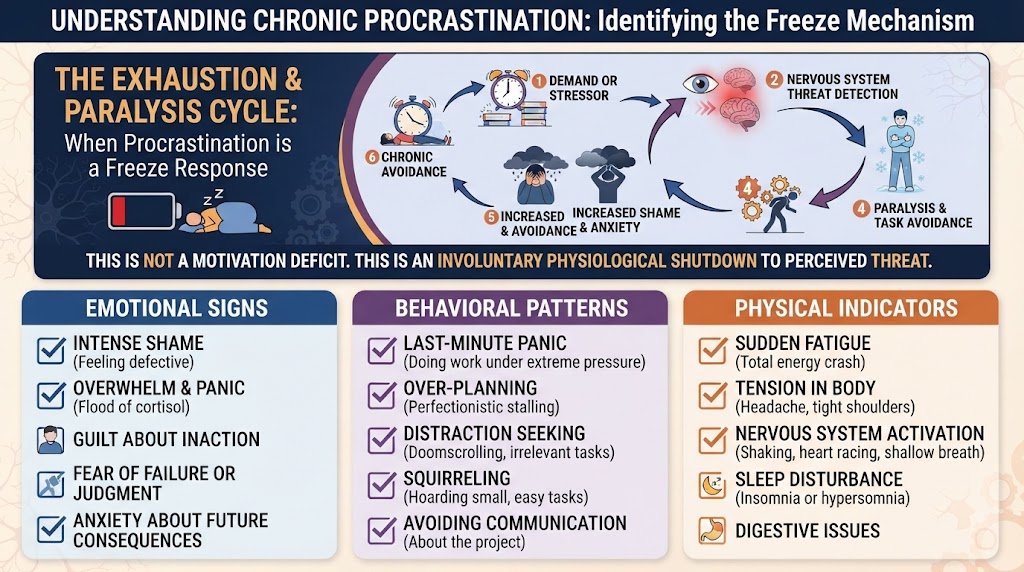
Trauma-based procrastination operates entirely differently from standard time-management issues. If traditional productivity tips like making lists or waking up early have repeatedly failed you, your avoidance may be rooted in an unhealed survival response rather than poor habits.
The Cycle of Exhaustion: You feel deep mental paralysis when facing important goals, followed by intense self-criticism for not getting started.
The Paralysis of Stakes: The more important a task is to your future or career, the harder it is to open the document or take the first step.
The Comfort of Distraction: You find yourself easily drawn to mindless activities not out of genuine enjoyment, but as a desperate escape from internal pressure.
Checklist: Emotional, Behavioral, and Physical Signs
Review the following indicators across emotional, behavioral, and physical categories to determine if your avoidance patterns stem from early nervous system conditioning.
Emotional Signs
Intense Shame and Guilt: Experiencing severe self-loathing or believing you are inherently lazy or broken every time a deadline approaches.
Chronic Anxiety and Dread: Feeling a persistent knot in your stomach or a sense of impending doom whenever you think about pending responsibilities.
All-or-Nothing Emotional Swings: Feeling completely confident one moment, then shifting to total hopelessness at the first sign of a roadblock.
Behavioral Patterns
The Last-Minute Panic Rush: Consistently putting tasks off until a crisis forces an adrenaline-fueled sprint to the finish line.
Avoiding Communication: Ignoring emails, bill notifications, or messages because opening them feels entirely unsafe.
Over-Planning Without Execution: Spending hours organizing schedules, buying planners, or making lists as a substitute for actually doing the work.
Physical Indicators
Sudden Physical Fatigue: Experiencing heavy limbs, sleepiness, or brain fog the exact moment you sit down to work.
Nervous System Activation: Noticing a tight chest, shallow breathing, or a racing heart when confronted with a new project or performance review.
Inability to Rest: Even when resting, feeling physically tense or unable to relax because your body remains stuck in high alert.
Key Differences Between ADHD-Based and Trauma-Based Procrastination
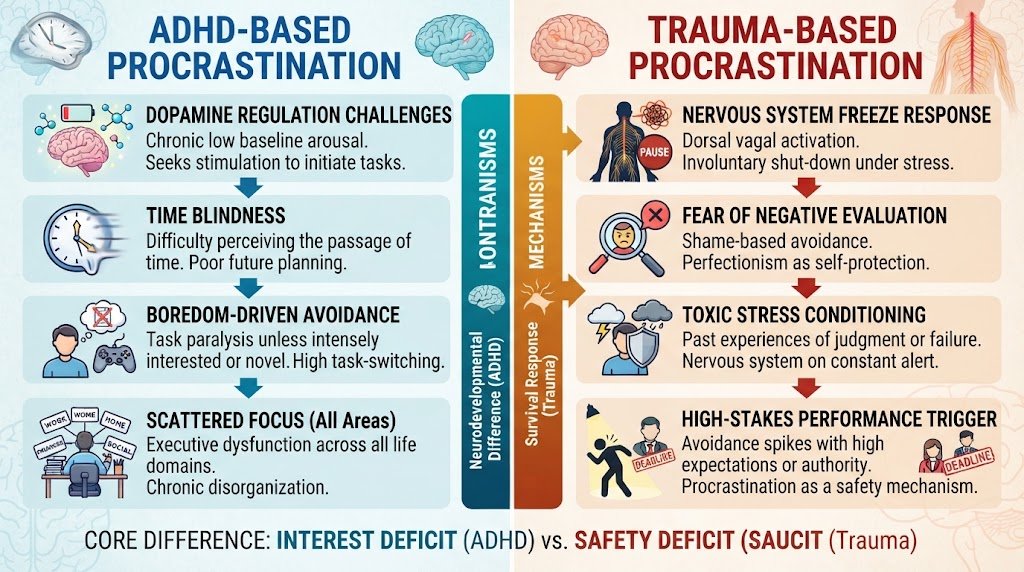
Disentangling attention deficit hyperactivity disorder from early adversity is crucial because while both cause severe executive dysfunction, their underlying neural triggers differ entirely. Understanding whether your task avoidance stems from neurodevelopmental differences or nervous system survival tactics shapes the entire healing process.
Neurological Origins: ADHD is a neurodevelopmental condition involving dopamine regulation and structural differences in the prefrontal cortex, whereas trauma-based avoidance is an acquired survival response to chronic stress.
The Emotional Component: Trauma-based procrastination is heavily driven by fear, shame, and the anticipation of negative evaluation, while ADHD avoidance often stems from boredom, low dopamine stimulation, or time blindness.
Contextual Triggering: ADHD challenges with focus typically appear across all areas of life regardless of emotional safety, whereas trauma-induced paralysis often flares up around high-stakes performance, authority figures, or situations mirroring past relational wounds.
For a deeper exploration of how early emotional patterns influence task avoidance, you can read
Can ADHD and Childhood Trauma Overlap?
Comorbidity between ADHD and complex trauma is exceptionally common, making self-diagnosis complex. Growing up with undiagnosed neurodivergence often creates a continuous stream of criticism, academic struggles, and relational friction, which frequently results in secondary trauma responses.
The Feedback Loop of Shame: Children with unmanaged ADHD frequently face harsh scolding from parents and teachers, internalizing deep feelings of inadequacy that morph into trauma-based perfectionism.
Exacerbated Paralysis: When a neurodevelopmental struggle with task initiation collides with a nervous system freeze response, the resulting paralysis becomes doubly intense.
Symptom Masking: Chronic hypervigilance can sometimes mask or mimic symptoms of executive dysfunction, making it difficult to determine which condition requires primary intervention.
When to Consider Professional Evaluation
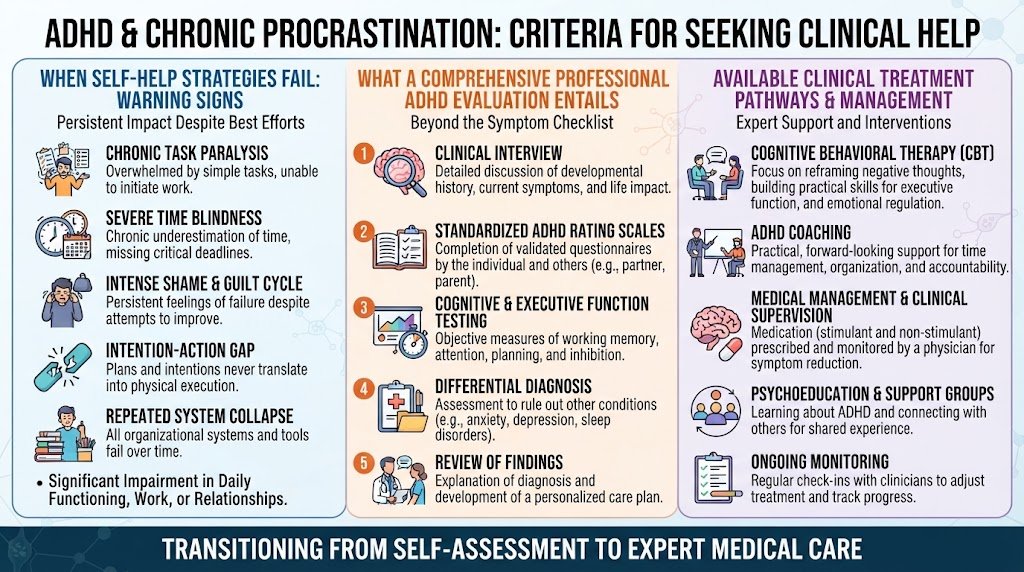
If task avoidance severely disrupts your career, relationships, or mental well-being despite your best self-help efforts, seeking a qualified clinician is the most effective next step. A trained mental health professional can provide clarity and rule out overlapping conditions.
Persistent Functional Impairment: When months of trying habit-building techniques, time-blocking, and emotional regulation yield zero lasting change.
Severe Comorbid Distress: If chronic procrastination is accompanied by clinical depression, debilitating anxiety, or intrusive thoughts linked to your past.
Targeted Treatment Mapping: An expert assessment ensures you receive the correct framework—whether that involves trauma-informed therapy, somatic regulation, or neurodevelopmental support.
Mild Avoidance vs. Complex Trauma Response
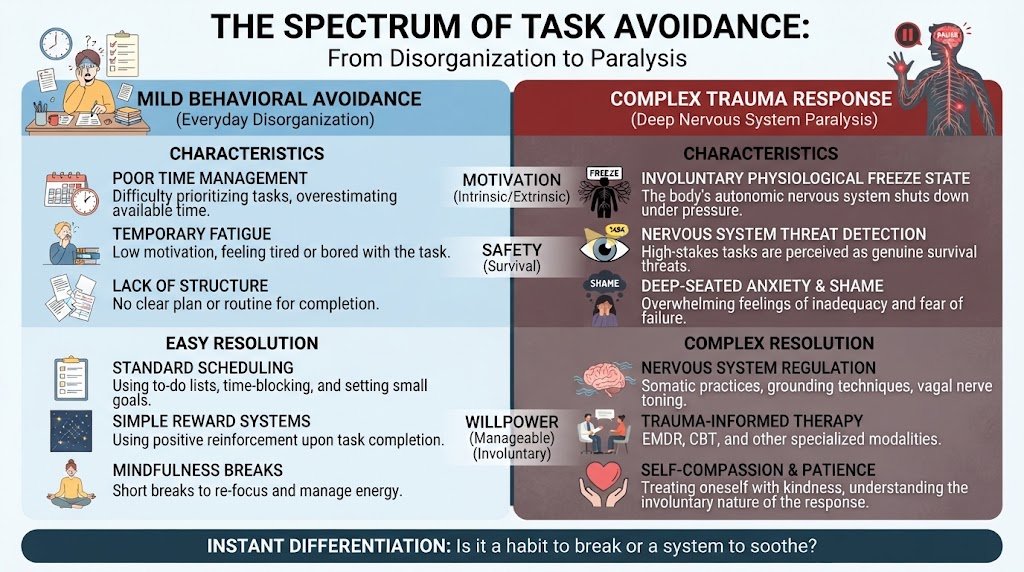
Task avoidance exists on a broad spectrum, ranging from occasional lifestyle disorganization to deeply ingrained physiological self-preservation. Understanding where your behavior falls on this scale determines whether standard productivity tips will help or if deeper nervous system healing is required.
Behavioral Disorganization: Mild avoidance usually stems from poor time management, lack of interest, or temporary fatigue, and it resolves quickly once a schedule or simple reward system is applied.
Nervous System Paralysis: Complex trauma responses involve an involuntary physiological freeze state where the body perceives the task as a genuine threat, making willpower entirely ineffective.
Shifting the Intervention: Moving past the surface-level frustration requires treating chronic avoidance not as a failure of discipline, but as a signal that the nervous system is reacting to deeper distress.
When Procrastination Signals Something More Serious (CPTSD, Dissociation)
When procrastination is tied to complex post-traumatic stress disorder or trauma-induced dissociation, it ceases to be just about missing deadlines. It becomes an automatic shutdown mechanism designed to protect the mind and body from unbearable overwhelm.
Fragmented Awareness: Dissociation during tasks can manifest as sudden brain fog, numbness, or feeling completely disconnected from your physical body while staring at a screen.
The CPTSD Freeze Loop: Chronic complex trauma keeps the survival system locked in a persistent freeze response, causing every major responsibility to trigger feelings of helplessness or panic.
Deep-Seated Emotional Armor: Procrastination acts as a heavy emotional barrier, protecting a vulnerable inner self from potential failure, harsh judgment, or the resurfacing of past relational wounds.
Step-by-Step: A Trauma-Informed Approach to Breaking the Cycle
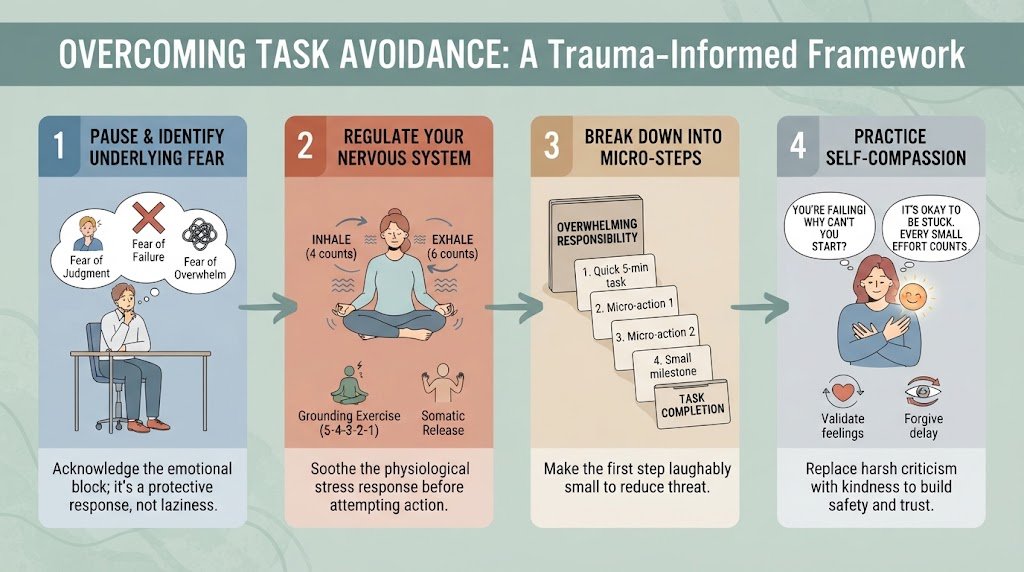
Healing trauma-based procrastination requires replacing self-punishment with nervous system safety. By shifting from top-down willpower to compassionate curiosity, you can gently untangle the survival responses keeping you stuck.
Pause and Identify the Fear: Notice when paralysis sets in, and gently ask what threat your nervous system is trying to protect you from.
Regulate Your Nervous System: Before opening a work document, use somatic tools like deep breathing or grounding exercises to signal safety to your body.
Micro-Step Your Tasks: Break large responsibilities into ridiculously small actions, such as typing a single sentence or opening a file, to bypass the freeze response.
Offer Self-Compassion: Actively dismantle the inner critic by replacing harsh judgment with understanding for why the task feels overwhelming.
4 Questions to Ask Yourself Before Avoiding a Task
When you feel the urge to pull away from a responsibility, pause and run through these four targeted self-reflection questions to decode your resistance.
What am I afraid will happen if I finish this task? Uncovers hidden fears of success, high expectations, or negative evaluation.
Does this demand trigger memories of past criticism? Identifies whether current pressures are being filtered through old childhood dynamics.
Am I actually lazy, or am I deeply exhausted? Separates genuine physical depletion and burnout from a behavioral flaw.
What is the smallest possible safe step I can take right now? Bypasses mental paralysis by reducing the stakes to a manageable level.
Practical Grounding Techniques for Task-Related Anxiety
When task-related anxiety activates your fight-or-flight or freeze response, somatic grounding techniques can bring your prefrontal cortex back online. These methods interrupt the physiological panic loop so you can approach your work with a clear mind.
The 5-4-3-2-1 Sensory Method: Name five things you can see, four you can touch, three you can hear, two you can smell, and one you can taste to anchor yourself in the present room.
Physiological Sighs: Take two quick inhales through your nose followed by a long, slow exhale through your mouth to immediately lower your heart rate.
Tactile Grounding: Press your feet firmly against the floor or hold a cold object to signal to your nervous system that you are physically safe in the current moment.
Download: Trauma-Based Procrastination Self-Assessment Checklist
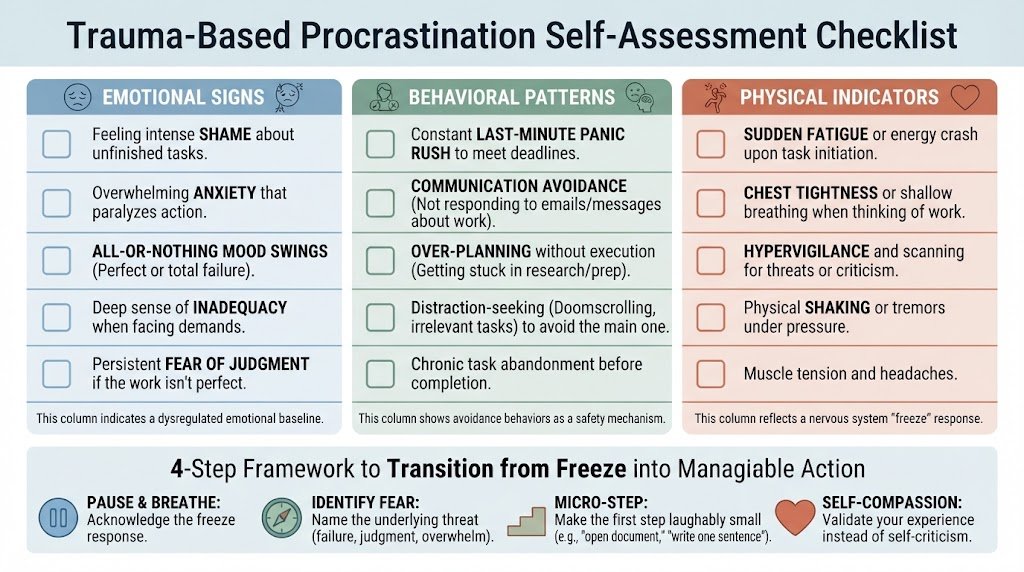
To help you put these insights into practice and identify your personal avoidance patterns, we have put together a comprehensive, printer-friendly resource. This self-assessment tool is designed to guide you through uncovering the root causes of your task avoidance without self-judgment.
What Is Included: A complete breakdown of trauma triggers, somatic check-in logs, and a step-by-step framework to transition from nervous system freeze into safe, manageable action.
How to Use It: Print out the guide or keep it on your desktop to reference whenever you notice the familiar paralysis of task avoidance creeping in.
Free Resource: Click the link below to download your copy instantly and take the first compassionate step toward breaking the cycle.
FAQs
What is the root of procrastination?
The root of procrastination is rarely a simple lack of willpower or laziness. At its core, it is an emotional regulation and nervous system survival issue, frequently driven by fear of failure, perfectionism, overwhelming stress, or early relational conditioning that makes tasks feel unsafe.
What is extreme procrastination disorder?
While not an official standalone clinical diagnosis in the DSM-5, extreme procrastination refers to chronic, debilitating task avoidance that severely damages an individual's career, finances, academic standing, and mental health. It is often tied to underlying conditions such as Complex PTSD (CPTSD), severe anxiety, depression, or unmanaged ADHD.
Is procrastination a sign of ADHD?
Procrastination can be a strong sign of ADHD, but it is not exclusively caused by it. ADHD-related procrastination stems from executive dysfunction, low dopamine stimulation, and time blindness. However, trauma-based avoidance can look identical on the surface while being rooted in fear and nervous system freeze.
Can someone with ADHD stop procrastinating naturally?
Because ADHD involves structural differences in dopamine regulation and prefrontal cortex function, relying purely on willpower or natural habit changes is often ineffective. Sustainable progress requires a combination of external scaffolding, behavioral strategies, proper environmental design, and sometimes medical or therapeutic support.
What personality type procrastinates the most?
Individuals who score high in neuroticism and perfectionism tend to procrastinate the most. Perfectionists delay starting tasks because they fear falling short of impossible standards, while neurotic personality traits are often linked to higher sensitivity to stress, emotional overwhelm, and threat avoidance.
Is procrastination really a trauma response?
For many chronic procrastinators, yes. When early environments involve toxic stress, harsh criticism, or emotional neglect, the developing brain learns to view demands, deadlines, and evaluations as genuine survival threats. Procrastination acts as an involuntary freeze response designed to shield the individual from perceived danger.
Sirinapa Chantarangsu
Sirinapa Chantarangsu is the Procrastination Editor at Holistic Wellbeing Living. She writes about task avoidance, perfectionism, focus, and manageable first steps. With six years of experience creating personal-growth content, Sirinapa helps readers replace guilt with practical strategies that make starting easier.