Jump to:
ToggleHow to Discipline a Dog Correctly: The Ultimate Humane Guide
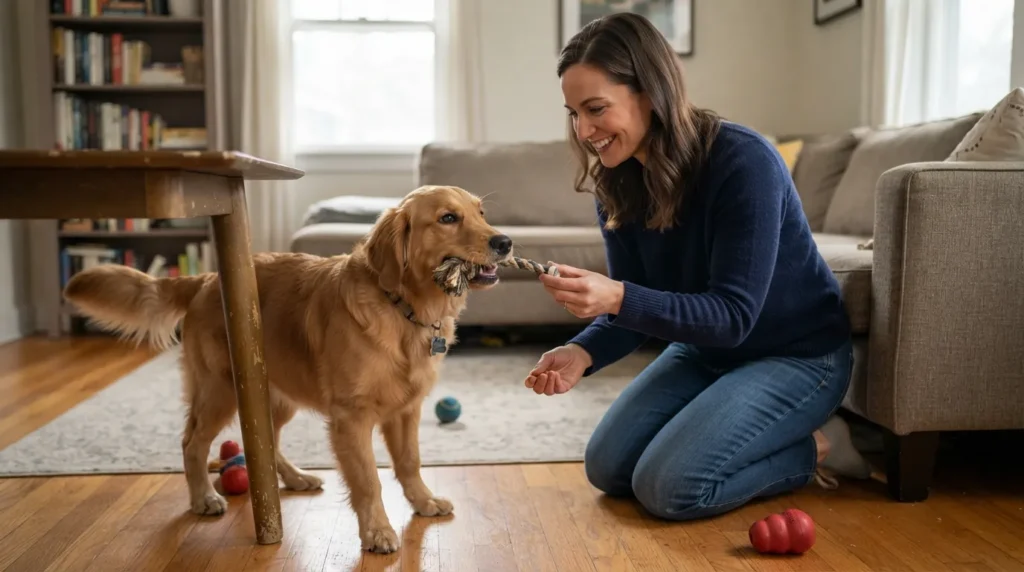
What "Discipline" Really Means for Dogs
Dog discipline is widely misunderstood as a system of punishment or dominance, but modern canine behavioral science defines it as structured guidance, clear boundaries, and consistent redirection. True discipline establishes predictable rules that help a dog navigate human environments safely, replacing reactive corrections with proactive education.
Why “Discipline” Doesn’t Meaning “Punishment”
Traditional approaches often conflate discipline with fear-based penalties, which damage trust and escalate anxiety-driven reactivity. Effective modern training shifts the focus toward positive reinforcement and timely corrections that teach acceptable alternatives rather than suppressing natural behaviors through intimidation.
Guidance over Force: Establishing leadership through calm, consistent boundaries rather than physical reprimands.
Redirection: Interrupting undesirable actions and instantly rewarding the dog for engaging in an alternative, positive behavior.
Clarity and Consistency: Using predictable cues so the dog understands what is expected in every household scenario.
Emotional Regulation: Helping high-drive or anxious dogs learn impulse control through structured routines.
What This Guide Covers
Mastering canine behavior requires a systematic approach across all major developmental and household challenges. This comprehensive blueprint breaks down the exact frameworks needed to address the most common behavioral pain points.
Bite Inhibition and Mouthy Behavior: Stopping puppy nipping and adult dog mouthing through safe redirection and impulse control.
House-Training Mastery: Establishing reliable elimination habits, crate routines, and rapid indoor accident prevention.
Recall and Preventing Running Away: Building an unbreakable recall command so your dog returns reliably even under heavy distraction.
Guarding and Food Stealing Prevention: Eliminating resource guarding and counter-surfing through structured boundary training and exchange protocols.
The Training vs. Punishment Spectrum: Implementing positive reinforcement frameworks that foster long-term obedience without triggering fear or aggression.
Why Traditional Punishment Fails — The Science Behind It
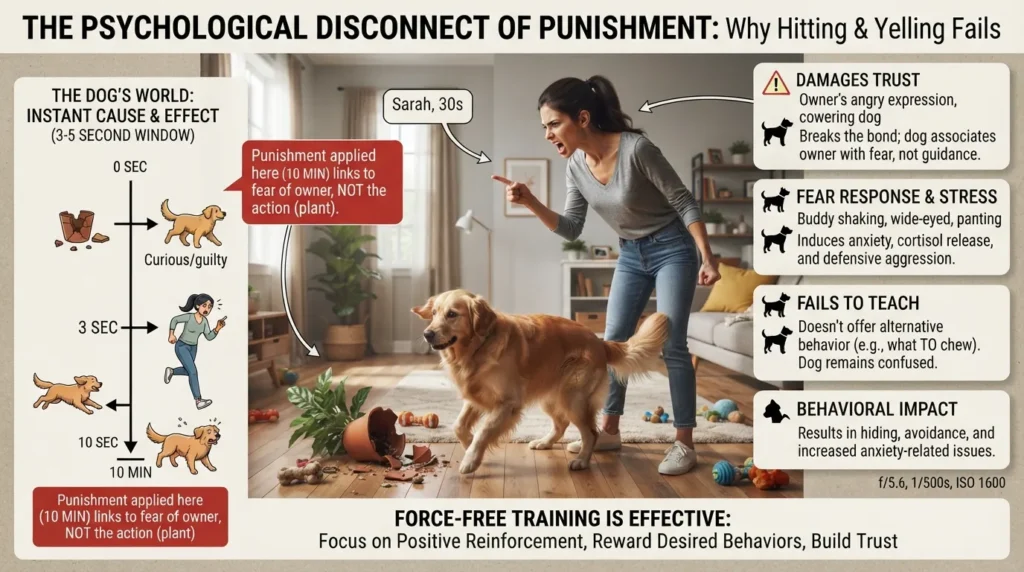
Traditional punishment frameworks fail because they rely on coercion rather than cognitive development, creating a breakdown in communication between species. Canine behavioral science proves that punitive tactics fail to teach alternative actions, leaving dogs trapped in cycles of confusion and stress.
Dogs Live in the Moment (Why Delayed Punishment Confuses Them)
Dogs possess associative memory structures tied primarily to immediate context rather than abstract retrospective timelines. When an owner scolds a dog minutes after a mess is made, the animal does not connect the reprimand to the past action; instead, they associate the owner’s angry demeanor and body language with the immediate present.
Contextual Association: Dogs link punishments to what is happening at the exact micro-second the correction is delivered.
The “Guilty Look” Fallacy: Submissive postures (cowering, avoiding eye contact) displayed during delayed scolding are fear responses to human anger, not a confession of guilt.
Cognitive Disconnect: Because dogs lack human episodic memory banks, punishing them after the fact teaches them to fear their owner rather than avoid the misbehavior.
How Hitting, Yelling, or Alpha-Rolling Damages Trust
Harsh physical corrections—including alpha-rolling, leash jerks, and hitting—rely on intimidation that fundamentally erodes the psychological safety of the domestic bond. As outlined by canine experts in Humane Discipline on Positively.com, punitive techniques damage trust, escalate fear-based reactivity, and suppress warning growls without addressing root emotional drivers.
Suppression Over Resolution: Force temporarily hides behavior but leaves underlying anxiety or predatory drives completely unresolved.
Escalation of Aggression: Pain-based corrections often trigger a defensive fight-or-flight response, leading to redirected bites toward handlers.
Destruction of the Bond: Chronic intimidation transforms the owner from a trusted provider of safety into an unpredictable source of stress.
Do Dogs Remember When You Discipline Them?
Dogs remember emotional states and associated environmental threats, but they do not retain a chronological memory of specific misdeeds to reflect upon later. While a dog will remember that a specific context or person feels unsafe or threatening following harsh treatment, they cannot mentally time-travel back to morning trash-shredding to connect it to an evening scolding.
How Long Should You Punish a Dog for Bad Behavior?
Punishment should last for zero seconds because active punishment is entirely ineffective for modifying canine habits. Instead of traditional duration-based punishment, modern behavioral science relies on immediate interruption paired with a redirection window of three to five seconds to guide the dog toward a rewarding, correct alternative.
The 4 Humane Pillars of Effective Dog Discipline
Transforming canine conduct requires moving away from outdated punitive measures and adopting a structured, science-backed framework. The four humane pillars of discipline rely on behavioral psychology, cognitive timing, and clear cause-and-effect outcomes to shape reliable habits.
Redirection: Replacing Bad Behavior Instantly
Redirection interrupts an undesirable action at [01:40] the exact micro-second it occurs and immediately channels that energy into an acceptable alternative [02:04]. Because dogs naturally seek engagement and mental outlets, simply stopping a behavior without providing an alternative leaves them frustrated.
Immediate Interruption: Use a sharp verbal cue like “Ah-ah” or a hand clap to pause the current action [01:47].
Instant Substitution: Swiftly introduce an approved item, such as a rubber chew toy substitution, to satisfy the dog’s underlying urge [02:11].
Reward the Shift: Praise and treat the dog the moment they engage with the correct item to cement the new neural pathway.
Negative Punishment: Removing Rewards, Not Adding Pain
In behavioral science, negative punishment means subtracting something the dog values—such as attention, toys, or access to space—the moment unwanted behavior begins. This teaches cause and effect without triggering fear or defensive aggression [02:43].
Removing Attention: If a dog jumps up for greetings, crossing your arms and turning your back removes the desired social reward [03:16].
Withholding Access: Leaving a room or putting away a favorite toy instantly halts play when boundaries are broken.
Reinforcing Calmness: Reintroduce the reward only when the dog displays calm, compliant behavior [03:24].
Management: Preventing Bad Habits Before They Start
Environmental management is the ultimate proactive strategy, neutralizing rehearsal opportunities for bad habits before they become deeply ingrained patterns. Controlling the physical space reduces household friction and sets both owner and dog up for success.
Strategic Barricades: Utilize baby gates and exercise pens to block access to off-limit zones like kitchens or carpeted bedrooms.
Crate Routines: Implement structured crate periods to manage house-training and prevent unsupervised chewing [00:50].
Tidy Environments: Clear counters of food items and store loose shoes out of reach to eliminate temptation entirely.
Reinforcing Good Choices Consistently
Consistency transforms isolated acts of obedience into lifelong behavioral standards. Dogs thrive on predictability, meaning rules must remain uniform across all household members and daily routines.
High-Value Payouts: Reward compliance with high-value treats or enthusiastic praise immediately following correct choices.
Uniform Family Rules: Ensure every human in the household enforces identical boundaries regarding furniture access and mealtime manners.
Repetition Through Routine: Practice basic impulse control drills daily so that responding correctly becomes an automatic reflex for your dog.
How to Discipline a Dog Correctly — Step-by-Step Method
Disciplining a dog correctly relies on an exact, repeatable sequence that aligns with canine cognitive processing. By replacing emotional reactions with precise timing, clear interruptions, and positive redirection, you can effectively eliminate bad habits while strengthening mutual trust.
Step 1: Catch the Behavior in the Act
Effective discipline requires precise timing because dogs lack the cognitive ability to connect a retroactive reprimand to past actions. You must witness the behavior as it occurs to deliver your response within a critical three-to-five-second window.
Immediate Presence: Supervise your dog closely using indoor leashes or baby gates during early training phases to prevent unsupervised slip-ups.
Environmental Control: Confine young dogs to the same room you occupy to eliminate delayed discovery of household messes.
Zero Retrospective Scolding: Never scold a dog after the fact, as delayed corrections only teach them to fear your approach.
Step 2: Interrupt Calmly, Never with Fear
When you catch unwanted behavior, interrupt it instantly using a neutral, low-energy verbal marker or a sharp hand clap. The goal is simply to break the dog’s focus without causing terror, intimidation, or defensive reactivity.
Neutral Markers: Use brief, non-emotional verbal cues like “Ah-ah” or “Nope” in a calm tone of voice.
Avoid Emotional Escalation: Refrain from yelling, screaming, or looming over the dog, which triggers adrenaline and anxiety rather than learning.
Clear Break in Action: Wait for the momentary pause in the dog’s unwanted activity before introducing the next step.
Step 3: Redirect to the Right Behavior
Stopping a bad habit without providing an alternative leaves a behavioral void that the dog will instantly fill with another undesirable action. Immediately guide their attention toward an acceptable, predetermined substitute.
Provide an Outlet: Hand your dog an approved chew toy if they were caught gnawing on household furniture.
Ask for a Command: Instruct the dog to sit or lie down if they were jumping up for unwanted attention.
Smooth Transition: Guide them gently into the new task without physical force or rough handling.
Step 4: Reward Immediately When Corrected
Reward compliance instantly the moment your dog engages with the alternative behavior you provided. Immediate positive reinforcement bridges the gap between the interruption and the desired standard, cementing the new habit into their neural pathways.
High-Value Payouts: Deliver a delicious treat or enthusiastic praise within two seconds of them making the right choice.
Reinforce the Choice: Show excitement for their cooperation so they understand that pivoting away from bad behavior yields great rewards.
Consistent Repetition: Repeat this four-step loop consistently every time the behavior occurs to build automatic obedience.
What Is the 3-3-3 Rule for Dog Training?
The 3-3-3 rule is a well-established guideline outlining the decompression phases a rescue or newly adopted dog experiences when entering a new home. It helps owners adjust their discipline expectations during transitional periods.
First 3 Days: The dog feels overwhelmed, shuts down, and may test boundaries while processing their unfamiliar environment.
First 3 Weeks: The dog begins to settle in, settles into a routine, and starts showing their true personality and potential behavioral quirks.
First 3 Months: The dog achieves full comfort and trust, developing a secure bond and deep familiarity with household rules.
How to Discipline a Puppy or Dog for Biting
Addressing puppy nipping and adult mouthing requires differentiating between developmental exploration and ingrained aggression. Establishing clear boundaries early prevents minor playful chewing from escalating into dangerous behavioral habits.
Why Puppies Bite (Teething vs Play vs Overstimulation)
Puppies explore their environment primarily through their mouths, making biting a natural part of early development. Pinpointing the root cause helps handlers apply the correct intervention without inducing fear.
Teething Discomfort: Sharp needle teeth emerge between 12 weeks and 6 months, causing gum inflammation that drives constant chewing on hands and furniture.
Social Play and Exploration: Littermates establish physical boundaries through wrestling and mouthing, a habit puppies naturally transfer to human companions.
Overstimulation and Fatigue: Overtired puppies often lose impulse control, resulting in frantic, hyperactive biting frenzies when they need rest.
How to Discipline a Puppy for Biting Without Fear
Correcting puppy biting effectively requires calm, consistent communication that mimics natural canine feedback loops without inflicting pain or terror.
Clear Interruption: Deliver a sharp verbal marker like “Ah-ah” at the exact moment teeth touch human skin.
Avoid Ineffective Methods: Passive ignoring or high-pitched squealing often fails to stop persistent nipping, as puppies interpret squeals as exciting littermate simulation.
Balanced Leadership: Establish clear rules through calm redirection rather than aggressive reprimands that damage trust.
How to Discipline an Adult Dog That Bites
Adult dog biting stems from fear, resource guarding, or territorial defensiveness rather than play, demanding strict management and professional behavioral modification.
Identify Triggers: Determine whether the bite attempt is triggered by handling, food proximity, or sudden startling movements.
Implement Safety Protocols: Use basket muzzles and secure crates during rehabilitation to protect family members while retraining responses.
Consult Professionals: Partner with a certified canine behaviorist to design a desensitization plan for fear-based aggression.
Bite Inhibition Training Technique
Building lifelong bite inhibition teaches a dog to control the pressure of their jaws, ensuring they understand that human skin is fragile.
The Redirection Loop: Immediately interrupt unwanted mouthing, present an approved redirection toy, and praise the dog the moment they clamp down on the toy instead.
Instant Time-Outs: If teeth touch skin, calmly stand up, cross your arms, and step away for 30 seconds to remove all social interaction.
Consistent Reinforcement: Reward calm interactions and gentle acceptance of treats to cement soft-mouth habits permanently.
How to Discipline a Dog for Peeing or Pooping in the House
House-training regressions and indoor accidents require systematic management and positive reinforcement rather than punitive reprimands. Effective house-training builds reliable habits through consistent scheduling, environmental controls, and thorough enzymatic cleaning.
Why Punishing Accidents Backfires
Rubbing a dog’s nose in waste or scolding them after an accident destroys trust and teaches them to hide their elimination habits. Because dogs cannot connect retrospective scolding to a past mess, punishment only teaches them to fear eliminating in front of their owner, often leading them to sneak behind furniture or into bedrooms to relieve themselves.
Concealed Elimination: Scolded dogs learn to hide when they need to go, making outdoor house-training significantly harder.
Fear and Anxiety: Punitive reactions create stress around the owner, damaging the secure communication needed for learning.
Failure to Teach: Reprimands do not communicate where the dog should eliminate; they only communicate that elimination is dangerous.
How to Discipline a Dog That Pees in the House (Correct Method)
Correcting indoor peeing requires immediate interruption if caught mid-act, followed by instant outdoor relocation and high-value rewards.
Mid-Action Interruption: Deliver a calm verbal marker like “Outside!” the moment squatting begins to pause the elimination.
Immediate Relocation: Swiftly carry or lead the dog to their designated outdoor potty spot before they finish.
Reward Success: Deliver praise and a high-value treat immediately after they finish eliminating in the correct outdoor location.
How to Discipline an Adult Dog That Poops in the House
Indoor defecation often points to underlying schedule changes, digestive distress, or incomplete house-training routines. Addressing the habit requires resetting feeding schedules and identifying medical or environmental triggers.
Audit Meal Timings: Feed your dog at the exact same times every day to regulate their digestive tract and predictable elimination windows.
Increase Outdoor Opportunities: Add an extra midday or late-evening walk to give them ample chance to empty their bowels outside.
Rule Out Medical Issues: Consult a veterinarian if a fully house-trained dog suddenly starts pooping indoors, as parasites or gastrointestinal distress may be the root cause.
Preventing Repeat Accidents Through Routine & Management
Environmental control and structural management completely eliminate indoor accidents by removing unsupervised opportunities for mistakes.
Enzymatic Cleaners: Scrub all accident sites thoroughly with an enzymatic pet odor cleaner to eliminate residual pheromones that attract dogs back to the same spot.
Strict Crate Routines: Utilize correctly sized crates during unsupervised periods to leverage a dog’s natural instinct to keep their sleeping area clean.
Predictable Schedules: Maintain a strict routine of taking your dog outside immediately after waking up, following heavy play sessions, and 20 minutes after meals.
How to Discipline a Dog That Doesn't Listen
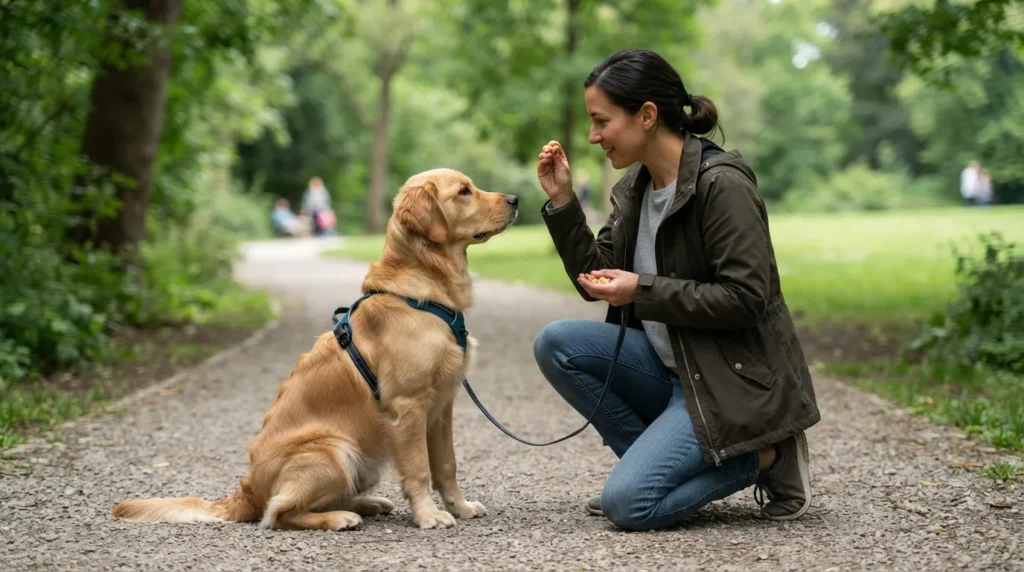
Disobedience is rarely a sign of stubbornness or spite; it typically indicates that a command lacks sufficient motivation, competes with overwhelming environmental distractions, or has not been generalized across different contexts. Overcoming selective hearing requires sharpening your communication and raising the value of your rewards.
Why Dogs “Ignore” Commands (Distraction, Confusion, Lack of Motivation)
When a dog fails to respond, it means the current environment or the payout for obeying cannot compete with what they find more interesting. Pinpointing the exact breakdown prevents unnecessary frustration and highlights where training needs reinforcement.
Environmental Competition: High-arousal stimuli like squirrels, other dogs, or unfamiliar smells easily override basic indoor training.
Faded Generalization: Dogs struggle to understand that a command learned in the living room applies equally well at the public park.
Inadequate Value: Low-value kibble cannot compete with the thrill of chasing wildlife or investigating new scents.
Rebuilding Focus and Command Response
Restoring reliable obedience requires stripping away distractions, resetting baseline focus, and practicing in controlled environments before scaling up difficulty.
High-Value Incentives: Upgrade from standard kibble to high-value treats like freeze-dried liver or cheese during high-distraction sessions.
Low-Distraction Foundations: Return to quiet indoor hallways to proof basic commands before testing them outdoors.
Engagement Drills: Practice rapid-fire attention games that reward your dog instantly for making eye contact on cue.
How Do You Discipline a Dog That Won’t Listen?
Correcting a dog that refuses to listen requires removing rewards or resetting the scenario rather than applying physical punishment or angry shouting. If a dog ignores a known command, you should eliminate access to the desired outcome and re-test their focus in a simpler setting.
Withhold Privileges: If your dog refuses to come inside when called, immediately end yard time and bring them inside on a short leash, removing their freedom.
Never Repeat Commands: Saying “Sit, sit, sit” teaches your dog to wait for the third or fourth repetition; issue the cue once, and guide them physically if necessary.
Reset and Simplify: Step back to a easier distraction level where success is guaranteed, then reward compliance heavily before building difficulty back up.
How to Discipline a Dog That Runs Away
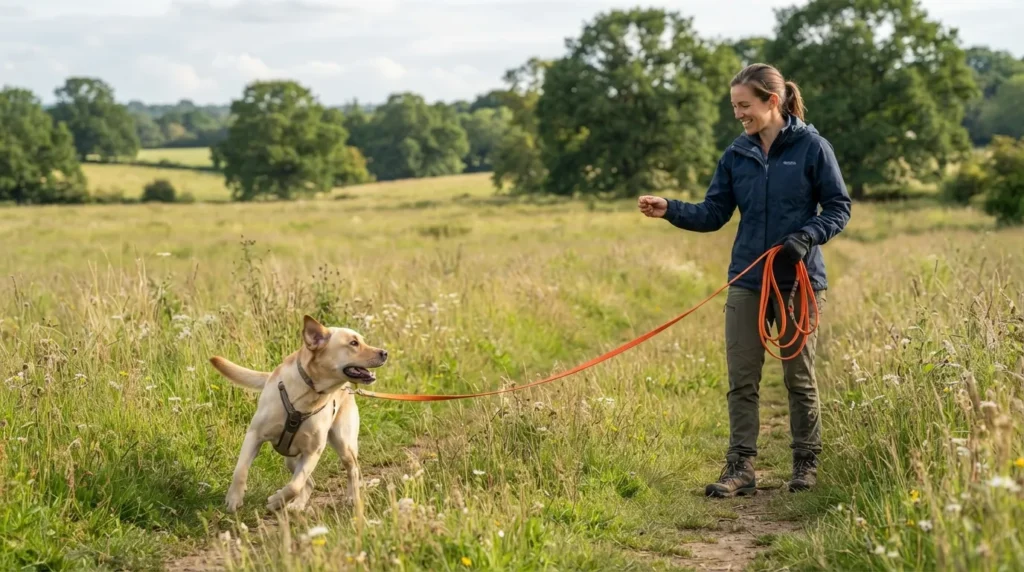
Escape behavior and bolting through open doors create immediate physical danger, making reliable recall and proactive management critical for survival. Correcting an escape artist requires focusing on environmental prevention and reward-based recall training rather than scolding the dog after they return.
Why Dogs Run Away (Fear, Instinct, Lack of Recall Training)
Dogs bolt for specific biological and environmental reasons that override casual obedience. Identifying the primary driver behind an escape attempt dictates how you should approach correction and prevention.
Predatory Drive and Prey Instincts: Chasing squirrels, cats, or wildlife triggers an adrenaline surge that makes a dog temporarily deaf to verbal commands.
Fear and Startle Responses: Loud noises like thunderstorms or fireworks can cause panic, driving a dog to flee blindly out of self-preservation.
Lack of Bulletproof Recall: Commands practiced only indoors will instantly fail when exposed to high-distraction outdoor environments.
How to Correct the Behavior Without Punishing After the Fact
Punishing a dog when they finally return from an escape cements a disastrous association: coming back to the owner results in scolding or pain. This ensures that the next time they bolt, they will stay away even longer out of fear.
Celebrate Returns: Always reward a dog enthusiastically when they return, even if it took 20 minutes of chasing; make coming back to you the best thing that has ever happened to them.
Never Call to Punish: Never use a recall cue to summon your dog for a bath, nail trim, or crate confinement immediately after catching them.
Secure the Perimeter: Rely on physical management—such as double-gated entryways and secure fencing—to eliminate rehearsal opportunities for bolting.
Building a Reliable Recall
Transforming your recall into an unbreakable safety cue requires systematic practice, high-value motivators, and zero reliance on luck.
Long-Line Training: Practice recall in open fields using a 30-foot long line, allowing safe exploration while maintaining physical control.
Jackpot Rewards: Reward successful recalls with exceptionally high-value treats like boiled chicken or steak that dwarf any outdoor distraction.
Gradual Distraction Scaling: Progress systematically from quiet indoor spaces to enclosed parks, and finally to open, high-distraction environments.
How to Discipline a Dog for Stealing Food (Counter-Surfing)
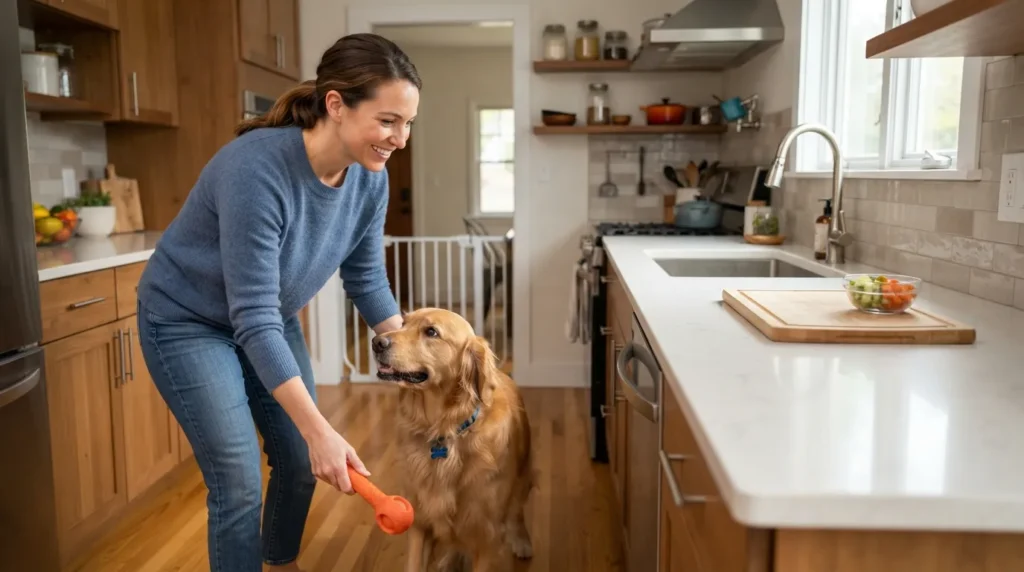
Counter-surfing and food stealing are self-reinforcing behaviors because the reward—a delicious snack—is instant and highly satisfying. Stopping this habit requires removing the opportunity entirely and teaching impulse control rather than relying on ineffective post-incident scolding.
Why Dogs Steal Food (Instinct, Boredom, Opportunity)
Dogs are opportunistic scavengers wired to seek out high-calorie meals whenever the chance arises. Understanding why your dog patrols tabletops helps you fix the root environmental triggers.
High Biological Value: Human food smells intensely appealing, triggering an ancestral drive to forage and scavenge.
Self-Reinforcement: Every successful food grab immediately rewards the dog, hardwiring the kitchen counter as a jackpot zone.
Boredom and Curiosity: Unsupervised kitchens provide mental stimulation and tasty snacks for under-exercised dogs.
Correcting Counter-Surfing the Humane Way
Physical punishment or yelling after food has already been stolen teaches the dog nothing about kitchen boundaries. Instead, you must interrupt attempts instantly and establish clear rules of engagement.
Immediate Interruption: Use a sharp verbal cue like “Leave it” the exact second the dog places paws on the counter.
Zero Shared Spoils: Never hand food scraps to a dog from the table or kitchen counter, as this directly encourages begging and scavenging.
Reward Lowered Attention: Praise and treat your dog heavily when they remain all four paws on the kitchen floor while food is being prepared.
Prevention Through Management
Environmental management is the only foolproof method for ending counter-surfing because it eliminates rehearsal opportunities completely.
Clear All Surfaces: Push plates, cutting boards, and food items away from table edges and deep onto counters where noses cannot reach.
Block Kitchen Access: Use baby gates or close doors during meal prep and dining times to prevent unsupervised wandering.
Provide Alternative Outlets: Give your dog a stuffed interactive chew toy in another room so they stay occupied while you cook.
How to Break a Dog's Aggressive Behavior
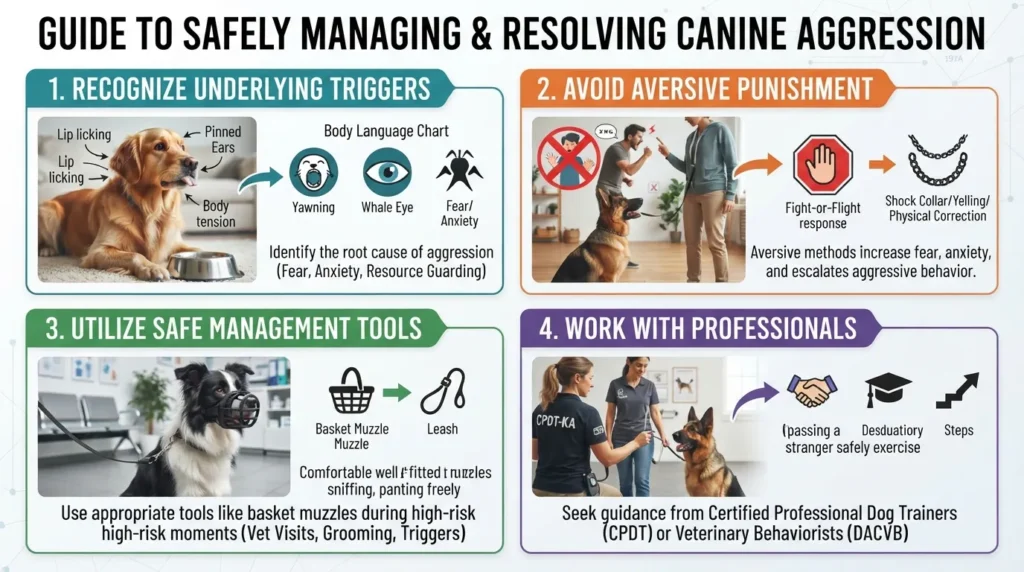
Aggressive outbursts—including snapping, growling, and lunging—are symptoms of underlying emotional distress rather than malicious dominance. Effectively addressing canine aggression requires identifying its core triggers and implementing structured desensitization rather than relying on punitive corrections that heighten defensiveness.
Recognizing the Root Cause of Aggression
Dogs resort to aggressive displays when they feel threatened, cornered, or protective of valuable resources. Pinpointing the specific emotional driver ensures your intervention matches the underlying issue.
Fear-Based Triggers: Defensive reactions sparked by unfamiliar people, loud noises, or perceived physical threats.
Resource Guarding: Intentional posturing or snapping to protect food, toys, resting spots, or human companions.
Pain and Medical Discomfort: Sudden aggression often signals hidden injuries, arthritis, or neurological distress requiring immediate veterinary care.
Why Punishment Escalates Aggression
Applying physical discipline, alpha-rolling, or shock collars to an aggressive dog confirms their worst fears by adding pain and intimidation to an already volatile situation. This suppresses warning growls, leaving the dog to bite without giving a visual warning next time.
Triggering Fight-or-Flight: Coercive tactics elevate adrenaline levels, driving an escalation into full defensive combat.
Eroding Trust: Intimidation transforms the handler into an active threat, worsening the dog’s baseline anxiety.
Removing Warning Signs: Punishing growls teaches a dog to stop growling while retaining the underlying bite intent.
Safe, Professional Correction Approaches
Managing aggressive tendencies safely demands controlled environments, strict boundaries, and professional guidance to protect everyone involved.
Safety Management: Equip the dog with a comfortable basket muzzle during necessary veterinary visits or high-risk interactions.
Desensitization Protocols: Gradually expose the dog to their triggers at a distance where they remain calm, pairing the presence of the trigger with high-value treats.
Strict Avoidance: Eliminate known environmental triggers entirely while working through a structured rehabilitation plan.
When to Seek a Certified Trainer or Behaviorist
Severe bite histories, unpredictable lunging, or deeply ingrained resource guarding exceed the scope of basic obedience training and require specialized intervention.
Consulting Specialists: Partner exclusively with a certified professional dog trainer (CPDT-KA) or a board-certified veterinary behaviorist (DACVB).
Medical Rule-Outs: Schedule a comprehensive health checkup to ensure underlying medical issues are not fueling the behavioral shift.
Long-Term Management: Follow customized behavior modification plans designed to safely re-wire your dog’s emotional responses.
Do Dogs Understand When They're Being Disciplined? (Psychology Angle)
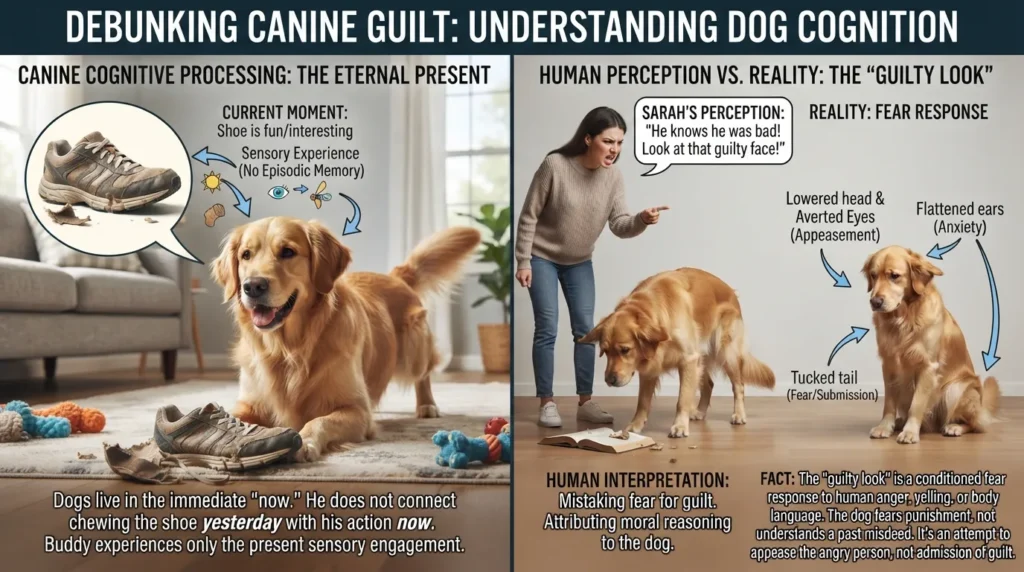
Understanding how a dog processes human discipline requires examining canine psychology and cognitive architecture rather than projecting human emotions onto pets. While dogs are masters of reading human body language and vocal tones, their brains process cause and effect entirely in the present moment, meaning traditional discipline is often misunderstood as unpredictable human anger.
Do Dogs Feel Guilty When They’ve Done Something Wrong?
Dogs do not experience moral guilt or retrospective remorse for breaking rules; the classic “guilty look”—characterized by cowering, averted eyes, and flattened ears—is purely a submissive appeasement response to human anger. Extensive behavioral studies prove that dogs display this exact submissive posture when scolded by an owner, even if the dog did nothing wrong, simply reacting to the owner’s stern tone and angry body language.
Absence of Episodic Memory: Dogs lack the cognitive capacity to mentally travel back in time to reflect on a past mistake.
Appeasement Posturing: Lowering the body and avoiding eye contact are evolutionary tactics used to defuse conflict and calm an upset leader.
Misinterpreted Cues: Owners often mistake fear for accountability, assuming the dog knows why they are shouting.
Do Puppies Remember If You Scold Them?
Puppies do not retain a chronological memory of specific misdeeds, but they do retain emotional impressions of how an environment or person feels over time. When scolded repeatedly after the fact, a puppy learns to associate the owner’s approach with unpredictability and stress rather than connecting the reprimand to a chewed-up shoe or an indoor mess.
Emotional Impressions: While specific actions fade instantly, repeated harsh reactions build a baseline climate of distrust.
Associative Conditioning: Puppies remember that sudden movements or raised voices signal danger, leading to defensive avoidance.
Short-Term Processing: Learning occurs exclusively through immediate three-to-five-second reinforcement windows.
Do Dogs Forgive You for Hitting Them?
Dogs display remarkable resilience and social tolerance, often appearing to forgive owners who rely on harsh physical corrections, but repeated intimidation permanently alters the dynamic of the relationship. While a dog will continue seeking affection, physical punishment erodes psychological security, replacing secure attachment with vigilant coping behaviors.
Resilience vs. Trust: Willingness to approach an owner stems from survival instincts and social dependency, not true emotional security.
Chronic Cortisol Elevation: Regular physical punishment keeps baseline stress hormones high, lowering the threshold for fear-based biting.
Rebuilding Bonds: Repairing a fractured relationship requires completely eliminating punitive actions and rebuilding confidence through positive reinforcement.
How Do You Know If You’ve Done Something Wrong With Your Dog?
Recognizing whether your discipline methods are failing requires evaluating subtle shifts in your dog’s daily demeanor and responsiveness. If your training approach is causing anxiety rather than clarity, your dog will exhibit distinct warning signs.
Avoidance Behaviors: Slipping away, slinking past you, or refusing to make eye contact when you enter a room indicates fear-based conditioning.
Calming Signals: Frequent yawning, lip-licking, or sudden scratching during training sessions show that the dog is overwhelmed and stressed.
Stalling Progress: If disobedience worsens or your dog shuts down entirely and refuses to try new behaviors, your timing or methods need immediate revision.
Is Hitting a Dog for Discipline Considered Abuse?
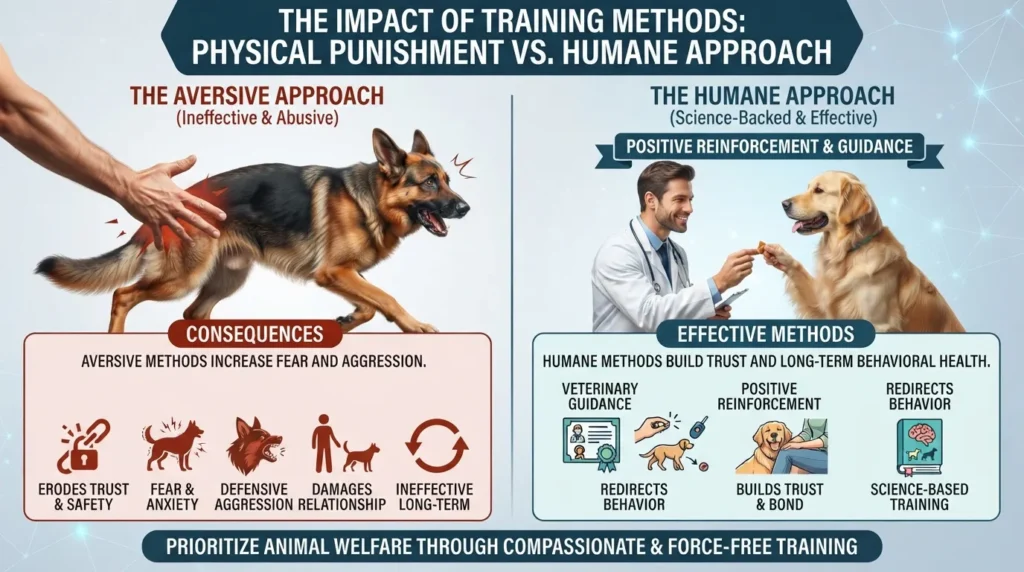
Hitting a dog for discipline is universally condemned by leading veterinary behaviorists, animal welfare organizations, and modern dog trainers as both inhumane and counterproductive. Physical punishment inflicts unnecessary pain and terror, damaging the human-animal bond while failing to teach the animal how to behave correctly.
What Veterinary Behaviorists and Trainers Say
Professional canine specialists and organizations like the American Veterinary Society of Animal Behavior (AVSAB) explicitly state that aversive training methods—including hitting, alpha-rolling, and shock collars—are scientifically proven to cause psychological harm. These experts emphasize that dogs learn through clear cause-and-effect patterns and positive reinforcement, not through intimidation or physical pain.
Erosion of Psychological Safety: Physical strikes teach a dog to fear their owner rather than understanding the rules of the household.
Escalation of Reactivity: Pain-triggered defensive responses frequently cause dogs to snap or bite back in self-defense.
Outdated Methodologies: Modern behavioral science has entirely replaced dominance-based physical correction with humane, cognitive-based guidance.
Signs Discipline Has Crossed Into Abuse
When physical corrections move past minor frustration into regular physical strikes, intimidation, or neglect, the situation crosses firmly into animal abuse. Recognizing these warning signs is critical for identifying when a training method becomes harmful.
Fearful Posturing: Cowering, trembling, or urinating submissively whenever an owner raises a hand or approaches.
Unexplained Injuries: Bruises, limping, or sensitivity to touch around the neck, muzzle, or body.
Learned Helplessness: The dog completely shuts down, refusing to move, explore, or interact out of intense terror.
What to Do Instead
Replacing physical punishment with humane, proactive strategies ensures your dog learns appropriate boundaries without suffering trauma or anxiety.
Immediate Redirection: Interrupt unwanted behavior instantly and guide the dog toward an acceptable alternative activity.
Environmental Management: Utilize baby gates, crates, and secure leashes to prevent mistakes before they happen.
Positive Reinforcement: Reward desired behaviors consistently with high-value treats and enthusiastic praise to build lasting obedience.
Should Someone Else Be Allowed to Discipline My Dog?
Allowing friends, family members, or untrained handlers to discipline your dog introduces dangerous inconsistencies that can derail behavioral training and trigger defensive reactions. Dogs do not generalize rules easily, meaning inconsistent corrections from multiple people create extreme confusion.
Uniform Household Rules: Everyone in the home must use identical, positive training methods to prevent mixed signals.
Zero Tolerance for Aversives: Never permit guests or unfamiliar handlers to yell at, swat, or physically correct your dog.
Clear Advocacy: Protect your dog by taking full control of training interactions in social settings to ensure their emotional safety.
The Naughtiest Age — Puppy Adolescence & Discipline Challenges
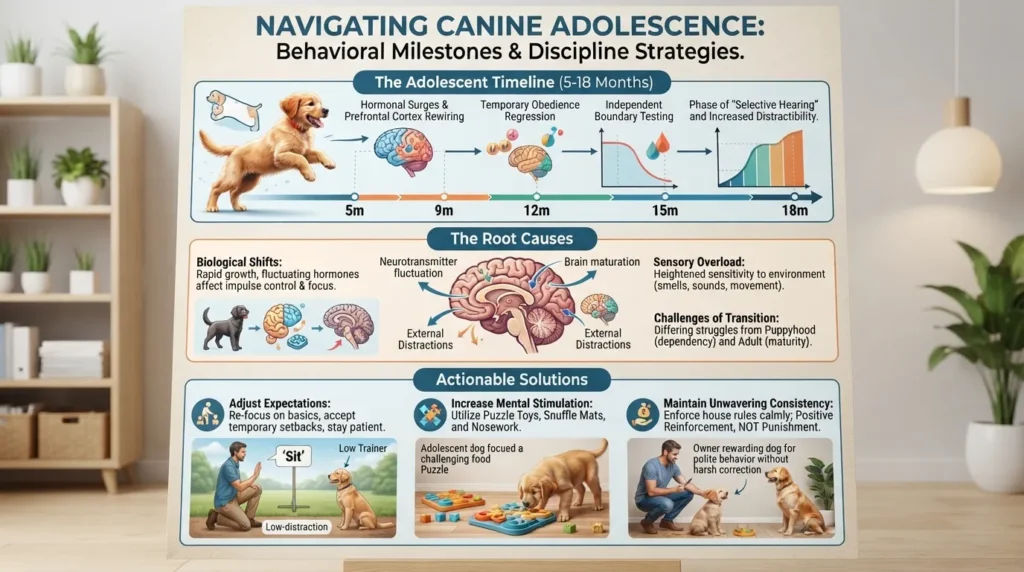
Puppy adolescence brings a sudden, frustrating regression in obedience that often catches owners completely off guard. Navigating this challenging developmental window requires adjusting your expectations and doubling down on consistent, positive reinforcement rather than reverting to harsh discipline.
What Is the Naughtiest Age for a Dog?
The naughtiest age for a dog is adolescence, which typically spans from 5 to 18 months depending on the breed. During this teenage phase, dogs experience a massive surge of hormones and cognitive rewiring, leading them to test boundaries, ignore previously mastered commands, and exhibit stubborn independent streaks.
Onset Timing: Behavioral regression usually starts around 5 to 6 months of age and can persist intermittently until the dog reaches social maturity at 18 to 24 months.
Breed Variations: Smaller breeds often mature faster and enter adolescence earlier, while large and giant breeds experience a much longer, more intense teenage window.
Sudden Onset: Owners are frequently shocked when a well-behaved puppy suddenly acts as if they have forgotten every command they ever learned.
Why the Adolescent Phase Feels Harder to Discipline
Adolescent dogs undergo significant neurological development similar to human teenagers, making their brains primed for risk-taking, boundary-testing, and sensory distraction. Punishing them during this phase only damages the bond just as they need steady leadership the most.
Hormonal Surges: Spikes in testosterone and estrogen heighten reactivity, environmental curiosity, and impulsivity.
Temporary Brain Rewiring: The prefrontal cortex undergoes major restructuring, temporarily impairing impulse control and decision-making skills.
Faded Generalization: Teenage dogs frequently test rules across different environments, requiring owners to re-proof commands from scratch.
Adjusting Your Training Approach During This Stage
Successfully surviving canine adolescence demands infinite patience, reinforced management strategies, and a return to foundational rewards to guide your dog into stable adulthood.
Lower the Bar Temporarily: Step back to basic indoor training settings when your dog struggles, then gradually reintroduce distractions.
Increase Mental Stimulation: Channel their boundless adolescent energy into puzzle toys, nosework games, and advanced trick training to prevent boredom.
Maintain Unwavering Consistency: Stick strictly to household rules without exception; letting boundaries slip during adolescence permanently cements bad habits.
Frequently Asked Questions
How to correct a misbehaving dog?
Correct a misbehaving dog by interrupting the action within a three-to-second window using a calm verbal marker like “Ah-ah.” Immediately follow the interruption by redirecting the dog toward an approved alternative, such as a chew toy or a sit command, and reward compliance instantly.
What is the most humane way to discipline a dog?
The most humane way to discipline a dog relies on the four pillars: redirection, negative punishment (removing attention or rewards), proactive environmental management, and consistent positive reinforcement. This science-backed approach teaches clear boundaries without inflicting fear, pain, or intimidation.
How do you discipline a puppy for biting?
Discipline a puppy for biting by interrupting nipping instantly with a neutral vocal cue, avoiding high-pitched squeals that mimic littermates. Immediately substitute an approved chew toy into their mouth, and praise them heavily the moment they engage with the toy instead of your skin.
Is hitting a dog for discipline abuse?
Hitting a dog is universally considered animal abuse by veterinary behaviorists and welfare organizations. Physical punishment inflicts unnecessary terror, erodes psychological safety, destroys the human-animal bond, and frequently triggers defensive aggression rather than teaching correct behaviors.
What is the 3-3-3 rule for dog training?
The 3-3-3 rule outlines the decompression timeline for newly adopted dogs: the first three days involve overwhelming shutdown and boundary testing; the first three weeks mark the settling-in and routine-building phase; and the first three months establish full comfort, trust, and security in the home.
Conclusion — Key Takeaways
Dog discipline is not about dominance, fear, or physical punishment; it is about providing clear, compassionate guidance that helps your dog navigate human environments with confidence. By replacing outdated reactive methods with structured redirection and proactive management, you build a foundation of trust and lifelong obedience.
Quick Recap of the 4 Humane Pillars
Mastering canine behavior relies on four core strategies that work in harmony with a dog’s natural cognitive development.
Redirection: Interrupting undesirable actions instantly and substituting an approved alternative outlet.
Negative Punishment: Removing rewards, attention, or access to space the moment boundaries are broken.
Management: Controlling the environment with baby gates, crates, and clean counters to prevent mistakes before they happen.
Consistent Reinforcement: Rewarding desired choices immediately to cement positive habits into automatic routines.
Final Advice: Consistency Over Punishment
Lasting behavioral change is achieved through patience, clear communication, and unwavering consistency rather than anger or physical correction. When every human in the household enforces uniform rules through positive guidance, your dog learns what is expected, resulting in a balanced, joyful, and deeply bonded companion.
Kittisak Wattanakul
Kittisak Wattanakul is the Discipline Editor at Holistic Wellbeing Living. He writes about routines, focus, consistency, and practical follow-through. With nine years of experience creating personal-growth content, Kittisak helps readers build realistic systems for steady progress without extreme productivity pressure.