Jump to:
ToggleDiscipline vs Punishment: The Definitive Guide for Parents
Introduction — Why Parents Confuse Discipline and Punishment]
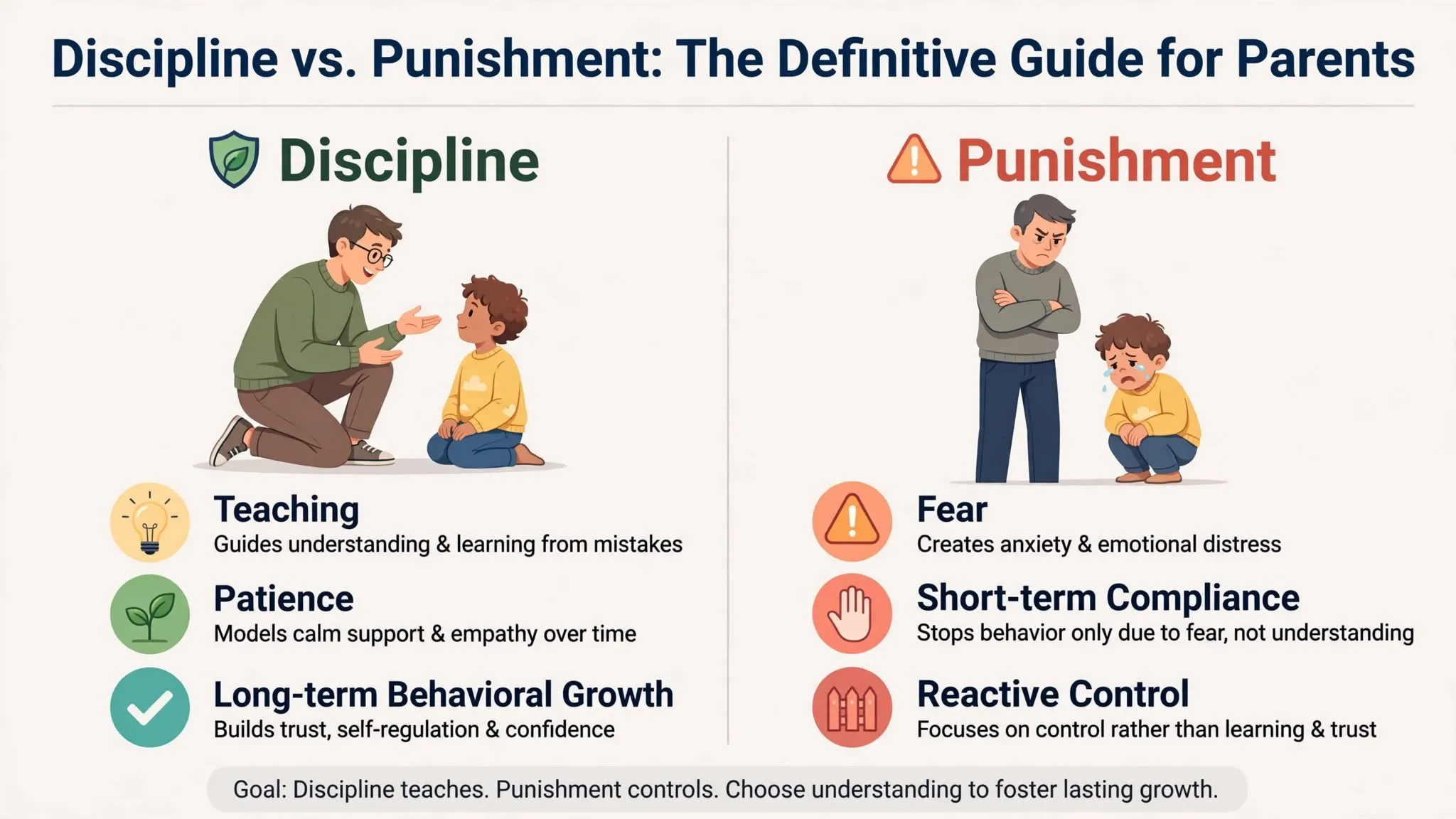
Many parents find themselves reacting out of exhaustion rather than intention, blurring the line between helping a child learn and simply making them pay for a mistake. At its core, discipline focuses on teaching, guidance, and proactive skill-building, whereas punishment relies on reactive control, fear, and penalizing past behavior. Understanding this fundamental shift changes everything about how children respond to authority.
Discipline vs Punishment: Discipline builds internal regulation and problem-solving skills, while punishment relies on external coercion and compliance through fear.
Proactive vs Reactive: Effective discipline establishes clear boundaries and teaches expected behaviors beforehand, whereas punishment reacts after a rule is broken with arbitrary consequences.
Teaching vs Penalizing: Discipline views misbehavior as a skill deficit to be corrected, whereas punishment views misbehavior as moral defiance to be stamped out.
The Real Meaning of Discipline

Discipline is a proactive, instructional process rooted in the Latin word disciplina, meaning learning or teaching. Rather than managing moments of crisis through fear or intimidation, true discipline focuses on guiding behavior and building long-term emotional regulation. It treats misbehavior as a normal developmental learning curve rather than a personal affront to authority.
Proactive Skill-Building: Focuses on equipping children with the tools they need to handle frustration, impulse control, and social challenges before they escalate.
Instructional Framework: Teaches children how to navigate complex situations independently instead of relying purely on adult supervision.
Internal Regulation: Cultivates intrinsic motivation and self-discipline rather than dependence on external rewards or penalties.
Discipline Teaches, It Doesn’t Just Correct
Effective discipline prioritizes skill acquisition over immediate compliance. When adults approach misbehavior as a teachable moment, they help wire the brain for better decision-making during future stressors.
Problem-Solving Focus: Involves collaborating with the child to figure out what went wrong and how to handle a similar situation differently next time.
Accountability Over Shame: Encourages children to repair mistakes and make amends, fostering genuine empathy rather than defensive avoidance.
Brain Development Support: Aligns with neurological growth by keeping the child’s emotional brain calm enough to process lessons and retain constructive feedback.
Punishment in Everyday Parenting
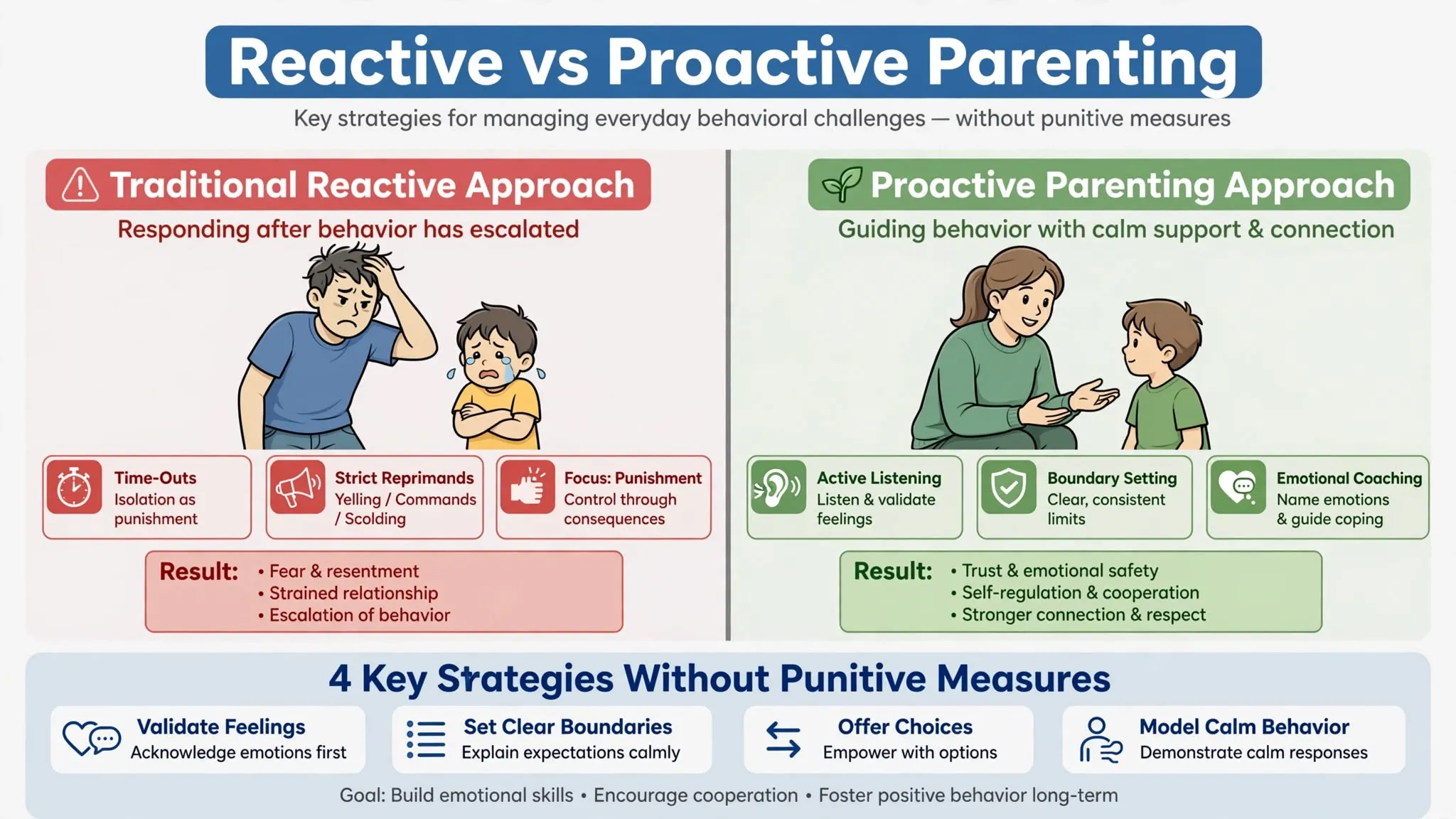
Punishment is a reactive, penalty-based approach designed to stop unwanted behavior through immediate discomfort or the removal of privileges. Unlike instructional guidance, everyday punishment relies on external control, often leaving children compliant out of fear rather than understanding.
Reactive Measures: Deployed instantly after a rule is broken, focusing entirely on halting the current action rather than addressing the root cause.
Cost of Compliance: Teaches children to hide mistakes or avoid getting caught rather than genuinely internalizing why a behavior is harmful.
Loss of Privileges: Frequently uses arbitrary penalties—such as taking away unrelated toys or activities—that bear little logical connection to the original infraction.
What Is Punishment in Psychology? (Operant Conditioning Explained)
In behavioral psychology, punishment is formally defined within operant conditioning as any consequence that decreases the future probability of a behavior. This framework divides punitive measures into two distinct categories based on how they alter environmental stimuli:
Positive Punishment: Involves adding an aversive stimulus (such as a reprimand or physical penalty) immediately following a behavior to suppress it.
Negative Punishment: Involves removing a desired stimulus or pleasant privilege (such as screen time or playtime) to reduce the likelihood of the behavior recurring.
Psychological Impact: While operant conditioning successfully stops actions in the short term, behavioral research shows it fails to teach replacement skills and often triggers anxiety or defiance.
Discipline vs. Punishment at a Glance
| Feature | Discipline | Punishment |
| Core Approach | Proactive, guidance-oriented, and structured around teaching long-term skills. | Reactive, penalty-based, and designed to stop unwanted behavior immediately. |
| Primary Objective | Teaches problem-solving, emotional regulation, and internal accountability. | Stops behavior through external control, compliance, and fear of consequences. |
| Temporal Focus | Focuses on the future by building strategies for better decision-making. | Focuses on the past by penalizing a mistake that has already occurred. |
| Emotional Tone | Calm, supportive, collaborative, and rooted in connection. | Frustrated, punitive, authoritarian, and rooted in isolation or fear. |
| Child’s Takeaway | “I need to figure out how to handle this better next time.” | “I need to make sure I don’t get caught next time.” |
Goal, Method, and Tone Compared
Understanding the structural differences between these two approaches reveals why their long-term outcomes diverge so sharply. While both aim to modify child behavior, the underlying mechanisms create completely different psychological environments for growth.
Proactive vs. Reactive Mechanics: Discipline anticipates challenges and establishes clear guardrails beforehand, whereas punishment waits for an infraction to occur before reacting with a penalty.
Teaching vs. Stopping Behavior: Discipline focuses on imparting functional coping mechanisms and problem-solving skills, whereas punishment merely halts the immediate action without providing a replacement behavior.
Fear vs. Guidance Dynamics: Punishment uses discomfort, pain, or loss of privileges to enforce obedience, whereas discipline relies on firm boundaries paired with supportive adult guidance.
Example 1 — Child Lies About Homework
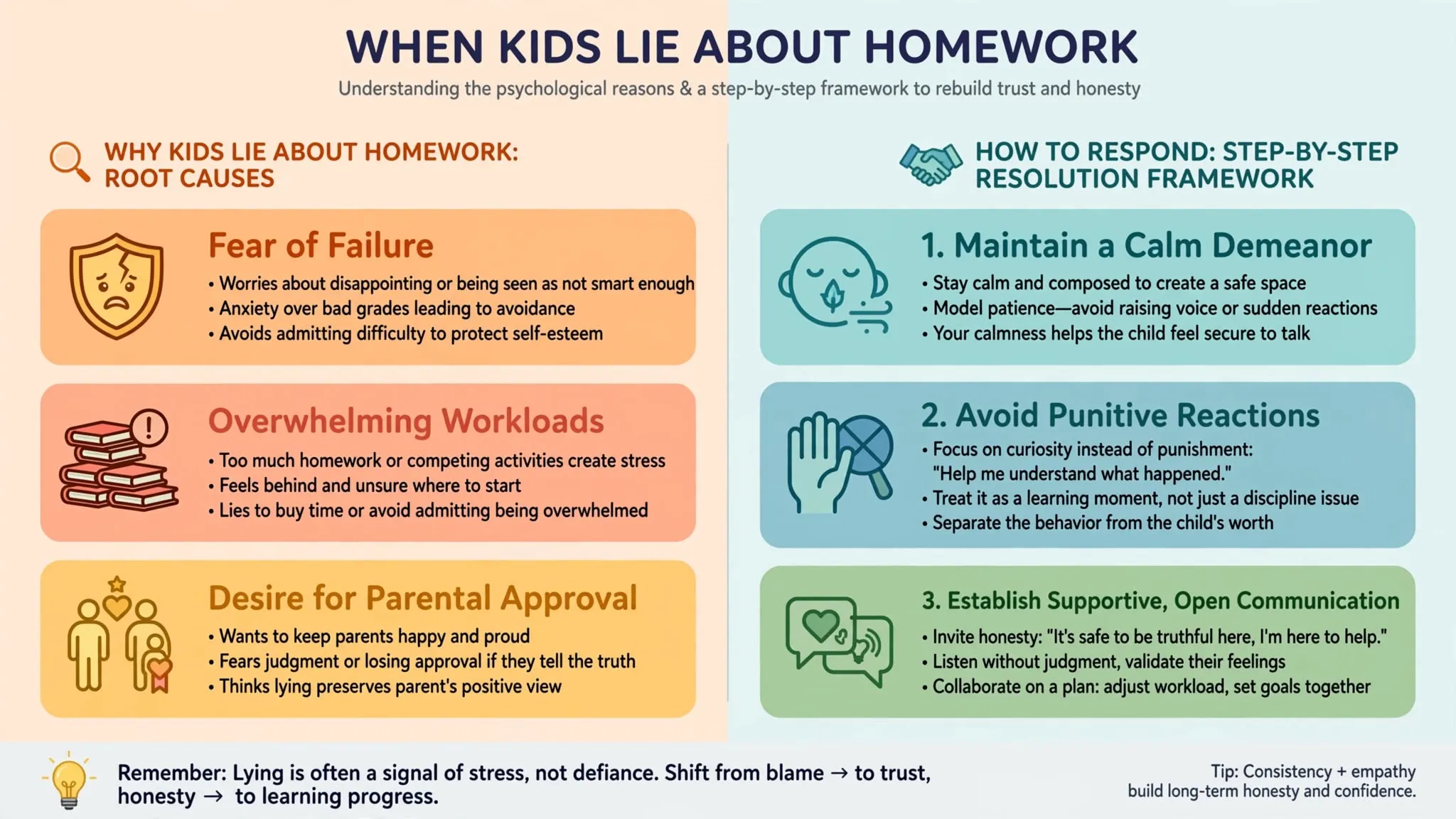
When a child lies about completing their homework, the approach parents take dictates whether the child learns honesty or simply learns how to lie better next time.
The Punishment Approach: Yelling at the child, grounding them from weekend activities, and taking away all electronics for a week. This relies on reactive fear and arbitrary penalties without addressing why the child felt the need to lie.
The Discipline Approach: Sitting down with the child, calmly discussing the stress or avoidance driving the dishonesty, and establishing a supportive evening routine. The child completes the missing work alongside a parent, experiencing a logical consequence while learning problem-solving skills for future academic pressure.
Example 2 — Child Hits a Sibling
Hitting is a high-emotion moment that often triggers reactive adult anger, making it a critical proving ground for the difference between punitive and instructional responses.
The Punishment Approach: Sending the child to a prolonged, isolated time-out or issuing a physical penalty. This isolates the child during emotional dysregulation and teaches that aggression is met with superior adult force.
The Discipline Approach: Using time-in by staying close to help the child calm their nervous system, naming the emotion behind the outburst, and coaching them on how to use words or a break card next time. The child is then guided to help repair the relationship with their sibling.
Example 3 — Child Refuses to Listen in Public
Public defiance can make parents feel judged, frequently tempting them to default to harsh, reactive control out of embarrassment.
The Punishment Approach: Publicly shaming the child, threatening harsh consequences at home, or dragging them away with angry reprimands. This escalates tension and damages trust.
The Discipline Approach: Stepping away from the stimulus to a quieter corner, using calm redirection, and lowering expectations for the remainder of the outing. The parent maintains a firm boundary while helping the child regulate sensory or emotional overload.
What Is Redirection?
Redirection intercepts challenging behavior before it escalates by shifting a child’s focus toward a more acceptable activity or environment. Rather than reacting with a penalty or waiting for a meltdown, this proactive technique disrupts the cycle of frustration by offering an engaging alternative.
Attention Shifting: Guides a child’s natural curiosity away from a restricted object or behavior and toward a constructive substitute.
Cognitive Interruption: Breaks the loop of emotional escalation in younger children before they lose the ability to self-regulate.
Low-Conflict Transition: Minimizes power struggles by changing the context of the situation rather than forcing direct compliance.
Where Rewards Fit In (Without Becoming Bribery)
Positive reinforcement and rewards celebrate genuine progress and encourage the repetition of desired behaviors, but they require careful implementation to avoid crossing into bribery. Effective reinforcement acknowledges effort after the fact, whereas bribery attempts to buy compliance before an action occurs.
Post-Action Recognition: Praise and tangible tokens are delivered organically after a child displays prosocial behavior, reinforcing their internal sense of accomplishment.
Intrinsic Motivation Support: Gradually fades external rewards as the skill becomes a natural habit, ensuring the child values the behavior itself rather than the prize.
Avoiding the Bribery Trap: Prevents transactional parenting where a child refuses to cooperate unless a material reward is offered upfront.
How a Reprimand Differs From Punishment
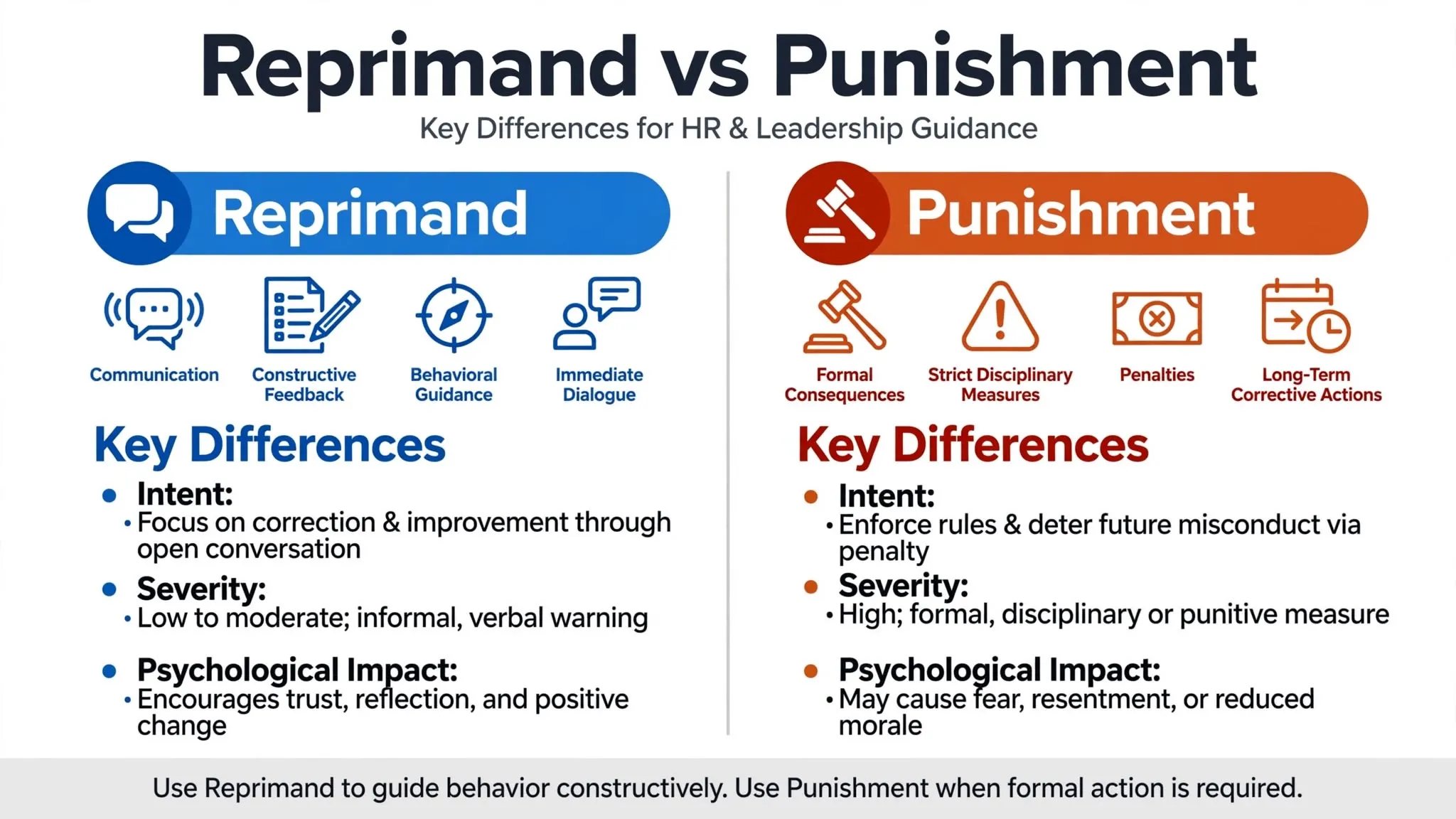
A verbal reprimand is a direct, immediate verbal correction designed to halt a specific action, whereas punishment involves a planned consequence or loss of privileges enacted after the fact. While both serve as corrective measures, they operate through entirely different psychological mechanisms and timeframes.
Immediacy and Duration: A reprimand happens instantly in the heat of the moment to interrupt a behavior, whereas punishment extends past the initial action with lasting penalties or restrictions.
Scope of Consequence: Reprimands rely exclusively on verbal communication and tone of voice, whereas punishment introduces tangible costs such as lost screen time or isolation.
Behavioral Impact: Frequent, harsh reprimands can lose their effectiveness over time through habituation, whereas punishment often triggers avoidance behaviors or resentment due to its punitive nature.
What Discipline Builds Over Time
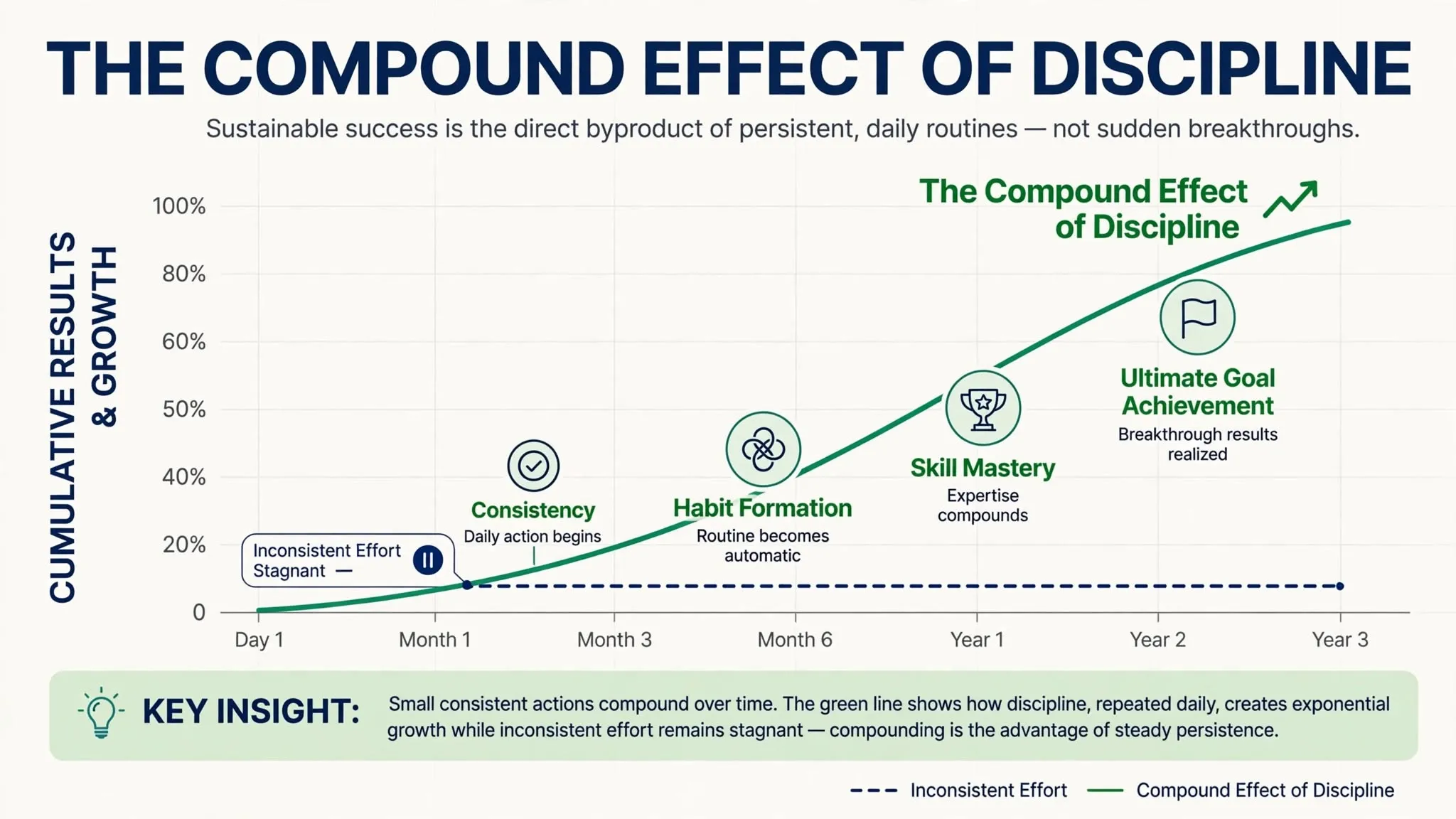
Consistent, guidance-oriented discipline fosters robust neural pathways for emotional regulation and resilience. When children experience supportive boundaries paired with problem-solving, they develop internal competencies that extend far into adulthood.
Emotional Regulation: Teaches children how to identify big emotions and calm their nervous systems without relying on external control.
Intrinsic Empathy: Encourages genuine perspective-taking and accountability, helping kids understand how their actions affect others.
Stronger Relational Trust: Preserves the parent-child bond, ensuring the child feels safe seeking guidance during future crises rather than hiding mistakes.
What Punishment Risks Long-Term
Relying on punitive measures shapes a child’s psychological development through fear, avoidance, and external compliance. Over time, these reactive tactics can undermine self-esteem and alter how children respond to stress and authority.
Fear of Getting Caught: Shifts the child’s internal motivation from doing the right thing to simply avoiding detection and escaping penalties.
Heightened Anxiety: Creates chronic stress responses and emotional hypervigilance as children anticipate harsh reactions to normal mistakes.
Erosion of Trust: Damages the foundational connection between parent and child, fostering resentment and emotional distance during adolescence.
Toddlers (1-3 Years)
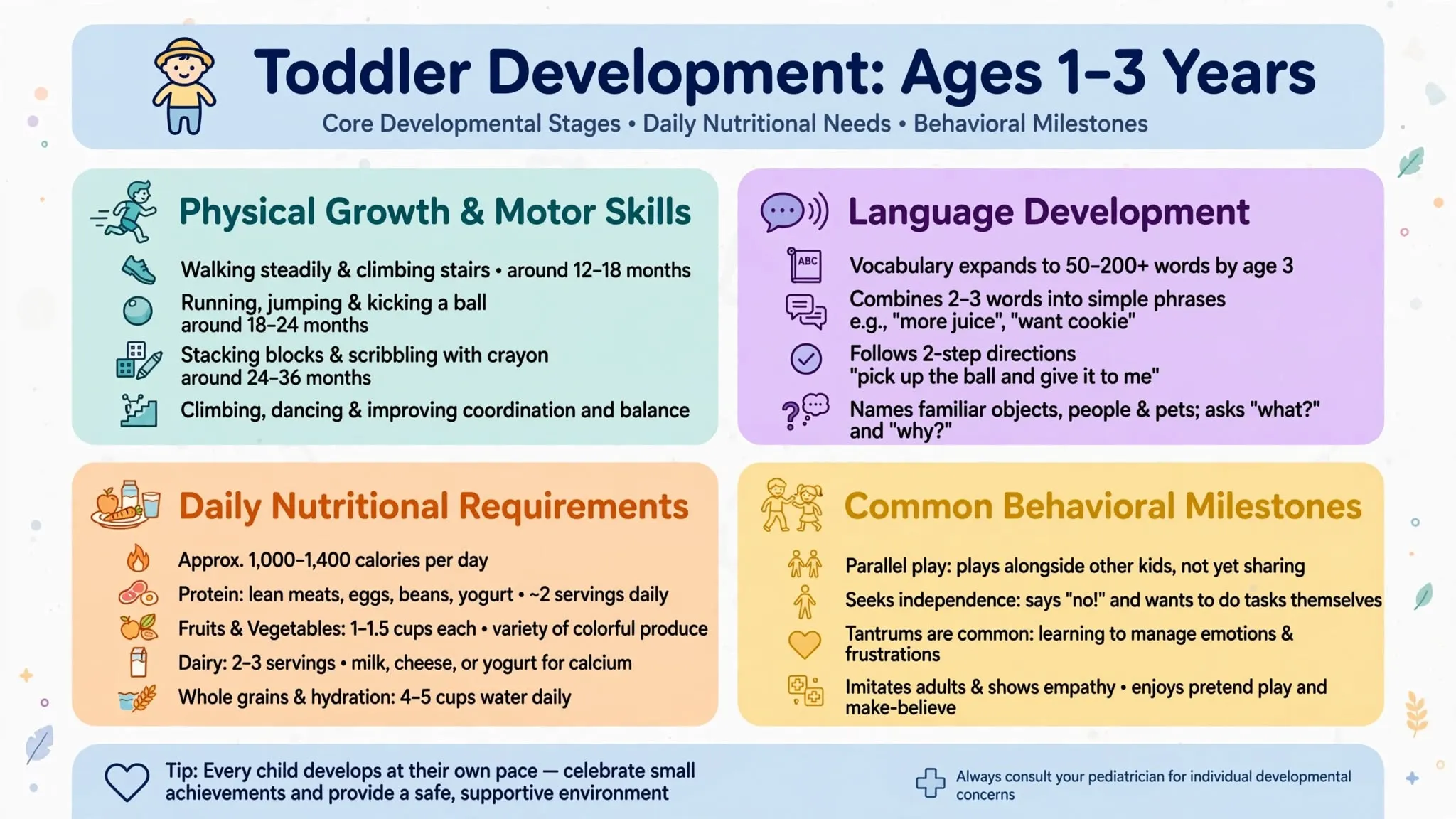
Toddlers lack the neurological maturity for impulse control or logical reasoning, making proactive redirection and physical removal the most effective discipline tools. Punishing a toddler for emotional dysregulation or exploring their environment only causes confusion and heightens distress.
Primary Approach: Immediate redirection, childproofing environments, and gentle physical guidance away from danger.
Developmental Reality: Brain architecture is entirely focused on sensory exploration; tantrums are physiological overloads, not intentional defiance.
Appropriate Action: Acknowledge their feeling briefly (“You wanted that toy”) and shift their attention to an acceptable alternative.
Preschoolers (4-5 Years)
Preschoolers begin understanding simple cause-and-effect relationships, allowing parents to introduce basic logical consequences and simple problem-solving conversations. They still require close emotional support to co-regulate during meltdowns.
Primary Approach: Logical consequences directly tied to the action, paired with clear verbal explanations.
Developmental Reality: Developing basic theory of mind and empathy, but still prone to impulsive reactions when overwhelmed.
Appropriate Action: If a child spills juice intentionally, they help wipe it up, experiencing a direct and natural repair process rather than a random penalty.
School-Age Children (6-12 Years)
School-age children possess advanced cognitive and perspective-taking abilities, making them prime candidates for collaborative problem-solving and restorative discipline strategies. This stage allows for deeper discussions about accountability, impact, and future choices.
Primary Approach: Collaborative brainstorming, restorative agreements, and structured problem-solving sessions.
Developmental Reality: Capable of understanding complex rules, long-term consequences, and the feelings of others.
Appropriate Action: Involve the child in determining how to fix a mistake, such as writing an apology note or working out a schedule to make up for missed responsibilities.
Why Yelling Backfires
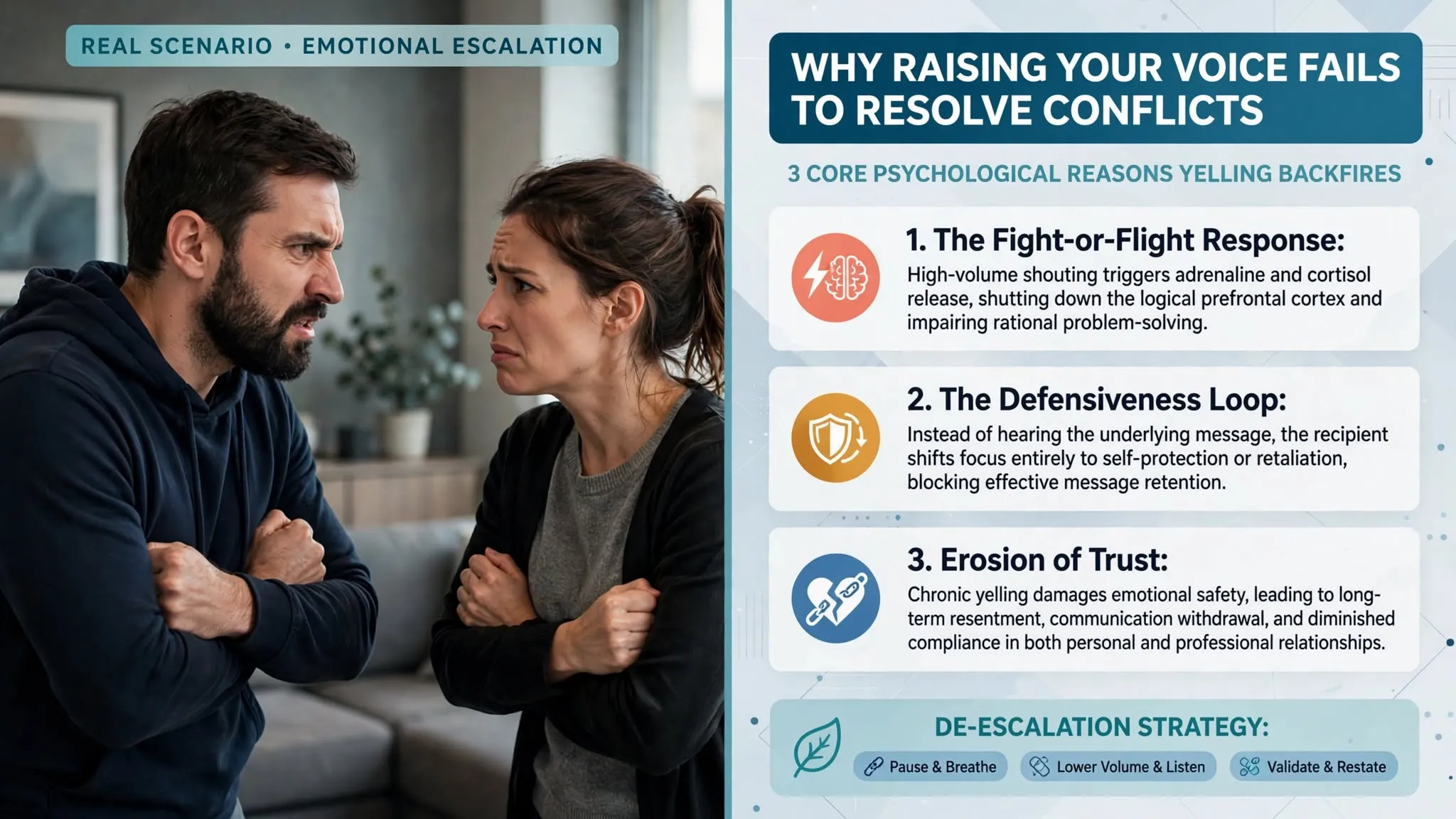
Yelling activates a child’s fight-or-flight response, hijacking their prefrontal cortex and shutting down their ability to process logic or learn. Rather than teaching accountability, chronic yelling teaches children to tune out adult voices or react with defensiveness and fear.
Neurological Hijacking: Pushes the child’s brain into survival mode, making cooperation and emotional regulation biologically impossible in that moment.
Desensitization Effect: Children quickly habituate to raised voices, forcing adults to yell louder and more frequently to get compliance.
Modeled Behavior: Teaches children that screaming is the standard way to handle frustration and resolve interpersonal conflict.
5 Calm Discipline Techniques That Work
Shifting away from reactive yelling requires deliberate strategies that keep both parent and child regulated while reinforcing clear boundaries.
Pause and Reset: Take a slow, deep breath before responding to interrupt your own automated reactive anger and model emotional control.
Lower Your Voice and Posture: Speak quietly and get down to the child’s eye level to create a grounded, non-threatening environment that commands attention naturally.
State Expectations, Not Demands: Use concise, positive language outlining what to do rather than what to stop doing (e.g., “Walk in the hallway” instead of “Stop running”).
Implement Structured Pauses: Give both parties a few minutes of quiet time to cool down before discussing the issue or determining a logical next step.
Follow Through Consistently: Deliver consequences or boundaries calmly and predictably without adding lectures, guilt trips, or emotional drama.
Common Causes of Persistent Defiance
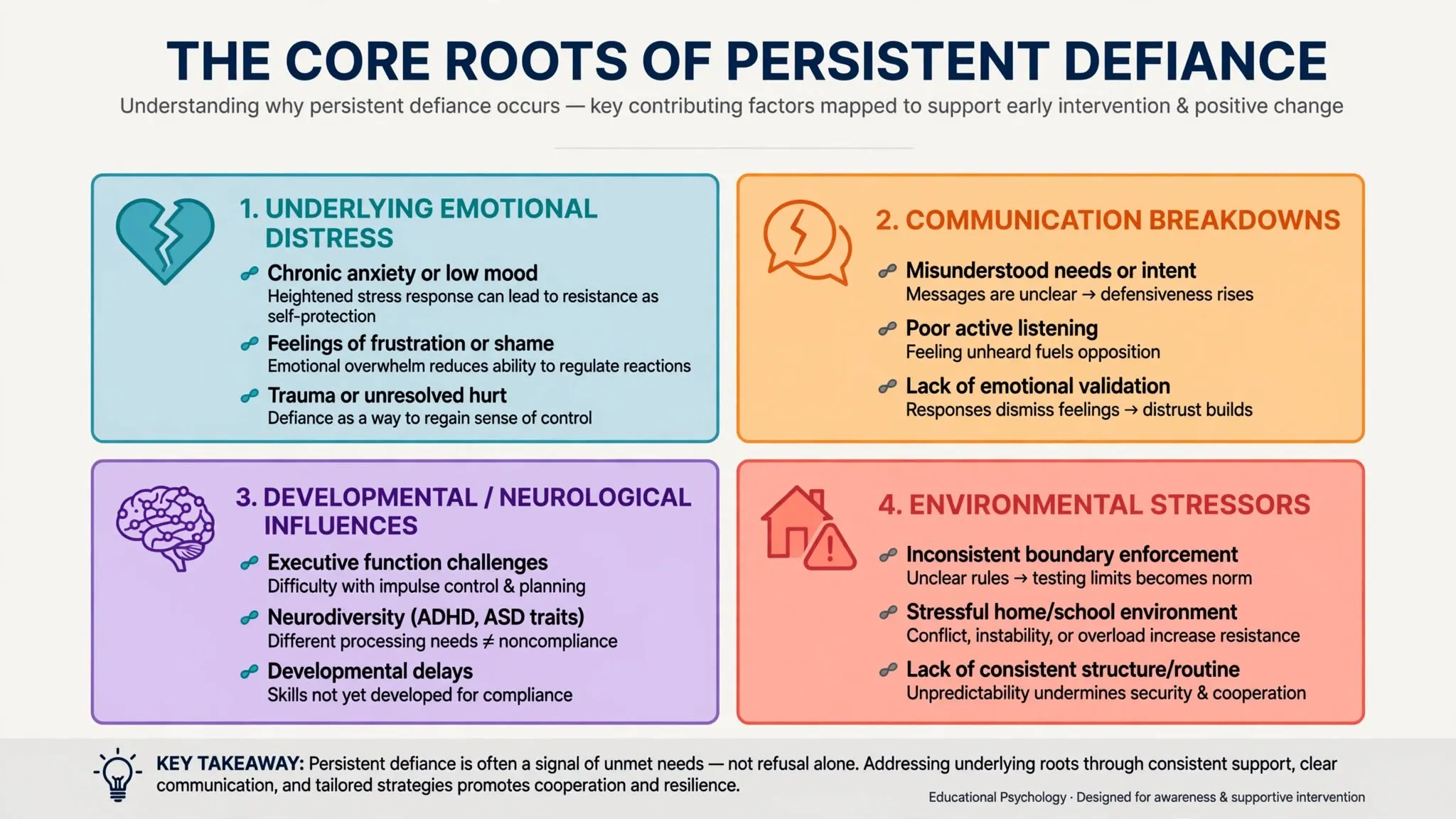
When standard discipline strategies consistently fail, it usually signals that the child’s behavior is driven by an underlying unmet need rather than simple disobedience. Pinpointing the root cause prevents parents from escalating punitive measures that only worsen the cycle.
Sensory or Emotional Overload: Children often act out when their nervous systems are overwhelmed by environmental stimuli, fatigue, or transitions they cannot verbally express.
Skill Deficits: Persistent non-compliance frequently stems from a genuine lack of executive functioning, frustration tolerance, or communication skills.
Connection Seeking: Negative attention is often preferred over no attention, driving children to provoke reactions when positive reinforcement is lacking.
Is It Normal Defiance or Could It Be ODD?
All children test boundaries as part of normal development, but chronic, intense defiance that severely disrupts family functioning may indicate Oppositional Defiant Disorder (ODD). Unlike typical stubbornness, ODD involves an enduring pattern of hostile, uncooperative, and vindictive behavior toward authority figures.
Frequency and Duration: Behavior persists for six months or longer and occurs far more frequently than is typical for the child’s age group.
Pervasive Impact: Disrupts relationships and functioning across multiple settings, including home, school, and social environments.
Core Characteristics: Regularly loses temper, actively refuses to comply with rules, blames others for mistakes, and deliberately annoys people.
When to Seek Professional Support
Recognizing the boundary between challenging developmental phases and clinical needs ensures families get the right intervention before family dynamics fracture completely. A qualified mental health professional can provide a comprehensive evaluation and tailored behavioral roadmap.
Ineffective Strategies: Standard positive parenting and logical consequences yield zero improvement despite weeks of consistent implementation.
Severe Distress: The child’s behavior causes significant emotional distress, chronic family conflict, or safety concerns for themselves or others.
School Impairment: Teachers report escalating behavioral challenges, academic disruption, or severe social isolation despite support in the classroom.
Frequently Asked Questions (FAQ Schema Target)]
What Is a Disciplinary Punishment?
A disciplinary punishment refers to a formalized consequence or disciplinary action that enforces a rule while attempting to teach a lesson. In practice, this often looks like a logical consequence—such as losing access to a video game after breaking a screen time limit.
Blended Approach: Combines the strict penalty of a punishment with the teaching goal of proactive discipline.
Logical Connection: Works best when the restriction directly relates to the broken rule rather than an arbitrary loss of privileges.
Clear Expectations: Requires parents to outline the specific rules and penalties beforehand to ensure fairness and predictability.
Is Child Discipline Necessary?
The necessity of discipline is absolute for a child’s cognitive, emotional, and social development. Without consistent, guiding boundaries, children struggle to develop self-control, empathy, or the ability to navigate complex environments safely.
Safety and Boundaries: Keeps children physically and emotionally safe by establishing clear limits on dangerous or harmful behavior.
Social Competence: Teaches children how to interact respectfully, share, and resolve conflicts with peers in the real world.
Emotional Resilience: Provides the structured, predictable environment required for children to practice managing frustration and disappointment.
How Do You Discipline a Child That Won’t Listen?
Disciplining a child who refuses to listen requires shifting from verbal commands to physical proximity and visual cues. Shouting across a room rarely improves listening or compliance; instead, parents must break the child’s current focus gently but firmly.
Close the Distance: Walk over to the child, get down to their eye level, and make gentle physical contact, such as a hand on the shoulder.
Check for Understanding: Ask the child to repeat the instruction back to you to ensure they actually processed the request.
Simplify the Command: Break multi-step instructions down into a single, actionable task using positive, concrete language.
How to Discipline a Defiant Child?
Managing active defiance requires extreme emotional regulation from the parent and a strict refusal to engage in power struggles. When a child escalates, the adult must de-escalate by maintaining a calm, unbothered presence while holding the boundary.
Offer Controlled Choices: Give the child two acceptable options to fulfill their need for autonomy (e.g., “Do you want to put your shoes on yourself, or should I help you?”).
Use the ‘When/Then’ Routine: Structure requirements calmly without negotiating (e.g., “When your toys are picked up, then we can go to the park”).
Walk Away from Arguments: State the boundary clearly once, then disengage to prevent the child from using arguing as a delay tactic.
At What Age Are Toddlers Most Defiant?
The peak toddler defiance age typically occurs between 18 months and 3 years old, driven by a massive surge in cognitive development and the drive for independence. During this window, children realize they have their own will, separate from their parents, but lack the neurological maturity to manage it.
The 18-Month Shift: Marks the beginning of the word “no” as toddlers discover their ability to refuse adult commands.
The Two-Year-Old Peak: Characterized by frequent tantrums caused by the frustrating gap between what they want to do and what they can actually achieve.
The Three-Year-Old Transition: Defiance often becomes more verbal and negotiated as language skills improve, though emotional regulation remains highly volatile.
Conclusion — Choosing Discipline Over Punishment]
Shifting the parenting approach from reactive punishment to proactive discipline fundamentally transforms how children develop emotional regulation, resilience, and trust. While punishment relies on fear and temporary compliance to suppress mistakes, discipline builds the internal wiring children need to navigate challenges successfully on their own.
Embracing Growth: Viewing misbehavior as a skill deficit rather than moral defiance allows parents to act as supportive guides instead of authoritarian enforcers.
Investing in the Future: Prioritizing teaching, logical consequences, and problem-solving lays the groundwork for lasting self-discipline and healthy long-term relationships.
Taking the Next Step: Start small by pausing before reacting, lowering the emotional temperature in high-stress moments, and focusing on what you want the child to learn rather than how they should be penalized.
Kittisak Wattanakul
Kittisak Wattanakul is the Discipline Editor at Holistic Wellbeing Living. He writes about routines, focus, consistency, and practical follow-through. With nine years of experience creating personal-growth content, Kittisak helps readers build realistic systems for steady progress without extreme productivity pressure.