
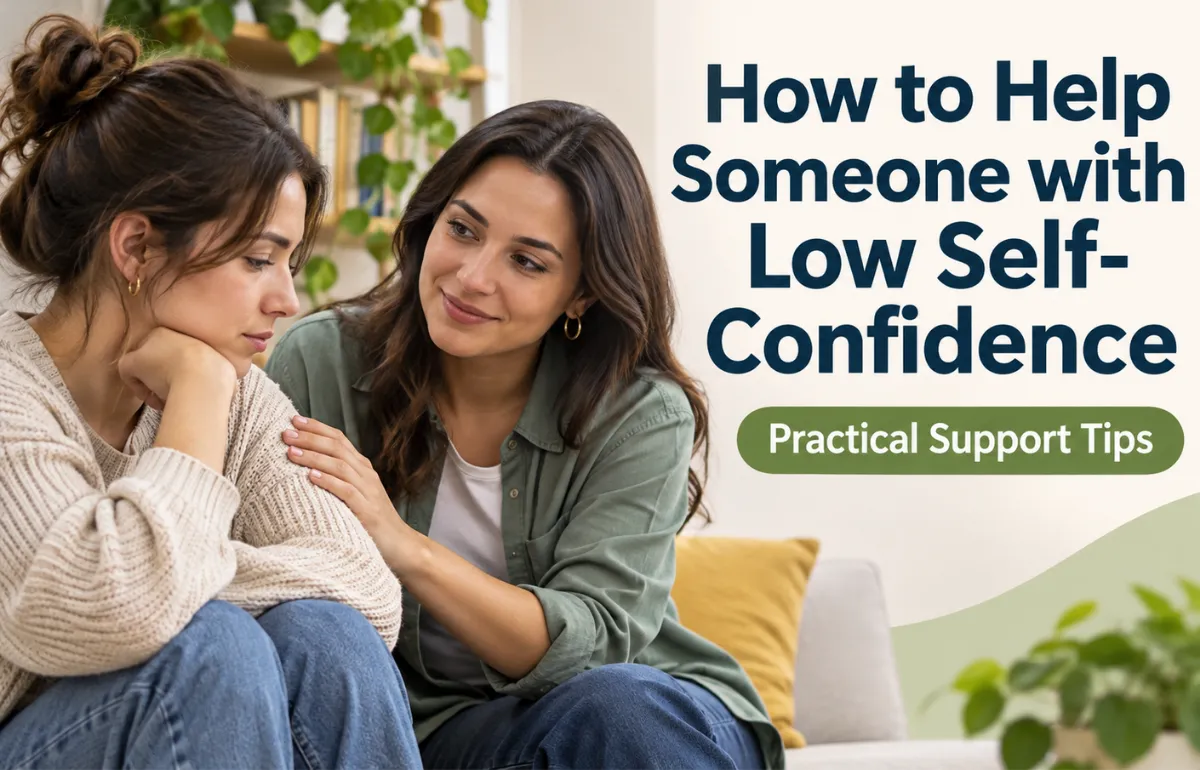
If you’re wondering how to help someone with low self-confidence, start by listening without judgment, acknowledging their feelings, recognizing their strengths, and encouraging them to take small, manageable steps toward independence. Avoid comparing them to others, dismissing their insecurities, or pressuring them to change overnight.
Low self-confidence is a lack of trust in one’s abilities, decisions, or capacity to handle everyday challenges. It can affect relationships, career opportunities, communication, and emotional well-being.
I believe that helping someone become more confident isn’t about constantly telling them how wonderful they are. It’s about creating an environment where they feel respected, understood, and comfortable making mistakes.
Whether you’re supporting a friend, partner, family member, or colleague, your everyday words and actions can influence how they see themselves. The key is to offer encouragement without making them dependent on your approval.
Understanding Low Self-Confidence
People struggling with confidence often question their abilities, even when they have the skills and knowledge needed to succeed.
They may avoid opportunities, hesitate to express opinions, or assume that others are more capable than they are.
Low self-confidence and low self-esteem are closely related, but they aren’t exactly the same.
Self-confidence refers to trust in your abilities, while self-esteem describes your overall sense of personal worth. Someone may feel confident at work but insecure in social situations or personal relationships.
According to the National Health Service (NHS), persistent low self-esteem can negatively affect mental health and contribute to problems such as anxiety and depression.
Understanding this distinction helps you offer support that addresses the person’s actual difficulties rather than making assumptions about their personality.
Signs Someone Is Struggling With Low Self-Confidence
Not everyone openly admits to feeling insecure. Some people hide their struggles behind humor, perfectionism, or an unusually independent personality.
Common signs include:
- Frequently apologizing for minor mistakes.
- Seeking reassurance before making decisions.
- Avoiding unfamiliar situations or responsibilities.
- Dismissing compliments and personal achievements.
- Comparing themselves negatively to others.
- Struggling to express opinions or set boundaries.
- Taking constructive criticism personally.
- Making frequent self-deprecating jokes.
- Giving up quickly because of a fear of failure.
I wouldn’t assume someone lacks confidence simply because they’re quiet or introverted. Pay attention to recurring patterns, especially when their behavior prevents them from pursuing things they genuinely want.
How to Help Someone With Low Self-Confidence: 12 Effective Ways
1. Listen Without Immediately Offering Solutions
When someone shares their insecurities, the natural reaction is often to offer advice or convince them they’re wrong.
However, they might need understanding more than solutions.
Imagine a friend telling you they’re afraid of attending a job interview because they don’t feel qualified. Instead of immediately insisting they’ll do well, ask what specifically makes them nervous.
You could say:
- “What part of the interview worries you most?”
- “Would you like to talk about what’s making you feel this way?”
- “I’m here to listen if you need me.”
These questions create emotional safety and help you understand the underlying problem.
I recommend asking whether they want advice, practical assistance, or simply someone to listen before deciding how to respond.
2. Give Specific and Genuine Compliments
General compliments can be comforting, but someone experiencing self-doubt may struggle to believe them.
Instead of saying, “You’re amazing,” highlight something you’ve genuinely noticed.
For example, tell them how clearly they explained a difficult topic, how patiently they handled a disagreement, or how thoughtfully they supported someone else.
Research published in Psychological Science found that certain overly positive self-statements made some participants with low self-esteem feel worse.
Although this research examined self-statements rather than compliments from others, it highlights why positivity that feels unrealistic may not always be helpful.
I prefer encouragement based on observable actions. It gives the person something concrete to reflect on rather than another opinion they feel pressured to accept.
3. Validate Their Feelings Without Reinforcing Negative Beliefs
There is a difference between acknowledging someone’s emotions and agreeing with their negative self-perception.
If someone says, “I’m terrible at everything,” you don’t need to agree or immediately argue.
A more helpful response might be, “It sounds like you’re really disappointed with yourself right now. What happened?”
This acknowledges their distress without confirming their negative belief.
Once they feel heard, gently encourage them to consider whether one disappointing experience accurately represents their entire ability.
The aim is to help them develop a more balanced perspective rather than force positive thinking.
4. Encourage Small Wins Instead of Major Changes
Confidence can develop through manageable experiences of achievement.
Someone afraid of public speaking may feel overwhelmed by the suggestion of addressing a large audience. Practicing with one trusted person might feel much more achievable.
Help them identify a challenge that feels slightly uncomfortable but still manageable.
For example, they could express an opinion during a small discussion, make a phone call independently, or complete a task they’ve been avoiding.
Recognize their willingness to try, regardless of the outcome.
Small successes can provide evidence that their abilities are greater than they initially believed.
5. Avoid Doing Everything for Them
Helping someone and taking over their responsibilities are two different things.
Imagine a colleague who feels uncomfortable sending professional emails. Writing every email for them may solve the immediate problem, but it removes opportunities for independent practice.
A better approach is to help them prepare the first email, offer feedback when requested, and gradually allow them to handle future communication.
I think of effective support as temporary assistance that becomes less necessary over time.
Before stepping in, ask yourself whether your involvement will help the person become more independent or simply make the situation easier for the moment.
6. Help Them Separate Failure From Personal Worth
People with low confidence sometimes interpret mistakes as evidence that they are fundamentally incapable.
A rejected job application becomes proof that they’re unemployable. An awkward conversation becomes proof that they’re socially inadequate.
Help them distinguish between an unsuccessful experience and their identity.
You might say, “That approach didn’t work, but what could you do differently next time?”
Avoid pretending that every failure is insignificant. Some setbacks have genuine consequences, and disappointment deserves acknowledgment.
What matters is helping them understand that a mistake can be addressed without turning it into a permanent judgment about themselves.
7. Give Them Opportunities to Make Decisions
Constantly making decisions for someone can unintentionally communicate that you don’t trust their judgment.
Start with ordinary situations. Ask them to choose a restaurant, suggest a weekend activity, or decide how to approach a shared task.
Respect their choices instead of repeatedly questioning or correcting them.
If they respond with, “Whatever you think is best,” encourage them to express their preference without creating pressure.
Something as simple as saying, “I’d genuinely like to know what you prefer,” can help them recognize that their opinions matter.
8. Stop Comparing Them to Other People
Comparisons can make existing feelings of inadequacy worse, even when they’re intended as motivation.
Telling someone that their sibling, colleague, or friend achieved something more easily may create shame rather than encouragement.
Instead, focus on their individual progress.
Remind them of a situation they previously found difficult but can now handle more comfortably. This allows them to recognize improvement without competing against someone else’s circumstances.
Personal development becomes more meaningful when progress is measured against an individual’s own starting point.
9. Help Them Build Healthy Boundaries
People experiencing low self-esteem may struggle to refuse requests because they fear rejection, disappointment, or conflict.
You can support their confidence by respecting their boundaries and encouraging them to communicate their needs.
If they decline an invitation, accept their answer without making them feel guilty.
If they disagree with you, respond respectfully rather than becoming defensive.
I consider this especially valuable because it gives someone direct evidence that expressing a different opinion doesn’t necessarily damage a relationship.
Your reaction to their boundaries can either strengthen their self-trust or discourage them from speaking up again.
10. Recognize Progress That Others Might Overlook
Confidence doesn’t always appear as a dramatic personality transformation.
Sometimes, progress means asking a question, attending an event alone, accepting a compliment, or expressing disagreement without immediately apologizing.
Notice these quieter achievements.
However, avoid publicly celebrating something they might prefer to keep private. Excessive attention can make an ordinary accomplishment feel like a performance.
A simple acknowledgment, such as “I noticed you spoke up for yourself today,” may be enough.
11. Be Consistent, Especially on Difficult Days
Someone may appear confident one day and deeply insecure the next.
Stress, criticism, unfamiliar circumstances, and personal disappointments can temporarily affect their confidence.
Avoid responding with frustration or suggesting that their previous progress was meaningless.
Check in after difficult experiences, keep reasonable promises, and maintain a respectful attitude even when they make mistakes.
Consistency helps create a relationship where they don’t feel required to perform well to receive kindness or acceptance.
12. Encourage Professional Support When Necessary
Learning how to help someone with low self-confidence also means recognizing the limits of informal support.
Persistent insecurity may be connected to bullying, emotional abuse, depression, anxiety, or other difficult experiences.
If self-doubt significantly interferes with their daily life, encourage them to speak with a qualified mental health professional.
Counseling and cognitive behavioral therapy (CBT) may help address persistent negative thinking patterns and underlying emotional difficulties.
Approach the conversation gently. Offer to help them explore available resources if they want assistance, but avoid pressuring them into treatment.
What to Say to Someone With Low Self-Confidence
The language you use can influence whether someone feels encouraged, dismissed, or misunderstood.
I recommend replacing automatic reassurance with responses that acknowledge emotions, encourage independent thinking, and demonstrate respect.
| Avoid saying | Say this instead |
|---|---|
| “Just believe in yourself.” | “Which part of this feels most difficult?” |
| “You’re overthinking everything.” | “I can understand why this is worrying you.” |
| “Everyone else can do it.” | “You can approach this at your own pace.” |
| “Let me do it for you.” | “Would you like some help getting started?” |
| “Stop being so negative.” | “Are you being harder on yourself than the situation deserves?” |
| “You have nothing to worry about.” | “What would help you feel more prepared?” |
| “Don’t disappoint me.” | “My respect for you isn’t based on the outcome.” |
Supportive communication doesn’t require perfect words. It requires paying attention to how your response affects the person receiving it.
The Difference Between Supporting and Rescuing Someone
One overlooked aspect of helping someone overcome insecurity is understanding when assistance becomes excessive.
You might have good intentions, but constantly protecting someone from uncomfortable experiences can limit their opportunities to develop independence.
| Healthy support | Unhelpful rescuing |
|---|---|
| Helping them explore options | Making every decision for them |
| Encouraging manageable challenges | Removing every uncomfortable challenge |
| Offering realistic feedback | Pretending they never make mistakes |
| Respecting personal boundaries | Monitoring their every action |
| Recognizing independent achievements | Encouraging dependence on your approval |
The goal is not to make someone feel confident only when you’re present. It’s to support the development of confidence they can carry into situations where you’re unavailable.
How to Support Someone Who Constantly Needs Reassurance
Repeated reassurance seeking can become exhausting for both people.
Someone might repeatedly ask whether they made the right decision, whether others like them, or whether they’ve done something wrong.
Providing reassurance occasionally is natural. However, answering the same question repeatedly may offer temporary comfort without resolving the underlying uncertainty.
I suggest gently returning some responsibility to the person.
For instance, if they repeatedly ask whether their work is good enough, ask what standards they used to evaluate it and which parts they feel satisfied with.
You can still offer your perspective without becoming their only source of validation.
If reassurance seeking becomes persistent or distressing, professional guidance may be beneficial.
How to Help Different People Build Self-Confidence
Helping a Friend
Give your friend opportunities to participate in activities they enjoy without making every interaction about their insecurities.
Invite them into conversations, value their suggestions, and avoid sharing their personal struggles with others without permission.
Friendship should remain a source of companionship, not become an ongoing confidence improvement project.
Helping a Romantic Partner
When helping a partner with low self-confidence, emotional security and mutual respect are particularly valuable.
Avoid hurtful comparisons, appearance-based criticism, and using their insecurities during arguments.
Express appreciation for their qualities beyond physical appearance or achievements.
Maintain healthy boundaries so that neither person’s emotional well-being becomes entirely dependent on the other’s reassurance.
Helping a Child or Teenager
Children and teenagers benefit from having age-appropriate opportunities to make choices, solve problems, and learn from mistakes.
Praise preparation, curiosity, honesty, and persistence rather than focusing exclusively on grades or achievements.
If bullying or social media comparisons are affecting their self-image, discuss those experiences openly and seek additional support when necessary.
Helping a Coworker
Support a colleague by recognizing their contributions, offering constructive feedback privately, and giving them appropriate credit for their work.
Avoid speaking on their behalf whenever they hesitate.
Instead, create opportunities for them to contribute in ways that suit their abilities and professional responsibilities.
An Exercise I Recommend: The Confidence Evidence Bank
Rather than relying exclusively on motivational conversations, I recommend a simple activity that helps someone recognize evidence of their abilities.
I call it the confidence evidence bank.
With their permission, encourage them to record three things whenever they face a meaningful challenge:
- The situation they found difficult.
- The action they took despite feeling uncertain.
- What that action revealed about their abilities.
For example, someone nervous about attending a social gathering might record that they introduced themselves to one unfamiliar person and discovered they could initiate a conversation despite feeling anxious.
The purpose isn’t to collect perfect outcomes. It’s to notice evidence of courage, adaptability, and personal growth.
Over time, these observations can provide a more balanced picture of their capabilities.
Keep the activity optional. It should support reflection rather than become another responsibility they fear getting wrong.
What If Their Low Confidence Is Caused by Your Behavior?
Before focusing entirely on changing someone’s self-perception, consider whether your own behavior contributes to their insecurity.
Do you frequently interrupt them? Make jokes about their mistakes? Correct minor decisions they make? Offer criticism more often than appreciation?
Even well-intentioned behavior can undermine another person’s confidence when repeated regularly.
If you recognize an unhealthy pattern, acknowledge it and change your approach.
An apology followed by consistent behavioral change may be more meaningful than several motivational conversations.
Similarly, when someone faces bullying, discrimination, or an emotionally abusive environment, encouragement alone cannot resolve the underlying problem. Practical support and access to appropriate resources may be necessary.
When Low Self-Confidence Requires More Serious Attention
Occasional self-doubt is common. However, persistent withdrawal, intense feelings of worthlessness, hopelessness, or difficulty managing everyday responsibilities deserve additional attention.
Encourage professional support if these difficulties continue or worsen.
If someone expresses suicidal thoughts or talks about harming themselves, take their statements seriously. Ask directly about their safety and help them access appropriate crisis support. If they are in immediate danger, contact local emergency services and stay with them if it is safe to do so.
The National Institute of Mental Health provides practical guidance for supporting someone experiencing suicidal thoughts.
Remember that caring about another person doesn’t mean assuming full responsibility for their mental health.
Conclusion
Understanding how to help someone with low self-confidence begins with empathy, patience, and respect for their independence.
Genuine encouragement, attentive listening, manageable challenges, and consistent emotional support can help someone gradually develop greater trust in their abilities.
I believe the most meaningful support comes from helping people recognize their own strengths rather than convincing them to depend on someone else’s approval.
Start today with one thoughtful conversation. Listen to the person, acknowledge something they’ve done well, and ask what kind of support would genuinely help them.
Small, respectful actions repeated over time can make a meaningful difference.
Frequently Asked Questions
1. What do you say to someone with low self-confidence?
Acknowledge their feelings, recognize their genuine strengths, and remind them that mistakes don’t define their abilities or personal worth.
2. Can you help someone overcome low self-confidence?
Yes. Patient encouragement, constructive feedback, emotional support, and opportunities for independent achievement can help, although lasting change requires their participation.
3. What causes low self-confidence in adults?
Common contributing factors include childhood criticism, bullying, unhealthy relationships, repeated setbacks, perfectionism, social comparisons, and mental health difficulties.
4. How do you help someone who doesn’t believe in themselves?
Listen without judgment, highlight specific evidence of their abilities, encourage manageable challenges, and avoid pressuring them to become confident immediately.
5. How long does it take to rebuild someone’s self-confidence?
There is no fixed timeline. Improvement depends on individual circumstances, underlying causes, available support, and opportunities to develop self-trust.

FOLLOW YOUR CURIOSITY
A little more to explore
Stay with the topic. Find another perspective to take into your day.
How to Be a Confident Leader: 12 Ways to Earn Trust
By Nattaya Boonmee
How to Start a New Work Project with Confidence: 11 Tips
By Nattaya Boonmee
How to Be Confident in an Interview: 15 Practical Tips
By Nattaya Boonmee