
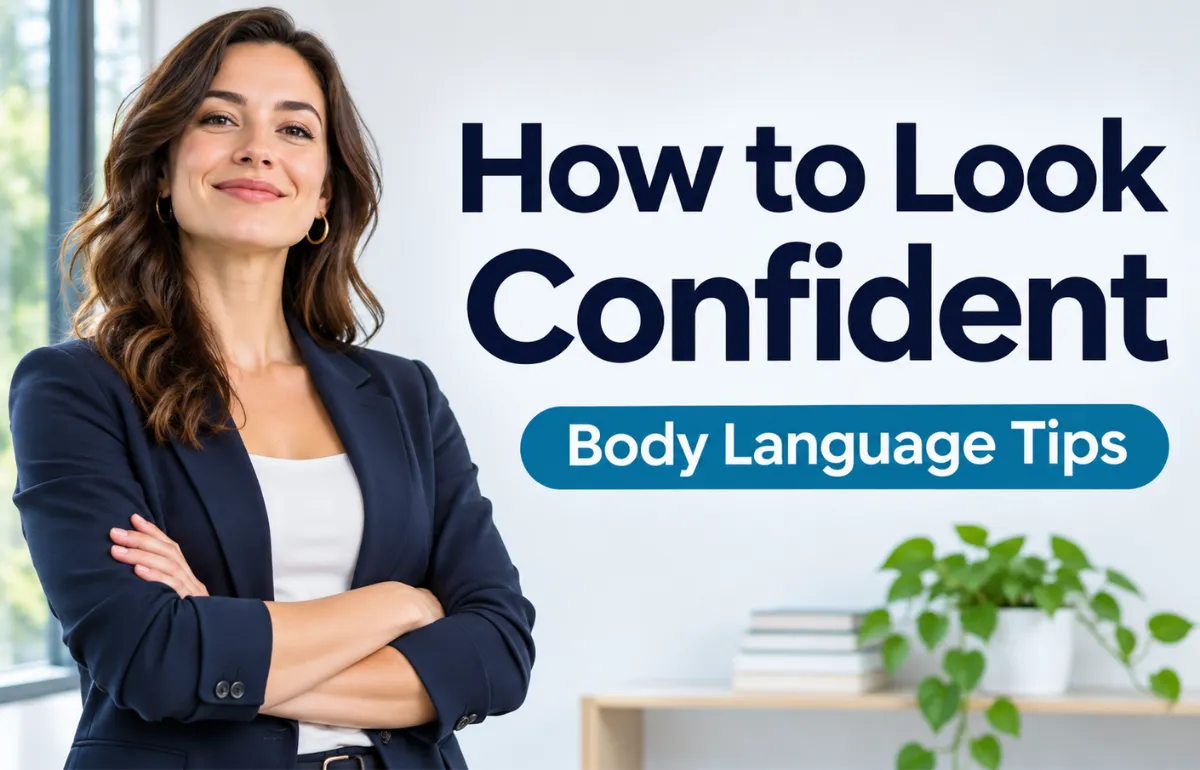
If you’re wondering how to look confident, start by standing upright, relaxing your shoulders, maintaining natural eye contact, using controlled hand gestures, and keeping your facial expressions relaxed. Looking confident means presenting yourself through nonverbal behaviors that communicate composure, self-assurance, and openness.
You don’t need to feel completely fearless to appear confident. Small adjustments to your posture, walking style, facial expressions, and physical movements can influence how others perceive you, even when you’re nervous.
I recommend focusing on looking comfortable rather than trying to look powerful. Confidence isn’t about dominating a room, maintaining a serious expression, or attracting everyone’s attention. It’s about appearing at ease with yourself without constantly seeking approval from others.
Here are 15 practical ways to develop that kind of presence naturally.
Why Body Language Matters When You Want to Look Confident
Before you introduce yourself, people may already begin forming impressions based on how you carry yourself.
Your posture, facial expressions, and movements contribute to how approachable, composed, and self-assured you appear. Although these impressions aren’t always accurate, nonverbal communication plays a meaningful role in social and professional interactions.
A meta-analysis published in the Journal of Organizational Behavior, examining decades of job interview research, identified eye contact and head movements among the nonverbal behaviors most strongly associated with interview performance.
However, body language isn’t a reliable way to determine someone’s actual personality or abilities.
I prefer to think of confident body language as a communication skill rather than a personality trait. You can improve how you present yourself without changing who you are.
15 Effective Ways to Look Confident Naturally
1. Stand Tall Without Making Your Body Stiff
Good posture is one of the simplest ways to improve your physical presence.
When you constantly look downward, hunch your shoulders, or collapse your chest, you may appear uncomfortable or withdrawn. However, standing excessively straight can make you look equally uncomfortable.
I recommend aiming for a relaxed, upright posture:
- Keep your head comfortably aligned with your spine.
- Allow your shoulders to settle naturally.
- Distribute your weight evenly when possible.
- Keep your knees relaxed rather than locked.
- Avoid pushing your chest excessively forward.
Imagine a gentle upward pull from the top of your head. This creates length without unnecessary muscular tension.
A confident posture should be comfortable enough to maintain while having a conversation, not something you can only hold for a photograph.
2. Maintain Natural Eye Contact
Eye contact can communicate attention, interest, and self-assurance. However, there’s a significant difference between making eye contact and staring.
If you constantly look away when someone speaks, they might interpret your behavior as discomfort or distraction. Meanwhile, uninterrupted eye contact can feel intimidating.
I suggest using conversational moments rather than counting seconds.
Look toward the person when they begin speaking, when you’re responding to an important point, and when you’re acknowledging something they’ve said. Briefly look away when gathering your thoughts.
Remember that comfortable eye contact differs across cultures and individuals. Research published in PLOS ONE highlights cultural differences in how direct gaze is perceived.
If direct eye contact feels uncomfortable, looking near someone’s eyes or toward their face can help you remain visibly engaged.
3. Relax Your Facial Expressions
Your face can reveal physical tension even when the rest of your body appears composed.
A clenched jaw, tightly pressed lips, raised shoulders, and furrowed eyebrows can create an impression of discomfort.
Before entering an important conversation, check whether you’re holding unnecessary tension around your mouth, forehead, or eyes.
Allow your jaw to loosen, soften your forehead, and let your lips rest naturally.
I wouldn’t recommend practicing an artificially serious expression to look more confident. A relaxed, responsive face often communicates greater ease than an expression you’ve deliberately frozen.
Your face should be free to respond to what’s happening around you.
4. Walk With Purpose Instead of Rushing
If you want to understand how to look confident while walking, pay attention to your direction, posture, and pace rather than trying to develop an impressive stride.
Walk at a comfortable speed, keep your head reasonably upright, and allow your arms to move naturally.
Avoid repeatedly checking your phone, staring at your feet without needing to, or rushing when there’s no reason to hurry.
One detail I recommend practicing is how you finish walking.
For example, when approaching someone’s desk, complete your final step, settle into a comfortable position, and then begin interacting.
Starting a conversation while you’re still adjusting your clothing, repositioning your feet, or searching through your belongings can make the interaction appear more hurried than necessary.
5. Keep Your Hands Visible and Relaxed
Not knowing what to do with your hands can make social situations feel awkward.
You might repeatedly adjust your sleeves, grip your phone, play with your jewelry, or hide your hands because you’re unsure where to place them.
Rather than controlling every movement, give your hands a comfortable resting position.
When standing, allow them to rest naturally beside your body. When sitting, place them comfortably on your lap or a nearby surface.
Use gestures when they help explain something, and let your hands return to their resting position afterward.
There’s nothing inherently unconfident about putting your hands in your pockets or crossing your arms. The circumstances, your comfort, and your overall body language matter more than any isolated gesture.
6. Develop a Comfortable Neutral Expression
A confident facial expression doesn’t require a permanent smile.
You should be able to listen, observe, and spend time around others without feeling obligated to look cheerful every moment.
I recommend developing a neutral expression that feels relaxed rather than deliberately intimidating.
Keep your forehead soft, your jaw comfortable, and your gaze attentive. Smile when greeting someone or responding to something pleasant, rather than maintaining a smile throughout an entire conversation.
This allows your facial expressions to reflect the interaction naturally.
It’s also perfectly acceptable to look thoughtful, concerned, or serious when the situation calls for it. Confidence doesn’t require hiding every emotion.
7. Take Up Your Natural Amount of Space
Some people make themselves physically smaller when they’re uncomfortable. They pull their elbows inward, tuck their chin, or perch on the edge of a chair.
Other people overcompensate by spreading their arms and legs excessively.
Neither extreme is necessary.
Allow yourself to occupy the space you reasonably need without invading someone else’s personal space.
When sitting, use the chair properly rather than balancing nervously on its edge. When standing, choose a comfortable stance instead of squeezing your feet together unnecessarily.
A 2022 review of 88 studies found that body positions can influence self-perceptions, although popular claims about hormonal changes from power posing lack convincing support.
I recommend comfortable openness rather than exaggerated dominance.
8. Reduce Unnecessary Movements
Looking self-assured doesn’t mean remaining perfectly still. It means avoiding unnecessary movements when they interfere with your communication.
Repeatedly clicking a pen, checking your watch, adjusting your hair, or switching your phone between your hands can distract attention from an interaction.
Try identifying the situations in which these habits appear most frequently.
If you repeatedly play with your phone during conversations, put it away. If your hands become restless during meetings, give them a comfortable place to rest.
Don’t criticize yourself for moving. Fidgeting can help some people concentrate or regulate discomfort.
The objective is to reduce distracting movements where practical, not to suppress every natural behavior.
9. Learn How to Sit Confidently
Your sitting posture deserves just as much attention as your standing posture, particularly during interviews, meetings, and social gatherings.
Choose a position that allows you to remain attentive without creating unnecessary tension.
Support your back when appropriate, position your feet comfortably, and keep your shoulders relaxed.
Avoid leaning excessively backward when someone is addressing you or leaning so far forward that you enter their personal space.
A slight forward lean can communicate interest during an engaging conversation. Returning to a comfortable resting position afterward prevents your posture from becoming forced.
Adapt these suggestions to your mobility, physical comfort, and seating arrangement.
10. Keep Your Chin in a Natural Position
The angle of your head can subtly change your physical presence.
Keeping your chin excessively lowered may create a withdrawn appearance, while lifting it too high can sometimes make you appear dismissive.
I recommend keeping your chin approximately level when looking ahead.
If you spend considerable time using a phone or laptop, you may become accustomed to looking downward. Before a face-to-face interaction, gently return your head to a comfortable, neutral position.
Don’t force your neck backward or maintain an uncomfortable angle.
A naturally positioned head makes it easier to look toward others without appearing physically tense.
11. Use Controlled and Meaningful Hand Gestures
Hand gestures can make communication more expressive and engaging.
The key is allowing your movements to support what you’re communicating rather than competing for attention.
For instance, you might use your hands to illustrate the size of something, distinguish between two options, or emphasize an important detail.
Avoid deliberately copying exaggerated gestures from motivational speakers if they don’t suit your personality.
I recommend practicing the gesture-and-return technique: make a relevant gesture, complete it, and allow your hands to settle again.
This creates a natural rhythm between movement and stillness without making your communication look rehearsed.
12. Improve Your Body Language While Listening
Many discussions about how to look confident focus entirely on speaking. However, the way you behave when someone else is speaking matters just as much.
Turn comfortably toward the person, acknowledge what they’re saying with appropriate facial expressions, and avoid constantly scanning your surroundings.
You don’t need to nod after every sentence or smile at everything.
Excessive nodding can sometimes communicate eagerness to agree rather than genuine attention.
Allow yourself to listen without performing agreement. You can remain friendly and receptive while holding a different opinion.
This is particularly useful during professional discussions where you want to communicate respect without appearing overly submissive.
13. Make Physical Transitions More Deliberate
An overlooked aspect of confident body language is what happens between activities.
Think about how you stand up from a chair, put away your belongings, turn toward someone, or move from one conversation to another.
These moments can become rushed when you’re feeling self-conscious.
I suggest practicing what I call the finish-and-settle technique.
Finish your current physical action before beginning the next one whenever possible.
For example, place your bag beside your chair, settle into your seat, and then greet the person across from you.
This isn’t about moving in slow motion. It’s about avoiding unnecessary overlap between movements when you’re already feeling pressured.
14. Avoid Overcorrecting Your Body Language
Trying too hard to appear confident can have the opposite effect.
You might become so concerned about maintaining eye contact, positioning your hands, and controlling your posture that you stop paying attention to the actual conversation.
Instead of monitoring your entire body, choose one adjustment at a time.
If you’re working on posture, allow your other movements to remain natural. Once that adjustment feels comfortable, practice another.
I recommend treating body language practice like learning any physical skill. Repetition matters more than trying to perform everything perfectly on your first attempt.
15. Learn to Recover From Awkward Moments
People occasionally stumble, drop objects, misjudge distances, or make uncomfortable facial expressions. Confident people aren’t exempt from these experiences.
What matters is how you continue afterward.
Imagine dropping your phone while introducing yourself. You can pick it up, acknowledge the interruption if necessary, and return your attention to the conversation.
Avoid repeatedly apologizing for minor mishaps or spending the remainder of the interaction trying to compensate.
I consider recovery an underrated part of physical confidence. Being able to return to a comfortable posture after an awkward moment is more useful than trying to prevent every possible mistake.
Confident vs. Nervous vs. Overconfident Body Language
Looking confident isn’t about making every movement bigger or stronger. There’s often a comfortable middle ground between appearing withdrawn and appearing intimidating.
| Body language | Possible signs of nervousness | Confident alternative | Possible signs of overconfidence |
|---|---|---|---|
| Posture | Hunched shoulders | Relaxed, upright position | Exaggerated chest expansion |
| Eye contact | Frequently looking away | Natural, intermittent eye contact | Prolonged staring |
| Facial expressions | Visible facial tension | Relaxed, responsive expression | Dismissive expressions |
| Hand gestures | Repetitive movements | Purposeful, comfortable gestures | Excessively dramatic gestures |
| Personal space | Making yourself unnecessarily small | Occupying reasonable space | Invading others’ space |
| Walking style | Rushed or hesitant movements | Comfortable, purposeful movement | Exaggerated strutting |
| Listening | Excessive nodding | Attentive, natural responses | Visibly dismissing others |
These are possible impressions, not reliable indicators of someone’s emotional state. Culture, disability, neurodivergence, and individual habits can influence all of these behaviors.
How to Look Confident in Different Situations
The same physical behaviors won’t necessarily work in every environment. I recommend adapting your body language to the situation rather than maintaining one fixed appearance.
| Situation | What to practice |
|---|---|
| Job interview | Comfortable sitting posture and attentive eye contact |
| Public speaking | Stable stance and meaningful gestures |
| Social gathering | Relaxed expressions and approachable posture |
| Walking alone | Comfortable pace and awareness of surroundings |
| Video meeting | Eye-level camera and relaxed shoulders |
| Meeting someone new | Natural smile and comfortable personal distance |
During video meetings, briefly looking toward the camera when making an important point can create the impression of direct engagement. Look at the screen when you need to observe other people’s reactions.
For public speaking, establish a comfortable position before beginning rather than repeatedly adjusting yourself during your opening sentence.
How to Look Confident When You Feel Nervous Inside
You don’t have to eliminate nervousness before improving your physical presence.
When you’re under pressure, remembering 15 different techniques may be unrealistic. Instead, I recommend a simple three-point physical reset.
- Establish a comfortable, supported sitting or standing position.
- Release unnecessary tension in your shoulders, jaw, and hands.
- Direct your attention toward the person or activity in front of you.
This takes only a few moments and doesn’t require anyone else to notice what you’re doing.
You can use it before entering a meeting, introducing yourself, or returning to a conversation after an uncomfortable interruption.
If nervousness remains, that’s okay. The purpose of the reset is to help you communicate comfortably, not to guarantee that nobody notices your anxiety.
A Five-Minute Exercise to Practice Confident Body Language
I recommend using your phone camera for this exercise because it allows you to observe how your movements appear from another person’s perspective.
Spend five minutes practicing the following:
- Minute 1: Stand naturally and observe your posture.
- Minute 2: Walk toward the camera and come to a comfortable stop.
- Minute 3: Explain a familiar topic while using natural gestures.
- Minute 4: Watch the recording without sound and observe your movements.
- Minute 5: Repeat the recording after making one small adjustment.
When reviewing the recording, focus on comfort, unnecessary tension, and the flow of your movements.
Don’t evaluate your physical attractiveness or compare yourself with someone else’s appearance.
Repeat the exercise occasionally and notice whether your movements become more comfortable. There’s no need to record yourself before every social interaction.
Final Thoughts
Learning how to look confident is less about creating a powerful image and more about developing a comfortable, composed physical presence.
Natural eye contact, relaxed facial expressions, balanced posture, purposeful gestures, and comfortable movement can help you communicate self-assurance without pretending to be someone else.
My recommendation is to start with one physical habit today. Relax your shoulders during your next conversation, practice comfortable eye contact, or pay attention to how you enter a room.
Gradually, these small adjustments can become part of your everyday body language rather than something you consciously perform.
Frequently Asked Questions
How can I look confident instantly?
Stand comfortably upright, relax your shoulders and jaw, look toward the person you’re addressing, and avoid rushing your movements.
How do I look confident when I’m shy?
Maintain a comfortable posture, use natural facial expressions, and direct your attention toward the conversation. You don’t need to become outgoing to appear confident.
How can I make my face look more confident?
Relax your jaw, soften your forehead, maintain an attentive gaze, and smile naturally when appropriate rather than forcing an expression.
How do I walk confidently in public?
Keep your head comfortably upright, walk at a natural pace, relax your shoulders, and allow your arms to move freely.
How can I look confident without looking arrogant?
Use open body language, respect personal space, maintain comfortable eye contact, and demonstrate genuine interest in other people.

FOLLOW YOUR CURIOSITY
A little more to explore
Stay with the topic. Find another perspective to take into your day.
How to Be a Confident Leader: 12 Ways to Earn Trust
By Nattaya Boonmee
How to Start a New Work Project with Confidence: 11 Tips
By Nattaya Boonmee
How to Be Confident in an Interview: 15 Practical Tips
By Nattaya Boonmee