Jump to:
ToggleHow to Keep a Mental Health Journal A Simple, Sustainable Method
What Is a Mental Health Journal?
A mental health journal is a dedicated space focused specifically on emotional processing, self-awareness, and mental regulation. Unlike a regular diary, which often acts as a chronological log of daily events, activities, and tasks, a mental health journal functions as an active emotional processing tool. It is not about what you did today, but how you experienced it, what thoughts it triggered, and how your nervous system responded. By moving past the surface details of your schedule, you give your mind a safe container to untangle complex feelings, track internal patterns, and release emotional weight. To dive deeper into how this practice positively impacts your nervous system and clarity, you can explore the benefits of writing in a journal here.
Getting Set Up
Getting started with your mental health journal for beginners requires very little friction: any tool works—whether it is a physical notebook, a notes app on your phone, or a private digital journal. There are no rules regarding grammar, neatness, or spelling, and your entries do not need to look pretty or make linear sense. Simply start with just 5 to 10 minutes a day so the practice feels accessible rather than like an overwhelming chore; if you need more comprehensive tips on establishing your routine, check out our guide on how to start journaling.
How to Actually Write an Entry Step-by-Step
Do a Brain Dump First
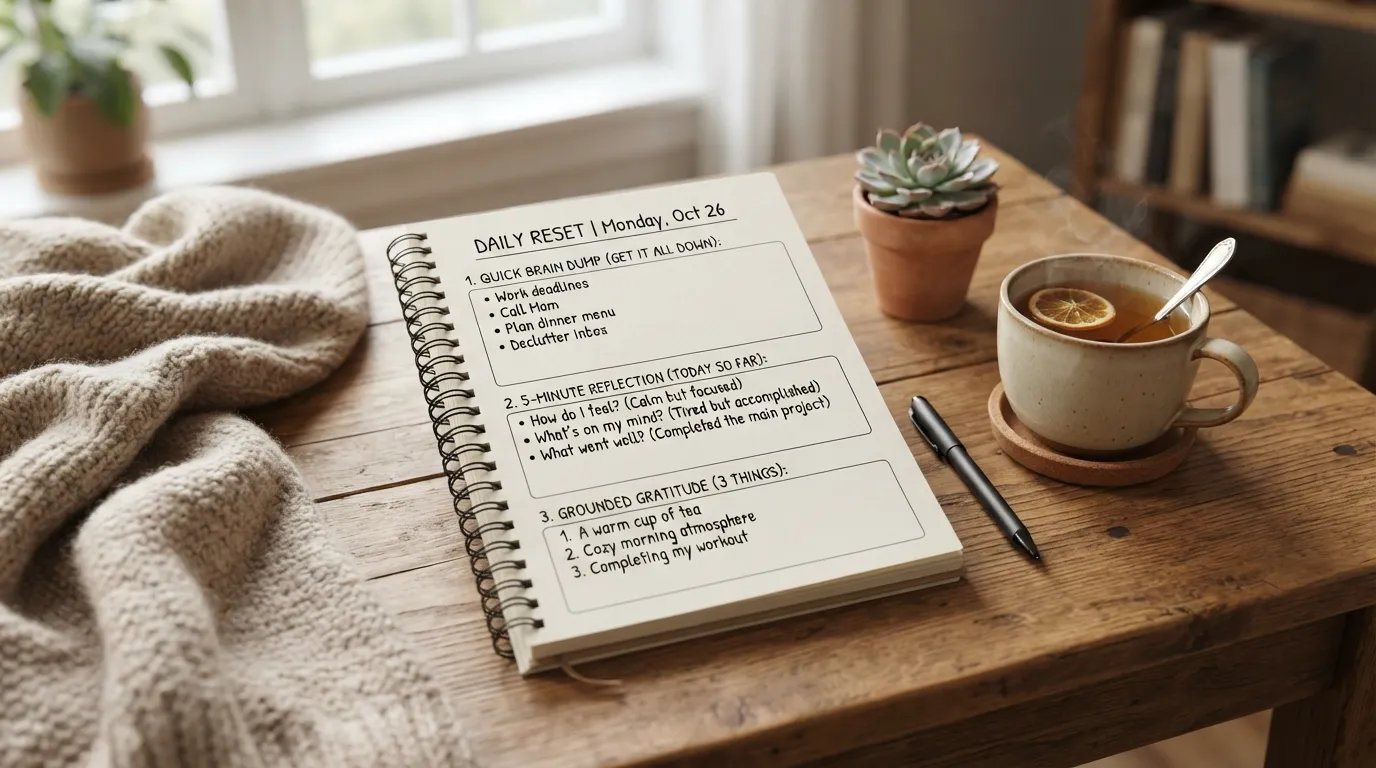
Before trying to organize your thoughts or solve any problems, start your entry with a raw, unfiltered brain dump. Write down everything swirling in your head—random worries, unfinished tasks, frustrations, and sensory overload—without editing yourself. Getting these thoughts out of your head and onto the page clears your mental RAM, making room for calm, intentional reflection.
Reflective Questions to Ask Yourself
Once the initial mental clutter is cleared, transition into structured reflection to understand your internal state. You can gently guide your thoughts using these four reflective questions:
“What emotion am I feeling most right now?”
“What is one thing within my control today?”
“What’s one small step I can take about this?”
“What’s one real thing that felt okay today?”
Use a Gentle Prompt if You’re Stuck
If staring at a blank page feels intimidating, lean on mental health journal prompts to gently guide your focus. You might ask yourself: What does my body need right now to feel a little safer? Or, If a friend came to me with the exact worry I am carrying, what would I tell them? Another grounding option is: What is a heavy expectation I can lay down for the rest of the day? You can find many more guided inquiries on our full collection of journal prompts page.
Balance Feelings With Solutions / Processing Emotions on Paper
Journaling is designed to help you process your emotions rather than just endlessly vent them. While venting provides initial relief, simply dwelling on complaints can sometimes reinforce distress. Balance your raw expression by asking yourself what the emotion is trying to tell you, turning the page into an active partner in your emotional regulation.
Add a Safe Gratitude Note
Incorporate gratitude, but keep it grounded in real, small things—like the warmth of a mug, a quiet moment, or a supportive text message. Explicitly avoid forcing toxic positivity or pretending things are fine when they are not. Your gratitude note should acknowledge goodness without invalidating the difficult things you are currently carrying.
Journaling Methods Used for Mental Health
The 3-3-3 Rule (Anxiety Grounding Method)
The 3-3-3 rule is a powerful sensory-awareness grounding technique designed to pull you out of a racing mind and back into the physical present. When anxiety flares, use this method on the page to anchor your nervous system by writing down:
Three things you can currently see around your physical space.
Three sounds you can hear in your immediate environment.
Three parts of your body you can physically move (such as rolling your shoulders, wiggling your toes, or taking a slow, deep breath).
The 3-2-1 Method
The 3-2-1 method provides a structured cognitive wind-down to help organize your thoughts at the end of a demanding day or when your mind feels scattered. On your page, list:
3 things that went well or that you appreciate from your day.
2 current emotional or mental priorities that need your gentle attention tomorrow.
1 boundary, release, or worry that you are consciously leaving behind on the page so you can rest.
How to Journal for Anxiety Specifically
Grounding-First Entries Before Emotional Entries
When managing a journal for anxiety, diving straight into deep emotional triggers can sometimes heighten feelings of overwhelm. Before you attempt to untangle complex feelings or vent about stressors, always begin your entries with a grounding-first approach. By noting your physical surroundings, describing your immediate sensory environment, or focusing on your breathing for a few lines, you signal safety to your nervous system before you begin the deeper work of exploring emotional complexities.
The “Worry, Then Plan” Structure
To prevent anxiety from spiraling on the page, try a “Worry, Then Plan” structure. Divide your journal page down the middle. On the left side, write out your unfiltered worries and catastrophic thoughts—letting them exist without trying to fix them. On the right side, write down practical, realistic next steps for these worries, or explicitly identify which of these concerns are completely outside of your control. This physical separation creates a clear, visible boundary between your worries and the actions you can actually take, helping to reduce the loop of anxious thinking.
Keeping Yourself Safe While Journaling What Not to Do
Avoid Rumination Loops
Be mindful of recognizing when your writing turns into a repetitive negative thought loop where you circle the exact same distress without finding new insight or relief. If you notice yourself looping on the same frustration for too long, gently catch yourself, close the book, change the subject, or pivot to listing three things you can control right now. Journaling should free your mind, not trap it deeper in the cycle.
Use the Third-Person Trick for Painful Memories
When writing about deeply painful memories or heavy emotional triggers, practice writing about yourself using third-person pronouns—such as “he,” “she,” or your actual name—instead of “I.” This linguistic trick creates healthy emotional distance, allowing you to observe and process difficult experiences without re-traumatizing your nervous system or getting flooded by the intensity of the memory.
Don’t Use Journaling as a Substitute for Professional Help
Journaling is a powerful supportive wellness practice, but it is never a replacement for professional therapy or medical care. If your journal entries continually reveal severe distress, persistent hopelessness, or thoughts of self-harm, please reach out to a licensed mental health professional, a trusted healthcare provider, or a crisis support line for compassionate, expert care.
Journaling for Students
For students navigating intense academic pressure, quick 5-minute entries can serve as an invaluable anchor in a busy day. Use the time between classes or during short breaks in study sessions to briefly unload feelings of academic stress, exam anxiety, or overwhelming workloads. By getting the weight of these deadlines and expectations out of your head and onto a scrap piece of paper or a digital note, you prevent mental burnout and give yourself the space to return to your books with a clearer, more focused mind.
How to Actually Write an Entry Step-by-Step
Navigating Mental Health & Anxiety Through Journaling
Do a Brain Dump First
Before trying to organize your thoughts or solve any problems, start your entry with a raw, unfiltered brain dump. Write down everything swirling in your head—random worries, unfinished tasks, frustrations, and sensory overload—without editing yourself. Getting these thoughts out of your head and onto the page clears your mental RAM, making room for calm, intentional reflection.
Reflective Questions to Ask Yourself
Once the initial mental clutter is cleared, transition into structured reflection to understand your internal state. You can gently guide your thoughts using these four reflective questions:
- "What emotion am I feeling most right now?"
- "What is one thing within my control today?"
- "What's one small step I can take about this?"
- "What's one real thing that felt okay today?"
Use a Gentle Prompt if You're Stuck
If staring at a blank page feels intimidating, lean on mental health journal prompts to gently guide your focus. You might ask yourself: What does my body need right now to feel a little safer? Or, If a friend came to me with the exact worry I am carrying, what would I tell them? Another grounding option is: What is a heavy expectation I can lay down for the rest of the day? You can find many more guided inquiries on our full collection of journal prompts page.
Balance Feelings With Solutions / Processing Emotions on Paper
Journaling is designed to help you process your emotions rather than just endlessly vent them. While venting provides initial relief, simply dwelling on complaints can sometimes reinforce distress. Balance your raw expression by asking yourself what the emotion is trying to tell you, turning the page into an active partner in your emotional regulation.
Add a Safe Gratitude Note
Incorporate gratitude, but keep it grounded in real, small things—like the warmth of a mug, a quiet moment, or a supportive text message. Explicitly avoid forcing toxic positivity or pretending things are fine when they are not. Your gratitude note should acknowledge goodness without invalidating the difficult things you are currently carrying.
Want a Printable Template?
If staring at a blank page still feels daunting, you don't have to navigate it alone. We offer a simple, downloadable mental health journal and prompt sheet that you can print out and keep tucked inside your notebook or near your digital device. Having these structured templates nearby acts as a gentle, low-effort bridge between feeling stuck and finding the words you need to process your day.
Watch: How to Journal for Anxiety
Types of Mental Health Journals You Can Try
Gratitude journal: Focuses on noticing small, comforting, and authentic moments of goodness to gently shift your perspective without ignoring real challenges.
Mood-tracking journal: Logs daily emotional shifts alongside sleep, energy levels, and environmental triggers to help you spot personal patterns over time.
Trauma/processing journal: Utilizes gentle containment, boundaries, and third-person writing techniques to navigate deep emotional history safely and at your own pace.
Guided prompt journal: Relies on structured, intentional questions to direct your self-reflection when you need a clear starting point without guesswork.
Stream-of-consciousness journal: Prioritizes raw, unfiltered brain dumps to clear mental clutter and release pent-up thoughts before they overwhelm you.
Bullet-style mental health journal: Combines rapid daily logs, habit trackers, and quick mental check-ins in a clean, concise layout.
Art/creative journal: Uses colors, shapes, collages, and doodles to express complex emotions when words feel entirely out of reach.
How to Make It a Daily Habit
To turn your journaling into a sustainable wellness ritual, pick a consistent trigger time that already exists in your day—such as right after your morning coffee or right before turning off the lights at night. On particularly difficult days when time or energy is limited, give yourself permission to keep your entries very short; remember that writing even a few words always beats writing nothing at all. Consistency is built on showing up for yourself, no matter how brief the visit, and you can explore more strategies for long-term consistency in our guide on how to journal daily.
FAQs
Is journaling a coping strategy?
Yes, journaling is widely recognized as a healthy emotional regulation and cognitive coping strategy. According to mental health resources like the University of Rochester Medical Center (URMC), writing about stressful events helps manage anxiety, reduce emotional overwhelm, and provide a constructive outlet for difficult feelings.
Can journaling help with depression?
Journaling can serve as a powerful self-care and complementary tool to help process heavy moods, identify negative thought loops, and track daily emotional patterns. However, as noted by organizations like NAMI (National Alliance on Mental Illness), while expressive writing supports emotional well-being, it is not a replacement for professional clinical treatment or therapy when managing clinical depression.
What time of day should you journal?
There is no single correct time to journal; it depends entirely on your personal goals. Morning journaling is ideal for setting daily intentions, organizing priorities, and clearing early-morning mental fog. Evening journaling works wonders for offloading task stress, reflecting on the day, and winding down before sleep.
Is it healthy to journal every day?
Daily journaling is generally healthy and helps build a consistent mindfulness habit, provided it feels like a supportive ritual rather than an exhausting chore. If daily writing feels burdensome, scaling back to a few times a week or writing only when needed is completely fine.
What's the format of journaling? (free-form vs. structured)
Journal formats generally fall into two categories: free-form (such as unedited stream-of-consciousness morning pages or brain dumps) and structured (such as gratitude lists, prompt-guided questions, bullet journals, or the 3-3-3 method). Choosing between them depends on whether your goal is open emotional release or focused, practical organization.
Pimchanok Srisuk
Pimchanok Srisuk is the Journaling Editor at Holistic Wellbeing Living. She writes about journaling prompts, reflective writing, emotional clarity, and mindful routines. With seven years of experience creating personal-growth content, Pimchanok helps readers use simple writing practices to understand their thoughts and make calmer everyday decisions.