Jump to:
ToggleFun Guided Journals: The Best Playful, Prompt-Filled Journals for Every Mood
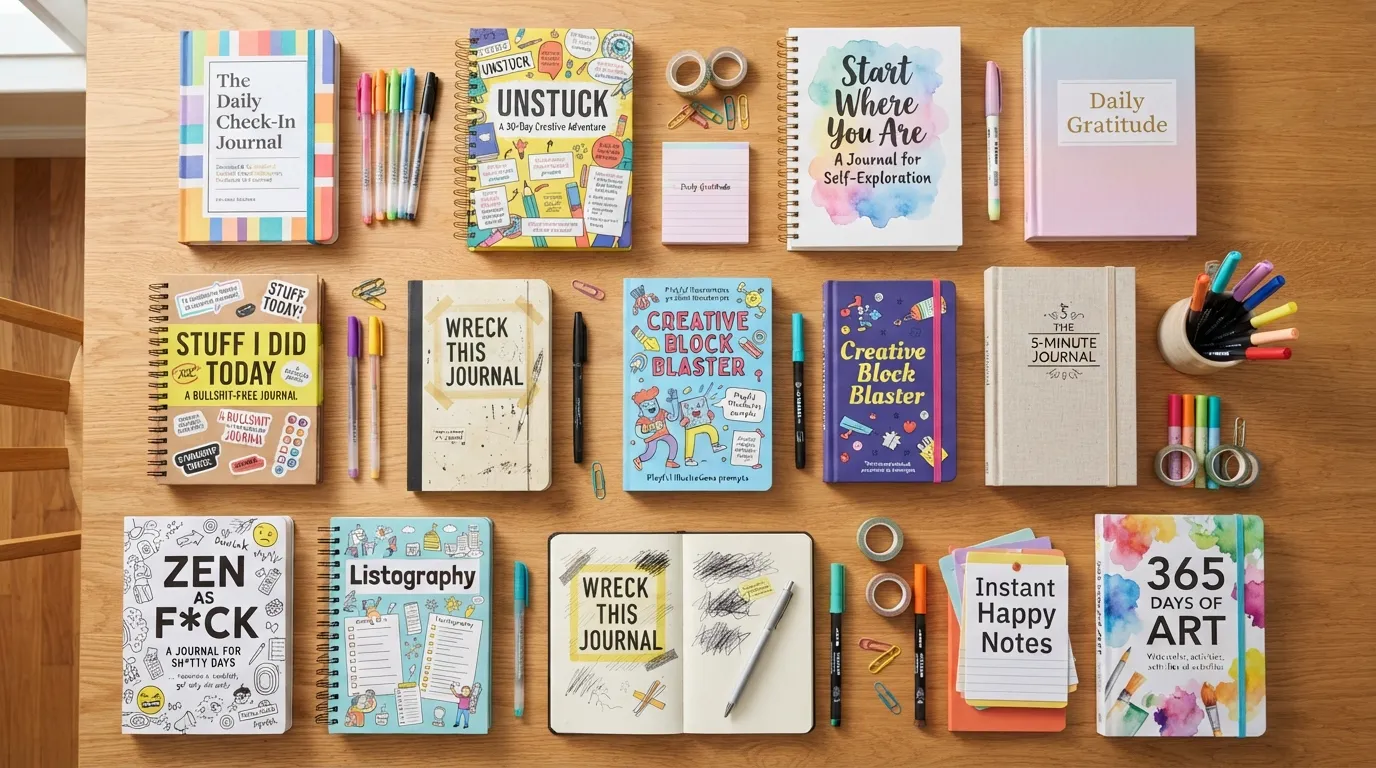
If you have ever stared at a completely blank page and felt a sudden wave of intimidation, you are definitely not alone. Traditional journaling can sometimes feel a bit like a high school homework assignment, complete with pressure to write something profound. But it does not have to be that way at all. When you incorporate our full guide to journaling into your routine, you will quickly discover that putting pen to paper can actually feel like a fun, low-pressure escape.
What makes a guided journal so different—and genuinely enjoyable—is how it ditches the blank slate in favor of playful prompts, quirky illustrations, witty humor, and flexible formats that meet you wherever your mood is at. Instead of wondering what to write, you are invited to color outside the lines, answer unexpected questions, or doodle your way through a stressful afternoon. Paired with the right journaling supplies, like colorful pens and vibrant sticky notes, these books turn self-reflection into a delightful daily ritual.
Let’s dive into the best playful, prompt-filled journals that will completely transform how you look at writing.
What Is a Guided Journal? And Why They're More Fun Than a Blank Page
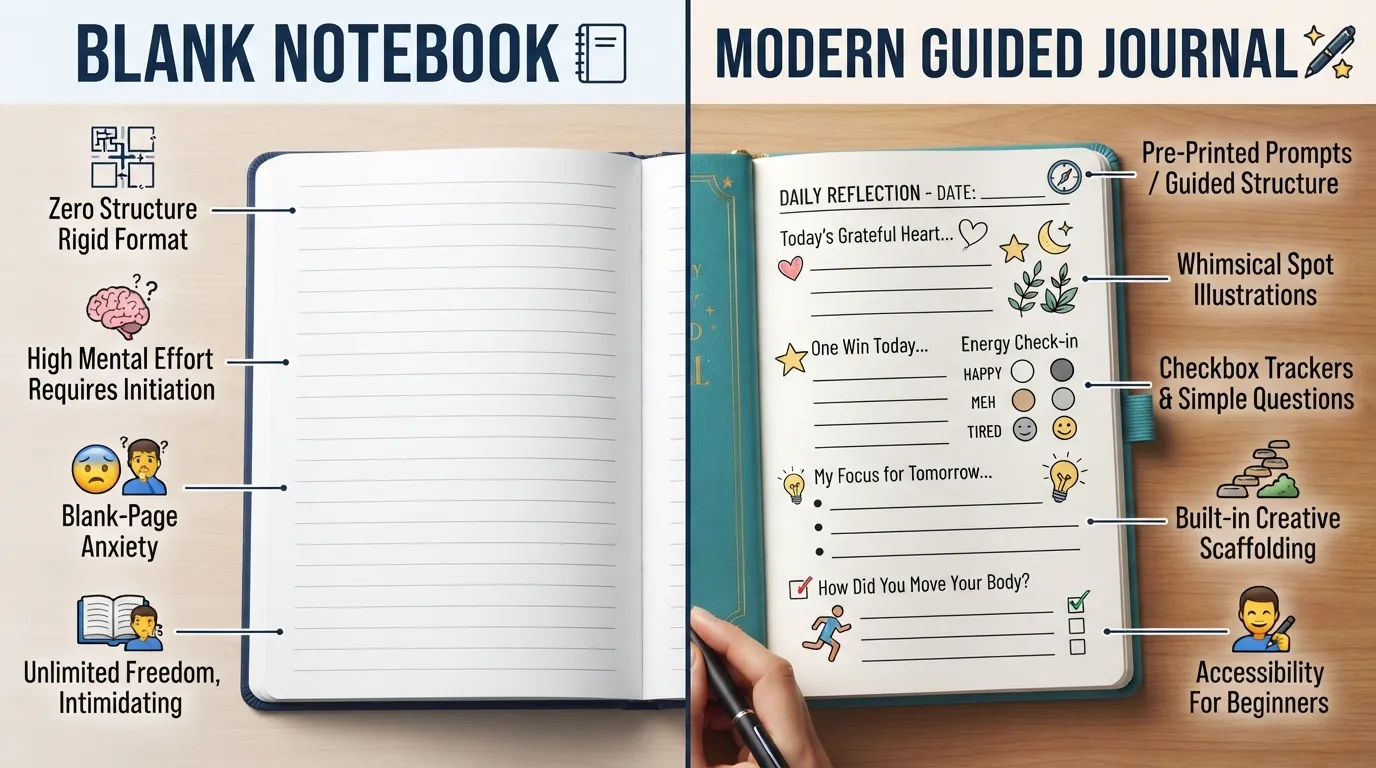
If you have ever picked up a blank notebook with the best of intentions only to watch it gather dust, you already know the existential dread of the empty page.
A guided journal completely solves this by offering built-in prompts, thought-provoking questions, and structured layouts that gently hold your hand through the reflection process.
Unlike a traditional blank journal where you carry the entire burden of creativity, a guided journal acts as an interactive conversation partner. For those who want the mental health benefits of reflection without the pressure, it is the ultimate sweet spot. (If you prefer building your own layouts from scratch, a bullet journal—which is a modular system of rapid-logging and custom trackers—offers a different kind of creative structure altogether.)
Guided Journal vs. Regular Notebook vs. Bullet Journal
Comparison of Journal Formats
| Feature | Guided Journal | Blank Notebook | Bullet Journal |
|---|---|---|---|
| Structure Level | High (pre-printed prompts, questions, and layouts) | None (completely open canvas) | Medium-High (custom layouts built by you using a dot-grid system) |
| Best for | Low-effort daily reflection, stress relief, and creative exploration | Free-form writing, sketching, and unstructured stream-of-consciousness | Habit tracking, productivity planning, and personalized organization |
| Time Commitment | Low (takes 2 to 5 minutes per prompt) | High (requires mental energy to figure out what to write) | Medium-High (requires time to set up spreads and migrate tasks) |
| Beginner-Friendly? | Extremely high (just open and answer) | Low for beginners (can trigger blank-page anxiety) | Moderate (requires learning the foundational dot-grid method) |
What Makes a Guided Journal “Fun”?
Not all journals are created equal, and the ones that truly spark joy share a few specific design choices that keep you coming back for more:
Playful illustrations: Whimsical artwork and unexpected visual elements that break up heavy blocks of text and make every page feel like a surprise.
Witty and charming prompts: Refreshingly modern questions that trade dry self-help clichés for humor, irreverence, and deep curiosity.
Flexible “skip-a-day” structures: Undated pages that free you from the guilt of missing a day, letting you drop in whenever the mood strikes.
Gamified elements: Built-in mini-challenges, sticker sheets, color-in trackers, and doodle spaces that make self-care feel like a game rather than a chore.
A variety of question types: A healthy mix of deep emotional check-ins, lighthearted hypothetical questions, and rapid-fire lists to match your energy level.
Satisfying physical design: Thick, high-grade paper, lay-flat bindings, and tactile covers that make the simple act of holding the book a sensory treat.
Best Fun Guided Journals for Every Type of Person
Best Fun Guided Journals for Beginners
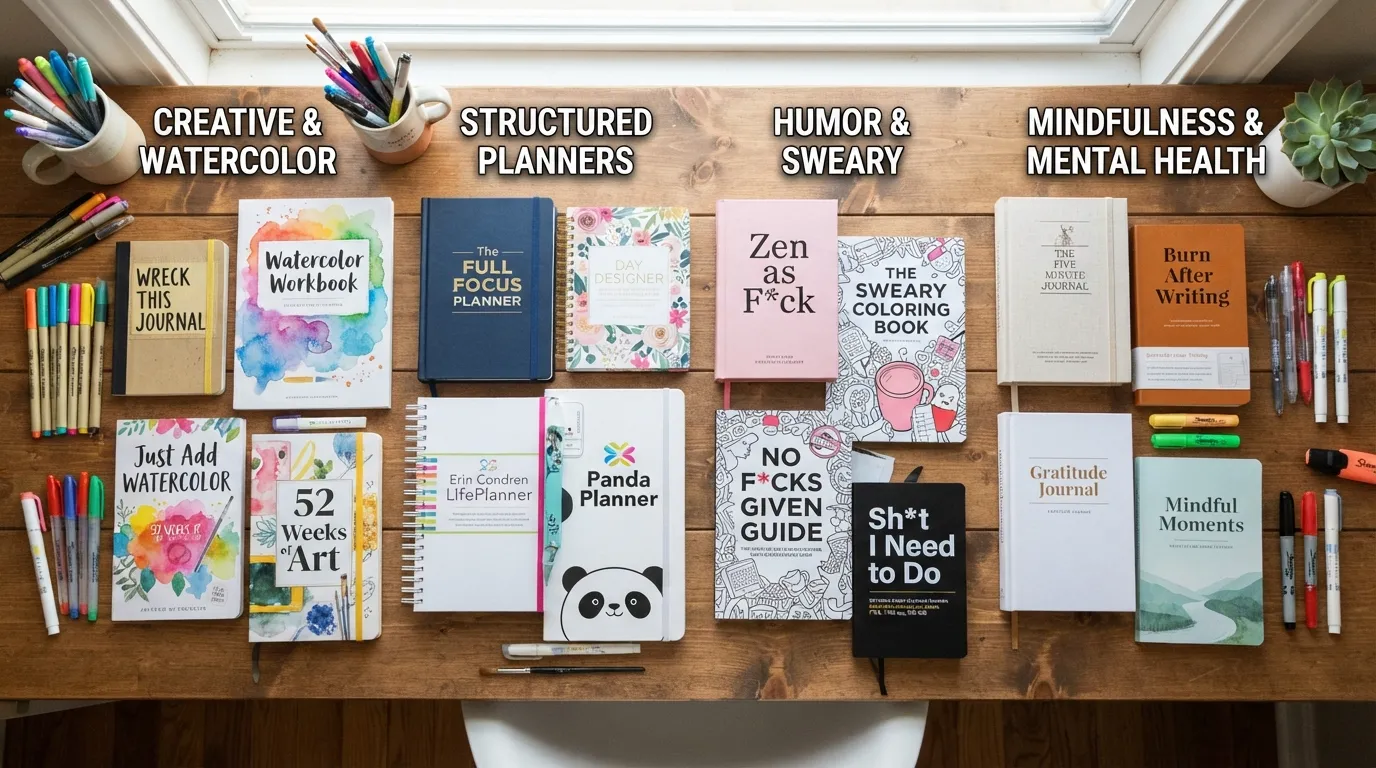
Start Where You Are by Meera Lee Patel: Perfect for absolute beginners because it combines vibrant, watercolor illustrations with low-pressure creative prompts, writing exercises, and comforting quotes that never feel intimidating.
1 Page at a Time: A Daily Creative Companion by Adam J. Kurtz: A wonderfully quirky, bite-sized interactive book that invites you to do weird, low-stakes things like cross out words, tape a receipt to a page, or scribble out your frustrations.
The Five Minute Journal: An ideal starting point for anyone worried they won’t have time; it uses a structured, rapid-fire format that takes under five minutes to ground your morning and evening.
Best Daily Journals With Prompts
The 6-Minute Diary: A daily powerhouse that features undated morning and evening structures, habit trackers, and weekly reflection questions designed to build consistency without burning you out.
Q&A a Day: A 5-Year Journal: Features a single, snappy question for every calendar day of the year, repeated across five consecutive years so you can watch your answers evolve over time.
The Daily Stoic Journal by Ryan Holiday and Stephen Hanselman: Offers a daily page of structured, timeless wisdom paired with practical prompts that help you process daily obstacles with clarity.
Fun Guided Journals for Adults
Zen as F*ck by Monica Sweeney: A humor-forward, sweary antidote to traditional toxic positivity, offering cheeky prompts that let you laugh while sorting through real mental clutter.
Burn After Writing (Neon or Illustrated Editions): A deeply introspective, mildly rebellious adult favorite that asks you provocative, unfiltered questions with the ultimate prompt: burn it when you’re done (or keep it as a secret time capsule).
Wreck This Journal: Now in Color by Keri Smith: An absolute classic anti-journal that encourages adults to tear, paint, poke holes in, and travel with the book, turning destructive impulses into pure creative release.
Best Guided Journals for Mental Health
Guided journals are wonderful supportive tools for self-discovery and stress relief, though they are designed to complement—not replace—professional therapy and medical care.
The Anti-Anxiety Notebook (by Therapy Notebooks): Built using cognitive behavioral therapy (CBT) frameworks to help you deconstruct anxious thought loops in real-time.
Let That Sh*t Go: A bestselling mental health-adjacent journal that blends irreverent humor with science-backed mindfulness exercises.
Clever Fox Self-Care Journal: Focuses heavily on holistic well-being, featuring dedicated habit trackers, emotional check-ins, and weekly balance wheels.
What do psychologists say about journaling? Clinical consensus highlights that expressive writing helps externalize internal chaos, lowering cognitive load and helping individuals process difficult emotional events more objectively over time.
Is it healthy to journal daily? Psychologists generally agree that consistency matters far more than intensity; writing for just three to five minutes a day yields better long-term psychological benefits than forcing an exhausting hour-long session once a week.
Happy Planner Guided Journal Picks
The Happy Planner guided journal line is organized by specific life themes—ranging from wellness and fitness to budget management and reading goals. Because they utilize a signature, customizable disc-bound system, you can effortlessly add, remove, or rearrange pages, snap in colorful stickers, and mix different layouts to match your evolving life.
The Happy Planner Wellness Guided Journal: Focuses on mental clarity and self-care, featuring weekly check-ins, habit tracking, and cheerful, grounding aesthetics.
The Happy Planner Budget/Goals Guided Journal: Blends practical tracking pages with motivational prompts to make tracking finances and personal milestones feel satisfying rather than stressful.
Best Guided Journal Books (Bound, Gift-Style Formats)
Moon Lists: Questions and Rituals for Self-Reflection: A gorgeous, heavy-stock hardcover book structured around lunar cycles, offering atmospheric lists and deep-dive conceptual questions.
The Book of Questions by Gregory Stock: A timeless, classic gift book filled with provocative ethical, psychological, and hypothetical questions that spark endless conversation and personal insight.
Comparison of Top Fun Guided Journals
Specialty Journal Collection Comparison
| Journal Name | Best For | Format | Fun Factor | Price Range |
|---|---|---|---|---|
| Start Where You Are | Creative beginners | Paperback Bound | Watercolor art & playful prompts | $12 – $18 |
| The Five Minute Journal | Fast daily gratitude | Hardcover Bound | Clean layout, quick & structured | $25 – $30 |
| Zen as F*ck | Humor-loving adults | Paperback Bound | Irreverent, witty, & sweary prompts | $14 – $18 |
| Wreck This Journal | Tactile stress relief | Paperback / Spiral | Destructive/creative gamified activities | $15 – $20 |
| The Anti-Anxiety Notebook | Managing stress & worry | Hardcover / Wire-bound | CBT-backed structured templates | $25 – $35 |
| Happy Planner Wellness | Customizable self-care | Disc-Bound | Stickers, flexibility, & thematic trackers | $25 – $35 |
| Moon Lists | Aesthetic monthly reflection | Hardcover Gift Book | Atmospheric, lunar-themed lists | $18 – $24 |
Digital & Printable Guided Journals
Guided Journal PDF Options
Guided journal PDFs are a fantastic solution if you are budget-conscious, prefer a customized print-at-home setup, or want to test-drive a specific layout before investing in a physical book. They let you print only the pages you actually use, offering ultimate flexibility. While they miss out on the tactile, heavy paper stock of bound books, digital and printable PDFs give you instant access and infinite reusability—especially if you load them onto a tablet or e-reader app. If you are looking to assemble your own custom layout binder, explore more journaling supplies to find the best hole punches, paper stocks, and binders for your digital creations.
Free & Paid Guided Journal Prompts
Whether you are downloading a printable template or starting with a blank slate, having the right questions makes all the difference. Here are several popular prompt categories with sample questions to jumpstart your writing:
Gratitude: What is one tiny, ordinary moment from today that brought an unexpected smile to your face?
Self-Discovery: What is a belief you held strongly five years ago that you have completely changed your mind about today?
Goal-Setting: If failure was completely impossible, what is one bold project or habit you would start tomorrow morning?
Evening Wind-Down: What is one burden, worry, or unfinished task from today that I can successfully leave outside my bedroom door?
Stress Relief: If my anxiety or stress had a physical voice right now, what is the exact message it is trying to tell me?
Creativity & Play: If I had an entire Saturday with zero responsibilities, financial limits, or obligations, how would I spend every hour?
How to Actually Use a Guided Journal So It Stays Fun, Not a Chore
Popular Journaling Methods to Try
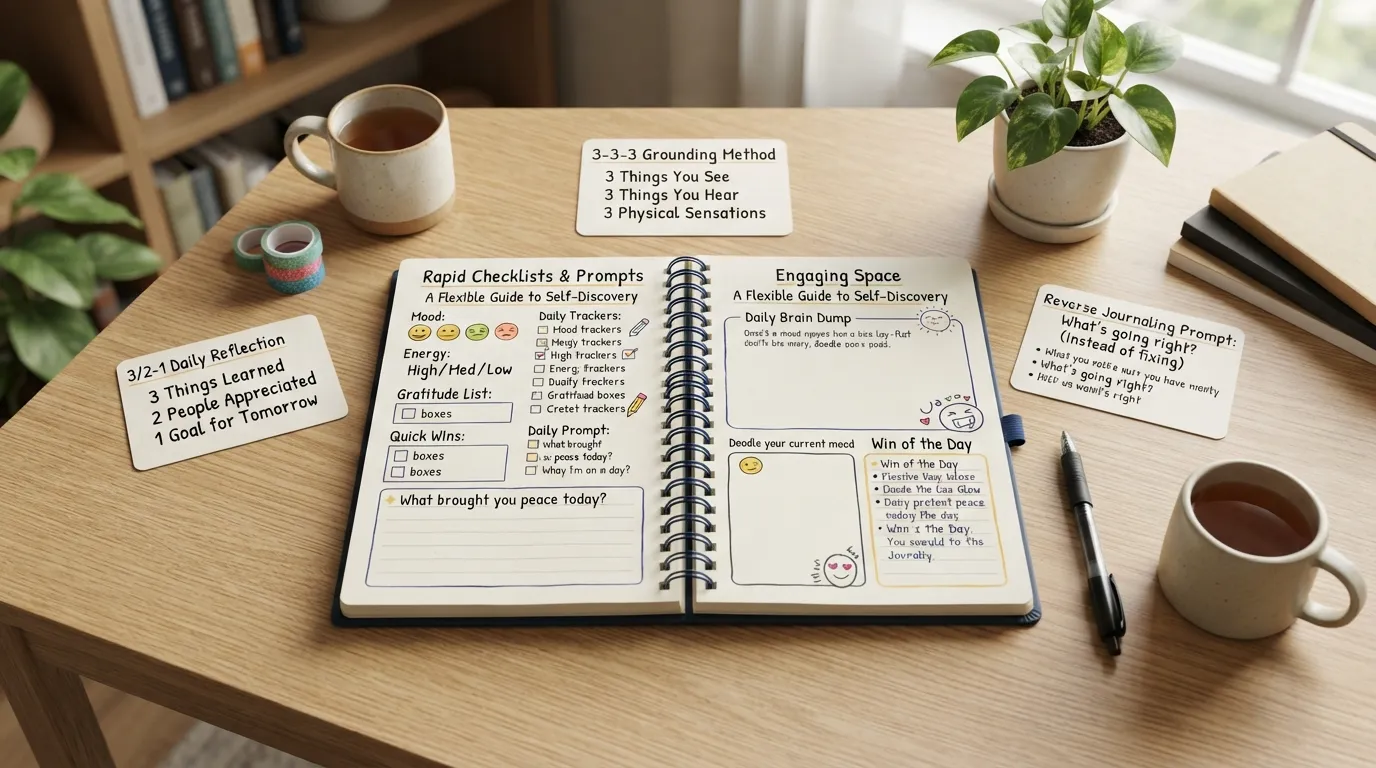
What is the 3-3-3 journaling method? This is a quick, highly effective grounding exercise designed to pull you out of an overactive mind and anchor you in the present moment. You simply write down three things you can visually see right around you, three distinct sounds you can hear, and three body parts you can physically move right now.
What is the 3/2-1 method of journaling? This structured daily framework helps you process your day without feeling overwhelmed by an endless stream of thoughts. At the end of the day, you quickly jot down three things you are genuinely grateful for, two things you accomplished or learned, and one clear intention or focus for tomorrow.
What is reverse journaling? Instead of writing a traditional, forward-looking diary entry about what is happening right now, reverse journaling turns the process on its head. You write as if you are responding to your own past entries, conversing directly with your future self, or evaluating how far you have come from a past perspective.
What is an interactive journal? An interactive journal is a hands-on book that breaks up traditional writing by incorporating dynamic physical tasks. These can include creative doodling prompts, tracking checklists, tear-out pages, color-in trackers, and sticker integration, keeping the process engaging and playful.
7 Types of Journals (Quick Reference)
Gratitude Journal: Focused entirely on cataloging everyday blessings, silver linings, and small moments of joy to boost overall optimism.
Bullet Journal: A customizable, index-driven organizational system utilizing a dot-grid layout to track daily tasks, rapid-logs, and custom collections.
Guided Journal: A structured book pre-loaded with prompts, questions, and creative layouts to eliminate blank-page intimidation.
Art/Visual Journal: A creative outlet combining sketching, painting, collage work, and mixed media with minimal or zero text.
Travel Journal: A dynamic logbook used to document itineraries, ticket stubs, polaroids, and localized memories from adventures on the road.
Dream Journal: A bedside notebook dedicated to recording vivid subconscious visions immediately upon waking before details fade.
Reflective/Therapeutic Journal: A deep, expressive processing tool used to unpack emotional patterns, trauma, and personal growth under psychological frameworks.
Fun Journal Ideas to Try This Week
Write a letter to your future self: Seal a prediction or an encouraging note to yourself one year from today.
Rank your week: Create a whimsical top-ten list of the weirdest, funniest, or most unexpected moments from the last seven days.
Do a doodle-only page: Ban all words for a single entry and express your current mood entirely through abstract shapes and colors.
The “Compliment Sandwich”: Write down three things you genuinely love about yourself, sandwiched around one quirky habit you are learning to accept.
The playlist diary: Write down the soundtrack of your day by listing five songs that match your current emotional frequency and why.
The mini-gratitude scavenger hunt: Look around your immediate room right now and find three unusual objects that make your life easier or happier.
What Are 7 Journal Entries? (Example Entry Types)
A great journal entry doesn’t have to look like a long, formal diary paragraph. Varying your writing formats keeps the practice fresh, playful, and completely adaptable to your energy levels. Here are seven common entry formats you can experiment with:
List Entry: Quick bullet points summarizing thoughts, ideas, or items without requiring long paragraphs.
Stream-of-Consciousness: Unfiltered, continuous writing that empties your head of racing thoughts without editing or stopping.
Prompt Response: Directly answering a pre-written question from a guided journal or creative book.
Gratitude Entry: A focused list or short reflection centering strictly on appreciation and positive takeaways.
Letter Entry: A direct message addressed to a specific person, an abstract concept, or your younger self.
Reflection Entry: Looking back on a past week, month, or challenge to extract lessons and measure personal growth.
Tracker Entry: Visual check-ins, habit logs, or mood meters that use color, symbols, and metrics instead of text.
Journaling Pitfalls to Avoid
What Not to Do When Journaling
While journaling is one of the most accessible forms of self-care, it is easy to accidentally turn it into a chore or a source of stress. Avoiding a few common traps will keep your practice light, sustainable, and genuinely fun:
Venting without reflecting: Using your pages as a pure trash can for anger without ever pausing to reframe or look for a constructive takeaway can leave you feeling worse than when you started.
Being too rigid: Treating your journal like a mandatory military duty rather than a flexible outlet creates unnecessary guilt the moment you miss a session.
Chasing Pinterest-perfect spreads: Falling into the trap of comparing your honest, messy handwriting and doodles to heavily curated, aesthetic social media spreads will fast-track your burnout.
Quitting entirely after skipping days: Letting a two-week gap convince you that you have “ruined” your habit; journaling is always waiting for you whenever you are ready to return, with no penalties for absence.
Is There a “Dark Side” to Journaling?
While putting pen to paper is overwhelmingly beneficial, psychologists occasionally point out a few unintended downsides when journaling lacks boundaries. The primary risk is falling into a loop of repetitive rumination—looping endlessly over the same negative emotions and venting without seeking resolution, which can actually reinforce stress rather than release it.
Other considerations include privacy concerns if you leave sensitive thoughts out in the open, or accidentally using journaling as an avoidance tactic to stall on taking real-world action.
This is precisely where the magic of a guided journal comes into play: by providing gentle structure, thoughtful prompts, and a built-in framework, it guides your mind away from anxious over-processing and helps steer your reflections toward clarity, humor, and peace.
Fun Guided Journals FAQ
What is the most popular guided journal?
The Five Minute Journal stands out as a globally recognized favorite, celebrated for its fast, structured gratitude prompts. Another massively popular choice is Wreck This Journal, which offers playful, creative, and destructive gamified activities that break down traditional writing barriers and melt stress away.
Are guided journals worth it, or should I just use a blank notebook?
Guided journals are entirely worth it if you frequently experience blank-page anxiety or struggle to maintain a daily habit. While blank notebooks offer total freedom, pre-printed prompts eliminate guesswork, saving mental energy and keeping your reflection sessions engaging and focused.
Can I switch between a guided journal and free-writing?
Absolutely. Many writers alternate depending on their daily mood and available energy levels. Use a guided journal for structured morning gratitude or stress relief, and transition to a blank notebook whenever you feel inspired to explore unconstrained, long-form creative thoughts.
How long should I write in a guided journal each day?
Most guided journals are specifically designed for short sessions lasting just two to five minutes. This brief daily time commitment makes consistency easy to achieve without feeling overwhelming, busy, or burdensome for your schedule.
Final Thoughts: Pick the Guided Journal That Matches Your Vibe
At the end of the day, the best journal is simply the one you actually use. Ditch the pressure to write a masterpiece or maintain a flawless streak, and instead choose a book that matches your current energy—whether that means a humor-packed prompt book, a structured wellness tracker, or a creative, messy doodle space. Self-care should feel like an exhale, not a chore. Ready to get started on your creative journey? Be sure to explore more journaling supplies and tools to find your new favorite pens and accessories, or head over to Journaling for even more inspiration, guides, and expert recommendations.
Pimchanok Srisuk
Pimchanok Srisuk is the Journaling Editor at Holistic Wellbeing Living. She writes about journaling prompts, reflective writing, emotional clarity, and mindful routines. With seven years of experience creating personal-growth content, Pimchanok helps readers use simple writing practices to understand their thoughts and make calmer everyday decisions.