Jump to:
Toggle130+ Stuff to Write in a Notebook: Fun, Cute, and Useful Ideas for Every Page
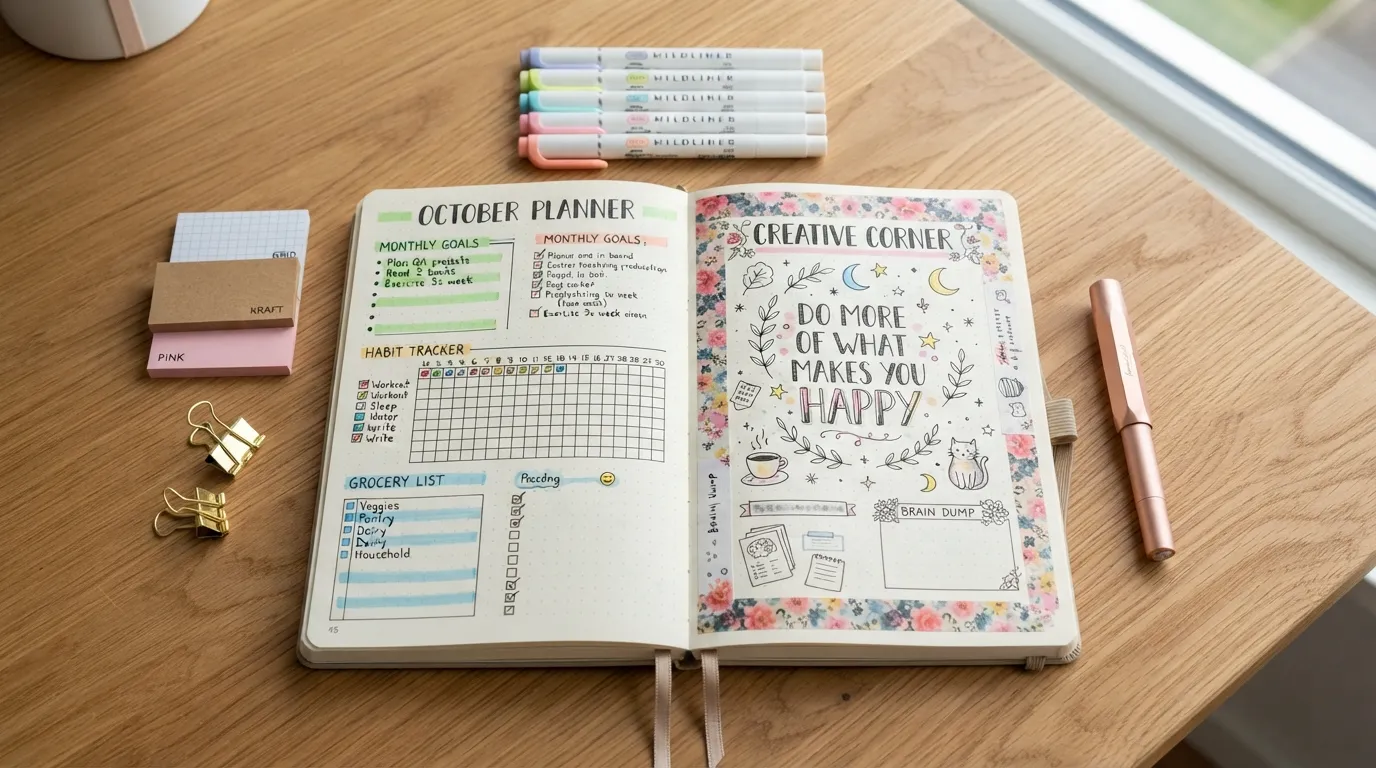
Staring at a blank page is often harder than filling one. Whether you bought a fresh journal with good intentions or have a stack of empty notebooks sitting on your shelf, facing those untouched pages can instantly spark creative block. Finding the right stuff to write in a notebook does not need to feel overwhelming or rigid. You do not need to draft a masterpiece—you just need a simple prompt or structure to get your pen moving without overthinking the outcome.
What should I fill in my notebook?
The best way to fill an empty notebook is with a balanced mix of daily lists, creative prompts, visual habit trackers, and personal reflections. Beginners usually find success by starting with low-pressure entries like media watchlists, brain dumps, gratitude lists, or one-line daily highlights.
This comprehensive guide breaks down over 130 creative, practical, and cute page ideas categorized by mood, age, and purpose. Use the jump links below to find the exact style that matches your current vibe, from quick organizational logs to deep self-reflection prompts. Before you start filling pages, explore more journaling techniques and ideas to find the style that fits you best.
Quick-Reference: What to Write Based on Your Mood
Matching your entry to your emotional state makes journaling effortless. If you are wondering what to write about in a notebook right now, use this quick-reference guide to select a prompt that aligns with your current energy level and mindset.
Notebook Selection & Prompt Matcher by Mood
| Your Current Mood | Notebook Type Best Suited | Example Prompt / Idea |
|---|---|---|
| Bored | Unlined / Grid Notebook | List 10 obscure media recommendations or draft a fictional character backstory. |
| Stressed | Lined Journal | Conduct a 5-minute raw brain dump of every urgent thought, then cross off what you cannot control. |
| Reflective | Guided / Lined Journal | Write a letter to your future self detailing one lesson you learned this past month. |
| Creative | Sketchbook / Dot-Grid | Combine handwritten quotes with stamp art, watercolor washes, or doodle borders. |
| Sleepy at Night | Bedside Pocket Notebook | Record three small wins from today and your top priority for tomorrow morning. |
| Excited / Inspired | Blank Spiral / Bullet Journal | Map out a vision board spread or outline actionable steps for a new passion project. |
| Anxious | Lined Notebook | Create a two-column "Fact vs. Feeling" chart to evaluate your current concerns objectively. |
| Nostalgic | Memory / Photo Journal | Paste in a recent ticket stub or printout and write down a detailed memory from that day. |
Selecting low-barrier stuff to write down prevents decision fatigue and helps you build a consistent daily writing habit.
Creative Writing Ideas to Fill Your Notebook
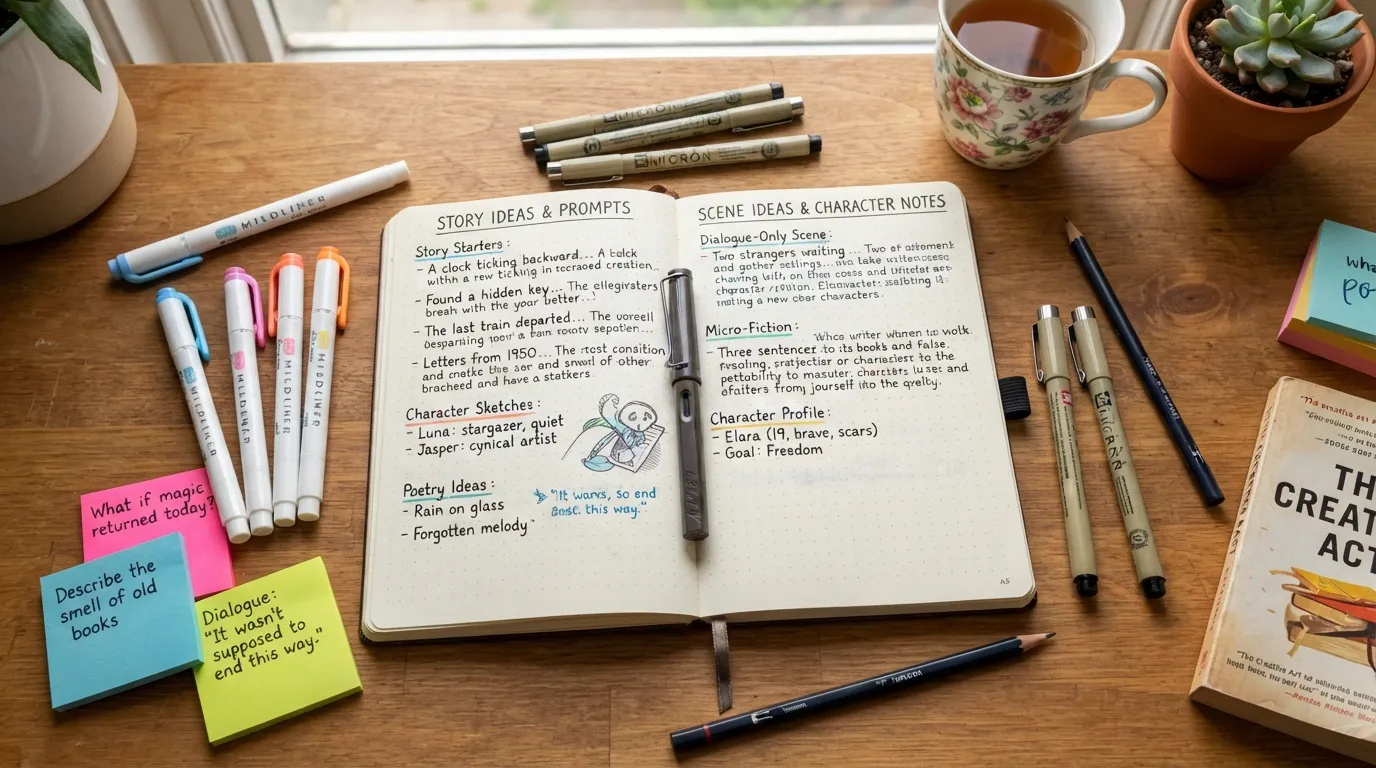
When you are staring at blank lined pages and unsure what to write about in a notebook, creative writing provides an immediate low-pressure outlet. Flexing your imagination removes the expectation of neatness or productivity, allowing you to treat your journal like a playground for unfiltered ideas.
Story Starters & Fiction Prompts
Fictional prompts spark rapid creative momentum. Use these ideas to draft micro-fiction or test out narrative concepts without committing to a full novel:
Character Sketches: Detail an unusual habit, core motivation, and physical trait for a stranger you saw today.
“What If” Scenarios: Write a scene starting with the prompt: “What if you woke up to find your morning commute was completely abandoned?”
Alternate Endings: Rewrite the final scene of a movie or book that disappointed you, giving the characters a better outcome.
World-Building Notes: Design a fictional town, complete with local laws, weird regional slang, and native folklore.
Dialogue-Only Scenes: Draft a two-page argument between two people using zero narrative exposition or tag lines.
The Overheard Conversation: Take a single phrase overheard in a coffee shop or on public transit and turn it into the opening line of a story.
Unusual POV Challenges: Narrate a mundane household event from the perspective of an indoor houseplant or a house key.
The 100-Word Story: Write a fully realized story with a beginning, middle, and end using exactly 100 words.
Poetry & Free Verse Ideas
You do not need formal training to write poetry in a journal. Simple constraints and rhythmic challenges make poetic exercises approachable and satisfying:
Found Poetry: Select 10 random phrases from your favorite song lyrics or news articles and arrange them into a fresh stanza.
Six-Word Memoirs: Summarize specific chapters of your life using six words maximum (e.g., “Lost the map, found better views”).
Haiku Challenges: Write a series of three-line haikus (5-7-5 syllable structure) describing your current surroundings.
Acrostic Poems: Spell out your name, current city, or favorite season vertically, turning each letter into a descriptive line.
Sensory Verse: Choose one emotion—like anxiety or joy—and write five lines describing its smell, texture, taste, color, and sound.
Blackout Poetry: Paste a printout of an old text page and use a dark marker to block out words, leaving only a poetic phrase visible.
Letter Writing (Never to Be Sent)
Unsent letters provide catharsis and clarity. Writing directly to someone—real or imagined—helps you process lingering emotions safely on the page:
Letter to Your Future Self: Draft a message to yourself five years down the road, asking questions about what you hope has changed.
Letter to Your Past Self: Write to yourself during a tough age (like 15 or 21), offering reassurance and wisdom you have gained since.
Letter to Someone You Forgive: Express unspoken thoughts to a person who hurt you, giving yourself closure without initiating contact.
Letter to an Unspoken Crush or Old Friend: Capture what you wish you had said during a past connection before time moved on.
Try This: 5-Minute Free-Write Challenge
Pick the nearest object on your desk. Set a timer for 300 seconds. Put your pen on the paper and write continuously about that object without stopping to correct spelling, punctuation, or logic. If your mind goes blank, keep writing the object’s color over and over until a new sentence forms. The goal is flow, not perfection.
Everyday & Practical Things to Write Down
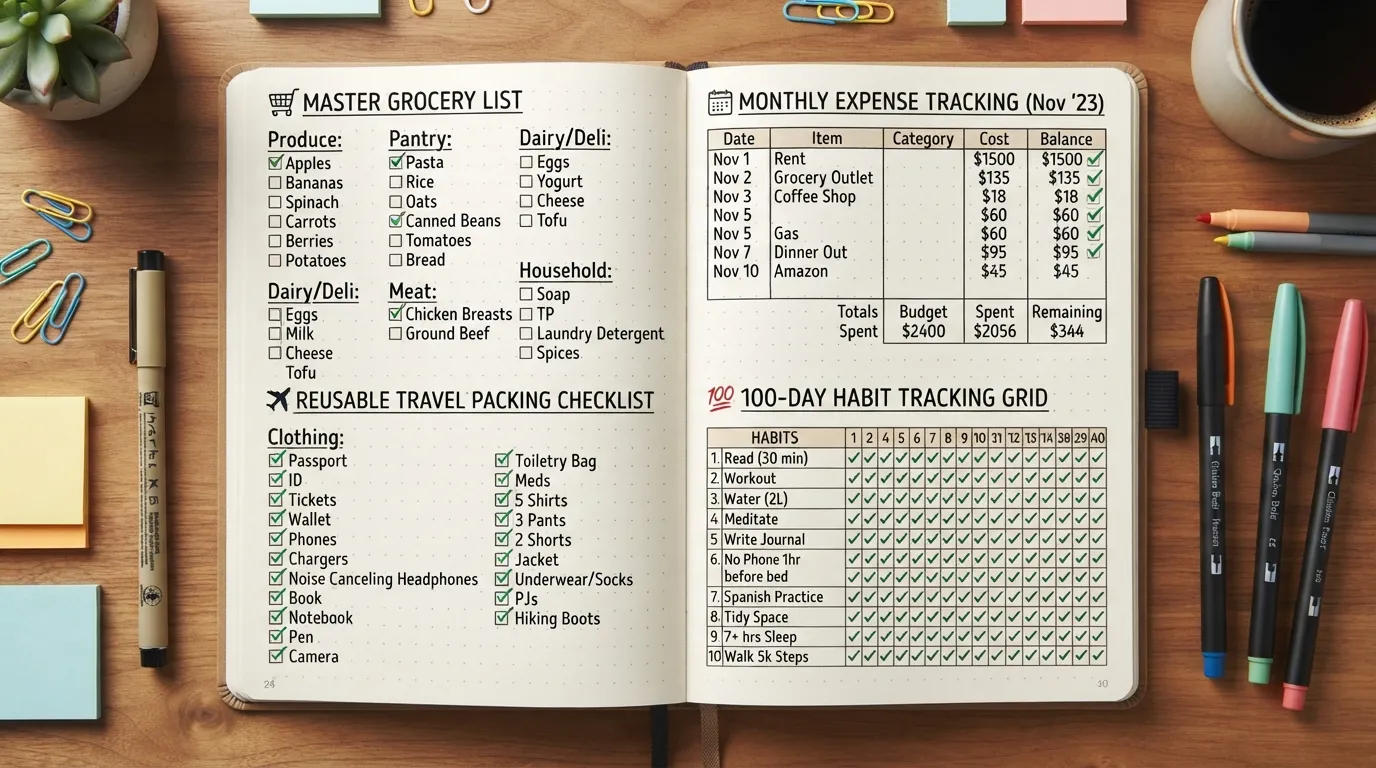
Notebooks excel when used as practical daily tools to clear mental clutter. Turning blank pages into functional trackers helps capture essential details off your screen, providing reliable things to write down on paper to organize your day.
Lists That Actually Help Your Life
Consolidating scattered reminders into dedicated pages keeps your personal routines running smoothly:
Master Grocery & Pantry Staples: List essential ingredients and recurring household items so meal planning takes seconds.
Master Packing List Templates: Create reusable checklists grouped by clothing, toiletries, and tech gear for hassle-free travel packing.
Books to Read & Media Watchlists: Keep a running tally of book recommendations, series releases, and films you want to check out.
Monthly Focus Goals: Write down three primary objectives for the current month with actionable weekly action steps.
Budget & Recurring Expense Notes: Track monthly subscription renewal dates, recurring bills, and variable daily expenses.
Gift Ideas Vault: Note down size preferences, wishlist items, and subtle hints dropped by family and friends throughout the year.
Places to Visit & Local Bucket List: Document nearby hiking trails, newly opened coffee shops, or weekend getaway spots.
Emergency & Contacts Directory: Record key phone numbers, doctor contacts, and essential account details off digital networks.
Subscription Audit Sheet: Tally every active app, streaming service, and software plan to identify recurring subscriptions to cancel.
Home Maintenance Schedules: Log seasonal home maintenance tasks, HVAC filter changes, and vehicle service records.
Daily Logs & Trackers
Structured visual trackers encourage long-term daily habits without demanding huge chunks of free time:
Color-Coded Mood Tracker: Draw a simple monthly grid where each box is shaded a specific color reflecting your dominant daily emotion.
Sleep & Hydration Logs: Monitor daily water intake levels against bedtime hours to spot trends in physical stamina.
Daily Gratitude Line: Jot down three distinct moments, simple comforts, or interactions that brought genuine value to your day.
Daily Wins Tally: Record one specific accomplishment before bed—no matter how minor—to build momentum over time.
Weekly Meal Prep Grid: Map out breakfast, lunch, and dinner options across seven columns to simplify grocery shopping.
10 Lists to Start This Week
[ ] Master Password/Account Hints Log
[ ] Favorite Go-To Quick Dinner Recipes
[ ] Seasonal Home Maintenance Checklist
[ ] Books Borrowed vs. Books Lent Out
[ ] Annual Subscription Renewal Dates
[ ] Favorite Coffee Shop & Order Tally
[ ] Master Travel Packing Checklist
[ ] Self-Care & Stress Relief Ideas
[ ] Project Brain-Dump & Priority List
[ ] 100-Day Habit Grid (Hydration/Movement)
Keeping these practical entries nearby provides functional, low-pressure stuff to write down whenever you need to declutter your mind.
What to Write in a Notebook When You're Bored
Boredom is often just untapped creative energy waiting for an outlet. When you catch yourself aimlessly scrolling on a screen, opening a fresh page gives your hands and mind something engaging to do. Finding playful, low-stakes what to write in a notebook when bored turns passive idle time into a fun creative break.
Boredom-Buster Writing Games
Interactive games on paper keep your brain active without feeling like work or study. Try these quick writing challenges to kill time and spark your imagination:
Would-You-Rather Showdowns: Write down 10 absurd “Would You Rather” scenarios and write a brief defense for each choice.
Doodle + Caption Pages: Draw three random, messy scribbles with your eyes closed, then turn them into recognizable objects with labeled captions.
Made-Up Word Dictionary: Invent five completely fake words, assign them realistic pronunciations, and write hilarious dictionary definitions.
Ultra-Specific Top 10 Lists: Rank random niche topics, like “Top 10 Worst Text Messaging Habits” or “Top 10 Fast Food French Fries.”
Alternate Life Scenarios: Map out what your life, job, and location would look like if you had chosen a completely different career path at age 18.
The Alphabet Challenge: Pick a topic (e.g., foods, cities, band names) and write down one item for every letter from A to Z without skipping.
Review Everyday Objects: Write dramatic 5-star or 1-star reviews for mundane items in your room, like your desk chair, stapler, or left shoe.
Dream Travel Itinerary: Plan an unrealistic, money-is-no-object 7-day vacation to your ultimate dream destination, complete with hourly activities.
Funny & Silly Notebook Prompts
Injecting humor into your pages keeps writing lighthearted. If you want funny stuff to write in a notebook, these light prompts require zero seriousness:
Worst Pickup Lines Hall of Fame: Record the most cringe-worthy, cheesy, or terrible pickup lines you have ever heard or read online.
Imaginary Superhero Origin Story: Invent a useless superhero (like Captain Slow-Walker) and write their epic backstory and weakness.
Roast Your Own Handwriting: Dedicate a page to evaluating your penmanship with dramatic critiques of your slant, spacing, and sloppy loops.
Fake Conspiracy Theories About Your Pet: Outline a top-secret dossier proving your dog or cat is secretly a government spy or alien ruler.
Dramatic Movie Script of a Mundane Event: Script out an intense, Hollywood-style action scene based on making a simple cheese toastie.
Bad Advice Column: Write down genuine life problems on the left side of the page and answer them with terrible, terrible advice on the right.
Apology Letter to Objects You’ve Broken: Write a formal, dramatic apology to the smartphone screen, coffee mug, or plate you accidentally smashed.
Pet Peeve Tier List: Categorize everyday annoyances—like loud chewing, slow walkers, or reply-all emails—into an official ranking chart.
What to Say Instead of “I’m Bored”
Saying “I’m bored” usually means your mind is looking for low-friction stimulation or a creative outlet. Instead of defaulting to screen time or sitting idly, reframe boredom as an invitation to engage your brain through pen and paper.
Instead of saying “I’m bored,” try using these action-oriented mindsets to kickstart your notebook:
“I need a 5-minute brain dump.” (Clear mental clutter by listing everything on your mind.)
“I’m going to capture a quick memory.” (Jot down a detailed recap of a fun moment from this week.)
“It’s time to map out a goal.” (Outline 3 actionable steps for a small project you’ve put off.)
“I’m going to doodle and write out my favorite quotes.” (Fill a page with inspiring lines and letterforms.)
“Let’s play a word game.” (Run through a 2-minute alphabet challenge or write a 6-word story.)
Boredom Emergency Kit (5 Prompts Under 2 Minutes)
List 5 things within arm’s reach and assign each a funny backstory.
Write down the last song you listened to and rewrite its first verse.
Jot down 3 things that made you laugh out loud this past week.
Draw a quick 4-panel comic about your morning routine.
List 10 words that sound funny when repeated out loud.
Cute & Aesthetic Notebook Ideas
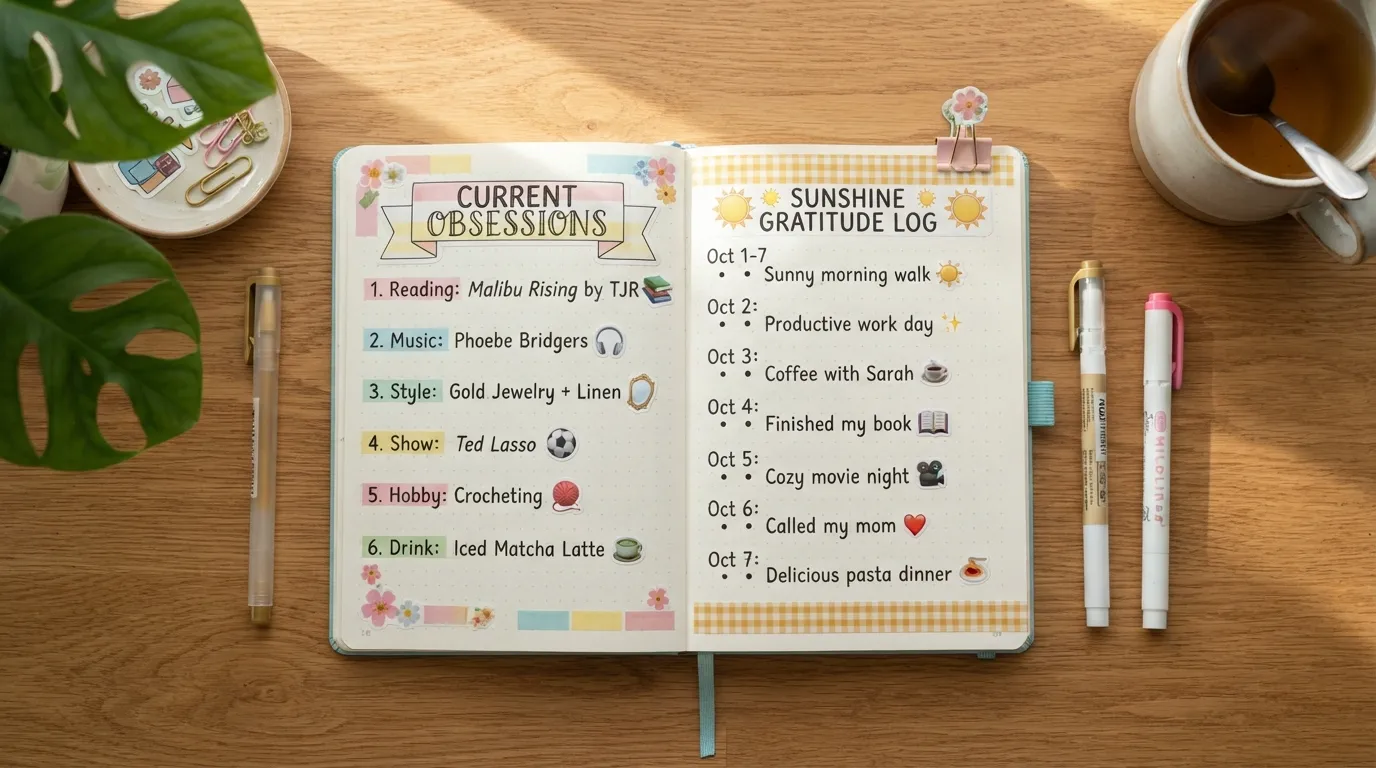
Creating visually inviting journal pages makes the writing process feel like a relaxing, self-care ritual. Blending soft visuals with uplifting words gives you plenty of cute things to write in a notebook while turning plain paper into a personal keepsakes archive.
Cute Prompts for Personal Notebooks
Focusing on positive, lighthearted reflections brings warmth to your pages. These ideas help you capture sweet everyday details and boost your mood:
Reasons I Love Myself Today: List three personal qualities, recent choices, or mindset shifts you feel proud of.
The Compliment Jar Page: Record kind words, thoughtful text messages, or unexpected praise you have received from others.
Little Joys & Small Moments: Document minor comforts, like warm sunlight through the window, a fresh cup of coffee, or a good song.
Aesthetic Mood Boards in Words: Describe a cozy scene using rich sensory language (e.g., “Raindrops on glass, oversized knit sweaters, warm cinnamon tea”).
Current Obsessions Page: Create a monthly roundup detailing your favorite snack, candle scent, fashion piece, and current repeat track.
Ideal Sunshine Day Itinerary: Map out your perfect, peaceful Sunday from sunrise to bedtime down to the smallest detail.
Favorite Words & Phrases List: Collect beautiful, soothing, or unique words you come across while reading books or listening to podcasts.
Monthly Joy Bucket List: List 5 cozy, seasonal activities you want to experience before the current month ends.
Decorating & Styling Your Pages
You do not need to be an artist to craft charming, aesthetic spreads. Simple layout techniques elevate your notebook’s overall look with minimal effort:
Washi Tape Frames: Use decorative paper tape to create frames around your lists, anchor polaroid photos, or section off page margins.
Sticker & Ephemera Collage: Layer cute planner stickers, stamp impressions, dried leaves, and vintage paper scraps alongside your text.
Color-Coded Headers: Assign specific pastel highlighter tones to titles, bullet points, and key dates to make your notes pop.
Hand-Lettering Practice: Dedicate pages to practicing faux calligraphy, bold serif titles, or whimsical handwriting styles.
Pair these ideas with the right essential journaling supplies and paper tools — from pens to washi tape — to bring your pages to life.
Insert aesthetic flat-lay image of a decorated notebook spread here (featuring pastel highlighters, washi tape borders, handwritten quote headers, and sticker accents).
Using soft colors and thoughtful prompts ensures you always have cute stuff to write in a notebook whenever you need a creative escape.
What to Write in a Secret Diary
A secret diary serves as a safe, judgment-free sanctuary where you can process your innermost thoughts without fear of evaluation. When deciding what can I write in my secret diary, focus on completely honest expressions of your emotions, unspoken fears, hidden desires, personal confessions, and raw life experiences that you are not ready to share with the world.
Private & Personal Entry Ideas
Writing candidly allows you to work through complex feelings and gain deep personal clarity. Use these private prompts to write without filter or self-censorship:
Secrets You Have Never Told Anyone: Write down confessions, hidden truths, or private thoughts you carry alone to release their weight.
Embarrassing Moments That Still Sting: Detail awkward interactions or past mistakes that keep you up at night, ending with why they no longer matter.
Unfiltered Thoughts on Relationships: Record your true feelings about friends, family, or colleagues without diplomatic filters.
Crushes & Hidden Feelings: Write down your honest emotions, romantic hopes, and unexpressed attraction toward someone special.
Fears You Do Not Share Out Loud: Document deep anxieties, insecurities, or worst-case scenarios to examine them rationally on paper.
Audacious Dreams & Secret Ambitions: Detail wild goals and aspirations you are hesitant to speak aloud for fear of being judged.
Unsent Apologies or Confrontations: Express raw anger or regret toward someone without starting a real-world conflict.
Raw Emotional Brain Dumps: Fill pages with stream-of-consciousness writing during emotional moments to process stress in real time.
Keep It Private: Quick Security Tips
Use Lockable Notebooks: Choose journals with physical combination locks or key closures to deter casual snooping.
Hide in Plain Sight: Disguise your diary as a mundane study notebook, recipe collection, or work log book.
Develop a Personal Cipher: Substitute letters or invent basic symbols for sensitive names and key locations.
Digital Backups with Passwords: If you prefer digital diaries, store them in password-protected, encrypted files.
What to Write in a Notebook for School
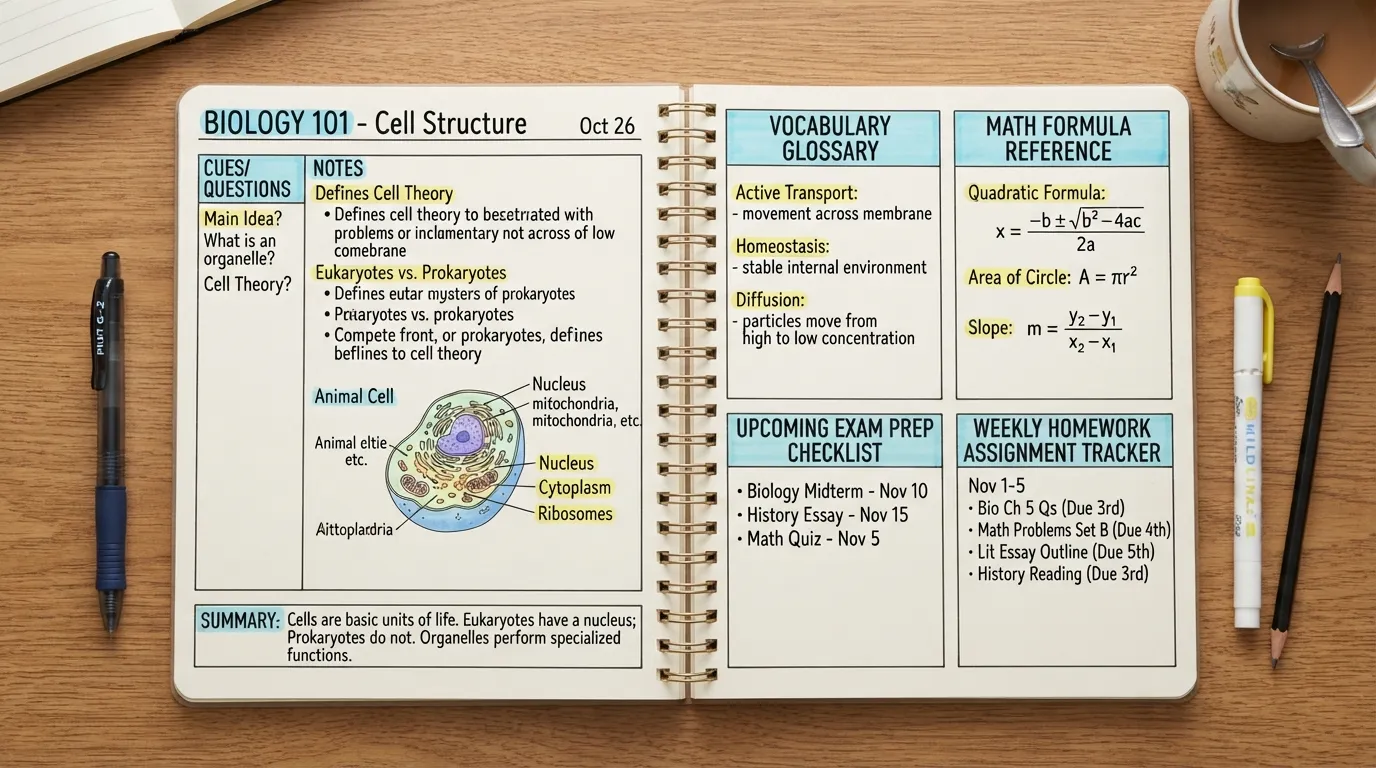
Maintaining structured academic journals transforms chaotic study sessions into organized, stress-free routines. Knowing what to write in a notebook for school helps you retain lectures better, prepare for exams faster, and keep all your academic deadlines under control.
Class & Study Notebook Ideas
Dedicated academic pages keep your coursework neat, accessible, and easy to review before major tests:
Structured Cornell Class Notes: Split pages into main lecture points, left-margin key terms, and bottom summary blocks for fast revision.
Subject Vocabulary Logs: Track complex terminology, definitions, and example sentences categorized by academic unit.
Formula & Reference Sheets: Reserve the back 5 pages of your notebook for essential math formulas, scientific equations, and grammatical rules.
Project Brainstorm Spreads: Map out essay arguments, research sources, and thesis statements before drafting assignments.
Exam Preparation Checklists: List specific textbook chapters, lecture slides, and practice sets to complete before test day.
Weekly Assignment Trackers: Maintain a running log of homework deadlines, reading assignments, and lab reports sorted by due date.
Teacher Office Hours Q&A: Write down confused concepts or specific questions to ask your instructor during study sessions.
Group Project Task Matrices: Record team member responsibilities, shared deadlines, and individual sub-tasks to keep everyone accountable.
Best Use for Lined Notebooks
When deciding what to write in a notebook with lines, leverage the built-in horizontal guides for linear, text-heavy tasks. Lined pages are ideal for sequential class lecture notes, formal essay outlines, long-form study summaries, and structured to-do lists. Conversely, blank or dot-grid paper works far better for free-form mind mapping, visual diagrams, and mathematical geometry sketching.
Academic Notebook Types & Layout Styles
| Notebook Type | Primary Layout Style | Best Academic Use Case |
|---|---|---|
| Lined Paper | Horizontal Ruled Lines | Sequential lecture notes, essay outlines, vocabulary logs, and daily assignment lists. |
| Dot Grid Paper | Subtle Dot Matrix | Bullet journaling, habit grids, custom study layouts, and architectural/flowchart diagrams. |
| Blank Paper | Pure White / Unruled | Mind mapping, artistic sketching, organic brainstorming, and unconstrained visual ideation. |
| Pocket Notebook | Small Lined / Grid | On-the-go assignment reminders, quick exam countdowns, and immediate key term jottings. |
Notebook Ideas for Kids and Teens
Journals provide a powerful outlet for kids and teens to process big emotions, explore imagination, and build lifelong writing habits. Tailoring your approach to different developmental stages ensures writing feels like an exciting adventure rather than homework.
What to Write in a Notebook for Kids
Younger children thrive on playful prompts that combine art, imagination, and storytelling. When figuring out what to write in a notebook for kids—especially for ages 8 to 12 wondering “What can a 12-year-old write about?”—keep activities engaging and low-pressure:
Favorite Animals & Why: List top animals and write three funny or fascinating facts about each one.
Made-Up Creature Description: Invent a brand-new hybrid animal, draw a quick sketch, and describe its habitat and superpowers.
“My Perfect Day” Story: Describe a fantasy day from sunrise to bedtime with zero rules or budget limits.
Drawing + One-Sentence Caption: Pair a simple doodle with a funny one-sentence caption explaining what is happening in the drawing.
Superhero Origin Story: Write a short tale about how an ordinary kid gains extraordinary abilities.
Time Capsule Letter: Write a letter to your future self 10 years from now, sealing it with tape to open later.
Joke & Riddle Bank: Collect favorite jokes, riddles, and funny puns told by friends or found in books.
Secret Club Rules: Design a fictional secret society, complete with secret handshake instructions and club bylaws.
What Can a Teen Write About
As teenagers navigate identity, shifting friendships, and future planning, notebooks become essential private emotional anchors. For ages 14 and up wondering “What can a 14-year-old write about?”, focus on self-discovery and independent expression:
Friendship Reflections: Process interpersonal dynamics, social shifts, and what qualities you value most in true friends.
Music & Playlist Reviews: Review albums or rate your monthly music playlists with notes on how specific songs make you feel.
Future Goals & Ambitions: Outline dreams for post-graduation, dream careers, and independent travel aspirations.
Identity & Self-Discovery Prompts: Explore personal values, style choices, and what makes you feel most authentically yourself.
Venting Pages: Raw, unfiltered emotional dumps to release stress from school, pressure, or family expectations.
Book & Media Quotes: Collect impactful lines from novels, movies, or poetry that resonate with your worldview.
Unsent Letters: Write honest notes to people who hurt or confused you without ever mailing them.
Creative Songwriting & Verse: Draft original song lyrics, free-verse poetry, or short story fiction pieces.
Age-Based Quick Prompts Reference
Age-Group Journaling Prompts
| Age Group | Sample Prompt 1 | Sample Prompt 2 |
|---|---|---|
| Ages 8–12 | Invent a new ice cream flavor and describe its crazy ingredients. | Draw a comic strip about your pet saving the neighborhood. |
| Ages 13–15 | Write down three things you love about your current personal style. | List five songs that define your mood this month and explain why. |
| Ages 16+ | Outline your 5-year vision for living independently and traveling. | Evaluate a major choice you made recently and what you learned from it. |
Things to Write on Your Notebook Cover or First Page
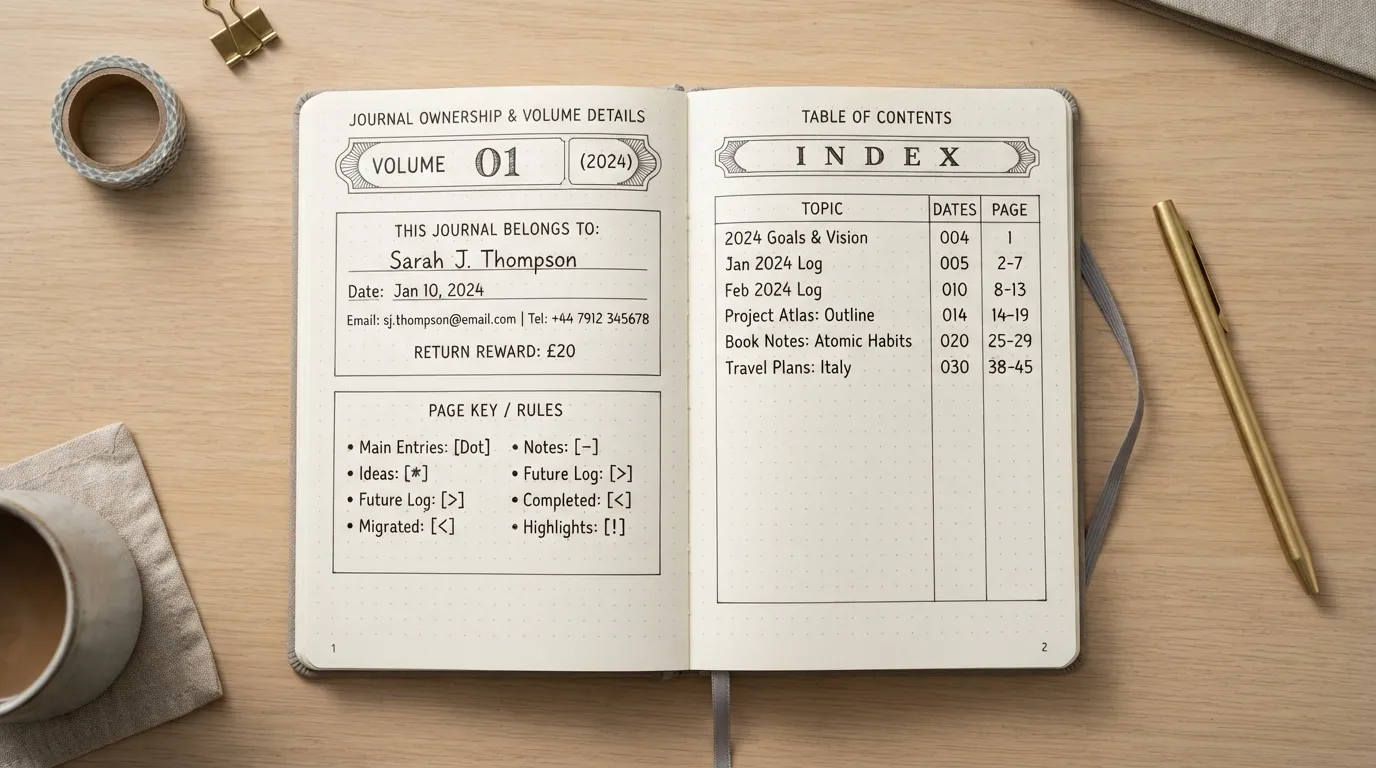
The way you open a notebook sets the tone for everything that follows. Decorating your cover or dedicating the very first page transforms a generic store-bought book into a personalized artifact. Exploring creative things to write on your notebook prevents that hesitation of marking up page one and gives your journal an official, intentional start.
First-Page & Cover Ideas
Establishing clear ownership and opening intentions makes the notebook feel instantly alive and ready for use:
Ownership & Contact Information: Include your name, email, or social handle in case the notebook is ever lost and found.
Table of Contents Template: Leave two blank pages at the very front reserved for indexing your major sections and page numbers.
“Rules for This Notebook”: Write down liberating ground rules, such as “Spelling mistakes allowed,” “No tearing out pages,” or “Messy handwriting encouraged.”
Core Inspirational Quote: Ink a powerful sentence from a favorite author or leader that anchors the overarching theme of this notebook.
Start and End Date Fields: Mark down the exact date you cracked the cover open, leaving a blank spot for when the final page is filled.
Vision Statement or Dedication: Write a 2-sentence declaration explaining what phase of your life or project this specific notebook is capturing.
Page 1 Template
To bypass blank-page anxiety instantly, use this simple structured checklist on your first inside page:
Title / Purpose: Volume 4: Creative Projects & Daily Life
Owner: Gulfam Haider Mehdi
Contact / Return Note: If found, please return (Reward offered!)
Opening Manifesto: “This book is a sandbox, not a museum. Be messy, be honest, and keep writing.”
Index Reference: Pages 1–10: Brain Dumps | Pages 11–50: Project Outlines
The Master List — 130+ Things to Write in a Notebook
When you need rapid inspiration or want to test out 130 ways to fill a notebook, this master index serves as your ultimate cheat sheet. Organized by category, use this comprehensive list of 130+ prompts whenever you need a quick spark to get your pen moving.
Creative Writing & Fiction (1–20)
Fictional character profile for a stranger
“What if” sci-fi scenario prompt
Alternate ending to a favorite novel
Fictional town world-building notes
Two-character dialogue-only scene
Overheard conversation snippet
Houseplant’s perspective on your day
100-word flash fiction story
Found poetry from song lyrics
Six-word personal life memoir
Morning observations haiku
Acrostic poem of your hometown
Sensory emotion description poem
Blackout poetry experiment
Unsent letter to your future self
Letter of forgiveness to your past self
Letter to a childhood hero
Unsent confession to an old friend
Fantasy world map sketching
Alternate career path timeline
Practical Lists & Productivity (21–45)
Master grocery & pantry staple list
Reusable travel packing checklist
TBR (To-Be-Read) book recommendations
Master film and series watchlist
Three monthly focus goals
Monthly budget subscription tracker
Gift ideas vault for family & friends
Local coffee shop & restaurant directory
Emergency contacts and doctor list
Subscription cancellation audit sheet
Seasonal home maintenance schedule
Color-coded monthly mood tracker
Sleep hours vs. hydration log
Daily gratitude line-up
Single daily accomplishment tally
Weekly meal prep dinner grid
Password hint security reference
Go-to quick 15-minute dinner recipes
Books borrowed and lent out log
Annual vehicle and service record
Project brain-dump matrix
100-day habit tracking grid
Self-care and stress relief menu
Workout routine and PR log
Weekly cleaning chore rotation
Boredom Busters & Funny Prompts (46–70)
Absurd “Would You Rather” questions
Blind-contour doodle and caption page
Made-up dictionary definitions
Top 10 worst fast-food French fries
Life path if you lived in 1920
A to Z food alphabet challenge
5-star review for your left shoe
Unrealistic 7-day dream vacation itinerary
Worst pickup lines hall of fame
Useless superhero origin story
Dramatic roast of your own handwriting
Conspiracy theory about your house cat
Hollywood action script for making toast
Bad advice column for life problems
Formal apology letter to a broken mug
Pet peeve official tier list
5-minute desk object free-write
Song first-verse rewrite challenge
Three things that made you laugh today
4-panel comic of your morning routine
10 funny-sounding words repeated aloud
Invented holiday traditions list
Worst fashion trends you secretly love
Fictional menu for an alien restaurant
Imaginary guest list for a dream dinner party
Cute & Aesthetic Spreads (71–95)
Reasons I love myself today list
Compliment jar entry page
Small moments of daily joy
Cozy sensory aesthetic word list
Current monthly obsessions roundup
Ideal peaceful Sunday itinerary
Beautiful words and definitions collection
Seasonal bucket list for autumn/summer
Washi tape framed quote layout
Sticker and ephemera collage page
Pastel color-coded header practice
Faux calligraphy alphabet lettering
Pressed flower botanical keepsake
Polaroid photo border memory entry
Favorite clothing color palette log
Comfort movie quotes collection
Sunshine tracking log
Weekend self-care ritual plan
Favorite coffee mug rating guide
Dream home aesthetic mood board notes
Indoor plant care growth tracker
Signature baking recipe card layout
Stamped border design practice
Favorite childhood fragrance memories
Gratitude jar visual drawing
School & Study Organization (96–110)
Cornell lecture notes layout
Subject vocabulary master glossary
Math formula and physics reference sheet
Essay thesis and source outline
Exam preparation checklist
Weekly homework assignment tracker
Teacher office hours question log
Group project task matrix
Language flashcard practice grid
Historical timeline study chart
Lab report step-by-step procedure notes
Book chapter summary bullet points
Classroom seating chart and project notes
Semester GPA and milestone tracker
Academic conference prep notes
Kids, Teens & First-Page Ideas (111–130+)
Favorite animals and fun facts list
Hybrid animal creature description
“My perfect day” imaginative story
Drawing with a funny caption
Kid superhero origin adventure
10-year time capsule letter
Joke and riddle collection bank
Secret club handbook rules
Teen friendship dynamic reflection
Monthly music playlist review
Post-graduation career ambitions
Personal style identity self-discovery notes
High school stress-venting page
Book quotes that change your perspective
First-page ownership and contact info
Personal notebook index table of contents
Liberating notebook ground rules list
Opening inspirational quote spread
Start and end date milestone fields
Volume title and opening manifesto statement
Pin This List!
Save this master index to your Pinterest board or bookmark it for the next time you stare at a blank page. Whether you are looking for aesthetic tracking, deep reflection, or fun boredom busters, these 130+ ideas guarantee you will never run out of stuff to write in a notebook.
Frequently Asked Questions
What should I fill in my notebook?
Fill your notebook with whatever serves your immediate mental or creative state, ranging from daily to-do lists and academic lecture notes to raw brain dumps, structured habit trackers, poetry, or custom visual sketches that keep you consistently engaged.
What is the best thing to write in a notebook?
The best thing to write is whatever lowers your mental friction and matches your personal goals, such as tracking daily priorities, capturing fleeting ideas, processing complex emotions, or documenting long-term creative projects and learning milestones.
What can I write if I'm bored?
When boredom strikes, try listing ten obscure media recommendations, drafting a fictional character backstory, designing an imaginary dream home floor plan, or brainstorming fresh bucket-list adventures to spark your creativity and pass the time.
What can I write in my secret diary?
Use your secret diary as a judgment-free space to record intimate personal feelings, recount memorable daily experiences, process frustrations, write unsent letters to people, or track private goals and dreams away from external pressures.
What can a 12-year-old write about?
A twelve-year-old can invent entirely new ice cream flavors with crazy ingredients, draw fun comic strips about their pets saving the neighborhood, write short adventure stories, or track their favorite hobbies, books, and sports achievements.
What are 100 things to do when bored?
Instead of searching for a massive checklist, break boredom by cycling through quick analog tasks: sketch your immediate surroundings, write a thank-you note to a friend, learn five words in a new language, or organize your desk layout.
What can a 14-year-old write about?
Fourteen-year-olds can explore identity and self-expression by writing about three things they love regarding their current personal style, listing five songs that define their monthly mood, or journaling about future ambitions and school projects.
What to say instead of "I'm bored"?
Swap out "I'm bored" by stating what you are curious to explore, such as "I am looking for a fun creative project," "I want to learn something completely new right now," or "Let's brainstorm an exciting weekend activity together."
Final Thoughts — Make Every Page Count
Filling a notebook does not require artistic perfection, expensive fountain pens, or rigid daily schedules. The true magic of journaling happens in the messy, unpolished moments—the raw brain dumps, the silly doodle pages, the practical grocery lists, and the quiet self-reflections. Every blank page is a low-pressure invitation to get your thoughts out of your head and onto paper, turning an ordinary stack of bound sheets into a personal archive of your life.
Ready to build a habit around this? explore more journaling techniques and ideas or stock up on essential journaling supplies and paper tools to get started today.
Pimchanok Srisuk
Pimchanok Srisuk is the Journaling Editor at Holistic Wellbeing Living. She writes about journaling prompts, reflective writing, emotional clarity, and mindful routines. With seven years of experience creating personal-growth content, Pimchanok helps readers use simple writing practices to understand their thoughts and make calmer everyday decisions.