Fear of Failure and Procrastination: Why Fear Holds You Back and How to Break the Cycle
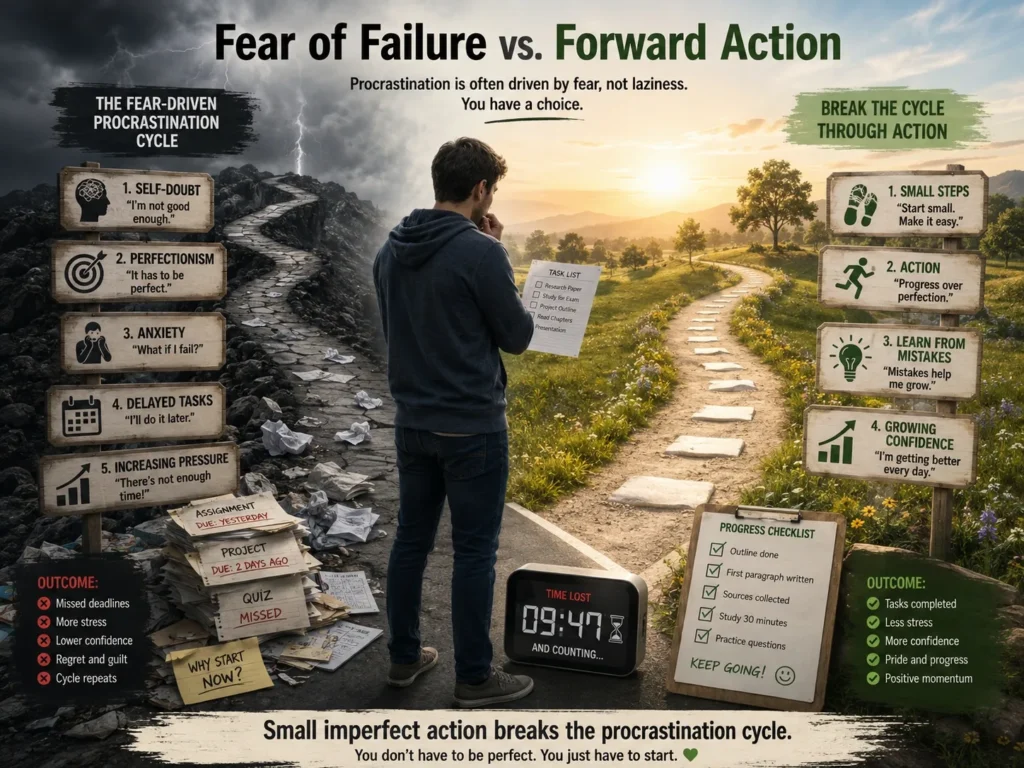
Fear of failure and procrastination are often connected in a way many people do not realize. When you are afraid of making mistakes, being judged, or not meeting expectations, delaying a task can feel like a temporary escape. The problem is that avoiding the task usually increases stress and makes the fear even stronger.
Procrastination is not always caused by laziness or poor time management. For many people, it is an emotional response to discomfort. Understanding why fear creates procrastination is the first step toward building confidence, taking action, and breaking the cycle.
Fear of failure and procrastination: Fear of failure can cause procrastination because avoiding a task temporarily protects your confidence from possible disappointment, criticism, or mistakes. The solution is not waiting until fear disappears, but learning to take small actions despite it.
What Is the Connection Between Fear of Failure and Procrastination?
Fear of failure and procrastination often create an avoidance cycle. A person thinks about an important task, feels worried about the outcome, experiences emotional discomfort, and delays starting. The delay provides short-term relief, but later creates more pressure and anxiety.
For example, a student may postpone studying because they fear getting a low grade. A professional may delay starting a project because they worry their work will not be good enough. In both cases, the fear of failure becomes the reason for avoiding action.
Why Fear of Failure Causes Procrastination
1. Self-Protection
Delaying a task can protect your self-esteem. If you never fully start, you can avoid facing the possibility of failure. Your mind creates a safety zone where you do not have to test your abilities.
2. Emotional Regulation
Difficult tasks can create uncomfortable emotions such as stress, uncertainty, and anxiety. Procrastination gives immediate emotional relief because you temporarily remove yourself from the stressful situation.
3. Perfectionism
Many people procrastinate because they believe their work must be perfect. When the standard feels impossible, starting becomes harder. The fear of producing imperfect work becomes stronger than the motivation to begin.
The Fear of Failure Procrastination Cycle
- A challenging task appears.
- Fear of failure or judgment increases.
- The brain looks for a way to avoid discomfort.
- The task gets delayed.
- Deadlines and pressure increase.
- Fear becomes even stronger.
Breaking this cycle requires changing your relationship with failure. Instead of seeing mistakes as proof that you are not capable, treat them as feedback that helps you improve.
Signs Your Procrastination May Be Caused by Fear of Failure
- You delay tasks even when they are important.
- You spend too much time planning but avoid starting.
- You worry about making mistakes before you begin.
- You compare your work with others and feel discouraged.
- You wait for the “perfect time” to take action.
- You avoid opportunities because you fear not succeeding.
How to Overcome Fear of Failure and Stop Procrastinating
1. Start With a Small Action
Large tasks often feel threatening because your brain focuses on the entire challenge. Reduce the pressure by choosing the smallest possible first step.
Instead of saying, “I need to finish this project,” try saying, “I will open the document and write the first paragraph.”
2. Accept Imperfect Progress
Waiting for perfect results creates unnecessary delays. Most successful work starts as an imperfect first attempt and improves through editing, practice, and feedback.
3. Focus on Effort Instead of Outcome
When you judge yourself only by the final result, every task feels like a test of your ability. Instead, measure success by completing the process and improving your skills.
4. Challenge Negative Thoughts
Fear often creates extreme thoughts such as “If I fail, everything is ruined.” Question these thoughts and replace them with more realistic ideas:
- A mistake does not define my ability.
- Failure can teach me what to improve.
- Starting gives me a chance to succeed.
Fear of Failure and Procrastination in Students
Students often experience procrastination because academic performance feels connected to their identity. Fear of low grades, disappointing parents, or comparing themselves with classmates can make studying feel overwhelming.
Helpful strategies include breaking assignments into smaller tasks, creating realistic study goals, asking for help early, and focusing on learning rather than only results.
Fear of Failure, Perfectionism, and Self-Doubt
Perfectionism and fear of failure often work together. A person may believe that anything less than perfect means failure, which creates pressure and avoidance.
| Fear-Based Thinking | Growth-Based Thinking |
|---|---|
| “I must not make mistakes.” | “Mistakes help me improve.” |
| “My work must be perfect.” | “Progress is better than perfection.” |
A Simple Exercise to Break Fear-Based Procrastination
When you notice yourself avoiding a task, write down answers to these questions:
- What exactly am I afraid will happen?
- Is this fear based on facts or assumptions?
- What is the smallest action I can take today?
- What would I do if I was not afraid of failing?
Frequently Asked Questions
How can I overcome my fear of failure?
You can overcome fear of failure by taking small actions, accepting mistakes as part of learning, challenging negative thoughts, and focusing on improvement rather than perfection.
Is procrastination caused by fear?
In many cases, procrastination can be connected to fear, especially fear of failure, criticism, uncertainty, or not meeting expectations. However, procrastination can have multiple causes.
What is the root cause of fear of failure?
Common causes include perfectionism, past negative experiences, low confidence, fear of judgment, and unrealistic expectations about success.
When should I seek professional support?
If fear and procrastination significantly affect your daily life, relationships, education, or work, speaking with a qualified mental health professional can provide personalized support.
Final Thoughts
Fear of failure and procrastination often appear together because delaying a task can feel safer than facing uncertainty. But avoiding action keeps the fear alive.
The way forward is not waiting until you feel completely confident. Start with a small step, allow yourself to learn through mistakes, and build confidence through action. Progress creates the evidence your mind needs to believe that you are capable.
Explore Topics
Sub-Topics & Guides
Featured Guides
Top Industry Resources
Editorial Integrity
Our content is 100% human-written, evidence-backed, and continuously updated to fulfill reader intent with maximum honesty.
"Small, consistent habits compounded over time create unshakeable momentum."