How to Reduce Procrastination in Kids: A Parent’s Guide to Building Better Habits
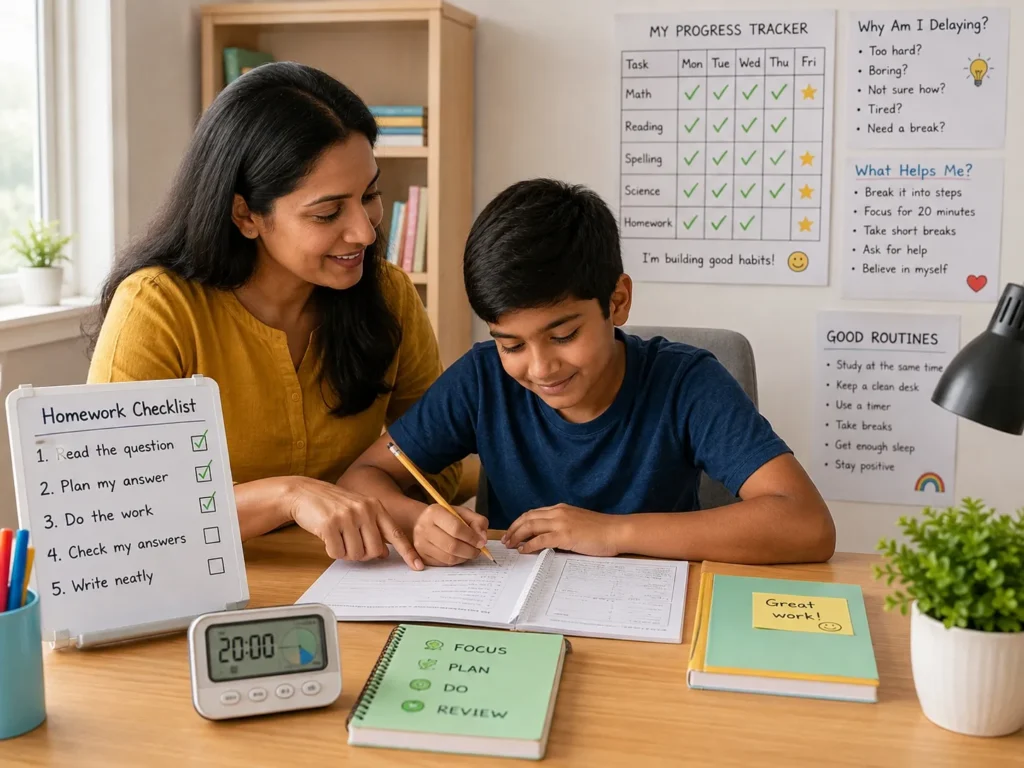
If your child keeps delaying homework, chores, or important tasks, it is easy to assume they are being lazy. However, procrastination in kids is often connected to feeling overwhelmed, fear of failure, difficulty starting tasks, weak organization skills, or too many distractions.
Learning how to reduce procrastination in kids is not about adding more pressure. It is about helping children understand why they avoid tasks and teaching them practical skills to start, continue, and complete responsibilities with more confidence.
Why Do Kids Procrastinate?
Before trying to fix procrastination, parents need to understand the reason behind the delay. A child who avoids homework may not be refusing to work; they may not know where to begin or may feel worried about making mistakes.
Common reasons children procrastinate include:
- Feeling overwhelmed: A large assignment can feel impossible when a child does not know the first step.
- Fear of failure: Some children delay tasks because they worry they will not do them perfectly.
- Lack of planning skills: Young children often need help learning how to organize time and responsibilities.
- Low motivation: A task that feels meaningless or boring is harder to start.
- Distractions: Phones, games, television, and constant notifications can make starting difficult.
- Weak self-regulation: Some children need support developing focus, patience, and emotional control.
Is Procrastination in Kids the Same as Laziness?
No. Procrastination is usually a delay in starting or completing a task, while laziness suggests a lack of willingness to put in effort. Many children who procrastinate actually want to succeed but struggle with motivation, emotions, organization, or knowing how to begin.
Instead of asking, “Why is my child lazy?” a more helpful question is:
How to Reduce Procrastination in Kids: 9 Practical Strategies
1. Find the Real Reason Behind the Delay
Start with a calm conversation instead of criticism. Ask your child what makes the task difficult.
- “Is the homework confusing?”
- “Do you know where to start?”
- “Does this feel too difficult?”
- “Are there distractions making it harder?”
Understanding the cause helps parents choose the right solution.
2. Break Big Tasks Into Smaller Steps
Large tasks create mental resistance. Teach your child to focus on the first small action instead of the entire project.
Example:
- Instead of: “Finish your science project.”
- Try: “Open your notebook, write the title, and complete the first section.”
Small progress creates momentum and makes starting less stressful.
3. Use the 5-Minute Start Method
Many children avoid tasks because starting feels difficult. Tell your child to work for only five minutes. Once they begin, continuing often becomes easier.
The goal is not to finish everything immediately. The goal is to overcome the starting barrier.
4. Create a Distraction-Free Environment
Children often procrastinate when their environment encourages distraction.
- Keep phones away during homework time.
- Create a consistent study area.
- Remove unnecessary noise.
- Keep required materials ready before starting.
5. Build Routines Instead of Constant Reminders
A predictable routine reduces the need for parents to repeatedly remind children.
For example:
- Snack after school.
- 10 minutes of relaxation.
- Homework begins at the same time daily.
- Short breaks are included.
6. Reward Effort and Progress
Positive reinforcement can encourage children to repeat good habits. Focus on effort, improvement, and consistency rather than only the final result.
Instead of saying, “You finally finished,” try:
7. Teach Time Management Skills
Children are not born knowing how to manage time. These skills need to be taught.
- Using a simple checklist.
- Planning tomorrow’s tasks.
- Estimating how long activities take.
- Completing important tasks before entertainment.
8. Help Children Manage Fear of Mistakes
Some children delay work because they want everything to be perfect. Teach them that mistakes are part of learning.
Completing a first draft is usually better than waiting for a perfect result.
9. Teach Independence Gradually
Parents should support children without taking over every task. The goal is to help children develop confidence and eventually manage responsibilities independently.
Procrastination in Kids vs Teens
| Kids | Teens |
|---|---|
| Need more parent guidance | Need more independence and accountability |
| Benefit from visual routines and reminders | Benefit from goal setting and planning skills |
| Often struggle with task understanding | Often struggle with motivation, distractions, and priorities |
Common Parenting Mistakes That Increase Procrastination
- Calling a child lazy: This can reduce confidence and does not solve the real problem.
- Doing everything for them: Children need opportunities to develop responsibility.
- Using only punishment: Fear may create short-term action but does not teach long-term skills.
- Comparing children: Comparison can increase stress and reduce motivation.
When Should Parents Look for Extra Support?
Occasional procrastination is normal. However, parents may want additional guidance if delays are severe, affect school performance, create constant stress, or appear alongside serious attention or emotional difficulties.
Persistent problems with focus, organization, or completing tasks may require understanding whether there are deeper challenges affecting a child’s daily life.
Frequently Asked Questions
Why does my child procrastinate so much?
Children may procrastinate because tasks feel difficult, unclear, boring, overwhelming, or emotionally uncomfortable. Finding the reason is the first step toward improvement.
How can I stop my child from delaying homework?
Create a consistent homework routine, remove distractions, break assignments into smaller steps, and help your child start with an easy first action.
Can procrastination be related to ADHD?
Some children with attention difficulties may struggle with starting tasks, organization, or managing time. However, procrastination alone does not mean a child has ADHD.
What is the best way to motivate a child who procrastinates?
Focus on building skills, creating routines, recognizing effort, and helping the child experience small successes instead of relying only on pressure.
Final Thoughts
Reducing procrastination in kids is a gradual process. The goal is not simply to make children finish tasks faster, but to help them develop confidence, organization skills, and the ability to manage responsibilities.
When parents focus on understanding the reason behind procrastination and provide practical support, children can learn better habits that help them both at school and in everyday life.
Explore Topics
Sub-Topics & Guides
Featured Guides
Top Industry Resources
Editorial Integrity
Our content is 100% human-written, evidence-backed, and continuously updated to fulfill reader intent with maximum honesty.
"Small, consistent habits compounded over time create unshakeable momentum."