Procrastination as a Maladaptive Coping Mechanism
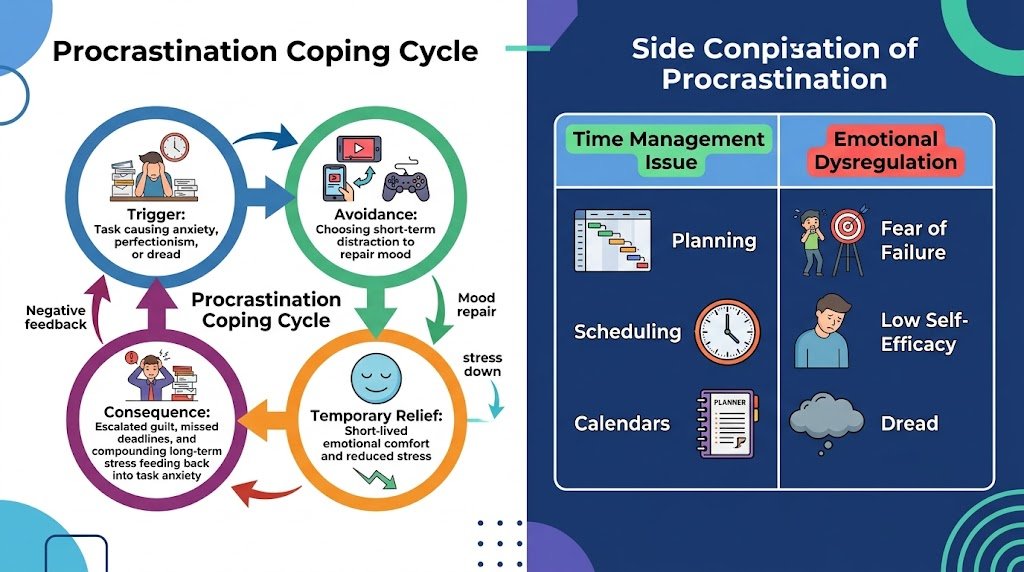
Procrastination is not a flaw in time management, but a negative coping strategy driven by emotional dysregulation. Individuals resort to avoidance behavior when faced with tasks that trigger anxiety, boredom, low self-efficacy, or fear of failure. Swapping immediate action for temporary relief provides a short-term mood repair, but this avoidance loop inevitably escalates long-term stress and psychological distress.
Understanding why the brain prioritizes short-term emotional comfort over long-term goals requires examining the psychological dynamics behind task avoidance:
Emotional Avoidance over Time Dysregulation: Task delay stems from an inability to manage negative emotions—such as perfectionism or imposter syndrome—associated with a specific project.
The Relief-Guilt Cycle: Choosing an engaging distraction yields short-term relief, but this temporary state quickly decays into heightened anxiety, self-criticism, and cumulative long-term stress.
Maladaptive Coping Patterns: Relying on delay tactics reinforces maladaptive coping patterns, conditioning the brain to perceive challenging tasks as threats rather than manageable obligations.
What Is Procrastination as a Coping Mechanism?
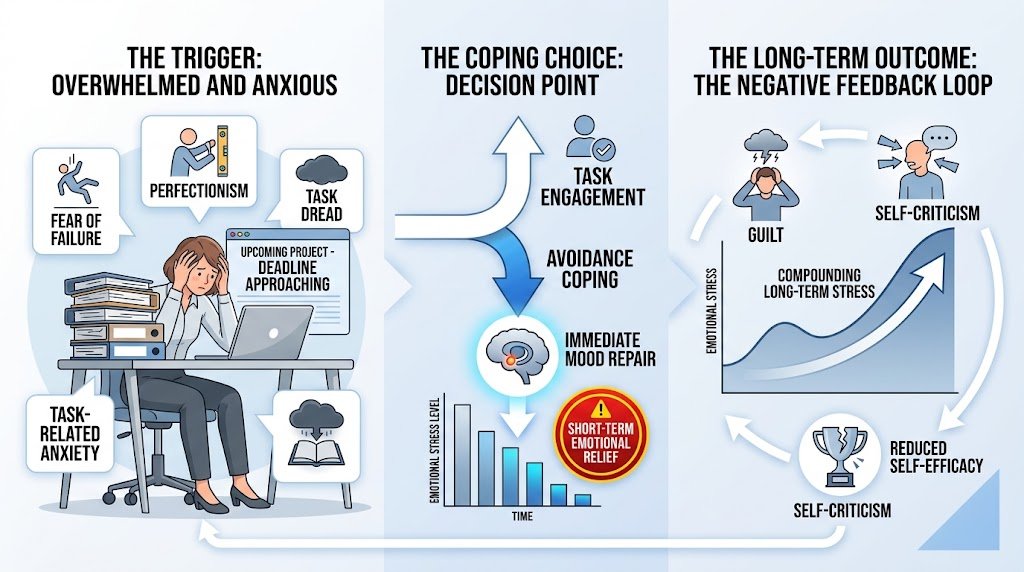
Procrastination functions as an avoidance coping strategy where individuals delay necessary tasks to escape the unpleasant emotions those tasks evoke. Rather than reflecting poor organization or laziness, it is a subconsciously deployed defense mechanism designed to manage feelings of dread, self-doubt, and overwhelm.
The Psychology Behind Procrastination as Avoidance
At its core, procrastination is a issue of emotional regulation rather than task management. When a task triggers negative affect, avoidance coping becomes the path of least psychological resistance.
Perfectionism and Fear of Failure: High personal standards often create an all-or-nothing mindset. Delaying a project protects self-esteem by postponing potential failure or criticism.
Task Dread and Boredom: Tasks perceived as tedious or overly complex generate immediate negative sentiment, prompting an automatic impulse to seek relief elsewhere.
Low Self-Efficacy: A lack of confidence in one’s ability to execute a task successfully triggers feelings of inadequacy, making avoidance feel like a safe harbor.
Why the Brain Chooses Short-Term Comfort Over Long-Term Goals
The decision to procrastinate represents a neurological tug-of-war between immediate mood repair and future well-being. This struggle is driven by competing brain structures and evolutionary priorities.
Amygdala and Stress Response: When a task generates anxiety, the amygdala identifies it as a threat. This triggers a mild fight-or-flight reaction, urging the brain to flee from the discomfort.
PFC vs. Limbic System: The prefrontal cortex attempts to focus on long-term goals, but the limbic system—which seeks immediate pleasure and pain avoidance—often wins out, leading to heightened impulsivity.
Short-Term Mood Repair: Choosing an easy distraction produces a quick release of comfort, reinforcing the brain’s reliance on avoidance whenever future stress arises.
In What Ways Is Procrastination a Negative Form of Coping?
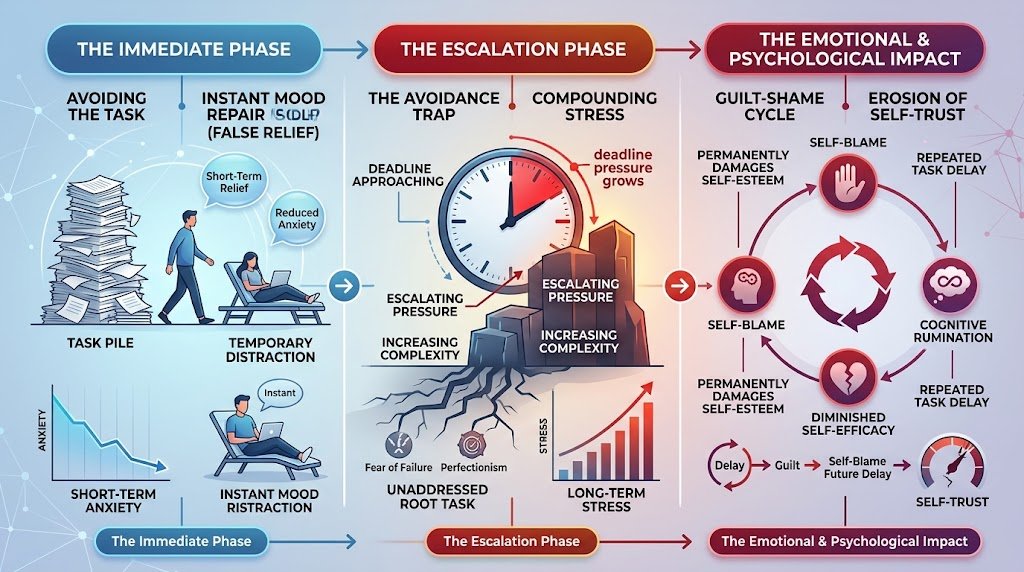
Procrastination is a negative form of coping because it provides immediate emotional relief while actively worsening long-term outcomes. By substituting task completion with temporary avoidance, it transforms manageable tasks into major sources of anxiety, damaging psychological well-being and productivity over time.
1. False Relief That Masks the Real Problem
Delaying a task offers instant gratification by removing an immediate stressor, creating a sense of false relief. However, this relief is temporary because the underlying obligation remains entirely unchanged.
Temporary Anxiety Reduction: Fleeing a difficult task calms the nervous system temporarily, giving a mistaken sense that the threat has been resolved.
Unresolved Demands: The source of the original anxiety remains untouched, guaranteeing that the stress will return with higher intensity later.
2. The Avoidance Trap (Untouched Root Issues)
Using delay as a primary defense mechanism creates an avoidance trap, preventing individuals from addressing the true causes of their distress. It acts as a passive barrier to personal growth and emotional resilience.
Unaddressed Triggers: Fear of failure, skill deficits, or perfectionism remain unexamined and unresolved when tasks are continually dodged.
Strengthened Avoidance Habits: Every instance of task delay reinforces maladaptive coping patterns, conditioning the mind to resort to avoidance whenever future difficulty arises.
3. Compounding Stress as Deadlines Approach
As deadlines draw near, the time available to complete the work shrinks, turning manageable workloads into overwhelming crises. This rapid accumulation of pressure leads to compounding stress and degraded work quality.
Time Compression: Squeezing complex projects into tight timeframes increases errors, exhaustion, and physiological strain.
Escalated Crisis States: Emergency conditions trigger elevated cortisol levels, making focused decision-making and high-level execution significantly harder.
4. The Guilt-Shame-Procrastination Cycle
Delaying action invariably leads to severe emotional fallout, initiating a vicious cycle of guilt, self-blame, and persistent rumination. The cognitive weight of uncompleted tasks drains mental energy even during leisure time.
Emotional Backlash: As time slips away, feelings of false relief are rapidly replaced by self-condemnation and shame over wasted time.
Mental Exhaustion: Constant rumination on pending deadlines keeps the mind in a perpetual state of tension, feeding directly back into the need for further emotional avoidance.
5. Erosion of Self-Trust and Self-Esteem
Repeatedly breaking promises made to oneself gradually destroys self-efficacy, leaving individuals feeling incapable of managing their responsibilities. This persistent erosion of self-trust reinforces a belief that success is out of reach.
Degraded Internal Credibility: Failing to execute planned goals undermines personal integrity and breeds chronic self-doubt.
Reinforced Self-Doubt: Low self-esteem increases vulnerability to future task anxiety, ensuring that the cycle of maladaptive coping continues uninterrupted.
The Negative Consequences of Procrastination
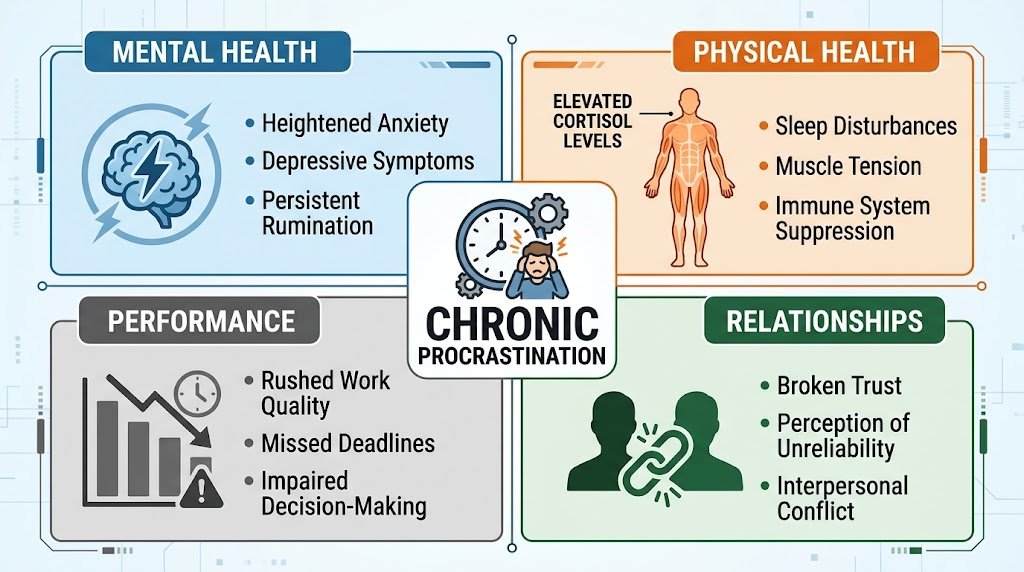
Procrastination extends far beyond lost productivity, acting as a chronic stressor that degrades well-being across multiple domains of life. When temporary task avoidance becomes a default reaction, the resulting cycle of delay damages psychological health, triggers physiological strain, undermines achievement, and erodes personal connections.
Mental Health Strain (Anxiety, Depression, Rumination)
Chronic task delay subjects the mind to constant internal tension, transforming manageable responsibilities into persistent sources of psychological distress.
Heightened Anxiety and Stress: Unfinished obligations remain active in background cognitive processing, maintaining an elevated state of worry and hypervigilance.
Depressive Symptoms and Self-Blame: Repeatedly failing to meet self-imposed targets fosters feelings of hopelessness, severe self-criticism, and low mood.
Persistent Rumination: Intrusive thoughts regarding upcoming deadlines disrupt quiet moments, preventing true relaxation and mental recovery.
Physical Toll (Insomnia, Muscle Tension, Immune Impact)
The physiological burden of chronic stress manifests in distinct somatic symptoms that compromise overall physical health. Research published in the National Institutes of Health repository{rel=”nofollow”} demonstrates a direct correlation between chronic procrastination, elevated stress markers, and adverse health outcomes.
Sleep Disturbances and Insomnia: Anxiety over pending tasks frequently spikes at night, causing difficulty falling asleep and fragmented rest.
Somatic Tension: Sustained stress triggers prolonged muscular contraction, leading to chronic tension headaches, neck strain, and back pain.
Immune System Suppression: Continuously elevated cortisol levels suppress optimal immune function, leaving the body more vulnerable to frequent illnesses and fatigue.
Performance Decline (Rushed Work, Missed Deadlines)
Operating continuously under emergency conditions severely restricts cognitive capacity, negatively impacting execution quality in academic and professional settings.
Subpar Output: Last-minute execution compresses critical phases like review and refinement, increasing errors and reducing work quality.
Missed Deadlines: Relying on late surges leaves zero margin for unforeseen obstacles, leading directly to past-due submissions.
Impaired Decision-Making: High-stress environments overload working memory, restricting complex problem-solving and creative thinking.
Reputation and Relationship Damage
The interpersonal fallout of chronic delay often leads to a breakdown in trust, creating friction with peers, colleagues, and family members.
Perceptions of Unreliability: Consistently failing to deliver on commitments leads supervisors and collaborators to view an individual as dependable-deficient.
Interpersonal Friction: Shifting work burdens onto group members or neglecting shared responsibilities breeds resentment and conflict.
Social Isolation: Feelings of shame surrounding task delay often prompt individuals to withdraw from social interactions, worsening feelings of loneliness.
Is Procrastination Always Negative? The Positive/Active Side
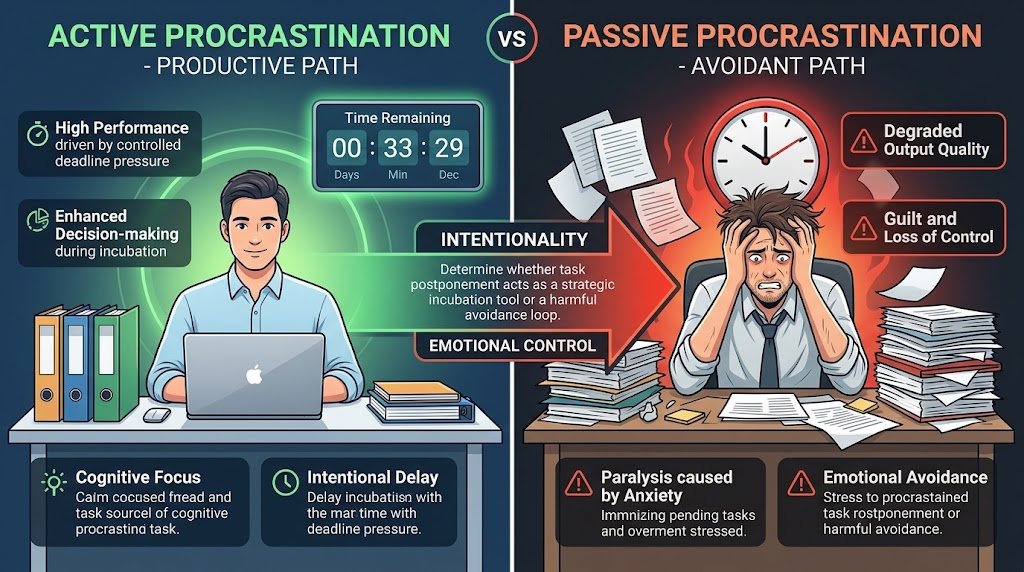
While delay is typically viewed as a destructive habit, strategic postponement can yield positive cognitive and performance outcomes. Understanding the boundary between functional delay and emotional avoidance depends entirely on intentionality and control.
Active vs. Passive Procrastination — The Key Difference
Distinguishing between active and passive delay is critical when evaluating whether task postponement is adaptive or harmful. Research spearheaded by procrastination scholar Piers Steel highlights how intent separates productive pauses from destructive avoidance.
Passive Procrastination: Paralysis caused by anxiety, low self-efficacy, or emotional overwhelm. The individual wants to work but remains frozen, suffering from guilt and worsening deadline pressure.
Active Procrastination: A deliberate, strategic decision to postpone tasks. Active procrastinators purposefully leverage time constraints to increase focus, maintaining full cognitive control over the execution phase.
When Delay Can Actually Improve Decision-Making
Intentional delay acts as a period of incubation, allowing complex ideas to mature in the background before committing to final decisions.
Subconscious Processing: Stepping away from an open-ended project gives the brain space to synthesize complex inputs, resulting in higher-quality problem solving.
Optimal Resource Allocation: Pausing non-critical tasks allows urgent, high-value objectives to take immediate priority without creating unnecessary cognitive clutter.
Deadline-Driven Focus: Certain individuals utilize time pressure performance strategically, using the pressure of a looming deadline to cut through distractions and enter a high-output state.
Why This Doesn’t Apply to Chronic Procrastinators
Strategic postponement requires robust emotional control and accurate time estimation—qualities typically missing in chronic procrastinators.
Loss of Intentionality: Chronic procrastinators do not choose delay; they are driven by anxiety and avoidance.
Degraded Execution: Without strong self-regulation, waiting until the last minute results in rushed, panic-fueled work rather than focused, high-level performance.
Cumulative Stress Burden: The constant presence of threat responses negates any potential cognitive benefits, turning potential strategic delay into compounding psychological strain.
Where Procrastination Fits Among the 7 Types of Coping Mechanisms
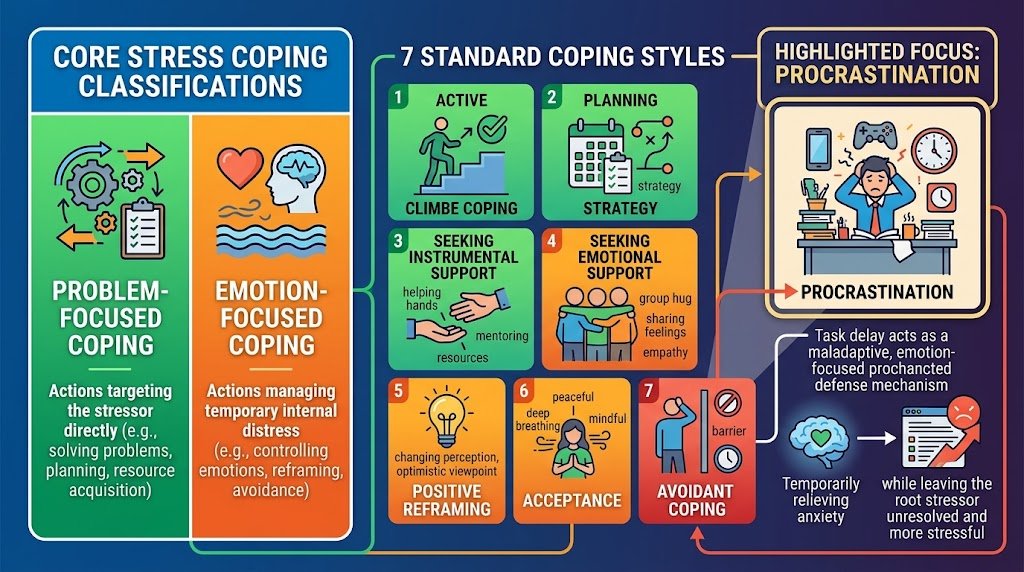
Psychological frameworks classify human stress responses to understand how individuals manage external demands and internal distress. Originating from the transactional model of stress developed by Richard Lazarus and Susan Folkman, coping mechanisms are broadly categorized based on whether they directly alter the stressor or merely manage the accompanying emotional turbulence.
Problem-Focused vs. Emotion-Focused Coping
The fundamental distinction between adaptive and maladaptive coping rests on the target of the response:
Problem-Focused Coping: Targets the root cause of stress directly through action, planning, time management, and problem-solving to eliminate or reduce the stressor.
Emotion-Focused Coping: Aims to manage, regulate, or suppress the negative emotional states associated with a stressor without directly changing the problematic situation itself.
The 7 Coping Styles Explained Briefly
Modern clinical psychology categorizes stress management into seven primary operational styles:
Active Coping: Taking direct steps and exerting effort to remove or mitigate the stressor.
Planning: Formulating action strategies, prioritizing tasks, and allocating resources systematically.
Seeking Instrumental Support: Requesting advice, assistance, or tangible resources from qualified experts or colleagues.
Seeking Emotional Support: Reaching out to peers, mentors, or loved ones for empathy, validation, and moral backing.
Positive Reframing: Reinterpreting a stressful situation in a constructive light to identify growth opportunities.
Acceptance: Acknowledging the reality of the stressful situation to begin adapting effectively.
Avoidant Coping: Physically or mentally disengaging from the stressor to escape immediate emotional discomfort.
Where Procrastination Falls (Avoidant/Emotion-Focused)
Procrastination fits squarely within the avoidant, emotion-focused coping category. Because it prioritizes short-term mood regulation over resolving the underlying challenge, it represents a classic maladaptive coping strategy.
Emotion-Driven Regulation: Procrastination does not attempt to make a difficult task easier; instead, it temporarily neutralizes feelings of dread, self-doubt, or anxiety by directing attention elsewhere.
Maladaptive Avoidance: By substituting productive action with distraction, it relies on psychological disengagement, ensuring that the original stressor remains unresolved while compounding overall anxiety over time.
What Did Carl Jung Say About Procrastination?
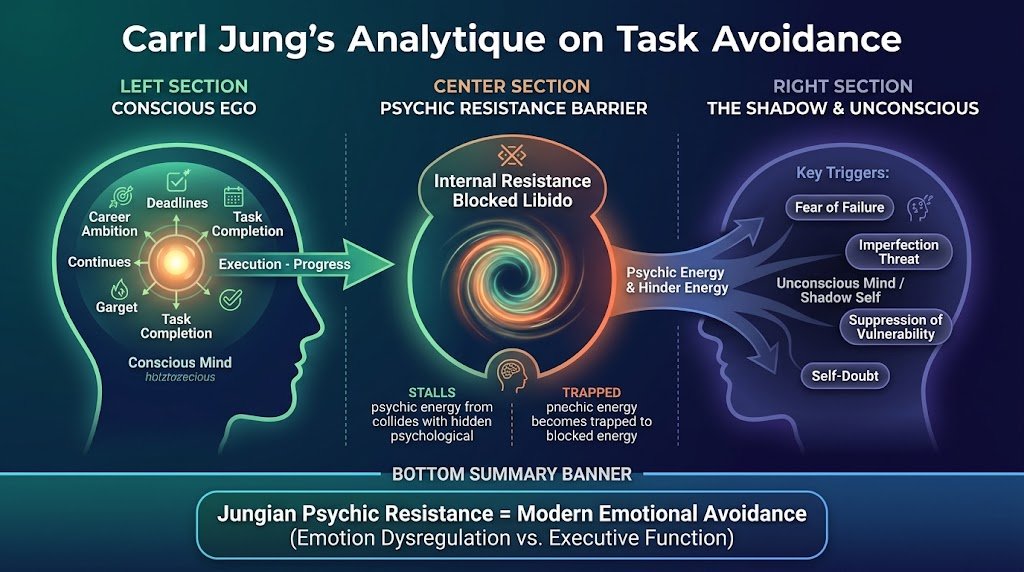
While Carl Jung never explicitly used the modern term “procrastination” in his clinical writing, his analytical psychology provides a deep framework for understanding task avoidance. Jung viewed resistance to action not as simple laziness, but as a symptom of underlying tension between the conscious ego and the unconscious mind.
Jung’s View on Avoidance and the Unconscious Mind
Jung posited that severe psychological resistance emerges when conscious goals clash with unconscious fears, values, or disowned aspects of the personality.
The Shadow Self and Task Resistance: Tasks that trigger self-doubt, fear of inadequacy, or perfectionism often touch upon the “shadow”—the suppressed aspects of the psyche. Avoiding these tasks protects the conscious ego from confronting uncomfortable self-truths.
Energy and Psychic Resistance: According to Jungian theory, when psychological energy (libido) is blocked from flowing into outer action, it turns inward. This internal friction manifests as fatigue, apathy, and persistent hesitation when attempting to begin important work.
How This Connects to Modern Procrastination Research
Jung’s insights directly parallel contemporary neurobiology and behavioral psychology regarding emotional avoidance:
Emotional Defense vs. Executive Function: Jung’s concept of psychic resistance aligns with modern findings that procrastination is driven by emotional dysregulation rather than poor time management.
Integrating the Shadow for Self-Efficacy: Modern therapeutic modalities like Acceptance and Commitment Therapy (ACT) echo Jungian principles by encouraging individuals to acknowledge internal discomfort rather than using task avoidance to escape negative emotions.
Procrastination, Motivation, and the Intrinsic-Extrinsic Link
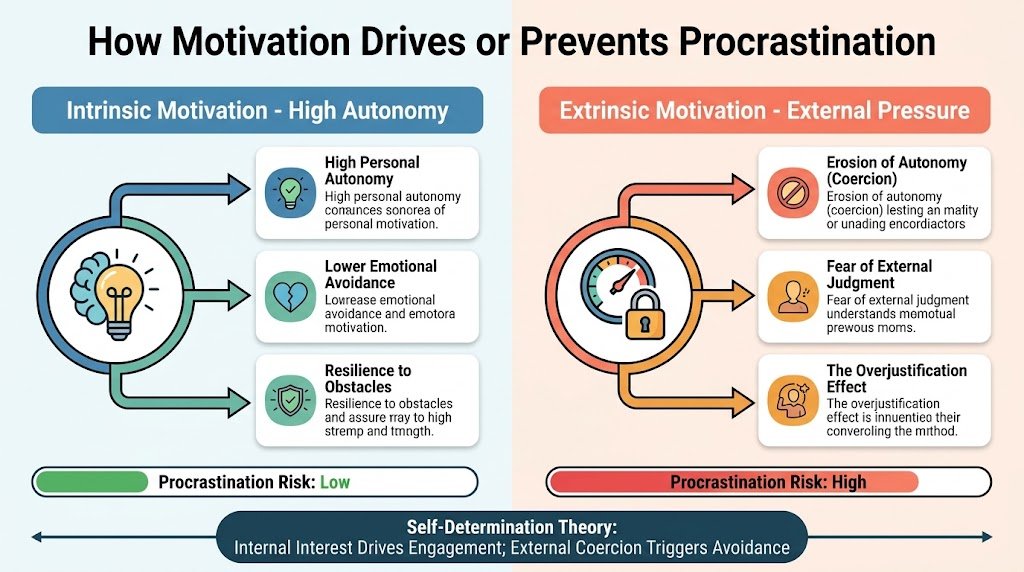
The underlying motivation driving a task determines the likelihood of procrastination. According to Self-Determination Theory, human behavior is fueled by distinct types of motivation: intrinsic (internal satisfaction) and extrinsic (external rewards or pressure). The balance between these forces dictates whether a task generates engagement or psychological resistance.
Intrinsic Motivation and Lower Procrastination Rates
When tasks are fueled by intrinsic motivation, procrastination rates drop significantly. Intrinsic motivation exists when an individual engages in an activity for its inherent enjoyment, curiosity, or alignment with personal values.
Higher Sense of Autonomy: Intrinsically motivated individuals experience greater autonomy and personal ownership over their actions, which reduces task-related anxiety and friction.
Reduced Emotional Avoidance: Tasks perceived as meaningful or inherently interesting generate positive affect, eliminating the need to deploy avoidance coping to repair mood.
Enhanced Resilience to Obstacles: When driven by internal interest, setbacks are viewed as natural components of mastery rather than threats to self-esteem.
Why Extrinsic Pressure Can Backfire
Extrinsic motivation relies on external factors such as financial compensation, grades, praise, or fear of punishment. While external incentives can initiate action, over-reliance on extrinsic pressure frequently triggers task avoidance.
Erosion of Autonomy: High external pressure creates a sense of coercion, causing individuals to feel controlled rather than self-directed. This loss of agency often breeds subconscious rebellion in the form of delay.
Heightened Fear of Evaluation: Extrinsic goals center performance on external judgment. This shifts focus toward fear of failure, perfectionism, and social evaluation, amplifying anxiety and driving emotional avoidance.
The Overjustification Effect: Excessive reliance on external rewards can diminish pre-existing internal interest, transforming previously engaging activities into burdensome obligations that invite procrastination.
How to Break the Negative Coping Cycle
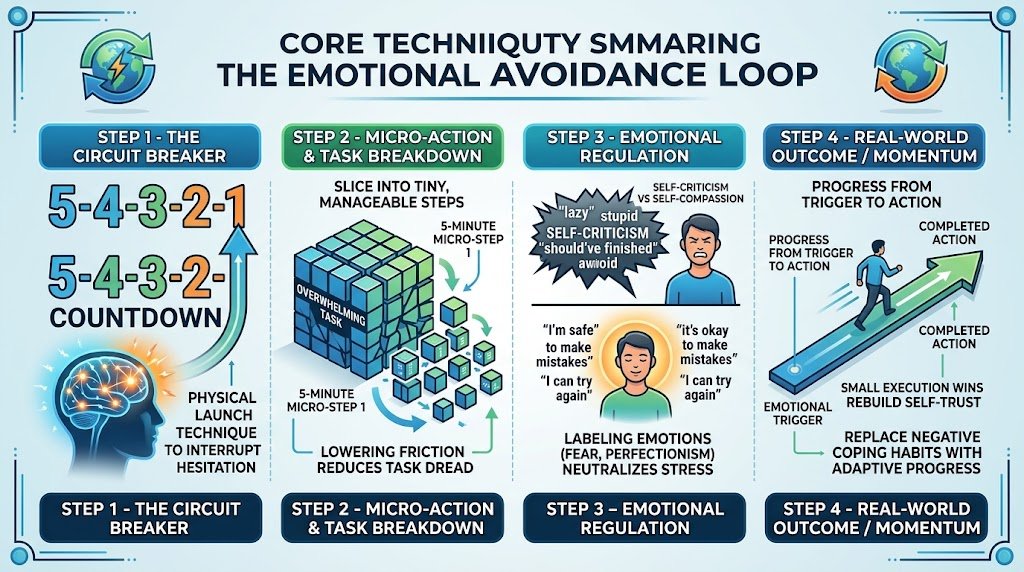
Overcoming procrastination requires replacing avoidant coping with actionable, emotion-regulation techniques. Shifting from task delay to active engagement involves lowering the friction required to start, addressing emotional triggers, and rebuilding self-trust through small wins.
The 5-4-3-2-1 Rule for Procrastination (Step-by-Step)
Developed by Mel Robbins, the 5-4-3-2-1 rule acts as an emergency circuit breaker for the brain’s threat response, interrupting emotional hesitation before the amygdala triggers task avoidance.
Identify the Hesitation: Recognize the precise moment emotional discomfort or task dread prompts you to delay.
Count Down Out Loud or Internally: Count backward mentally: 5-4-3-2-1. The backward sequence demands focus, shifting activity from the limbic system to the prefrontal cortex.
Physical Launch at “1”: Move immediately upon reaching “1”—stand up, open the document, or sit at the desk. Taking immediate physical action bypasses overthinking.
Breaking Tasks Into Smaller, Manageable Steps
Overwhelm occurs when the brain evaluates a massive, complex project all at once. Task-breakdown lowers activation energy by making the initial commitment feel trivial.
Define the Micro-Action: Strip a project down to its smallest possible starting component (e.g., “open a blank document and write one sentence” instead of “write the full quarterly report”).
The 5-Minute Commitment: Agree to work on the micro-task for just 300 seconds. Because starting is the highest barrier, momentum usually carries performance beyond the initial 5 minutes.
Isolate Immediate Next Steps: Focus exclusively on the single immediate action required, deliberately ignoring subsequent steps until the current step is completed.
Addressing the Root Emotion Instead of the Task
Because procrastination stems from emotional dysregulation, targeting the underlying feeling is more effective than forcing rigid time management.
Practice Self-Compassion: Replace harsh self-criticism with neutral acknowledgment. Forgiving past delays reduces anxiety, making it easier to re-engage with the work.
Label the Emotional Trigger: Explicitly name the feeling holding you back—whether it is fear of failure, boredom, or perfectionism—to lessen its unconscious control over your actions.
Reframe Task Dread: Shift focus away from long-term outcome expectations toward immediate process goals, removing the fear of external judgment.
A First-Hand Example: Applying This to a Real Deadline
Faced with writing a complex technical architecture document under a tight deadline, acute task dread set in. The sheer scope created an overwhelming fear of producing sub-par work, triggering a strong urge to reorganize emails instead—a classic avoidance coping response.
Recognizing this emotional avoidance trap, the first step was labeling the trigger as a fear of failure rather than a lack of capability. Instead of attempting to draft the whole document, the task was broken down into a single micro-action: writing three bullet points outlining the introduction. Using the 5-4-3-2-1 countdown, physical action was initiated immediately at “1” without reviewing the remaining sections. Completing those three initial bullets dissolved the psychological resistance, generating enough momentum to draft two full sections within an hour.
Frequently Asked Questions (FAQ)
What are 10 negative ways to cope with stress?
Negative coping mechanisms offer temporary emotional relief while compounding stress over time. The ten most common maladaptive coping strategies include:
- Procrastination: Delaying essential tasks to avoid uncomfortable emotions.
- Substance Misuse: Relying on alcohol, drugs, or excessive caffeine to numb pressure.
- Emotional Overeating: Consuming comfort foods to cope with anxiety or sadness.
- Social Withdrawal: Isolating oneself from supportive friends, family, or colleagues.
- Aggression and Outbursts: Discharging internal tension through irritability or anger.
- Excessive Screen Time: Escaping into social media, gaming, or streaming to avoid responsibilities.
- Compulsive Spending: Using retail therapy to regain a temporary sense of control.
- Doomscrolling: Obsessively consuming negative news to manage uncertainty.
- Excessive Self-Criticism: Engaging in harsh internal monologue that breeds helplessness.
- Denial: Pretending a stressful situation does not exist rather than taking action.
Are there potential negative consequences of habitual procrastination?
Habitual procrastination leads to severe long-term consequences across multiple areas of life. Psychologically, it fuels chronic anxiety, depression, persistent guilt, and an ongoing erosion of self-esteem. Physically, the continuous elevated stress levels lead to sleep disturbances, tension headaches, and suppressed immune function. Professionally and academically, it results in missed deadlines, rushed work quality, impaired decision-making, and damaged professional credibility.
Why do people procrastinate even when they know it's harmful?
People procrastinate despite knowing the harm because procrastination is a problem of emotional regulation, not time management. When a task triggers feelings of dread, low self-efficacy, boredom, or fear of failure, the brain's amygdala views the task as an emotional threat. The limbic system then seeks immediate mood repair by choosing short-term relief (avoidance) over long-term goals managed by the prefrontal cortex, overriding logical reasoning.
What causes procrastination in students?
Student procrastination is primarily driven by academic pressure, fear of failure, and undeveloped emotional regulation skills. Key contributing factors include:
- Perfectionism: Fear that academic output will not meet high personal or parental standards.
- Low Self-Efficacy: Doubting one's ability to master complex subject matter.
- Unclear Task Structure: Ambiguous essay prompts or large projects that trigger overwhelm.
- Immediate Distractions: Constant access to smartphones and social media offering instant rewards.
- Temporal Discounting: Perceiving distant exam dates or assignment deadlines as non-urgent threats.
Mark Steve
Mark Steve is a tech, business, and lifestyle writer with over 5 years of experience analyzing digital trends, startups, and online business models. He publishes well-researched, fact-checked content focused on clarity, credibility, and real-world value.