Jump to:
ToggleDiscipline: What It Is, Why It Matters, and How to Build It

Introduction — What Is Discipline?
Discipline is the foundational framework of self-control and structured habits that enables individuals to align daily actions with long-term goals. Rather than acting as a form of punishment, authentic discipline serves as an intentional blueprint for personal growth, emotional regulation, and sustained productivity.
What Does Discipline Really Mean?
At its core, discipline bridges the gap between intention and execution. It moves beyond fleeting motivation to establish reliable routines that persist even when enthusiasm fades.
Self-Control and Impulse Management: The mental capacity to resist short-term gratification in favor of enduring value and delayed rewards.
Structural Consistency: Implementing repeatable systems, schedules, and boundaries that reduce decision fatigue.
Active Adaptation: Cultivating the resilience required to course-correct after setbacks without abandoning core objectives.
The Purpose of Discipline in Daily Life
The ultimate function of discipline is to preserve mental bandwidth and create psychological freedom. By automating repetitive choices and establishing healthy boundaries, individuals protect their focus for high-impact work and meaningful relationships.
Minimizing Decision Fatigue: Eliminating daily friction by pre-determining responses to common challenges and distractions.
Accelerating Skill Acquisition: Transforming sporadic practice into habitual mastery through consistent, incremental effort.
Fostering Emotional Stability: Providing a steady internal anchor during periods of high stress, uncertainty, or external chaos.
Why Is Discipline Important? (Core Intent Section)

Discipline is an essential requirement for turning long-term goals into reality, acting as the stabilizing force that outlasts fleeting motivation. Without structural consistency and intentional habits, potential remains unexecuted and personal growth stalls.
Why Discipline Is a Necessity, Not a Choice
Treating discipline as a fundamental necessity rather than an optional trait shifts the focus from temporary willpower to reliable systems. It replaces chaotic reactions with predictable routines that protect mental energy.
Sustaining Momentum: Ensures progress continues steadily during periods of low inspiration or high external friction.
Building Reliable Habits: Replaces erratic bursts of effort with sustainable, daily micro-actions that compound over time.
Eliminating Paralysis: Reduces overthinking by creating clear, pre-determined pathways for daily execution.
How Discipline Shapes Long-Term Success
Long-term success is rarely the result of a single monumental breakthrough; it is built through the accumulation of disciplined choices. Structure provides the protective boundary within which true expertise and mastery can develop.
Compounding Advantages: Small, disciplined adjustments accumulate over months and years to yield disproportionately large outcomes.
Resilience Under Pressure: Equips individuals to weather unexpected crises by relying on established, resilient routines.
Targeted Self-Improvement: Directs scarce time and energy exclusively toward high-leverage activities that align with core values.
Core Benefits of Discipline (Main Listicle Section)
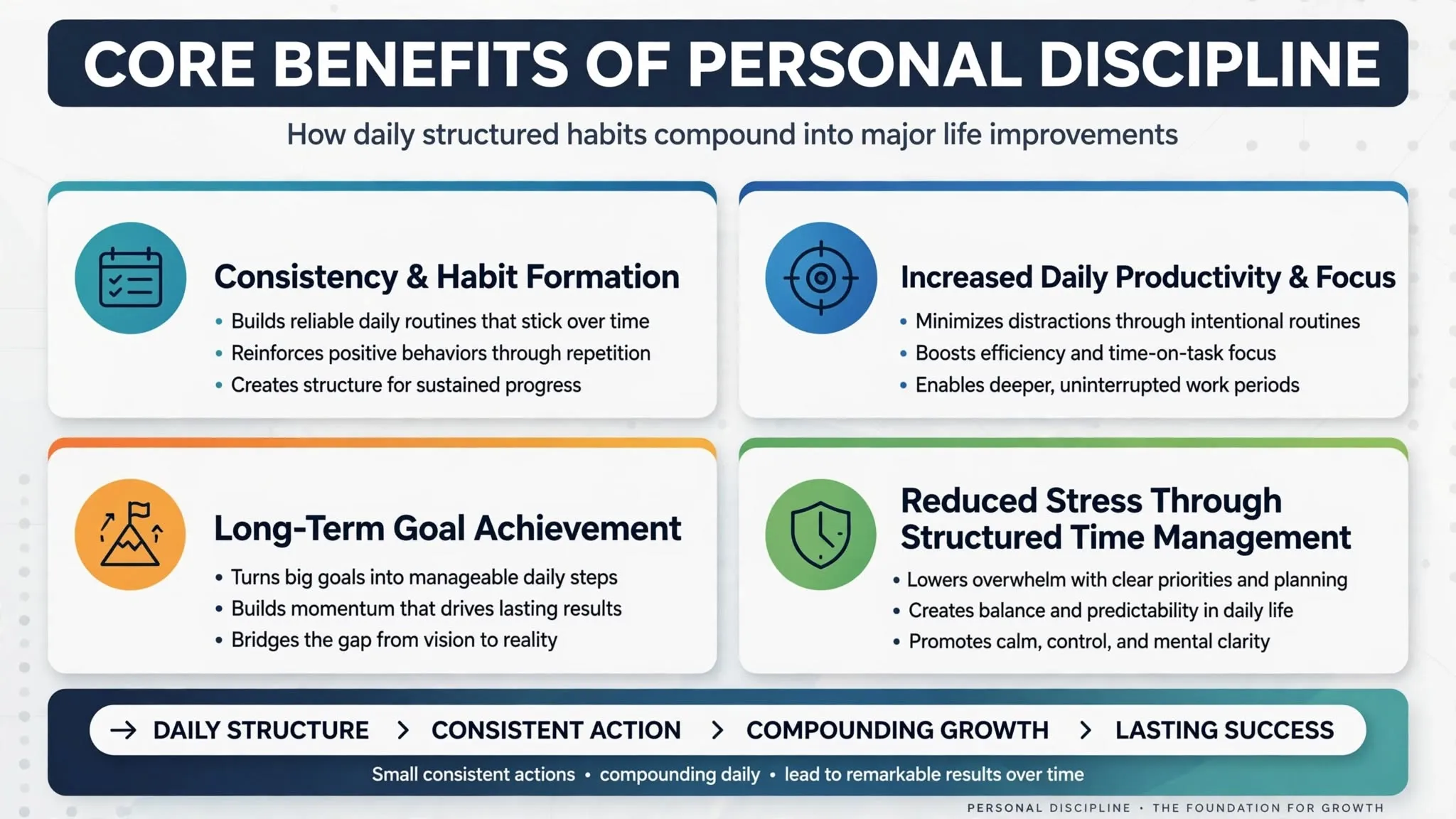
Achieving true self-discipline unlocks a wide array of compounding psychological, physical, and professional advantages that transform everyday execution. Establishing this foundation directly drives measurable improvements across every major domain of daily life.
Helps You Achieve Long-Term Goals
- Goal Achievement: Breaks massive objectives down into manageable, daily milestones that ensure steady forward momentum.
- Purposeful Direction: Keeps attention anchored on vital outcomes rather than distracting short-term pursuits.
- Improves Mental Health (Reduces Stress & Anxiety)
- Anxiety Reduction: Lowers chronic worry by replacing chaos and unpredictability with reliable personal structures.
- Mental Clarity: Clears psychological clutter, directly fostering a calm, focused, and disciplined mind.
- Boosts Focus & Productivity
- Deep Work: Eliminates constant context-switching to maximize output during dedicated working blocks.
- Efficiency Gains: Streamlines task completion by enforcing clear boundaries against digital and environmental distractions.
- Strengthens Physical Health & Healthy Habits
- Physical Well-being: Drives consistent engagement in physical fitness, balanced nutrition, and restorative rest routines.
- Preventive Care: Ensures regular adherence to healthy lifestyle choices that compound into lifelong vitality.
- Builds Trust in Relationships
- Reliability: Fosters deep trust with family, friends, and colleagues through consistent follow-through on commitments.
- Accountability: Strengthens interpersonal bonds because others know they can depend on your word.
- Increases Resilience After Setbacks
- Bounce-Back Power: Transforms failures from emotional dead-ends into objective feedback for iterative improvement.
- Mental Toughness: Equips you to weather high-pressure crises without abandoning your foundational routines.
- Improves Time Management
- Prioritization: Directs precious hours toward high-leverage activities while actively cutting out time-wasting habits.
- Schedule Control: Replaces frantic multitasking with deliberate, well-structured blocks of time.
- Builds Emotional Control
- Impulse Regulation: Prevents impulsive reactions to provocation by pausing between emotional triggers and responses.
- Calm Demeanor: Maintains professional and personal composure under high-stress conditions.
- Encourages Financial Responsibility
- Smart Budgeting: Enforces strict adherence to saving and spending plans rather than succumbing to impulse buys.
- Wealth Accumulation: Fosters long-term financial security through systematic, disciplined investing habits.
- Creates a Disciplined Mind
- Cognitive Mastery: Cultivates an inner environment where intentional choice permanently overrides reactionary habits.
- Mental Freedom: Frees up cognitive bandwidth by automating routine decisions, leaving maximum energy for creative problem-solving.
Discipline vs. Motivation — What's the Difference?
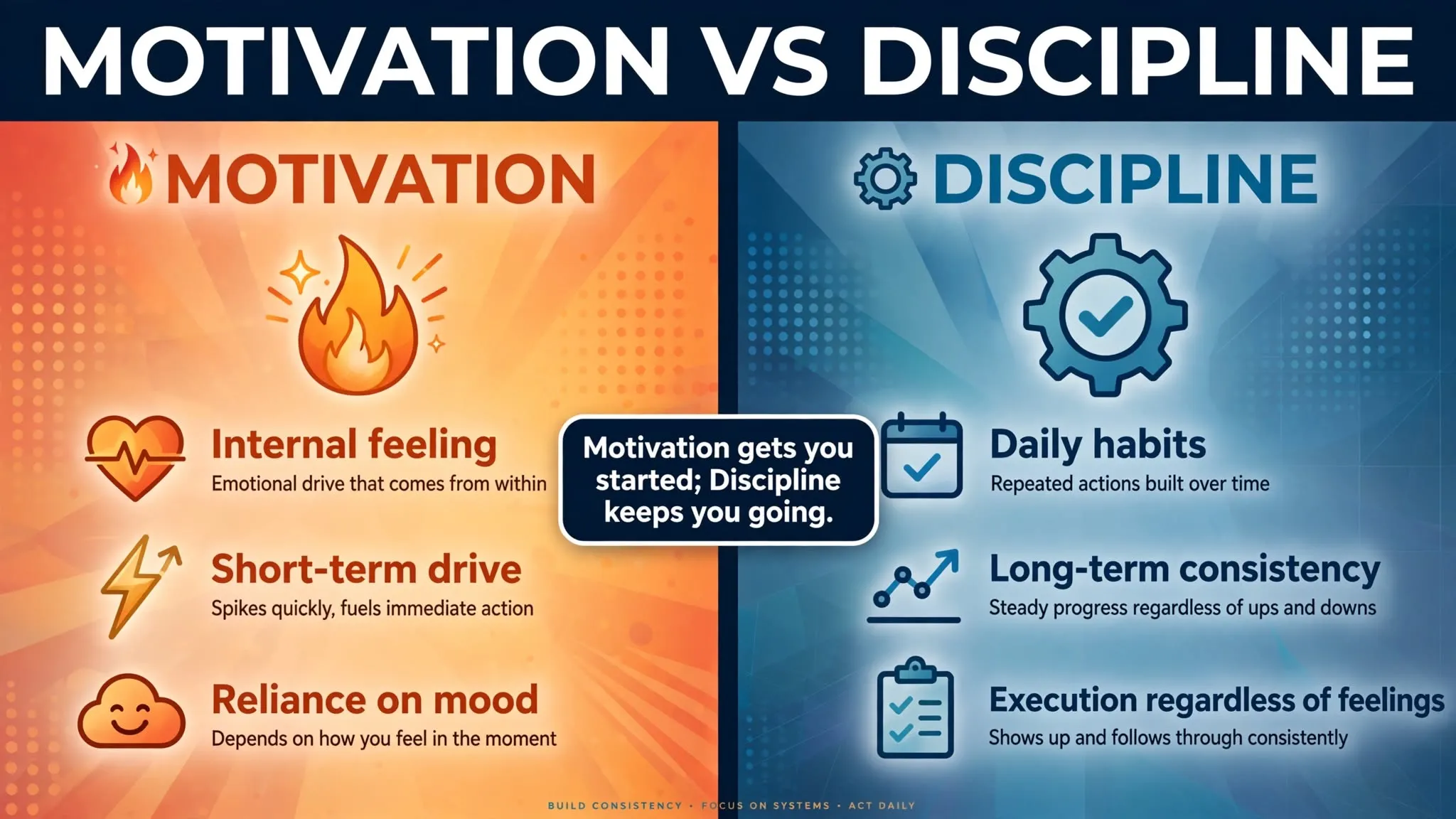
Motivation is a temporary emotional state fueled by excitement and inspiration, whereas discipline is a reliable system built on structured habits. While motivation relies heavily on fleeting feelings to initiate action, discipline ensures consistent execution regardless of mood.
Motivation vs. Discipline: Key Differences
Understanding the structural contrast between these two forces prevents the common trap of waiting for inspiration before taking action.
Emotional State vs. System: Motivation is a fluctuating emotional spark, while discipline functions as an automated behavioral system.
Initiation vs. Sustaining Power: Motivation excels at getting a project started, but discipline carries it through the inevitable hurdles and plateaus.
External Dependence: Motivation often requires external stimuli, rewards, or novelty, whereas discipline is entirely self-generated and internally controlled.
Why Discipline Outlasts Motivation
Relying exclusively on motivation leads to inconsistent results because human emotional states naturally fluctuate throughout the week or month. Discipline eliminates this vulnerability by decoupling daily action from transient feelings.
Friction Elimination: Established routines remove the need to feel inspired, lowering the mental barrier required to begin important tasks.
Compound Consistency: Small, disciplined efforts repeated daily outpace massive bursts of motivated activity that lack follow-through.
Unwavering Reliability: A structured approach ensures forward progress continues even during high-stress periods, fatigue, or low morale.
Discipline vs. Abuse — Where's the Line?
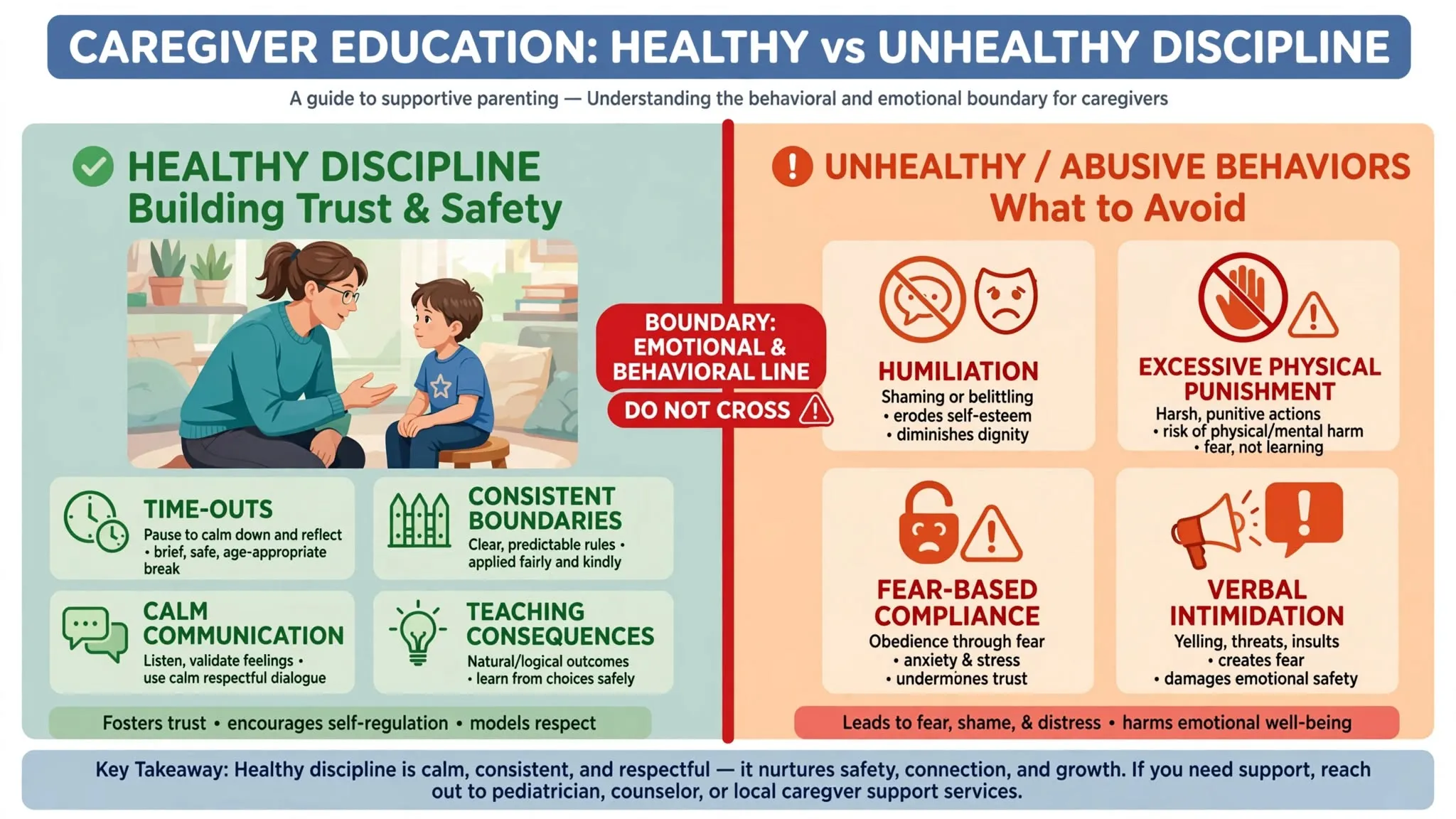
Healthy discipline is grounded in mutual respect, clear boundaries, and constructive guidance, whereas abuse involves control, intimidation, or physical and emotional harm. True discipline aims to teach and develop accountability, while abusive behavior inflicts fear and degrades psychological safety.
How Healthy Discipline Differs From Abuse
Distinguishing between constructive guidance and harmful behavior requires evaluating the core intent and the emotional environment of the interaction. Healthy structures prioritize long-term emotional well-being and collaborative problem-solving over intimidation.
Constructive vs. Destructive Intent: Healthy discipline aims to educate, correct, and foster self-control, whereas abuse seeks to dominate, demean, or punish.
Emotional Safety: Appropriate boundaries are maintained without resorting to personal attacks, terror, or threats of abandonment.
Mutual Respect: True guidance honors the dignity of the individual, preserving trust and open communication even during corrections.
Signs Discipline Has Crossed a Line
Recognizing the exact boundary where discipline transforms into abuse is critical for maintaining safe, healthy environments in both homes and workplaces. Any practice that relies on fear, isolation, or degradation violates the core tenets of personal growth.
Escalation to Harm: The introduction of physical force, harsh intimidation, or intentional infliction of pain.
Psychological Degradation: Utilizing chronic humiliation, verbal abuse, or severe shaming to force compliance.
Loss of Trust: Creating an atmosphere of constant terror where individuals comply out of fear rather than understanding mutual expectations.
The 4 R's of Positive Discipline

The 4 R’s of positive discipline—Related, Respectful, Reasonable, and Revealed—provide a constructive framework for guiding behavior without resorting to punitive punishment. This methodology shifts the focus from external control to internal accountability and problem-solving.
What Are the 4 R’s? (Related, Respectful, Reasonable, Revealed)
Each component of the framework serves a specific purpose in maintaining healthy boundaries while preserving trust and emotional safety.
Related: The guidance or natural consequence must directly connect to the behavior rather than feeling arbitrary or unrelated.
Respectful: The interaction is delivered with dignity, avoiding sarcasm, humiliation, or harsh personal attacks.
Reasonable: Expectations and corrective actions are proportionate to the situation and manageable for the individual involved.
Revealed: Rules, expectations, and consequences are communicated clearly and proactively ahead of time rather than imposed as surprises.
How to Apply the 4 R’s in Real Life
Implementing this framework transforms everyday corrections into valuable learning opportunities that build long-term self-control.
Connecting Actions to Outcomes: Design boundaries that naturally flow from choices, helping individuals directly observe the impact of their behavior.
Maintaining Composure: Deliver feedback in a calm, neutral tone to ensure the message is heard without triggering a defensive response.
Establishing Clear Agreements: Co-create expectations in advance so that everyone involved understands the boundaries and the reasoning behind them.
What Does the Bible Say About Discipline?

Biblical scripture frames discipline not as cruel punishment, but as an essential expression of love, wisdom, and moral formation. Throughout scripture, structure and correction are presented as vital tools for shaping character and guiding individuals away from destructive behaviors. You can explore exact translations and textual contexts directly on BibleGateway rel=”nofollow”.
What Proverbs 13:24 Says About Discipline
Proverbs 13:24 states that whoever spares the rod hates their child, but the one who loves their child is diligent in disciplining them. In historical and wisdom literature contexts, this verse uses metaphorical language to emphasize active parental guidance rather than neglect.
Love Through Action: True affection requires the hard work of correction rather than taking the path of least resistance by letting bad habits slide.
Diligent Engagement: Discipline must be applied consistently and promptly rather than out of sudden, unmanaged anger.
What Proverbs 22:15 Says About Discipline
Proverbs 22:15 notes that foolishness is bound up in the heart of a youth, but the rod of correction will drive it far away. This proverb highlights human nature’s tendency toward short-sighted or impulsive choices early in life.
Correcting Naivety: Acknowledges that immature impulses require external boundaries and correction to mature properly.
Proactive Guidance: Structural boundaries act as a corrective barrier that redirects poor judgment before it hardens into permanent character flaws.
What James 1:19 and James 4:17 Teach About Discipline
The New Testament expands discipline into emotional self-mastery and spiritual accountability, emphasizing personal responsibility in daily actions. James 1:19 instructs believers to be quick to listen, slow to speak, and slow to become angry, laying down a foundational rule for emotional self-control.
Emotional Restraint: Mastering one’s speech and temper is viewed as a high form of spiritual and personal discipline.
The Duty of Action: James 4:17 notes that knowing the right thing to do and failing to do it constitutes a missed mark, linking discipline directly to active obedience and follow-through.
What Jesus Said About Discipline
While Jesus did not outline a formal corporate playbook for modern scheduling or productivity, His teachings modeled ultimate self-discipline through submission to a higher purpose. He consistently practiced solitude, resisted severe temptations in the wilderness, and surrendered personal comfort for a long-term mission.
Self-Denial as a Practice: Jesus framed personal discipline around daily sacrifice, famously teaching that followers must pick up their cross daily.
Inner Integrity: His focus shifted discipline away from mere outward compliance toward purity of heart, motive, and thought.
Disadvantages of Discipline (Balance Section — Content Gap Fill)
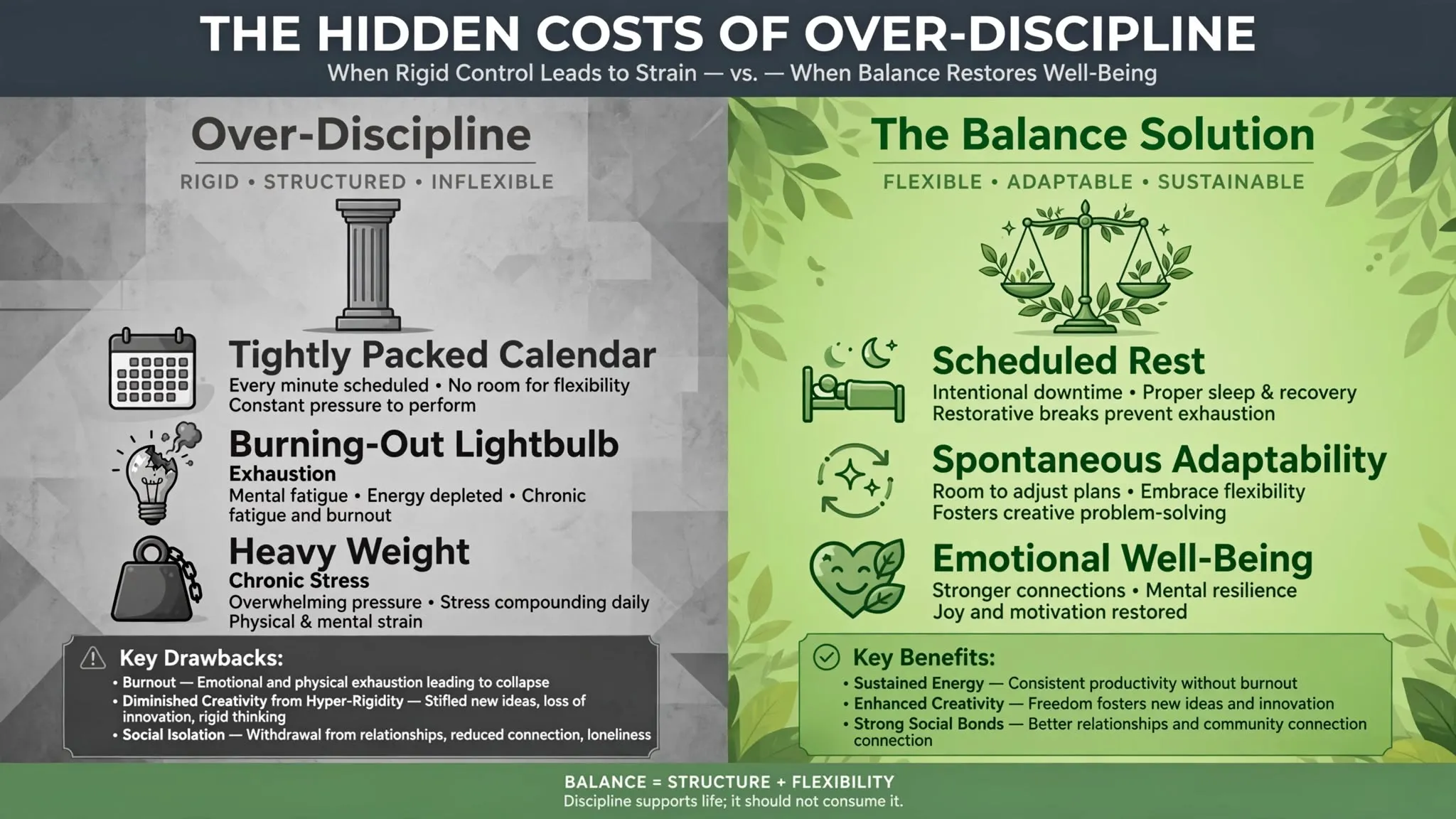
While structure and consistency are essential for long-term achievement, excessive or inflexible adherence to rigid rules can trigger unintended negative consequences. Striking the right balance ensures that personal boundaries support well-being rather than stifling creativity, adaptability, and psychological health.
When Discipline Becomes Too Rigid
Over-discipline often manifests as an inflexible refusal to adapt when unexpected circumstances demand a change in plans. This hyper-controlled mindset replaces healthy self-regulation with punishing perfectionism.
Loss of Spontaneity: Eliminating all room for improvisation can make life feel mechanical, joyless, and overly transactional.
Intolerance for Mistakes: Unrealistic standards create an environment where minor missteps are treated as catastrophic failures.
Impaired Problem-Solving: Rigid adherence to a single routine prevents individuals from pivoting when creative solutions are required.
Discipline Burnout: A Real Risk
Treating discipline as an unrelenting military campaign rather than a sustainable lifestyle often leads to severe psychological and physical exhaustion.
Chronic Fatigue: Constant self-monitoring and suppression of natural rest impulses drain vital mental bandwidth.
The Pendulum Effect: Over-restricting behavior frequently results in total burnout, causing individuals to abandon their routines entirely in favor of complete apathy.
Diminishing Returns: Pushing through exhaustion drastically lowers productivity and strips away the genuine sense of fulfillment that discipline is meant to provide.
How to Keep Discipline Healthy, Not Harmful
Maintaining a balanced approach requires treating personal systems as supportive tools rather than tyrannical masters. Flexibility and self-compassion are vital components of sustainable growth.
Building In Buffer Zones: Design schedules that include unstructured downtime and rest to prevent chronic fatigue.
Practicing Self-Compassion: Treat setbacks as temporary data points rather than proof of moral failure.
Regular System Audits: Periodically evaluate routines to ensure they still serve your actual goals and mental well-being.
Types of Discipline (Self, Financial, Work)

Discipline manifests across different areas of life, each requiring specific behavioral frameworks to achieve stability and long-term success. Mastering these distinct categories ensures that structure supports personal growth, professional output, and financial security simultaneously.
Self-Discipline
Self-discipline serves as the psychological anchor for all other forms of structured behavior, governing how an individual manages personal choices, impulses, and daily habits. It relies entirely on internal drive rather than external supervision.
Impulse Management: Pausing before reacting to emotional triggers or immediate temptations.
Habit Formation: Building sustainable routines that replace erratic bursts of willpower with consistent execution.
Personal Accountability: Taking complete ownership of daily actions, choices, and outcomes without making excuses.
Financial Discipline (Budgeting, Saving, Avoiding Impulse Spending)
Financial discipline establishes the monetary boundaries required to build long-term stability and eliminate debt-induced stress. It transforms money management from reactive spending into a proactive wealth-building tool.
Strict Budgeting: Allocating income intentionally across necessary living expenses, savings goals, and discretionary spending.
Consistent Saving: Automating regular contributions to emergency funds and investment accounts before discretionary money is spent.
Avoiding Impulse Purchases: Enforcing a mandatory waiting period for non-essential buys to curb emotional spending habits.
Work Discipline
Work discipline dictates professional reliability, focus, and productivity within a career or business setting. It separates high performers from those who rely solely on sporadic bursts of inspiration.
Time Blocking: Dedicating uninterrupted blocks of time to high-leverage tasks while eliminating digital distractions.
Consistent Follow-Through: Meeting professional deadlines, honoring commitments, and communicating proactively when challenges arise.
Quality Control: Maintaining high standards of execution even when tasks become repetitive or tedious.
Real-Life Example — Building a Disciplined Routine (E-E-A-T Depth Section)
Building a disciplined routine requires moving away from overwhelming lifestyle overhauls and focusing instead on repeatable micro-habits. By anchoring new actions to existing daily patterns, you remove friction and make sustainable consistency your default state.
A Simple Daily Discipline Routine You Can Start Today
Implementing a reliable structure begins with small, methodical steps that prevent decision fatigue and protect your mental energy throughout the day.
Anchor Habits (Habit Stacking): Pair a new, challenging behavior immediately after an established daily action, such as reviewing tomorrow’s priorities right after your morning coffee.
Time-Blocked Execution: Dedicate uninterrupted 45-minute blocks specifically to high-leverage work, eliminating distractions before they start [01:50].
Evening Reset: Spend five minutes clearing your workspace and setting your top three priorities before bed to guarantee a friction-free start the next morning.
As discussed in the video above, self-discipline forms the foundational bridge required to establish permanent, healthy habits [04:01]. Once a routine is locked in through initial self-discipline, it transforms into automatic behavior that requires far less willpower to maintain [04:09].
Common Distractions That Break Discipline (and How to Handle Them)
External interruptions and internal resistance will always test your boundaries, making a pre-planned response strategy essential for long-term success.
Digital Interruption: Silence phone notifications and close irrelevant browser tabs before entering a deep-work session to protect your focus [02:17].
Procrastination Triggers: Break intimidating tasks down into trivial 5-minute increments to bypass the psychological resistance of getting started [00:55].
Emotional Reactivity: Practice pausing when faced with sudden chaos, choosing to respond with calculated adjustments rather than impulsive reactions [02:33].
FAQs (PAA Capture Section)
What are the benefits of discipline?
Discipline provides the structural foundation necessary to achieve long-term goals, improve mental health, and boost daily productivity. By establishing consistent habits, individuals eliminate decision fatigue, foster emotional control, and build resilience against unexpected setbacks.
What are 10 benefits of self-discipline?
Goal Achievement: Turns massive aspirations into manageable, step-by-step milestones.
Mental Health Support: Reduces chronic anxiety by replacing daily chaos with predictable personal structures.
Enhanced Focus: Maximizes output during deep work by eliminating digital and environmental distractions.
Physical Well-being: Drives consistent adherence to healthy fitness, nutrition, and rest routines.
Relationship Trust: Fosters reliability and accountability with family, friends, and colleagues.
Resilience: Transforms failures into objective feedback for rapid recovery and growth.
Time Management: Prioritizes high-leverage tasks while cutting out time-wasting habits.
Emotional Regulation: Prevents impulsive reactions by pausing between emotional triggers and responses.
Financial Stability: Enforces strict budgeting and wealth-building saving habits.
Cognitive Mastery: Cultivates an inner environment where intentional choice permanently overrides reactionary impulses.
What are the disadvantages of discipline?
Excessive or inflexible discipline can lead to severe burnout, chronic fatigue, and an intolerance for minor mistakes. When personal routines become overly rigid, they risk stifling spontaneity, creativity, and the psychological flexibility required to adapt to changing circumstances.
What is the difference between motivation and discipline?
Motivation is a temporary emotional state fueled by excitement, inspiration, and external novelty that excels at starting tasks. Discipline, by contrast, is an internal behavioral system built on structured habits that ensures consistent execution regardless of mood or fleeting feelings.
What is the difference between abuse and discipline?
Healthy discipline is grounded in mutual respect, clear boundaries, and constructive guidance aimed at fostering personal accountability and growth. Abuse relies on control, intimidation, fear, and emotional or physical harm, destroying psychological safety rather than teaching positive behavior.
Conclusion — Key Takeaway
Mastering discipline is not about imposing rigid restrictions or enduring endless punishment; it is about building reliable systems that protect your time, energy, and long-term vision. By replacing fleeting motivation with structured daily habits, you create the mental freedom required to achieve your most ambitious goals.
Your Next Step Toward a Disciplined Life
Sustainable personal growth begins with a single, deliberate adjustment rather than an overwhelming lifestyle overhaul. Focus on one small habit you can automate today to bridge the gap between your intentions and your daily execution.
Identify One Friction Point: Pinpoint a single area—whether in your daily routine, finances, or work—where lack of structure causes unnecessary stress.
Commit to a Micro-Action: Implement a tiny, repeatable habit that takes less than five minutes but moves you closer to your objective.
Build Momentum: Allow small wins to compound over time, transforming initial willpower into automatic, lifelong consistency.
What is the biggest distraction or goal standing in your way right now? Share it below, and let’s map out a customized routine to help you break through.
Kittisak Wattanakul
Kittisak Wattanakul is the Discipline Editor at Holistic Wellbeing Living. He writes about routines, focus, consistency, and practical follow-through. With nine years of experience creating personal-growth content, Kittisak helps readers build realistic systems for steady progress without extreme productivity pressure.