Fun Study Methods: How to Make Studying Less Boring and More Effective

Why Studying Feels Boring (and How to Fix It)
Studying often feels boring because traditional methods force our brains into passive consumption rather than active problem-solving. When material lacks immediate emotional relevance or interactive feedback, dopamine pathways stall, turning learning into an uphill mental battle.
Passive friction: Reading static text without interaction reduces cognitive engagement and stalls focus.
Dopamine deficit: Monotonous repetition fails to trigger the brain’s reward centers, tanking motivation.
The fix: Replacing rote memorization with dynamic, fun study methods transforms friction into engagement.
By shifting how you approach the material, you can completely eliminate boredom and turn productivity into a natural byproduct of curiosity.
Why Fun Study Techniques Actually Work (The Science Angle)
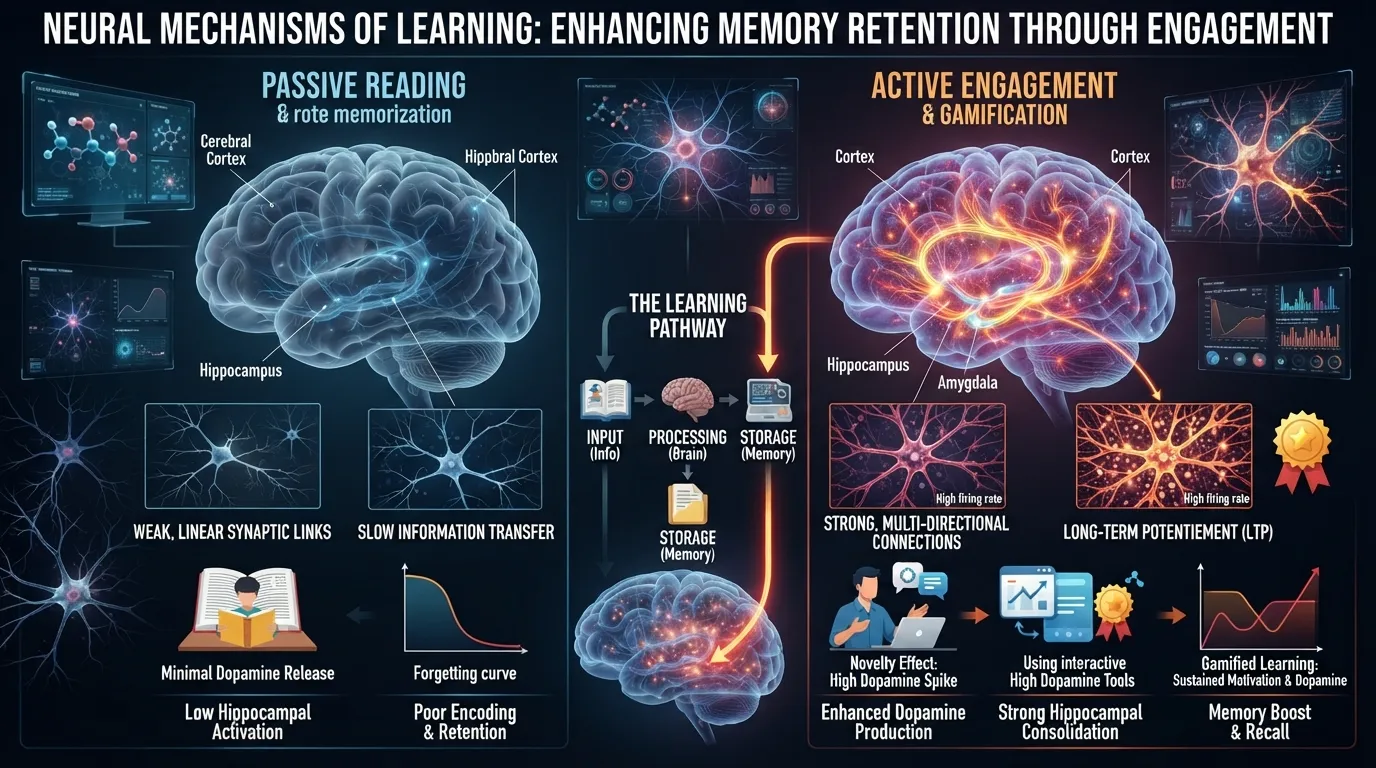
Fun study techniques work because they align with fundamental neuroscience principles, transforming learning from a grueling chore into a natural reward loop. When you introduce gamification, variability, and interactive challenges, you trigger neurological responses that hardwire information into long-term memory.
How Novelty and Dopamine Improve Memory Retention
The human brain is biologically wired to prioritize unusual, interactive, or unexpected experiences over monotonous data. When you encounter novelty through gamified learning or creative study formats, your brain releases dopamine into the hippocampus, the control center for memory consolidation.
Neurochemical activation: Dopamine acts as a natural catalyst that signals the brain to assign high priority to current experiences.
Synaptic strengthening: This chemical surge promotes long-term potentiation (LTP), physically reinforcing the synaptic connections holding new information.
Research backing: Studies highlighted in neuroscience literature on Novelty and Dopaminergic Modulation of Memory Persistence demonstrate that distinct novel triggers directly enhance memory persistence and recall.
The Role of Active Engagement vs Passive Reading
Passive reading creates an illusion of competence, tricking your mind into thinking you understand a concept simply because the words look familiar on a page. Active engagement shatters this illusion by forcing your brain to reconstruct knowledge from scratch.
Eliminating the familiarity trap: Skimming textbooks builds temporary short-term recognition rather than durable neural pathways.
The retrieval advantage: Forcing your mind to pull data outward via active recall creates robust retrieval cues, drastically reducing study time while doubling or tripling retention rates.
Friction into feedback: Interactive techniques give immediate validation, helping you target actual knowledge gaps instead of wasting hours rereading comfortable material.
Gamify Your Study Sessions
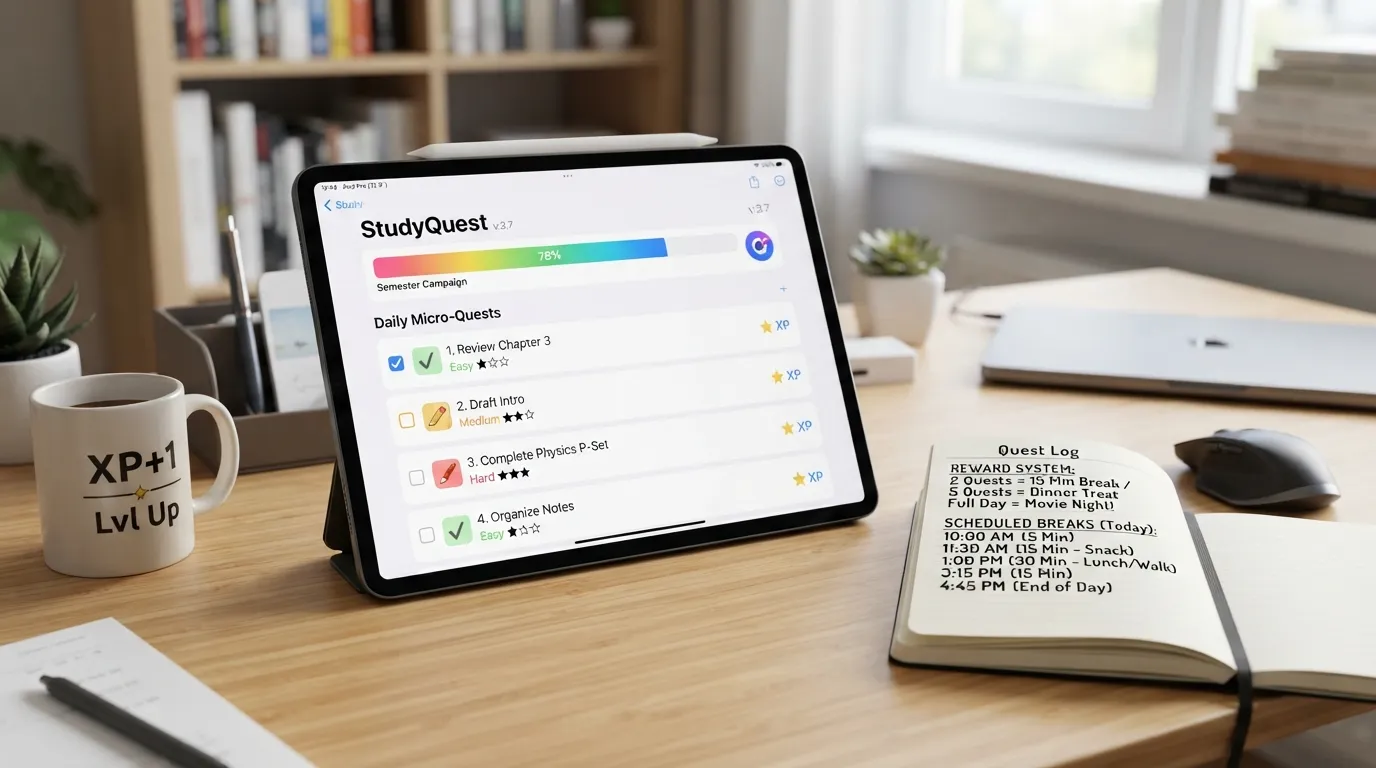
Gamification turns the tedious mechanics of studying into a rewarding game by leveraging core psychological drivers like achievement, progression, and immediate feedback. By applying game design structures to your academic workload, you replace academic dread with an intrinsic urge to level up and conquer complex material.
Create a Quest System (Micro-Goals with Difficulty Ratings)
Breaking a massive textbook chapter or a intimidating syllabus into bite-sized missions prevents cognitive overload and decision paralysis. Assign every study task a specific difficulty rating and treat completion like finishing a level in a video game.
Task breakdown: Split daunting projects into specific micro-quests, such as “master three organic chemistry reaction pathways” instead of “study chemistry.”
Difficulty multipliers: Tag each quest with a rating from Easy to Legendary to reflect the mental energy required, making low-friction tasks feel quick and satisfying.
Momentum building: Knocking out a series of low-difficulty micro-quests early in your session creates quick wins that build unstoppable momentum for heavier topics.
Track Progress Visually (Progress Bars & Timer Apps)
Visual feedback loops keep your brain anchored to the finish line by making abstract progress tangible and undeniable. Seeing a physical representation of your advancement prevents the mental drift that usually leads to procrastination.
Analog progress trackers: Use physical checkboxes or draw custom progress bars on your notes to experience the satisfying tactile reward of crossing items off.
Digital focus apps: Implement productivity tools like the Forest app to grow virtual trees during timed intervals, turning uninterrupted focus blocks into a visual garden.
Time-boxing limits: Pair your trackers with structured blocks to anchor your attention and protect against burnout during long study blocks.
Set Up a Reward System
Immediate rewards train your brain to associate studying with positive reinforcement rather than punishment or stress. Establishing a clear payout for finishing your quests cements the habit loop and keeps motivation high.
Immediate payoffs: Grant yourself small perks after finishing a micro-quest, such as a 5-minute stretch, a quick walk, or a favorite snack.
Session-end milestones: Save larger rewards—like an episode of your favorite show or guilt-free gaming—for the absolute completion of your daily study checklist.
Dopamine alignment: Tying high-value treats directly to completed output ensures your natural reward centers stay fully aligned with your academic goals.
Change Your Environment and Study Style

Your physical surroundings and sensory environment act as silent anchors for your attention and focus. Breaking out of stale routines by shifting where and how you study prevents cognitive fatigue and re-energizes your brain’s processing capacity.
Switch Study Locations (Library, Park, Café)
Staring at the same bedroom walls for hours breeds mental stagnation and triggers avoidance behaviors. Changing your study location introduces subtle contextual shifts that force your brain to stay alert and engaged with the present moment.
Contextual variety: Rotating between a quiet library floor, a sunlit park bench, or a low-buzz café prevents your brain from associating your study routine with confinement.
Environmental cues: Different settings naturally trigger different productivity modes, helping you separate the deep-focus zone from casual relaxation areas.
Novelty stimulation: A fresh backdrop keeps your sensory inputs active without causing the severe distractions that disrupt deep work.
Use Creative, Colorful Notes and Doodles
Monotone text blocks signal boredom to your visual cortex, making dense concepts feel twice as hard to parse. Integrating color coding, creative formatting, and intentional sketches converts flat data into a vibrant visual map.
Strategic color coding: Assign specific colors to key themes, formulas, or vocabulary categories to activate visual memory pathways during exams.
Concept sketching: Turn abstract definitions or processes into simple doodles or flowchart arrows to engage both hemispheres of your brain.
Spatial organization: Using colored highlighters and spatial layout boxes ensures your study notes remain readable and easy to scan at a glance.
Add Background Audio (Lofi, Instrumental, Ambient Sound)
Silence can sometimes make every tiny household noise feel like a massive distraction. Introducing predictable, lyric-free background audio masks disruptive environmental sounds and stabilizes your focus rhythm.
Lyric-free tracks: Play instrumental focus music like lofi beats, classical compositions, or cinematic scores to prevent verbal processing interference.
Ambient noise generation: Use rain sounds, cafe chatter, or brown noise generators to smooth out unpredictable auditory interruptions.
Acoustic grounding: Establishing a consistent audio cue signals your brain that it is time to lock into deep-work mode instantly.
Movement-Based Fun Study Techniques
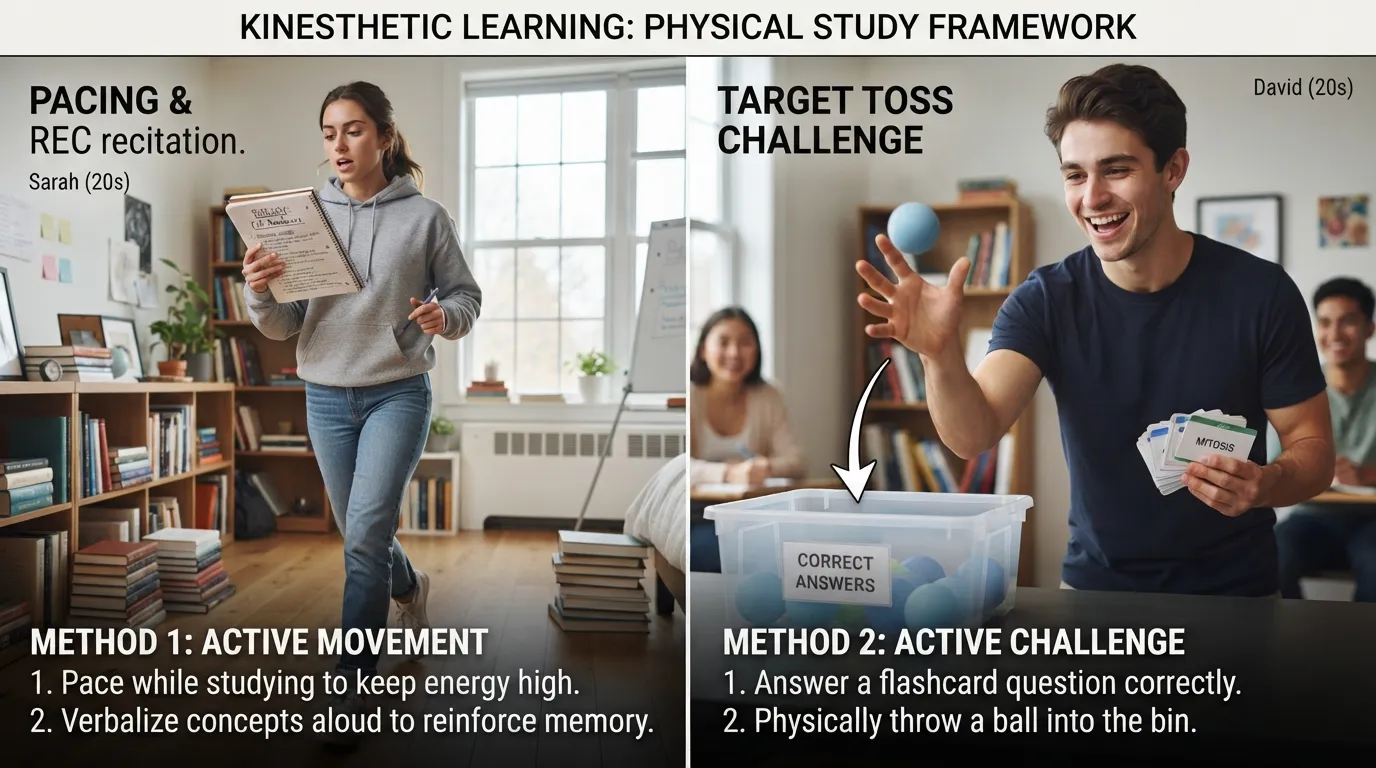
Kinesthetic learning breaks the monotony of sitting at a desk for hours by pairing physical movement with cognitive processing. Incorporating your body into your study sessions activates motor memory pathways, transforming dry facts into dynamic, unforgettable experiences.
Turn Quizzing Into a Physical Challenge (Basketball, Walking Quiz)
Sitting still while testing yourself can lead to mental fatigue and restlessness. Injecting physical motion into review sessions keeps your energy levels high while clearing away brain fog.
Hoop review: Toss a soft basketball into a laundry bin every time you answer a flashcard correctly, turning basic drills into a fun arcade game.
Walking quiz loops: Pace around your backyard or an indoor hallway while reciting definitions or listening to recorded lecture notes aloud.
Kinesthetic pacing: Matching your study stride to your pacing helps rhythmically lock key concepts into your long-term memory.
Create a Dance or Movement Routine for Key Facts
Abstract formulas, historical timelines, and sequential processes are notoriously difficult to memorize through reading alone. Translating these concepts into distinct physical gestures or mini-dance routines uses muscle memory to lock information in place.
Gesture anchoring: Assign a unique hand motion or body pose to specific vocabulary words, historical figures, or mathematical rules.
Choreographed timelines: Walk through sequential historical events by mapping each step of a room to a specific date or milestone.
Embodied recall: When trying to remember a tough fact during an exam, visualizing the physical movement you created acts as an instant shortcut to the answer.
Fun Study Techniques for Solo Learners
Studying alone does not mean you have to rely on dry reading or isolating memorization drills. Solo study techniques harness creative expression and self-directed output to keep your solo sessions engaging, interactive, and highly effective.
Teach a Pet or Stuffed Toy the Concept (Feynman-Style Technique)
The fastest way to test your true comprehension is to strip away complex jargon and explain a difficult topic in plain English. Treating an inanimate object or pet as your student exposes hidden knowledge gaps instantly.
Simplified articulation: Force yourself to teach a complex theory as if talking to a total beginner, ensuring you actually understand the underlying mechanics.
The expert illusion test: If you stumble or rely on textbook definitions mid-explanation, you have immediately located your exact knowledge gap.
Low-pressure audience: Speaking out loud to a patient, non-judgmental listener eliminates performance anxiety while building your verbal fluency on the topic.
Record a Podcast or Video Explaining the Topic
Turning yourself into a content creator transforms passive study notes into an interactive production project. Recording an audio summary or mini-video locks information into your memory through performance and active delivery.
Audio diary format: Open your phone’s voice recorder and explain a lecture topic as if hosting your own educational podcast episode.
Self-critique loop: Listen back to your recording during a walk to reinforce the material while catching areas where your explanation was unclear.
Engaging delivery: Performing for an imaginary audience keeps your energy elevated and prevents the mental drifting common in silent reading.
Fun Study Techniques for Group Learners
Collaborative learning turns studying into a social experience by leveraging peer accountability, healthy competition, and shared brainpower. Group study techniques replace passive isolation with dynamic interaction, making complex topics far easier to master together.
Host a Trivia Night or Kahoot-Style Quiz
Turning standard review sessions into a high-energy game show injects excitement and urgency into your material. Competing against peers sparks friendly rivalry that drives everyone to review and memorize details thoroughly.
Custom game design: Build interactive quizzes on platforms like Kahoot or Quizizz using test questions contributed by every member of the study group.
Scoreboard stakes: Introduce lightweight stakes, such as having the loser buy coffee or pick the next study venue, to keep engagement high.
Collaborative debrief: Review missed questions collectively to ensure everyone understands the correct underlying concepts before wrapping up.
Play Flashcard Card Games (Go Fish, Snap, Memory)
Standard flashcards can quickly feel tedious when used for endless solo drills. Repurposing physical flashcards into familiar party or card games adds a layer of unpredictable fun to vocabulary or formula reviews.
Study snap: Lay out cards face down and race to match questions with their correct answers as they are flipped over.
Go fish for concepts: Collect matching pairs of terms and definitions by asking group members for specific cards using concept descriptions.
Memory grid: Arrange terms in a grid matrix and test your group’s collective spatial memory alongside your academic recall.
Try Study-Themed Roleplay With Friends
Roleplaying breathes life into subjects like history, literature, or business by forcing you to embody the perspectives you are studying. Immersing yourselves in a scenario helps anchor abstract events into concrete human experiences.
Historical debates: Assign historical figures or political factions to different group members and debate a turning-point crisis from their exact viewpoints.
Case study simulation: Act out a business or medical scenario where each person takes on a professional role to solve an applied problem.
Immersive perspective: Stepping inside the narrative transforms flat textbook timelines into memorable, real-world stories that stick in your mind during exams.
Named Study Frameworks Explained — 3-2-1 Method & More
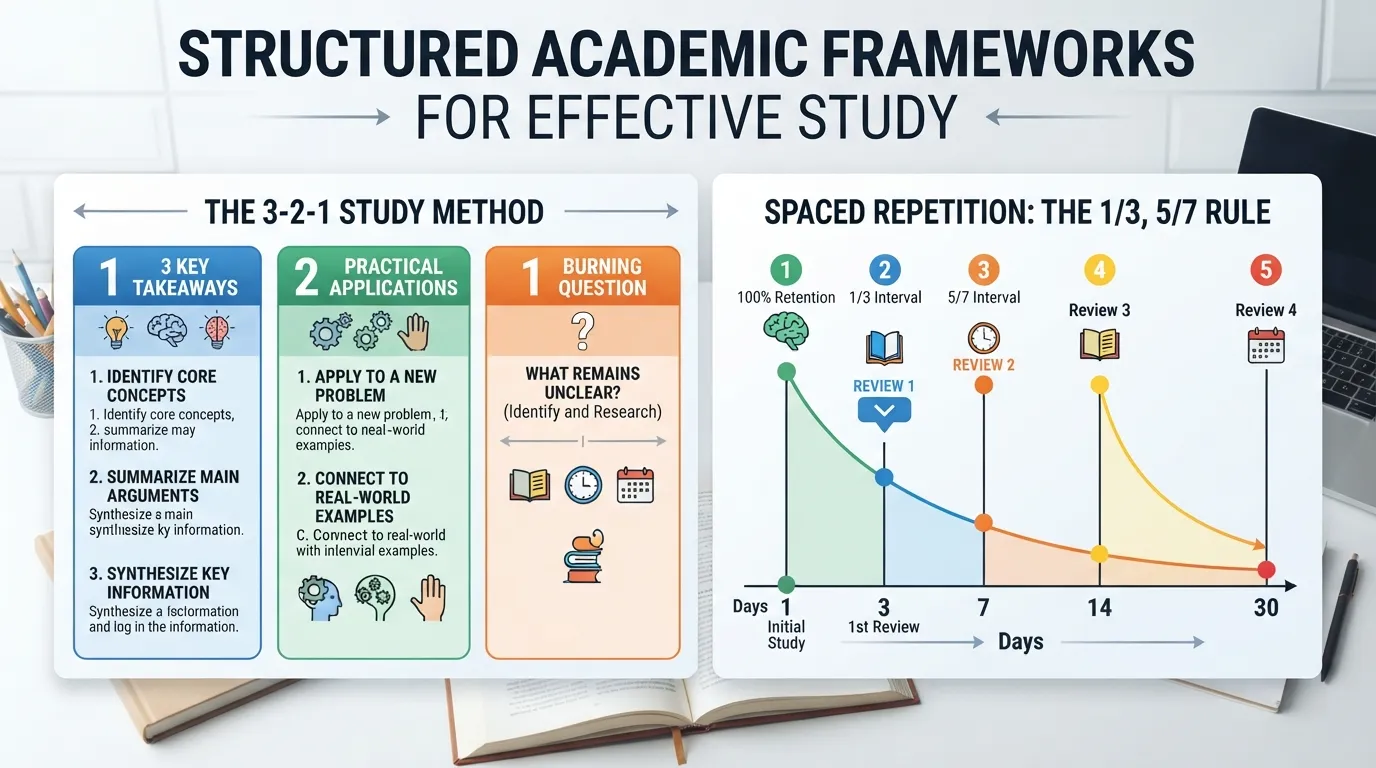
Named study frameworks provide structured, repeatable blueprints that eliminate the guesswork of how to review information. Adopting a tested system provides a clear tactical roadmap for every session, turning scattered preparation into a streamlined process.
What Is the 3-2-1 Study Method?
The 3-2-1 method is a rapid summarization framework that forces your brain to distill complex information into its most essential components. It prevents cognitive overload by chunking review sessions into three distinct cognitive tiers.
Three key takeaways: Write down three distinct concepts, facts, or definitions you learned during the session in your own words.
Two practical applications: Identify two real-world scenarios, problems, or examples where you can apply what you just learned.
One burning question: Formulate one lingering question or area of confusion to research or ask your teacher about next.
What Is the 1/3, 5/7 Rule in Studying?
The 1/3, 5/7 rule is an evidence-based scheduling framework that dictates how frequently you should revisit material to beat the forgetting curve. It optimizes your review timeline so you spend less time rereading and more time retaining.
The 1/3 interval: Review newly learned material within one-third of the time it will take until your test, ensuring early consolidation.
The 5/7 spacing: Space out subsequent review intervals at 5-day and 7-day milestones to transition data smoothly into long-term memory.
Curve mitigation: This structured spacing directly combats natural memory decay, slashing the hours needed for heavy cramming sessions.
Overview of the “7 Secret Methods” for Studying
The “7 secret methods” refer to a combination of meta-learning strategies used by top academic achievers to maximize output. Integrating these principles transforms your overall study workflow from reactive to strategic.
Metacognitive tracking: Constantly audit your own understanding instead of assuming familiarity with a topic.
Interleaving practice: Mix different subjects or problem types within a single session to build cognitive agility.
Elaborative interrogation: Continuously ask “why” and “how” a concept works rather than accepting facts at face value.
Concrete examples: Pair every abstract theory with a real, tangible example from daily life.
Dual coding: Combine visual diagrams with verbal notes to anchor concepts in two memory channels.
Spaced repetition: Use intervals rather than marathon sessions to strengthen neural pathways over time.
Active retrieval: Test your knowledge constantly without looking at the source material.
Best Apps and Tools to Make Studying Fun
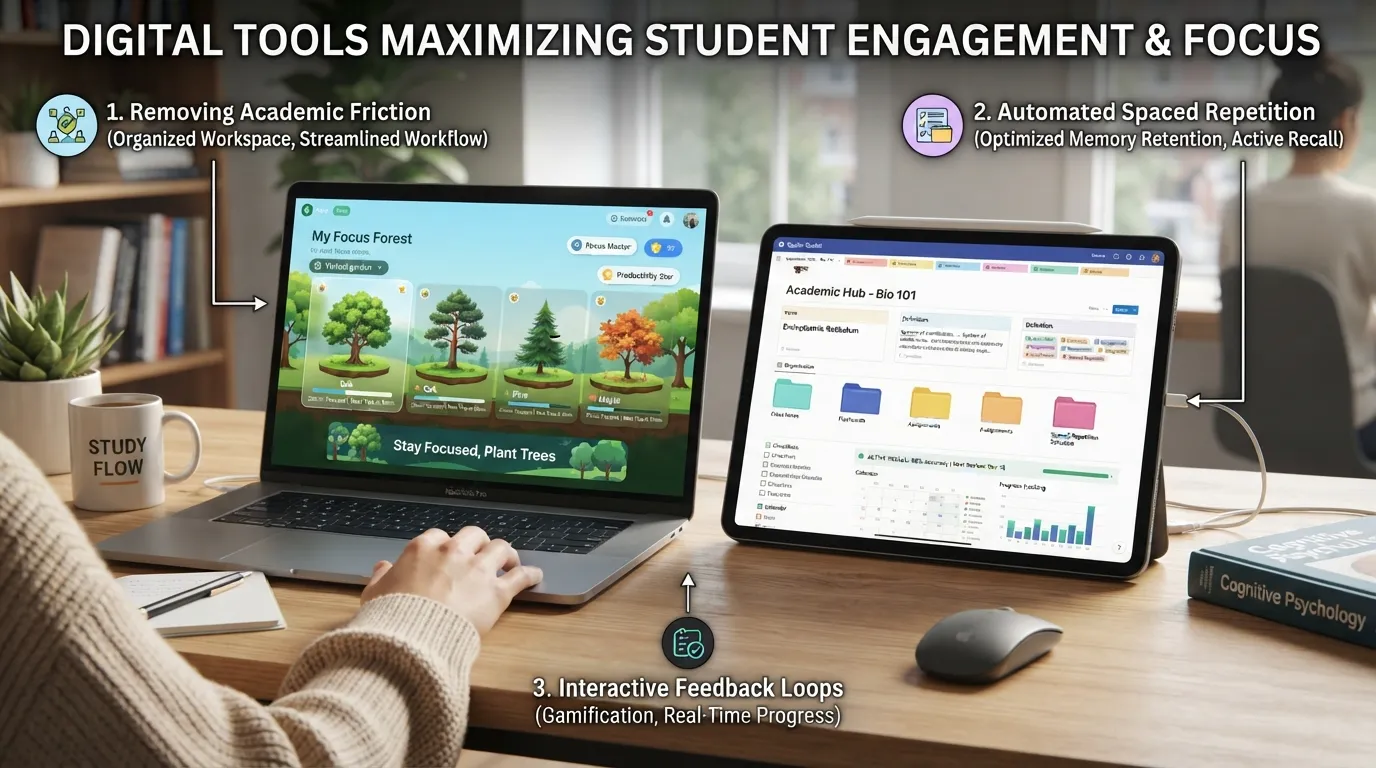
Leveraging digital tools turns modern devices from endless distraction sources into powerful engines of academic engagement. Choosing the right software setup automates friction, adds satisfying feedback loops, and replaces tedious routines with interactive experiences.
Gamification & Focus Apps (Forest, Kahoot, Quizlet)
Integrating gamified apps directly into your study workflow harnesses behavioral design principles to maintain high motivation. These platforms use points, virtual rewards, and friendly competition to make deep work feel effortless.
Forest app: Grow virtual trees by locking your phone screen during study blocks, keeping you accountable and off social media.
Kahoot & Quizlet: Transform rote vocabulary drills and practice tests into interactive game shows or flashcard battles.
Habit loops: Gamified mechanics trigger natural dopamine hits upon task completion, turning study consistency into an addictive positive habit.
Note-Taking and Organization Tools
Cluttered notebooks and disorganized files breed academic overwhelm and mental fatigue. Modern digital workspaces allow you to structure complex topics visually while keeping your study system clean and accessible.
Notion: Build custom knowledge hubs, embedded checklists, and dynamic revision timetables tailored to your exact classes.
Anki: Harness automated spaced repetition algorithms to optimize memory retention for heavy-content subjects like medicine or law.
Digital canvases: Use apps like GoodNotes or Obsidian to combine handwritten sketches, cross-linked notes, and colorful formatting into a unified study engine.
Unconventional and Unusual Study Techniques
Unconventional study techniques break the mold of traditional academic routines by introducing weird, highly creative mental loops that make information stick. When standard flashcards and textbook reading fail to hold your interest, shifting to bizarre analogies or artistic interpretations wakes up your brain.
Weird But Effective Techniques Real Students Use
Injecting absurd imagery and unconventional formats into your review sessions tricks your memory into retaining data effortlessly. The sillier or more exaggerated your study mechanisms are, the deeper they carve themselves into your long-term memory.
Absurd historical framing: Imagine historical figures or scientific elements as dramatic characters in an over-the-top reality TV show to remember complex interactions [02:13].
Sensory study rituals: Establish a specialized study drink or cozy snack that you only consume while working, transforming desk time into a dedicated mini-cafe session [05:48].
Identity romanticization: Treat your study block like you are the main character in a movie by dressing in your favorite comfy outfit and setting up an inviting micro-corner [00:15].
How to Turn Studying Into a Story or Song
Translating dry academic facts, formulas, or chronological timelines into a narrative structure or musical rhythm engages both cerebral hemispheres. Turning raw data into a creative art project shifts your mindset entirely away from stressful homework [02:29].
Formula storytelling: Weave difficult mathematical rules or chemical equations into a tiny fictional story featuring recurring characters [02:29].
Rhythmic rhyming: Set tricky vocabulary definitions or historical dates to the beat of your favorite song to leverage auditory and lyrical memory hooks.
Creative output: Shifting your focus from passive memorization to creative expression turns learning from a draining chore into an exciting artistic adventure [02:37].
How to Make Fun Study Techniques Actually Stick
Fun study techniques keep you engaged and motivated, but pairing them with proven cognitive frameworks is what ensures long-term retention. Merging creative review methods with evidence-based memory principles transforms temporary excitement into durable, exam-ready knowledge.
Combine Fun Techniques With Spaced Repetition
Relying solely on exciting, gamified study sessions without a schedule often leads to forgetting information over time. Integrating spaced repetition with your fun methods ensures your brain reviews material right before natural memory decay occurs.
Scheduled integration: Plug your gamified quizzes and flashcard card games into a digital spaced-repetition calendar or an app like Anki.
Strategic intervals: Review your creative notes and quest milestones at expanding intervals, such as 1 day, 3 days, and 7 days out.
Decay prevention: Combining engaging formats with automated spacing schedules slashes cramming time while locking facts securely into your long-term memory.
Use Active Recall Alongside Creative Methods
Creative study activities like coloring notes, writing songs, or roleplaying can sometimes create an illusion of competence if you rely entirely on passive review. Pairing these fun formats with active recall forces your brain to pull answers directly from memory without looking at prompts.
Blank-slate testing: After building a colorful concept map or storytelling routine, close your notes and try to sketch or explain the core mechanism from scratch.
Feynman validation: Use the trick-a-toy method or record a voice memo explaining the concept without referencing your creative props or study notes.
Rigorous feedback: Check your active recall output against your original study materials to expose real knowledge gaps and guarantee genuine mastery.
Frequently Asked Questions
What Are Some Fun Ways to Study?
Fun ways to study include gamifying your workload with quest systems, playing review-based card games like Go Fish with flashcards, teaching concepts to a pet using the Feynman technique, or building colorful, creative mind maps and concept sketches.
What Are the Top 5 Study Techniques?
The top five evidence-based study techniques are active recall (testing yourself without notes), spaced repetition (reviewing material over increasing intervals), the Feynman technique (explaining concepts simply), interleaving (mixing different subjects), and metacognitive self-assessment to track actual understanding.
How Can I Make Studying More Interesting?
You can make studying more interesting by changing your environment regularly, adding lyric-free ambient background music or lofi beats, turning practice questions into physical challenges, and romanticizing your study workspace with personalized lighting and designated treats.
How to Be a Top 1% Student?
Top 1% students combine rigorous active learning systems with elite consistency. They prioritize deep work over marathon hours, use spaced repetition to eliminate forgetting, audit their exact knowledge gaps ruthlessly, and maintain sustainable routines that completely prevent mental burnout.
Conclusion — Your Fun Study Action Plan
Transforming how you approach academics does not require an entire lifestyle overhaul overnight. By swapping draining routines for engaging, science-backed systems, you can completely eliminate study boredom and unlock effortless focus.
Pick two or three techniques: Choose a mix of gamification, environmental shifts, or active recall tools from this guide to test during your next session.
Build your feedback loop: Track your small wins using progress bars, timer apps, or immediate rewards to keep dopamine pathways active.
Commit to consistency: Apply your chosen methods consistently using spaced repetition to turn fleeting study motivation into permanent, long-term mastery.
Stop treating learning like an exhausting punishment and start treating it as an engaging puzzle. Pick your favorite strategy today, set up your workspace, and transform how you study for good.