Jump to:
TogglePet Discipline vs Punishment: How to Train Birds & Rabbits
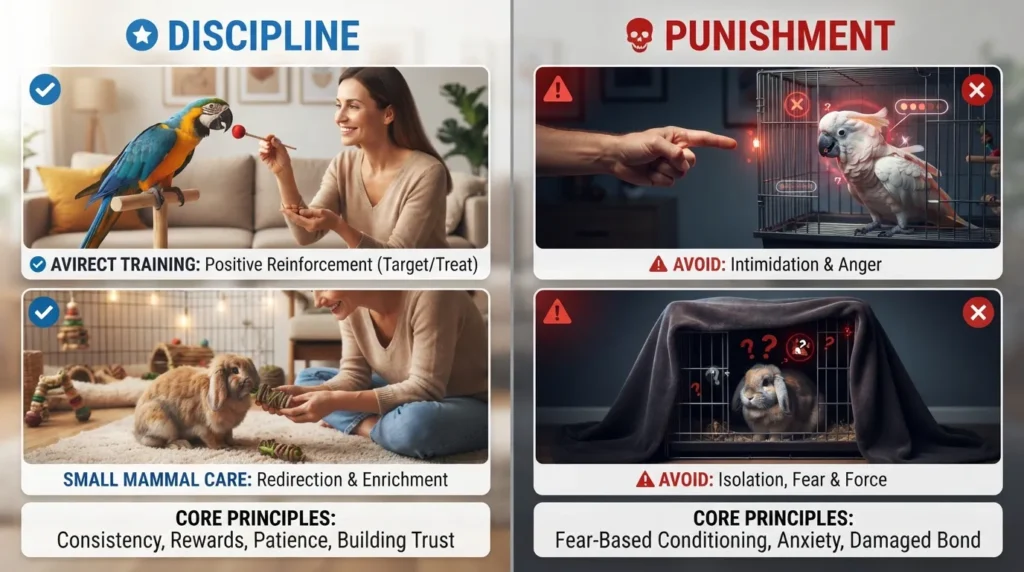
Discipline vs. Punishment
Reframing how you approach behavioral correction is the single most effective shift you can make as a pet owner. Discipline focuses on teaching, guidance, and preserving mutual trust, whereas punishment relies on fear, intimidation, and reactive alpha-dog or dominance myths that damage the human-animal bond.
What “Discipline” Really Means for Pets (Not Punishment)
Effective discipline is proactive, educational, and species-appropriate. Whether you are working with dogs, cats, birds, or rabbits, true discipline teaches animals what to do instead of merely reacting when they make a mistake.
Rooted in Guidance: Discipline provides clear boundaries through predictable routines and consistent cues, helping pets navigate human environments with confidence.
Preserves Trust: Using positive reinforcement and redirection ensures your pet looks to you for safety and instruction rather than shrinking away in fear.
Species-Specific Understanding: Bird behavior and rabbit behavior differ vastly from canine or feline psychology; discipline must respect these natural instincts rather than expecting human-like moral reasoning.
Long-Term Behavioral Shift: While punishment might suppress an unwanted action temporarily out of anxiety, proper training builds alternative habits that last a lifetime.
The 3 Golden Rules of Pet Discipline
Rule 1: Redirect Immediately — Interrupt unwanted behaviors by offering an acceptable alternative instantly, such as giving a chew toy when a puppy nips or a foraging puzzle when a rabbit chews furniture.
Rule 2: Never Use Fear — Avoid shouting, physical corrections, or isolation, as these tactics destroy trust, elevate stress hormones, and often escalate aggression or hiding.
Rule 3: Reward the Right Choice — Immediately reinforce desired actions using high-value treats, praise, or play to cement the correct behavior in your pet’s memory.
Why Do Birds and Rabbits Misbehave?
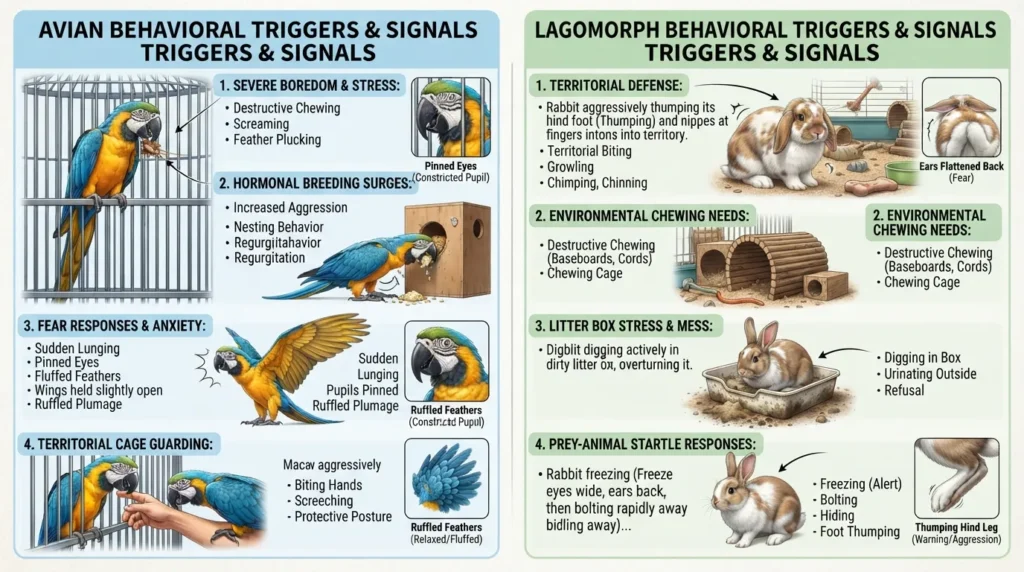
Behavioral issues in exotic pets rarely stem from spite or stubbornness. Pinpointing the root biological, environmental, or psychological trigger is the first step toward restoring harmony without resorting to punitive measures.
Common Triggers for Bad Behavior in Birds
Avian misbehavior is typically an outward symptom of an unmet physical or psychological need. Understanding these core drivers prevents you from misinterpreting a cry for help as disobedience.
Severe Boredom: Highly intelligent species like parrots require constant mental stimulation, or they will resort to screaming, feather-plucking, and furniture chewing.
Hormonal Surges: Seasonal changes and improper daylight cycles trigger breeding hormones, leading to territorial nipping, cage defensiveness, and aggressive lunging.
Fear and Trauma: Sudden environmental changes, unfamiliar people, or past mishandling cause birds to bite out of a primal instinct for self-preservation.
Territorial Instincts: Guarding a favorite perch, toy, or cage mate is a natural survival mechanism that easily mimics malicious aggression to human handlers.
Common Triggers for Bad Behavior in Rabbits
Rabbits communicate distress through actions that frustrate owners, such as nipping, digging, or spraying. These habits almost always tie back to environment and instinct.
Territorial Defense: Unspayed or unneutered rabbits fiercely protect their domain, resulting in lunging, grunting, and scratching when hands enter their enclosure.
Environmental Boredom: Without adequate chew toys, tunnels, and foraging opportunities, rabbits redirect their natural chewing instincts onto baseboards, carpets, and furniture.
Litter Box Stress: Dirty living conditions, a suddenly relocated litter box, or underlying urinary tract pain will cause a rabbit to eliminate outside of its designated zone.
Fear and Startle Responses: As prey animals, rabbits panic easily when approached too quickly from above, leading to defensive biting or violent thumping.
How to Tell If Your Bird or Rabbit Is Angry or Stressed
Recognizing subtle warning signs allows you to de-escalate a situation before a bite or scratch occurs. Watch closely for these specific body language signals.
Avian Warning Signs: Pinned eyes, ruffled neck feathers, tail-faffing, hissing, and leaning forward aggressively indicate that a bird needs immediate space.
Lagomorph Warning Signs: A low-pitched grunt, flattened ears against the back, twitching tails, and sharp backward lunges mean a rabbit is feeling threatened or extremely angry.
The Freeze Response: Both birds and rabbits will suddenly freeze, holding their bodies tense and unblinking, which signals peak stress rather than calmness.
How to Discipline a Bird — Step-by-Step Method
Disciplining a bird requires patience, emotional control, and precise timing. Because avian pets view the world through a completely different lens than mammals, successful training relies on clear boundaries and reward-based systems rather than intimidation.
Step 1: Use a Firm, Calm “No” (Not Yelling)
Your tone of voice sets the emotional baseline for your bird. When your pet engages in unwanted behavior like nipping or screaming, respond immediately with a low, firm, and steady “No” without raising your volume.
Avoid Shouting: Yelling sounds like an exciting flock alarm to a bird, which will often encourage them to scream louder or bite harder.
Keep Energy Neutral: Deliver the verbal cue calmly and detach your attention from the bird instantly to show that the action yields zero rewards.
Consistency is Vital: Use the exact same word and tone every single time so your pet quickly associates the sound with a boundary.
Step 2: Redirect Instead of Punish
Redirection is the cornerstone of positive reinforcement training. When your bird starts chewing on furniture, biting your fingers, or screaming for attention, immediately shift their focus to an approved activity.
Offer an Alternative: Give your bird a foraging toy, a wooden block to chew, or a different perch to satisfy their natural instincts safely.
Change the Environment: If excitement or hormonal agitation triggers the behavior, move your bird to a quieter area or cover part of the cage briefly to let them decompress.
Keep Interventions Neutral: Do not make a big deal out of the handover; simply replace the forbidden item with the correct one seamlessly.
Step 3: Ignore Attention-Seeking Behavior (Bite/Scream Response)
Many birds repeat bad behaviors simply because they get a massive reaction from you. Screaming, feather-plucking, and aggressive lunging are often high-value tickets to getting your immediate focus.
Enforce a Strict Extinction Burst: When you stop reacting, the behavior may briefly get worse before it gets better; stay strong and offer zero eye contact, talking, or movement.
Turn Your Back: Pivot your body away or walk out of the room for thirty seconds to show that bad behavior causes your presence to vanish entirely.
Reward the Silence: The instant your bird stops screaming or biting, turn back around and reward the quiet behavior with calm praise.
Step 4: Reward Positive Behavior Immediately
Training only works if your pet understands what you actually want them to do. Reinforce good choices instantly to build lasting neural pathways.
Timing is Everything: Deliver a high-value treat (like a tiny piece of millet or a favorite seed) or enthusiastic verbal praise within two seconds of the desired action.
Catch Them Being Good: Look for moments when your bird is playing quietly or stepping up nicely and reward those moments proactively.
Phase Out Continuous Treats: Once a behavior becomes reliable, transition from constant food rewards to intermittent praise and head scratches.
The 3-3-3 Rule Explained (and how it applies to discipline/settling routines)
When introducing a new bird to your home or resetting a fractured relationship, the 3-3-3 rule serves as a crucial timeline for adjustment. Understanding these phases prevents you from rushing discipline before trust is established.
First 3 Days: Total decompression. Your bird is overwhelmed by the new environment; focus on quiet observation, routine feeding, and zero heavy training or forced handling.
First 3 Weeks: Routine building. Your pet begins to learn household sounds, schedules, and basic boundaries; introduce gentle redirection and start establishing trust.
First 3 Months: Full integration. Your bird feels secure, understands your expectations, and responds consistently to reward-based discipline and clear household rules.
Fixing Specific Bad Behaviors in Birds
Resolving persistent avian bad habits requires a targeted approach that addresses the underlying motivation rather than just the symptom. By shifting your response strategy, you can break unwanted cycles without damaging your bond.
How to Stop a Bird From Biting
Biting is a primary communication tool for parrots and other pet birds, often triggered by fear, hormonal shifts, or a desire to make hands go away.
Remove the Reward: If you pull your hand back quickly or yell, your bird learns that biting is an effective way to control your actions. Keep your hand steady and neutral.
Master the Wobble Balance: Gently lower your hand or arm slightly when your bird bites to destabilize their footing safely without causing pain or fear.
Identify Triggers: Pay attention to body language cues like pinned eyes or fluffed feathers so you can back off before a bite occurs.
How to Stop a Bird From Screaming
Excessive vocalization is frequently an attention-seeking behavior or an expression of environmental boredom.
Never Reward the Noise: If you run over and yell at a screaming bird, you have just given them the exact attention they craved.
Enforce Timed Silence: Walk out of the room completely when the screaming starts, returning only after the bird has been quiet for at least thirty seconds.
Increase Mental Engagement: Provide foraging boxes, complex puzzle toys, and rotate their toy selection weekly to eliminate boredom-driven vocalizations.
How to Stop a Bird From Chewing Furniture
Chewing is an instinctual need for parrots and other exotic pets that cannot be trained out of them, meaning you must redirect it rather than punish it.
Provide Approved Alternatives: Supply plenty of shreddable cardboard, natural wood blocks, and seagrass mats in designated play areas outside the cage.
Block Access Points: Use pet-safe deterrent sprays or physical barriers like PVC guards to protect valuable baseboards and household trim.
Supervise Free-Roaming Time: Keep a close eye on your bird whenever they are out of the enclosure to interrupt unwanted chewing instantly.
Is It Normal for a Parrot to Bite and Scream?
It is entirely normal for parrots, quaker parrots, and other companion birds to exhibit biting and screaming behaviors. Because birds lack human moral frameworks, they do not understand malicious wrongdoing; these actions are simply instinctive survival tactics, territorial instincts, or calls for connection. Recognizing that your bird is not acting out of spite is the ultimate key to maintaining patience.
Why Punishment Methods Fail (And What to Avoid)
Confrontational training methods and punitive tactics actively destroy the human-animal bond. When owners rely on intimidation, pets do not learn correct behavior; instead, they learn to fear their handlers, leading to suppressed stress and unpredictable defensive aggression.
Why Yelling Doesn’t Work
Raising your voice at a stressed bird or rabbit feels completely counterintuitive to your pet’s natural instincts.
Misinterpreted as Flock Calling: Birds perceive shouting as an exciting flock alarm, which frequently encourages them to scream louder rather than quiet down.
Elevates Stress Hormones: Sudden loud noises spike adrenaline and cortisol levels in prey animals, triggering a panic response rather than a teaching moment.
Destroys Communication: Your pet learns to associate your voice with danger, making future training sessions infinitely more difficult.
Why Covering the Cage as Punishment Backfires
Throwing a blanket over a bird’s cage to silence bad behavior is an outdated practice that causes severe psychological harm.
Creates Confusion and Anxiety: Cages should represent a safe haven; turning them into a dark isolation chamber creates severe confusion and fear.
Fails to Address the Root Cause: The animal cannot connect the sudden darkness to their previous action, making the punishment entirely meaningless.
Triggers Cage Aggression: Over time, penalized pets become hyper-defensive of their enclosures, leading to increased biting and lunging when hands approach.
Why Water Spraying Damages Trust
Using spray bottles to blast water at misbehaving birds or rabbits is a harsh, aversive tactic that erodes trust instantly.
Targeted Animosity: Animals quickly learn to associate the spray bottle—and your hands holding it—with sudden pain and danger.
Health Risks: Spraying water directly into a bird’s face can startle them into aspirating fluid or damaging delicate nasal structures.
Only Suppresses Temporarily: The behavior stops out of sheer terror rather than understanding, often resurfacing the moment you put the bottle down.
Why Hitting or Physical Correction Is Never Acceptable
Physical corrections, tapping a bird’s beak, or pushing a rabbit down cross the line into outright abuse.
Fragile Anatomy: Exotic pets have delicate bones and sensitive nervous systems that are easily injured by physical force.
Promotes Defensive Biting: Cornered or physically corrected pets will defend themselves with increased aggression, turning minor nipping into severe attacks.
Destroys Mutual Trust: True discipline relies on guidance and reward; physical violence teaches your pet that you are an unpredictable predator rather than a safe caregiver.
How to Rebuild Trust With a Bird That Won't Bond
Rebuilding a fractured relationship with a distrustful or traumatized bird requires immense patience and a complete reset of your interaction style. When a pet has learned to view human hands as a threat, you must systematically prove that your presence equals safety, predictability, and rewards.
Step-by-Step Trust Rebuilding Roadmap
Moving too fast is the number one reason bonding efforts fail. Follow this structured roadmap to bridge the gap at your bird’s pace.
Phase 1: Desensitization to Presence: Spend 15 to 20 minutes sitting quietly near the cage reading or talking softly without making direct eye contact or attempting to touch your bird.
Phase 2: Target Feeding Through Bars: Offer high-value treats exclusively through the cage bars, allowing your bird to approach you voluntarily without any pressure to step up.
Phase 3: Open-Door Hand Feeding: Transition the treat-delivery process to an open cage door, letting your pet lean forward to take food directly from your motionless palm.
Phase 4: Voluntary Step-Up Training: Introduce a T-perch or your finger only after your bird eagerly approaches your hand, letting them choose when to step onto it.
Daily Bonding Habits That Work
Consistent micro-interactions build positive neural pathways much faster than infrequent, lengthy handling sessions.
Talk in Soft Tones: Narrate your daily activities around the house using a gentle, high-pitched vocal cadence to soothe your bird’s natural prey instincts.
Share Safe Meals: Eat healthy snacks like leafy greens or grains near your bird, letting them watch you enjoy food to trigger natural flock-eating behavior.
Respect Body Language Retreats: If your bird pins its eyes, backs away, or leans away from you, immediately stop your advance to honor their boundary.
Signs Your Bird Is Starting to Trust You Again
Watch closely for these subtle behavioral indicators that prove your rehabilitation efforts are succeeding.
Curious Head Tilting: A relaxed posture with a tilted head and pinned pupils focused softly on you indicates active, safe curiosity rather than fear.
Fluffing and Feather Preening: If your bird feels comfortable enough to preen, stretch a wing, or nap in your immediate presence, their stress levels have dropped significantly.
Vocal Greeting: Chirping or calling out softly when you enter the room shows that your bird associates your arrival with positive expectations.
How to Discipline a Bunny or Rabbit — Step-by-Step Method
Disciplining a rabbit requires an entirely different approach than training dogs or cats because lagomorphs are sensitive prey animals that do not respond to verbal scolding or physical punishment. Effective bunny discipline focuses on environmental management, clear redirection, and positive reinforcement to guide behavior without causing fear.
Step 1: Understand Rabbit Body Language Before Correcting
Before you attempt to correct any unwanted action, you must read your rabbit’s physical signals to understand the emotional driver behind the behavior.
Recognize Fear and Aggression: Flattened ears, low-pitched grunts, and sharp backward lunges indicate that your rabbit is terrified or defending its territory, not acting out of malice.
Identify Boredom Cues: Tossing toys, chewing baseboards, or digging at carpets usually means your rabbit lacks adequate mental stimulation and environmental enrichment.
Avoid Sudden Over-Correction: Never chase or corner a frightened rabbit, as this shatters trust and triggers defensive biting or violent thumping.
Step 2: Redirect Chewing and Digging Behavior
Rabbits have continuously growing teeth and an instinctive biological drive to chew and dig, making punishment entirely ineffective against these natural habits.
Provide Safe Chew Outlets: Supply plenty of untreated willow balls, seagrass mats, apple wood sticks, and cardboard digging boxes filled with shredded paper.
Block Off Household Hazards: Protect baseboards, electrical cords, and furniture legs using plastic cord protectors, baby gates, or specialized grid barriers.
Interrupt Instantly: If your rabbit starts chewing forbidden items, gently clap your hands once, say a firm “No,” and immediately place an approved chew toy in front of their mouth.
Step 3: Handle Biting and Nipping The Right Way
Nipping is common in unspayed or unneutered rabbits, as well as young bunnies learning their strength, but reacting with anger will only escalate the conflict.
Mimic Littermate Feedback: When a rabbit nips too hard, emit a sharp, high-pitched squeak or say “Ouch” just like another rabbit would, then immediately withdraw your attention for one minute.
Never Retaliate: Do not flick your rabbit’s nose or push them away violently, as this teaches them that human hands are dangerous predators.
Check for Hormonal Drivers: Spaying and neutering virtually eliminates hormonal nipping and territorial aggression in the vast majority of domestic rabbits.
Step 4: Solve Litter Box Regression and Territorial Marking
When a previously litter-trained rabbit starts urinating or dropping pellets outside the box, it signals a stress trigger, medical issue, or territorial dispute.
Clean Thoroughly: Eliminate lingering urine odors using an enzymatic cleaner to prevent your rabbit from returning to the same unauthorized spot.
Add Extra Boxes: Place additional litter boxes in the exact corners where your rabbit prefers to eliminate until good habits are re-established.
Block Restricted Zones: Limit free-roaming access temporarily if your rabbit is marking new rooms, gradually expanding their territory as reliable habits return.
Positive Reinforcement Techniques for Rabbits
Rabbits thrive on routine, predictability, and high-value rewards when learning new household expectations.
Use High-Value Treats: Reinforce desired actions instantly using tiny pieces of fresh herbs like cilantro, a slice of carrot, or a single oxbow pellet.
Reward Calm Approached: Offer a treat whenever your rabbit approaches you voluntarily without food in your hand, building a positive association with your presence.
Praise Quiet Exploration: Speak in a soothing, gentle tone and offer light head strokes when your rabbit uses their designated toys, cementing good habits naturally.
Safety, Bite Risk, and When to Seek Professional Help
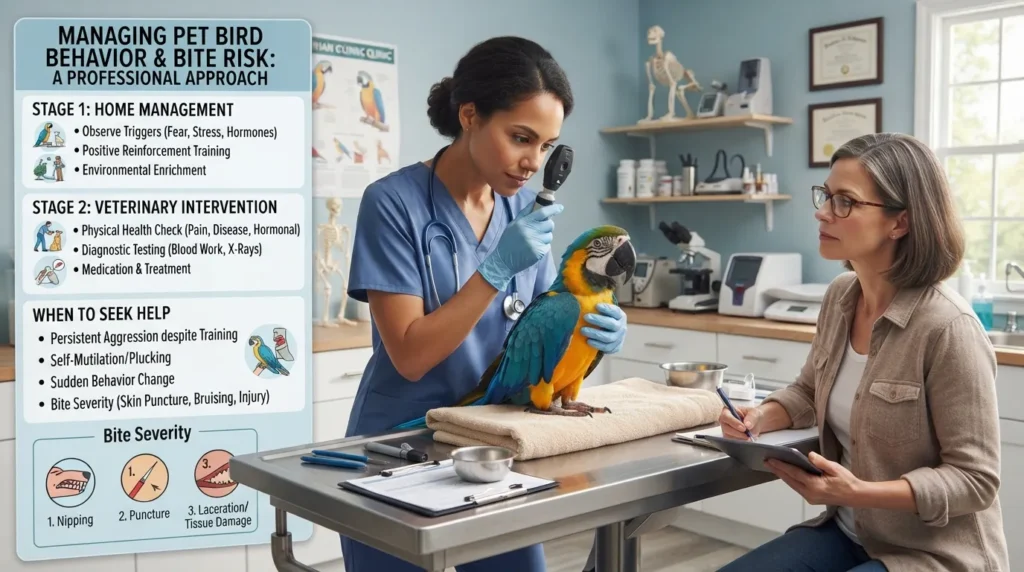
Recognizing the physical limitations of your handling techniques protects both you and your pet from injury. While minor nips are a normal part of communicating with exotic pets, severe aggression requires immediate risk management and expert intervention.
How Serious Can a Parrot or Rabbit Bite Be?
Parrots possess tremendous beak strength capable of splintering hard wood, meaning a defensive bite can break human skin, cause deep bruising, or lacerate tissue. Rabbit bites and scratches can similarly pierce skin and introduce bacteria, though their primary risk involves defensive lunges that lead to accidental handler drops or startle injuries.
Infection Risks: Puncture wounds from pet beaks or teeth introduce oral bacteria that can quickly cause localized swelling or cellulitis if not washed immediately.
Tissue Trauma: Larger hookbills like Macaws or Amazons can inflict severe soft-tissue damage if a bite is mishandled or panicked.
Prevention First: Proper handling, reading pre-bite body language, and avoiding confrontational reactions remain your best defense against serious injury.
Warning Signs That Require a Vet or Certified Behaviorist
Certain escalation triggers move far beyond standard training adjustments and demand immediate professional assistance.
Unprovoked Attacks: If your bird or rabbit lunges or bites without any visible environmental trigger, underlying pain or neurological stress may be at play.
Severe Self-Mutilation: Feather-plucking in birds or excessive over-grooming and barbering in rabbits indicate extreme psychological distress requiring veterinary oversight.
Sudden Personality Reversals: A previously tame animal turning completely hostile overnight usually signals a hidden illness or injury.
When Aggression Is a Medical Issue, Not a Behavior Issue
Many chronic behavioral problems in exotic pets stem directly from undiagnosed physical ailments rather than stubbornness or bad habits. Hormonal imbalances, nutritional deficiencies, arthritis, and dental malocclusion in rabbits routinely manifest as sudden defensive aggression.
Consult an experienced avian and exotic veterinarian for a thorough physical examination when behavior shifts abruptly; resources like the Winter Park Veterinary Hospital Avian Care Guide offer comprehensive medical and dietary baselines to help you monitor your pet’s health.
Partnering with a certified avian or exotic animal behaviorist ensures that any customized rehabilitation plan addresses both physiological wellness and long-term psychological stability.
Frequently Asked Questions
What Is the 3-3-3 Rule for Birds?
The 3-3-3 rule is a general adjustment timeline used when bringing a new bird home or resetting a relationship. It outlines three distinct phases of adaptation: the first 3 days of total decompression, the first 3 weeks of routine building and basic trust, and the first 3 months of full household integration and consistent behavioral expectations.
What Do Birds Do When Angry?
Angry birds display unmistakable body language warnings to signal that they need immediate space. Common indicators include pinning their eyes, raising their crest or neck feathers, hissing, tail-faffing, leaning forward aggressively, and lunging or biting when hands approach.
How to Stop a Bird From Being Aggressive?
Stopping avian aggression requires removing the triggers that cause defensive behavior and utilizing positive reinforcement. You can stop aggression by avoiding punishment, identifying hormonal or fear-based triggers, ignoring attention-seeking bites, and redirecting your bird toward approved toys and activities.
How to Know If a Bird Is Angry?
You can identify an angry bird by watching for physical tension and protective posturing. Warning signs include constricted or pinned pupils, fluffed neck feathers, a low body stance against the perch, snapping the beak, and making sharp hissing sounds.
Why Do Birds Suddenly Become Aggressive?
Sudden avian aggression is typically driven by biological changes, environmental shifts, or health issues. Common triggers include hormonal surges during breeding season, severe boredom, past trauma or fear, territorial cage guarding, or underlying physical pain.
Is It Possible to Discipline a Parrot Without Hitting It?
Disciplining a parrot without physical force is not only possible, but it is the only effective method for building long-term trust. Non-violent discipline relies on calm verbal cues, immediate redirection to safe toys, ignoring attention-seeking behaviors, and rewarding positive choices.
What Bird Is Most Aggressive?
Certain parrot species possess stronger tendencies toward territorial or hormonal aggression if not socialized correctly. Large hookbills like Macaws, Cockatoos, and Amazon parrots, as well as smaller species like Quaker parrots, are frequently cited for strong-willed or defensive behavior during maturity.
How to Calm Down a Stressed Bird?
Calming a stressed bird requires creating a predictable, quiet, and secure environment. You can soothe a frightened bird by speaking in a soft, gentle voice, moving slowly, dimming room lighting, lowering cage placement, and leaving them undisturbed to decompress.
Building a Trust-Based Relationship
Establishing a harmonious home with an exotic pet relies entirely on trust-based training rather than fear or domination. True behavioral correction happens when you proactively guide your bird or rabbit toward good choices, reinforcing their natural instincts with patience and positive reinforcement.
Responsible pet ownership means recognizing that you are the architect of your pet’s environment. Adjusting your own reactions ensures your pet feels secure, respected, and eager to learn rather than defensive and anxious.
Quick Recap Checklist: Dos and Don’ts of Pet Discipline
Keep these core principles in mind to navigate behavioral challenges safely and effectively. Acting as a calm, predictable guide prevents minor misunderstandings from escalating into permanent trust issues.
Do use immediate redirection: Swap unacceptable items with safe, species-appropriate chewing or foraging toys the instant bad behavior starts.
Do reward good choices: Deliver high-value treats and soft praise within two seconds of a positive action to build strong neurological associations.
Do respect body language: Step back immediately when your bird pins its eyes or your rabbit thumps its foot, honoring their boundaries before a bite occurs.
Don’t use physical force: Tapping beaks, pushing, or hitting will permanently destroy your bond and trigger severe defensive aggression.
Don’t use scare tactics: Yelling, covering cages during the day, or spraying water elevate stress hormones and fail to teach alternative behaviors.
Don’t ignore the environment: Avoid punishing an animal for acting out when the root cause is actually extreme boredom, hormonal surges, or cage-bound frustration.
Final Practical Tip From Real Experience
As a quick positive reinforcement recap, the most impactful change you can make today is tracking your pet’s specific environmental triggers. Exotic animals rarely act out randomly; there is almost always a preceding pattern.
Keep a behavior log: Write down exactly what happened, what time it was, and who was in the room right before a bite or screaming fit occurred to identify hidden stressors.
Manage your own energy: Birds and rabbits are highly empathetic prey animals; if you approach a training session frustrated or tense, your pet will instantly mirror that anxiety.
Celebrate micro-wins: Focus entirely on small daily improvements, such as a gentle treat acceptance or a quiet moment on a perch, to cement long-lasting behavioral success.
Kittisak Wattanakul
Kittisak Wattanakul is the Discipline Editor at Holistic Wellbeing Living. He writes about routines, focus, consistency, and practical follow-through. With nine years of experience creating personal-growth content, Kittisak helps readers build realistic systems for steady progress without extreme productivity pressure.