Jump to:
ToggleHow do you handle stress effectively in life and work

What "Handling Stress Well" Really Means
Handling stress well is not about suppressing frustration or maintaining a robotic lack of emotion under pressure. True stress tolerance involves emotional discipline, cognitive flexibility, and the ability to maintain functional composure when faced with high-stakes demands or unforeseen disruptions.
What Does “Handling Stress Well” Actually Mean?
Effective coping ability goes far beyond simply enduring difficult situations. It requires a strategic balance of physiological regulation and problem-solving efficiency to prevent burnout and sustain performance.
Emotional Discipline: Acknowledging stress responses without letting negative emotions dictate immediate reactions or impair decision-making.
Cognitive Flexibility: Rapidly shifting focus from the emotional trigger to actionable, solution-oriented steps when pressure mounts.
Physiological Composure: Managing physical tension signals—such as elevated heart rate or shallow breathing—to stay clear-headed.
Adaptive Recovery: Using structured downtime and mental boundaries to bounce back fully after high-pressure events conclude.
Two Ways People Ask This Question (Self-Reflection vs. Job Interview)
The intent behind exploring this concept typically falls into two distinct categories, each requiring a different approach to evaluation and application.
Self-Reflection Path: Individuals seeking personal growth look inward to evaluate their current coping mechanisms, identify stress triggers, and build stronger psychological resilience.
Job Interview Path: Candidates preparing for behavioral questions look outward to frame their composure, problem-solving skills, and stress tolerance in a way that appeals directly to hiring managers.
Divergent Focus: While the self-reflection path centers on inner well-being and long-term sustainability, the interview path prioritizes external performance, accountability, and professional reliability.
Self-Assessment — How Well Do You Actually Handle Stress?
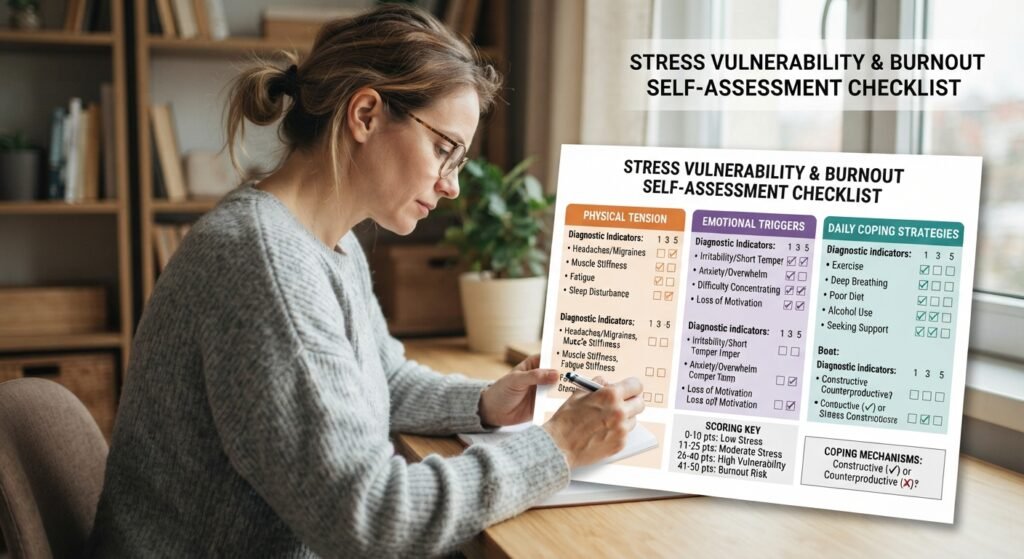
Evaluating your personal coping ability starts with honest self-awareness. Recognizing how your mind and body react to pressure helps determine whether your current stress response is adaptive or pushing you toward burnout.
Signs You Handle Stress Well
True resilience shows up in your daily habits and recovery speed. People who manage pressure effectively exhibit distinct behavioral patterns that protect their mental clarity.
Rapid Emotional Reset: Acknowledging frustration quickly without letting negative moods derail the entire day or project.
Proactive Problem-Solving: Focusing immediate energy on controllable variables rather than complaining about uncontrollable external factors.
Physical Equilibrium: Maintaining stable sleep patterns, regular eating habits, and steady energy levels even during demanding weeks.
Healthy Boundaries: Successfully disconnecting from work or obligations during personal time to allow complete mental recovery.
Signs You’re Struggling to Cope (First Signs of Stress)
Recognizing early warning signs prevents acute pressure from turning into chronic exhaustion. According to clinical data compiled by MedlinePlus, individuals often display specific physical symptoms of stress and emotional indicators when their coping capacity reaches its limit.
Physical Symptoms of Stress: Persistent tension headaches, unexplained muscle stiffness in the neck or shoulders, and recurring digestive discomfort.
Cognitive Fog: Noticeable forgetfulness, racing thoughts, and an inability to maintain focus on routine tasks.
Emotional Volatility: Heightened irritability, sudden mood shifts, and a pervasive feeling of being overwhelmed by minor inconveniences.
Behavioral Shifts: Withdrawing from social interactions, procrastination, or relying on caffeine and alcohol to push through the day.
Quick Self-Check: Rate Yourself in 5 Questions
Use this practical, scannable checklist to evaluate your current stress vulnerability. Answer yes or no to gauge where you stand right now:
1. Sleep Quality: Do you consistently wake up feeling exhausted or experience frequent nighttime awakenings due to racing thoughts?
2. Physical Tension: Do you carry chronic physical tightness, such as a clenched jaw, tight shoulders, or stress-related headaches?
3. Decision Fatigue: Do simple, everyday choices feel disproportionately difficult or exhausting by midday?
4. Emotional Baseline: Do minor disruptions or unexpected changes instantly trigger disproportionate frustration or anger?
5. Disconnection: Do you find it nearly impossible to completely stop thinking about work or obligations when you are supposed to be resting?
Core Strategies to Handle Stress and Pressure
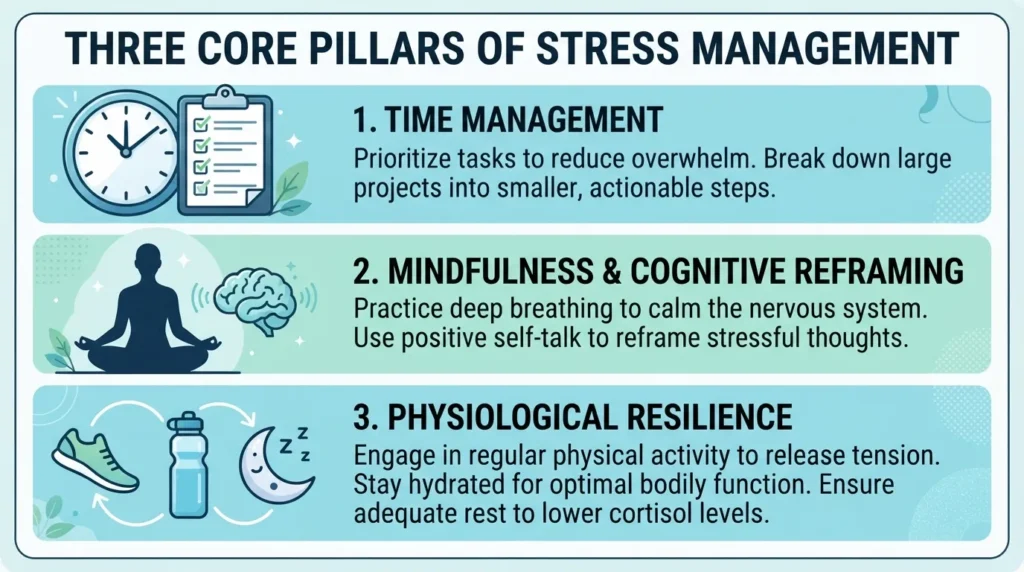
Managing high-pressure situations requires a mix of structural planning and immediate tactical adjustments. Effective stress management techniques prevent daily demands from turning into chronic overwhelm by focusing your energy on what you can actually control.
Prioritize: Sort Tasks by Urgency and Importance
When multiple deadlines hit at once, treating every task as an emergency fuels panic. Effective prioritization requires separating what truly moves the needle from what merely feels urgent in the moment.
The Matrix Method: Evaluate tasks based on urgency and long-term impact to stop reactive firefighting.
Eliminate Low-Value Noise: Delegate, postpone, or drop tasks that consume energy without delivering meaningful results.
Single-Tasking Focus: Direct full attention to the highest-priority item until it reaches a natural stopping point.
Deconstruct: Break Big Problems into Small Steps
Massive projects or crisis situations trigger stress because the brain perceives the entire scope as an insurmountable threat. Breaking complexity down restores a sense of agency and lowers cognitive load.
Micro-Milestones: Divide a daunting assignment into actionable steps that take less than thirty minutes to complete.
Actionable First Move: Focus exclusively on the very first physical action required to start, ignoring the rest of the project for now.
Momentum Building: Use small, early completions to clear mental fog and build confidence for tougher tasks.
Pause: Use Timed Breaks to Reset
Pushing through fatigue leads to diminishing returns and severe mental strain. A deliberate mindfulness pause interrupts the fight-or-flight response before it compromises your decision-making.
Micro-Resets: Step away from your workspace for two minutes every hour to drop your shoulders and reset your breathing.
Cognitive Detachment: Completely shift your focus away from work tasks during breaks to give your executive function a chance to recover.
Sensory Grounding: Use brief physical movements, hydration, or looking out a window to ground yourself in the present moment.
Communicate Early When Workload Spikes
Waiting until you are completely overwhelmed to speak up prevents others from helping you manage expectations. Transparent communication protects both your well-being and project quality.
Proactive Transparency: Flag impending capacity limits to managers or team members before deadlines are actually missed.
Solution-Focused Dialog: Present alternative timelines, resource needs, or task trade-offs rather than simply complaining about stress.
Realistic Alignment: Re-negotiate deliverables collaboratively to maintain high standards without sacrificing your health.
5 More Practical Techniques
Integrating these daily habits into your routine builds long-term resilience against sudden pressure spikes.
Controlled Breathing: Use box breathing (inhaling, holding, exhaling, and holding for four seconds each) to rapidly lower your heart rate.
Intentional Movement: Take a brisk walk or do light stretches to burn off physical tension accumulated during sedentary work hours.
Firm Boundary-Setting: Establish non-negotiable cutoff times where work communication stops entirely to protect personal recovery.
Sleep Hygiene: Prioritize consistent sleep schedules to ensure your brain has adequate time for emotional processing and memory consolidation.
Realistic Planning: Build buffer time into your daily schedule to absorb unexpected disruptions without triggering a state of panic.
How Do You Handle Stressful Situations at Work

Navigating professional friction requires a blend of emotional control and proactive communication. Managing workplace stress effectively ensures you maintain high output and career longevity without burning out.
Common Causes of Workplace Stress
Identifying the root triggers of professional tension allows you to address systemic issues rather than just treating the symptoms.
Unrealistic Deadlines: Chronically tight turnarounds leave no room for unexpected setbacks or quality control.
Role Ambiguity: Unclear expectations and shifting responsibilities make it difficult to prioritize daily tasks.
Communication Breakdowns: Lack of alignment across teams creates rework, confusion, and avoidable delays.
Heavy Workload Volume: Taking on too many concurrent projects stretches your cognitive and physical capacity too thin.
Lack of Control: Feeling powerless over decisions that directly impact your workflow or output quality.
How to Stay Composed During a Deadline Crunch
When a major project threatens to derail your day, maintaining external composure prevents panic from spreading across the team.
Triage Ruthlessly: Cut or defer non-essential tasks immediately to focus entirely on the critical path items.
Control Your Physiology: Use slow, deliberate breathing to stop your heart rate from spiking when urgent requests pile up.
Isolate and Execute: Block off uninterrupted focus time to knock out complex deliverables without distractions.
Talking to Your Manager or Team About Workload
Bringing up capacity issues requires a constructive approach that focuses on protecting project quality rather than complaining.
Audit Your Output: Bring concrete data showing your current project load and time allocations to the conversation.
Offer Solutions: Propose specific trade-offs, such as pushing back a secondary deadline to accommodate an urgent priority.
Establish Clear Boundaries: Align on what “done” looks like for urgent tasks to prevent scope creep from overwhelming your schedule.
Real-World Example: Handling a High-Pressure Work Week
When two major client deliverables landed on the same Wednesday afternoon alongside an unexpected system outage, the initial instinct was to rush through everything simultaneously. Instead of multitasking and risking severe errors, I paused to restructure the week.
First, I mapped out the exact hourly requirements for both deliverables and flagged the timeline conflict to my manager immediately, providing a revised delivery schedule for the secondary project. Second, I broke the primary client report into three distinct milestones and delegated preliminary data checks to a teammate.
By clearing away low-value distractions and communicating capacity limits early, I delivered the primary project on time with zero errors, finished the secondary project twenty-four hours later, and avoided working late into the night.
How to Answer "How Do You Handle Stress?" in an Interview

Mastering behavioral interview questions requires shifting your focus from avoiding pressure to demonstrating structured problem-solving. Hiring managers ask this question to evaluate your professional composure, self-awareness, and reliability under adverse conditions.
What Interviewers Are Really Testing For
Employers do not expect candidates to be emotionless robots who never experience pressure. Instead, they look for specific behavioral indicators that prove you can deliver results when challenges arise.
Emotional Regulation: Your ability to keep frustration in check and maintain clear communication during a crisis.
Problem-Solving Agility: How quickly you pivot from panicking about a problem to executing a workable solution.
Self-Awareness: Knowing your personal limits and taking proactive steps to prevent burnout before it impacts your work.
The STAR Method Explained
Structuring your interview response using the STAR framework ensures your answer remains concise, relevant, and compelling to hiring managers.
Situation: Briefly set the context by describing the high-pressure event or challenging deadline you faced.
Task: Explain your specific responsibility and what was at stake if the goal was not met.
Action: Highlight the concrete steps you took to manage the stress, prioritize tasks, and solve the problem.
Result: Share the positive outcome, emphasizing metrics, successful delivery, or lessons learned.
Full Sample Answer Using STAR
In my previous role at a digital agency, we faced an unexpected client pivot two days before a major product launch. The entire scope changed, and the team was visibly flustered. My responsibility was leading the final asset delivery.
Instead of rushing into haphazard changes, I called a quick fifteen-minute sync to triage the new requirements, broke the remaining workload into hourly milestones, and delegated preliminary checks to a colleague. By keeping my focus narrow and communicating transparently with our manager, we successfully executed the revised launch on schedule without missing a single quality benchmark.
Bad Answer Example (and Why It Fails)
“Whenever things get crazy at work, I just keep my head down, stop talking to everyone, and work eighty-hour weeks until it gets done. Eventually, it works out.”
Why It Fails: This answer highlights poor communication, lack of delegation, and an unsustainable approach to burnout that raises immediate red flags for hiring managers.
Mistake to Avoid: Never Say “I Never Feel Stressed”
Claiming you never experience pressure during your career immediately signals a lack of self-awareness or dishonesty. Interviewers want to see genuine emotional intelligence and tested coping mechanisms, not a polished facade of perfection.
Frequently Asked Questions About Handling Stress
Anticipating common questions about pressure and resilience helps you navigate both personal self-assessment and high-stakes job interviews with confidence.
How Well Do You Handle Stress Disability Questions and Answers?
When addressing stress-related inquiries linked to a disability, focus on your proactive coping mechanisms and reasonable workplace accommodations. You are not legally required to disclose a specific medical diagnosis during an interview.
Focus on Systems: Emphasize the structured workflows, task management software, and communication habits you use to manage stress at work effectively.
Frame Accommodations Positively: Discuss any required disability accommodation—such as flexible working hours or a noise-canceling environment—as a professional tool that allows you to deliver peak performance.
Highlight Adaptability: Share a concise example of how you successfully navigated a high-pressure scenario using your established methods and accommodations.
How Well Do You Work Under Pressure?
Employers ask this to gauge your adaptability and critical thinking. A strong response directly addresses prioritization, focus, and clear communication rather than claiming immunity to pressure.
Sample Short Answer: “I work very well under pressure by immediately breaking down complex challenges into smaller, manageable steps. Instead of letting a tight deadline overwhelm me, I prioritize tasks by their overall impact, communicate any bandwidth constraints to my team early, and focus on executing the most critical deliverables first.”
What Are 7 Ways to Manage Stress?
Effective coping mechanisms require a balanced combination of immediate tactical resets and long-term restorative habits.
Prioritize Ruthlessly: Focus your energy exclusively on high-impact, urgent tasks and delegate the rest.
Take Micro-Breaks: Step away from your workspace for two minutes every hour to clear cognitive fatigue.
Practice Box Breathing: Use structured breathing techniques to actively lower your heart rate during crises.
Communicate Capacity: Flag impending workload spikes to managers before you actually miss deadlines.
Set Firm Boundaries: Disconnect completely from workplace communication platforms during your off-hours.
Move Daily: Use intentional physical activity to process and release accumulated physical tension.
Maintain Sleep Hygiene: Protect a consistent sleep schedule to ensure your brain has time for optimal recovery.
What Are 5 Common Causes of Stress in the Workplace?
Unchecked stress at work frequently stems from systemic organizational bottlenecks and misaligned expectations rather than individual shortcomings.
Unrealistic Deadlines: Project timelines that demand perfection but leave zero margin for unexpected delays or revisions.
Role Ambiguity: A persistent lack of clear job expectations, leading to overlapping duties and constant friction.
Poor Communication: Siloed team information that causes unnecessary rework, confusion, and stalled momentum.
Excessive Workloads: A volume of concurrent tasks that chronically exceeds a person’s available working hours.
Lack of Autonomy: Severe micromanagement that strips employees of their control over daily decision-making.
Conclusion — Key Takeaway
Mastering high-pressure environments is not an innate personality trait, but a trainable skill rooted in emotional discipline and structured problem-solving. By recognizing early physical warning signs, prioritizing effectively, and reframing challenges through clear action frameworks, you can turn overwhelming moments into opportunities for growth.
Final Thoughts: Handling Stress Is a Skill, Not a Personality Trait
True resilience develops through consistent daily habits and proactive communication rather than passive endurance. Whether you are conducting a personal self-assessment, navigating a high-stakes workplace crisis, or fielding behavioral questions in an interview, treating stress management as a systematic practice ensures long-term professional success and personal well-being.
Kittisak Wattanakul
Kittisak Wattanakul is the Discipline Editor at Holistic Wellbeing Living. He writes about routines, focus, consistency, and practical follow-through. With nine years of experience creating personal-growth content, Kittisak helps readers build realistic systems for steady progress without extreme productivity pressure.