Jump to:
ToggleEmotional Self Regulation: What It Is, Why It Matters & How to Master It
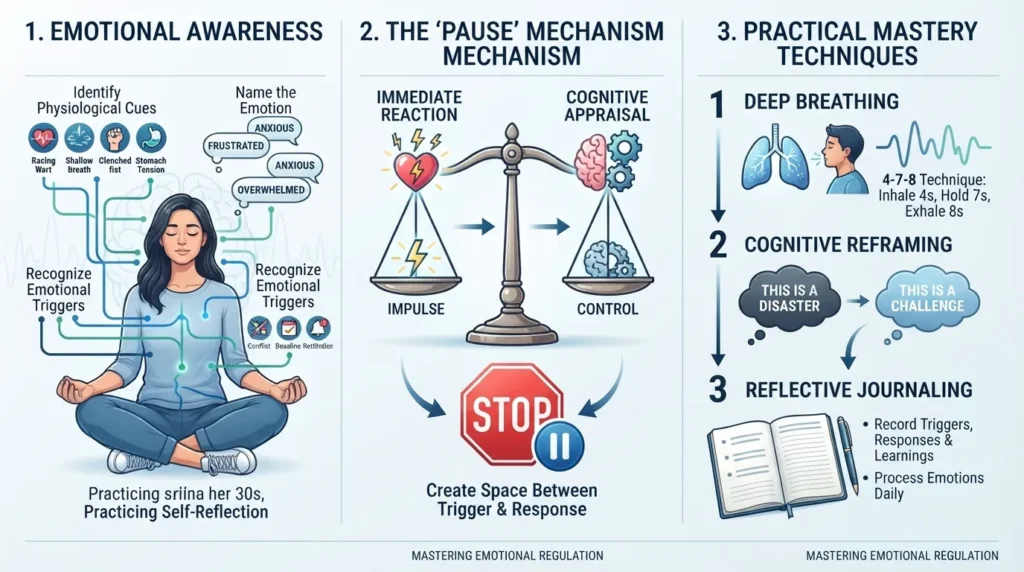
Emotional self-regulation is the conscious or non-conscious capacity to monitor, evaluate, and modify emotional reactions—particularly intense feelings like anger, anxiety, or frustration—to align with personal goals, social norms, and long-term well-being. Unlike passive coping, this active psychological mechanism empowers individuals to pause between a trigger and a response, shifting behavior from impulsive reactivity to intentional, values-driven action.
What Does Emotional Self-Regulation Mean?
At its core, emotional self-regulation represents the internal governance system of human behavior. It governs how quickly an individual can calm down after a stressor, maintain focus despite emotional distress, and adapt behavioral output when environmental demands shift abruptly.
Neurological Basis: Rooted in the dynamic interplay between the amygdala (the brain’s emotional threat detector) and the prefrontal cortex (responsible for executive function and impulse control).
Dynamic Adaptation: Involves modulating emotional intensity rather than suppressing or eliminating feelings entirely.
Goal Alignment: Directs emotional energy toward constructive outcomes rather than destructive behavioral outbursts.
Emotional Regulation vs. Emotional Self-Regulation
While frequently used interchangeably in casual discourse, emotional regulation and emotional self-regulation possess distinct psychological boundaries. Recognizing this nuance is essential for applying correct therapeutic and developmental frameworks.
Broader Scope: General emotional regulation encompasses any method used to influence emotions, which can include external interventions like co-regulation with a therapist, medication, or environmental modifications.
The “Self” Distinction: Emotional self-regulation specifically highlights autonomous, self-directed processes where the individual acts as their own primary agent of change.
Internalized Control: It relies heavily on self-monitoring and adaptive coping strategies developed internally, moving past reliance on external soothing agents.
Mastering this distinction provides a foundational baseline for developing robust emotional intelligence, transforming raw emotional experiences into manageable, productive states without resorting to rigid emotional control.
Why Is Emotional Self-Regulation Important? (Core Benefits)
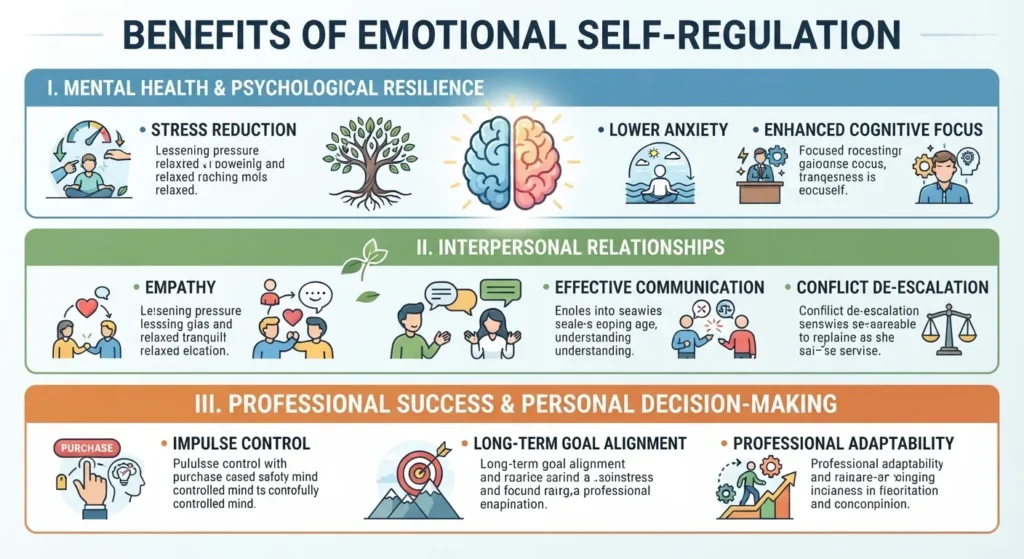
Emotional self-regulation serves as the psychological anchor for overall human functioning, directly influencing mental stability, physical vitality, and interpersonal success. By interrupting automatic physiological reactivity, individuals can preserve cognitive resources, protect long-term health, and navigate complex social landscapes with clarity.
Better Mental Health (Lower Stress, Anxiety, Depression)
Mastering emotional self-regulation significantly buffers the mind against chronic psychological distress. By actively down-regulating the stress response, individuals reduce the cumulative wear and tear on neural circuits associated with mood disorders.
Anxiety Reduction: Intercepts runaway catastrophic thoughts before they spiral into panic or generalized anxiety.
Depression Mitigation: Prevents chronic rumination by shifting cognitive processing away from cyclical negativity toward actionable problem-solving.
Emotional Equilibrium: Lowers baseline cortisol and adrenaline levels, fostering sustainable daily mental health and long-term wellbeing.
Stronger Relationships and Communication
Interpersonal friction often stems from unmanaged emotional spikes that trigger defensive or aggressive communication patterns. Self-regulation creates the necessary cognitive space to respond to relational conflict with empathy rather than reactivity.
Conflict De-escalation: Stops volatile arguments by replacing impulsive behavior with measured, assertive dialogue.
Empathy Amplification: Frees up mental bandwidth to accurately read partner or peer emotional cues instead of focusing solely on self-protection.
Trust Building: Fosters reliable, predictable emotional availability that deepens both personal and professional relationships.
Improved Focus and Decision-Making
High emotional arousal hijacks the prefrontal cortex, impairing working memory, risk assessment, and executive control. Effective self-regulation restores rational oversight during high-pressure scenarios.
Cognitive Clarity: Clears emotional noise to streamline complex decision-making processes in high-stakes environments.
Sustained Attention: Protects deep-work focus from being derailed by transient emotional distractions or minor frustrations.
Error Minimization: Reduces costly mistakes caused by haste, frustration, or emotional fatigue.
Higher Resilience During Setbacks
Adversity is inevitable, but the recovery trajectory depends entirely on how quickly an individual can process and metabolize disruptive emotional states. Self-regulation transforms acute failure into constructive adaptation.
Adaptive Bounce-Back: Shortens the duration of despair following a major life disruption or professional failure.
Optimized Problem-Solving: Directs energy toward creative solutions rather than helpless venting or avoidance.
Grit Reinforcement: Builds psychological resilience by treating setbacks as temporary data points rather than permanent personal defeats.
Physical Health Connection
Unchecked emotional dysregulation keeps the sympathetic nervous system locked in a chronic fight-or-flight state, which severely degrades systemic physiological functioning over time. Managing internal emotional states protects somatic integrity.
Immune Support: Lowers systemic inflammation driven by chronic psychological stress, protecting the body against autoimmune vulnerabilities.
Cardiovascular Protection: Reduces resting heart rate and blood pressure spikes linked to chronic anger and anxiety.
Somatic Relief: Eliminates stress-induced physical ailments such as tension headaches, gastrointestinal distress, and sleep disruption.
Signs You Have Poor Emotional Self-Regulation
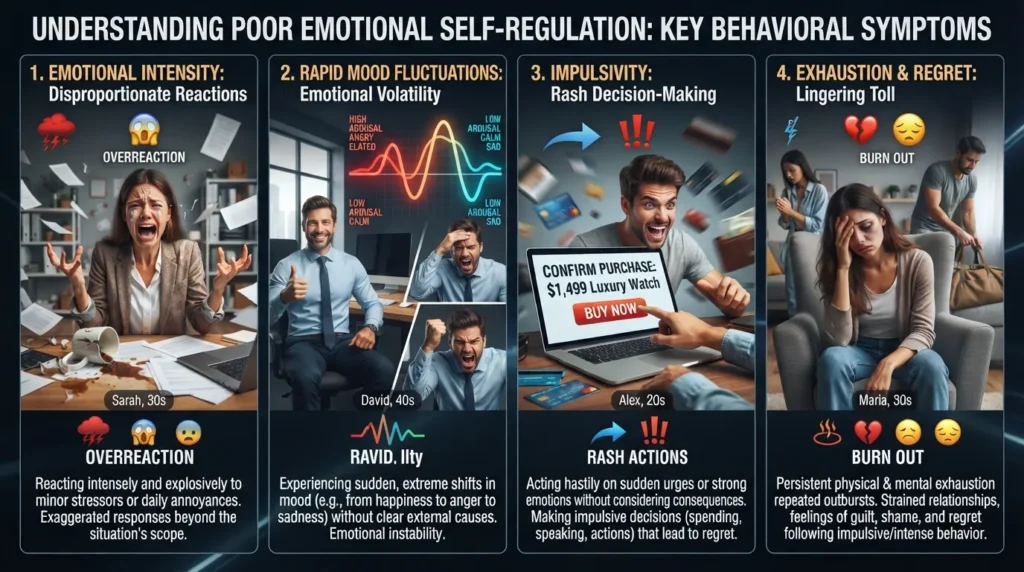
Poor emotional self-regulation manifests as a persistent struggle to manage the intensity and duration of daily feelings, leading to frequent friction in personal and professional spheres. When internal braking systems fail, minor daily inconveniences trigger outsized psychological and behavioral shockwaves.
Common Behavioral Signs (Overreacting, Outbursts, Mood Swings)
Behavioral indicators are usually the most visible markers of underlying emotional dysregulation, often catching both the individual and those around them off guard. These externalized reactions stem from an inability to create a pause between a trigger and an action.
Frequent Overreacting: Exploding with intense anger or frustration over minor annoyances, such as traffic delays or misplaced household items.
Sudden Emotional Outbursts: Experiencing sudden emotional outbursts or crying spells that feel completely uncontrollable in the moment.
Rapid Mood Swings: Cycling through drastic emotional highs and lows throughout the day with little to no environmental justification.
Emotional Signs (Prolonged Negative Emotions, Heightened Sensitivity)
Beneath visible behavior lies an internal landscape dominated by unchecked physiological and psychological friction. This state drains cognitive energy and keeps the nervous system in a constant state of red alert.
Prolonged Negative States: Lingering in moods like resentment, bitterness, or despair long after the triggering event has passed.
Heightened Emotional Sensitivity: Taking casual comments or constructive feedback deeply personally, perceiving them as direct personal attacks.
Chronic Exhaustion: Feeling mentally depleted due to the constant, unconscious energy required to suppress or manage unmediated feelings.
A Quick Self-Check List
Evaluating specific day-to-day habits provides a grounded method to gauge personal regulation capacity. Reviewing these statements helps identify whether automatic impulsivity is overriding intentional choice.
I regularly say or do things out of anger or frustration that I regret later.
My physical body—such as a racing heart or tight jaw—frequently reacts before I can cognitively process a situation.
I find it exceptionally difficult to soothe myself once I become upset or anxious.
Minor changes to daily routines or unexpected delays instantly ruin my mood.
I rely heavily on avoidance, distraction, or numbing habits to cope with uncomfortable feelings.
What Happens If You Don't Regulate Your Emotions?
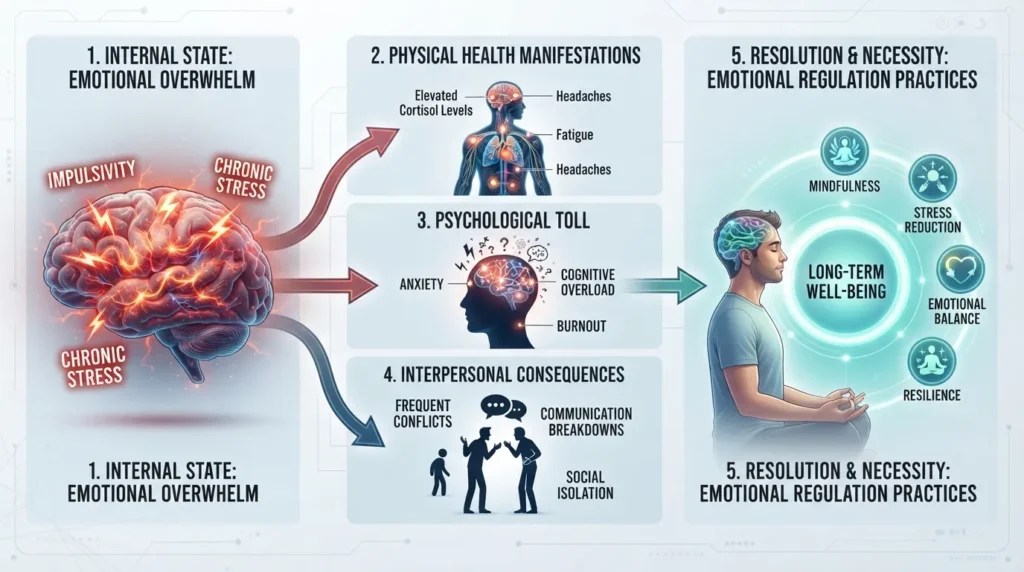
Unchecked emotional dysregulation transforms internal distress into external chaos, steadily eroding personal stability and quality of life over time. Without intervention, the inability to manage intense feelings creates cascading consequences across every major domain of human functioning.
Short-Term Consequences (Conflict, Regret, Poor Decisions)
Immediate fallout from unmanaged emotional spikes typically manifests within hours of a trigger, leaving a trail of social and cognitive friction. These rapid-fire outcomes stem from acute cognitive hijacking where emotional impulses override rational forethought.
Interpersonal Conflict: Sparking avoidable arguments with partners, family members, or colleagues due to uncalibrated verbal reactions.
Intense Regret: Grappling with immediate psychological fallout after saying or doing something damaging in the heat of the moment.
Compromised Choices: Making hasty, short-sighted poor decisions driven by panic, anger, or excitement rather than objective assessment.
Long-Term Consequences (Chronic Stress, Damaged Relationships, Health Risks)
When emotional dysregulation becomes a default lifestyle pattern, the cumulative toll transitions from temporary friction into chronic, systemic degradation. The body and mind pay a heavy price for continuous unmanaged turbulence.
Systemic Health Risks: Sustaining elevated cortisol and inflammation levels that increase vulnerability to autoimmune disorders, chronic fatigue, and cardiovascular disease.
Permanently Damaged Relationships: Eroding trust and mutual safety over years of unpredictable outbursts, leading to social isolation or divorce.
Occupational Stagnation: Derailing career advancement through chronic workplace conflicts, missed deadlines, and a reputation for instability.
The “Cycle of Distress” Explained
The cycle of distress represents the self-perpetuating psychological loop where poor emotional regulation actively triggers the very outcomes that worsen emotional distress. This loop traps individuals in rigid behavioral loops that feel nearly impossible to escape without conscious restructuring.
Triggering Event: An ordinary stressor occurs, activating an unmanaged, intense emotional spike.
Maladaptive Reaction: The individual resorts to unhealthy coping mechanisms, such as emotional eating, avoidance, or substance misuse, to numb the discomfort.
Temporary Relief & Negative Reinforcement: The unhealthy behavior offers short-term escape, which brain circuits register via negative reinforcement, strengthening the habit loop.
Compounded Fallout: The aftermath of the poor choice—such as health issues, guilt, or self-destructive behavior—creates a fresh wave of severe emotional distress, perpetuating the cycle.
What Triggers Emotional Dysregulation?
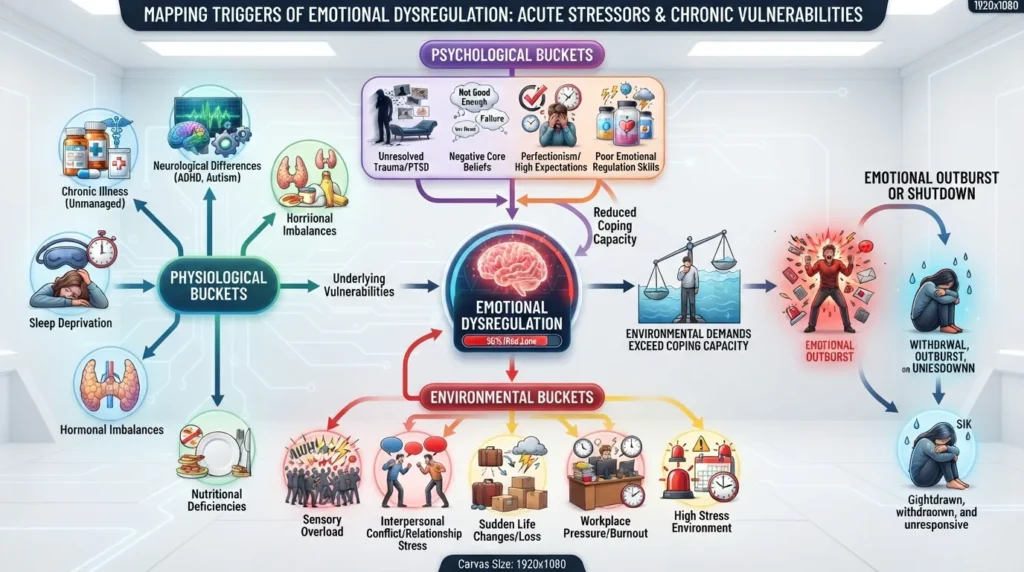
Emotional dysregulation rarely occurs in a vacuum; it is typically the result of a complex interplay between biological vulnerabilities, neurological wiring, and environmental conditioning. Identifying the root catalysts behind unmanaged emotional reactivity is essential for replacing self-blame with targeted, effective behavioral interventions.
Childhood Trauma and Early Experiences
Developing brains require consistent, attuned environmental scaffolding to build internal emotional regulation circuits. When early life is marked by chronic stress or trauma, the nervous system adapts for survival rather than balanced growth.
Amigdala Hyper-Sensitization: Chronic early adversity keeps the threat-detection system permanently on high alert, misinterpreting neutral daily events as genuine danger.
Depleted Executive Development: Sustained exposure to chaotic environments pulls metabolic resources away from the prefrontal cortex, impairing long-term impulse control.
Unprocessed Residue: Unresolved childhood wounds frequently erupt in adult life as disproportionate rage or despair when current stressors mimic historical threats.
Attachment Style and Upbringing
Early relational patterns with primary caregivers form the blueprint for how individuals learn to soothe themselves during distress. An inconsistent or neglectful early environment obstructs the development of internal regulatory mechanisms.
Insecure Attachment: Growing up with unpredictable caregivers fosters attachment styles rooted in anxious clinging or emotional avoidance.
Absence of Co-Regulation: Children learn to self-soothe by first being safely soothed by adults; missing this critical scaffolding leaves adults structurally unequipped to calm their own nervous systems.
Suppression Norms: Households that punish or dismiss emotional expression teach children to bury feelings, which inevitably builds internal pressure until an explosive breakdown occurs.
Temperament (Genetic/Biological Factors)
Individual differences in baseline temperament dictate how intensely a person experiences emotional stimuli from birth. Some nervous systems are simply wired with a lower threshold for sensory and emotional overload.
Biological Reactivity: Inherited neurochemical traits can cause an individual to experience emotional highs and lows with greater baseline intensity than their peers.
Sensory Processing Differences: Highly sensitive nervous systems absorb more environmental data, leading to rapid sensory fatigue and subsequent emotional burnout.
Physiological Predispositions: Natural variations in neurotransmitter regulation affect how efficiently the brain clears stress hormones like cortisol and adrenaline.
Low Emotional Intelligence
Emotional regulation requires a high degree of internal literacy. Lacking the fundamental skills to identify, label, and process internal states makes effective self-governance nearly impossible.
Alexithymia: A distinct difficulty in identifying and describing one’s own emotional states, making it hard to catch distress before it boils over.
Deficient Vocabulary: Having a narrow emotional lexicon prevents individuals from nuance-checking their feelings, reducing complex internal states to crude binary reactions like “mad” or “fine.”
Undeveloped Strategies: Lacking conscious awareness of healthy coping alternatives leaves brute-force suppression or explosive reactivity as the only available default responses.
Related Conditions
Certain neurodivergent profiles and clinical diagnoses feature emotional dysregulation as a core neurobiological characteristic rather than a behavioral choice. Recognizing these intersections helps frame regulation challenges with nuance and self-compassion.
ADHD: Dopamine regulation differences frequently manifest as rapid frustration, impulsivity, and emotional flooding.
Autism: Sensory overload and atypical executive functioning frequently trigger intense emotional meltdowns under stress.
Borderline Personality Disorder (BPD): Characterized by intense emotional sensitivity and a severe lack of internal baseline stability.
Complex PTSD (CPTSD): Rooted in prolonged relational trauma, resulting in persistent nervous system dysregulation and hyper-reactivity.
The 4 R's (and 5 R's) of Emotional Regulation
Mastering emotional self-regulation requires a structured, step-by-step framework to transition from impulsive reactivity to deliberate choice. The 4 R’s and extended 5 R’s models provide a reliable behavioral roadmap, cultivating deep self-awareness and building a sustainable regulation framework for everyday challenges.
What Are the 4 R’s of Emotional Regulation?
The classic 4 R’s framework—Recognize, Reflect, Respond, and Reinforce—breaks down the psychological mechanics of processing intense emotional states. This sequence helps individuals intercept automatic nervous system triggers before they dictate behavior.
Recognize: Spot and accurately label the exact emotion arising in the body and mind (e.g., distinguishing frustration from anxiety) [00:36].
Reflect: Pause to examine the root cause of the trigger without immediate judgment or self-blame [01:15].
Respond: Choose a deliberate, values-aligned action instead of executing an automated emotional outburst.
Reinforce: Acknowledge successful emotional management to strengthen positive neural pathways for future triggers.
What Are the 5 R’s? (Extended Model Comparison)
Expanding the framework into the 5 R’s introduces a vital upstream step focused on physiological baseline maintenance and environmental management. This comprehensive approach ensures that emotional regulation is supported long before a stressful trigger occurs.
Reset: Regulate the physical nervous system through deep breathing, movement, or rest prior to emotional escalation.
Recognize: Identify the early warning signs of emotional shifts within thoughts and bodily sensations [01:00].
Reframe: Alter the cognitive interpretation of a stressor to view it as a manageable challenge rather than a crisis [02:11].
Respond: Execute a calm, constructive behavioral choice rather than reacting impulsively.
Review: Evaluate the outcome afterward to extract learning lessons and improve future coping resilience.
Simple Table: 4 R’s vs 5 R’s Side-by-Side
| Framework Stage | The 4 R’s Approach | The 5 R’s Extended Approach |
| Phase 1 | Recognize the emotion | Reset physiological baseline |
| Phase 2 | Reflect on the trigger | Recognize the emotion |
| Phase 3 | Respond intentionally | Reframe the cognitive perspective |
| Phase 4 | Reinforce positive habits | Respond intentionally |
| Phase 5 | — | Review and evaluate outcome |
Healthy vs. Unhealthy Emotional Regulation Strategies
Selecting the right coping mechanisms determines whether emotional distress becomes a catalyst for growth or a source of chronic damage. While healthy strategies process feelings through structured awareness and physiological restoration, unhealthy strategies offer temporary relief at the high cost of long-term stability.
Healthy Strategies (Mindfulness, Journaling, Therapy, Exercise, Sleep Hygiene)
Healthy emotional regulation techniques are active, constructive methods designed to process physiological arousal and cognitive friction without causing collateral damage. These approaches build long-term neural resilience by encouraging direct engagement with internal states.
Cognitive Reappraisal: Consciously reframing negative thoughts and viewing stressors as manageable challenges rather than personal crises.
Mindfulness & Grounding: Staying anchored in the present moment through breathwork or meditation to observe feelings without immediate judgment.
Expressive Outlets: Channeling intense emotional energy through structured journaling, creative arts, or open communication with trusted peers.
Physical Restoration: Leveraging regular movement, balanced nutrition, and strict sleep hygiene to keep the nervous system’s baseline balanced.
Professional Support: Utilizing targeted modalities like cognitive behavioral therapy to unpack deep-seated triggers and build tailored toolkits.
Unhealthy Strategies (Suppression, Substance Misuse, Avoidance, Emotional Eating)
Unhealthy strategies rely on brute-force avoidance or numbing, which temporarily dampens discomfort while compounding psychological and physical harm over time. These patterns trap individuals in rigid stress loops.
Emotion Suppression: Forcibly bottling up internal feelings, which increases physiological stress and inevitably leads to explosive behavioral outbursts.
Substance Misuse: Utilizing alcohol, drugs, or prescription medications to artificially deaden emotional pain and bypass genuine processing.
Behavioral Avoidance: Fleeing from people, places, or conversations that induce discomfort, thereby shrinking life experience and reinforcing fear.
Emotional Eating: Using food to soothe acute nervous system distress, leading to metabolic friction and subsequent guilt loops.
Self-Destructive Outlets: Resorting to extreme behaviors or self-injurious behavior as a desperate physical mechanism to externalize unbearable internal tension.
Comparison Table: Healthy vs Unhealthy at a Glance
| Metric / Attribute | Healthy Regulation Strategies | Unhealthy Regulation Strategies |
| Immediate Mechanism | Processes, metabolizes, and integrates feelings | Numbs, suppresses, or avoids emotional data |
| Neurological Impact | Strengthens prefrontal cortex control over the amygdala | Keeps the threat-detection system hyper-reactive |
| Long-Term Outcome | Builds resilience, clarity, and relational trust | Perpetuates chronic stress, regret, and health risks |
| Primary Examples | Mindfulness, cognitive reappraisal, exercise | Emotion suppression, avoidance, substance use |
How to Improve Emotional Self-Regulation (Practical Strategies)
Improving emotional self-regulation is not an innate, fixed trait; it is a dynamic skill set that can be actively trained and strengthened over time. Shifting from knee-jerk reactivity to intentional composure requires consistent daily habits designed to bridge the gap between trigger and response.
Name and Acknowledge the Emotion
The physiological intensity of an emotional spike drops significantly the moment it is accurately labeled. Vague internal distress is much harder to govern than a specifically identified state [00:36].
Stop the Spiral: Pause the moment discomfort arises and ask: “Am I feeling frustrated, overwhelmed, or anxious?”
Pinpoint Nuance: Move beyond broad labels like “bad” to pinpoint exact feelings, differentiating between distinct states like chronic work stress and acute uncertainty [02:14].
Remove Judgment: Acknowledge the feeling without shaming yourself for experiencing it, treating the emotion as objective data rather than a personal failure [01:15].
Practice Mindfulness (Step-by-Step)
Mindfulness anchors executive control by pulling scattered cognitive attention back to the present moment, interrupting automatic nervous system escalation.
Step 1: Shift Posture: Sit comfortably, drop your shoulders, and bring your complete attention inward.
Step 2: Focus on Breath: Notice the physical sensation of air moving in and out of your lungs without trying to artificially change its rhythm.
Step 3: Observe Distractions: When emotional or anxious thoughts intrude, mentally label them as passing events and gently guide your focus back to the breath.
Use Cognitive Reappraisal
Changing how you interpret an external event instantly rewires your internal emotional reaction [02:11]. This technique prevents minor setbacks from triggering outsized psychological distress.
Real Scenario Example: If a friend suddenly cancels dinner plans, an automatic dysregulated thought might be: “They don’t care about me; I always end up alone.”
The Reappraisal Shift: Consciously reframe the situation: “They are likely overwhelmed with their own schedule; this gives me an unexpected evening to rest and recharge.”
The Result: The physiological spike of rejection dissipates, replacing panic and anger with calm adaptability.
Try Deep Breathing / Nervous System Regulation
When the body enters fight-or-flight mode, cognitive reasoning goes offline. Activating physiological self-soothing mechanisms restores neurological balance from the bottom up.
Physiological Sigh: Take two quick inhales through the nose followed by one long, slow exhale through the mouth to instantly trigger the parasympathetic nervous system.
Box Breathing: Inhale for four seconds, hold for four, exhale for four, and hold empty for four to steady a racing heart rate.
Grounding Check: Engage your physical senses by naming five things you can see, four you can touch, three you can hear, two you can smell, and one you can taste.
Identify Your Emotional Triggers
Mapping your vulnerability zones prevents ambush by predictable stressors, allowing you to establish preemptive boundaries or coping strategies.
Pattern Tracking: Maintain a brief journaling log noting occurrences where you experienced sudden irritability or emotional flooding.
Root Cause Analysis: Identify common denominators across your triggers—such as sleep deprivation, hunger, specific people, or high-pressure deadlines.
Proactive Shielding: Build buffers around high-risk environments, ensuring adequate rest and emotional preparation before entering challenging situations.
Build a Daily Emotional Regulation Routine
Consistent daily habits fortify baseline resilience, making it significantly easier to manage unexpected crises when they occur.
Prioritize consistent sleep hygiene and nutrition to stabilize baseline neurological functioning [04:16].
Dedicate 10 minutes daily to quiet reflection or mindfulness meditation [01:43].
Engage in regular physical exercise to metabolize residual stress hormones and stimulate feel-good neurotransmitters [04:26].
Schedule regular check-ins with trusted peers or a professional therapist to process lingering emotional friction before it boils over [03:48].
What Is the Hardest Emotion to Control? — Unique Angle
While all difficult feelings test psychological endurance, neuroscientists and psychological researchers consistently rank anger, shame, and grief as the hardest emotions to control. These high-intensity states short-circuit prefrontal cortex processing faster than standard stress responses, making conscious regulation uniquely demanding.
Why Certain Emotions (Anger, Shame, Grief) Are Harder to Regulate
Certain emotional states hijack neural circuitry with such evolutionary force that traditional cognitive pauses feel nearly impossible to execute in the heat of the moment.
Anger (High Arousal & Retaliatory Drive): Floods the bloodstream with adrenaline and testosterone, creating a powerful physical impulse to attack or defend that burns hotter than rational thought.
Shame (Internalized Self-Erasing): Operates on a somatic level by convincing the individual that they are fundamentally flawed rather than simply having made a mistake, triggering defensive hiding or defensive rage.
Grief (Wave-Like Neurological Despair): Mimics physical pain in the brain, arriving in unpredictable, overwhelming waves that resist quick cognitive reframing or linear processing.
Practical Tips for the Hardest Emotions Specifically
Managing these extreme states requires specialized tactical interventions designed to handle severe emotional intensity without relying on willpower alone.
For Anger (The Physical Discharge): Step away immediately and use explosive physical movement—such as brisk walking or wall push-ups—to burn off excess adrenaline before attempting to speak or resolve conflict.
For Shame (The Compassion Pivot): Catch the self-loathing internal monologue and deliberately verbalize self-compassion, separating your identity from the behavioral trigger to lower somatic threat levels.
For Grief (The Surrender Approach): Stop fighting the wave; allow yourself to cry, express sorrow fully in a safe space, and treat the body with gentle self-soothing until the acute neurological storm subsides.
How to Deal With Someone Who Is Emotionally Dysregulated
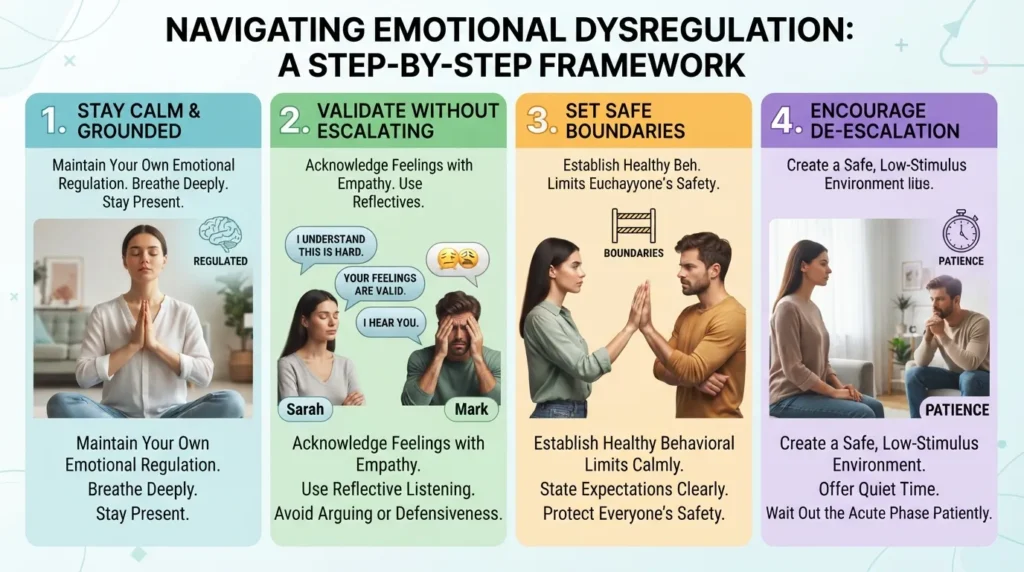
Navigating an interaction with an emotionally dysregulated individual requires immense tactical patience, as trying to use logic during an emotional storm invariably escalates tension. Success depends on shifting your focus from winning an argument to restoring a sense of shared safety and neurological calm.
Staying Calm Yourself First
Mirror neurons transmit emotional states rapidly between people, meaning your internal composure is the single most powerful tool for external de-escalation. If you match their panic or anger, the interaction enters a runaway feedback loop of mutual reactivity.
Lower Your Tone: Consciously drop the volume and pitch of your voice, forcing the other person’s nervous system to strain slightly to hear you, which naturally encourages listening.
Relax Your Body: Unclench your jaw, drop your shoulders, and open your posture to signal non-threat to their hyper-vigilant amygdala.
Pause Before Answering: Implement a deliberate three-second delay before responding to ensure your words come from a grounded place rather than defensiveness.
What to Say (and Avoid Saying) in the Moment
Language during a dysregulated episode must prioritize validation and safety over correction or debate. Certain common phrases act like fuel on an emotional fire, while others provide immediate relief.
Phrases to Avoid: Never say “Calm down,” “You’re overreacting,” or “You’re being irrational”—these invalidate their internal reality and spike their defensive arousal.
Phrases to Use: Offer grounding validation such as, “I can see how overwhelming this is for you right now; I am here, and we can figure it out.”
Active Listening: Reflect back their core pain points without judgment (e.g., “It sounds like you felt completely dismissed in that meeting”), which proves you are allies rather than adversaries.
Setting Boundaries Without Escalating
Supporting someone in distress does not mean accepting verbal abuse, manipulation, or unsafe behavioral outbursts. Boundaries must be communicated with firm compassion rather than punitive anger.
Name the Behavior, Not the Person: Clearly state what is acceptable without attacking their character (e.g., “I want to help solve this, but I cannot continue this conversation while you are shouting”).
Offer a Time-Out: Suggest a structured pause if escalation continues (e.g., “Let’s take a 20-minute break to breathe and reset, and then we will resume calmly”).
Hold the Line: Follow through consistently on enforced limits to protect your own well-being while teaching sustainable co-regulation habits.
Emotional Self-Regulation in Children vs. Adults — Silo Connection
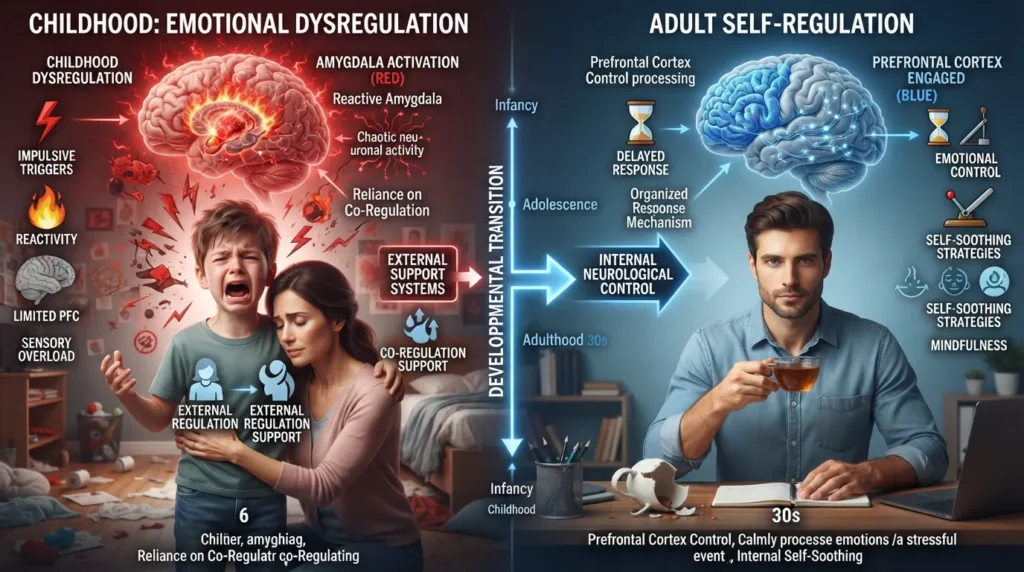
Emotional self-regulation is not a fixed trait written into human DNA at birth; it is a neurological muscle that evolves through distinct stages across the lifespan. While children rely entirely on adult scaffolding to manage their inner worlds, adults are expected to operate their own internal governance systems, though many continue to struggle without intentional practice.
How Emotional Regulation Develops in Childhood
Young children possess under-developed prefrontal cortices, rendering them biologically incapable of processing intense feelings independently. Emotional maturity emerges gradually through a complex interplay of neurology and lived experience.
Co-Regulation as a Prerequisite: Infants and toddlers learn to calm down only because attuned caregivers soothe them, teaching their nervous systems what safety feels like physically.
The Maturation Curve: As children grow into late childhood and adolescence, neurological pathways slowly myelinate, improving impulse control and working memory.
Environmental Conditioning: Consistent boundaries and compassionate guidance teach young minds to label internal states rather than acting on every impulsive spark.
Why Some Adults Still Struggle With It
Adults trapped in chronic dysregulation usually missed critical developmental milestones during their formative years, leaving structural gaps in their emotional architecture.
Missed Scaffolding: Adults who grew up in chaotic, neglectful, or overly punitive environments never absorbed the foundational tools required for self-soothing.
Trauma Stunting: Unresolved childhood trauma can freeze emotional processing mechanisms, causing grown adults to regress into childlike tantrums under stress.
Avoidance Habits: Decades of relying on unhealthy coping mechanisms like suppression or substance use prevent the brain from building new, resilient neural pathways.
The Role of Discipline and Practice in Strengthening This Skill
Transforming emotional control from a grueling daily effort into second nature requires the same consistent application as learning a physical instrument or language.
Intentional Repetition: Deliberately practicing mindfulness, cognitive reappraisal, and breathwork rewires neural circuits over time.
The True Meaning of Discipline: True emotional discipline is not about rigid self-punishment or suppression; it is the daily commitment to showing up for your mental well-being.
Lifelong Growth: Reaching genuine emotional maturity is an ongoing process of reviewing mistakes, forgiving lapses, and refining personal coping strategies through continuous practice.
When to Seek Professional Help
While self-guided tools and daily habit adjustments successfully improve emotional balance for many individuals, chronic dysregulation can sometimes require formal clinical intervention. Peer-reviewed research highlights that structured clinical support significantly accelerates recovery for those struggling with severe emotional volatility and psychological distress (PMC8848120 rel=”nofollow”)). Recognizing when self-help is insufficient protects long-term well-being and opens the door to specialized healing modalities.
Signs It’s Time to Talk to a Professional
Deciding to seek outside assistance is a proactive step toward reclaiming stability, not a sign of personal weakness. Certain markers indicate that independent strategies are no longer enough to manage daily pressure.
Persistent Functional Impairment: Emotional volatility consistently disrupts your job performance, academic standing, or ability to maintain stable personal relationships.
Intense Self-Harm or Destructive Impulses: You find yourself resorting to dangerous behaviors, substance misuse, or aggressive outbursts that feel completely outside your control.
Exhausting Emotional Loops: Months of intentional mindfulness and self-soothing produce zero reduction in chronic anxiety, explosive anger, or depressive numbness.
Is Medication Ever Used for Emotional Dysregulation?
While medication cannot teach an individual how to regulate their feelings, a licensed medical doctor or psychiatrist may evaluate whether underlying neurochemical imbalances are driving severe dysregulation.
Targeting Co-Occurring Conditions: Medications are rarely prescribed for “dysregulation” on its own; instead, they are selectively utilized to manage underlying conditions like clinical depression, severe anxiety, or ADHD that exacerbate emotional flooding.
Stabilizing Baseline Arousal: In certain clinical profiles, pharmacological support helps lower acute physiological hyper-arousal, creating a stable biological window where therapy and behavioral strategies can actually take root.
Non-Prescriptive Guidance: Any exploration of medication requires comprehensive medical evaluation, personalized risk assessment, and ongoing supervision by a qualified healthcare professional.
What Therapy Can Help With
Targeted psychotherapy provides a safe, highly structured clinical environment to unpack the root causes of emotional volatility and build durable, life-long toolkits.
Cognitive Behavioral Therapy (CBT): Helps patients identify distorted thought patterns, master cognitive reappraisal, and systematically alter unworkable behavioral habits.
Dialectical Behavior Therapy (DBT): Specifically engineered to address severe emotional dysregulation, teaching rigorous modules in distress tolerance, mindfulness, and emotion modulation.
Processing Trauma: Provides a compassionate space to heal from historical wounds that continue to hijack the nervous system during everyday adult stressors.
Frequently Asked Questions
Can You Give Me Examples of Emotional Regulation?
Emotional regulation encompasses everyday choices that prevent automatic emotional reactions from dictating behavior. Practical examples include taking three deliberate deep breaths before responding to an irritating text message, reframing a sudden work critique as an opportunity for professional growth rather than a personal attack, or stepping away from a heated argument to walk briskly and burn off excess adrenaline before resuming a conversation calmly.
What Is the Difference Between Emotional Regulation and Emotional Intelligence?
While closely related, emotional regulation and emotional intelligence represent different layers of psychological functioning. Emotional intelligence acts as the overarching capability to perceive, understand, use, and manage emotions across both self and others. Emotional regulation, by contrast, refers specifically to the targeted skills and behavioral strategies used to modulate the intensity and duration of one’s own emotional experiences.
How Does Practicing Emotional Regulation Impact Daily Life and Relationships?
Mastering emotional regulation fundamentally transforms personal well-being by reducing chronic stress, lowering baseline anxiety, and preventing impulsive decision-making. In relationships, it replaces volatile outbursts and defensive arguments with empathetic listening, clear boundary-setting, and calm conflict de-escalation, building deeper trust and long-term stability with partners, family members, and colleagues.
Is It Possible to Develop Emotional Regulation as an Adult?
Emotional regulation is a flexible neurobiological skill rather than a fixed personality trait, meaning it can be actively trained at any stage of life. Through consistent daily practices—such as mindfulness meditation, cognitive reappraisal, journaling, and targeted therapies like CBT or DBT—adults can successfully rewire their neural pathways, strengthen prefrontal cortex control, and build durable coping mechanisms regardless of past developmental gaps.
Conclusion
Mastering emotional self-regulation is the ultimate foundation for sustainable mental wellbeing, healthy relationships, and long-term personal success. By shifting away from automatic reactivity and embracing intentional daily habits like cognitive reappraisal and mindfulness, you reclaim full authority over your behavioral choices. True emotional discipline is not about suppressing your humanity or forcing artificial calm; it is the ongoing, empowering practice of meeting life’s inevitable challenges with clarity, resilience, and unwavering composure.
Kittisak Wattanakul
Kittisak Wattanakul is the Discipline Editor at Holistic Wellbeing Living. He writes about routines, focus, consistency, and practical follow-through. With nine years of experience creating personal-growth content, Kittisak helps readers build realistic systems for steady progress without extreme productivity pressure.