Jump to:
ToggleHow to Help a Procrastinator Without Making It Worse: A Complete Guide

Procrastination is rarely a simple failure of time management or sheer laziness. It is almost always an emotional regulation problem rooted in overwhelm, perfectionism, or underlying executive dysfunction. When a task triggers anxiety or boredom, the brain treats it as a genuine threat and seeks immediate relief through avoidance.
Pushing harder with logic or pressure only amplifies their stress response. To help effectively, you have to lower the emotional stakes rather than raise the volume of demands.
Why “Just Try Harder” Advice Doesn’t Work on a Procrastinator
Telling a procrastinator to just get started ignores the invisible friction freezing their momentum. Their brains are caught in a feedback loop of task resistance and shame.
Executive Dysfunction Bottlenecks: Neurological roadblocks make breaking a large project down into sequential steps feel functionally impossible without external scaffolding.
The Shame Spiral: Every reminder of a delayed task adds emotional weight, making the project feel even more intimidating than it was originally.
The Dopamine Deficit: Procrastination offers temporary emotional relief, creating a counterproductive reward loop that reinforces the avoidance behavior.
Helping vs. Enabling: The Line You Need to Know Early
Support becomes enablement the moment you start absorbing the consequences or the cognitive load of their responsibilities. Stepping in to rescue someone might bring short-term relief, but it trains their brain to rely on your panic instead of building internal resilience.
Support Looks Like: Offering to body-double while they sort through mail, or helping them identify the single micro-step required to begin.
Enabling Looks Like: Taking over their core obligations, making excuses for missed deadlines, or managing their schedule so they never face friction.
The Boundary: You can act as an emotional sounding board or a collaborative anchor, but you must never become the project manager of their personal life.
Understanding Why They Procrastinate First

Procrastination is an emotional regulation failure, not a time-management deficit. When faced with an intimidating task, the brain perceives an emotional threat and seeks immediate comfort.
The Threat Response: The amygdala hijacks the brain, viewing the stress of a looming task as physical danger and triggering fight, flight, or freeze.
Misdiagnosing the Delay: Treating procrastination with scheduling apps or planners fails because it addresses the symptom while ignoring the emotional friction.
Fear of Failure and Perfectionism
Perfectionism sets an impossibly high standard that makes starting feel like an invitation to public failure. If a task cannot be done perfectly, the perfectionist brain decides it is safer not to do it at all.
All-or-Nothing Thinking: The belief that a piece of work must be a masterpiece or it is a total failure paralyzes output before the first draft even begins.
Protecting Self-Worth: Procrastination offers a convenient psychological shield. If they fail, they can blame lack of time rather than lack of ability.
Anxiety, ADHD, and Executive Dysfunction Links
Underneath chronic task avoidance, there is often a neurological wiring issue that makes traditional productivity advice useless. Executive dysfunction disrupts the brain’s ability to plan, focus, and execute tasks independently.
The ADHD Connection: Dopamine deficits make routine or unstimulating tasks physically painful for the brain to initiate without external novelty or high urgency.
Overwhelm Paralysis: Anxiety amplifies task complexity, making a simple three-step chore feel like scaling a vertical mountain.
Is It Laziness or Something Deeper? (Depression/Personality Angle)
Laziness implies a carefree refusal to work, whereas procrastination is almost always accompanied by intense distress, guilt, and paralysis. When avoidance becomes severe and persistent, it frequently points to deeper psychological roadblocks.
The Depression Overlap: Clinical depression saps emotional energy and interest, turning basic daily maintenance tasks into insurmountable hurdles.
Trait Differences: Certain personality types, such as those high in neuroticism or low in conscientiousness, are more vulnerable to emotional dysregulation under stress.
The “Temporal Discounting” Science Behind Delay
The human brain struggles to value future rewards or consequences as much as immediate ones, a psychological phenomenon known as temporal discounting. To a procrastinator, a deadline two weeks away feels like it belongs to a completely different person.
Distant Future Self: Functional brain imaging shows that thinking about our future self activates the same regions as thinking about a total stranger.
Immediate Relief Bias: The brain chooses the guaranteed, instant dopamine hit of scrolling social media over the uncertain, delayed reward of completing a complex project.
How to Help a Procrastinator — Relationship-by-Relationship Guide
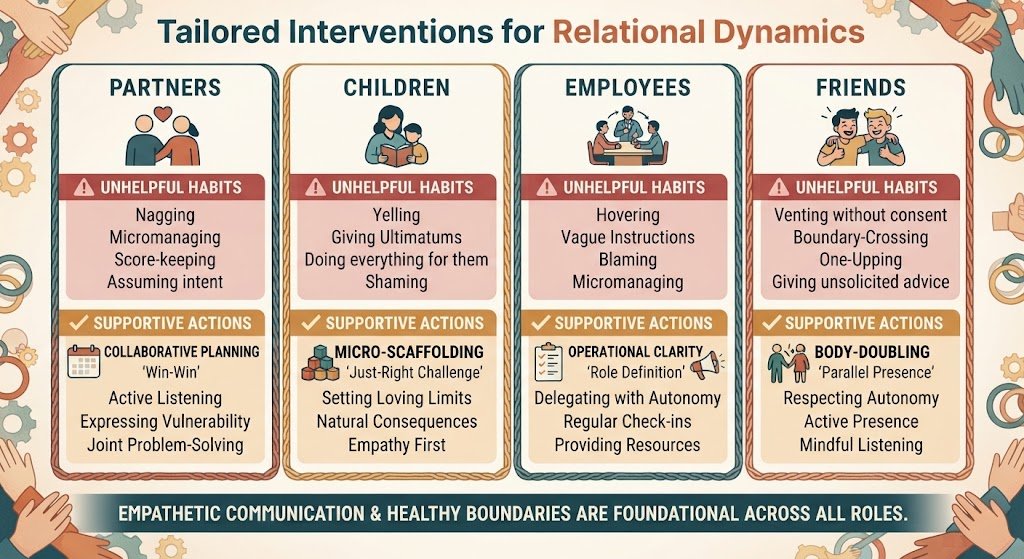
Effective intervention requires shifting your role based on your connection to the person. You cannot parent a partner, micro-manage a colleague without crushing morale, or lecture a teenager without triggering defiance.
Assessing the Dynamic: Look at whether you share household bills, authority, or just free time before choosing your intervention strategy.
Adjusting the Tone: Lowering your emotional investment prevents you from absorbing their stress and burning out yourself.
How to Help a Partner or Spouse Who Procrastinates
When your romantic partner procrastinates, shared responsibilities pile up, breeding resentment and turning you into an unpaid manager. The goal is to restore partnership without stepping into a parental role.
Separate the Task from Identity: Instead of criticizing their habits, focus on the shared impact: “I feel overwhelmed when household chores pile up before the weekend.”
Use Collaborative Planning: Sit down over coffee to map out weekly tasks together, giving them a sense of ownership rather than a list of demands.
Avoid the Trap of Rescue: Let natural consequences happen occasionally if forgetting a deadline or chore will not cause a catastrophic crisis.
How to Help a Procrastinating Child or Teen (Without Nagging)
Nagging teens usually teaches them how to tune you out rather than how to manage their homework. Building their internal executive functioning skills requires guiding them to solve their own bottlenecks.
Ask Curiosity Questions: Instead of asking “Did you do your science project?”, ask “What is the hardest part of getting started on that assignment today?”
Scaffold the First Five Minutes: Sit with them quietly while they open their laptop and write the first single sentence, removing the initial friction barrier.
Praise the Process, Not Output: Acknowledge their effort when they push through resistance, which builds long-term resilience over quick grades.
How to Help an Employee or Team Member at Work
Professional procrastination hurts team momentum, but handling it poorly looks like micromanagement or toxic control. Workplace support needs to focus on operational clarity and psychological safety.
Check for Skill Gaps First: Ensure the delay is not stemming from confusion about project scope or a lack of necessary tools rather than motivation.
Break Down Milestones: Replace vague quarterly goals with tightly defined daily or bi-weekly check-ins to catch roadblocks early.
Shift from Policing to Problem-Solving: Ask in a 1-on-1: “What is currently standing in the way of you moving this deliverable forward?”
How to Help a Friend Who Keeps Putting Things Off
Friendships are built on mutual support, but carrying the weight of a friend’s constant self-sabotage drains your energy. Your role here is to act as a low-stakes sounding board, not an accountability coach.
Offer Body Doubling: Invite them over to work on separate goals—such as filing taxes or updating resumes—while sitting quietly in the same room.
Keep it Light and Non-Judgmental: Celebrate small wins without shaming past delays to keep the communication channel open.
Protect Your Boundaries: Remind yourself that you can offer encouragement, but you cannot care about their goals more than they do.
Exact Scripts — What to Say (and What NOT to Say)
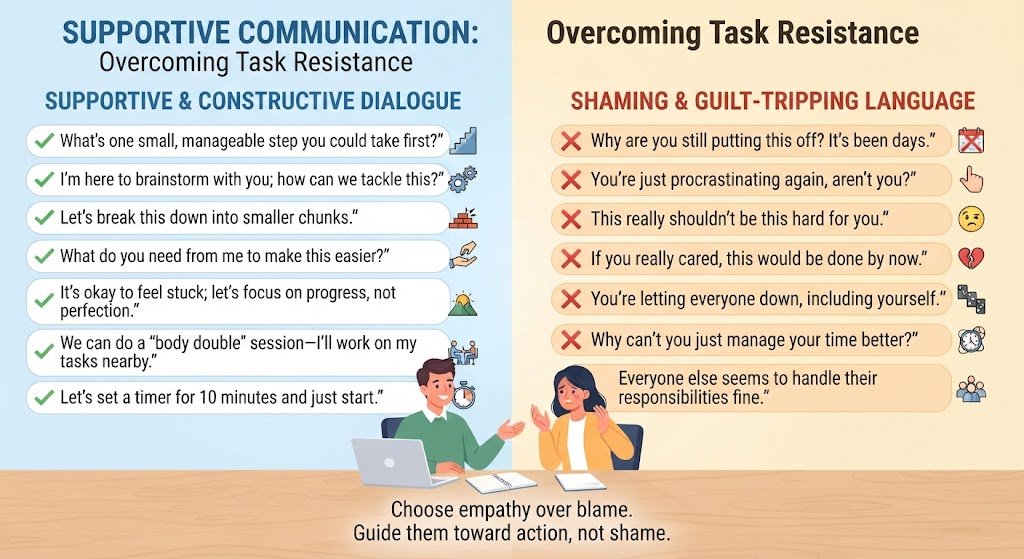
The language you use sets the emotional tone for the entire interaction. Phrasing that sounds helpful in your head often registers as criticism or judgment to someone already struggling with task paralysis.
Focus on Collaboration: Frame yourself as a teammate helping them clear a roadblock rather than an authority figure handing down penalties.
Lower the Stakes: Reduce the perceived emotional threat of the task by treating initial progress as an experiment rather than a final test.
5 Phrases That Motivate Instead of Guilt-Trip
Supportive language acknowledges the difficulty of the task while inviting them to take a manageable first step. These phrases help bypass their defense mechanisms and engage their problem-solving brain.
“What is the smallest, easiest piece of this project we can tackle together right now?” Breaks down paralyzing overwhelm into a single micro-action.
“I noticed you’ve been avoiding this—are you feeling stuck on how to start, or is something else making it heavy?” Validates the emotional friction without assigning blame.
“Would it help if I hung out in the room while you knock out those emails for twenty minutes?” Offers practical body doubling without managing the task for them.
“Let’s just figure out the very next step together, and you can take it from there.” Removes the pressure of having to plan the entire workflow at once.
“How can I best support you with this deadline without driving you crazy?” Empowers them to choose the type of accountability they actually find useful.
Phrases to Avoid: Nagging, Comparing, Shaming
Pessimistic or judgmental phrasing triggers the amygdala, pushing the procrastinator further into avoidance and reinforcing their shame spiral.
“Why can’t you just get it done like everyone else?” Triggers toxic comparisons and deepens feelings of inadequacy.
“If you actually cared about this, you would have started weeks ago.” Attacks their character instead of addressing the executive dysfunction or anxiety blocking the work.
“I told you this would happen if you waited until the last minute.” Adds insult to injury by delivering unhelpful hindsight instead of solutions.
“Just do it already; it’s not even that hard.” Minimizes their internal psychological barrier and invalidates their genuine stress.
How to Start the Conversation Without Sounding Like a Lecture
The opening seconds of a conversation determine whether the listener hears support or an attack. Entering the dialogue with curiosity instead of accusation keeps defensiveness low.
Check Your Timing: Never bring up a delayed task when they are already stressed, rushed, or exhausted from the day.
Lead with an Observation, Not an Accusation: Swap out “You never finish your work on time” for “I’ve noticed this project seems to be taking a heavy toll on you lately.”
Ask Permission to Discuss: Frame the chat respectfully by saying, “Do you have ten minutes to brainstorm a way to get past this roadblock together?”
Practical Tactics You Can Suggest to Them
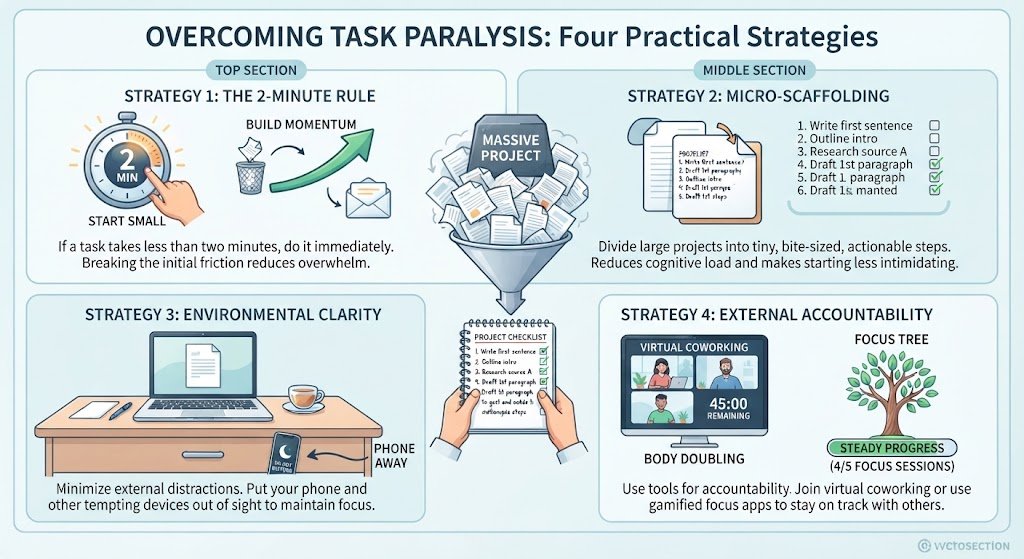
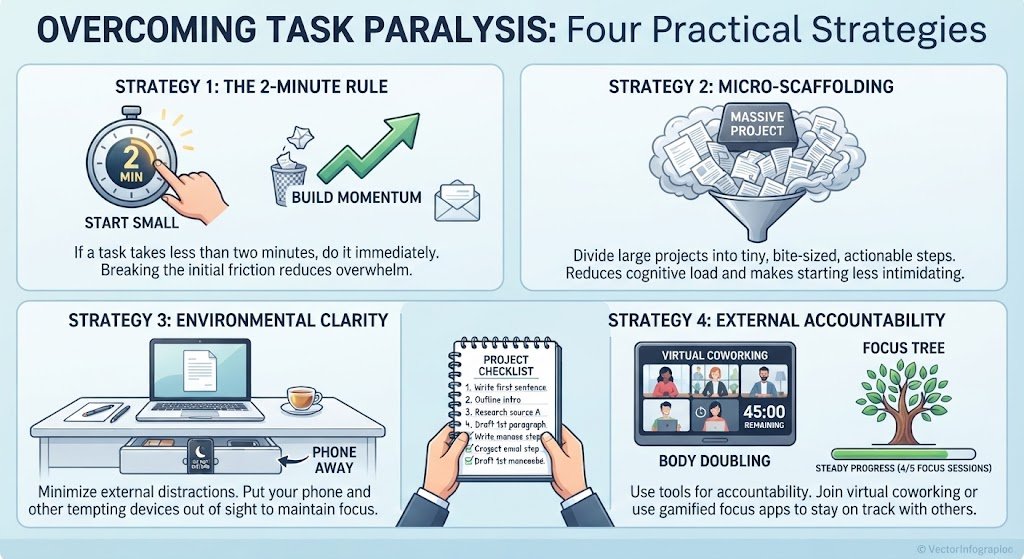
Helping someone else overcome procrastination means acting as an external catalyst rather than a taskmaster. Introduce these evidence-based techniques gently, framing them as experiments rather than rigid rules.
Keep the Barrier Low: Focus on initiating effort rather than demanding immediate, flawless completion.
Remove Digital Friction: Help them clear distractions out of their physical and virtual workspace before they attempt to start.
The 2-Minute Rule: How to Introduce It to Someone Else
When a project feels overwhelming, suggest that they commit to working on it for just two minutes [01:36]. The primary objective of this approach is not to finish the work, but to crush the initial resistance barrier that feeds task paralysis [01:12].
Frame the Ask: Say, “Would you be open to trying this for just two minutes to see if it loosens things up?”
Leverage Action over Motivation: Explain that waiting to feel motivated rarely works because action generates its own momentum [01:45].
Permit Stopping: Assure them they have full permission to walk away after two minutes if they still feel completely blocked, removing the psychological trap of forced endurance.
Helping Them Break Big Tasks Into Bite-Sized Steps
A massive assignment triggers a massive threat response in the brain. When someone stares at an overwhelming objective, help them shrink the target until it feels completely harmless.
Micro-Scaffolding: Instead of suggesting they “write the essay,” ask what it looks like to open the document and write a single heading.
Externalize the List: Write down the steps together on a physical notepad so their working memory does not have to carry the entire weight of the project.
Environment Fixes You Can Suggest (Phone Away, App Blockers)
Willpower is a finite resource that easily collapses under the weight of constant digital notifications. Proposing environmental tweaks protects their focus before temptation sets in.
Out of Sight, Out of Mind: Suggest placing smartphones in another room or inside a drawer while they tackle deep work blocks.
Digital Guardrails: Recommend installing website or app blockers to temporarily lock social media feeds during dedicated focus periods.
Recommending Accountability Tools (Focusmate, Pomodoro Apps, Forest)
External scaffolding can bridge the gap when internal drive fails. Suggesting structured digital tools or community platforms adds gentle external pacing to their workflow.
Virtual Coworking: Introduce platforms like Focusmate, which pairs users with a live accountability partner for structured, timed video work sessions.
Time-Boxing Apps: Suggest the Pomodoro Technique using simple timers to alternate short bursts of focus with mandatory rest breaks.
Gamified Focus: Recommend apps like Forest, which turns uninterrupted focus time into growing a virtual tree, adding a light motivational reward.
For further insights on breaking through task resistance, watch The Simple Trick to Overcome Procrastination – Instantly🔥 by Quantum Project (Tharun Speaks).
Practicing Self-Compassion Coaching — Helping Them Forgive Past Delays
Helping someone move forward requires dismantling the emotional baggage of what they failed to do yesterday. When you guide them toward self-forgiveness, you lower their internal anxiety and make starting the next task feel achievable.
Separate the Person from the Behavior: Make it clear that a delayed project or a missed deadline reflects a momentary hurdle, not a flaw in their character.
Normalize the Struggle: Remind them that task avoidance is a universal human stress response, not a unique moral failure.
Why Guilt and Shame Backfire
When someone internalizes their procrastination as proof that they are lazy or incompetent, their brain experiences heightened emotional distress. This emotional spike triggers another wave of the amygdala’s threat response, driving them right back to avoidance for comfort.
The Stress-Avoidance Loop: Beating oneself up increases anxiety, and when anxiety gets too high, the brain seeks immediate relief through distraction.
Paralyzing Expectations: Shame convinces the individual that because they messed up the timeline, any future effort is already compromised.
How to Help Someone Let Go of Past Procrastination
Releasing past delays requires active reframing so they can look at the current moment without carrying yesterday’s dead weight. Your job as a supportive presence is to anchor them firmly in the present.
Acknowledge and Release: Say something like, “What happened last week is done; let’s wipe the slate clean and look at what we can do in the next hour.”
Examine Without Accusation: Help them review a past delay as a neutral data point rather than a crime: “What do you think triggered the block on that specific report?”
Encouraging Progress Over Perfection
Perfectionism demands flawless execution from the very beginning, which paralyzes output. Cultivating a mindset of progress over perfection gives them permission to create messy, imperfect initial drafts.
Celebrate the Imperfect Start: Praise any forward movement, even if the final result needs revision later.
Shift the Goalposts: Replace the standard of getting everything right with the simpler standard of simply moving the needle forward by one percent today.
How to Deal With a Procrastinator Without Burning Out
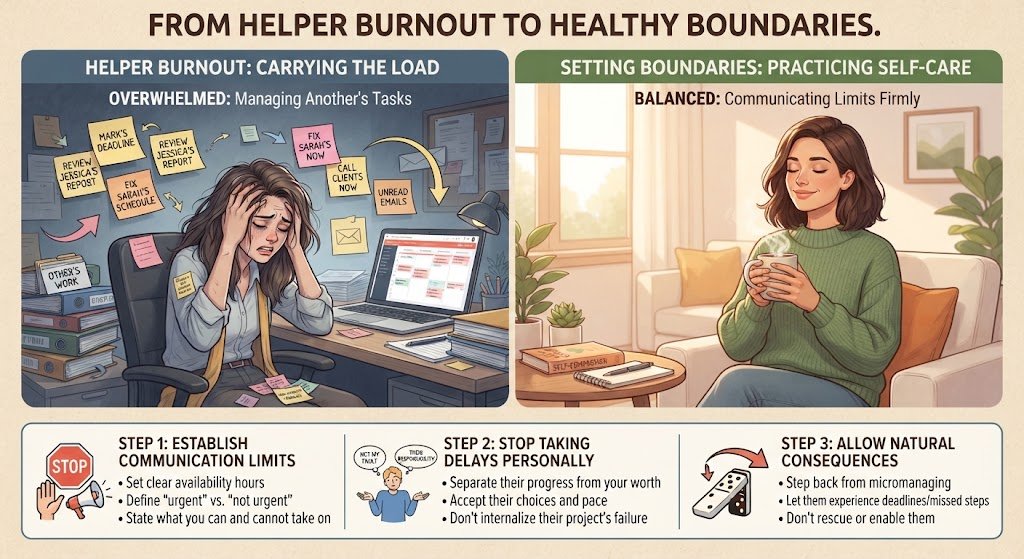
Carrying the invisible load of someone else’s responsibilities breeds deep resentment and fatigue. Preventing helper burnout requires clear boundaries and a conscious decision to step out of the project manager role.
Check Your Investment: Recognize that you cannot care about their goals or deadlines more than they do without exhausting yourself.
Maintain Separate Spheres: Keep your daily routines, tasks, and emotional bandwidth clearly detached from their avoidance loops.
Setting Boundaries Without Guilt
Clear boundaries prevent well-intentioned support from turning into a draining chore. You can love and support someone deeply while still refusing to absorb the chaos of their procrastination.
Communicate Limits Clearly: Say, “I want to help you brainstorm solutions, but I cannot keep track of your project milestones for you.”
Protect Your Time: Establish dedicated windows when you are available to act as a sounding board, and stick firmly to your own schedule outside of those times.
How to Stop Taking Their Delays Personally
It is easy to view someone’s procrastination as a sign of disrespect toward your time or advice. Shifting your perspective helps you realize that their task avoidance is entirely about their own internal friction, not about you.
De-couple Their Output from Your Worth: Understand that a partner or coworker missing a deadline is dealing with their own executive dysfunction, not punishing you.
Drop the Need to Fix It: Release the internal pressure to rescue them every time they hit a wall, allowing them space to build their own resilience.
When to Step Back and Let Natural Consequences Happen
Sometimes the most compassionate thing you can do is get out of the way and let reality deliver the feedback you cannot. Rescuing someone from every dropped ball guarantees they will never learn to catch.
Allow Minor Failures: If a missed chore or delayed submission will not result in a disaster, let them experience the natural fallout of waiting too long.
Step Out Gracefully: If your interventions are constantly met with resistance or broken promises, gently step back and say, “I’m going to step away from managing this with you so you can find your own rhythm.”
Frequently Asked Questions
What Is the 3-2-1 Rule for Procrastination?
The 3-2-1 rule is a mental countdown technique designed to interrupt overthinking and eliminate hesitation before starting a difficult task. You count down silently from three to one, and the moment you hit one, you immediately take the first physical action.
- 3: Acknowledge the upcoming task and quiet your internal resistance.
- 2: Prepare your physical environment or posture to engage.
- 1: Execute the very first micro-step without giving your brain time to negotiate.
What Are the 7 Steps to Cure Procrastination?
Overcoming deep-seated task avoidance requires a structured approach that tackles emotional regulation rather than just scheduling. These seven progressive steps build sustainable momentum over time.
- 1. Identify the Emotional Block: Figure out whether fear of failure, boredom, or perfectionism is causing the freeze.
- 2. Shrink the Task: Break the massive project down into a tiny, non-threatening step.
- 3. Use the 2-Minute Rule: Commit to working on the task for just two minutes to build initial momentum.
- 4. Clean Up Your Environment: Remove digital and physical distractions like your phone or messy tabs.
- 5. Practice Self-Compassion: Forgive past delays to stop the shame and guilt spiral.
- 6. Establish Light Accountability: Use body-doubling or quiet work sessions with a supportive partner.
- 7. Celebrate Small Wins: Acknowledge every instance of pushed-through resistance to reinforce progress.
Can Procrastination Be a Symptom of Depression?
Procrastination is frequently intertwined with clinical depression, where an overwhelming lack of energy and persistent low mood make even basic daily chores feel impossible. When executive functioning is impaired by depressive thought patterns, task avoidance ceases to be a simple bad habit and becomes a sign of underlying emotional exhaustion. For a deeper clinical look at how mood disorders impact daily function, you can explore resources like Psyche.
What Personality Type Procrastinates the Most?
Individuals who score high in neuroticism and low in conscientiousness tend to struggle most with chronic procrastination. People with high neuroticism experience heightened anxiety under stress, which triggers the brain's freeze response and leads to avoidance.
- Low Conscientiousness: Often battles with impulse control, organization, and long-term planning.
- High Perfectionism: Individuals who tie their self-worth entirely to flawless output frequently avoid starting tasks to protect themselves from perceived failure.
Why Do High-IQ People Procrastinate?
Gifted or high-IQ individuals often rely on raw intelligence and last-minute panic to breeze through early academic or professional milestones. Because they are used to succeeding without sustained effort, they rarely build the frustration tolerance or deep work habits required when tasks eventually become genuinely difficult.
- Lack of Early Scaffolding: Never having to study hard early on means they lack a toolkit for handling complex, multi-layered challenges later.
- The Boredom Trap: Highly intelligent brains crave stimulation, making routine or repetitive tasks intensely painful to initiate.
How Do I Stop Myself From Procrastinating Too Much?
Breaking your own personal cycles of task avoidance requires changing how you approach friction and self-judgment. Shifting your mindset turns procrastination from a character flaw into a solvable hurdle.
- Lower the Bar: Give yourself permission to write a terrible first draft or complete a sloppy first iteration.
- Stop Waiting for Inspiration: Accept that action precedes motivation, and start before you feel ready.
- Forgive Yourself Instantly: Let go of past delays immediately so you do not carry yesterday's guilt into today's work.
Sirinapa Chantarangsu
Sirinapa Chantarangsu is the Procrastination Editor at Holistic Wellbeing Living. She writes about task avoidance, perfectionism, focus, and manageable first steps. With six years of experience creating personal-growth content, Sirinapa helps readers replace guilt with practical strategies that make starting easier.