Habits That Can Change Your Life Backed by Psychology
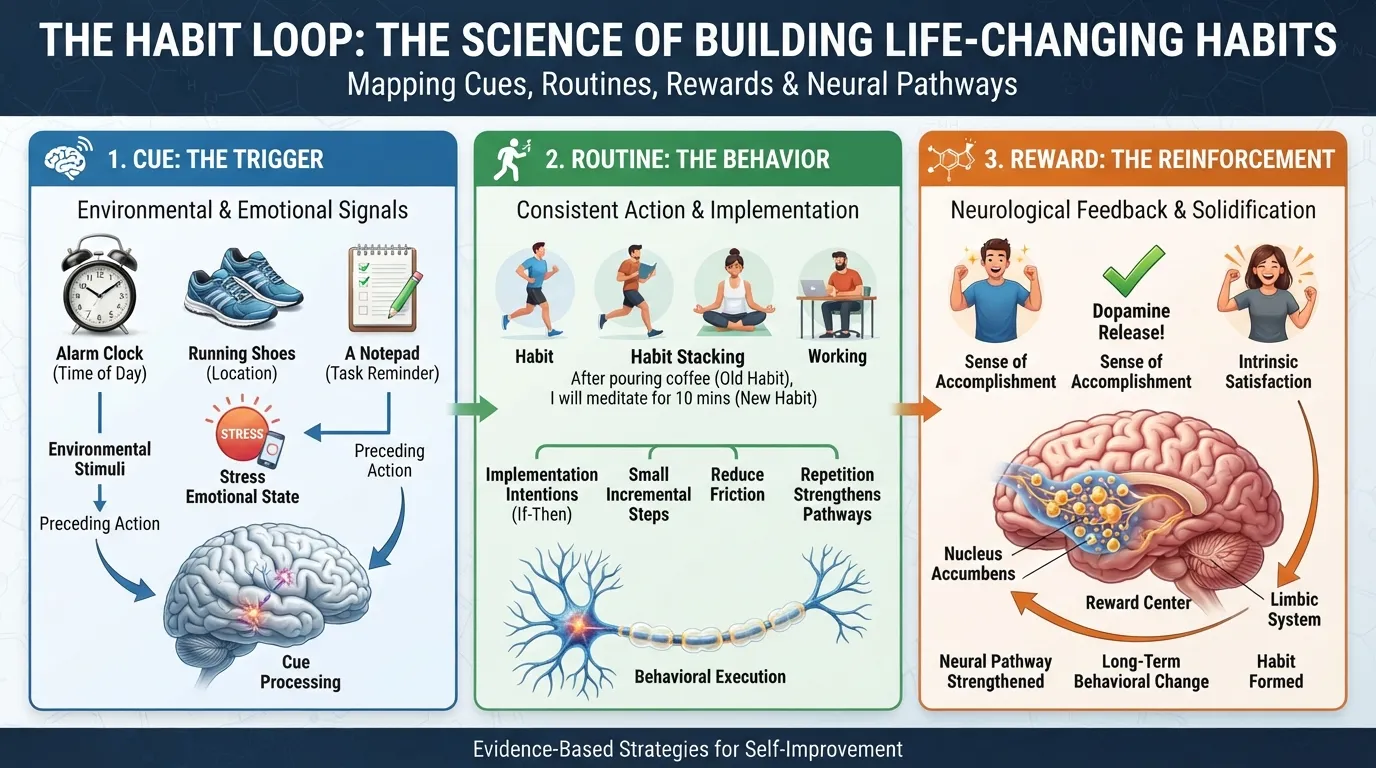
You don’t need a complete life overhaul to feel better, think clearer, or get more done. Small, repeatable habits — practiced daily — compound into real change over weeks and months.
Health & Energy Habits
Drink Water First Thing in the Morning
After 6-8 hours without fluids, your brain is running on empty. Rehydrating immediately after waking helps restore focus and mental alertness faster than reaching for caffeine first.
Move for Just 2 Minutes
Motivation follows action, not the other way around. A short burst of movement — stretching, a few push-ups, a quick walk — breaks morning sluggishness and signals your body to switch into an active state.
Get Daily Steps / Walk Outside
You don't need a gym membership to benefit from movement. Walking outside, taking the stairs, or pacing during phone calls adds up to meaningful physical activity and exposes you to natural light, which helps regulate your body's internal clock.
Mental Clarity & Focus Habits
Focus & Mindset Habits
Practice Single-Tasking
Multitasking splits attention and increases errors — your brain isn't built to fully process two demanding tasks at once. Giving one task your full, uninterrupted attention for even an hour produces better results than switching between five.
Limit Phone/Screen Time
Every notification pulls your attention away and takes minutes to fully recover from. Auditing and reducing screen time reclaims hours you can redirect toward rest, learning, or things that actually matter to you.
Daily Journaling
Writing down your thoughts, goals, or reflections gets mental clutter out of your head and onto paper, which reduces overthinking and helps you spot patterns in your behavior over time.
Rest & Routine Habits
Maintain Sleep Hygiene
Going to bed and waking up at consistent times trains your body's internal clock, improving sleep quality even if total hours stay the same. Screens before bed delay this process by suppressing melatonin production.
Plan Your Next Day the Night Before
Mornings feel chaotic when decisions pile up right when you wake up. Preparing your schedule, clothes, or workspace the night before removes friction and lets you start the day with direction instead of scrambling.
Keystone Habits — One Habit That Triggers the Rest
Not all habits carry equal weight. A keystone habit is one change that naturally triggers other positive changes without you trying — psychologists have found that people who start exercising regularly, for example, often begin eating better, sleeping more consistently, and managing stress more effectively, without deliberately working on those areas.
This is why trying to change everything at once usually fails, but focusing on one keystone habit can reshape your whole routine. Common keystone habits include regular exercise, consistent sleep timing, and daily meal planning — pick one and let its ripple effect do the rest of the work.
Start today: Choose one keystone habit (exercise is the most researched) and commit to it for two weeks before adding anything else.
Habits for Happiness & Emotional Wellbeing
Daily Gratitude
Regularly noting what you’re grateful for shifts attention away from what’s missing and toward what’s already working in your life — research links this practice to improved mood and lower stress over time.
Connect With Others / Nurture Relationships
Strong social connections are one of the most consistent predictors of long-term happiness — even brief daily interactions with people you care about measurably improve mood and reduce feelings of isolation.
How Long Does It Take to Build a Habit? (3-3-3 Rule & 7-21-90 Rule)
The 3-3-3 rule breaks habit-building into manageable stages: focus on one habit for 3 days to get started, sustain it for 3 weeks to build consistency, and by 3 months it starts feeling automatic.
The 7-21-90 rule works similarly but with different checkpoints: a habit starts forming noticeably after 7 days, feels more natural by 21 days, and becomes a stable part of your routine by 90 days.
Neither rule is a strict law — habit formation speed varies by person and habit complexity — but both point to the same truth: consistency over weeks matters more than intensity on any single day.
How to Actually Stick to These Habits
The biggest mistake people make is trying to adopt five habits at once and burning out within a week.
FAQs
What are 10 habits that can change my life?
Drinking water first thing, moving for 2 minutes daily, getting daily steps, single-tasking, limiting screen time, journaling, maintaining sleep hygiene, planning the next day, practicing gratitude, and staying connected with others.
What is the 3-3-3 rule for habits?
Focus on a habit for 3 days to start, 3 weeks to build consistency, and 3 months for it to feel automatic.
What is the 7-21-90 rule?
A habit becomes noticeable after 7 days, feels more natural after 21 days, and becomes a stable routine by 90 days.
What are the 7 habits of highly effective people?
Based on Stephen Covey's framework, they are: be proactive, begin with the end in mind, put first things first, think win-win, seek first to understand then to be understood, synergize, and sharpen the saw (continuous self-renewal).
What are 7 ways to stay healthy?
Stay hydrated, move daily, sleep consistently, eat balanced meals, manage stress, limit screen time, and maintain social connections.
What are 12 daily habits that make you happier?
Practicing gratitude, connecting with others, moving your body, getting sunlight, journaling, single-tasking, sleeping consistently, limiting screen time, planning ahead, drinking enough water, practicing a keystone habit, and doing one small act of kindness.
What are the 7 most important things in life?
Most people rank health, relationships, purpose, personal growth, financial stability, mental wellbeing, and contribution to others as the core priorities that shape a fulfilling life.
What habits should I change?
Start by identifying habits that drain your energy or time without giving anything back — excessive screen time, inconsistent sleep, and skipping movement are the most common ones worth changing first.
Thanawat Rattanakul
Thanawat Rattanakul is the Habits Editor at Holistic Wellbeing Living. He writes about daily routines, habit systems, small behavior changes, and sustainable progress. With eight years of experience creating personal-growth content, Thanawat helps readers build practical routines that fit real life.