How to Create Healthy Relationship Habits: A Step-by-Step Guide That Actually Sticks
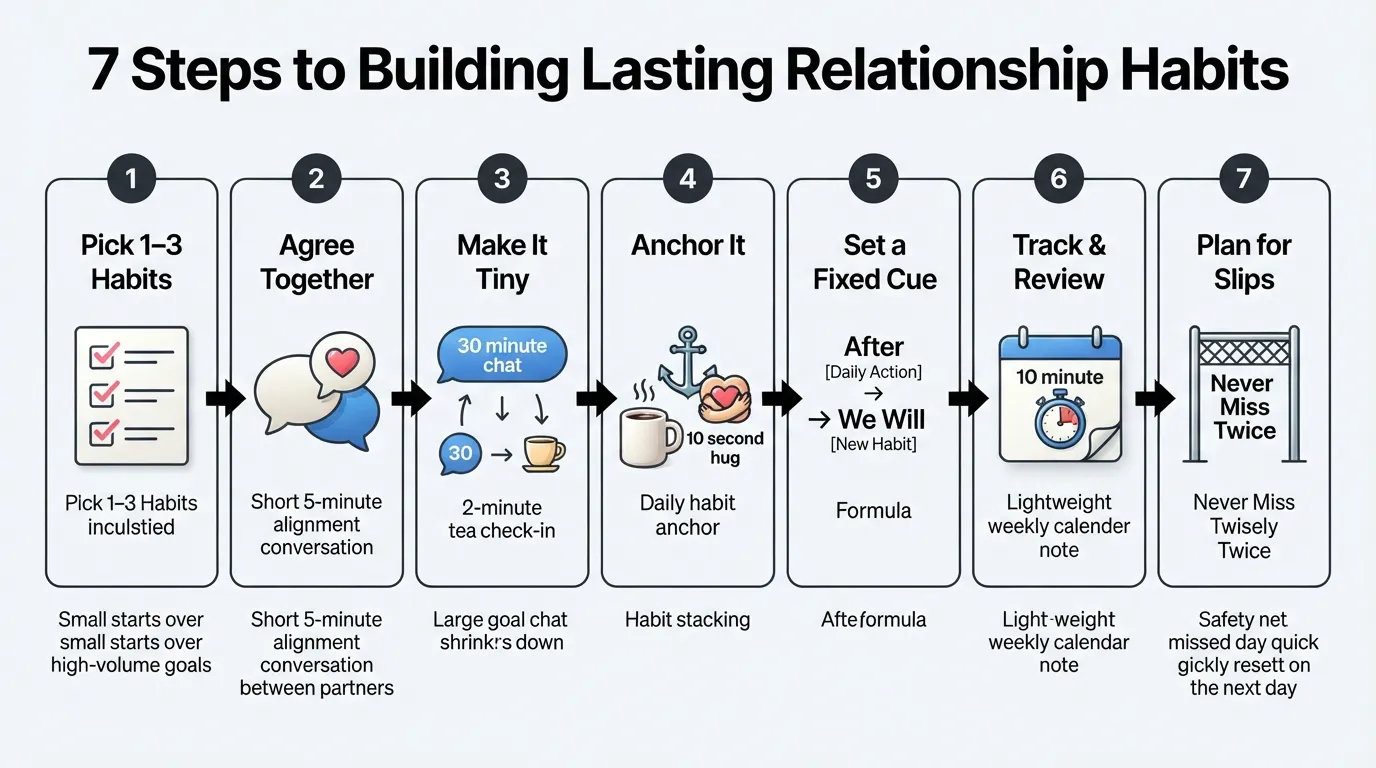
Creating healthy relationship habits starts by picking one to three small actions, linking them to your existing daily routine, and practicing them consistently for at least two months alongside a brief weekly review. A healthy relationship habit is simply a small, repeatable action that builds trust and connection over time. Instead of waiting for big moments or sudden motivation, you protect your bond through predictable, daily steps—even when life gets busy or stressful.
How to Create Healthy Relationship Habits in 7 Steps
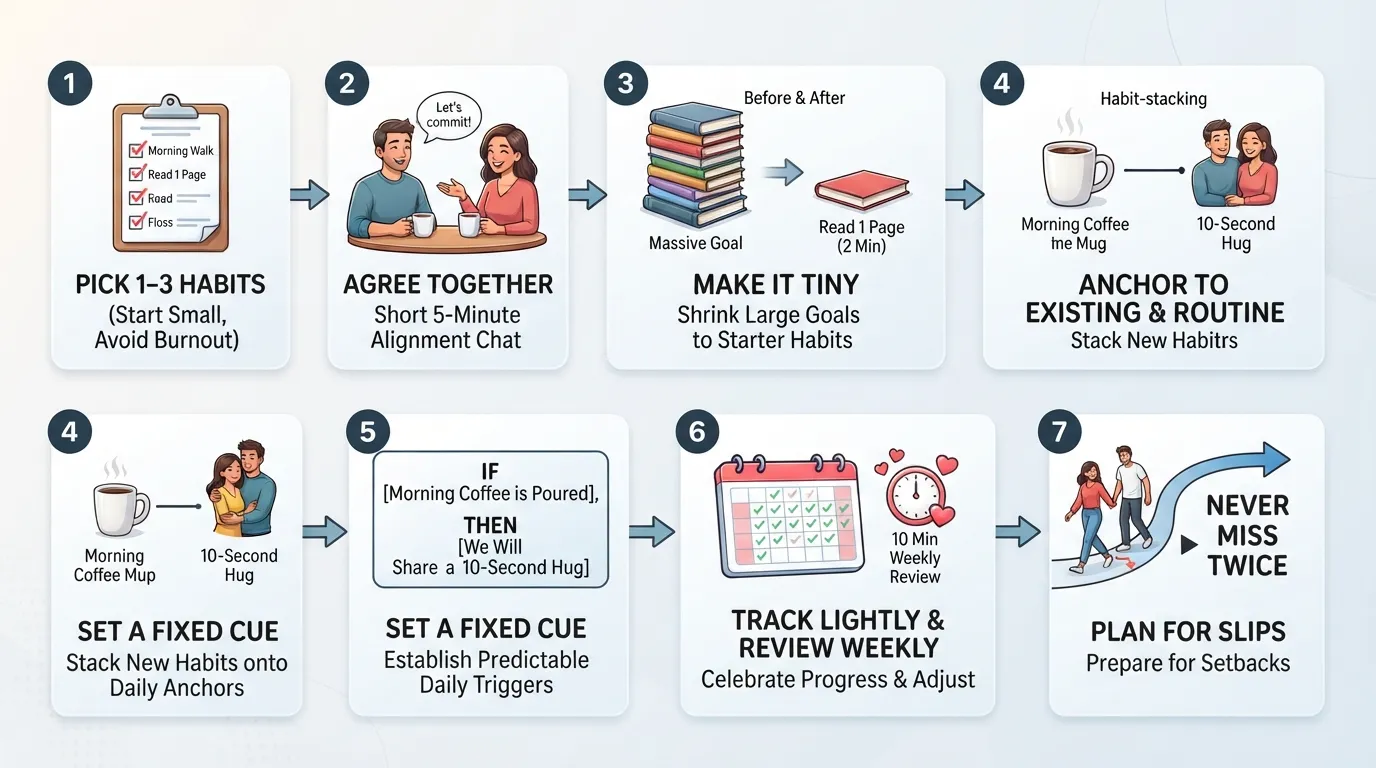
To build lasting relationship habits, focus on making small daily changes rather than attempting a complete overnight overhaul. Following a structured system helps turn intentional efforts into automatic routines that keep you connected.
Step 1: Pick 1–3 Habits, Not 10
Trying to change everything at once overwhelms your daily schedule and leads to burnout. Focus on one to three habits so you can build momentum without feeling stressed.
Look for the area where you notice the biggest gap in your connection—like daily communication or showing appreciation—and start there.
Common mistake to avoid: Trying to fix every issue simultaneously instead of mastering one simple habit first.
Step 2: Agree Together
Sit down for a short, focused five-minute conversation so both of you are aligned on what you are building together.
Example scenario:
“I’d love for us to pick one small thing we do every day to stay connected. What’s one habit you’d like to try together?”
Focus this conversation on how you communicate, manage shared responsibilities, or respect each other’s personal space. Let each partner choose one habit they want to focus on.
Common mistake to avoid: Imposing a habit on your partner without asking for their input first.
Step 3: Make It Tiny
Shrink your new habit down to a two-minute version so it feels easy to do every day, even when you are tired or busy.
Big Goal: Have a deep 30-minute conversation every evening.
Tiny Starter: Ask one intentional question while pouring evening tea: “What was the best part of your day?”
Big Goal: Read a relationship book together for an hour a week.
Tiny Starter: Read one page aloud before turning off the lights.
Big Goal: Express deep gratitude every day.
Tiny Starter: Say one specific “thank you” for something small your partner did today.
Common mistake to avoid: Making the initial habit too large or time-consuming to sustain on difficult days.
Step 4: Anchor It to Something You Already Do
Link your new action to an established daily routine using the habit stacking framework developed by James Clear.
The formula is simple: After [Current Habit], I will [New Tiny Habit].
Morning Coffee: While waiting for the kettle to boil, give your partner a 10-second hug.
After Dinner: Right after clearing the table, clear the kitchen together for two minutes without checking phones.
Before Bed: Right after setting your morning alarm, share one thing you appreciated about each other that day.
Common mistake to avoid: Picking a vague time like “later today” instead of a specific daily anchor.
Step 5: Set a Fixed Cue
Define your habit using a clear structure: “After X, we will Y.” A fixed trigger removes the need to negotiate or remember to act every day.
Practicing habits only during or immediately after an argument rarely works because emotional stress blocks skill-building. Practice them during calm, neutral moments so they become second nature.
If scheduling your relationship habits feels unromantic, remember that routines protect your connection during busy times—they do not kill spontaneity.
Common mistake to avoid: Waiting until a conflict happens to try practicing a new healthy communication habit.
Step 6: Track Lightly and Review Weekly
Keep a shared, lightweight checklist on the fridge or a notes app to track progress together without keeping score or assigning blame.
Set aside 10 minutes once a week for a quick “state of us” check-in:
What worked: What small habit felt easy and helpful this week?
What to adjust: Do we need to make a habit smaller or change the cue?
Logistics: Quick check on upcoming plans, schedules, or shared budgets.
You will know your new habits are working when you notice these five signs:
Less baseline tension during daily routines
Faster recovery after minor disagreements
More frequent, spontaneous words of appreciation
Easier, low-stress daily check-ins
Fewer negative assumptions about each other’s intentions
Common mistake to avoid: Turning your weekly review into a long list of grievances instead of a quick check on your habits.
Step 7: Plan for Slips
Missing a day is a normal part of building new routines, not a sign of failure. Use James Clear’s “never miss twice” rule: if life gets busy and you miss one day, simply resume the habit the very next day.
When a slip happens, use a simple restart script to get back on track without placing blame:
Example scenario:
“We both had a crazy week and missed our evening check-ins. Let’s reset tonight with a quick two-minute chat after dinner.”
Common mistake to avoid: Viewing a missed day as a total failure and abandoning the habit entirely.
Sources used
Clear, James. Atomic Habits (habit stacking framework and “never miss twice” rule).
Fogg, BJ. Tiny Habits (anchoring tiny habits framework).
9 Healthy Relationship Habits Worth Creating
Focusing on small, consistent interactions creates a strong foundation of trust and connection. Here are nine practical habits that build a resilient bond, complete with simple ways to start practicing them today.
1. Daily Check-In
A daily check-in is a dedicated window where both partners share how they are feeling without distraction. During this time, practice active listening by reflecting back what you hear before offering advice or responding.
Example scenario:
“It sounds like you felt really overwhelmed during that meeting today. Did I get that right?”
Starter version: Set aside 10 minutes, put all phones in another room, and ask each other, “How are you feeling about us today?”
How often: Daily.
2. Say What You Need Out Loud
This habit replaces expecting your partner to read your mind with clear, direct communication. Instead of assuming they know what you are thinking, you state your emotional or practical needs explicitly.
Example scenario:
“I had a exhausting day. I don’t need advice right now, but I would love a hug and 15 minutes to unwind.”
Starter version: Practice saying one clear sentence: “Right now, I need [support / space / help with dinner].”
How often: As needed, or during your weekly review.
3. Daily Appreciation
Daily appreciation means noticing small, everyday acts your partner does and thanking them explicitly. Research by Algoe, Gable, and Maisel (2010) shows that partners who express gratitude for everyday thoughtful acts experience a noticeable boost in romantic connection and closeness.
Example scenario:
“Thank you for making coffee this morning before I woke up. It made my early start so much easier.”
Starter version: Notice one small thing your partner did today and say, “I noticed when you did X, and I really appreciate it.”
How often: Daily.
4. Turning Toward Each Other’s Bids
According to John Gottman’s research, a “bid” is any small attempt one partner makes for attention, affection, or connection—like pointing out something out the window or asking a quick question. Choosing to acknowledge these moments (“turning toward”) rather than ignoring them (“turning away”) directly builds long-term relationship stability.
Example scenario:
Partner points at the window: “Look at that sunset!”
Turning toward: Pause scrolling, look up, and say, “Wow, those colors are amazing.”
Starter version: Catch one bid today, stop whatever you are doing for 10 seconds, and give your partner your full attention.
How often: Daily.
5. Pausing Before You React
Pausing gives your brain time to switch from a defensive emotional reaction to a thoughtful response. Before responding in a tense moment, ask yourself: “Do I want to win this point, or do I want to protect our connection?”
Example scenario:
“I can feel myself getting defensive right now. Let’s pause for 20 minutes and come back to this calmly.”
Starter version: Agree on a simple time-out signal or phrase that either person can use to pause a rising argument for 20 minutes.
How often: Whenever tension starts to build.
6. Repairing After an Argument
A repair habit ensures that minor conflicts are addressed and resolved rather than swept under the rug. A proper apology includes three distinct parts: acknowledging the impact of your actions, taking direct responsibility without excuses, and stating what you will do differently next time. Remember that John Gottman’s research shows many relationship conflicts are ongoing (perpetual) differences rather than fully solvable problems, so the goal is gentle understanding rather than absolute agreement.
Example scenario:
“I’m sorry I raised my voice earlier; it was wrong to snap at you. Next time I feel overwhelmed, I will ask for a short break first.”
Starter version: After a disagreement settles, ask: “What could we both do slightly differently next time?”
How often: As needed after arguments.
7. Keeping Small Promises
Trust is not built in dramatic declarations; it is constructed through small, predictable actions every day. Doing what you said you would do—like calling when you arrive or completing a shared task—signals reliability. If trust has been damaged, rebuilding it requires consistent, transparent actions repeated over a long period.
Example scenario:
“I promised I’d take care of the groceries today, so I went right after work.”
Starter version: Pick one tiny promise today—like taking out the trash at a specific time—and follow through without being reminded.
How often: Daily.
8. Quality Time
Quality time means spending uninterrupted moments together without screens or multi-tasking competing for your focus, such as sharing a phone-free meal.
The 7-7-7 Rule: This popular framework suggests scheduling a date night every 7 days, a weekend getaway every 7 weeks, and a longer vacation every 7 months. Note that while this is a useful planning framework, it is a popular guideline rather than a research-backed rule.
Starter version: Sit together for a 15-minute meal or tea break with all mobile phones placed face-down in another room.
How often: Daily for small moments, weekly for dedicated dates.
9. Protecting Your Own Identity, Space, and Goals
A healthy relationship consists of two distinct individuals choosing to share a life, not two people losing their separate identities. Supporting each other’s personal hobbies, friendships, and career goals prevents codependency and controlling behavior.
Example scenario:
“I know you have your art class tonight, so I’ll handle dinner and give you uninterrupted time to paint.”
Starter version: Block out two hours this week for your own personal hobby or goal, and encourage your partner to do the same.
How often: Weekly.
Making These Habits Work Long-Distance
Building relationship habits when living apart requires translating physical routines into predictable digital touchpoints.
Daily Check-In: Replace the in-person check-in with a fixed 15-minute video call every evening before bed.
Quality Time: Stream a movie or share a meal together over a video call on a scheduled date night.
Shared Logistics: Use a shared digital calendar app to sync your schedules, track joint plans, and count down to your next planned visit.
Sources used
Algoe, S. B., Gable, S. L., & Maisel, N. C. (2010). “It’s the little things: Everyday gratitude as a booster shot for romantic relationships”, Personal Relationships. Link
Gottman, John. Research on bids for connection, turning toward vs. turning away, and perpetual conflicts in relationships.
How to Replace Unhealthy Relationship Habits
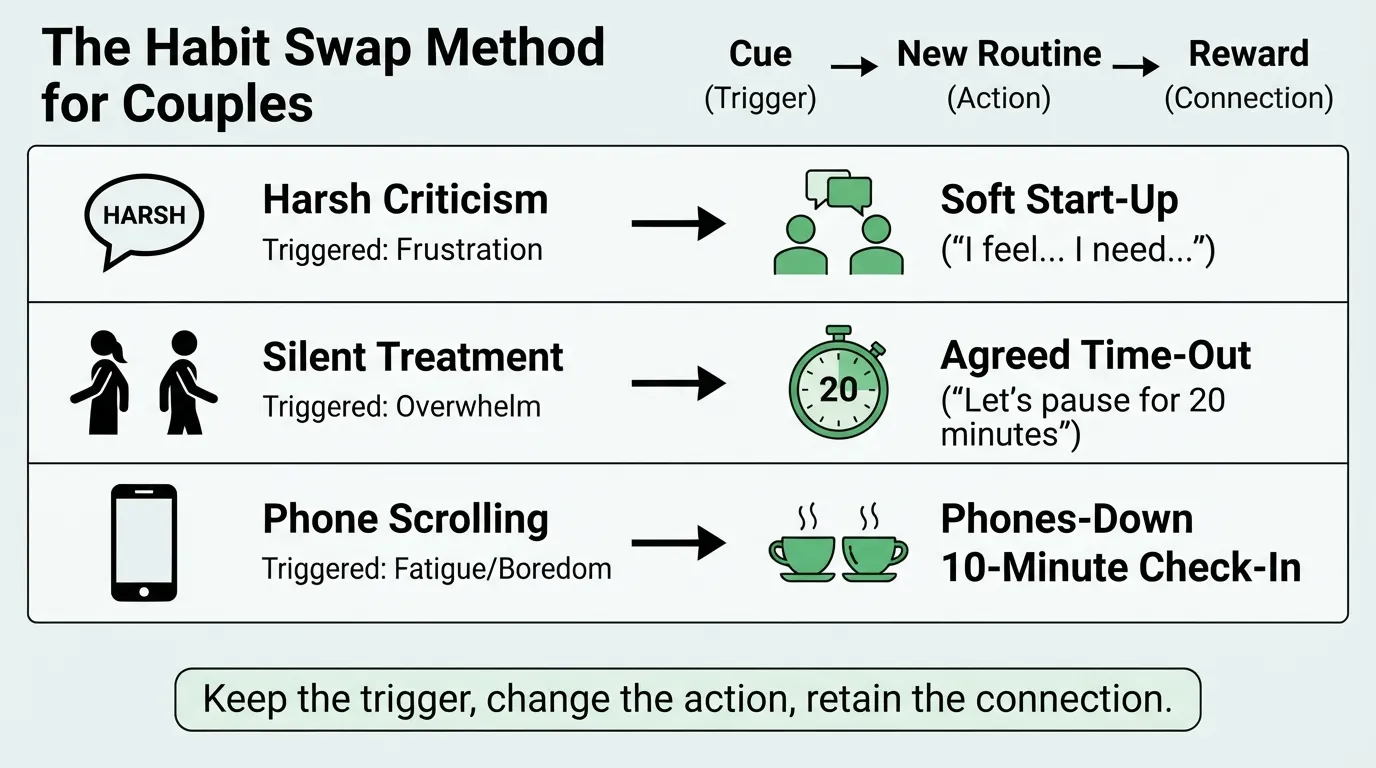
Breaking an unwanted habit is rarely successful if you simply try to suppress it through willpower alone. Instead of trying to eliminate a bad pattern, replace the harmful action while keeping the underlying trigger and reward intact.
The Cue-Routine-Reward Swap
Every habit consists of three main elements: a trigger (cue), the behavior itself (routine), and the emotional release or benefit you get from it (reward).
When you feel stressed or hurt (the cue), your brain instinctively looks for a familiar reaction (the routine) to feel safe or regain control (the reward). To replace an unhealthy habit, keep the original cue and reward, but swap in a healthier routine. For example, if you scroll on your phone to unwind after a tiring day, keep the cue (feeling exhausted) and the reward (decompressing), but replace the phone with a five-minute screen-free tea break with your partner.
Swap Table
Use these specific replacements to substitute unhealthy reactions with structured, healthier alternatives:
| Unhealthy Habit | The Trigger (Cue) | New Healthy Habit |
Harsh Criticism (Attacking your partner’s character during a disagreement) | Feeling frustrated, misunderstood, or unappreciated | Softened Start-Up State your feeling and specific need gently without placing blame (“I feel overwhelmed when dishes sit in the sink. Can we clean them together?”). |
Silent Treatment (Shutting down or icing out your partner when upset) | Feeling emotionally overwhelmed or defensive | Agreed Time-Out Ask for a clear 20-minute pause to calm down, and commit to returning to the conversation once you are grounded. |
Phone Scrolling (Checking screens while your partner is talking) | Boredom, fatigue, or seeking quick stimulation | Phones-Down Window Put phones in another room or face-down during meals and daily check-ins to offer full, undivided attention. |
How Long Does It Take to Build Relationship Habits?
Building a new relationship habit takes roughly two to three months of consistent practice before it feels natural. Setting realistic expectations prevents frustration when progress feels slow or uneven.
According to a study by Lally, van Jaarsveld, Potts, and Wardle (2009) published in the European Journal of Social Psychology, habits took a median of about 66 days to become automatic, with a wide range of 18 to 254 days. It is important to note that this study looked at individual habits (such as drinking water or running), not couples. When two people try to build a habit together, coordination and varying schedules mean it can take slightly longer.
Here is a realistic timeline of what to expect as a couple:
Days 1–14 (The Deliberate Phase): The habit requires conscious effort and daily reminders. It will feel awkward or forced at first—this is completely normal.
Days 15–60 (The Transition Phase): The action starts to feel familiar, though you will still need cues like alarm reminders or habit stacking.
Days 66+ (The Automatic Phase): The behavior becomes a natural part of your daily routine that requires very little mental effort.
The study also found that missing a single day did not seriously derail habit formation over the long run. If you miss a day, simply pick back up the following day without guilt.
Sources used
Lally, P., van Jaarsveld, C. H., Potts, H. W., & Wardle, J. (2009). “How are habits formed: Modelling habit formation in the real world”, European Journal of Social Psychology.
What If Your Partner Won't Get on Board?
You do not need your partner’s full participation to start improving your relationship dynamics. Changing your own daily habits alters how you interact with each other, which often inspires your partner to respond differently over time.
Habits You Can Start on Your Own
Several core habits require zero coordination and can be practiced unilaterally starting today:
Daily Appreciation: Expressing genuine thanks for small things your partner does shifts the tone of your home regardless of whether they reciprocate immediately.
Pausing Before You React: Choosing to take a 20-minute breather when you feel defensive prevents minor arguments from escalating.
Stating Your Needs Clearly: Practice saying what you need directly rather than waiting for your partner to guess.
Keeping Small Promises: Consistently doing what you said you would do builds baseline trust and reliability.
Making Repair Attempts: Offering a soft apology or checking in after a tense moment opens the door for reconciliation.
How to Invite Them
When asking your partner to join you, frame your request as an invitation to build a better experience together rather than a demand or criticism of their past behavior.
Example scenario:
“I’ve been trying to be more present and less distracted lately. I’d love to try a simple two-minute check-in together after dinner this week to see if it helps us feel more connected. Would you be open to trying it with me for a few days?”
When to Bring in a Couples Therapist
If you consistently try to start conversations or repair arguments but meet complete stone-walling, ongoing resentment, or severe communication breakdowns, individual habit adjustments may not be enough. Consider reaching out to a licensed couples therapist or professional counselor when persistent issues create ongoing distress, or when you need a safe, neutral space to work through deeper relationship patterns.
A Simple 30-Day Relationship Habit Plan
Starting a 30-day plan is the initial step to build momentum, though research shows it typically takes about two months for a new habit to become fully automatic. Use this structured roadmap to introduce small, manageable habits week by week.
| Timeline | Core Focus | Daily / Weekly Action |
| Week 1 | Foundation & Appreciation | • Daily: Say one specific “thank you” for something small. • Daily: Keep one small promise you made to your partner. |
| Week 2 | Daily Touchpoints | • Daily: Continue Week 1 habits. • Daily: Do a 10-minute phone-free check-in after dinner. |
| Week 3 | Clear Communication | • Daily: Continue Week 1 & 2 habits. • As needed: State your needs directly out loud using one sentence. • As needed: Pause for 20 minutes if tension builds during a disagreement. |
| Week 4 | Review & Expand | • Daily: Continue daily appreciation and phone-free check-ins. • Weekly: Hold a 10-minute “state of us” review to discuss what worked and make minor tweaks. |
Mark Steve
Mark Steve is a tech, business, and lifestyle writer with over 5 years of experience analyzing digital trends, startups, and online business models. He publishes well-researched, fact-checked content focused on clarity, credibility, and real-world value.